Home Blog Page 173

Lagos gov calls for collective action on clean urban transport

Gov. Babajide Sanwo-Olu of Lagos State has urged stakeholders to harness clean urban transport innovation and investment to achieve economic development, social equity, and climate resilience.

Sanwo-Olu made this call at the 2025 Lagos Metropolitan Area Transport Authority (LAMATA) International Conference on Sustainable Urban Mobility, held in Ikeja, on Wednesday, October 8.
Lagos
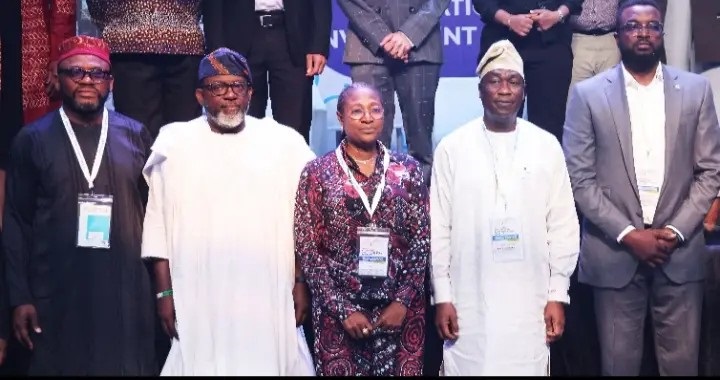
L-R: Permanent Secretary, Lagos State Ministry of Transportation, Mr Olawale Musa; Chairman of the Lagos State House of Assembly’s Committee on Transport, Temitope Adedeji; Managing Director, Lagos Metropolitan Area Transport Authority (LAMATA), Abimbola Akinajo; Deputy Gov. Dr Obafemi Hamzat, and Commissioner for Transportation, Mr Oluwaseun Osiyemi, at the 2025 Lagos Metropolitan Area Transport Authority (LAMATA) International Conference on Sustainable Urban Mobility (SUMConference25), held in Ikeja

The conference had “Harnessing Clean Urban Transport Innovation and Investment in Africa” as its theme.

The governor, who was represented by his Deputy, Dr Obafemi Hamzat, emphasised the need for sustainable mobility in Africa.

He noted that sustainable mobility is not a luxury but a necessity for achieving economic development, social equity, and climate resilience in Africa.

Sanwo-Olu challenged Africans to think big, act bold, and move together to build a continent that moves efficiently, inclusively, and sustainably.

“Let us harness clean urban transport innovation and investment not as abstract ideals but as instruments of continental renaissance.

“Let us build an Africa that moves efficiently, inclusively, and sustainably.

“By 2050, over 1.3 billion Africans will live in cities. How we move those people cleanly, affordably, and equitably will determine whether our growth is sustainable or self-defeating,” he said.

The governor highlighted Lagos transformation in urban mobility, citing the Bus Rapid Transit corridors, ferry terminals, smart ticketing systems, and upcoming electric bus pilot as examples of what is possible when African cities believe in themselves.

He also mentioned the state’s deployment of a citywide sensor network to track urban transport-induced emissions in real-time.

Sanwo-Olu emphasised that the conference must move Africa closer to a continental Air Quality Alliance, linking African cities in a shared platform of open data for clean air.

He noted that the journey to sustainable urban mobility demands political courage, financial creativity, institutional resilience, and partnerships that cross continents.

The Commissioner for Transportation, Mr. Oluwaseun Osiyemi, reiterated the state’s commitment to driving Africa’s clean and sustainable transport revolution.

Osiyemi said that Africa’s rapid urbanisation, presents both great challenges and tremendous opportunities for sustainable development.

“As our cities grow, we must prioritise clean, affordable, and efficient mobility for all,” he said.

The commissioner noted that sustainable mobility was key to improving air quality, reducing congestion, and promoting economic growth.

He noted that several African cities, such as Nairobi, Addis Ababa, Cape Town, Accra, and Lagos, are already implementing electric mobility initiatives, non-motorized transport infrastructure, and multimodal public systems.

Earlier, LAMATA’S Managing Director, Mrs. Abimbola Akinajo, stated that the conference served as a knowledge hub for policymakers, planners, engineers, researchers, operators, and other key stakeholders at both national and sub-national levels in Nigeria.

She recalled that, in 2024, Lagos State Government, through LAMATA, formally institutionalised an annual conference on sustainable urban mobility.

She said the conference was geared toward fostering synergy, cooperation, commitment, and unity among African governments, businesses, and communities to adopt sustainable transport practices, reduce carbon footprints, and promote renewable energy sources.

Meanwhile, the Chairman of Badagry Local Government Area, Mr. Babatunde Hunpe, has commended Gov. Babajide Sanwo-Olu for his commitment to the development of Badagry, through the inauguration of the Late Sunny Akinsanya Ajose Housing Estate in Ajara.

Hunpe gave the commendation at the inauguration of the project, which was initially started in 2013 by the New Towns Development Authority (NTDA) and later transferred to the Ministry of Housing in 2017 for completion.

He noted that the new project, coming barely two months after the inauguration of several road networks, showed the governor’s strong dedication to the holistic development of the Badagry division.

“This is truly a season of bountiful harvest for our people under your purposeful and progressive leadership,” he said.

According to him, the Lagos Homes Project in Badagry is not just another housing scheme but a continuation of a vision first conceived by President Bola Tinubu during his tenure as governor of Lagos state.

“What we see today is that noble dream turned into reality through your hands, the hands of a builder and a doer,” Hunpe said.

He, however, appealed to Sanwo-Olu to help complete some abandoned state projects in the area.

“These include the Lagos State VIP Chalet, Yafin Road Project, Agbovipe–Agadangba–Erekiti Road, the second phase of Hospital–Topo–Idale Road, Aradagun–Mowo Road, Owode–Apa Road, and the Badagry Deep Sea Port,” he said.

Hunpe noted that completing the projects would further cement the governor’s legacy as a leader,  who transformed Badagry into a world-class hub for tourism and commerce.

Also speaking, the Akran of Badagry, Aholu Menu Toyi I, represented by Chief Anthony Tunji, expressed gratitude to the governor for completing many projects in the town.

He said the people of Badagry, like Oliver Twist, are asking for more developmental projects.

Similarly, Mr. Bonu Solomon, the lawmaker representing Badagry Constituency 1 in the Lagos State House of Assembly, thanked Sanwo-Olu for completing the estate and urged him to ensure that indigenes benefitted from its allocation.

Mr. Abdulhafis Toriola, Chairman of the Lagos State House of Assembly Committee on Housing, assured residents that their interests would be protected in the allocation process and urged them to continue living in peace and harmony.

The residential buildings are 35 blocks of 12-in-1 buildings (one, two, three-bedroom apartments) making a total of 420 units.

By Oluwatope Lawanson, Raji Rasak, Aderonke Ojediran and Lydia Chigozie-Ngwakwe
All is now set for GOCOP 2025 Annual Conference

0

All is now set for the 2025 Annual Conference of the Guild of Corporate Online Publishers (GOCOP), scheduled to hold at 10:00 a.m. on Thursday, October 9, 2025, at the Radisson Blu Hotel, Ikeja GRA, Lagos.

The ninth edition of the GOCOP Annual Conference will focus on the theme: “Reconciling Campaign Promises with Governance Realities: Challenges and Prospects.”

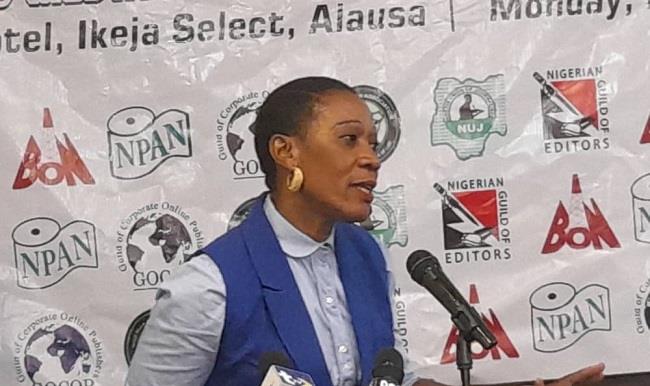
Maureen Chigbo, GOCOP President
Maureen Chigbo, GOCOP President, at Media Roundtable on self-regulation

In a press statement signed by the Publicity Secretary of GOCOP, Ogbuefi Remmy Nweke, the Chairman of the Conference Planning Committee and GOCOP Deputy President, Danlami Nmodu, mni, confirmed that all arrangements have been concluded to ensure a highly impactful and well-attended event.

According to Nmodu, the 2025 conference aims to generate practical insights and strategies for bridging the gap between political campaign promises and the realities of governance in Nigeria and across Africa.

The event will feature a keynote address, followed by a high-level panel discussion involving seasoned experts in media, governance, and policy.

The conference, he said, would be chaired by the former Governor of Old Ondo State and former Deputy National Chairman of the Peoples Democratic Party (PDP), Chief Bode George, while the former Speaker of the House of Representatives and immediate past Governor of Katsina State, Aminu Bello Masari, would deliver the keynote address.

Panel discussants, he said, include the Director, Institute of Continuing Education, University of Lagos (UNILAG), Prof. Abigail Ogwezzy-Ndisika, and the Director-General, National Orientation Agency (NOA), Alhaji Lanre Issa-Onilu.

Nmodu further noted that the GOCOP Conference had evolved into a credible platform for dialogue among online publishers, policymakers, and industry leaders, advancing the Guild’s mission of promoting responsible and ethical journalism in the digital age.

He recalled that past editions of the conference have featured notable personalities such as Rev. Matthew Hassan Kukah; Mr. Boss Mustapha, former Secretary to the Government of the Federation; Prof. Mahmood Yakubu, INEC Chairman; Prof. Uche Uwaleke; and former Governor Liyel Imoke; who have all provided critical perspectives on national issues ranging from security and the economy to elections and digital transformation.

GOCOP, a professional body of over 120-member organisations, comprises publishers, editors, and senior journalists who transitioned from traditional media to online platforms, upholding the values of credibility, accuracy, and professionalism in digital journalism.

Nmodu emphasised that the GOCOP 2025 conference also presents strategic sponsorship and partnership opportunities for brands seeking meaningful engagement with influential media leaders, policymakers, and corporate decision-makers.

The untold story of Nigeria’s abandoned housing dreams in Ilorin

0

Unarguably, Nigeria is facing a worsening housing crisis.

Access to affordable housing remains a major challenge for low- and middle-income earners, hampered by high construction costs, inadequate financing, weak infrastructure, and limited government delivery.

According to the Federal Mortgage Bank of Nigeria (FMBN), the deficit is currently estimated at more than 28 million units.

Housing
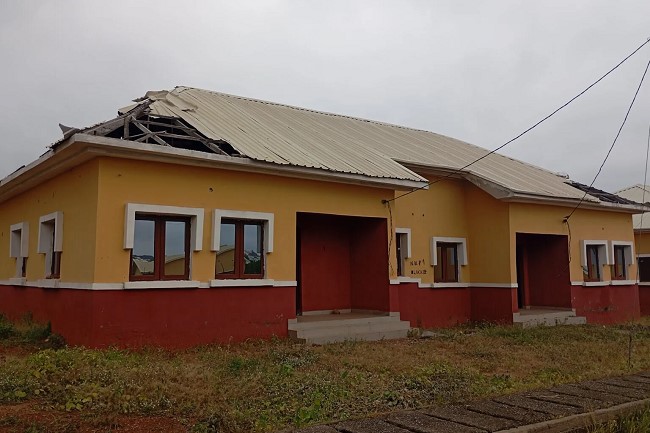
The roof of one of the buildings in Ali Ara, already blown away by wind

To bridge this gap, the Federal Government unveiled the National Housing Programme (NHP) in 2016 under former President Muhammadu Buhari, aiming to provide affordable homes for Nigerians across 34 states.

The initiative, now rebranded as the Renewed Hope Housing Programme under President Bola Tinubu, targets Nigerians aged 21 and above in paid employment, who contribute 2.5 per cent of their monthly salary to the National Housing Fund managed by the FMBN.

Yet, in Ilorin, Kwara, two of these housing projects – one located in Ali-Ara, off Asa Dam Road, and another at Ogbondoroko in Asa Local Government Area – stand as symbols of unfulfilled promises.

One has been completed but left unallocated; the other remains partially finished years after groundbreaking.

The estate at Ali-Ara, inaugurated with fanfare in December 2022, comprises 76 housing units under Phase One of the NHP. The facilities include roads, drainage, electricity connections, and water supply.

The project features 48 units of two-bedroom bungalows, 20 three-bedroom bungalows, four one-bedroom units, and four three-bedroom units built using stabilised earth technology.

During the inauguration, the then Minister of Works and Housing, Babatunde Fashola, disclosed that building contracts were awarded in November 2016 at a cost of N728.49 million, while infrastructure contracts followed in May 2017 at N619.26 million.

The breakdown included N446.1 million for roads and drains, N85.1 million for electricity, and N87.9 million for boreholes.

In spite of these investments, none of the housing units has been occupied nearly three years later, a situation that has turned optimism into concern among nearby residents, who now fear the empty buildings could become a hideout for criminals.

Dr Abdulazeez Olatunji, Chairman of the New Era Community, has lived in the Ali-Ara area for over a decade.

He recalls the excitement that greeted the project’s construction.

“We were delighted when the project started; it brought good roads and drainage, and we thought facilities like markets and health centres would follow.

But today, the houses stand empty; that’s the real abandonment,” he lamented.

While the estate has not yet become a serious crime spot, Olatunji expressed fears that its isolation and lack of habitation make it a potential security threat.

“The guards securing the place sometimes collude with others to steal livestock; we have had reports of goats and rams being kept inside the empty houses before being moved out at night,” he said.

The community chairman urged the Federal Ministry of Housing and Urban Development to address all issues delaying the allocation of the houses before the infrastructure deteriorates further.

Sharing a similar sentiment, a military officer residing nearby, who pleaded anonymity, said he donated part of his land to make access roads possible, hoping the estate would bring development.

“I gave part of my land for the road, believing the project would improve the area.

“But since completion, nothing has changed; some boreholes have been vandalised, and only two of six industrial boreholes are working; the rest were stripped of their pumping machines,” he said.

He added that while the government provided security guards, vandalism and theft of electrical components persist due to inactivity.

For Mrs Tawakalitu Mustapha, who runs a small shop beside the estate, the empty houses have dashed her hopes of increased patronage.

“We thought business would boom once people moved in, but that has not happened. Some say they’ve been allocated the houses but can’t move in because facilities are already spoiling,” she said.

At Ogbondoroko, Phase 2 and 3 of the NHP project tell a similar story, though construction is yet to be completed.

Mrs Faith Ilesanmi, a resident of eight years, believes the estate’s poor access road and distance from the city deter potential subscribers.

“The location is far from town, and the road is terrible; even if completed, it will be difficult for civil servants to live here,” she explained.

Another resident, Mr. Abdulgafar Abdulsalam, described the project as “a white elephant venture,” arguing that most civil servants, which is the programme’s target group, cannot afford the houses due to existing loan deductions from their salaries.

“If I had the money they’re asking for, I would rather buy land and build my own house.

“The purpose of this programme to help civil servants has been defeated,” he said.

Housing experts have long warned that Nigeria needs to build at least 700,000 units annually to close its housing deficit, yet fewer than 100,000 units are produced each year across public and private sectors combined.

Stakeholders aver that abandoned or unallocated estates like those in Ilorin further worsen this deficit, especially when thousands of government workers continue to pay high rents in urban centres.

The Federal Ministry of Housing and Urban Development maintains that allocation of completed NHP estates is ongoing nationwide.

However, residents and civil servants in Kwara say they have received no official communication or allocation notice since the 2022 commissioning.

Mr. Badamasi Haiba, Director, Press and Public Relations in the Ministry of Housing and Urban Development through documents shared, said the government had allocated the completed units.

He, however, could not provide information on the reasons contractors are yet to go back to site to complete others.

In their views, urban planners warn that abandoned estates can quickly deteriorate and attract criminal activities.

A report by the UN-Habitat highlights that unoccupied housing developments often lead to infrastructure decay, illegal occupation, and increased insecurity.

Olatunji and others in the New Era Community call on the Federal Government to act swiftly.

“These houses should not rot away while people struggle for accommodation. If the allocation process is delayed by bureaucracy, the government should at least put them to temporary public use; for example, as training centres, clinics, or low-cost rentals,” he urged.

Until then, observers say the estate stands as a reminder of Nigeria’s recurring pattern–a nation building homes but not housing people.

By Usman Aliyu and Bushrah Yusuf-Badmus

Latin American and Caribbean countries agree on ambitious environmental agenda for the region

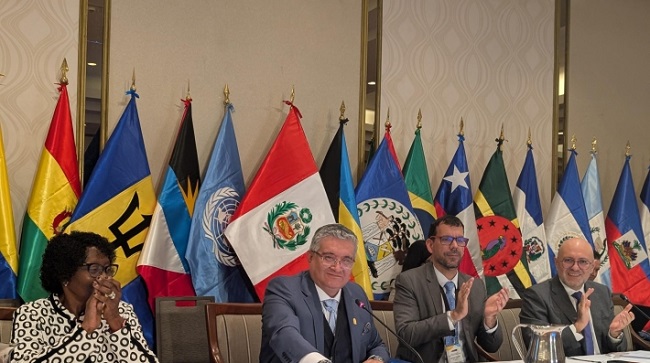
The XXIV Meeting of the Forum of Ministers of Environment of Latin America and the Caribbean concluded with the adoption of key decisions to address the triple planetary crisis of climate change, biodiversity loss, and pollution.  

The measures include the adoption of an updated Regional Action Plan on Ecosystem Restoration and Water Security, which will strengthen countries’ resilience to droughts and desertification, while also generating social and economic benefits for the region. 

Latin America and the Caribbean
Delegates at the XXIV Meeting of the Forum of Ministers of Environment of Latin America and the Caribbean

Countries also agreed on new initiatives and plans to reduce pollution and protect health and the environment. These include a new Programme for the Reduction of Methane Emissions in the Waste Sector and the progressive closure of dumpsites, the Regional Action Plan on Chemicals and Waste 2026–2029, the Regional Action Plan on Air Quality 2026–2029, as well as strengthening regional cooperation to address plastic pollution. 

“We must respond effectively and in synergy to the crises of climate change, biodiversity loss and pollution in all its forms, with a common agenda that enables us to define and implement a practical and concrete roadmap through multiple regional and global partnerships,” said Peru’s Minister of the Environment, Juan Carlos Castro Vargas.

“At this international meeting, where Peru concluded its term as Presidency of the Forum of Ministers, we generated joint proposals to foster cooperation and investment that will help our countries address and close environmental gaps,” added Vargas.

For his part, Panama’s Minister of Environment, Juan Carlos Navarro, whose country begins a new two-year term as Presidency of the Forum, stated: “This handover symbolises more than a change of Presidency: it is the continuity of a collective effort in which Latin America and the Caribbean speak with one voice to urgently confront regional and global environmental challenges. We must protect our forests and rivers, our biodiversity and our oceans now, to ensure the clean air and pure water upon which our very lives depend.” 

During the meeting, ministers also reviewed the latest outcomes of the Second Meeting of the Range States for the Jaguar, recently held in Mexico, including the Regional Action Plan for Jaguar Conservation. This plan aims to strengthen ecological connectivity and the protection of strategic ecosystems in the region, consolidating the jaguar as an emblematic and umbrella species for conservation and restoration efforts. 

In thematic consultative sessions, and throughout their deliberations, representatives discussed ways to accelerate the implementation of multilateral environmental agreements, as well as cross-cutting areas such as integrating a gender perspective into environmental action, strengthening education and training for sustainability, and promoting circular economy models across the region. 

The Lima Declaration, adopted at this meeting, reaffirms the need to respond in an integrated manner to the crises of climate, biodiversity, land degradation, drought and pollution in all its forms. It recognises the human right to a clean, healthy and sustainable environment, underscores the urgency of strengthening regional and global cooperation, calls for the recognition of the special circumstances faced by Small Island Developing States, and calls for advancing a just transition that leaves no one behind.

It also highlights the importance of integrating gender perspectives, the knowledge of Indigenous Peoples and local communities, as well as mobilising financial and technological resources to accelerate climate action, and biodiversity conservation, including for the benefit of iconic species in the region such as the jaguar, as well as ecosystem restoration in the world’s most biodiverse region. 

“We extend our deep gratitude to Peru, a nation of extraordinary cultural heritage and unparalleled natural wealth, for its leadership over the past two years as President of this Forum, and to Minister Castro Vargas for his dedicated stewardship,” said Elizabeth Maruma Mrema, UNEP’s Deputy Executive Director.

“We warmly welcome Panama, through Minister Navarro, as it takes over the Presidency of the Forum of Ministers of Latin America and the Caribbean – a platform that serves as living proof that multilateralism is the essential pathway for our region to advance sustainable solutions, inspire action, and produce concrete results to address the many interlinked planetary environmental crises. UNEP is proud to serve as its Secretariat and remains fully committed to supporting Latin America and the Caribbean in building a more prosperous, equitable, and resilient planet for all,” she added. 

The Forum serves as a key space to prepare joint positions of Latin America and the Caribbean in multilateral negotiations, including the upcoming COP30 in Belém, Brazil, and the seventh session of the United Nations Environment Assembly (UNEA-7), to be held from December 8 to 12, 2025, in Nairobi, Kenya, under the theme “Advancing Sustainable Solutions for a Resilient Planet.” 

UNEA-7 will be preceded by the seventh meeting of the Open-Ended Committee of Permanent Representatives (OECPR-7), which will take place from 1 to 5 December 2025. 

Namibia disregards dangers of trade as it seeks to sell elephant ivory, rhino horn

0

Despite Africa’s elephants and rhinos still living under serious threat from poaching and illegal trade, Namibia is pushing hard to resume ivory and horn sales.

From November 23 to December 5, 2025, representatives of the 185 countries that are signatories to the Convention on International Trade in Endangered Species of Wild Fauna and Flora (CITES) will gather in Samarkand, Uzbekistan, for the 20th meeting of the Conference of the Parties (COP20).

Elephants in Namibia

Namibia has put three proposals before the meeting which would rescind existing international trade bans and allow it to sell rhino horns and stockpiled elephant ivory, a move the Environmental Investigation Agency (EIA) and many other conservation organisations warn would be catastrophic for remaining wild populations, not just in Namibia but elsewhere in Africa too.

It’s first proposal seeks a change to the status of its population of southern white rhinos to allow for international commercial trade in their horns.

Its second is to transfer its population of Critically Endangered black rhinos from Appendix I – the strongest level of CITES protection – to Appendix II to allow for international commercial trade in horns.

And its third is to seek approval to sell off more than 46 tonnes of registered raw ivory (whole tusks and pieces) for commercial purposes.

EIA Deputy Campaign Leader (Elephants), Rachel Mackenna, said: “Parties to CITES have a strong history of rejecting attempts to resume legal trade in ivory and rhino horns and we would expect them to hold the line at COP20.

“Namibia’s proposals are reckless, given the huge weight of evidence that legal ivory and rhino horn trade in the past has primarily served to stimulate demand, which inevitably leads to more poaching and trafficking of illegal wildlife products.”

Namibia’s push comes as rhino populations around the world remain at high risk from poaching and illegal trade – and Namibia in particular continues to experience high levels of rhino poaching, increasing by nearly eight per cent in the country in 2024, with 83 rhinos killed compared to 77 in 2023.

EIA’s Senior Wildlife Policy Analyst (Rhinos), Taylor Tench, highlighted: “It is especially concerning that Namibia has not consulted any other rhino range states in Africa about its plans, despite the exorbitant risks that Namibia’s proposals present to the safety and conservation of their rhino populations.

‘’In addition, rhino horn trade is illegal in end-use countries such as China and Vietnam and so Namibia has no apparent viable prospective trading partners.’

“The proposals would also undermine significant efforts made by these consumer countries to reduce demand for illegal wildlife products over the years.”

Namibia’s third proposal to be allowed to sell of 46 tonnes of stockpiled ivory would undo decades of hard-won progress to end the international ivory trade and aid the recovery of elephant populations.

Previous one-off sales of stockpiled ivory under CITES proved to be a disaster for elephants as they primarily served to fuel demand in Asian markets, triggering sharp increases in poaching and trafficking and contributing to catastrophic declines in elephant populations in range states such as Tanzania and Mozambique.

EIA’s Wildlife campaigners will be actively engaging at COP20 on a range of key issues relating to the protection of elephants, rhinos, Asian big cats, pangolins and vaquita porpoises and will be pushing back hard against Namibia’s detrimental proposals.

Nigeria validates just transition guidelines, action plan

0

Nigeria has taken a bold and historic step toward building an inclusive, sustainable, and low-carbon future.

The National Council on Climate Change (NCCC) has officially validated the Just Transition Guidelines and Action Plan (JT-GAP) – a landmark framework designed to steer the nation’s shift to a green and climate-resilient economy.

Validation Workshop
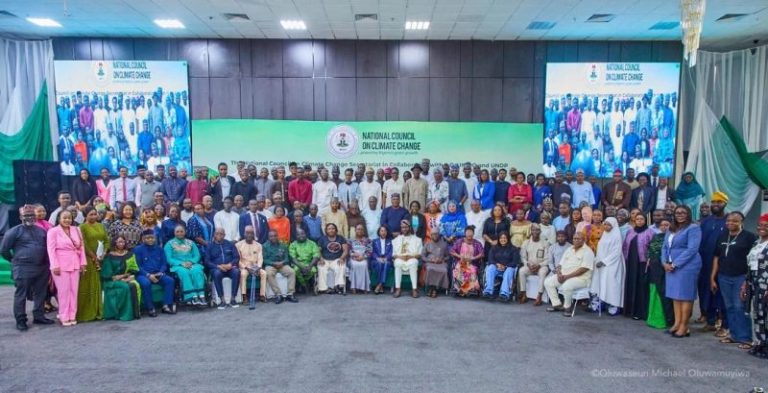
Participants at the Validation Workshop for Nigeria’s Just Transition in Abuja

The validation ceremony, held from October 6 to 7, 2025, at the Nigeria Air Force Conference Centre, Kado, Abuja, marks a pivotal moment in Nigeria’s journey toward a fair and equitable transition.

Developed by the Centre for Climate Change and Development (CCCD), Alex Ekwueme Federal University, Ndufu-Alike, Ebonyi State, with support from International Labour Organisation (ILO), the United Nations Development Programme (UNDP), and the United Nations Industrial Development Organisation (UNIDO), the Just Transition Guidelines and Action Plan stands as a model of evidence-based, inclusive policy formulation.

The two-day event commenced with a technical session, which provided an in-depth review of the draft JT-GAP. The session brought together technical experts from across government, academia, and international development institutions to deliberate on key components of the report.

The technical presentation was anchored by Professor Emmanuel Oladipo, representing the lead consultant, Professor Chukwumerije Okereke, while the cross-cutting themes of the JT-GAP – such as gender inclusion, youth empowerment, and social equity – were presented by Dr. Austine Sadiq Okoh, who served as the Project Manager. Their presentations set the tone for a robust exchange of ideas, ensuring the technical soundness and inclusivity of the final document.

The workshop featured participants from various ministries, departments, and agencies (MDAs); multilateral institutions; civil society organizations; women and youth groups; representatives of persons with disabilities; labor unions; and private sector actors. This wide-ranging participation underscored the national commitment to ensuring that Just Transition truly leaves no one behind.

The validation ceremony, which took place on the second day, was graced by an array of distinguished personalities, including the Director-General of the NCCC, Mrs. Tenioye Majekodunmi; Mr. Ibrahim Shelleng, Senior Special Assistant to the President on Climate Finance and Stakeholder Engagement; the Chairman and Deputy Chairman of the House of Representatives Committee on Climate Change; the Special Adviser to the President on the Ease of Doing Business; the Country Director of the NDC Partnership; and Permanent Secretaries on Climate Change from Lagos, Cross River, and Imo States.

Also in attendance were heads of federal ministries, development partners, industrial leaders, labor union representatives, CSOs, youth advocates, people living with disabilities, and members of the consultant team.

In her remarks, Mrs. Tenioye Majekodunmi, the Director-General of the NCCC, described the JT-GAP as “a comprehensive, evidence-based, and professionally crafted document that reflects Nigeria’s unwavering commitment to an equitable energy transition and decarbonisation pathway.”

She emphasised that the plan aligns seamlessly with Nigeria’s Nationally Determined Contributions (NDCs), Energy Transition Plan (ETP), and long-term net-zero ambitions, adding that it was developed through an extensive process of national and international review.

She further commended the consultant team and stakeholders for producing a document that “leaves no one behind,” reaffirming that “the Just Transition is not merely an environmental agenda, but a people-centered development vision that ensures economic growth, social justice, and environmental sustainability move hand in hand.”

The DG called on all stakeholders to take collective ownership of the report and ensure the timely implementation of its recommendations across all sectors.

Participants at the validation ceremony unanimously applauded the quality, inclusiveness, and international standard of the Just Transition Guidelines and Action Plan.

They lauded the depth of consultation and participatory engagement that characterised its preparation, describing it as a true reflection of national will and international best practice.

Professor Chukwumerije Okereke, the Lead Consultant, says: “I am delighted to have led the team that produced the Just Transition Guidelines and Action Plan (JT-GAP). Our report offers insight on how Nigeria can unlock new opportunities in green growth, innovation and emerging industrial ecosystems while taking ambitious climate action. We have not only provided a detailed analysis of the justice dimensions of climate impact and transition pathways in key sectors of Nigeria’s economy. But we have also offered clear guidance and action plan on how Nigeria can align climate ambition with its development priorities to ensure that decarbonisation does not come at the expense of jobs, livelihoods and social stability.”

Continuing, Okereke says, “Both climate change and action implicate equity and justice in profound and complect ways. By embedding fairness and inclusivity at the core of Nigeria’s transition effort, the JT-GAP if implemented will protect workers, trade unions, women, the youth, and marginalized groups and communities and help Nigeria to mitigate critical transition risks such as job displacement, stranded assets and fiscal stress.”

The validation of the JT-GAP therefore marks a new dawn for Nigeria. And is a milestone in the nation’s commitment to achieving a just, inclusive, and people-driven transition that prioritises social equity, decent jobs, and community well-being in the face of climate change.

It reaffirms Nigeria’s determination to lead Africa’s march toward a low-carbon, climate-resilient, and sustainable future.

By Paul Ogwu, Assistant Project Manager

ACReSAL moves to deepen collaboration on climate resilience, food security

The Federal Government of Nigeria, through the collaborative efforts of the Ministries of Environment, Water Resources and Sanitation, and Agriculture and Food Security, appears committed to combating climate change and environmental degradation, with the ACReSAL project yielding tangible results in restoring degraded lands and promoting sustainable livelihoods in the semi-arid region of the country.

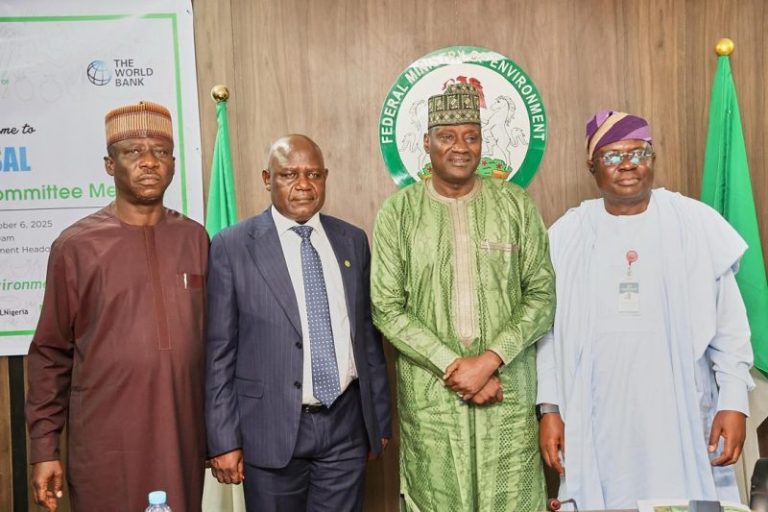
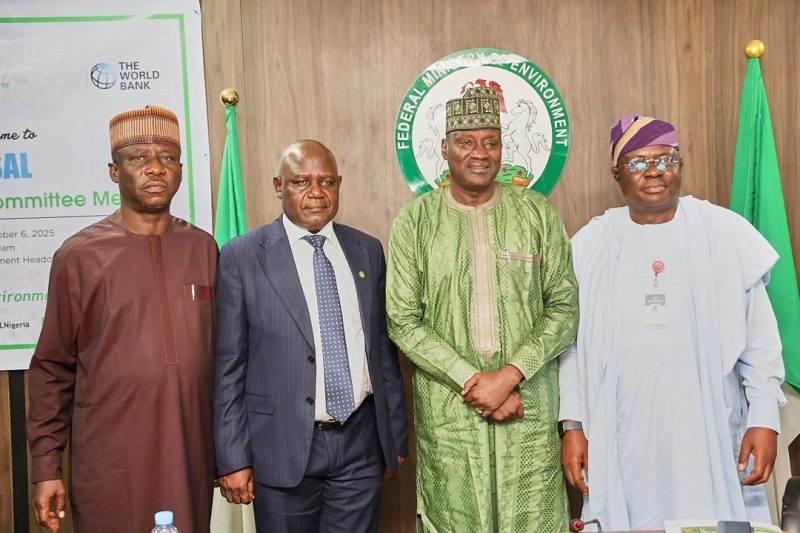
This resolve was emphasised during the Federal Technical Committee (FTC) meeting of the Agro-Climatic Resilience in Semi-Arid Landscapes (ACReSAL) Project, held at the Federal Ministry of Environment in Abuja. The meeting was attended by the Permanent Secretaries of the three implementing ministries, key Director Generals, Directors, and other ACReSAL Project stakeholders from federal ministries, departments, and agencies to review the project’s progress and examine its Annual Work Plan for the upcoming implementation year.

ACReSAL
Some delegates at the the Federal Technical Committee (FTC) meeting of the Agro-Climatic Resilience in Semi-Arid Landscapes (ACReSAL) Project

Delivering the opening remarks, the Permanent Secretary, Federal Ministry of Environment, Mr. Mahmud Adam Gambari, described the gathering as a defining moment in Nigeria’s pursuit of environmental sustainability and community resilience.

“As we confront the realities of climate change, drought, and food insecurity, our shared vision through ACReSAL is transforming into concrete action,” he said. “This plan embodies our collective responsibility to restore degraded lands, strengthen livelihoods, and secure a sustainable future for millions of Nigerians.”

From the agriculture sector, the Permanent Secretary, Federal Ministry of Agriculture and Food Security, Dr. Marcus Ogunbiyi, reaffirmed the ministry’s full support for the project’s objectives.

“The ACReSAL project aligns perfectly with our mission to strengthen food security through climate-smart agriculture,” he stated. “By promoting drought-tolerant crops, soil restoration, and improved farming practices, we are empowering smallholder farmers and building resilience in rural communities. Together, we can ensure that our agricultural sector continues to thrive despite environmental challenges.”

The Permanent Secretary, Federal Ministry of Water Resources and Sanitation, Mr. Richard Philaangwa, highlighted the project’s critical role in protecting Nigeria’s water ecosystems and improving sanitation standards in semi-arid regions.

“ACReSAL offers a comprehensive approach to managing our fragile water systems,” he noted. “Through watershed rehabilitation, sustainable irrigation, and rainwater harvesting, we are not only preserving water resources but also enhancing public health and agricultural productivity. Our ministry remains committed to providing the technical leadership necessary to advance water security across the country.”

Following the remarks by the Permanent Secretaries, the National Project Coordinator (NPC) of ACReSAL, Abdulhamid Umar, delivered a presentation on the project’s current status and impact across the participating states. 

He noted that ACReSAL’s interventions are technologically driven and encompass afforestation, reforestation, ecosystem restoration, erosion and flood control, livelihood initiatives, climate-smart agriculture, water management, capacity building, policy development, strategic catchment management planning, institutional strengthening, and environmental education initiatives – all geared toward long-term impacts and sustainable environments.

Mr. Umar revealed that, so far, the project has restored over 800,000 hectares of degraded landscapes. He added that civil works have reached an almost completion stage in some states. 

He further stated that out of the wide range of impactful activities implemented in the state, 8,708,291 persons have benefited from the project intervention, with 4,120,649 being women.

According to him, ACReSAL has successfully addressed numerous environmental challenges, including those that once plagued communities in the Nguru Wetlands and Hadejia axis of the Northeast—now cited as classical examples of the project’s transformative impact.

The Permanent Secretaries commended the collaboration among the three ministries and stakeholders, stressing that the FTC’s recommendations would be forwarded to the Federal Steering Committee (FSC), chaired by the Honourable Ministers of Environment, Water Resources and Sanitation, and Agriculture and Food Security, for approval.

The Agro-Climatic Resilience in Semi-Arid Landscapes (ACReSAL) project seeks to mitigate the impacts of climate change in northern Nigeria by restoring degraded lands, improving water management, increasing agricultural yields, and promoting sustainable livelihoods.

The meeting concluded with a collective call for continued inter-ministerial synergy to ensure that ACReSAL delivers measurable benefits to communities most affected by desertification, drought, and land degradation.

In a show of courtesy, the committee paid a visit to the Minister of Environment, Malam Balarabe Abbas Lawal, at the end of the meeting, which took place at the Ministry of Environment Headquarters, Abuja.

UN member states explore strategies for space weather monitoring

Twenty-three UN member states under the auspices of Office for Outer Space Affairs (UNOOSA) are exploring strategies, tools and means of acquiring accurate data for space weather monitoring, forecasting.

They sought to achieve this on Tuesday, October 7, 2025, during a five-day UNOOSA and Nigeria workshop on International Space Weather Initiative (ISWI) being organised by the National Space Research and Development Agency (NASRDA) in Abuja.

Space weather
Space weather

Space weather refers to the environmental conditions in space, particularly the effects of solar activity on Earth’s atmosphere and magnetic field.

The participating countries included France, Germany, Japan, Cote’ Ivoire, South Africa, Brazil, India, Indonesia and the National Aeronautics and Space Administration.

The workshop focused on Space Weather during a Moderate Solar Cycle 25.

Space weather, during a moderate solar cycle, signifies a period of relatively low, though not minimal, solar activities.

It could  lead to geomagnetic storms that cause visible phenomena and disrupt activities such as aviation communication, power grid and Global Positioning System (GPS) disruptions.

Ms. Sharafat Gadimova, UNOOSA, Austria, said developing capabilities in space weather was one of many space activities UNOOSA supported members states to achieve.

Gadimova said the international community would explore strategies to improve the collection, exchange in delivering space weather data modelling and forecasting methods to enhance accuracy and reliability.

“This community will also work to design a platform to identify user requirement and promote synergy between different communities addressing space weather impact.

“These activities will support capacity building, training, initiatives and providing data information on cutting-edge, up-to-date space weather research,’’ she said.

Chief Uche Nnaji, Minister of Innovation, Science and Technology, said space weather was a global phenomenon which required a collective international action because of its impact on orbit infrastructure.

Represented by Dr Matthew Adepoju, Director-General, NASRDA, Nnaji also drew the attention of global partners to the need for addressing extreme weather conditions such as hurricane.

“This is an opportunity for scientists and global policy makers to shift attention to the root cause of most of the hurricane that takes its origin from Sahara Desert in Africa.

“We need to join hands for programmes such as Great Green Wall to become a successful initiative and address the causes of these disasters related to extreme weather condition,’’ he said.

The minister pledged that Nigeria would be committed to spearheading activities aimed at boosting weather conditions in Africa.

Adepoju, in his capacity as NASRDA D-G, said that developing countries, particularly those in Africa, should take climate impacts seriously and develop tools to address them.

“For developing nations such as Nigeria, and indeed the entire African continent which is advancing rapidly in digital transformation, our vulnerability to this phenomenon is growing.

“Our dependence on satellite technology for banking, telecommunication, broadcasting, weather forecasting and national security makes the understanding and prediction of space weather not simply a scientific theory,’’ Adepoju said.

By Ijeoma Olorunfemi

Kukah, Sanusi, Atedo rally behind Dangote Refinery, warn Labour against disruption

0

A group of eminent Nigerians, top business leaders, clerics, and civil society advocates, have cautioned the Petroleum and Natural Gas Senior Staff Association of Nigeria (PENGASSAN) and the organised labour movement against actions capable of undermining national economic interests, particularly concerning the Dangote Petroleum Refinery.

In a joint statement signed by Atedo Peterside (CON), Khalifa Muhammad Sanusi II, Bishop Matthew Hassan Kukah (CON), Osita Chidoka, Opeyemi Adamolekun, and several other prominent Nigerians, the group described recent disruptions and threats of industrial action around the refinery as unfortunate and dangerous to Nigeria’s energy security and investment outlook.

Matthew Hassan Kukah
Bishop Matthew Hassan Kukah

They noted that while government mediation had helped de-escalate tensions, the episode underscored the need for restraint and dialogue in addressing labour grievances.

“The right to organise cannot become a licence to hold the economy hostage,” the statement warned. “Productive enterprises that lower costs and create jobs must be safeguarded. Industrial disputes, if not carefully managed, risk discouraging both domestic and foreign investment at a time when Nigeria most needs capital and innovation. A refinery of this scale is a national lifeline, with profound consequences for jobs, energy security, and inflation.”

The leaders lamented that for decades, Nigerians endured the collapse of government-owned refineries, the waste of trillions of naira in subsidies, and dependence on fuel imports. “These failures left citizens exposed to scarcity, inflation, and insecurity”.

Describing the Dangote Refinery as “a national symbol of what bold domestic investment can achieve,” the leaders said Nigerians have already begun to feel its impact through the significant drop in fuel prices from about N1,500 per litre to around N820 in some areas, and the resulting reductions in transport fares and food costs.

“This impact on transport and food prices gives Nigerians a glimpse of how local productivity can improve daily life,” they added. “It also sends a message to investors at home and abroad that genuine industry, rather than speculation, can still thrive in Nigeria.”

The group stressed that while workers’ rights must be protected, such rights must also be exercised responsibly and within the law.

They also dismissed allegations of monopoly, clarifying that the refinery operates in an open market where others are free to invest. Stakeholders with genuine competition concerns, they advised, should approach statutory regulators such as the Federal Competition and Consumer Protection Commission (FCCPC) rather than resort to strikes or blockades.

“There is no legal monopoly here,” the statement noted. “Others are free to invest in refining, provided they can mobilise the necessary resources and expertise.”

Commending the Federal Government, labour unions, and the management of Dangote Refinery for stepping back from confrontation, the signatories urged all parties to embrace dialogue as a lasting framework for resolving disputes.

“This crisis is not about a refinery or any other business,” the statement noted. “It is about the direction of our economy: whether we will continue in a cycle of scarcity and rent-seeking or build a future anchored on productivity, fairness, and shared prosperity. The Dangote refinery represents an audacious step forward. It should not be undermined but strengthened – as a signal to other industrialists that investing in Nigeria’s future is worthwhile.”

The statement was also signed by Ibrahim Dahiru Waziri, Abubakar Siddique Mohammed, Obonganwan Barbara Etim James, Senator Sola Akinyede, Dudu Mamman Manuga, Dr. Salamatu Hussaini Suleiman, Arunma Oteh, and Aisha Yesufu.

Nigeria calls for pan-African strategy to dominate LNG trade

0

Nigeria Liquefied Natural Gas Limited (NLNG) has urged African nations to move beyond the role of raw material suppliers and take their place as key players in the global LNG market.

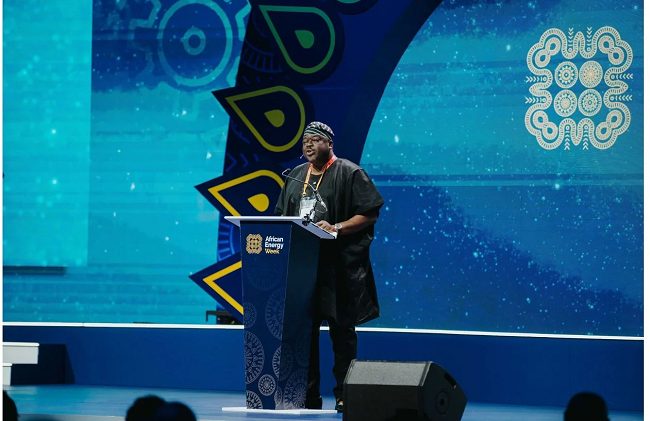
NLNG’s Deputy Managing Director, Mr. Olakunle Osobu, in a statement, made the remarks while addressing political and business leaders at the 2025 Africa Energy Week in Cape Town, South Africa.

Africa Energy Week
Deputy Managing Director of NLNG, Olakunle Osobu, addressing participants during the 2025 Africa Energy Week in Cape Town, South Africa

The statement was issued by the company’s General Manager, External Relations and Sustainable Development, Dr Sophia Horsfall, in Port Harcourt on Tuesday, October 7, 2025.

Speaking further, Osobu said Africa was no longer a bystander in global discussions on energy security, affordability, and sustainability, but a rising pillar of global supply, one which Nigeria had a duty to lead.

He stated that with more than 850 trillion cubic feet of natural gas reserves, representing about six per cent of global reserves, Africa was critical to the ongoing global energy transition.

“Africa has the resources, positioning, and ambition to double its share of the global LNG market within the next decade,” he said.

Highlighting Nigeria’s pioneering role in LNG development, Osobu pointed out the ongoing NLNG Train 7 expansion project which, he said, would increase the company’s production capacity.

“The Train 7 expansion project will increase our LNG production capacity from 22 million tonnes per annum (MTPA) to 30 MTPA.

“Our  investment in expansion shows that Nigeria is driving LNG growth not only for exports but also for domestic industries and energy access.

“We must prove that Africa can deliver LNG that is secure, competitive, and sustainable,” he added.

Osobu noted that the emerging LNG frontiers across the continent collectively represented more than 45 MTPA of potential new supply.

According to him, with these additions, Africa’s LNG output could rise from about 70 MTPA today to 120 MTPA by 2035, further consolidating the continent’s standing as a global LNG hub.

He pointed out Africa’s strategic advantage, including shorter shipping routes to both European and Asian markets, but said that competitiveness, financing, and domestic energy responsibility remained the continent’s biggest challenges.

Osobu observed that countries such as the United States and Qatar were rapidly expanding their LNG capacities, while global financiers increasingly demanded low-carbon and decarbonised LNG projects.

“Therefore, Africa’s LNG journey must strike a balance between reliably supplying the world, catalysing industrialisation across the continent, and demonstrating sustainability in line with global decarbonisation goals,” Osobu said.

The Africa Energy Week 2025 brought together policymakers, investors, and industry leaders to shape Africa’s energy future.

By Desmond Ejibas