A UN body tasked with operationalising the Paris Agreement’s international carbon market has agreed rules that deal with the risk that emission removals credited under the mechanism might later be reversed.
Known as the Article 6.4 Supervisory Body, it is responsible for establishing the rules and infrastructure for the Paris Agreement Crediting Mechanism. This mechanism will allow countries and other actors to cooperate in reducing greenhouse gas emissions by generating high-integrity carbon credits, while also supporting sustainable development.
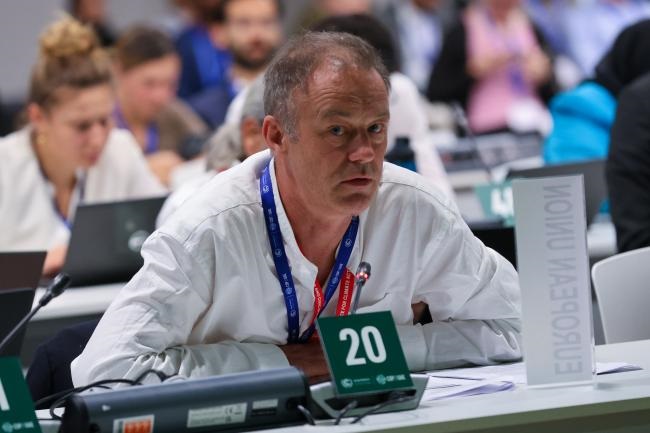
Martin Hession, Chair of the Article 6.4 Supervisory Body
At a recent meeting in Bonn, the Supervisory Body made substantial progress on a draft reversal standard, which sets out how to account for and manage situations where emission removals are later lost. It implements a key standard on removals agreed by countries at COP29 in November 2024.
“Getting to this point wasn’t easy – there were strong views on all sides and some very tough decisions to make,” said Martin Hession, Supervisory Body Chair.
“But we’ve landed on a standard that provides a firm foundation for addressing reversal risk in line with science. It also recognises the need for practical solutions to address the longer term. I trust that stakeholders will engage to ensure that we meet and deliver on the highest standards.”
Key points of discussion included how long projects storing emissions should be monitored for possible reversals, how to define “negligible” risk, what alternatives including full remediation and risk guarantees could allow projects to exit liability.
The new rules require for the monitoring of risks over a period to be approved by the Supervisory Body and provide incentives for investors to manage risk through monitoring and an insurance pool. They also lay out options to repay the risk early or pass it on to third party offering robust insurance and guarantees.
The rules were agreed on the basis that project methods, monitoring timeframes, and tools for both risk management and compensation will be grounded in the best available science and kept under continuing review.
Other matters
The Supervisory Body agreed a Common Practice Analysis Tool, which helps check whether a type of project is already widespread in a region, ensuring that credits are only given for projects that go beyond what is already happening, a concept known as “additionality.”
Additionally, the Body agreed to accredit four further independent auditors tasked with validating and verifying projects – also known as a Designated Operational Entities (DOEs).
Next steps
The Supervisory Body will meet again virtually from October 29 to 30, 2025, when it aims to adopt its first methodology under the Paris Agreement Crediting Mechanism.
At COP30, under CMA agenda item 15(b), countries will consider the Supervisory Body’s annual report to the CMA and can respond to the recommendations from the Body and provide additional guidance on the operation of the mechanism.
For centuries, bird migration has awed humanity. Every year, millions of birds travel thousands of kilometres, transversing continents in search of feeding, breeding and resting grounds. During these sojourns, these birds provide critical ecosystem services including pollination, and pests control. Additionally, through birdwatching birds contribute billions of dollars to the tourism sector in many countries around the world. Every year, the world celebrates World Migratory Bird Day (WMBD) in May and October, to raise awareness about birds and the plight they face while migrating along routes known as flyways.
Africa is home to a number of flyways, including the East Atlantic Flyway (EAF) which extends from the Arctic, down the western flanks of Europe, and reaching the southern tip of the African Atlantic coastline, spanning 49 countries. Along the EAF, are key sites which support a large number of migratory waterbirds including the Banc d’Arguin National Park in Mauritania, Bijagós Archipelago in Guinea-Bissau – recently added to the UNESCO World Heritage Site, in addition to the Saloum Delta and Djoudj National Parks in Senegal. Together, these sites host almost three million migratory birds, underlining their importance.
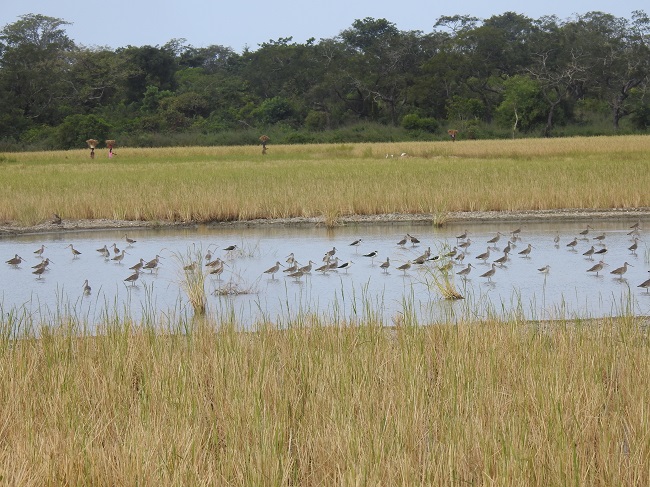
Black-tailed Godwits in Cussana-Cussenthe, Guinea Bissau
However migratory bird numbers are plummeting in the EAF, driven by various threats including deforestation, infrastructure development, industrial agriculture, overfishing and climate change among others. Further, critical sites including wetlands, grasslands and forests which host key populations of migratory bird species are disappearing at an alarming rate.
To address this challenge, BirdLife and Partners established the East Atlantic Flyways Initiative (EAFI) in 2015. EAFI focuses on improving conservation efforts and strengthening capacity of conservation partners through a local to global conservation approach along the flyway. In Senegal, Mauritania and Guinea- Bissau, EAFI partners are leading on the conservation of the Black-tailed Godwit, classified as Near Threatened on the IUCN Red List.
In Senegal’s 273 ha Tocc Tocc Community Nature Reserve, and 17,000 ha Lac de Guiers, both critical sites for migratory birds, EAFI support has enabled protection of critical sites for migratory birds, while improving livelihoods for local communities. In Guinea Bissau’s 119,700 ha Rio Mansôa and Gêba estuary, more than 3600 people have benefitted from capacity building on biodiversity management.
In addition, BirdLife and partners are involved in the International Climate Initiative (IKI) funded Climate-Resilient East Atlantic Flyway’ (CREAF) programme which aims at protecting critical wetlands sites for birds and peoplewhile empowering local communities along the flyway.Additionally, there is need for concerted efforts from various stakeholders including local communities, policy, and decision makers to identify and implement relevant solutions to conserve these critical habitats along the EAF.
Migratory birds connect communities, and landscapes across borders. As we celebrate migratory birds, let us renew our commitment to protect these majestic creatures for posterity.
By Geoffroy Citegeste, East Atlantic Flyways Initiative (EAFI) Manager at BirdLife International; email: geoffroy.citegetse@birdlife.org
Shell Nigeria Exploration and Production Company Limited (SNEPCo), a subsidiary of Shell plc, together with Sunlink Energies and Resources Limited, have taken a final investment decision (FID) on the HI gas project offshore Nigeria.
When completed, the project will supply 350 million standard cubic feet (approximately 60 thousand barrels of oil equivalent) of gas per day at peak production to Nigeria LNG (NLNG; Shell interest 25.6%), which produces and exports liquified natural gas (LNG) to global markets. Production is expected to begin before the end of this decade.
Peter Costello, Shell’s Upstream President
“Following recent investment decisions related to the Bonga deep-water development, today’s announcement demonstrates our continued commitment to Nigeria’s energy sector, with a focus on Deepwater and Integrated Gas,” said Peter Costello, Shell’s Upstream President. “This Upstream project will help Shell grow our leading Integrated Gas portfolio, while supporting Nigeria’s plans to become a more significant player in the global LNG market.”
The increase in feedstock to NLNG, via the Train 7 project that aims to expand the Bonny Island terminal’s production capacity, is in line with Shell’s plans to grow its global LNG volumes by an average of 4-5% per year until 2030. It will also bolster NLNG’s contribution to Nigeria’s national economic development goals, including jobs in construction and operations.
The HI field was discovered in 1985 and lies in 100m of water depth around 50km from the shore. The current estimated recoverable resource volumes of the HI project are approximately 285 mmboe (million barrels of oil equivalent).
Nigerian vehicle manufacturer, Innoson Vehicles Manufacturing (IVM) Limited, has disclosed plans to establish a Compressed Natural Gas (CNG) assembly plant in Bayelsa State.
The Managing Director and Chief Executive Officer of the firm, Chief Innocent Chukwuma, stated this when he visited Gov. Douye Diri in Yenagoa on Monday, October 13, 2025.
The Innoson CEO said the investment would boost the state’s transportation sector as well as provide training and create jobs.
Managing Director and Chief Executive Officer of IVM, Chief Innocent Chukwuma (right), with Gov. Douye Diri of Bayelsa State
He stated that the initiative would also promote cleaner and greener environment and enhance the country’s capacity to meet its renewable energy target by 2030.
In his presentation, the company’s Corporate Communications Manager, Mr. Kamsi Ejiofor, explained that the objective is to introduce modern CNG buses, ambulances and vehicles that would enhance mobility and public efficiency in the state.
According to him: “the plant will generate 1000 jobs and thousands of direct opportunities in assembly, maintenance, logistics and local manufacturing as well as boosting Bayelsa’s economy by enhancing its industrial base.”
Ejiofor said: “The usage of CNG vehicles will save cost from fuel and maintenance, improve health, cleaner air and lead to innovation in Bayelsa, making the state a clean energy and tech pioneer in Nigeria.”
Responding, governor Diri commended Chukwuma for the decision to site the CNG conversion plant in the state, noting that the investment would help grow Bayelsa’s industrial base.
While expressing his administration’s commitment to collaborate with the vehicle manufacturing firm, Diri described the initiative as a welcome development towards moving the state’s economy from consumption to production.
He said the investment was timely, nothing that procurement of CNG vehicles was in the state government’s budget projection for 2026 and expressed delight over the economic impact of such investment, particularly in the area of job opportunities.
Diri noted that his administration was putting in place the necessary infrastructure to support investments in Bayelsa and urged other investors to emulate Innoson to invest in the state.
“It is a welcome development for CNG vehicles plant to be sited in Bayelsa. We are ready to partner with you.
“One area that l am interested in is the CNG aspect. The world is moving towards renewal energy because of environmental pollution.
“My administration was considering purchasing CNG buses to run our upland transport system. Your coming is timely because it is part of our projections for 2026.
“I assure you that we are putting in place the right environment to enable investments thrive in terms of peace and security, infrastructure and our independent power supply, which will ensure uninterrupted electricity,” he said.
Diri also announced an implementation committee to interface with the company.
The committee has Secretary to the State Government, Prof. Nimibofa Ayawei, as chairman while other members are the Commissioner for Trade and Investment, Jones Ebieri, his Information and Finance counterparts, Mrs. Ebiuwou Koku-Obiyai and Maxwell Ebibai respectively.
Others are the Commissioner for Justice and Attorney-General, Biriyai Dambo (SAN), Preye Broderick (Transport), Mazi Johnson Onuma (General Duties), as well as the Special Adviser on Investment, Owanari Harry, and the Technical Adviser on Entrepreneurship, Charity Kens Godwin.
Vice-President Kashim Shettima says President Bola Tinubu’s administration is developing a National Disaster Risk Financing Framework to guarantee timely funding for prevention and preparedness.
Shettima said this at the 2025 International Day for Disaster Risk Reduction (IDDRR) themed “Fund Resilience, Not Disasters”, organised by the National Emergency Management Agency (NEMA), and held on Monday, October 13, in Abuja.
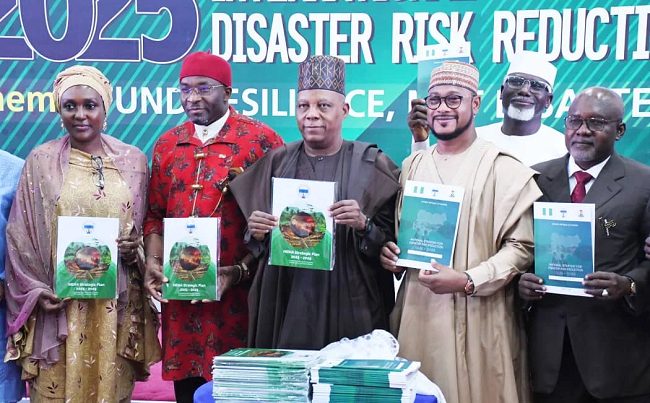
VP Kashim Shettima with officials at the ceremony to observe the 2025 International Day for Disaster Risk Reduction (IDDRR)
He also said that the administration was deepening partnerships with development partners, the private sector, and research institutions to drive innovation and resilience building at all levels.
“If we fail to invest in resilience, we will continue to spend our scarce resources cleaning up after crises instead of building lasting prosperity.
“President Bola Tinubu emphasises this need to treat resilience as a national policy.
“We are integrating disaster risk reduction into every sector—from agriculture and infrastructure to education and health.
“This is as we are expanding early warning systems to ensure that communities receive timely alerts before floods, droughts, or disease outbreaks occur.
“We are strengthening state and local emergency management agencies through training, technology, and coordination support,” the vice-president said.
Shettima, however, said that commitment alone was not enough, adding, “We must match our words with action and our policies with funding.”
“To fund resilience is to invest in drainage systems, not relief camps; to build stronger schools and hospitals, not temporary shelters.
“Asi, to support farmers with climate-smart tools, not just food aid after floods; and to train and equip our first responders before the sirens start to wail.
“This is the shift we must make—from reacting to crises to anticipating and preventing them.”
He stated that resilience cannot be guaranteed by government alone, saying, ” It is built by all of us.
“It is reflected in how we plan our cities, in how businesses protect their workers, and in how communities share information and look out for one another.
“This is why our private sector must see itself as a partner in prevention, embedding risk reduction into corporate planning and investment decisions.”
Shettima said that academia and research institutions also bear the responsibility of helping the government generate the data, innovation, and practical research needed to prepare for a safer future.
“We count on them to shape the knowledge that guides our decisions. And we expect our civil society to hold us accountable, to raise awareness, and to mobilise citizens around the shared responsibility of preparedness.
“But none of these efforts will yield results unless we empower and support our communities to take ownership of their safety.
“They are the foundation of whatever strategy we adopt and the heartbeat of our national resilience.
“Distinguished ladies and gentlemen, the decades of disasters our nation and the world have endured must inspire us to move from sympathy after disasters to strategy before they happen.
“We must replace reaction with readiness and fear with foresight,” the vice-president said.
He commended NEMA, partners, and all who continue to play their role in keeping Nigerians safe and in building a nation that is ready – not just for today but for tomorrow.
The Minister of Humanitarian Affairs and Poverty Reduction, Mr. Yusuf Sununu, highlighted the importance of disaster risk management in Nigeria.
He emphasised the need for a comprehensive and holistic approach to address the challenges posed by disasters.
According to him, Nigeria has suffered significantly from disasters, including flooding, drought, landslides, insurgency, and banditry, which have complicated humanitarian and poverty reduction efforts.
He stressed the need for a comprehensive and holistic approach to disaster risk management, involving all stakeholders.
Sununu also called for empowering local communities to prepare for and respond to disasters.
“A nation that cannot absorb shock and takes longer time to recover will definitely have prosperity far from it.
“We need to reduce our reliance on external funding and look inward to reduce shortfalls and improve domestic mobilisation of funds,” he said.
The minister listed several initiatives by the government to address disaster risk management and poverty reduction, which included the Conditional Cash Transfer programme, which had reached over N8.1 million households in Nigeria.
“There is also a plan to provide 21,000 Nigerians with interest-free and collateral-free loans of N300,000 each to support dry season farming and mitigate the effects of flooding,”he added
The Director-General, NEMA, Mrs. Zubaida Umar, called for increased funding for disaster risk management to build resilience in the country.
She emphasised the need for a proactive, preventive, and well-financed disaster risk management framework.
According to her, NEMA had developed two landmark policy instruments, which are the NEMA Strategy Plan (2025-2029) and the National Disaster Risk Reduction Strategy (2025-2030).
“Let us collectively rethink how we fund resilience; to move from reactive, ad-hoc funding of disasters to a multi-stakeholder financing architecture that supports prevention, preparedness, and sustainable recovery.
“Resilience must be mainstreamed across sectors from agriculture, water resources, energy and infrastructure to finance, education, and health,” she said.
The Country Director of PLAN International Nigeria, Dr Charles Usie, in a keynote address, highlighted key observations and recommendations for increasing disaster risk reduction funding in Nigeria.
He, however, called for increased transparency in disaster risk management.
Usie further cited limited accountability and disclosure in NEMA’s projects and funding.
He recommended improving data collection, management, and dissemination to design effective financial protocols and investment strategies.
The country director also advocated improved coordination among the stakeholders, with a clear segregation of roles and responsibilities.
“We are unable to continue to talk about increased funding where we have not been able to look at how to perform it as a way of performing it.
“NEMA must prioritise financial transparency by publishing their budgets, allocations, and expenditure details as much as possible,” Usie urged.
By implementing the above recommendations, Nigeria can build a financial backbone necessary for lasting stability and protecting development gains.
Nigeria on Monday, October 13, 2025, launched the Net-Zero Nature-Positive Project (NZNP) to address climate change challenges and achieve its net-zero emissions target by 2060.
Speaking at the NZNP inception workshop, the Director of Forestry, Federal Ministry of Environment, Halima Bawa-Bwari, noted that the project marks a pivotal moment in the collective journey toward a climate-resilient and rich in biodiversity and inclusive in its development.
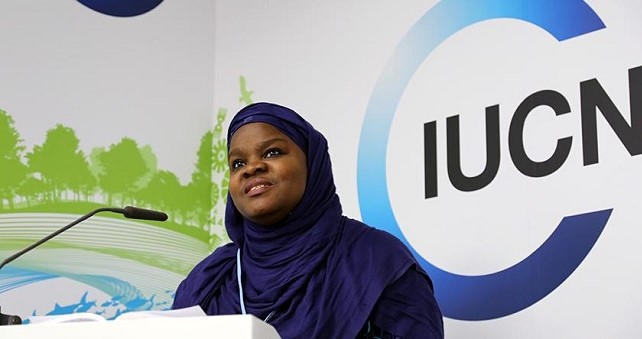
Director, Department of Forestry, Federal Ministry of Environment, Mrs. Halima Bawa-Bwari
Bawa-Bwari said that through the NZNP project, Nigeria would strengthen institutional coordination and boost biodiversity, restore degraded ecosystems, and unlock investment pipelines that prioritise nature-positive, low-carbon development.
“NZNP project offers a unique opportunity to address these challenges in an integrated and transformative way.
“Today marks a pivotal moment in our collective journey toward a future that is not only climate-resilient but also rich in biodiversity and inclusive in its development.
“Nigeria’s commitment to a net-zero, nature-positive future is not just aspirational, it is grounded in action from updating our newly submitted Nationally Determined Contributions (NDCs).
Bawa-Bwari stated that the NDCs would reflect more ambitious climate targets, and actively investing in nature-based solutions that deliver both mitigation and adaptation benefits.
“Our efforts should go beyond emissions reduction. This programme represents a powerful platform to accelerate those efforts,” she said.
Also speaking, Ms. Elsie Attafuah, the United Nations Development Programme (UNDP) Resident Representative in Nigeria, said that NZNP is a movement that reflects Nigeria’s bold commitments to achieve Net Zero emissions by 2060.
Attafuah, who was represented by Mr. Blessed Chirimuta , the Deputy Resident Representative of UNDP, added that NZNP project would conserve 30 per cent of Nigeria’s land and marine ecosystems by 2030.
She said that the project would ensure that the Niger Delta, embed environmental accountability and to channel investment toward green growth.
Attafuah stated that climate change is already disrupting lives and livelihoods, biodiversity loss is accelerating, and vulnerable communities are bearing the heaviest burdens hence the urgency is real.
“The Niger Delta, especially Rivers and Bayelsa, stands at the front lines of these challenges.
“Through this project, we wil work with state governments in Rivers and Bayelsa to integrate net-zero and nature-positive strategies into development planning.
“Partner with women’s cooperatives and youth networks, ensuring they are not only beneficiaries but leaders of the green transition.
She reaffirmed UNDP’s commitment, from the creeks of Bayelsa to the bustling cities of Rivers, and indeed across the entire nation, so that the Net Zero Nature Positive Project becomes a model for Africa and the world.
The NZNP Project in Nigeria is a global initiative funded by the Global Environment Facility (GEF) and implemented in partnership with the United Nations Environment Programme (UNEP) and the UNDP.
Also, in an address of welcome, Mrs. Nkechi Aneke-Agnes, Director, Planning, Research and Statistics in the Ministry of Environment, said that NZNP Accelerator is one of the 11 Integrated Programmes under GEF-8 cycle.
“This is aimed to accelerate the implementation of nature-positive and net-zero pathways by investing in nature and new technologies.
Aneke-Agnes, who is also the Operational Focal Point of GEF, said that the launch is a significant step to Nigeria’s transition to a Net Zero and Nature Positive future by promoting ecosystem restoration, expanding access to clean energy and de-risking sustainable investments.
“The project will also support Nigeria’s vision in achieving the NDCs, Nature Positive Commitment by 2030 and Net Zero emission target by 2026.
Similarly, Dr Nkemdirim Odoya, Director, Department of Forestry, Rivers Ministry of Environment, assured the state’s support for UNDP on the project.
“Rivers houses a unique species of elephant that you cannot find in any part of Nigeria and so this project is a welcome development,” she said.
Mrs. Susan Uyadongha, the Director of Forestry, Bayelsa State Ministry of Environment, said that the project aligns perfectly with the state’s commitment to environmental sustainability, biodiversity conservation and climate resilience.
A new report by CAN International exposes how the transition to renewable energy is systematically overlooking people’s needs and rights, as well as countries’ sovereignty.
The study, which analyses recent developments in 16 countries, finds that the current transition is failing to be just and equitable, prioritising profits over people, and de facto replicating the same old injustices of the fossil fuel industry.
Renewable energy
Four rich countries, together with their corporations, are continuing to engage in extractivist practices: Canada and Australia (extracting transition minerals), Germany (pushing for a risky and unlikely “green” hydrogen market) and Japan (extracting forests, under the claim of scaling up “renewable” energy). China and the UAE follow suit.
Across the 16 countries analysed, 47% of the prospective renewable energy capacities would come from “giga” projects (>1GW). The report exposes how these projects – among other export-oriented projects developed by and for foreign companies – pose significant risks for local communities and workers and divert essential resources from needed domestic action.
Jacobo Ocharan, Head of Political Strategies at CAN International, said:‘’The transition to renewables is being built on the same flawed foundation of extraction and exclusion that defined the fossil fuel era. A people-centered, equitable approach supported by strong public policies, international cooperation, and alternative ownership models is essential to ensure that the benefits of renewable energy are widely shared, and its risks minimised.’’
Janet Milongo, Energy Transition Senior Manager at CAN International, said:‘’We must fundamentally shift course. This requires systemic change, and international and national policies that put people first and hold corporations and governments accountable. As documented in the report, successful alternatives already exist, such as the solar rooftop boom in Pakistan, the widespread adoption of ‘balcony solar’ kits in Germany, and a growing number of renewable energy projects led by Indigenous Peoples and communities in Canada and Australia. We need bold policies to urgently scale up these solutions, with justice at their core – ensuring that no one is left behind.”
With a series of upcoming multilateral moments (NDCs assessment, COP30, G20 summit), the report provides recommendations to governments and policymakers:
Establish a Just Transition Global Mechanism at COP30 to foster international cooperation around renewable energy and transition minerals.
Strengthen international and national policies to hold corporations accountable, mandate human rights due diligence, and community engagement.
Support community-led renewable energy and alternative models of ownership, and ensure that Indigenous Peoples, tenants, poorer and rural households are not left behind.
Julie Ducasse, Renewable Energy Coordinator at CAN International, lead author, said: “In too many places, the private sector is turning potential benefits (local jobs and ownership, lower bills, improved access to energy, economic diversification) into missed opportunities. It is time for countries and communities to reclaim these benefits. This is not a distant ideal: when the right policies and incentives are in place, locally driven and people-led projects are thriving. This is also not a matter of justice only: without the active participation of communities and households, the transition will simply not happen at the scale and pace needed.”
Caroline Avan, Head of Programme, Natural Resources and Just Energy Transition, Business & Human Rights Resource Centre, said: “The case has never been clearer: a people-centered energy transition is the only way to deliver a fast and fair energy transition. As the Renewable Energy Tracker clearly demonstrates, we are at a tipping point: renewable energies are not only the essential infrastructures of our future global energy system, but they also have the potential to contribute to advancing human rights, build a fairer global economic order and achieve climate justice for all. The time is ripe for convergence of actions between policymakers, companies and civil society.”
Frosina Antonovska, Climate and Energy Policy and Network Coordinator for Western Balkans, CAN Europe, said:“While countries in the Western Balkans are still struggling to develop their coal phase-out strategies and advance just transition toward a renewable-based, decentralised and nature-friendly energy system, they now face an additional challenge – the growing pressure of foreign extractivism interests. To ensure that the benefits of the transition are shared equitably, people and local communities must be at its core. Otherwise, we risk deepening existing inequalities and vulnerabilities and ultimately undermining any climate justice efforts.”
Stefan Gsänger, Secretary General of World Wind Energy Association, said:“The third edition of the Renewable Energy Tracker is an impressive piece of work and an important tool for measuring countries’ progress towards a worldwide transformation to 100% renewable energy. It is especially useful that this year’s edition also analyses socio-economic progress, including community energy.”
Sunil Acharya, Just Transition Campaign Manager, Recourse, said: “A just transition cannot be outsourced to private investors. International Financial Institutions (IFIs) claim to enable clean energy but continue to push a failed privatisation model. They must stop funding false solutions and instead back public and community-led renewable energy systems that deliver affordable power and energy sovereignty.”
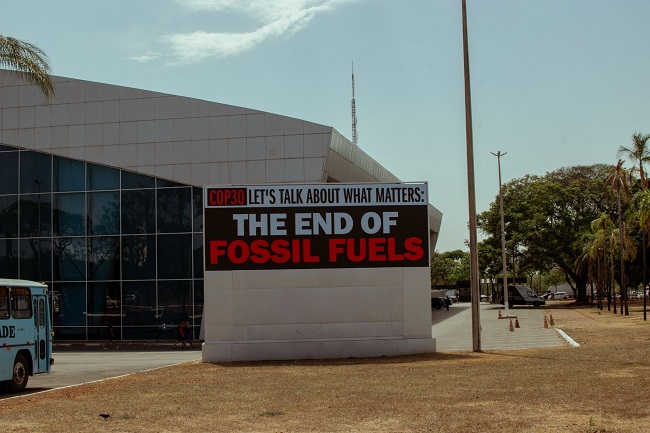
Delegates from member countries were welcomed in Brazil’s capital with billboards urging that the issue be included in the Pre-COP discussions
Less than a month before the United Nations Climate Change Conference, COP30, which will take place in Belém (PA), a crucial issue for the planet still hangs in the air, with no sign that it will be properly addressed: the gradual phase-out of fossil fuels. There is a real risk that a deal on this will once again be left out of the final declaration, repeating the failure of COP29, which was marked by the strong presence of pro-oil lobbyists.
One of the billboards urging that fossil fuels phase-out be included in the Pre-COP discussions. Photo credit: Bárbara Cruz
The burning of fossil fuels accounts for 70% of greenhouse gas emissions driving the climate crisis. That is why, at COP30, it is imperative for nations to reach a consensus on an ambitious plan with clear, concrete targets to progressively reduce the use of oil, gas, and coal, coupled with a just energy transition.
To reinforce this message, civil society organisations put up billboards across Brasília, which this week is hosting more than 30 heads of delegations for the Pre-COP – the last high-level meeting before Belém. The goal is to remind them that a real solution to the climate crisis necessarily involves ending the fossil fuel era.
At COP28 in 2023, the Global Stocktake (GST) – the Paris Agreement’s global progress assessment – recognised the shift away from fossil fuels as an urgent action for this critical decade. Countries also committed to tripling renewable energy capacity and doubling energy efficiency by 2030.
However, the lack of more ambitious commitments by countries, combined with a complex geopolitical landscape – marked by the rise of the far-right and inadequate, insufficient, and unjust international climate finance – will put governments’ climate pledges to the test. This scenario underscores the need for greater political and diplomatic pressure to ensure the next steps deliver clear and binding commitments.
It is essential for all negotiators to work effectively toward the success of COP30. A meaningful outcome must ensure progress in halting and reversing deforestation and forest degradation, as well as advancing all aspects of the COP28 energy package – including a just, orderly, and equitable transition away from fossil fuels. Implementation must be accelerated, which requires increased investment and support, including robust financial flows for a just energy transition in developing countries.
Widespread coral reef die-off marks the world’s first climate tipping point, according to a new report by 160 scientists. The Global Tipping Points Report 2025 highlights mounting risks across Earth’s systems, from melting glaciers and ice fields to slowing ocean currents, ice sheets and rainforests under pressure. The report was led by the University of Exeter with contributions from the Potsdam Institute for Climate Impact Research (PIK) and 85 other institutions.
Beyond coral reefs, the report highlights the risks, consequences, and governance challenges around Earth system tipping points. These span a variety of scales, from those with local impacts like glaciers and small ice fields to those with consequences at the continental and global scale, such as major ocean circulations, the polar ice sheets, and the Amazon rainforest.
Melting glacier
Current global warming of around 1.3-1.4 °C already exceeds the estimated tipping point for warm-water coral reefs. Several critical Earth system components, including land permafrost, the Greenland ice sheet, the West Antarctic ice sheet and the North Atlantic subpolar gyre, may reach their tipping points once temperatures rise just above 1.5 °C.
“We have more and more evidence for tipping points in all these different systems,” warns PIK scientist Sina Loriani, who has co-led a new, updated section on the latest state of science on Earth system tipping points. “There is an increasing risk that we kick off feedback loops that amplify and accelerate changes in the Earth system.”
The report finds that widespread die back of the Amazon rainforest, due to the combined stress of climate change and deforestation, could be triggered at a lower temperature than previously thought, with the lower end of the estimated range now at 1.5°C. This highlights the need for urgent action.
“We must minimise both how far and how long we overshoot 1.5°C. Every fraction of a degree, and every year above that threshold, increases the risk of triggering irreversible tipping points,” says Nico Wunderling, scientist at PIK and Goethe University Frankfurt and also a report co-section lead.
Case study underscores the outsized impact that crossing tipping points will have
A case study on Áakʼw Tʼáak Sítʼ, also known as the Mendenhall Glacier, near Juneau, Alaska (USA) highlights the substantial risks of crossing tipping points even in relatively small-scale systems like glaciers and small ice fields. In Juneau, increasingly large glacier lake outburst floods from Áakʼw Tʼáak Sítʼ set successive records in 2023, 2024 and 2025, causing tens of millions of dollars of damage and presenting serious adaptation and governance challenges for the region.
“The tragic situation in Juneau underscores the outsized impact that crossing tipping points will have on cities, local communities, and indigenous peoples everywhere, as they will bear the burden of adapting to continued environmental change. The quick and resilient actions of many – from building temporary flood barriers, to sourcing mutual aid and investing in long-term planning – demonstrate the complex network of stakeholder and rightsholder groups that must engage to achieve ‘real-world’ adaptation,” said PIK scientist Donovan Dennis, who led the case study.
Not just warnings: the report identifies positive changes too
The 160 authors of the report argue that the nature of abrupt and irreversible Earth system tipping points mean they pose a different type of threat to other environmental challenges, and that current policies and decision-making processes are not currently adequate to respond.
However positive changes have been observed with the rapid up take of solar photovoltaics, wind power globally, and in the adoption of electric vehicles, battery storage and heat pumps in leading markets. The report shows that these technologies are already rapidly transforming energy systems, but further acceleration – e.g. via positive social and economical tipping points – is needed to halt and reverse global warming in time to avert triggering other tipping points.
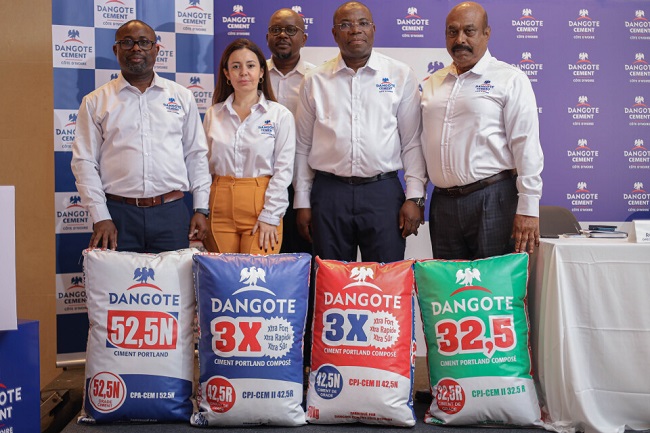
Dangote Cement, a subsidiary of the group founded by Aliko Dangote, has officially launched its operations in Attingué, some 30 kilometres from Abidjan, Côte d’Ivoire. The announcement was made on Wednesday, October 8, 2025, by Serge Gbotta, Managing Director of Dangote Cement Côte d’Ivoire, at the Novotel Abidjan-Marcory.
Covering an area of 50 hectares, the plant has a production capacity of 3 million tonnes of cement per year, making it one of the group’s largest facilities outside Nigeria.
Sales and Marketing Director, Stephane Tchimou; Legal and Compliance Director, Francophone Africa, Romina M. Orlando; Chijioke Nwobi, Human Resources Director; Dangote Cement Ivory Coast CEO, Serge Gbotta; Plant Director, Loius Raj
This strategic project, with an estimated investment of 100 billion CFA francs, embodies Aliko Dangote’s vision of building a self-sufficient Africa that is less dependent on imports and capable of transforming its own resources into world-class finished products.
With this facility, Côte d’Ivoire becomes the 11th African country to host a Dangote Cement production unit. The group, which has a total capacity of 55 million tonnes per year on the continent, intends to contribute to the development of Ivorian infrastructure and meet the growing demand for construction materials, driven by rapid urbanisation and major construction projects in the country.
According to forecasts, the Attingué plant could generate more than 1,000 direct and indirect jobs. This represents a significant boost for young people in Côte d’Ivoire, but also for the ecosystem of local SMEs – transporters, building tradespeople, retailers, suppliers and subcontractors.
At the launch ceremony, the Chief Executive Officer (CEO) of Dangote Cement Côte d’Ivoire reiterated the company’s philosophy: “Our ambition is clear: to offer Ivorians internationally-standard cement, produced locally, at a competitive price. The Attingué plant is not just an industrial unit, it is a symbol of confidence in the future of Côte d’Ivoire and a commitment to sustainable development alongside local communities,” said Mr Gbotta.
The CEO also highlighted the training programmes that the company intends to set up for young Ivorian engineers and technicians through the Dangote Academy, with a view to strengthening local skills in industrial management.
For his part, Stéphane Tchimou, Commercial Director of Dangote Cement Côte d’Ivoire, emphasised the direct impact of this facility on construction industry players and distributors: “We know that Ivorian masons, craftsmen and contractors need reliable, high-performance cement that is available without interruption. It is for them that we have chosen to establish one of our largest units here. Our distribution network will be structured to ensure proximity and availability in all regions of the country,” he said.
He added that the company plans to put support mechanisms in place, including credit facilities and commercial assistance, to support small retailers and boost the value chain.
Beyond the purely industrial aspect, Dangote Cement promises community initiatives around the Attingué plant: opening access roads, drinking water supply projects, support for local health facilities. The company is demonstrating its commitment to sustainable and inclusive development, in partnership with local authorities and certain NGOs.
‘The risks in Africa are often exaggerated. In reality, this continent is full of opportunities. Our role is to tell a new story, that of an Africa that produces, innovates and builds for its children,’ sums up Aliko Dangote, founder of the group.
With its premium cement available in several grades (CPJ 32.5R for masonry, CPJ 42.5N for buildings and CPA 52.5 for large structures), Dangote Cement intends to establish itself as a trusted partner for the Ivorian construction industry.
The Attingué plant, designed to be at the cutting edge of technology, should enable the country to significantly reduce its cement imports and eventually become a regional hub for production and export.
It should be noted that Dangote Cement’s arrival in Côte d’Ivoire is not just about opening a factory. According to the businessman, it is a promise of shared growth, job creation and knowledge transfer. Between industrial ambition, economic opportunities and social commitment, the Nigerian giant wants to help write a new chapter in the history of construction in Côte d’Ivoire.