An EU regulation that phases out the sale of flavoured “roll
your own’’ tobacco is valid, the Top EU Court said on Wednesday, January 30,
2019.
Flavoured tobacco
The decision concerns a German firm, Planta Tabak, that
filed a lawsuit protesting a 2014 EU prohibition on the sale of certain
flavoured tobacco products.
The ban was justified on the grounds that the flavour masks
the tobacco taste and encourages consumption, thereby posing a health threat.
The EU gave member states two years to implement the rule,
and it took effect in Germany in 2016.
But it also granted extra time to manufacturers of products
with a market share greater than 3 per cent until 2020, so they would have time
to sell off their stock.
After this rule took effect in Germany in 2016, Planta Tabak
sued on the grounds that this phase-out structure was discriminatory.
Berlin’s administrative court ultimately referred the case
to the European Court of Justice (ECJ).
The Luxembourg judges rejected the firm’s claim, arguing
that the phase-out period granted to member states to implement the regulation
was enough for producers.
By allowing member states to determine whether a tobacco
product reaches 3 per cent of market share, the ECJ said, the regulation
granted enough legal certainty to manufacturers and therefore did not
discriminate.
Moreover, the broader health objectives specifically,
discouraging tobacco consumption by young people justified the regulation’s
“restriction on the freedom of goods,’’ the Luxembourg judges wrote.
“Some flavourings are particularly attractive to young
people and facilitate initiation of tobacco consumption,’’ they argued.
The case now reverts to Berlin’s administrative
court.
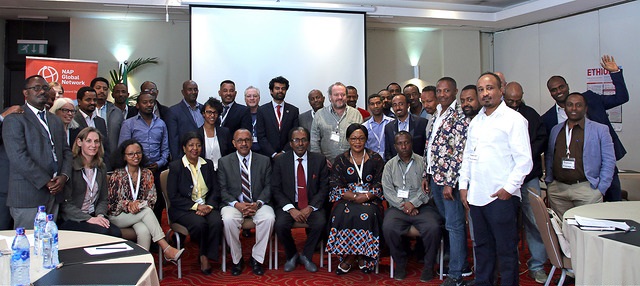
The government of Ethiopia on Wednesday, January 23, 2019 hosted
its first National Adaptation Plan (NAP) assembly, bringing together key
government actors and development partners in dialogue on the transition to
implementation of the country’s NAP.
NAP Assembly participants
Supported by the NAP Global Network, Ethiopia’s recently
completed NAP provides an overarching framework for the country’s response to
the impacts of climate change, complementing other elements of its climate
change policy suite.
“NAP Assembly (is) an excellent opportunity to disclose our
strategic initiatives, create synergies and transform our strategy and
implementation of our NAP into actions through partnership and collaboration
with development partners to build a more economically vibrant, socially
inclusive and environmentally sustainable country,” said Professor Fekadu
Beyene, Commissioner for Ethiopia’s Environment, Forest and Climate Change
Commission.
“I view this meeting as a classic example of the collaborative efforts needed from stakeholders in assisting the efforts of our government to realise its ambition of reaching middle-income status before 2025,” he added.
As a next step, government actors and other stakeholders
will develop a roadmap for implementing Ethiopia’s NAP.
“In moving towards the implementation phase of the NAP
process, Ethiopia has demonstrated commitment to participation and
consideration of gender issues, putting forth these important guiding
principles that are enshrined in the United Nations Framework Convention on
Climate Change,” said Angie Dazé, Associate with the NAP Global
Network. “We are pleased to have been able to support them in these
efforts.”
Over 150 participants from across the globe that converged
on Abuja for a two-day National Summit on the Human Right to Water have
carpeted the World Bank and short-sighted leaders of the African continent for
promoting water privatisation schemes that have largely cut poor people off a
basic human right and thrown their nations into debts.
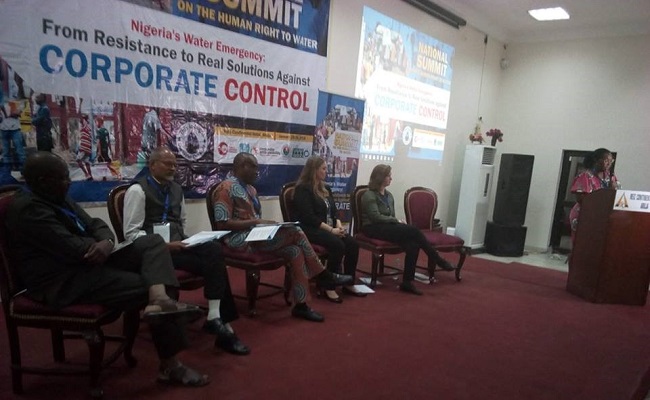
Local and international delegates sharing experiences at the National Summit on Water
The summit, with the theme: “Nigeria’s Water Emergency:
From Resistance to Real Solutions Against Corporate Control”, was
organised by the Environmental Rights Action/Friends of the Earth Nigeria
(ERA/FoEN) in concert with Corporate Accountability, Public Services International
and other groups on the platform of the Our Water Our Right Coalition.
Participants said that despite growing remunicipalisations
as a result of failed promises by pro-privatisation forces, chief promoters of
privatisation such as the World Bank and International Financial Corporation
(IFC) have become more daring, as such, advocates must bond together to stop
them.
In a keynote address titled: “The Nigerian Water Crisis
and the Imperative of Rights-based Solutions”, Dr. Otive Igbuzor said that
the July 28, 2010 General Assembly of the United Nations recognition of
water and sanitation as basic human right entitles everyone to sufficient,
safe, acceptable, physically accessible and affordable water for personal and
domestic uses.
Igbuzor, who is Executive Director African Centre for
Leadership, Strategy & Development (Centre LSD), said the recognition
of this basic right also obligates the state to protect and prevent third
parties from interfering with the rights to water and sanitation, including
that government will making laws to ensure that providers or individuals comply
with human rights standards related to the rights to water and sanitation.
Going into history, he said that the involvement of the
private sector in water and sanitation issues since the late 1980s supposedly
to enhance access has only increased the cost of water services since private
firms charge full costs and must pay taxes and earn a profit.
He maintained that claims that privatisation would actually
enhance service delivery compared with the public sector has been proven false
and not supported by evidence emerging from cases in Africa, Europe and Latin
America where private sector participation was strongly promoted.
“On the contrary, private sector participation has led to
rising social inequality and the weakening of democratic governance and
substantive citizenship in the management of water and sanitation services,” he
said.
He stressed that while water is very important for life and
human survival, the challenge is that the poorest of the poor do not have
access to clean water and sanitation, hence a global water crisis and a
Nigerian water crisis.
According to him, the Nigerian water crisis is exacerbated
by the crisis of the Nigerian state which has gone beyond mediating the
competing interest of elite groups or being an instrument of the ruling class
to become an instrument of deception.
The result of this, he argued, is a dysfunctional and
deceitful Nigerian state with crisis in all the sectors: Political, economic,
social, educational, health, water, among others.
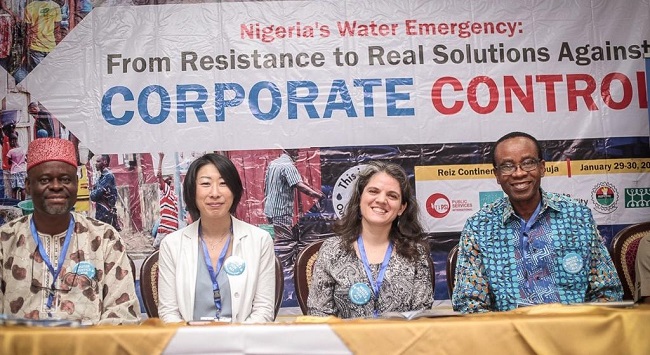
L-R: Dr Otive Igbuzor (keynote speaker), Satoko Kishimoto (Transnational Institute), Shayda Naficy (Corporate Accountability) and Nnimmo Bassey (Chair of the board of ERA) and the summit
He concluded by reiterating that since the UN has recognised
water and sanitation as a basic human right, the state has the obligation to
respect, protect and fulfill the rights of their citizens to water and
sanitation.
Earlier in a welcome address, Chair of the Board of
ERA/FoEN, Nnimmo Bassey, said that the campaign against the privatisation of
water has recorded notable milestones since the Lagos Water Summit that
held in 2015. They include the growing synergy between labour and civil society
organisations in resisting water privatisation and the expunging of anti-people
sections of the Lagos Environment Law following opposing by the Our Water
Our Right Coalition in 2017.
Bassey revealed that beyond Lagos which the private water
industry was interested in grabbing as a poster child, other African nations
are also being primed for water privatisation.
Mr Taiwo Otitolaye, the Executive Director, Community
Outreach for Development and Welfare Advocacy, an NGO, urged Nigerians to
resist the privatisation and commercialisation of water.
“We must resist the privatisation and commercialisation of
water; and in unison work together to realise clean, accessible and affordable
water for all citizens, no matter where they reside. Water is a human right
issue.
“Research across the states in Nigeria confirms a yearly
recycle budgets on water by most state governments without utilising the
budgeted funds for providing water to communities,’’ Otitolaye said.
Mr Mukaila Babarinde, the Head, Climate Change, Federal
Ministry of Water Resources, noted that the role water played in all sectors of
human development “cannot be over-emphasised’’.
He underlined the need for stakeholder collaboration and
advocacy to sustain momentum to improve access to potable water, saying that
Federal Government could not do it alone.
Babarinde said that efforts of government to improve access
to potable water include the completion of abandoned water projects in the
country and inauguration of the Partnership for Expanded Water Supply
Sanitation and Hygiene programme.
He urged state governments to step up efforts to reticulate
water from completed dams across the country to help in making water available
for the populace.
Ms. Shayda Edwards-Naficy, the Senior Programmes Director,
Corporate Accountability, noted that water crisis was a global crisis, saying
there was the need for governments to prioritise access to potable water and
sanitation facilities.
According to her, there is the need for all civil society
groups to fight to promote human right to water.
“We are here to speak with one voice against privatisation
and call for strong support for public water systems.
“We believe that the water problems that communities, states
face are global in nature; there are struggles around corporations that stand
against human rights across the globe, so we need to work together.
“Water needs to be in the hands of people, not corporations,
movements around the world are demanding an end to the corporate control of
this vital resource; it’s time.”
She said that there was presently a global solidarity to
campaign for water justice for all, calling for governments and the World Bank
to the heed calls and end the promotion of water for profit.
That summit also had various sessions where
grassroots groups from Lagos, Flint and Pittsburgh in the United States and
India learned and shared experiences.
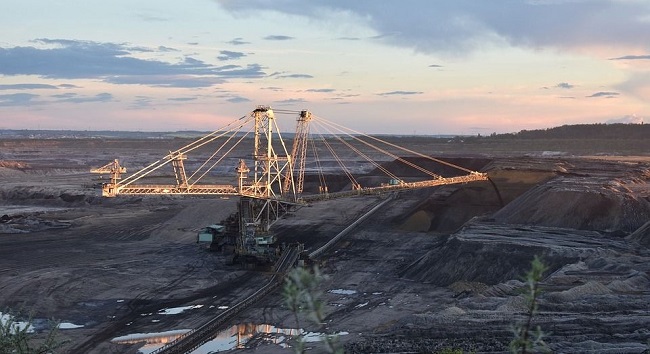
The Federal Government in Germany has announced plans
to phase out coal by 2038.
Germany will phase out coal in 2038
The Commission on Growth, Employment and Structural Change
released a 20-year report which has agreed to cancel out coal by 2038.
With only one vote against, the commission agreed on a total
of €40 billion in aid for the states affected by the coalition exit. The Federal
Government will now turn the commission report into a reliable energy concept.
Olaf ScholzIf, Federal Finance Minister, said: “If we do not
lose sight of the common goal, we can develop Germany into an exemplary state
of energy policy.”
In the years 2023, 2026 and 2029, the Commission will
undertake a review by an independent panel of experts.
In response to this review, the power plant capacity will be
reduced to 17 gigawatts of brown coal and hard coal in 2030, more than halving
it. Depending on the report, the withdrawal of coal could take place, according
to the recommendation of the commission, by 2035.
Environment watchdog, Greenpeace, has called for this target
to be brought forward to 2030 to ensure that carbon emissions are reduced
sooner.
It was reported that, in 2018, the production of coal
accounted for 38 per cent of Germany’s energy generation. This move away from
fossil fuel generation will put Germany back on track to meet the targets set
at the Paris Agreement.
This news follows a report that
found that the immediate phase-out of fossil fuels is crucial to meet important
climate targets.
The report found that if carbon intensive technologies were
replaced by carbon-free alternatives, carbon emissions would steadily decline,
dropping to near zero in 40 years. This would result in a 64 per cent chance of
limiting global warming to 1.5 degrees Celsius.
In a reaction, physicist Hans Joachim Schellnhuber, a member
of the Commission and Director Emeritus of the Potsdam Institute for Climate
Impact Research, said: “Germany is finding its way back to the
climate protection path: the beginning of an orderly phase-out of coal-fired
power generation has been made.
“This is an important step on the road to the post-fossil
age – a step that also opens up new perspectives for the affected regions
through innovation-driven structural change. The fact that the consensus was
difficult to achieve, however, should not be concealed. Efficiency in the
implementation and best possible use of taxpayers’ money should certainly also
be the focus of the legislative processes that are now to follow.”
Economist Ottmar Edenhofer, Director of the Potsdam
Institute for Climate Impact Research and of the Mercator Research Centre on
Global Commons and Climate Change, submitted: “It is necessary to
take a second step on the road to stabilising our climate, now that the Coal
Commission has taken an important first step. It is great that such a broad
body, from industry to nature conservationists, has been able to agree to
abandon coal. But it is only the necessary prerequisite, not yet sufficient,
for substantially reducing our greenhouse gas emissions.
“However, some conservationists and quite a few business
representatives share a tendency towards an unfortunately expensive planned
economy. That is why we now need effective CO2 pricing in order to use market
mechanisms to really secure the coal phase-out. A minimum price is conceivable
in European emissions trading or in a pioneer coalition of Germany, France and
the Netherlands. Smart CO2 pricing would also generate revenues with which the
state can create more justice for all, instead of just making billions
available for special interests.”
On his part, Earth system scientist Johan Rockström,
Director of the Potsdam Institute for Climate Impact Research, stressed: “The
whole world is watching how Germany – a nation based on industry and
engineering, the fourth largest economy on our planet – is taking the historic
decision of phasing out coal. This could cascade globally, locking in the
fastest energy transition in history.
“This can help end the age of fingerpointing, the age of too
many governments saying: why should we act, if others don’t? Germany is acting,
even if the commission’s decision is not flawless. Yet it is a key contribution
to limit the the increasing risks of for instance extreme weather events
accross the world. To avoid crucial elements of the Earth system to tip, such
as the huge ice sheets, we need social tipping points. Germany just passed one
of these.”
The city of Bali in Indonesia has announced plans to
implement a tourist tax which targets plastic pollution.
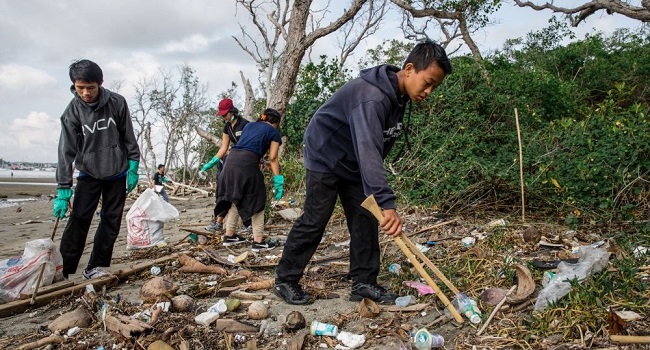
Picking discarded plastics in Bali
The Jakarta Post
has reported that Bali has drafted a bylaw on tourist contributions for the environment
and cultural preservation. The “tourist tax” will involve a fee of $10 for
overseas visitors to the island.
The Indonesian island is a popular tourist destination and
draws crowds of over four million people every year, but this has come at a
cost. Bali is facing a plastic pollution crisis, producing over 3,800
tonnes of waste every day.
The island does not have a enough rubbish collection system
and this has resulted in most rubbish being left on the island, buried in the
ground, or ending up in the ocean.
Presently, over 12 million tonnes of plastic end up in oceans
each year. As a result, over 90 per cent of sea birds have ingested plastic.
Bali has introduced the “go green” initiative to encourage
visitors to think about the footprint they will leave behind.
Wayan Koster, Bali Governor, spoke outside the Bali
Legislative Council building. He said: “This will give us better fiscal space
to support the development of Bali.”
This comes after Bali banned a range of single-use plastics
in December, including shopping bags, Styrofoam and plastic straws.
This news follows the European Union agreeing on deal for a single-use
plastic ban, which could be put into place by 2021. The ban will
target the 10 plastic products most often found on our beaches as well as
abandoned fishing gear.
When cow urine falls on degraded land, it releases far more
nitrous oxide – a potent greenhouse gas – than when absorbed by healthy
pasture. The findings of a new study show additional benefits of landscape
restoration and conservation.
For total livestock emissions, beef cattle is said to account for the highest methane emissions
The exceptional climate-altering capabilities of cattle are mainly due to methane, which they blast into the atmosphere during their daily digestive routine. Cattle urine is a lesser-known climate offender. It produces nitrous oxide (N2O), which has warming power far greater than that of carbon dioxide (CO2), the main driver of global warming. A study conducted by the International Centre for Tropical Agriculture (CIAT) and partners shows that these N2O emissions can be significantly curbed by healthy cattle pastures.
For the study, researchers collected urine from cattle at research sites in five countries across Latin America and the Caribbean. They spilled these 500 mL samples on paired cattle fields classified as degraded or healthy, which was determined by vegetation coverage. In six of the seven test sites, degraded pastures emitted significantly more N2O – sometimes up to three times as much. The results were published January 29, 2019 in Scientific Reports, an open-access journal by the publishers of Nature.
“Degraded pastures are bad in so many ways,” said
Ngonidzashe Chirinda, a CIAT researcher and the study’s lead author. “This
study adds to the case for land restoration. Degraded pastures not only affect
food security and the livelihood of farmers today but affects the livelihood of
future farmers because they emit more gases that cause global warming.”
The results add urgency to global land restoration
agreements, including Initiative 20×20, which aims to bring into restoration 20
million hectares of land into restoration in Latin America by 2020 as a first
major step toward even more ambitious restoration targets.
Estimates vary, but Chirinda calculates, conservatively, that
there are 150 million hectares of degraded lands in Latin America. Brazil alone
is home to some 80 million hectares of degraded pastureland.
Degraded livestock land is generally characterized by
overgrazing, soil compaction, loss of organic material and low levels of
nutrients and soil carbon. Large-scale land restoration with improved forage
grasses, rotational grazing and the addition of shrubs and trees (silvopastoral
farming) could significantly mitigate the negative climate effects wrought by
degradation. In addition to reducing N2O emissions, restored landscapes
generally contain more carbon, have healthier soils and more robust and
productive livestock.
“This study highlights the importance of avoiding land degradation
in the first place,” said Todd Rosenstock, a co-author based at the World
Agroforestry (ICRAF). “Maintaining healthy pastures appears to reinforce goals
of both the United Nations’ Framework Convention on Climate Change and the UN
Convention to Combat Desertification simultaneously.”
The curious results from the single test site that did not
align with the study results – in Taluma, Colombia – may be attributed to several
factors that merit further research. N2O emissions there were by far the lowest
at any test site and were the same on both degraded and healthy pastures. The
cattle urine used in the experiment had the lowest nitrogen content compared to
the other research sites, which likely contributed to the results. The forage
grass used there, Brachiaria humidicola, also has an especially high
nitrification inhibition capacity, meaning that it prevents nitrogen from
becoming N2O.
Power of data from
far-flung places The study is a victory for well-designed, modest-budget science. The project
began with a weeklong training session at CIAT headquarters in Cali, Colombia,
where a team of Ph.D. students from the additional participating countries –
Argentina, Brazil, Nicaragua and Trinidad and Tobago – helped design the
research plan and standardised the study’s methodology.
The students returned to their home countries and carried
out the experiment to coincide with their area’s rainy seasons, to assure
similar climate conditions across study sites. (The exception was Taluma, which
was sampled during a period characterised by low rainfall, which is also
another possible reason why the N2O emissions were lower there).
“The power is in the number of data points from all the
different countries,” said Chirinda.
Better cattle
greenhouse gas estimates Researchers said the study is a useful step toward creating a more detailed
picture of the scope of greenhouse gas emissions from cattle farming in LAC.
“Since work on emissions from livestock in the region is not
common, this study generates at least one piece of information that is missing
from theoretical greenhouse gas estimates in the LAC region,” said Miguel
Andrés Arango, a co-author and scientist at Colombia’s AGROSAVIA, the nation’s
largest agriculture research organisation.
“Being able to estimate the real impact of cattle production
will allow us to propose potential practices for reducing emissions,” said
Arango. “It is high time we know the emission factors for our agricultural
systems.”
Collaborators and
funders The study was conducted under the framework of the Latin America climate
change Mitigation Network (LAMNET) and implemented as part of the CGIAR
Research Program on Climate Change, Agriculture and Food Security (CCAFS),
which is carried out with support from CGIAR Fund Donors and through bilateral
funding agreements.
Collaborators on the project included researchers affiliated
with the following organisations: the National Autonomous University of
Nicaragua; the National Institute of Agricultural Technology in Argentina
(INTA); the Federal University of Rio Grande do Sul (UFRGS) and the Institute
of Agriculture and Forestry Management and Certification
(IMAFLORA) in Brazil; the University of the West Indies in Trinidad
and Tobago; Universidad Nacional de Colombia; the United States Department of
Agriculture (USDA); and the University of Vermont.
Sportswear manufacturer, Adidas AG, has announced its
commitment to make 11 million pairs of shoes made from recycled plastic in
2019.
Adidas footwear. Photo credit: Adidas
In 2018, Adidas produced five million shoes made from
recycled plastic. This year, to curb the growing plastic pollution, the firm has
committed to over doubling this figure.
Adidas has collaborated with Parley for the Oceans, a
company that intercepts plastic from beaches before it can reach the oceans.
This plastic is then upcycled and made into a yarn becoming a key component of
the upper material of Adidas footwear.
Eric Liedtke, Adidas Executive Board member responsible for
Global Brands, said: “With Adidas products made from recycled plastic, we
offer our consumers real added value beyond the look, functionality and quality
of the product, because every shoe is a small contribution to the preservation
of our oceans. After one million pairs of shoes produced in 2017, five million
in 2018, we plan to produce eleven million pairs of shoes containing recycled
ocean plastic in 2019.”
Where the use of plastic is unavoidable, for example in
transport packaging, Adidas is relying on counterbalancing measures and
promoting sustainable alternatives.
It also supports the innovation platform Fashion for Good
with a donation of €1.5 million, which equates to the company’s environmental
impact of plastic packaging.
Gil Steyaert, Executive Board member responsible for Global
Operations at Adidas, said: “Sustainability at Adidas goes far beyond
recycled plastic. We also continue to improve our environmental performance
during the manufacturing of our products. This includes the use of sustainable
materials, the reduction of CO2 emissions and waste prevention. In 2018 alone,
we saved more than 40 tons of plastic waste in our offices, retail stores,
warehouses and distribution centres worldwide and replaced it with more
sustainable solutions.”
This news follows Adidas signing the Climate Protection
Charter for the Fashion Industry where it agreed to reduce greenhouse gas
emissions by 30 per cent by 2030.
Minister of Interior, Lt.-Gen. Abdulrahman Dambazau (retd), on Tuesday, January 29, 2019 solicited support of international donors and other stakeholders in alleviating humanitarian crisis around countries in Lake Chad Basin.
Minister of Interior, Lt.-Gen. Abdulrahman Dambazau (retd)
Dambazau made the appeal at the second Regional Protection
Dialogue on Lake Chad Basin in Abuja.
He said that the cooperation of the stakeholders was
imperative in ensuring that their efforts at alleviating the crisis in the
region yielded positive results.
Earlier, at the meeting, UN Office for the Coordination of
Humanitarian Affairs (OCHA) in collaboration with the Ministry of Budget and
National Planning and the Ministry of Finance launched a Humanitarian Response
Protection Plan.
The Plan is part of concrete measures to solidify efforts to
alleviate the crisis in the region.
Dambazau recalled that a Tripartite Agreement among Nigeria,
Cameroon and United Nations High Commissioner for Refugees (UNHCR) was signed
in March 2017.
He said that the agreement was to facilitate the voluntary
return of Nigerian refugees living in Cameroon in a safe and dignified manner,
adding that the process for the return of the refugees was ongoing.
“I do not need to tell you that it is not yet ‘Uhuru’ as far as the alleviation of the challenges of the Lake Chad Basin is concerned,” he said.
The minister noted that security in the basin had remained a
challenge in spite of the efforts of the joint military forces of countries in
the basin.
“In spite of the huge breakthrough achieved in the fight
against the insurgents by efforts of our joint military forces, security in the
Basin has remained a challenge, particularly for the displaced population and
other vulnerable groups.”
He explained that the aim of the dialogue was for
stakeholders to appraise the commitments toward the implementation of outcome
of the first meeting.
“It is also to explore broader regional and international
support towards comprehensive review of the protection situation in Lake Chad
Basin countries.
“It is to reinvigorate consensus around protection
considerations and principles as informed by international law and standard
norms.
“It is also to propose and seek the adoption of a framework
for comprehensive solutions that are in line with international principles,” he
said.
The minister added that objective of the meeting was to
identify the protection risk in the region resulting from conflict-induced
crisis in the Lake Chad Basin and proffer appropriate practical solutions to
redress them.
“It is also to provide practical solutions to the plights of the people in and around the Lake Chad region who were turned to refugees and Internally Displaced Persons due to insurgency in the region,’’ he said.
Kenya is set to launch the Kenya Food and Drug Authority
(KFDA) to help promote food safety, a government official said on Tuesday,
January 29, 2019.
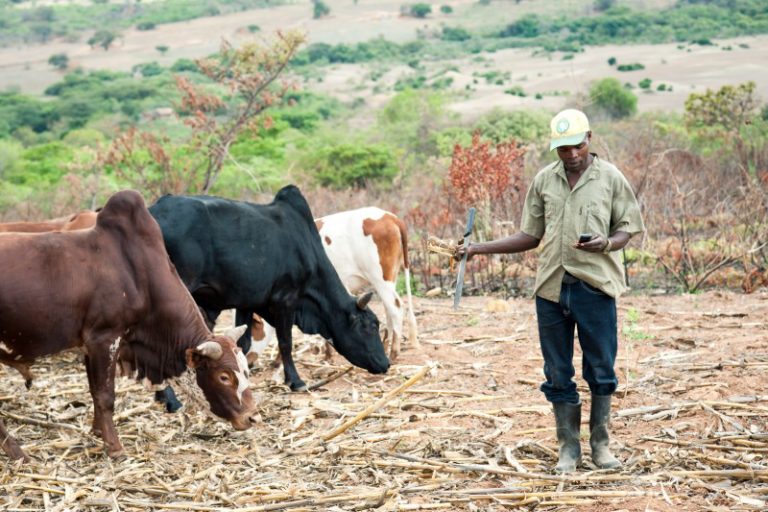
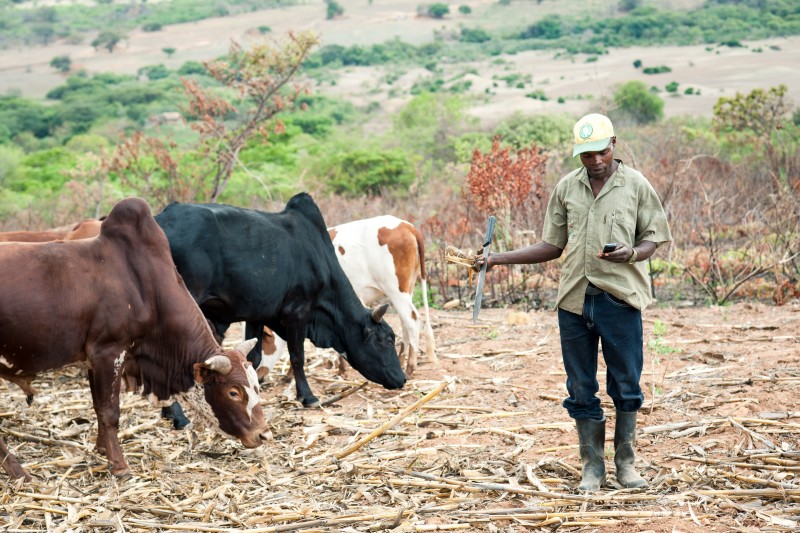
A Kenyan smallholder farmer
Harry Kimutai, Principal Secretary of the State Department
for Livestock, said this during a forum on milk quality and safety in Nairobi.
“The authority is expected to ensure that populations
consume safe food as well as promote domestic and international trade in Kenyan
products,’’ said Kimutai.
He said the authority would enforce regulations to help
reduce cases of aflatoxin in milk and cereals, a condition that is currently
blamed for the upsurge of cancer cases in the country.
The official noted that the bill leading to the formation of
the authority has been discussed by the Ministry of Health and the Ministry of
Agriculture, Livestock, Fisheries and Irrigation and is due to be subjected to
validation by stakeholders.
Kimutai said the government has developed an elaborate
framework of dairy standards that cover all the major dairy products
manufactured or traded locally.
“These standards cover safety requirements as informed and
benchmarked on international standards such as those developed by the Codex Alimentarius
Commission,’’ said Kimutai.
The Kaduna State Government on Tuesday, January 29, 2019 said it had passed a bill to the legislative arm to review laws for proper protection of the state’s forest resources.
Nasir el Rufai, Governor of Kaduna State
Mr Anthony Kachiro, the Director of Forest Resources in the
Ministry of Agriculture and Forestry Development of the state, disclosed this
to the News Agency of Nigeria (NAN) on Tuesday in Kaduna, the state capital.
Kachiro, who doubles as the State Chairman, Task Force on
Forest Protection, said that the new laws would replace the old ones that had
become obsolete.
He said that the bill, when it became law, would provide a
proper legal backing to the state officials in terms of sanctions, fines and
prosecution of those encroaching in the state forest reserves.
According to the official, the state government is working
in line with the international effort to tackle the effects of global warming
and environmental hazard of desertification.
He said while the laws were being fine-tuned for
proper enforcement, the state government had set up a task force with members
drawn from the state timber and firewood dealers associations to tackle illegal
felling of trees for local use and for business.
He said that the task force had recently impounded six
trucks of firewood and timber being transported from Kasuwan Magani in Kajuru
Local Government Area and Mi-Ido, near Ladugga in Kachia Local Government Area.
When asked if any arrest was made from the impounded
vehicles, the official said: “No, we didn’t arrest anyone, but six
vehicles from a particular vendor were impounded on their way
from Ladduga.’’
“Those involved will be sanctioned and fined appropriately
to ensure that the forests resources are protected,” Kachiro said.
He said that the task force was also monitoring those
engaged in illegal felling of trees to make charcoal for business and proper
sanctions would equally be applied on them to curtail their activities.
“We are working to ensure that for everyone tree that is cut
down, at least three others are planted in the same area by the same person,”
he said.
On the number of trees planted in 2018 in the state, Kachiro
said that the ministry had concentrated in the maintenance and management of
the trees planted in 2017 in its effort to tackle desertification.
The official, however, urged the state government to provide the task force with adequate security for proper discharge of its mandate.