Executive Secretary, Sokoto Rural Water Supply and
Sanitation Agency (RUWASSA), Alhaji Sidi Abass, has linked insurgency, cattle
rustling to challenges of poor hygiene and open defecation practice in border
communities.
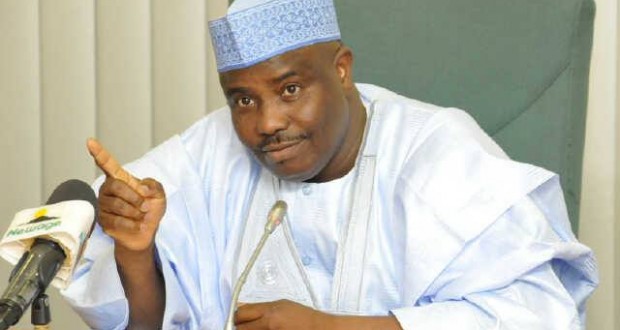
Governor Aminu Tambuwal of Sokoto State
Abass made this known when the Water, Sanitation and
Hygiene (WASH) in Emergency Working Group carried out a Cholera Assessment
and Monitoring visit to Sokoto on Tuesday, February 5, 2019.
“The problem of insurgency as well as cattle rustling is
what is affecting border communities with Niger and Zamfara because of the
movement of people and animals, those people evacuating sewages and dumping it
in open spaces.’’
He said that the sensitisation and awareness created through
the mass media would go a long way to educate those in the community on
promotion of hygiene.
Abass said that community members had been drafted into WASH
Committees to lead engagements for behaviour change, and sensitisation for
total sanitation.
He said that RUWASSA had trained some village heads on water
safety plans to ensure that they in turn train their populace “that water does
not get contaminated from point of produce to point of consumption.’’
Abass said that part of the intervention on water safety and
hygiene promotion was to see that people adapted toilet models that suit their
economic level toward the goal of ending open defecation.
According to him, there are indications that all are set for
Tangaza Local Government Area in the state to be declared open defecation-free
in two months.
“As I am speaking with you now, I have given them two
months, January and February, so by March, we are going to validate when we are
sure; what drew us back was some communities with collapsed toilets, otherwise,
we would have met the December target.’’
He said that access to water and sanitation in the state was
improving, adding that at the RUWASSA level, it had been able to rehabilitate
broken down boreholes and provided new ones.
“Just last year alone, we provided 142 hand-pump boreholes
and rehabilitated over 300 solar-powered boreholes, this has increased not less
than 3,000 households accessing potable water.’’
The WASH in Emergency Working Group was established in 2012 when the country experienced devastating floods that affected 85 million people in 14 states.
The group has since remained active, especially in the
North-East where IDPs exist and have responded immediately on outbreaks of
cholera.
The group membership cuts across WASH sector players from institutions, development partners, international and local NGOs and CSOs, responding to WASH issues in the North East, with UNICEF as its co-lead.
A comprehensive new study of the Hindu Kush Himalaya (HKH)
region, known as the world’s “Third Pole” for its vast store of ice, finds that
even the most ambitious Paris Agreement goal of limiting global warming to 1.5
degrees by the end of the century will lead to a 2.1 spike in temperatures.
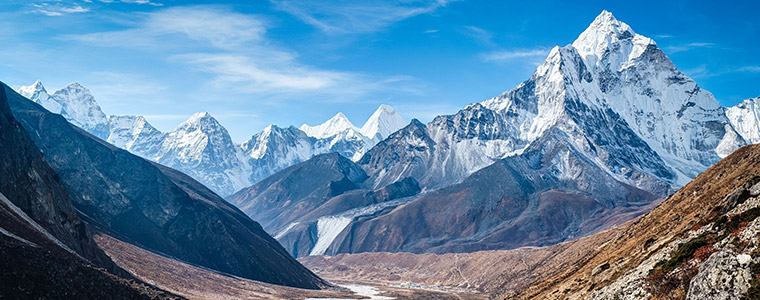
The Hindu Kush Himalaya (HKH) region
The study adds that warming on the Third Pole, home to Mount
Everest, K2 and other soaring peaks, will likewise result in the melting of
one-third of the region’s glaciers, a critical water source to some 250 million
mountain dwellers and the 1.65 billion others living in the river valleys below.
If global climate efforts fail, the study warns that current
emissions would lead to five degrees in warming and a loss of two-thirds of the
region’s glaciers by 2100.
“This is the climate crisis you haven’t heard of,” said
Philippus Wester of the International Centre for Integrated Mountain
Development (ICIMOD), who led the report. “Global warming is on track to
transform the frigid, glacier-covered mountain peaks of the HKH cutting across
eight countries to bare rocks in a little less than a century. Impacts on
people in the region, already one of the world’s most fragile and hazard-prone
mountain regions, will range from worsened air pollution to an increase in extreme
weather events. But it’s the projected reductions in pre-monsoon river flows
and changes in the monsoon that will hit hardest, throwing urban water systems
and food and energy production off kilter.”
Styled after the Intergovernmental Panel on Climate Change
(IPCC) reports, the Hindu Kush Himalaya Assessment is the first and most
authoritative study of its kind to provide an assessment of one of the world’s
most significant, yet often overlooked, mountain regions. Developed over
five years, it includes insight by more than 350 researchers and policy experts
from 22 countries and 185 organisations. With 210 authors, 20 review editors
and 125 external reviewers, it provides an unprecedented insight into the
region’s distinct environment, people and wildlife.
“The massive size and global significance of the Hindu Kush
Himalaya region is indisputable, yet this is the first report to lay down in
definitive detail the region’s critical importance to the well-being of
billions and its alarming vulnerability, especially in the face of climate
change,” said David Molden, director general of ICIMOD. The authors used a
range of approaches, including climate modelling, to write the report.
The HKH region covers 3,500 kilometres across Afghanistan,
Bangladesh, Bhutan, China, India, Myanmar, Nepal and
Pakistan. Nestled in its record-breaking peaks, glaciers feed 10 of
the world’s most important river systems, including the Ganges, Indus, Yellow,
Mekong and Irrawaddy, and directly or indirectly supply billions of people with
food, energy, clean air and incomes. Additionally, the region contains four of
the world’s biodiversity hotspots.
Though the mountainous region was formed around 70 million
years ago, its glaciers are extremely sensitive to the changing climate. Since
the 1970s, when global warming first set in, these ice masses have steadily
thinned and retreated, and snow-covered areas and the amount of snow have
decreased. These changes have ripple effects felt throughout the region.
When glaciers melt, they flow into lakes and rivers. Changes
to the timing and magnitude of this melting leads to an increase in the number
and size of glacier lakes, which can suddenly flood. This can lead to a surge
of glacier runoff into major rivers, which could lead to flooding and the
destruction of crops. As a result of the HKH ice melt, more water is expected
to surge through the Indus, Ganges and Brahmaputra rivers, forcing a change to
the agriculture in the valleys around them.
Greenhouse gases are exacerbated by air pollutants
originating from the Indo-Gangetic Plains – one of the world’s most polluted
regions. These pollutants deposit black carbon and dust on the glaciers,
hastening their melting and changing monsoon circulation, and rainfall
distribution over Asia.
As the Nepal earthquake in 2015 laid bare, mountain cities
and settlements are vulnerable to disasters – from landslides and erosion to
debris flows and floods. As the number and intensity of these disasters
increase, more than one billion people are at risk.
These changes hit the region’s poor hardest. About one-third
of the 250 million HKH mountain people live on less than $1.90 a day; more than
30 percent of the region’s population doesn’t have enough to eat, and around 50
percent face some form of malnutrition, with women and children suffering the
most. The realities of mountain life, such as inaccessibility, fragility and
remoteness, make it difficult for people to earn a living in the region;
nonetheless, the report points out that mountain people have the potential to
earn incomes by better utilising the region’s resources, such as hydropower
potential.
For example, HKH has a huge hydropower potential of ~500
gigawatts, enough to power half a billion homes in the region. Nonetheless,
more than 80 percent of the rural population, most of whom live in mountain
regions, rely on traditional fuels, such as firewood or dung, for cooking, and
about 400 million people in HKH countries still lack basic access to
electricity.
Despite the cultural and political diversity of the
countries studied, they are united in the unique challenges facing mountain
regions, which will only get worse with climate change and glacial melt, the
report argues.
“There are rocky times ahead for the region: between now and
2080, the environmental economic and social conditions laid out in the report
could go downhill,” said Eklabya Sharma, deputy DG of ICIMOD. “Because many of
the disasters and sudden changes will play out across country borders, conflict
among the region’s countries could easily flare up. But the future doesn’t have
to be bleak if governments work together to turn the tide against melting
glaciers and the myriad impacts they unleash.”
The report also calls for greater recognition of mountain
areas and the HKH region in global climate efforts.
“It’s not just occupants of the world’s islands
that are suffering,” Dasho Rinzin Dorji, ICIMOD board member from Bhutan, said.
“We need to start thinking of mountain regions as climate hotspots worthy of
urgent attention, investments and solutions.”
Following the successful conclusion of the UN Climate Change
Conference (COP24) in Poland in December 2018, which resulted in the adoption
of the Paris Agreement Work Programme, the international community finally has
operational guidelines to translate their climate pledges under the Paris
Agreement into concrete action. This provides an important step for delivering
action at the transformational scale necessary to limit the global average
temperature rise to as close as possible to 1.5 degrees Celsius – the central
goal of the Paris Agreement.
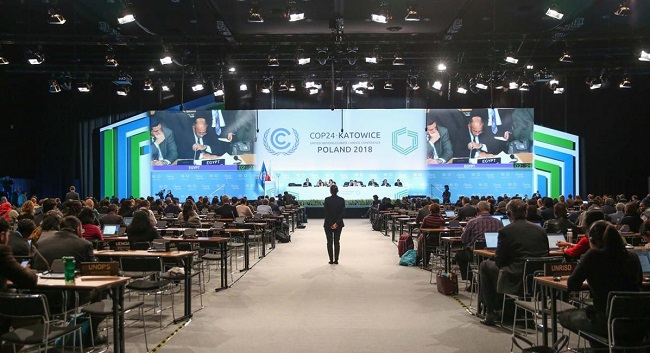
A delegate stands in the main meeting hall of COP24 in Katowice, Poland
Year 2019 has clearly emerged as a critical year – perhaps
an inflection point – as climate change has become the “biggest
threat to the global economy”, as the UN Secretary-General António Guterres
has said, and ambitious action is urgently required on all fronts. Central in
this mobilization effort is the UN Secretary-General’s 2019 Climate Summit in
September, which aims to boost ambition and accelerate action.
A series of Regional Climate Weeks will
kick-start converstations for the Summit in Africa, Latin America and Asia
Pacific. Two days of the Regional Climate Weeks will be dedicated to technical
dialogues on the implementation of the climate commitments or “Nationally
Determined Contributions (NDCs). These technical
NDC dialogues, running since 2014, have been organised by the UN
Development Programme (UNDP) and UN Climate Change (UNFCCC) Secretariat to help
countries plan and implement their climate committments.
Translating NDCs into
Concrete Climate Actions
The last round of technical NDC dialogues held in 2017-2018
focused on the energy sector and allowed participants to exchange national
experiences on NDC implementation, including linkages to the Sustainable
Development Goals (SDGs); opportunities and barriers for climate actions;
climate finance and private sector engagement; gender-responsive approaches,
scaling up ambition, and long-term strategies.
Given that climate action is a complex issue, it requires a
whole-of-country approach. This entails coordination among government
entities on all levels and the engagement of key stakeholders ranging from
women, indigenous populations and civil society organisations to financial
institutions and the private sector. The dialogues that have taken place
to date have shown that there is a strong need to build capacities within and
across ministries and local ownership and accountability is essential for the
sustainability of climate projects.
Access to finance remains one of the most important barriers
to climate action. Going forward, financial instruments and innovative
financing mechanisms must be leveraged to mobilise adequate climate
finance. An enabling environment for private sector engagement and
public-private collaborations must also be further enhanced to ensure the
required pace and scale of climate action is fulfilled in these critical years
ahead.
Inspiring Examples of
Regional Progress on Climate Committments
In Latin
America, the transition to clean energy is in full swing. New
energy reforms and plans have provided opportunities for countries to increase
their share of renewable energies (principally hydro and wind) in the energy
matrix, establish energy efficiency funds and promote the electrification of
the transport sector. Many countries are including the transport sector in
their development plans thus not only contributing to their NDC targets but
also to their development goals.
In Africa,
a key emerging topic for countries has been the engagement of regional,
municipal and local actors to help bridge the gap between ambitious national
climate targets and the concrete actions required on the ground. The
representation of local entities and civil society organisations (CSOs) at the
dialogue was a clear indication that this inclusive engagement process was well
underway in the region.
Meanwhile, the Small Island Developing States (SIDS) in
the Pacific and Caribbean regions
have demonstrated great leadership in terms of energy efficiency and
security. In the Pacific, countries have been building on existing energy
plans or strategies to implement energy projects and establish green energy
funds. In the Caribbean, countries have been focusing on renewable energy
generation and energy efficiency, forest and land use management, and
waste. Both regions are looking to include additional sectors such as
water and agriculture and to strengthen adaptation components. Given
their current pace of implementation, SIDS may well be in a position to submit
even more ambitious NDCs in 2020.
Countries from the Eastern
Europe, Caucasus and Central Asia region also showed strong
determination to implement their NDCs with some countries striving to go beyond
what is already included. Key areas of focus included energy security and
independence, the development of long-term Low Emission Development Strategies
(LEDS) and the inclusion of adaptation in NDCs. As countries are preparing
for a clean energy transition, it was encouraging to see new regional
partnerships emerge to develop regional energy efficiency standards and enhance
integrated energy systems.
The dialogue for Asia
and Arab States, which brought together two distinct regions, showed
that despite the regions’ differences, countries shared very similar
experiences regarding NDC implementation. Countries from both regions
have already begun to invest in clean and energy efficient solutions (e.g.,
energy efficient buildings and industries) as well as different energy
technologies. Countries are working hard to reduce political and
regulatory barriers to unlock investments in clean energy and are exploring innovative
financial instruments such as green Islamic bonds or “sukuks”.
With 130 developing countries and over 803 participants from
government ministries, the private sector, multilateral organisations and other
institutions having participated in this round of dialogues alone, it is clear
that the technical NDC dialogues have until now provided an important, neutral
and inclusive platform for key stakeholders to discuss technical issues on
putting their climate commitments into action.
Looking ahead
The next technical NDC dialogue series, which will now be
integrated for the first time with the larger Regional Climate Weeks, will run
from 2019-2020. Discussions will focus on the preparation of second-round NDCs
with increased coverage, clarity and ambition; capacity strengthening for
tracking NDC implementation progress; and peer-to-peer knowledge exchange,
building on lessons learned from implementing initial NDCs and drawing on the
outcomes of the Talanoa Dialogue and COP24.
Looking beyond the second generation NDCs, the
dialogues will further support countries to look to 2050 and beyond and
encourage the formulation of long-term
climate strategies, which countries are invited to submit to the UNFCCC by
2020. Long-term climate strategies define trajectories for low-carbon,
climate-resilient, and sustainable development, and thus chart a clear
direction on ambitious climate action for policy and decision makers, investors
and the business community.
Agriculture is the highest contributor to global warming in
Nigeria, a recent research conducted by the Federal Ministry of Science and
Technology says.
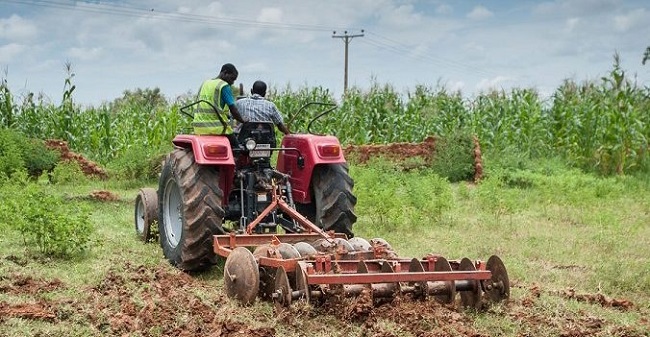
Agriculture
This research debunks the long-time general assumption that
energy is the highest contributor to global warming.
Prof. Peter Ekweozoh, Director, Environmental Sciences
and Technology, Federal Ministry of Science and Technology, made this known in
an interview with the News Agency of Nigeria (NAN) in Lagos on Monday, February
4, 2019.
He spoke with NAN at a workshop with theme: “Green Economy
Capacity Assessment Workshop” at the Federal Institute of Industrial Research
Oshodi (FIIRO), Lagos.
The workshop was a partnership between the University of
Reading, U.K, and FIIRO to brainstorm on how to improve the Green Economy and
mitigate environmental degradation.
“A recent research by our ministry shows that the
agriculture sector is the highest contributor to global warming in Nigeria and
also the use of land, contrary to what we believed.
“Research has proven that it is not energy, and so, if we
are able to stop the use of chemical fertilisers, burning of agricultural waste
and turn them into usable products, our society will be better.
“The Federal Government is already making efforts at having
low carbon development programmes. The President has signed the Paris Agreement
that took place in 2015.
“With this development, Nigeria will be able to enforce its
own policy called the `National Determined Contribution on Sea Waste Road Map
2030,’’ he said.
Ekweozoh said that the country was not deficient in having a
policy framework that could attract donors to help in realising the Green Agenda
policy but rather, the country needs personnel to carry out its policy.
“We are not bereft of a framework that can help us with the
Green Economy; what we need is to put our policy framework together in order to
attract foreign donors. We have up-to-date climate change policies and
roadmaps.
“In the implementation of the Green Economy policy
framework, we need to coordinate the skills. We also need to close those gaps
and then we will have a good shot at implementation of the policy.
At the end of this programme we will start massive capacity
building programme as a result of the gaps to fill,” he said.
Ekweozoh said that Nigeria had inaugurated a National Waste
to Wealth Programme in 2015, which was aimed at addressing environmental degradation.
“In 2015, Nigeria signed National Waste to Wealth
Programme to law. This programme is an inter-ministerial mission that seeks to
address some attitudes which we need to change.
“We also need to educate our people to know how to treat
waste and stop throwing waste around.
“We need to put in place appropriate technology, facilities
that will undertake the processing of mix waste because that is what we have.
Just dumpsite everywhere, unlike what we have in the Europe which is
technological land fills.
“I believe once that is achieved, we will have the National Science Technology Innovation Roadmap 2030 which is supposed to drive development in all the sectors – agriculture, industry, tourism, water resources and energy,” he said.
One man’s endeavour is changing lives of many in rural
Cameroon and fighting climate change. He is tapping energy from the sun and
supplying to hospitals in “forgotten” places. Arison Tamfu reports
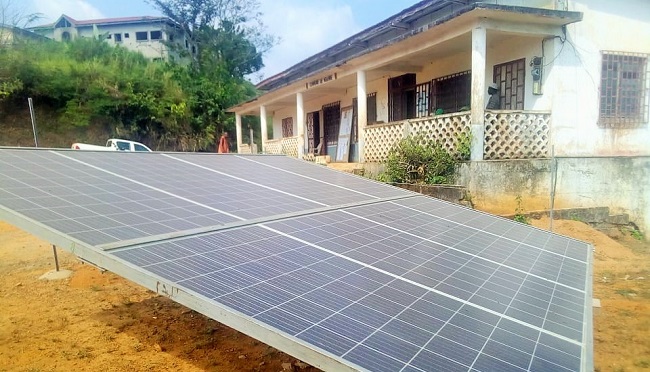
Solar panels at Ngambe Council
Ngo Bas was just 14 when she became
pregnant. And now, she is 15 and is due at any moment. Literally.
“I’m past nine months pregnant,” she says
with a grin.
She lives with her grandmother in Ngambe, a
remote, forested community in Cameroon’s Littoral Region. Things are hard, her
granny says, disturbed that the life of the unborn child is in danger because
Bas does not feed well. But that is the least of her worries. Bas is supposed
to give birth at Ngambe District Hospital where there is no electricity.
“We have been without electricity for like…
I can’t even remember. The hospital and by extension patients are the most
affected,” says Dr. Daniel Telep Yede, director of Ngambe District Hospital.
“We use traditional African bush lamps and
torches during delivery at night. This is a very, very risky venture. Anything
can happen to the child and the mother because we don’t usually see what we are
doing. We refer worst cases to other hospitals, but they are very far away,” he
adds.
That is what worries Bas and her granny
most.
But Bas’ worries might soon be over. There
is good news. Gaston Claude Songo is about providing the hospital with solar
energy.
Songo, 40, is soft-spoken, but he is sure
of what he’s doing, and has proved a rare skill for seeing the obvious. The
idea of supplying renewable energy to remote communities in Cameroon has become
a passion for him.
One afternoon in early 2018 while driving
in the hot sun in Douala traffic, Songo was struck by the obvious.
“Broadly available technology, plummeting
cost of solar panels, and free, unlimited sunshine. I realised that this was a
gift from Mother Nature. Why should my people suffer when energy is almost free
and clean?” Songo says with a sense of pride and fulfillment.
Eleven months later, Songo is fully-engaged
in a project to supply solar power to hospitals in rural Cameroon.
“It is purely a personal initiative. I
provide the energy free of charge. I have been raising some funds for the
project through social media campaigns especially on Facebook. People of good of
will who believe in helping others and making the world a better place have
been of great assistance” he says.
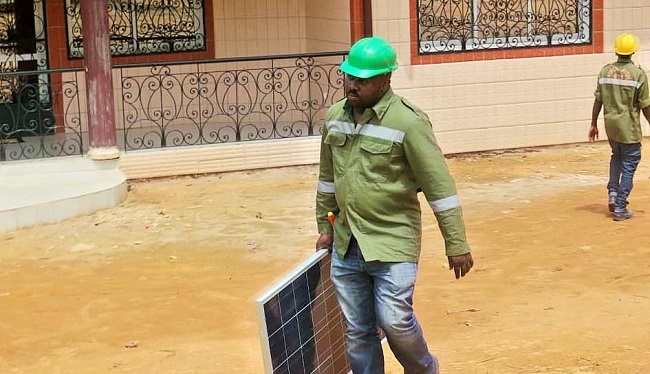
Today, Songo has come to install solar
panels in the Ngambe District Hospital.
He is a native of Ngambe and understands
better that anyone else what his people are going through.
“As a child I witnessed the suffering my
people were experiencing because there was no electricity. It was horrible
especially in the hospitals in rural areas or forgotten places. Hospitals are very
sensitive, and patients need hope. Darkness in hospitals kills that hope” he
says while placing two solar panels on the rooftop of the hospital building. “I
want to show to the world that without being rich, we can still help others
through our skills and knowledge,” he adds.
Gaston Claude Songo about to install solar panels
Night is falling and Songo is done with the
installation. To the amazement and joy of the villagers, the bulb is switched
on and…voila… there is light.
“This is a miracle. Just like that and
there is light in the hospital,” exclaimed a patient in the hospital.
That evening by 8:00 pm, coincidentally,
Bas in critical labour arrives the hospital. She is breathless as nurses rush
her to delivery room. Things move faster than usual. With ease and comfort of
the light, Dr. Yede and his team start the delivery process and few hours
later, the cry of a baby is heard. She is delivered of a healthy boy and she is
doing well.
“This delivery would have been risky and
almost impossible yesterday. At last darkness has been defeated in this
hospital,” says Dr. Tede breathing a sigh of relief. “We will now be able to
work 24hrs, admit patients, perform operations and store some hospital material
in the refrigerator,” he adds.
“My baby has brought light here. Thanks a
lot to technology. Can you imagine what I would have gone through if there was
no light,” says Bas joyfully.
Local authorities are confident that the
advent of light in the community will significantly change the lives of the
people.
“Development has been retarded here for
long because of electricity. We did not know that the sun can provide energy.
Songo has opened our eyes. I am now making it an official policy for Ngambe to
tap light from the sun and wherever possible. I can guarantee you that this is
going to significantly alleviate poverty in this community,” says Gilbert Yede,
mayor of Ngambe rural council inhabited by approximately 10,000 people.
Curing
climate change
Songo’s success story is a real booster to
the fight against climate change that has taken its toll on the livelihoods of
people especially in Africa where droughts, erratic rainfall, floods have
become the new normal.
Scientists agree that renewable energy is
one of the major ways of mitigating the adverse impacts of climate change
because it is clean and does not emit dangerous greenhouse gases into
atmosphere.
Renewable energy is energy generated from
natural resources such as sunlight, wind, rain, tides and geothermal heat which
are naturally replenished.
“A switch to renewable energy is what we
need now. Times have changed,” says Emmanuel Tabot, an environmentalist.
Songo has decided to move with the times by
making renewable energy available to people.
“Renewable energy is by action not talking.
Africa has sunlight, wind, tides, and rains in abundance. Why don’t we just
abandon our old ways of supplying energy and act now to save the world from the
dangerous consequences of climate change?” says Songo adding that energy
deficiency is a major setback to development in Cameroon in particular and
Africa in general.
And he’s right.
Most of Cameroon lives in the dark.
Cameroon suffers from outages: about 10 electrical outages per month, which
last an average of two hours each.
Despite the impressive hydroelectric
capabilities of the country, only approximately 20% of the population have
access to the national grid, with 80 percent of the supply concentrated in
urban areas and just 17 percent in rural areas according to the Ministry of
Water Resources and Energy. Apart from hydro power, Cameroon is well endowed
with sunshine, and various sources of biomass and natural gas, yet little
effort has been put into the development of these energy sources. Renewable
energy currently contributes about 1% towards Cameroon’s energy mix according
to 2018 government figures.
“One of the factors contributing to the
slow implementation of renewable energy in the country is the lack of a defined
renewable energy government policy. Government commitment and enthusiasm are
essential for promoting renewable energy efforts by both foreign and private
sector investors,” says Dr. Edouard Mboumboue of the University of Yaounde 1.
Cameroonian President, Paul Biya has placed
renewable energy high on his list of national goals, however, Cameroon’s first
large-scale wind and solar farms are still being developed.
Songo’s achievement is a fascinating
eye-opener to the government and now, the government plans to boost Cameroon’s
electricity access in rural areas as part of its “Vision 2035” development
plan, aimed at expanding the economy and slashing poverty to 10 percent.
“What he is doing is a great personal
endeavour. It’s encouraging and we will now intensify efforts to supply
renewable energy to rural areas in the country,” says Joseph Tabe of the
Ministry of Water Resources and Energy.
Government intends to supply solar power to
approximately 250,000 people in 1,000 rural communities of the country by 2020.
“This will change lives and notably
alleviate poverty in rural areas. People like Songo should play a key role,”
says Tabe.
One of Songo’s personal goals is to meet
government officials, entrepreneurs and people of good will to seek for
partnership or support that will enable him to expand his project that he now
calls “Solar Energy for my people”.
“What we have done in Ngambe and other
places, we can share with local entrepreneurs across Africa and beyond,” he
says. “We have the local know-how and engineering, but no means. Now, we are
working and learning how to master technologies on our own and start to invest
more in our own confidence to produce local wealth and put a smile on people in
rural communities,” he adds.
As long as sunlight is free, Songo wants to
supply green energy to “every rural hospital” in Cameroon.
“This energy will not only help the hospitals
but will keep local businesses in business, and even provide basic services to
villages that have been socially off-the-grid as well,” he says.
Courtesy of the Health of Mother Earth
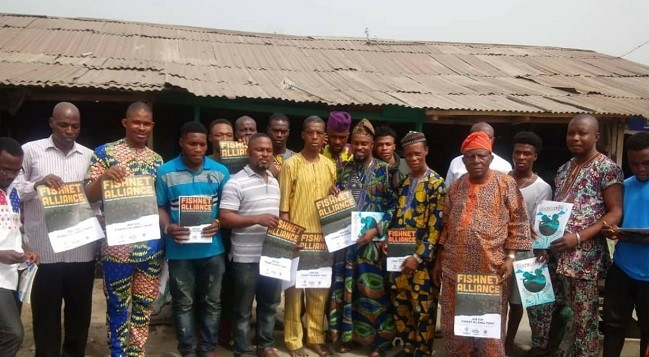
Foundation (HOMEF) fishers in Nigeria and Togo met on December 28, 2018 in
Makoko community, Lagos State, Nigeria. The meeting reportedly created space
for exchange of information and ideas to ensure sustainable fishing and ensure
that fishers’ rights are upheld and respected by policy makers.
Adam Derman (second left) with fishers from Makoko
The meeting hosted Adam Muhamadou Derman, the
Secretary General of Fishermen Trade Union in Togo; who also doubles as the
chairman of FishNet Alliance, Togo and leaders of fishing associations in
Makoko. Apostle Akintimehin, one of the leaders of fishing associations in
Makoko, thanked HOMEF for being always committed to the cause of fishers in
Makoko and Nigeria at large.
While narrating the fishing practices in
Togo, Adam said that there are federations of fishers in Togo which include: continental
fishers (folks that fish in rivers, creek and other inland water) and oceanic
fishers (folks that fish in seas, oceans etc.). He added that, at a time, a new
fishing port was constructed in Lome by the Chinese without due consultations
with the fishers – so the fishers were not involved in the construction. He
stated that it would have been better if the fishers were consulted so they can
decide how the port would be operated.
According to him, a time came when the
fishers and trade union of fishers raised their voices because the construction
activities were negatively impacting their fishing activities. A management
committee was set up and fishers were incorporated into the management of the
port, affording them the opportunities to be involved in decision making for
the port operations and fishing in their region.
He added that monitoring of fishing
activities was done by the government in the past, but now that there are
professional fishing association associations.
“We are part of the monitoring and control
team with government public administration. With the fishers’ involvement, they
have put in place good fishing practices like fishing with small nets, fishing
with generator, in which they go for fishing with generator and put light
inside the water to attract fish,” he said.
While reiterating the stance of FishNet
Alliance, he said that there is a sensitisation going on now to discourage
fishers from using chemicals because some fishermen go to the sea with some
chemicals and put them in the water to catch more fishes to have more money.
“We are currently dialoguing with them and
informing them about the harm (both to the marine environment and to humans that
consume the fishes and also our livelihoods) of using chemicals to fish, informing
them that the chemical kills the fish, their eggs and other aquatic organisms.
When this happen, they will not be able to reproduce and if this continues over
some years; there will be no more fish in our water.”
He informed that they have gone a step
ahead to ensure that the local knowledge is preserved for now and the future –
so they organise workshops to train community fishers (both young and old) on
sustainable local fishing techniques and resource management as a way of
continuous reminder about their traditional methods of fishing that respects
nature. He believes that by so doing, they are transferring the local knowledge
to the future.
They expressed their readiness to uphold
the tenets of the FishNet Alliance stating that the FishNet Alliance is the way
to go and that it will help unite fishers in Africa and in other parts of the
world.
The fishers from Makoko thanked him from
coming all the way from Togo for a knowledge exchange and solidarity visit,
stating that they face threats of displacement from their coastal environment
due to dredging activities by the government, and that, secondly, fishing gears
are expensive, and they do not enjoy any assistance from the government.
Participants opined that the problems faced
by coastal communities are similar in nature, yet the authorities involved are
not taking the plight of the fishers in coastal areas into consideration, even
when the fact is clear that the sector employs more people than the oil and
mining sectors.
With the FishNet Alliance, the fishers in
coastal regions in Nigeria, Togo and Ghana believe that they now have leverage
and a platform to express themselves and share their experiences and issues
with other fisher folks across the coast of West Africa.
The platform brings about collective
efforts in putting a stop to the activities of the explorative and extractive
industries across Nigeria and the coast of West Africa, the fishers stressed.
The fishers from Lome and Makoko agreed that since exploration for hydrocarbons is ongoing along the entire coastline of West Africa, it is essential that the FishNet network expands to more countries and that fishers are trained to monitor the marine ecosystem in their territories.
By Stephen Oduware (Project Officer, Sustainability Academy, HOMEF)
The world has been trying for decades to curb deforestation
but continues to fail. Forests are still being cleared at high rates despite
efforts by forested and supportive countries alike. A new study by researchers has found that there is no “one
size fits all” solution: every agent of deforestation is different and requires
specialised efforts to reduce their impact.
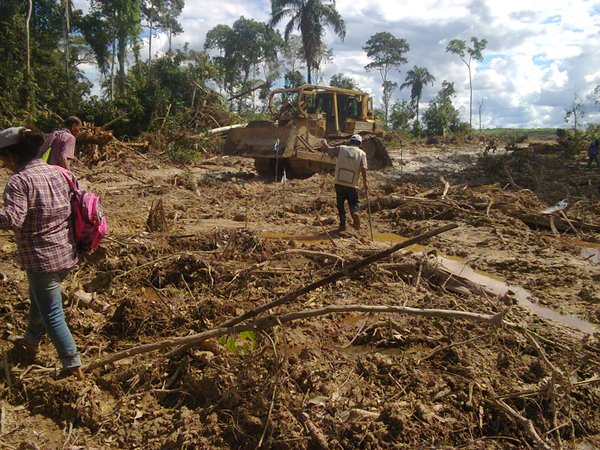
Deforestation in Peru
The researchers – from World Agroforestry, ASB
Partnership for the Tropical Forest Margins, African Centre for Technology
Studies, Ethiopian Environment and Forest Research Institute, and the Norwegian
Institute of Bioeconomy Research – highlighted three main typologies of
deforestation, and forest degradation: 1) smallholding farmers, usually very
localised; 2) large-scale commercial agriculture involving legal or illegal
allocation of forested areas to establish commercial farms; and 3) natural
factors, such as fire, insect attack and landslides.
Each of these three forms of deforestation need to be
addressed differently if the rate of deforestation is to decrease
substantially. In their study, the researchers focused on the first category – smallholding
farmers – in two forested areas: Menagesha Suba in Ethiopia; and Masaai Mau in
Kenya.
“We applied behavioral science theories to understand the
in-depth contexts among smallholders in relation to deforestation and forest
degradation,” said Lalisa Duguma, the lead author of the paper and a researcher
at World Agroforestry. “In the past, the search for solutions to curb
deforestation largely focused on technical solutions without unearthing the
underlying behavioral logic of smallholders as it relates to deforestation.
Such an approach misses its target widely.”
They found that the factors forcing smallholders to engage
in deforestation and forest degradation were largely contextual, that is,
socio-demographics, production constraints, policies and governance issues,
with some influence from routine practices, such as timber extraction for
fuelwood and construction. These factors can be broadly aggregated as
necessity-driven, market-driven, and governance-driven.
“In the forests studied, deforestation and forest
degradation were mostly caused by farmers meeting their needs for subsistence,
supported by weak governance. Though most factors were intrinsic to
smallholders’ contexts, the extent of deforestation and degradation was
aggravated to a great extent by factors external to the communities living
close to the forested area.
There was also an observed strong interdependence between
the various key factors, which demands a systemic approach for dealing with the
drivers of deforestation and degradation. Therefore, when policies are being
developed, there should be scrutiny of the contexts, the factors aggravating
destructive behavior, and the associated enablers, to reduce forest losses
under varying socioeconomic, biophysical, and governance conditions.
The researchers recommend that REDD+ should use the
typologies of deforestation and forest degradation and the context in which
they occur to identify targeted measures that could enhance effective control
of loss of forests.
“With REDD+ moving into implementation after the
Paris agreement,” said Peter Minang, a co-author and leader of the Landscapes
Governance research unit at World Agroforestry, “a search for innovative ways
of understanding the drivers of deforestation and finding corresponding
relevant solutions is critical to save forests.”
The University of Reading in the United Kingdom says it is
partnering with the Federal Institute of Industrial Research Oshodi (FIIRO) to
achieve green economy transition in Nigeria.
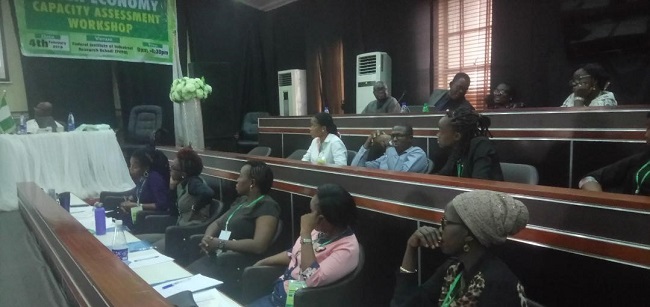
Cross section of participants at the workshop
Prof. Chuks Okereke of the university made this known on
Monday, February 4, 2019 at a forum held in Lagos. The theme of the workshop
was: “Green Economy Capacity Assessment Workshop’’.
Okereke said that the project, which included four other
agencies under the Federal Ministry of Science and Technology, was designed to
engender Green Economy decisions in Nigeria.
Green Economy is an economy that aims at reducing
environmental risks and ecological scarcities. It also aims for sustainable
development without degrading the environment.
Okereke said: “This project is aimed at knowing the
gaps in the partner agencies, so that an effective training programme will be
implemented to equip them on how to facilitate green economy transition.
“Our research shows that there are lots of gap in African
Government systems, which include low technical skills in the area of life
cycle assessment, renewable technologies and even in terms of policy designs
mainstream.
“However, the extent of these gaps has not been really
identified in a systematic way.
“Our focus now is to have a systematic identification for
these loopholes, so that we can know for certain where those gaps exist and
work on them.
“This research will help us to facilitate low-carbon
development in Africa, which is currently the poorest and most vulnerable
continent to climate change.’’
Prof. Gloria Elemo, the Director-General, FIIRO, said that
the workshop was aimed at sensitising participants on the latest developments
in green economy around the world.
Elemo explained that the workshop would point out the set of
skills required by the Federal Ministry of Science and its agencies to
effectively facilitate green economy transition in Nigeria.
The director-general, represented by Dr Yemisi Asagbra, the
Director of Production, Analytical and Laboratory
Management, said that the workshop would help participants to become
part of the resource persons within the ministry.
Elemo said that they would help to galvanise Nigeria’s
efforts at climate mitigation and adaptation, particularly in the food and
agro-allied industry.
The Economic Community of West African States (ECOWAS) and
the African Development Bank (AfDB), on Monday, February 4, 2019 signed a $22
million agreement for the technical design to develop the Abidjan-Lagos Road.
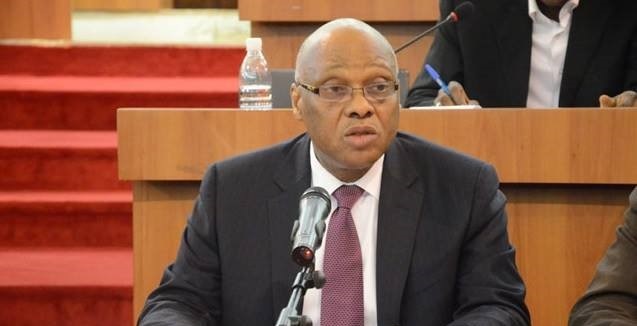
ECOWAS Commission President, Jean-Claude Brou
The signing of the Grant Retrocession Agreement between
ECOWAS and AfDB and the contracts for the feasibility, environmental,
socio-economic and detailed engineering designs was done at the ECOWAS
Commission in Abuja.
ECOWAS Commission President, Jean-Claude Brou, said that the
signing was in recognition of the decision of the Presidents of Nigeria, Ghana,
Cote d’Ivoire, Togo and Benin in 2014 on the construction of the highway.
“With the approval of the member states, the ECOWAS Commission forwarded financing requests of approximately $89 million to several development partners, including AfDB and European Union, to fund the technical and project preparation studies.
“We thank the AfDB for their swift response and subsequent
identification mission undertaken in Dec. 2018 for possible financing.
“The EU contribution of €9.13 million was mobilised through
the African Development Bank who also contributed approximately $11.06 million
making it a total of $22.72 million for the project.”
The commission’s president added that contracts were also
signed with three major consulting firms to undertake feasibility,
environmental, socio-economic and detailed engineering designs for the six-lane
highway.
He said the 1,080 km Abidjan-Lagos corridor would connect
some of the largest and economically dynamic cities in Africa and also link
vibrant seaports which served landlocked countries of the region.
The Senior Director, AfDB, Mr Ebrima Faal, said West Africa
needed deeper market integration to promote industrialisation for the economic
development of the region.
Faal reiterated that the total intra-regional trade stood at
15 per cent, adding that the project would facilitate trade within the region.
“Promoting regional trade is enshrined in articles
establishing AfDB and is a key pillar in the High Five priorities of the bank.
“That is why the bank is investing heavily in high quality
regional transport infrastructure throughout the continent.”
The AfDB representative said the objective of the
Abidjan-Lagos Corridor Highway Study was to undertake all the needed technical
studies for the effective implementation, operations and economic development
of the highway.
Mr Mayne David-West, Pearl Consultants and Civil and
Structural Engineers, who spoke on behalf of the other consultants, said the
project design would take two years and would connect to the planned East-West
coastal road.
“The project design life span will take two years before
construction; we will provide bid documents for the construction itself.
“The beauty of this road is that there is already an
existing East-West coastal road design which starts from Lagos to Calabar and
from there, goes to Cameroon.
“When this road is done, it will be connected to the
East-West coastal road.”
The EU representative, Mr Kurt Cornelis, said the project
fitted in the framework of the cooperation of the EU with the continent and the
region.
Cornelis said the project would strengthen the competitiveness of the territories, stimulate investments, encourage regional integration for development growth and job creation.”
The Kaduna State Emergency Management Agency (SEMA) with
support of an NGO, Christian Aid, on Monday, February 4, 2019 sensitised a
community in the state on appropriate response during fire and flood
emergencies.
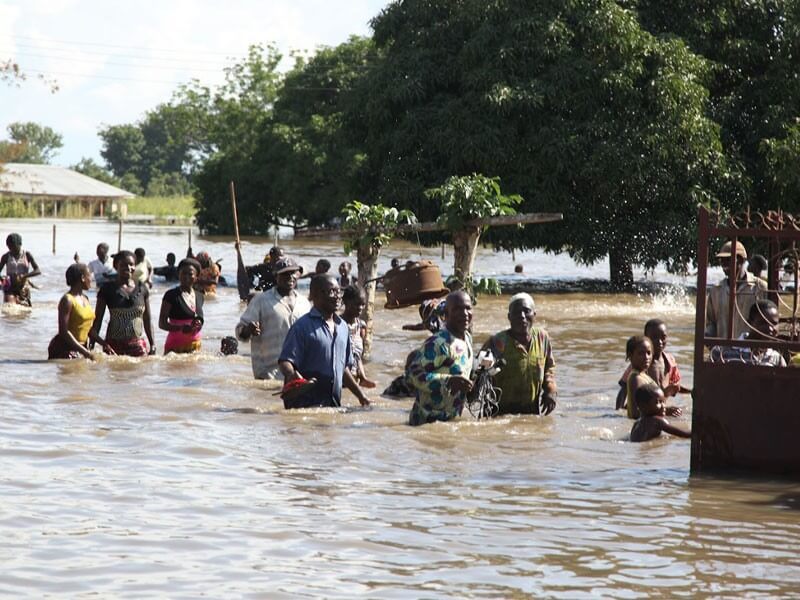
A flood ravaged community
During the event held within Bashama community in
Kaduna, Executive Secretary of the agency, Ben Kure, said the aim was to
develop local disaster response capacity.
Kure, who was represented by Mubarak Ibrahim of Relief
and Disaster Management unit of the agency, said that the simulation exercise
was in line with the agency’s preparedness and response strategies.
He said that the exercise was also aimed at increasing
synergy among response agencies in the state.
He said that the objective was to ensure that communities,
especially first responders are fit, ready and able to provide prompt
professional services meant to reduce casualties during fire incidents.
“We know that disaster management is demanding and requires
a lot of determination and commitment to accomplish.
“Therefore, we must understand the various roles support
agencies ought to play in managing disaster and building community resilience,”
he said.
Emmanuel Danjuma, Programme Officer Disaster Management and
Peace Building, Christian Aid, said the exercise would create required skills
and resilience for people of the community to provide rescue in emergencies.
He said the exercise was targeted at nine communities in
three Local governments Area’s of Kaduna North, South and Chikun.
He listed the communities to include Ungwar Rimi, Malali,
Rafinguza and Haliru Dantoro community in Kaduna North; Romi, Nasarawa in
Chikun, and Baranawa and Tudun wada in Kaduna South.
Danjuma said the sensitisation and simulation exercise was
in line with the European Commission Humanitarian Office (ECHO) as part project
of early Warning for Early Response (EWER) initiative.
He assured that the centre would continue to sensitise
communities to ensure that safety becomes a culture among residents, adding
that this will, in turn, reduce to the barest minimum accidents at home.
The event was graced by the National Emergency Management
Agency (NEMA), Kaduna State Fire Service, Red Cross, NGOs, and traditional
rulers, among others.