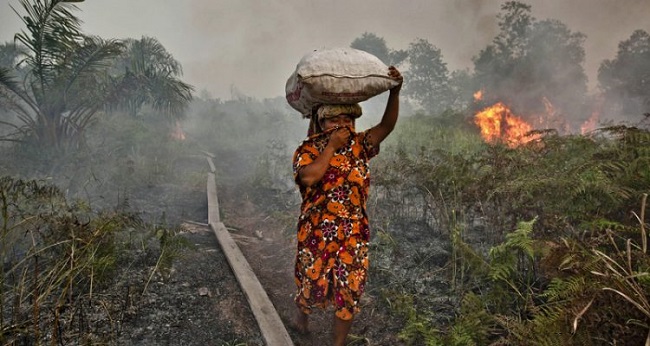
The Indonesian military deployed an aircraft to create
artificial rain on Monday, February 25, 2019 as thick smog, caused by forest
fires, forced schools to close on Sumatra Island, officials said.
Indonesian forest fire
“The plane can carry tons of salt to be used in
cloud-seeding,’’ said Edwar Sanger, the Head of the Civil Protection Agency in
Riau province on Sumatra.
Haze has blanketed parts of Riau, forcing schools to send
students’ home as pollution reached hazardous levels on Monday, Antara news
agency reported.
Visibility in Rupat sub-district was as low as 100 metres,
local official Hanafi was quoted as saying by Antara.
Forest fires are an annual hazard in Indonesia and the
resulting haze often affects neighbouring Singapore, Malaysia and Thailand,
driving air pollution to hazardous levels.
A study by researchers from Harvard and Columbia
University’s found that more than 100,000 people in South-East Asia might have
died prematurely in 2015 as a result of forest fires in Indonesia.
The research attributed premature deaths in adults to breathing
high levels of carbon-based particulates.
The Indonesian government put the death toll from the 2015
forest fires at 24.
The World Bank estimated economic losses as a
result of the fires at $16 billion.
More than two-thirds of Germans are in favour of a complete
ban on advertising for tobacco products, a study released on Monday, February 25,
2019 showed.
According to scientists, tobacco smoking is dangerous to health
Sixty-nine per cent of respondents to a survey commissioned
by the German Insurance Association said they would favour a ban, while only 27
per cent said they were against it.
A slightly smaller majority of 58 per cent said they would
welcome a ban on alcohol advertising, with 36 per cent of respondents against
it.
A majority of 75 per cent said they would welcome higher taxes
on tobacco and 59 per cent said the same for alcohol.
The survey included a representative sample of 1,003 people
over the age of 18, who were interviewed by the Forsa research institute
between Feb. 4 and Feb. 8.
In Germany, a debate about advertising harmful substances
has been continuing apace for several years.
Under the previous government of Chancellor Angela Merkel,
an attempt to enshrine a ban on tobacco advertising in law failed due to
opposition from her conservative bloc.
The UN Population Fund (UNFPA) has urged strategic stakeholders to strive more to safeguard women and girls from Gender-Based Violence (GBV) and other harmful practices.
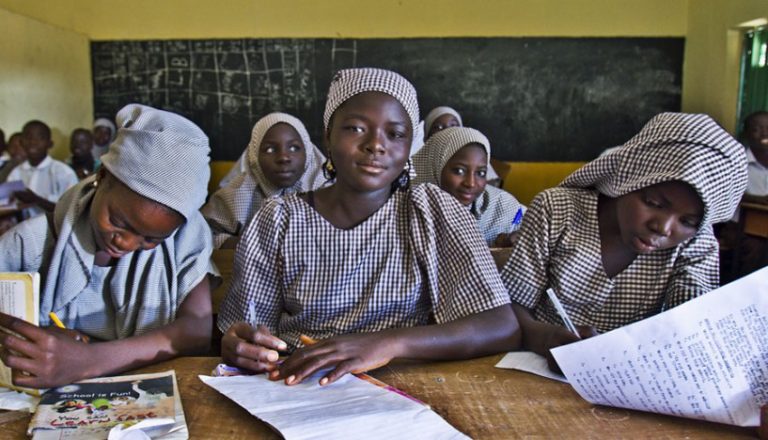
The girl child: The UNFPA seeks safeguard of women and girls from gender-based violence
The fund made the call in a statement issued by Mrs Kori
Habib, the Media and Communication Specialist of UNFPA Nigeria, on Monday,
February 25, 2019 in Abuja.
She stated that the appeal became necessary following
growing cases of Violence Against Women and Girls (VAWG) reported recently in
the public domain.
The statement reiterated UNFPA’s Zero Tolerance for GBV and
Harmful Practices, adding: “UNFPA commends government at all levels, civil
society organisations and other development partners on their efforts which
enabled the enactment of 2015 Violence Against Person’s Prohibition (VAPP) Act,
its passing into law across some states.”
The agency also used the opportunity to assure the federal
and state governments of its continued advocacy and support for the enactment
and domestication of the required laws, noting its readiness to
support capacity building of front-line response providers such as law
enforcement agents and the judiciary to help end the scourge.
UNFPA also stated that it would engage key stakeholders in
awareness campaigns and for sustainable data management, adding that notable
cases of VAWG that caught public attention included the 13-year-old Ochanya
Ogbaje, who was allegedly raped to death by a father and son in Benue in 2018.
Another notable case it cited was that of a popular blogger,
Ms Linda Ikeji, who was allegedly drugged and raped in Lagos recently, as well
as the reported story of Gift Alonge, who suffered countless incidences of
sexual assault and defilement in the hands of her biological father.
UNFPA equally mentioned the case of a young woman who was
brutalised by a group of young men in Benin City through the insertion of
pepper in her private part, stressing that “all these cases of violence and the
countless number of unreported cases, are symptoms of a larger malaise, which
require urgent national attention.
“UNFPA appeals to all states in Nigeria to domesticate and
enforce the VAPP Act.
“UNFPA also calls on relevant actors to take advantage of
the VAPP Act to address the scourge of violence against women and girls in
Nigeria.”
The Coordinator, Coalition of Non-Governmental Organisations (NGOs), Dr Odigha Odigha, says that the group has started introducing viable options of livelihood to Cross River State communities to ensure forest preservation.
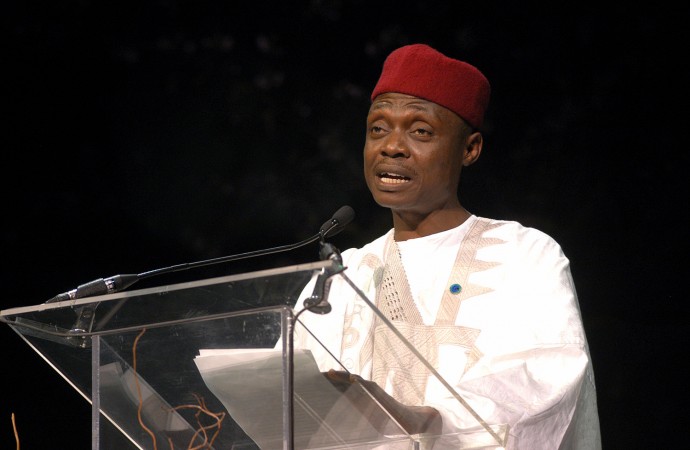
Odigha Odigha delivering a speech after being decorated with the 2003 Goldman Prize in San Francisco, California
Odigha made the disclosure in an interview with the News Agency of Nigeria (NAN) on Sunday, February 24, 2019 in Lagos.
According to him, the alternatives are means of empowering
the communities that are dependent on forest resources in the area for their
livelihood.
“Most communities in Cross River make a living from the
forest.
“To get them to help in preserving the forest, alternative
means of livelihood have to be provided for them.
“The environmental NGOs working in the areas have to put
heads together to find a way of getting the communities to help in preserving
the forest.
“In collaboration with the communities, we have to look for
the alternatives in honey and beekeeping, mushroom farming and fuel-efficient stoves,’’
he said.
Odigha said that the Cross River forest is rich in varieties of plants that produce high quality honey in the country.
He said the NGOs were assisting and encouraging the
communities in bee farming in terms of training, logistics and finance.
The coordinator said that there were over 25 edible
mushrooms in the Cross River forests, and the groups were empowering people to
have mushroom farms.
He said that the NGOs were empowering the communities to be
able to produce mushrooms at such a commercial level that they would feed the
country and also export.
Odigha said that the groups were also tapping into fuel efficient stoves to reduce drastically the communities’ dependent on firewood for cooking.
According to him, the coalition’s efforts in that regard
have yielded positive results as firewood that will normally last for one week
can now be used for over a month.
The coordinator lamented that the government had not been
forthcoming on the issue of environment and forest preservation.
Odigha, however, said that the coalition, with the help of international donor agencies, had been able to reduce the harm done to the environment through mishandling of the various forest resources in the area.
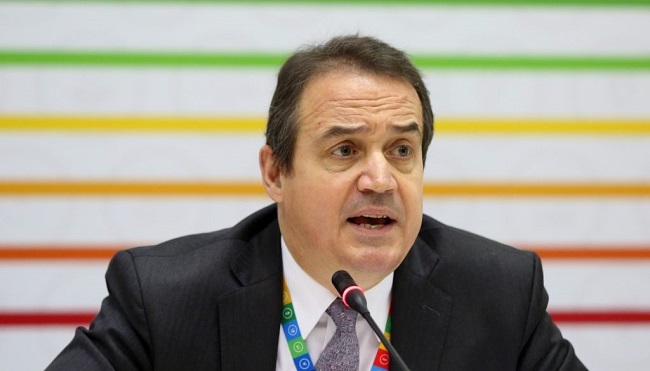
The Board of the Green Climate Fund (GCF) has selected
Yannick Glemarec to be its new Executive Director. The Board made the
merit-based selection decision at its 22nd meeting at the GCF headquarters in
Songdo, Republic of Korea, following an extensive global recruitment process.
Yannick Glemarec
Glemarec will lead the Secretariat of the world’s leading
fund supporting climate action in developing countries.
Glemarec brings 30 years of international experience in
climate change, development, finance and their interrelationships. He served as
UN Assistant Secretary-General and Deputy Executive Director for Policy and
Programme in UN Women from 2015 to 2018. Before joining UN Women, he was the
Executive Coordinator of the UN Multi-Partner Trust Fund Office in New York
from 2013 to 2015.
Previously, he served as the United Nations Development Programme
(UNDP) Executive Coordinator for the Global Environment Facility (GEF) in New
York from 2007 to 2012. Earlier, he worked with UNDP in increasingly senior
development and environment programme positions in Switzerland, Viet Nam, China
and Bangladesh. He holds a PhD from the University of Paris in Environment
Sciences, and two master’s degrees in Hydrology and in Business Administration.
Board Co-Chair Nagmeldin Goutbi Elhassan Mahmoud, from
Sudan, said: “We are delighted to select Yannick Glemarec as our next Executive
Director. His strong experience and skills will provide GCF with the leadership
needed to take us through a successful replenishment, and to increase our
climate impact in developing countries.”
Fellow Co-Chair Josceline Wheatley, from the United Kingdom,
said: “Yannick was selected from a highly qualified pool of applicants for the
position. His experience and dynamism greatly impressed the Board, and we are
delighted to nominate him to lead the Secretariat.”
Speaking after the Board announcement, Glemarec said: “I am
honoured by the Board members’ decision, and look forward to working together
with the Board, Secretariat, and our partners to make a real impact in the
fight against climate change.”
The GCF was established to support low-emissions and
climate-resilient development in developing countries. It is part of the
financial mechanism of the United Nations Framework Convention on Climate
Change (UNFCCC), and serves the Paris Agreement.
Ten countries from the English-speaking Caribbean region
convened at St. George’s University in Grenada from February 5 to 6, 2019 to
discuss a new model of cooperation for measuring, reporting and verifying (MRV)
climate action.
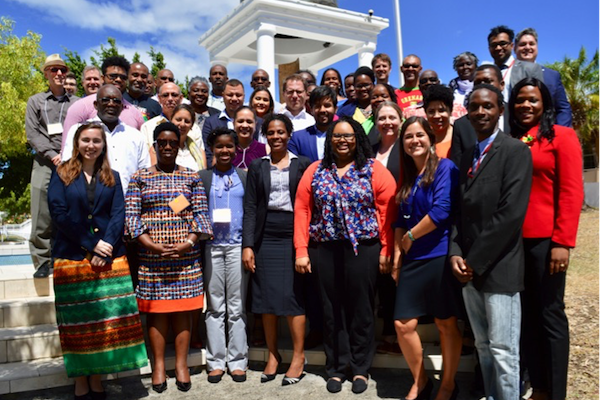
Participants at the meeting to discuss MRV in St. George’s, Grenada. Photo credit: GHG Management Institute
The meeting started with a stark call to action, delivered
by Damiano Borgogno of the United Nations Development Programme (UNDP) who
said: “You cannot control what you cannot measure.”
Countries must be able to measure and track emissions to
make informed decisions that result in climate change action, he said. Borgogno
urged for enhancing Paris Agreement transparency processes in the region,
noting that the Caribbean can lead others in working towards meeting the world’s
1.5°C climate target.
This meeting marked the formal launch of the Caribbean
Measurement, Reporting and Verification “MRV” Hub, a unique collaborative
technical institution where countries in the region can share expertise to
foster regional excellence and generate stronger policy-relevant carbon
accounting. The MRV Hub provides a mechanism through which country experts will
function as a true learning, mentoring and resource-sharing technical
cooperative.
Carlos Fuller, International and Regional Liaison Officer of
the Caribbean Community Climate Change Centre (CCCCC), remarked: “This is a
great initiative that will create the critical mass of regional expertise to
monitor and track the Caribbean’s contribution in addressing climate change.”
During its initial phase, the Hub is supported by numerous
international and regional organisations including the Greenhouse Gas
Management Institute, the United Nations Framework Convention on Climate
Change, the Windward Islands Research and Education Foundation, St. George’s
University, UNDP, the UN Environment, and with support from the International
Climate Initiative (IKI) of the Federal Ministry for the Environment, Nature
Conservation and Nuclear Safety.
Hugh Sealy, from the MRV Hub, encouraged countries “with a
cooperative model, two plus two will equal 10 in our region.”
“Our goal is to improve domestic policy making, create
efficiencies in climate action and become instrumental for the successful
implementation of climate plans, the cornerstone of the Paris Agreement,” said
Mr. Borgogno.
Steps to ensure that a proposed off-grid electricity project
is less likely to involve a financial loss moved towards a conclusive phase
recently in Abuja, where stakeholders met to validate the project document.
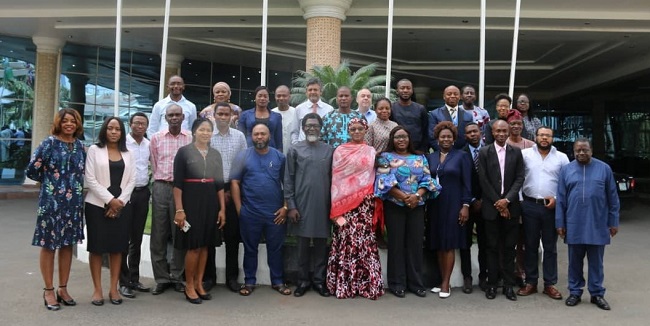
Group photo of participants at the workshop
Participants at the daylong workshop on Thursday, February
14, 2019 were presented an overview of the Project Document wherein they provided
inputs into the project design in the bid to finalise the document.
Titled: “De-risking Sustainable Off-grid Lighting Solutions
in Nigeria”, the project is a collaboration involving the United Nations
Development Programme (UNDP) Country Office and the Global Environment Facility
(GEF), who are supporting the government of Nigeria to actualise the dream.
It is being financed via a $2.64 million GEF grant and $10.6
million of co-financing from the UNDP, government institutions, multi-lateral
institutions, and private sector players. The Rural Electrification Agency
(REA) is the national implementing partner.
The aim of the initiative is to promote private sector
investment in sustainable off-grid lighting technologies by establishing a
sound policy environment that facilitates the creation of a self-functioning
and sustainable market in Nigeria.
The project Concept has already been approved by the GEF
Secretariat and is presently at the Preparation & Endorsement stage.
Afterwards, the project will enter a five-year (from 2019 to 2024)
implementation phase.
It features three components: Policy derisking of off-grid
lighting solutions, Financial derisking of off-grid lighting solutions, Knowledge
management and scale-up strategy.
Along the line, changes were made to the project design, such that proposed outputs such as support to establishing a Lighting Transition Fund and support to a kerosene subsidy transition strategy were eliminated. One of the reasons given for the adjustment is that assessments showed that rural households now used little and increasingly less kerosene for lighting purposes, as they were turning to dry-battery powered hand-held torches and standalone generators.
According to a team of project consultants comprising Etiosa
Uyigue, Ejiro Joyce Olive-Igbuzor and Sanju Deenapanray, risks (and cost of
capital and cost of electricity) can be reduced and/or transferred using a
combination of policy derisking and financial derisking instruments.
They listed barriers to the deployment of off-grid rural
electrification to include: Power market, Social acceptance, Technology and
hardware, Digital platform and Telecoms sector, Developer and energy service
providers, Payment and User Credit, Financing.
“One of the critical elements or ingredients that this election will be framed around is the issue of power. So, what we are hoping is that whatever it is that we agree as a project here today will contribute in no small way to finding a lasting solution to the issue of power deficit in the country,” said Muyiwa Odele of the UNDP in an opening message.
A firm, Tullow Oil, handling Kenya’s only oil project, says
a deal with local Kenyan authorities that will allow it to pump water to
pressurise the project for a final green light may take a while.
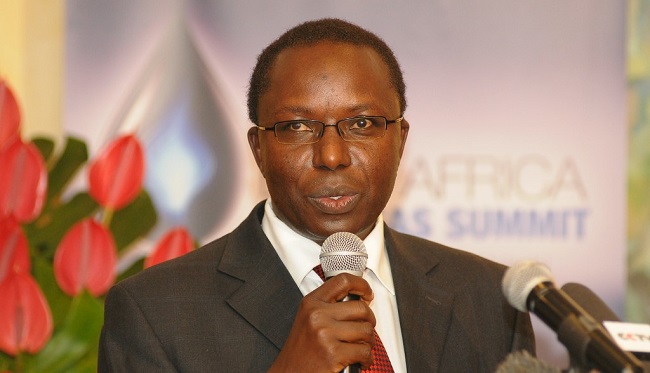
Martin Mbogo
Tullow’s Kenya Managing Director, Martin Mbogo, said on
Friday, February 22, 2019 in Nairobi that the deal might delay the project
until the third quarter of 2019.
Mbogo said Tullow, with partners Total and Africa Oil, were
working towards a final investment decision (FID) by year-end and had hoped the
water deal would be reached by mid-year.
“I would probably realistically put it more for Q3 in terms
of landing that agreement,” Mbogo told Reuters, referring to the deal
organising the way Tullow can tap a body of water straddling two counties in
northwestern Kenya.
“(It’s) one of those things we absolutely need before we can
get to FID.”
Tullow estimates that Kenya’s onshore fields in Turkana
province hold 560 million barrels of oil and expects them to produce up to
100,000 barrels per day from 2022.
Another milestone to pass is land acquisition for
infrastructure around the oil fields and the 820 km pipeline to the Indian
Ocean for which it plans to send out construction tenders within weeks.
The government recently gazetted land it wants to buy in
order to lease it to the oil partners.
Having clarity on land acquisition and pipeline tariffs is
crucial to reach a final investment decision on the $2.9 billion project, which
Tullow wants to make money at $50 a barrel.
“There is good but slower than expected progress on the land
issue,” Mbogo said.
This week, the Kenyan government together with Tullow
approached potential buyers of Kenya’s low-sulphur crude, including Asian
refiners like India’s Reliance, independent oil groups and majors such as Royal
Dutch Shell.
There will be further such meetings during International
Petroleum week in London next week to see whether buyers are willing to pay a
premium to Brent crude for Kenyan oil.
The government has an option to buy up to 20 per cent in
both the fields and the pipeline, which Tullow expects it to exercise at least
in part before the final investment decision.
Kenya has mooted floating its national oil company as holder
of such a stake on the Nairobi and London bourses. The oil ministry was not
immediately available for comment on this.
Gov. Godwin Obaseki of Edo State has urged communities in
the state to always raise alarm when erosion and other forms of natural
disasters threaten their environment.
Governor Godwin Obaseki of Edo State
The governor said this during the official inauguration and
inspection of remediation work on Ewu and Ibore gully erosion sites in Esan
Central Local Government Area of the state on Thursday, February 21, 2019.
The remediation work is being done by the Nigeria Erosion
and Watershed Management Project (NEWMAP).
Obaseki said that gully erosions were mostly caused by human
activities and urged communities to take steps to identify them for quick
government intervention.
“If the communities have alerted government on time, the
threat to their environment could have been prevented and unnecessary loss of
lives and huge financial costs avoided,” he said.
He said that the remediation work marked the end of trauma,
uncertainty, loss of lives and property in the two communities and a beginning
of environmental and waste management.
The governor also assured people of Ugbalo community, close
to Ibore community that work would commence to address their flooding
challenge.
Obaseki said the next plan for the council was economic
empowerment of youths through technical education and revitalisation of Ewu
Flour Mill to provide jobs.
Earlier, Commissioner for Environment and Sustainability,
Mrs Omoua Oni-Okpaku, said that the two sites were
among numerous others ongoing in the state and assured that they would be
completed as scheduled.
She called on the communities to cooperate with contractors
handling the project to ensure completion of ongoing Phase II.
In his remarks, Onojie of Ewu, HRH Rasaq Ojiefo III,
appreciated the project, saying lives had been lost particularly during the rainy
season.
“We thank you our governor, the contractors and everyone
working on the success of the project.
“Over 10 youths have died because of this gully before this
work commenced,” he said.
Similarly, spokesman for Ibore, Mr Theophilus Okoh, praised
the governor for fulfillment of his electioneering promise in 2016.
Botswana, home to almost a third of Africa’s elephants, is
considering lifting a ban on big game hunting, to combat what the government
says is growing conflict between humans and wildlife.
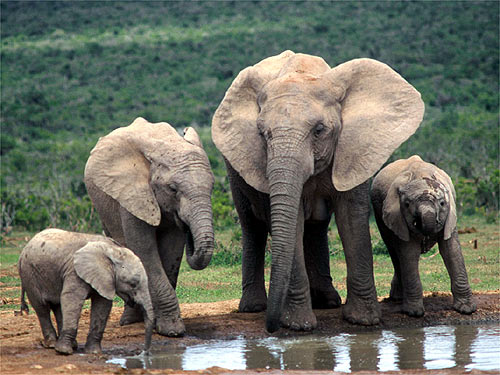
Elephants
Conservationists estimate the southern African country has
about 130,000 elephants, however some lawmakers say it is much higher and
causes problems for small-scale farmers.
A committee appointed by President Mokgweetsi Masisi to
review the 2014 hunting ban handed a report on the matter to Masisi on Thursday,
February 21, 2019.
“We recommend a legal framework that will enable the growth
of a safari hunting industry.
“We also manage the country’s elephant population within the
historic range,’’ Frans Van Der Westhuizen, who chaired the committee that also
called for “regular but limited” elephant culling, said.
Masisi set up the committee in June 2018 to consider the ban
imposed by former president Ian Khama after surveys showed declining wildlife
populations in the north.
Botswana, the size of France and mostly arid, has a population
of around 2.3 million people and vast tracts of remote wilderness that make it
a magnet for foreign tourists who want to view wildlife.
Masisi said he would present the report to his cabinet
before deciding.