Home Blog Page 170

Shaping the next five years of Global Climate Action

0

UN Climate Change on Tuesday, September 23, 2025, published a summary of feedback from the consultation process on the “five-year plan” – a shared roadmap to organise and scale climate action through to 2030.

The foundation for this plan was laid at COP29, where the mandate of the Climate High-Level Champions was renewed until 2030. Following that decision, the incoming COP30 Presidency invited the Champions to lead an inclusive consultation with Parties and non-Party Stakeholders, as outlined in its fourth letter.
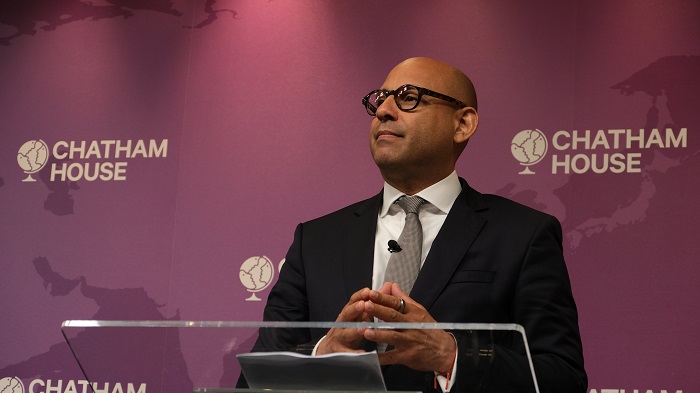
Simon Stiell
UN Climate Change Executive Secretary, Simon Stiell

Developed jointly by the COP30 Presidency, the Climate High-Level Champions and UN Climate Change, the new five-year plan intends to align the efforts of governments, businesses, and communities to deliver on the Paris Agreement. By integrating a broad range of perspectives, it will be anchored in the voices and priorities of those driving climate action worldwide – a pivotal step toward a coherent, effective, and inclusive Global Climate Action Agenda.

Global Voices Shape the Agenda

The submissions invited by the Climate High-Level Champions and highlighted in the new synthesis report reflect a diverse set of 67 insights and recommendations – the most ever received for such a Champions’ call. Inputs come from both Parties and groups of Parties – representing more than 120 countries – as well as a wide range of non-Party stakeholders – businesses, cities, regions, communities, and organisations that play a vital role in advancing implementation efforts.

The inputs stress the need for accelerated and inclusive climate action – with an all-hands-on-deck approach to align voluntary initiatives with national strategies and the overarching goals of the Paris Agreement and the outcome of the first Global Stocktake.

“As this new era of implementation gathers pace, we must also keep evolving, and striving towards faster, fully inclusive, higher-quality decisions that tie the formal process ever-closer to real economies and real lives,” said UN Climate Change Executive Secretary, Simon Stiell, in a speech at New York Climate Week on Monday, September 22, 2025.

Building on a Decade of Progress

The new five-year plan for Global Climate Action comes at a pivotal moment.

The facts show the world is aligning with the Paris Agreement. Investment in renewables has increased ten-fold in 10 years. The clean energy transition is booming across almost all major economies and hit $2 trillion last year alone. Today, over 90% of new renewables cost less than the cheapest new fossil option.

“But this boom is uneven. Its vast benefits are not shared by all,” said Stiell. “So, we need to step it up. And we need to step it up fast.”

The inputs in the summary of feedback cover the full spectrum of the climate action agenda. Some standout suggestions and common themes include the following: 

  • Translate voluntary commitments into measurable implementation by supporting the delivery of national climate action and adaptation plans, scaling solutions, strengthening existing initiatives, and enabling systemic and sectoral transformation that delivers tangible results on the ground. 
  • Mobilise climate finance, in particular, for adaptation and resilience and ensure equitable access for developing countries. 
  • Strengthen delivery by establishing metrics and tracking frameworks that link non-Party stakeholder contributions to climate action and adaptation plans. 
  • Ensure inclusive and sustained engagement by providing capacity-building, resources, and predictable channels for dialogue. 
  • Embed equity by ensuring underrepresented groups have meaningful roles in decision-making, leadership, and resource allocation 

COP30: A Unified Agenda for Scaled Solutions

The COP30 Presidency is currently working hand-in-hand with the Climate High-Level Champions and UN Climate Change on a unified Action Agenda that builds on the progress made in the last decade and streamlines and organizes it to scale the solutions the world still urgently needs.

“From small businesses to local communities, people are at the heart of climate action. The next five years must empower those at the forefront of climate action with the tools, finance, and partnerships they need to turn solutions into livelihoods and resilience,” said Nigar Arpadarai, Climate High Level Champion for COP29.

Stiell, who outlined what COP30 needs to do in his speech on Monday, said It must respond to the state of national climate plans (NDCs), to the roadmap to $1.3 trillion annually of accessible finance, deployable at speed and scale, to progress made and where acceleration is most needed.

He also said COP30 must spur faster and wider implementation, across all sectors and economies, and it must leave no-one behind. All of which not only aligns with the global climate action agenda but also helps achieve these goals.

Road to Belém: Shaping the Future Together

The five-year vision to be unveiled at COP30 is expected to be an important milestone for international climate cooperation – one that aligns voluntary initiatives with national priorities, avoids fragmentation, and accelerates the delivery of the Paris Agreement.

“The next five years must be about delivery,” concludes Dan Ioschpe, Climate High Level Champion for COP30. “By aligning what governments have already agreed with the leadership of businesses, cities and subnationals, and communities, we can turn the Global Stocktake into a blueprint for real transformation. Belém will be where we lay those foundations together.”
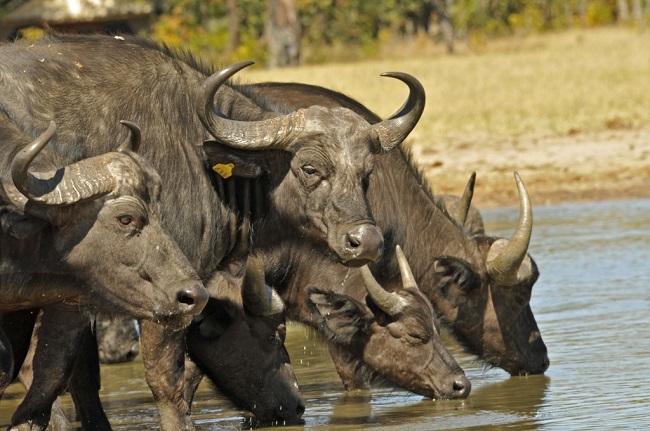
Lions trigger buffalo stampede, causing mass drowning in Namibian river

0

The Ministry of Environment, Forestry, and Tourism confirmed on Tuesday, September 23, 2025, the drowning of over 80 buffaloes in Namibia’s Chobe River following a stampede triggered by lions.

Ministerial spokesperson, Ndeshipanda Hamunyela, said the stampede occurred when lions chased a herd of buffalo from the Botswana side of the river into Namibia, in the Serondela area.

Buffaloes
Buffaloes

The animals fell from a deep cliff into the river, with some tumbling over each other, she said.

“The ministry and other law enforcement officials are on site to maintain law and order.

“The meat will be distributed to communities in the immediate area by the ministry with the involvement of other relevant stakeholders in the region,’’ the spokesperson said.

A similar incident also occurred in 2023, which saw over 100 buffaloes die in a mass drowning following a stampede into the Chobe River.

The Chobe River flows along the northeastern border of the Chobe National Park in Botswana, which is known for its large wildlife breeding. 

Nigeria’s climate gamble: Can NDC 3.0 deliver net-zero by 2060?

0

Nigeria’s Third Nationally Determined Contribution (NDC 3.0), officially submitted in September 2025, represents the country’s most ambitious climate commitment to date. It is designed as a blueprint for aligning Nigeria’s development pathway with global climate goals, while integrating subnational perspectives and national development priorities.

The plan covers sector-wide strategies for emissions reduction and adaptation, with clear targets, inclusive processes, and a bold financing vision. Yet, the challenge remains whether Nigeria can turn this blueprint into lived reality.

Balarabe Abbas Lawal
Minister of Environment, Alhaji Balarabe Lawal

NDC 3.0 commits Nigeria to reducing greenhouse gas (GHG) emissions by 29% by 2030 and 32% by 2035 relative to 2018 levels. This translates to an emissions reduction of about 184.9 million tonnes CO₂e from a 2018 baseline of 573.5 million tonnes. The plan maintains an unconditional 20% emissions reduction target by 2030, with conditional reductions (dependent on international finance and support) covering roughly 80% of the 29% (2030) and 32% (2035) targets.

Importantly, these commitments are aligned with Nigeria’s net-zero target by 2060. On energy access and transition, the NDC sets a target of achieving 100% electricity access by 2030 and ensuring that at least 50% of power generation comes from renewables by the same year. It also envisions phasing out kerosene lighting by 2035 and shifting household cooking fuels from biomass to LPG and electricity.

The NDC covers all major emitting sectors: energy (including oil and gas), transportation, industry, agriculture, forestry, and waste. Priority actions include achieving a 60% reduction in fugitive emissions (leaks and venting) from the oil and gas sector, accelerating adoption of electric and compressed natural gas (CNG) vehicles, expanding both on-grid and off-grid renewable energy, cutting deforestation while promoting sustainable forestry and ecosystem restoration, and advancing climate-smart agriculture to build resilience for farmers already facing droughts, floods, and soil degradation. These goals signal a push to decarbonise while also addressing food security, livelihoods, and resilience.

A defining feature of NDC 3.0 is its emphasis on subnational engagement. States, local governments, and communities were consulted in its design, and the framework envisions governors, state ministries, and local actors as key implementers. This reflects a growing recognition that climate action and resilience-building happen most directly at subnational levels, where floods, droughts, and insecurity impact lives daily.

Nigeria estimates that implementing NDC 3.0 will require $337 billion between now and the mid-2030s – $195 billion for mitigation and $141.5 billion for adaptation. The latter includes infrastructure resilience, food security, and loss and damage measures. The document assumes that concessional international finance, blended instruments to crowd in private capital, and stronger domestic institutions will make this scale of financing possible. Yet, experience suggests that securing and deploying such funds remains a daunting challenge. Domestic budgets cannot cover the gap, and donor flows are becoming more uncertain.

Multilateral funds exist but remain highly competitive, and Nigeria’s past struggles with transparency and project readiness continue to deter large-scale access. The National Climate Change Fund offers a potential domestic mechanism, but it is undercapitalised. Without bankable projects, robust monitoring and reporting, and guarantees against political and security risks, private capital is unlikely to flow at the necessary scale.

Beyond finance, security may be the single biggest factor undermining NDC delivery. Banditry, insurgency, oil theft, and communal clashes directly affect climate projects – delaying renewable rollouts, displacing farmers, and deterring investment. Unless security is treated as part of climate infrastructure, project implementation will remain fragile.

At the same time, Nigeria’s extractive dependence continues to cast a long shadow. While oil and gas are framed as “transition fuels,” the lure of revenues from new fossil projects, alongside a rising boom in solid minerals such as gold and lithium, risks locking Nigeria into another extractive cycle.

Without strong governance and environmental safeguards, these sectors could undermine climate goals. Politically, the landscape remains volatile. Elections are approaching, campaigns are already absorbing policymaker attention, and fossil fuel lobbies remain influential. Climate goals risk being subordinated to short-term bargains. Without insulation from electoral cycles, sustaining the long-term planning required for NDC delivery will be difficult.

In an optimistic scenario, Nigeria could mobilise blended finance, improve security in key corridors, accelerate distributed renewables, and scale up climate-smart agriculture. This would not deliver every headline target, but it could produce significant progress by 2030. More likely is a mixed scenario: pockets of success in states with strong leadership or donor support, but limited national-scale impact. The pessimistic scenario – shrinking finance, worsening insecurity, and unchecked extractives – remains equally plausible.

Can Nigeria achieve its net-zero target by 2060? The answer depends on how the next decade is navigated. If NDC 3.0 drives genuine structural change; mobilising finance, mainstreaming renewables, transforming agriculture, regulating extractives, and integrating security into climate planning, then the 2060 goal remains possible. However, if the implementation gaps that plague previous commitments persist, net-zero will remain aspirational.

The stakes are enormous: resilience for millions of citizens, credibility on the global stage, and the ability to prove that African nations can lead in defining just, inclusive climate pathways. If finance is mobilised, security integrated, extractives governed, and politics stabilised, NDC 3.0 could mark a turning point. If not, it risks joining the list of climate plans that read well on paper but fail in practice.

By Donald Ikenna Ofoegbu, Programme Manager, Sustainable Nigeria Programme, Heinrich Böll Stiftung, Abuja

‘Reckless, disruptive, indifferent’ – Reactions trail Trump’s UNGA climate denial speech

0

US President, Donald Trump, lambasted the United Nations and countries around the world during a nearly hour-long speech on Tuesday, September 23, 2025, at the UN General Assembly.

Trump admonished the UN over what he views as its ineffectiveness. He said some countries “are going to hell” over their immigration policies.

Donald Trump
US President Donald Trump addresses the 80th United Nations General Assembly

And he blasted climate change measures and what he called the “green energy scam”, claiming renewable energy sources like solar and wind are more expensive than fossil fuel energy.

On the contrary, renewables have driven down the cost of electricity in the US.

Trump touched on everything from Barack Obama’s carbon footprint to his own failed bid years ago to renovate the UN’s headquarters. He mocked wind energy, praised “clean, beautiful coal,” and suggested that environmentalists “want to kill all the cows.”

The president criticised Europe’s high energy prices and what he called an obsession with climate change and green energy. “We stand ready to provide any country with abundant, affordable energy supplies if you need them – and most of you do,” he said, offering US coal and fossil fuels as alternatives.

Responding to Donald Trump’s speech at the UN General Assembly, climate activists called the U.S. president’s push for fossil fuel expansion and climate denial a thinly veiled threat to global peace, progress, and survival.

Namrata Chowdhary, Head of Public Engagement at 350.org, said: “UN Secretary-General António Guterres gave us fair warning earlier today, that we have ‘entered an age of reckless disruption and relentless human suffering’. As he said, ‘The pillars of peace and progress are buckling under the weight of impunity, inequality, and indifference.’

“His warning was only emphasised by the erratic speech given by Donald Trump: Reckless. Disruptive. Indifferent. And mocking with impunity the relentless suffering around the world, in a speech hard to distinguish from reality TV of the worst kind.

“Fact-checkers will be kept busy unravelling the many loosely linked threads in that latest missive, but the choice ahead is clear. If we want to protect the planet, world leaders must commit to phasing out fossil fuels, and scale up investment in clean, renewable energy that delivers justice and resilience for all.”

Trump’s remarks, which appeared to downplay the urgency of climate action and pushed for expanded fossil fuel investment, come as the world continues to experience record-breaking heat, fires, and floods. At the upcoming UN Climate Summit, world leaders face a stark choice: stand with people and the planet, or with the fossil fuel industry. 

On Saturday, more than 600 actions across 87 countries called for world leaders to draw the line on fossil fuels, while in New York, over 25,000 people marched to demand a tax on extreme wealth.

JL Andrepont, US Senior Policy Analyst at 350.org, said: “Trump knows he’s lying, and most Americans know it too. This stream of lies is part of the same fossil-fueled billionaire agenda that got tens of thousands into the NYC streets this weekend, calling for climate justice. The leader of the world’s top polluting country is trying to tell the people – from our Pacific family members to the climate-and conflict-displaced peoples he’s deporting – that their lived reality is not real. But there are far more of us calling for human rights than there are of him and his cronies.

“We refuse to be pawns in Trump’s unjust quest to pad the pockets of billionaires like him. It’s time to draw the line and make billionaires in and out of government pay for the damage they’ve caused and fund the needs of the people.”

The group is calling on governments to commit to phasing out fossil fuels and scale up investment in clean, renewable energy that delivers justice and resilience for all.

Crop conservation, research vital in addressing food security challenges – IITA

0

The International Institute of Tropical Agriculture (IITA) says the conservation of crops at gene bank and research conduction are vital to addressing food security challenges in Africa and globally.

Dr Olaniyi Oyatomi, an Associate Scientist and Seedbank Manager at IITA’s Genetic Resource Centre, said this at a media training on Gene bank, Genetic Resources and Bioscience organised by IITA on Tuesday, September 23, 2025, in badan, Oyo State.

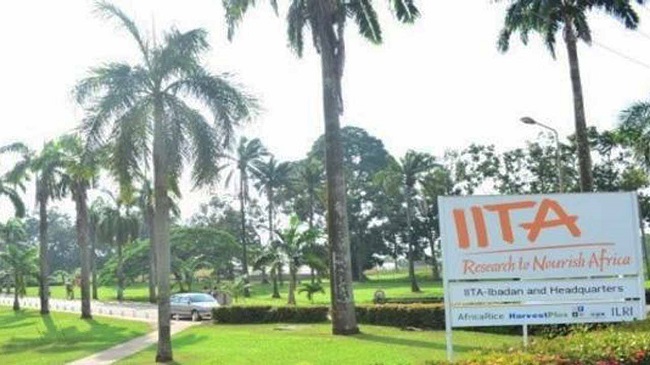
IITA
IITA, Ibadan

Oyatomi said crop conservation and research would help in regeneration and development of improved crop varieties that were pest and disease resistance and adaptable to changing climatic and environmental conditions.

According to him, without conservation of seeds at the gene bank and research there will be no improve seed to develop for future utilisation for breeders to breed improved varieties.

The scientist said the old seed planted by farmers was gradually degenerating and needed to be improved upon to be able to adapt to changing climatic conditions and pests and diseases resistance.

“At IITA gene bank, we have different crops like cowpea, yam, cassava ,plantain and banana collected from different Africa countries and the world, which we conserved and improved on its varieties.

“We have the largest collection of cowpea accessions which is around 16,000 in IITA gene bank.

“Gene bank plays a significant role in short, long term crops preservation, quality retention, prevent degeneration for present and future generations and continuous supply to breeders to use and ensure food security,” Oyatomi said.

He said the institute had enough materials and resources to get improved crop varieties, that were adaptable to different climatic conditions, noting that without crop improvement there could not be food security.

According to him, seed security is recipe for food security, if there are no secure seeds, pests and diseases as well as climate change would affect them and this will lead to food security challenges.

He said that seeds collection and preservation served as an opportunity for breeders to use for breeding new varieties that are high yielding which would be supply to farmer to plant to ensure food sufficiency.

Oyatomi said that the institute had been receiving a lot of request from breeders in Africa and different parts of the world and to use those improved crop varieties for breeding high yielding crops.

He called on government to invest in research, especially in breeding new crop varieties in order to overcome food security challenges in Africa and the world generally.

Also speaking, Dr Yemi Fajire, Laboratory Manager, Bioscience, IITA, said challenges facing agriculture could be mitigated through science innovations in order to  meet global food demands.

Fajire said that adoption of technology would make breeding easier and shorten the length of time to develop new varieties that were high yielding and crop improvement.

Journalists were later taken round for field and laboratory visits.

The training is to equip media professionals with the knowledge to report agricultural innovation accurately, especially in the area of crop improvement.

By Suleiman Shehu

Uncontrolled high blood pressure puts over a billion people at risk – WHO

0

The World Health Organisation (WHO) on Tuesday, September 23, 2025, released its second Global hypertension report, showing that 1.4 billion people lived with hypertension in 2024, yet just over one in five have it under control either through medication or addressing modifiable health risks.

The new report – released at an event co-hosted by WHO, Bloomberg Philanthropies, and Resolve to Save Lives during the 80th United Nations General Assembly – also reveals that only 28% of low-income countries report that all WHO-recommended hypertension medicines are generally available in pharmacies or primary care facilities.

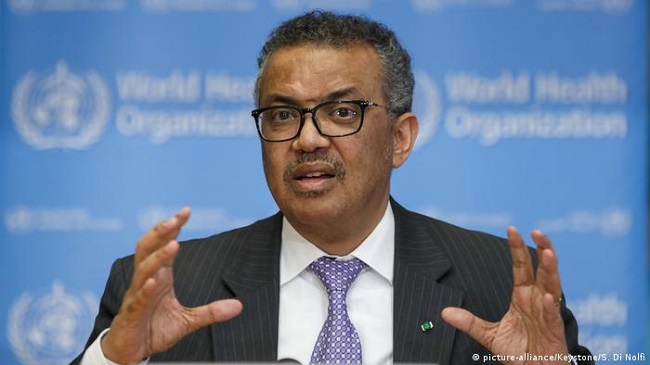
Tedros Ghebreyesus
Dr. Tedros Adhanom Ghebreyesus, Director-General, World Health Organisation (WHO)

Hypertension is a leading cause of heart attack, stroke, chronic kidney disease, and dementia. It is both preventable and treatable – but without urgent action, millions of people will continue to die prematurely, and countries will face mounting economic losses. From 2011 to 2025, cardiovascular diseases – including hypertension – are projected to cost low- and middle-income countries approximately $3.7 trillion, equivalent to around 2% of their combined GDP.

“Every hour, over 1,000 lives are lost to strokes and heart attacks from high blood pressure, and most of these deaths are preventable,” said Dr. Tedros Adhanom Ghebreyesus, WHO Director-General. “Countries have the tools to change this narrative. With political will, ongoing investment, and reforms to embed hypertension control in health services, we can save millions and ensure universal health coverage for all.”

“Uncontrolled high blood pressure claims more than 10 million lives every year, despite being both preventable and treatable. Countries that integrate hypertension care into universal health coverage and primary care are making real progress, but too many low- and middle-income countries are still left behind,” said Dr Kelly Henning, who leads the Bloomberg Philanthropies Public Health Programme. “Strong policies that raise awareness and expand access to treatment are critical to reducing cardiovascular disease and preventable deaths.”

Persistent barriers

Analysis of data from 195 countries and territories shows that 99 of them have national hypertension control rates below 20%. The majority of the affected people live in low- and middle-income countries, where health systems face resource constraints.

The report highlights major gaps in hypertension prevention, diagnosis, treatment, and long-term care. Key barriers include weak health promotion policies (on risk factors such as alcohol, tobacco use, physical inactivity, salt, and trans fats), limited access to validated blood pressure devices, lack of standardised treatment protocols and trained primary care teams, unreliable supply chains and costly medicines, inadequate financial protection for patients, and insufficient information systems to monitor trends.

Access to medicines: a cornerstone of progress

Blood pressure medication is one of the most cost-effective public health tools. Yet only 7 out of 25 (28%) of low-income countries report general availability of all WHO-recommended medicines, compared to 93% of high-income countries. The report explores the barriers and strategies for improving access to hypertension medication through better regulatory systems, pricing and reimbursement, procurement and supply chain management, and improved prescribing and dispensing of these medicines.

“Safe, effective, low-cost medicines to control blood pressure exist, but far too many people can’t get them,” said Dr Tom Frieden, President & CEO, Resolve to Save Lives. “Closing that gap will save lives – and save billions of dollars every year.”

Country-level progress

Despite barriers, progress is possible. Bangladesh, the Philippines, and South Korea have made significant progress by integrating hypertension care into universal health coverage (UHC), investing in primary care, and engaging communities:

  • Bangladesh increased hypertension control from 15% to 56% in some regions between 2019 and 2025 through embedding hypertension treatment services in its essential health service package and strengthening screening and follow-up care.
  • The Philippines has effectively incorporated the WHO’s HEARTS technical package into community-level services nationwide.
  • South Korea has integrated health reforms, including low costs for antihypertensive medications and limiting patient fees, which have resulted in a high rate of blood pressure control nationally: 59% in 2022.

WHO calls on all countries to embed hypertension control in UHC reforms. Implementing the measures recommended in the report could prevent millions of premature deaths and ease the massive social and economic toll of uncontrolled high blood pressure.

New analysis shows renewables at the heart of national climate targets

0

As governments prepare to meet at the UN Secretary-General’s Special High-Level Event on Climate Action, a new analysis conducted by 350.org and Zero Carbon Analytics shows that renewable energy is fast becoming the backbone of national climate strategies.

An analysis of the first 36 NDC 3.0 submissions (countries’ updated Nationally Determined Contributions under the Paris Agreement) finds that about 70% either set new renewable energy targets or already have ambitious expansion plans and a high percentage of clean energy domestically.

Renewable energy
Renewable energy

These pledges extend to 2035 and are the first since the Paris Agreement’s Global Stocktake, which called for stronger sectoral action. The report comes after hundreds of thousands of people filled streets around the world to Draw the Line on climate inaction over the weekend.

Andreas Sieber, 350.org Associate Director of Global Policy and Campaigns, says: “Renewables have moved from the sidelines to the centre stage of national climate plans. This shift sends a powerful message: governments now understand that scaling up clean power isn’t optional, it’s the fastest, cheapest way to cut emissions, boost economic growth, bolster energy security, protect citizens from worsening climate impacts, and address the cost-of-living crisis. With COP30 in Brazil just weeks away, world leaders must build on this momentum. It’s time to draw the line on climate inaction and deliver the renewable energy boost the world is ready for.”

The findings also show broad alignment with the COP28 commitment to triple global renewable energy capacity by 2030, signaling real momentum ahead of COP30 negotiations.

350.org says it will continue to track submissions as more countries submit their updated NDCs in the lead up to COP30. A detailed annex is available alongside the analysis.

Read the report here.

Fresh crisis rocks NUPENG as stakeholders call for resignation of President, General Secretary

0

The embattled President and General Secretary of Nigeria Union of Petroleum and Natural Gas Workers (NUPENG), Comrades Williams Akporeha and Afolabi Olawale, have taken fresh swipe from Petroleum Tanker Drivers (PTD) just as the Branch stakeholders called for the duo’s immediate resignation in order to give room for fresh air and stability in the union.

The latest call was contained in a statement signed by Comrade Preye Odede-Graham on Sunday, September 21, 2025, on behalf of PTD elders and stakeholders, Comrades (Alhaji) Tajudeen Abubakar (Kaduna Zone), Chief (Comrade.) Edafe Osas (Warri Zone), Comrade Joseph Dagogo-Jack (JP) (Port Harcourt Zone) and Comrade Kolade Fadahunsi-Ojelabi (Lagos Zone).

Williams Akporeha
President of Nigeria Union of Petroleum and Natural Gas Workers (NUPENG), Comrade Williams Akporeha

This latest onslaught came on the heels of ongoing industrial disputes between Dangote Refinery, NUPENG, the Depot and Petroleum Products Marketers Association of Nigeria (DAPPMAN), the Independent Petroleum Marketers Association of Nigeria (IPMAN), and other industry associations. 

PTD blamed the recent woes befalling NUPENG on the lacklustre attitude of the union’s President as well as intimidation, victimisation and harassment of the members of PTD by the General Secretary which is at variance with the extant rules of the union as well as human dignity.

PTD maintained that they no longer wanted to be used as attack dogs against the federal government especially President Bola Ahmed Tinubu and other players in the industrial ecosystem.

They lampooned leaders of NUPENG over their failure to hail the tenacity of Dangote Refinery for standing against all odds to defeat the process pressure and market disruption with the 650,000 bpd capacity alongside with the 4,000 CNG trucks tankers and 6,000 truck cargoes totalling 10,000 trucks costing N2 trillion to move the products to the consumers at no cost, with value added of over 40,000 jobs. 

They also begged President Tinubu to ensure high tariffs increase to discourage fuel importation and add increased crude supply to Dangote Refinery with licence for oil exploration. They further advised Mr. President to nationalise oil well so as to allow for proper dredging which majority licensed sites were desolate and moribund.

They begged law enforcement agencies, anti-graft agents, industry regulators, federal government, stakeholders in trade union, media, civil society, legal profession, etc, to support them to commence the re-engineering of NUPENG by showing Afolabi and Williams the exit doors from the union so that the petroleum industry could get the much-anticipated liberation. 

“On this note, we therefore appeal to all our members in PTD and others in various branches not to be despaired, let us join hands together and win the battle against these common enemies and stop them once and for all, these multidimensional nonsense and slavery in the union must be hurriedly put to stop. United, we stand against every economic saboteur and enemy of progress in Nigeria’s economic powerhouse,” the statement said.

Govt commends Renaissance Africa’s production increase, calls for more oil, gas investment

0

The President Bola Ahmed Tinubu administration has stated that its goal of attracting more funds and investments into the Nigerian oil and gas sector to grow the country’s industrialisation is at the centre of its decision to devote more executive attention to ongoing reforms in the energy sector.

Special Adviser to the President on Energy, Mrs. Olu Verheijendisclosed this on Monday, September 22, 2025, in Abuja, when she received the Managing Director and Chief Executive Officer of The Renaissance Africa Energy Company Limited, Mr. Tony Attah.

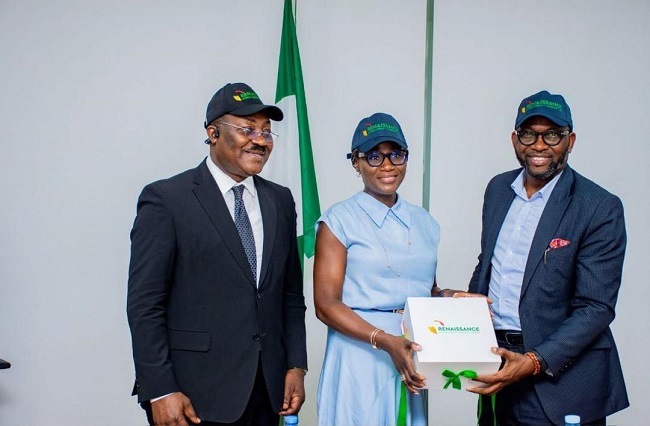
Renaissance Africa Energy Company Limited
L-R: Renaissance Africa Energy Company Limited’s Chief Production Officer, Mr. Mesh Maichibi; Special Adviser to President Bola Ahmed Tinubu on Energy, Mrs Olu Verheijen; and Managing director and Chief Executive Officer of Renaissance Africa Energy Company Limited, Mr. Tony Attah, when the pair was received by the Special Adviser to the President on Energy in Abuja

“This is why we continue to work on investment-enabling reforms with a bid to achieving national targets. I congratulate Renaissance Africa Energy Company Limited because you have done a good job so far in increasing oil and gas production. Understandably, we continue to look forward to the opening of new wells and new drilling activities,” she said.

The Special Adviser commended Renaissance Africa’s over 40% oil production increase within 150 days of its completion of the landmark transaction in March 2025, when Renaissance Africa Energy Holdings Company Limited successfully acquired the shares of Shell Petroleum Company Limited in The Shell Petroleum Development Company Limited (SPDC). SPDC was then rebranded Renaissance Africa Energy Company Limited and retained its role as the operator of the joint venture.

Attah said, “On our part, we must also commend your office for the three Executive Orders that have brought revolutionary changes, especially to the oil and gas sector. Our company, Renaissance Africa’s success since came onboard is because we are riding on that enabling environment that the government of President Bola Ahmed Tinubu has provided. I particularly commended the Special Adviser on Energy and your team for your tenacity in following this required path.”

He said, “This enabling environment that you are creating has further emboldened us in our drive to achieve our vision to be Africa’s leading energy company enabling energy security and industrialization in a sustainable manner.

“We are glad too that we are seeing immediate results from our strategy to improve work processes and conditions which have, in turn, galvanised our employees, improved daily crude oil production by about 40%, and returned Renaissance Africa and the joint venture to a position where we are now fulfilling our contractual gas supply quantities to the NLNG Limited (Nigeria Liquefied Natural Gas) – for the first time in over five years.”

Nigeria’s NDC 3.0: From pledges to proof – what must happen in the next 12 months

0

Nigeria’s Third Nationally Determined Contribution (NDC 3.0) is the most consequential reset of our climate strategy since Paris. It replaces “percent-below-BAU” promises with economy-wide emissions cuts referenced to a real baseline, and it names the sectors where Nigeria can deliver fast, affordable abatement with real development gains.

It also puts a price tag on delivery and ties the plan to the country’s broader policy spine – net-zero by 2060, the Climate Change Act, methane commitments, and transparency reforms.

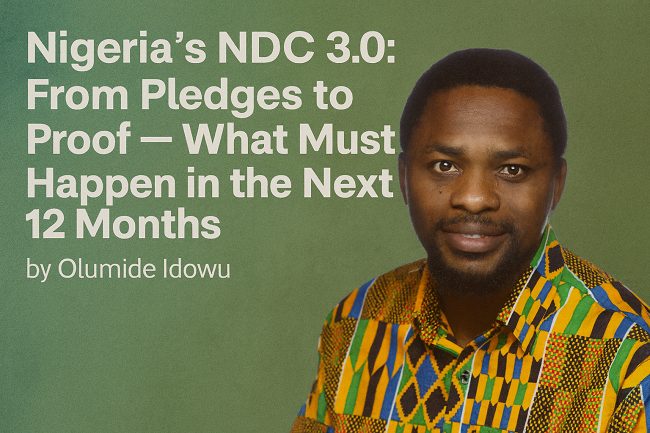
Olumide Idowu
Olumide Idowu

What’s new – and why it matters

Absolute targets, clear baseline. NDC 3.0 keeps 2018 as the reference year used in NDC 2.0 and moves to absolute reductions aligned with the Global Stocktake, rather than BAU percentages. This improves credibility, comparability, and accountability.

A defined 2035 waypoint. The NDC now sets an absolute reduction of 184.9 MtCO₂e in 2035 from 573.5 MtCO₂e in 2018 – a 32.2% cut – providing a concrete mid-term milestone on the path to net-zero 2060.

Sector realism. The plan concentrates mitigation where Nigeria’s levers are strongest:

  • Oil & gas methane: a 60% cut in leaks/venting and elimination of routine flaring by 2030, scaling to deeper cuts thereafter.
  • Transport: large gains from EV and CNG adoption (≈44.3 MtCO₂e potential).
  • Forests & land use (LULUCF): a 60% deforestation-rate reduction (≈304.8 MtCO₂e potential) plus re/afforestation. This is the single biggest wedge in the package.

Financing the shift. Government estimates US$337 billion (2026-2035) is needed across mitigation and adaptation, with US$195 billion for mitigation and US$141.5 billion for adaptation. That scale demands blended public–private finance, carbon markets, and strong project preparation.

Fairness and feasibility. Nigeria emits ~0.73% of global GHGs with per-capita emissions well below the world average, yet it is adopting absolute cuts and methane leadership – evidence of good-faith alignment with the Stocktake, despite pressing development needs.

The execution gap

Nigeria’s climate framework has matured: the Climate Change Act, a submitted BTR1, an LT-LEDS (2024), and ongoing adaptation planning (ADCOM, NAP) all point to better “plumbing” for delivery. But plans become progress only with discipline on four fronts: methane, clean cooking, forests, and power/transport.

A 12-month, results-first playbook

1) Methane first in oil & gas

  • Publish a national LDAR calendar (assets, inspection frequency, fixes) and a flaring-ban enforcement roadmap tied to penalties and, where appropriate, crediting under high-integrity carbon market rules.
  • Launch a Methane Transparency Portal with site-level disclosures, satellite corroboration, and citizen alerts.
    These steps hit the largest “quick-win” abatement at low cost while protecting revenues.

2) Make clean cooking Nigeria’s flagship social climate programme

  • Mandate modern cooking solutions (LPG, electric, advanced biomass) in public institutions – schools, clinics, security posts – and track monthly uptake.
  • Use results-based finance and PAYGo to de-risk last-mile distribution through women- and youth-led MSMEs; pair with social protection for affordability.
    The co-benefits – health, time savings, gender equity – are outsized and reduce pressure on forests.

3) Forests: cut loss, grow cover

  • Operationalise the 60% deforestation-reduction target via state-level forest compacts, community forestry, mangrove protection, and legal timber/charcoal traceability.
  • Scale re/afforestation and agroforestry aligned with the NDC’s quantified potentials.
    Forest measures account for the largest mitigation wedge and are inseparable from rural livelihoods.

4) Power and transport that people feel

  • Grid & DISCO loss reduction and a clear minigrid programme for public services (clinics, schools, water systems) convert climate targets into human-development gains.
  • Urban mobility: set passenger-kilometre targets for BRT/rail and a public-fleet conversion calendar (EV/CNG), unlocking the transport wedge identified in the NDC.

5) Finance at scale, with integrity

  • Publish an NDC Investment Plan mapping each measure to funding sources: sovereign green/sukuk, concessional lines, private capital, and Article 6 transactions – sequenced to the US$337 billion need.
  • Stand up a project-prep facility to take pipelines from concept to bankability; lock in high-integrity carbon market participation with community benefit-sharing.

6) Governance, MRV, and law

  • Single, public NDC MRV platform integrating energy, LULUCF, waste, and methane; quarterly dashboards feeding BTR2.
  • Use the Climate Change Act to set sector targets and compliance pathways; finalise Article 6 procedures and activate the national registry so private finance can flow with safeguards.

Why this approach is right for Nigeria

The NDC’s centre of gravity – methane, forests, clean cooking, efficient transport/power – aligns with Nigeria’s economic structure and social realities. The oil and gas sector remains pivotal, so controlling methane is both climate-smart and revenue-protective.

Clean cooking and electrification deliver immediate health and productivity benefits, particularly for women and girls. Forest governance and restoration underpin rural incomes and climate resilience, while modern mobility and reliable power make cities livable and competitive. In short, these are development multipliers, not trade-offs.

A coalition to deliver

NDC 3.0 was built with national institutions and regional partners and acknowledges the lived realities of vulnerable Nigerians. That spirit must carry into implementation: federal ministries and the NCCC setting standards; states delivering services; private operators investing; civil society monitoring; and communities co-designing benefits.

As an implementing civil-society partner, ICCDI-Africa will prioritise four contributions over the next year:

  1. Methane Community Observatories in host LGAs to surface leaks and flaring events, escalate grievances, and validate fixes – feeding the national portal.
  2. Clean-Cooking Acceleration Coalition with women/youth MSMEs, financiers, and state energy/environment ministries to drive demand, vendor training, and last-mile tracking.
  3. Young Lawyers for Climate Justice to draft model state climate bylaws, methane-disclosure standards, and Article 6 community-benefit MOUs; pursue litigation only when cooperative compliance fails.
  4. NDC Scorecards & Town-Halls (Lagos, Rivers, Kano, FCT) translating targets into local actions and publishing quarterly public dashboards tied to the MRV platform.

The takeaway

NDC 3.0 is a credible, more ambitious blueprint that aligns Nigeria with the Global Stocktake and our 2060 net-zero commitment. It identifies the biggest, cheapest wins and attaches a realistic price tag. The difference between another plan and a turning point will be what we do in the next 12 months: cut methane, scale clean cooking, protect and restore forests, fix power and transport bottlenecks, and publish what we achieve – quarter by quarter. That is how Nigeria moves from pledge to proof.

By Olumide Idowu, Executive Director, ICCDI Africa

All figures and policy references are from Nigeria’s NDC 3.0 transmission version and associated national submissions (BTR1, LT-LEDS, ADCOM/NAP in progress)