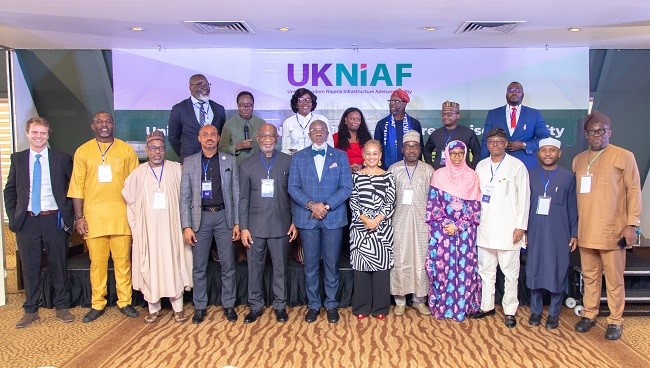
The United Kingdom-Nigeria Infrastructure Advisory Facility (UKNIAF), launched in 2019, is the third programme in a longer 16-year legacy of infrastructure support from the UK Government to the Government of Nigeria. On Tuesday, December 2, 2025, the programme brought together over 100 senior stakeholders from government, development partners, development finance institutions and the private sector, to reflect on the last six successful years of UKNIAF work and celebrate the close-out for this phase of UK government support.
Since its inception, UKNIAF has provided targeted technical assistance and advisory support to Federal and State institutions across the Power, Infrastructure Finance and Roads sectors, helping to embed evidence-based reforms and data-driven decision-making.
Chief Adebayo Adelabu, Minister of Power; Cynthia Rowe, Head of Development Cooperation’ Prof. Chidiebere Onyia, Secretary to the State Government; and a cross-section of guests
Through its work, the programme enabled significant finance to be mobilised and supported sector transformation in sub-national markets. It strengthened key institutions, creating a more investor-ready environment for infrastructure.
Plenary and panel sessions during the event featured senior representatives of participating ministries, departments and agencies, development partners and private actors. These discussions highlighted how institutional capacity had evolved, where reforms had taken root, and what was required to sustain momentum.
Participants emphasised the significant contributions of the programme towards supporting economic growth and improving livelihoods. In the Power sector, UKNIAF’s success was underscored in the adoption of landmark policies, enhancing regulatory capabilities and creating new markets.
Examples included the development of the country’s first Integrated Resource Plan which charts a least cost, low carbon pathway for power sector expansion; designing advanced data capabilities at the Nigerian Electricity Regulatory Commission (NERC) to monitor and manage tariffs, grid flows and outages in real time. And, enabling states to create their own electricity markets to meet their own needs and capitalise on their resources.
In the Infrastructure sector, participants welcomed UKNIAFs efforts to improve the planning, financing and delivery of bankable projects. Key examples included the mobilisation of $75m of financing from the African Development Bank to the Special Agro-Industrial Processing Zone (SAPZ) programme, through the provision of project preparation services to two states; accelerating sustainable mini-grids and solar plants by supporting the Rural Electrification Agency (REA) adopt new project models and technical standards.
And, helping to build Nigeria’s bankable project pipeline through the design of a new project preparation facility, with ₦21 billion allocated in both of the 2024 and 2025 budgets respectively for its operationalisation.
Frank Edozie, UKNIAF Team Lead, said: “UKNIAF’s close-out was not an end point, but a handover for sustained delivery. For over six years, we helped strengthen institutions with tools that make Nigeria’s infrastructure landscape more transparent, climate-smart and attractive to investors, and this legacy now sits with our partners to sustain and grow.”
Minister of Power, Chief Adebayo Adelabu, said: “The technical assistance, capacity development, and advisory services provided under UKNIAF have laid a firmer foundation for the sustainable and inclusive electricity supply industry we are building in our nation today.”
Cynthia Rowe, Head of Development Corporation for UK Foreign, Commonwealth and Development Office (FCDO) in Nigeria, added: ‘’I take great pride in the achievements of the United Kingdom Nigeria Infrastructure Advisory Facility (UKNIAF) and the strong partnership between the UK and Nigeria. Together, we have achieved milestones that once seemed far out of reach. From supporting pioneering states to take control of their electricity markets, to unlocking $75m in financing with project preparation assistance and designing Nigeria’s Climate Change Fund to attract global climate investment. Our shared success has shown what is possible’’.
Secretary to the State Government, Enugu State, Prof. Chidiebere Onyia, said: “The impact of UKNIAF is also reflected in the quality of ambassadors that have transferred the knowledge and experience from the programme into the subnational and national infrastructure delivery process leading to impact and irreversibility. UKNIAF is maybe ending as a programme, but UKNIAF’s legacy in supporting senior decision makers lives on.”
The event delivered renewed commitments from partners to sustain tools and reforms, and the dissemination and handover of knowledge products and programme outputs. It also reinforced relationships among public, private, and development actors and deepened understanding of the roles that public and private sector players can continue to play in Nigeria’s infrastructure landscape.
Participants included beneficiary clients and donor partners such as the Nigeria Governors’ Forum, the Federal Ministry of Power, the Ministry of Finance, the Nigerian Electricity Regulatory Commission, the Rural Electrification Agency, the Transmission Company of Nigeria, key state governments and other agencies.
They were joined by donor partners and Development Finance Institutions (DFI), including the African Development Bank, World Bank, International Finance Corporation (IFC), and others, alongside private sector and civil society organisations active in Nigeria’s infrastructure and energy ecosystems.
As another year ends, it’s important to reflect on Africa’s position in the global fight against smoking-related diseases. Unfortunately, the familiar pattern continues: while the rest of the world adopts modern harm reduction strategies, Africa remains significantly behind, stuck in outdated methods that don’t address current public health needs.
Across Europe, North America, and parts of Asia, safer nicotine alternatives such as nicotine pouches, e-cigarettes, heated tobacco products, and snus have been widely available for years. Their effectiveness in helping smokers reduce or eliminate exposure to the most harmful compounds in cigarette smoke is well documented. Countries such as Sweden, the United Kingdom, Japan, and New Zealand have witnessed remarkable declines in smoking rates precisely because they embraced these innovations rather than resisted them.
Tobacco smoking
Yet Africa continues to hesitate. Policymakers seem reluctant to accept technologies that could dramatically reduce the human toll of smoking. Instead of moving toward regulation, many governments remain stuck in debates that science has already resolved. This inaction has consequences. Every year, more than 200,000 Africans lose their lives to smoking-related illnesses; a figure that will rise unless decisive steps are taken.
In the absence of sensible regulation, the black market has flourished. Across the continent, illicit and counterfeit nicotine products are everywhere. These unregulated products have no quality checks, no age restrictions, and no safety standards. They place consumers at risk, empower criminal networks, and rob governments of revenue.
The irony is glaring: the very policies meant to “protect public health” are creating conditions that do the exact opposite. When safer alternatives are banned or excessively restricted, people do not stop using nicotine – they simply find it elsewhere, often from unsafe and illegal sources.
What is most frustrating is that the science is no longer in doubt. Safer nicotine products are not risk-free, but they are undeniably less harmful than smoking. The evidence from countries that have adopted these alternatives is overwhelming. Sweden is on track to become the world’s first smoke-free nation. Japan has experienced dramatic drops in cigarette sales since heated tobacco became available. The United Kingdom recognizes vaping as one of the most effective tools for adult smoking cessation. These examples highlight what Africa is missing: a chance to save millions of lives.
Africa cannot continue allowing misinformation, fear, and outdated thinking to shape its public health decisions. The continent needs clear, evidence-based policies that regulate safer nicotine products responsibly, ensure adult smokers have access to them, and curb the black market by bringing these products into a legal, controlled environment. Public education should be grounded in facts, not alarmist narratives, and regional cooperation should guide regulatory approaches so that no country falls behind while others move ahead.
The stakes could not be higher. Every year we delay, more lives are lost unnecessarily. Smoking remains one of Africa’s biggest yet most solvable health challenges. We already have the tools to address it – tools that have been tested and proven elsewhere. What we lack is the political courage to act.
As we turn the page on another year, I urge African leaders to recognize the urgency of this moment. The global conversation has evolved. The science is clear. Lives can be saved. Africa must not remain an observer while the rest of the world moves forward.
History will judge our decisions. Let it not be said that we had the chance to save lives and chose hesitation instead. The health of millions of Africans depends on the choices we make today.
By Joseph Magero, Campaign for Safer Alternatives (CASA)
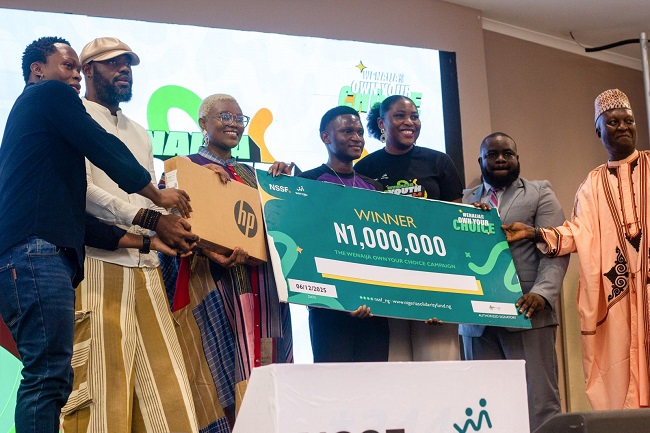
A student, Dayo Alade Daniel, has emerged winner of the 2025 WeNaija Health Advocacy Campaign receiving a prize of ₦1 million and a laptop at the WeNaija Youth Impact event organised by the Nigeria Solidarity Support Fund (NSSF) in Lagos.
Anita Nwokoji clinched the second position with ₦500,000 and a laptop, while Efaemiode Ikoi Iran placed third, taking home ₦400,000 and a laptop.
Other winners include Esther Okwumo (fourth, ₦300,000 and a laptop) and Emmanuel Shalom (fifth, ₦200,000 and a laptop).
Dayo Alade Daniel receiving a prize of ₦1 million and a laptop at the WeNaija Youth Impact event
The WeNaija Campaign, which received more than 400 entries, focused on Sexual and Reproductive Health (SRH).
The theme of the campaign is “Own Your Choice”. The key theme is the “Dangers of an Incomplete Sexual and Reproductive Health”.
Why Sexual and Reproductive Health?
Speaking at the event, Dr. Feijiro Chinye -Nwoko, Managing Director of NSSF, said the choice of the theme was driven by young people who identified SRH as one of the most pressing but least discussed health challenges they face.
“Sexual and reproductive health has become a silent crisis. Many people assume they understand it because they are older, but there is deep ignorance,” she said.
“We are seeing maternal deaths, mental health issues and premature deaths linked to SRH. The youths asked us to focus on this, and we listened.”
She said the organisation aims to build the capacity of youth participants by equipping them with accurate information and training them to champion change in their communities.
Judging the Entries – Messaging and Creativity
A judge in the competition, Mr. Ojehonmon Okugbe, said storytelling quality played a significant role in selecting the winners.
“Young people have short attention spans, so how information is packaged is just as important as the information itself,” Okugbe said
“I assessed simplicity of language, relevance of visuals, and how relatable their methods were.
“Some entries were outstandingrap, spoken word, acting. You could tell they understood the message and were passionate.”
Experts Call for Better Sex Education
Also speaking, consultant clinical psychologist, Dr. Busola Olamuymiwa, said lack of accurate SRH information is placing millions of young Nigerians at risk.
“Children as young as nine are now having sex, yet we are not giving them the information they need,” she said.
“We need proper sex education in schools, taught by professionals who are not afraid to call things by their correct names. If we don’t teach them, they learn from social media and peers, often in unsafe ways.”
She said churches, parents and community leaders also need to be more open to professional-led conversations to curb harmful misinformation.
Impact So Far
Dr Chinye-Nwoko said more than two million youths have been reached through WeNaija programmes in the last five years, including the Impact Awards and advocacy cohorts which run twice a year.
“Our goal is to reach 10 to 15 million young Nigerians. WeNaija is a platform that gives them access to data, stakeholders and opportunities to create community-level change,” she added.
Biodiversity in Europe faces an existential threat. Not only is climate change putting it under pressure, but also man-made nitrogen emissions into the atmosphere.
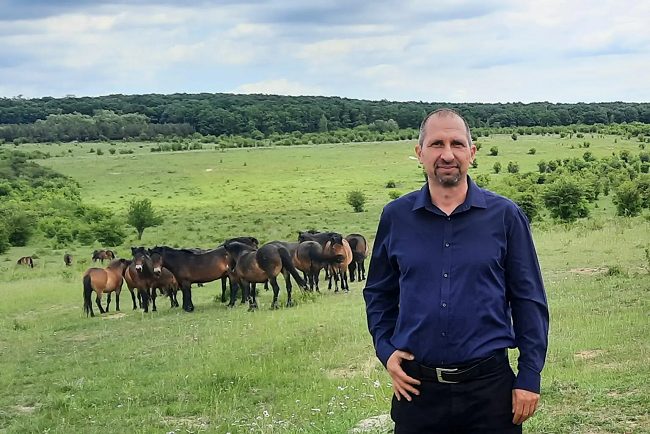
“This risk is hardly talked about, yet it is having an absolutely devastating effect on biodiversity in Europe. The species-rich nature, especially the colourful meadows and flowering grasslands, is coming under severe pressure from aggressive grasses and nitrophilous weeds due to long-term nitrogen emissions into the atmosphere. Europe’s landscape is gradually turning into a green desert,” warns Dalibor Dostal, director of the conservation organisation European Wildlife.
Dalibor Dostal, director, European Wildlife
One significant source of this negative change is nitrogen oxide emissions from internal combustion engine cars.
According to the European Environmental Agency, the road transport sector remains the largest source of nitrogen oxide (NOx) emissions and was responsible for 37% of the total NOx emissions in the EU in 2020.
“A rapid transition to electromobility is not only important for climate protection, but also for preserving biodiversity in Europe. European companies should play a key role in this. The transition to electromobility is the most important contribution of companies to their corporate social responsibility (CSR) in the field of climate protection and biodiversity,” notes Dostal in his appeal to European companies and their current approach.
In his words, it is important that companies operating across the EU approach this issue in the same responsible way in all countries. “It is unfortunate if subsidiaries of companies in Western Europe buy electric cars, but their subsidiaries in Central and Eastern Europe continue to buy cars with internal combustion engines,” said Dostal.
At the same time, it is crucial for Europe’s biodiversity that the EU maintains its ban on the production of internal combustion cars after 2035.
“Emissions of nitrogen oxides from biofuels or synthetic fuels are equal to or even higher than those of cars with diesel or petrol internal combustion engines. Whereas electric cars have zero emissions,” said Dostal, drawing an important comparison.
Studies on large fleets of cars show that real-world emissions of nitrogen oxides in conventional diesel passenger cars (Euro 5 and Euro 6) are in the hundreds of mg/km in normal operation. For example, an analysis of 149 vehicles found average emissions of 330–440 mg of NOx/km for Euro 6 diesels, depending on the type of driving, and even about 720 mg of NOx/km2 for Euro 5.
Similar values, around 350–560 mg/km, were measured in an official study by the European Commission. Overall, the average modern diesel car in real operation emits around 4–7 times more NOx than emission limits allow. Moreover, biofuel combustion engines produce 10–23% more NOx than fossil diesel.
Also, synthetic fuels have NOx emissions comparable to current internal combustion engines according to findings to date, and as such there is no lowering of dangerous nitrogen emissions. “Synthetic fuels and biofuels pose as much or more of a threat to biodiversity than fossil diesel or petrol. It is by no means a modern or clean technology. This is just a marketing ploy to prolong the use of internal combustion engines in Europe at a time when the US and China are competing to dominate the global EV market,” concluded Dostal.
While for nitrogen oxides, road transport is the largest source of emissions in the EU, for nitrogen overall, agriculture is an even more significant source, especially livestock farming and the use of artificial fertilisers on fields. While rapid change is not possible in agriculture to preserve Europe’s food security, all the necessary technologies are already available in the EU to achieve rapid improvements in the transition to electromobility.
In addition to road transport, shipping is a significant source of NOx emissions in the EU. According to a joint report by the EEA and EMSA (EMTER), maritime and inland shipping accounted for around 24% of all NOx emissions (6) in the EU in 2018.
The natural grazing of large herbivores such as European bison and wild horses can bring a slight improvement to the state of the diverse landscape. But it remains essential to move as quickly as possible to zero-emission transport, i.e. battery electric vehicles.
The Nigerian Content Development and Monitoring Board (NCDMB) has described the recent acquisition of Saipem, an Italian oil servicing firm by Marconi NG EPC, as a major boost to the Nigerian Content drive.
In May 2025, a consortium of Nigerian investors acquired Saipem from its former owners and operated as Marconi.
Dr Obinna Ezeobi, General Manager, Corporate Communications at NCDMB, stated this on Thursday, December 11, 2025, in Port Harcourt during a media tour of oil and gas facilities operated by Nigerian companies.
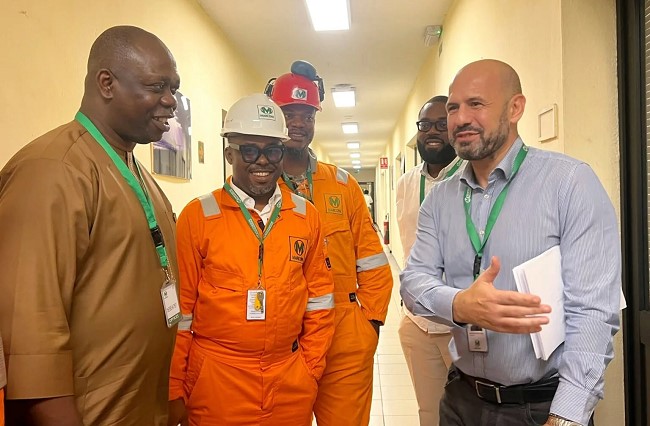
Officials of NCDMB and Marconi NG EPC during the media tour of oil and gas facilities
Ezeobi, who was speaking at Marconi’s one million square meters fabrication yard, noted that the acquisition would position the company to handle projects across all spheres of the sector.
He explained that the NOGIC Act 2010 that established NCDMB mandates the board to exclusively reserve contracts for Land and Swamp Oilfields for Nigerian companies.
“The acquisition of Saipem by Nigerian investors indicate that our efforts in promoting the participation of Nigerian companies in the oil and gas value chain is yielding enormous fruits.
“With world class facilities here run by Nigerians, the company can bid for jobs across Land, Swamp and Deepsea Oilfields,” Ezeobi said.
Conducting the media team round the facility, Dr David Editang, Nigerian Content Manager of Marconi, explained that the new owners retained the services of Nigerian experts who operated the facility for the past 15 years before the acquisition.
He said that the facility had capacity to fabricate, store and evacuate oil and gas facilities through three jetties and a helipad.
Speaking to the media after the tour, Gian Fabio Del Cioppo, Managing Director, Marconi NG EPC, said that Marconi Yard has the largest facility of its kind in West Africa, covering more than 1,000,000 sq meters logistics, secured, and positioned for project execution in the Nigeria energy space.
According to him: “It is one of the few yards in the country with assets and organisation for executing complex projects and includes a 330-meter jetty.
“It has the capacity to fabricate over 25,000 tons of heavy structures capital EPC projects, both onshore and offshore.
“Marconi has adopted a ‘one-stop-hub’ model to enhance cost efficiency, streamline interfaces, competitive with international alternatives,” he said.
Nigerian industrialist, Aliko Dangote, on Thursday, December 11, 2025, announced a N100 billion annual education support initiative, describing it as a long-term investment aimed at reducing financial barriers that drive millions of young Nigerians out of school. The programme is expected to cost more than N1 trillion over the next decade.
The Presidency praised Dangote for unveiling what is now the largest private education support programme in Nigeria, describing the initiative as a major boost to the Federal Government’s human capital development agenda.
Speaking at the launch in Lagos, Dangote said the plan will support 45,000 new students every year from 2026, rising to 155,000 beneficiaries by the fourth year and remaining at that level for ten years. In total, the scheme is projected to reach 1.3 million students across all 774 local government areas.
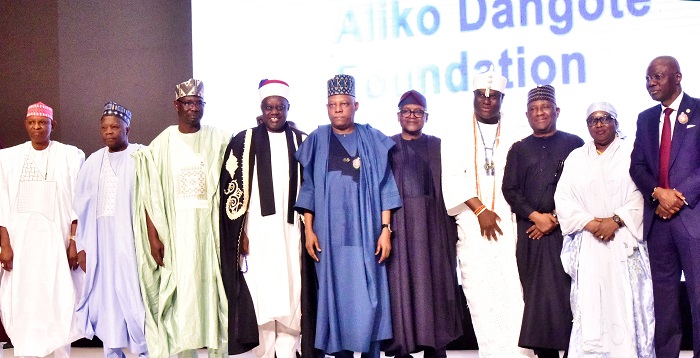
L–R: Kano State Governor, Abba Kabir Yusuf; Gombe State Governor, Muhammadu Inuwa Yahaya; Nasarawa State Governor, Abdullahi Sule; Chairman, ADF Scholarship Programme Steering Committee, Justice Sidi Bage, JSC; Vice President of the Federal Republic of Nigeria, Kashim Shettima; Chairman, Aliko Dangote Foundation, Aliko Dangote; Ooni of Ife, Oba Adeyeye Enitan Ogunwusi (Ojaja II); Chairman, BUA Group, Abdulsamad Rabiu; Deputy Governor of Kaduna State, Hadiza Balarabe; Lagos State Governor, Babajide Sanwo-Olu, at the launch of the Aliko Dangote Foundation (ADF) N100 Billion Annual Education Scholarship Initiative in Lagos on Thursday, December 11, 2025
The initiative comprises four programmes targeted at sectors where educational exclusion is most acute. Through the Aliko Dangote STEM Scholars, the programme will fund 30,000 undergraduate students annually in science, technology, engineering and mathematics (STEM) across Nigeria’s public universities and polytechnics. Beneficiaries will have their tuition aligned to actual institutional fees.
A total of 5,000 students in public technical and vocational institutions will receive support each year for tools, materials and essential training requirements through the Aliko Dangote Technical Scholars. This complements the Federal Government’s recent policy providing free tuition for TVET students.
The MHF Dangote Secondary School Girls Scholars, named after Dangote’s daughters – Mariya, Halima and Fatima – will support 20,000 public-school girls annually from JSS1 to SSS3, with continued support into tertiary education. The Foundation will prioritise states with the highest numbers of out-of-school girls.
Through the Dangote Teacher Training Programme, the Foundation will launch a large-scale teacher development scheme, beginning with 10,000 secondary-school STEM teachers in 39 government colleges attended by MHF scholars and expanding across all six geopolitical zones.
Dangote said the intervention is aimed at Nigeria’s most vulnerable learners, noting that financial hardship, not lack of talent, is the primary reason many drop out of school.
“This is not only charity. This is a strategic investment in Nigeria’s future. Every child we keep in school strengthens our economy. Every student we support reduces inequality. Every scholar we empower becomes a future contributor to national development,” he said. “Our young people are not asking for handouts. They are asking for opportunities. They are asking for a chance to learn, to grow, to compete and to succeed. And we believe they deserve that chance.”
Dangote noted that for more than three decades, the Aliko Dangote Foundation has invested heavily in health, nutrition, economic empowerment and humanitarian support across Nigeria. However, he said one guiding principle has remained unchanged: “no nation can rise above the quality of education it offers its young people.”
He described education as “the foundation on which every prosperous society is built”, calling it the most powerful equaliser and the strongest engine of social mobility. Despite this, he warned that many talented Nigerian students continue to face financial pressures that threaten to push them out of school. Their dreams, he said, are limited not by ability but by opportunity.
“We cannot allow financial hardship to silence the dreams of our young people – not when the future of our nation depends on their skills, resilience and leadership,” Dangote said.
Noting that this concern informed the Foundation’s new Education Support Initiative, Dangote stressed that the effort is intended as a starting point rather than a standalone solution. “A single organisation cannot solve Nigeria’s education challenges alone,” he said. “Government has a role. The private sector has a role. Communities and families have a role. When we work together, we can transform education – and with it, transform Nigeria’s future.”
He added that Nigeria’s progress must not be judged by the number of children left behind, but by the millions empowered and prepared for leadership. He expressed hope that the new initiative would inspire broader action across sectors.
Addressing young Nigerians directly, Dangote said: “your dreams matter. Your education matters. Your future matters. We believe in you. We are investing in you. And we are committed to ensuring that you do not walk this journey alone.”
The Foundation, he said, will use a merit-based and fully digital system for verification, disbursement and monitoring, working in partnership with NELFUND, JAMB, NIMC, NUC, NBTE, WAEC and NECO. Dangote said the focus will be on measurable outcomes including retention, completion rates and post-school impact. He noted that the vision behind the initiative is to give every deserving child the chance to learn – unfettered by cost, free to dream, and equipped to achieve.
To oversee implementation, a Programme Steering Committee has been constituted, chaired by His Highness Justice Sidi Dauda Bage, Emir of Lafia. Other members include former vice-chancellors, senior education administrators, technical advisors and representatives of the Dangote family.
Dangote also disclosed that the programme’s long-term sustainability is tied to his formal commitment to allocate 25 per cent of his wealth to the Aliko Dangote Foundation, adding that the progress on the initiative will be reviewed in 2030 as part of Dangote Group’s Vision 2030 strategy.
He commended President Bola Ahmed Tinubu’s Renewed Hope agenda in the education sector, alongside the Federal Ministry of Education, SUBEBs and state governments, for “deliberate and steady efforts” to support learners amid economic pressures.
The initiative builds on the Foundation’s existing education investments, including university hostels across several states, the Mu Shuka Iri early-learning programme in Kano – which has reached more than 10,000 children – the Aliko Dangote School for Orphan Girls in Maiduguri with an annual N500 million commitment, and a N15 billion pledge over three years to upgrade the Aliko Dangote University of Science and Technology, Wudil.
Dangote said the new scheme marks only the first phase of expanded education interventions focused on quality of learning, teacher development and modern school environments.
A population becomes a liability only when it is uneducated
Vice President Kashim Shettima said the intervention demonstrates the critical role of private-sector actors in national development. He noted that Nigeria’s demographic growth makes urgent investment in education indispensable, warning that “a population becomes a liability only when it is uneducated.”
“Alhaji Aliko Dangote, through his far-reaching philanthropy, has set in motion the single largest private-sector education support intervention in the history of this country,” Shettima said. “What he has done here today is a lesson to each of us. This is nation-building in its purest form.”
Shettima highlighted ongoing reforms under President Bola Ahmed Tinubu’s administration, including the Nigerian Education Loan Fund (NELFUND), strengthened basic education infrastructure through UBEC, expanded TETFUND interventions and accelerated technical and vocational programmes.
He said these reforms aim to improve Nigeria’s poor Human Capital Index ranking and prepare young people for a skills-driven global economy. Describing Dangote’s philanthropy as “structural and long term,” Shettima said the initiative aligns strongly with the government’s priority of expanding equitable access to education.
“No nation surpasses the aspirations of its most committed patriots,” he said. “The legacy of Alhaji Aliko Dangote reminds us that greatness is not measured by wealth but by the number of lives one lifts from the shadows into the light.”
The Vice President added that the Aliko Dangote Foundation programme will widen opportunities for thousands of learners and bolster the FG’s efforts to build a competitive workforce. He called for stronger collaboration between government, the private sector and development partners to address persistent gaps in the education system.
Education Minister Tunji Alausa described the initiative as “pure human capital development,” saying it aligns with the Tinubu administration’s education sector renewal plan of transforming Nigeria from resource-based economy to a knowledge-based economy and is significant because every local government area will benefit. He said that by the end of the first decade of the scholarship programme, an estimated 170,000 girls would have been enrolled in school through the MHF scholars alone, significantly helping to close the gender gap in education.
Lagos State Governor Babajide Sanwo-Olu, speaking on behalf of the 36 state governors, also commended the initiative and pledged the governors’ full support. He said Dangote continues to set the pace in philanthropy and national development.
“This is purposeful leadership. As a real partner in progress, he has choices, but he has chosen once again to lead with a bold and unprecedented initiative,” he said. “He has consistently shown what true philanthropy means and how wealth can become a catalyst for development. You are using your resources to lift millions, and Nigeria will remember this.”
Chairman of the Programme Steering Committee, Justice Sidi Dauda Bage, Emir of Lafia, said the scheme is unprecedented and praised Dangote’s patriotism in reinvesting his wealth to uplift other Nigerians.
“This is a remarkable challenge Alhaji Aliko Dangote has taken upon himself – the largest ever undertaken by a single individual – committing his resources to support more than 1,325,000 Nigerian students over ten years at a cost exceeding N1 trillion. This is phenomenal, remarkable and truly commendable. Tens of millions of young Nigerians will feel the impact over the next decade and beyond. The multiplier effect on our human capital, social development indicators and overall economic prosperity will be absolutely unprecedented.”
The Ooni of Ife, Oba Adeyeye Enitan Ogunwusi, Ojaja II, said Dangote’s impact in driving private-sector transformation remains unmatched, describing the new initiative as both transformational and a strategic investment in Nigeria’s future.
He recalled how the ADF had come to the aid of his community during a devastating communal conflict that resulted in the destruction of several properties.
In her virtual remarks from the United States, the United Nations Deputy Secretary-General, Amina Mohammed, said the scholarship scheme would create an enabling environment for children to learn and for families to prosper.
Nigeria’s natural resources in communities in states like Zamfara, Nasarawa, Niger and Cross River are being extracted and carted away without recourse to the people and environment. Similarly, the gaps in monitoring and regulation of the solid minerals sector give the impression that government institutions are surrendering to foreign interests.
Executive Director, Renevlyn Development Initiative (RDI), Philip Jakpor, made the submission in Lagos on Thursday, December 11, 2025, in his welcome words at the official launch of Silent Conquest: The Chinese Infiltration of Nigeria’s Solid Minerals Sector, a report influenced by RDI’s work in host communities across Nigeria where sold mineral is mined.
Dr Dele Alake, Minister of Solid Minerals Development
“The report reminds us that Nigeria’s solid minerals sector holds as much potentials as oil and gas and, when transparently harnessed and managed, could bring prosperity to the local communities and the nation at large.
“Unfortunately, like oil and gas, we have observed that the solid mineral sector is opaque and allows players, especially the foreign players, to extract without responsibility, leaving host communities empty handed,” stated Jakpor, co-author of Silent Conquest.
The findings, he disclosed, show that the country’s invasion, which most Nigerians fear, has already happened.
“It is the Chinese that have invaded all the spaces where solid minerals like gold and transition minerals like lithium are found. From Nasarawa to Zamfara, Niger, Kwara, Ogun and Abia to Akwa Ibom the story is the same. Not only has the sector been captured, but the players are also not ready to play by our rules. That is the bad news.”
He added: “We only get some little succor from the activities of some agencies of government like the EFCC that has been up and doing in checkmating unlicensed and illegal mining. The EFCC has been very proactive and have their hands full with arrests, prosecutions and arraignments of illegal Chinese miners and their local collaborators.
“The NSCDC has also been very active in that space. Disturbingly, we have seen some security agencies fighting each other to protect the illegal miners and the report also draws a nexus between illegal mining and terrorism currently ravaging the northern part of the country.
“The recent proposal by governors of northern Nigeria to ban mining for six months to checkmate terrorism financing should set us thinking. It should make us ask questions and the answers are in plain sight. What we have documented in the report we are launching today is happening around us, it is happening in our communities. We read it, watch it and listen to it on radio. But if we continue to overlook or gloss over it, it will become a monster like we have seen in Nigeria’s Niger Delta where oil has become a curse.”
Samuel Orovwuje, co-author of Silent Conquest, described the event as being more than the unveiling of a report.
“It is a call to attention, a call to accountability, and ultimately, a call to action. We gather here because the future of our nation’s mineral wealth – and the dignity of our communities who live on these lands – cannot be left to chance, silence, or external interests.”
Silent Conquest, according to him, began as a simple inquiry on how Nigeria, a country blessed with vast solid minerals, has become a landscape of unchecked extraction, foreign infiltration, and institutional vulnerability.
“The answers we found were deeper and more consequential than we anticipated. What emerged was not just a narrative of illegal mining, but a story of governance failure, quiet incursions, and the gradual erosion of state authority across mineral-bearing regions.
“This work is the product of months of research, careful documentation, and the difficult task of distilling complex incidents into a coherent national story. It draws on verifiable data, policy audits, investigative reports, field accounts, and official records. At every stage, we were guided by one principle: truth must serve the public interest.
“But this launch is not about pointing fingers. It is about laying a foundation for reform.
“It is about insisting that Nigeria’s minerals do more than enrich shadow networks – that they contribute meaningfully to our economic diversification, industrial development, and collective prosperity. It is about strengthening the institutions that stand between national resources and global exploitation. And it is about ensuring that Nigeria’s sovereignty is neither negotiated nor quietly eroded under the weight of foreign interests and internal collusion.
“As we unveil Silent Conquest today, we do so with humility, clarity of purpose, and a firm belief that evidence-based work can change the direction of public policy. I extend my deep appreciation to colleagues, reviewers, researchers, civil society partners, and every institution that contributes to the ongoing struggle for transparency and accountability in our extractive sector.”
Silent Conquest: The Chinese Infiltration of Nigeria’s Solid Minerals Sector is a timely, rigorously compiled, and policy-relevant report that fills a critical gap in Nigeria’s extractive governance discourse.
As a reviewer, I find this work both compelling and necessary – an evidence-driven analysis that illuminates one of the most complex and least understood threats to Nigeria’s economic sovereignty: the rise of foreign-linked illegal mining networks.
The report distinguishes itself through its careful integration of official data from Nigeria Extractive Industries Transparency Initiative (NEITI) audits, enforcement records from the Economic and Financial Crimes Commission (EFCC) and the Nigeria Security and Civil Defence Corps (NSCDC), and a wide body of credible media and policy literature.
Silent Conquest
For those who were curious about China’s particular interest in Nigeria’s spat with the United States following President Donald Trump threat to use lethal force on terrorists, the answer seems not to be far-fetched. The report captures the fact that Chinese nationals have been implicated in “rent payment” in terrorist strongholds in northern Nigeria to enable them access precious minerals.
The authors demonstrate an impressive ability to connect granular field-level events to broader patterns of national security risk, environmental decline, and governance failures. This strengthens the report’s credibility and positions it as an essential reference for policymakers, regulators, civil society actors, and researchers working on extractive governance.
One of the strongest contributions of this report is its balanced tone. While the subject matter is sensitive – touching on foreign involvement, state collusion, and high-value critical minerals – the analysis remains grounded in documented facts rather than speculation. The presentation of recent arrests, institutional failures, community impacts, and legislative proceedings is thorough and responsible. The narrative highlights systemic weaknesses without losing sight of the wider implications for Nigeria’s economic diversification agenda.
Equally important is the report’s framing of illegal mining as both an economic and a national security challenge. By linking resource theft to insecurity, community grievances, and environmental impacts, the author situates illegal mining within Nigeria’s broader governance landscape. This multidimensional approach is one of the report’s key strengths.
The recommendations presented are clear, actionable, and aligned with global best practices in natural resource governance. They underscore the urgent need for legal reform, stronger enforcement architecture, and accountability mechanisms capable of addressing both internal and external drivers of illicit extraction.
In sum, Silent Conquest: The Chinese Infiltration of Nigeria’s Solid Minerals Sector is a well-researched and courageously presented contribution to ongoing national debates on resource protection. It is a work that challenges institutions to confront uncomfortable truths, strengthens public understanding of emerging threats, and provides practical pathways for reclaiming state control of Nigeria’s mineral wealth.
It is important to mention a few things about the authors of the report. I make bold to say that they are competent to write about this issue. Philip Jakpor started his work career as a journalist in 2003 reporting the environment and agriculture. Even after leaving the newsroom in 2007, he has consistently engaged the media on a host of subjects concerning the environment including in the Niger Delta and in the mining communities in the north and Sam Orovwuje is a policy analyst and independent scholar. His research interests include sustainable development goals, African political development, and decolonial theory.
I commend the Revevlyn Development Initiative (RDI) and the authors for producing a report that is not only analytical but strategic – one that should guide decision-making at the highest levels of government and among all stakeholders committed to safeguarding Nigeria’s natural resources.
It is our hope that the relevant agencies of government like the EFCC and NSCDC already confronting this menace are further strengthened and provided the needed resources to continue their good work.
Review by Babatunde Jimoh, Member, Vanguard Editorial Board
At COP30 in Belém, the United Nations Human Settlements Programme (UN-Habitat) played a central role in elevating the climate–urban agenda, convening the Fourth Ministerial Meeting on Urbanisation and Climate Change, co-hosting the Cities and Regions Hub, and supporting countries in advancing stronger urban alignment in their Nationally Determined Contributions (NDCs).
Through high-level engagements, technical sessions, and the launch of new knowledge products, UN-Habitat helped bring local implementation, housing, informality, multilevel governance, and urban climate finance to the forefront of global climate discussions.
COP30
The following 10 points capture the main takeaways from UN-Habitat’s engagement at COP30.
Implementing the Paris Agreement depends on cities and regions. At the Fourth Ministerial Meeting on Urbanisation and Climate Change, 17 ministers, 21 governors and mayors and 30 international institutions reaffirmed that global climate goals cannot be achieved without strong local and multilevel action.
Housing and informal settlements are climate priorities. For the first time at a COP, leaders acknowledged that upgrading informal settlements and improving basic services are core components of climate resilience and adaptation.
Countries demonstrate growing commitment to multilevel action by integrating clearer urban priorities into NDCs 3.0. The latest analysis from UN-Habitat shows that NDCs 3.0 now include the strongest urban alignment to date, with urban content nearly doubling and multilevel governance referenced in two-thirds of submissions.
Cities and regions show strong leadership and readiness to scale action. Through 46 events and more than 200 speakers at the Cities & Regions Hub, local governments demonstrated practical solutions on heat, flooding, water security, mobility, nature-based solutions, waste, and project preparation.
COP30 strengthened the case for multilevel governance as essential to effective climate implementation. Countries highlighted the value of coordination platforms and mechanisms to ensure that national ambition is matched with territorial delivery capacity.
Advancing local climate finance is a pressing global priority. Ministerial discussions and the Cities & Regions Hub confirmed that more accessible pathways for city-scale projects, especially informal and vulnerable communities including access to finance, are critical to achieving global climate goals.
Linking adaptation, nature, land, and people is vital. Multiple sessions at COP30 reaffirmed that nature-based solutions, resilient land use, and secure housing must be integrated into climate policy frameworks, including within the Global Goal on Adaptation.
The forthcoming IPCC Special Report on Climate Change and Cities is critical to accelerate action. Countries committed to using the report to strengthen the science-policy-action interface and inform future climate planning, signalling strong demand for urban-focused evidence.
UN-Habitat leaves COP30 with reinforced vigour to support countries with local climate implementation. Member States and local governments expressed that support for NDC implementation for urban and local impact is essential. New partnerships are emerging for planning, finance and implementation.
The Nigerian Midstream and Downstream Petroleum Regulatory Authority (NMDPRA) in Osun State has warned residents against panic buying and storing petroleum products at home.
The agency also warned petroleum marketers against hoarding and any form of sharp practices before, during and after the Yuletide.
The NMDPRA state coordinator, Mr. Kunle Adeyemo, gave the warning while speaking with newsmen on Thursday, December 11, 2025, in Osogbo, the state capital.
Fuel
Adeyemo said there is adequate supply of petroleum products in the state to meet the demand of residents before, during and after the festive period.
The NMDPRA boss noted that storing petroleum products at home could cause fire outbreaks, leading to loss of life and property.
He said the agency had put measures in place to ensure the smooth supply and distribution of petroleum products across the state.
Adeyemo said any marketer caught hoarding fuel or engaging in illegal pump adjustments would be sanctioned.
The NMDPRA boss also said the officials of the agency would continue to go around the state for monitoring and surveillance, with a view to sanction any marketer found culpable.
According to him, NMDPRA will intensify monitoring and surveillance of outlets in line with its regulatory mandate to ensure compliance with quality, quantity and safety of operations.
The NMDPRA coordinator who noted that the Federal Government had made sufficient petroleum products available to last throughout the festive season and beyond, said there was no need for panic buying or hoarding.
“Petroleum products are available in all depots around the country. Marketers should not engage in diversion, under dispensing, hoarding, adulteration or unsafe acts at retail outlets.
“Any marketer or operator caught engaging in sharp practices will be sanctioned accordingly,” he said.
Adeyemo also appealed to residents to patronise only approved, certified gas facilities in the state.