The International Fund for Agricultural Development (IFAD) has called for intensified efforts by governments and other stakeholders in scaling-up water-related infrastructure for sustainable productivity, resilience, and climate adaptation.
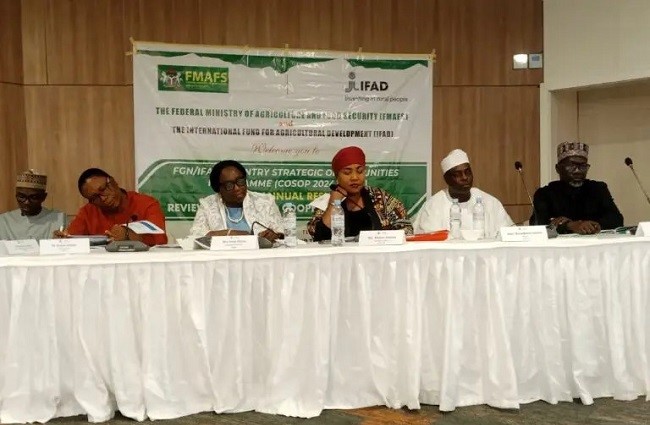
Mrs. Dede Ekoue, IFAD Country Director, made the call at the Federal Government/IFAD Second Annual Review of the Country Strategic Opportunities Programme (COSOP) 2024 to 2029 on Friday, December 12, 2025, in Abuja.
Ekoue said that COSOP, which was adopted by the Federal Government, development partners and other stakeholders in 2024, aimed at improving food and nutrition security, while addressing the underlying drivers of fragility.
Stakeholders at the COSOP review meeting in Abuja on Friday. Photo credit: NAN
She said it was also meant to promote inclusive and resilient growth of Nigeria’s rural economy through a market-driven transformation of the agrifood system.
Ekoue, who said that water infrastructure remained critical to productivity, resilience, and climate adaptation, identified it paucity as a major impediment towards achieving the 2024 to 2029 COSOP targets
Ekoue said that Nigeria’s agrifood was constrained by low productivity capacities of small holders, weak integration of small holders into value chains, food insecurity and malnutrition.
Other challenges, according to her, include persistent rural poverty, high dependence on food imports and multidimensional fragility like conflict, climate and environmental degradation.
Ekoue said that the review provided a timely opportunity to assess progress toward the targets collectively set by stakeholders for 2029.
“COSOP was developed following extensive consultations under the leadership and coordination of the Federal Ministry of Agriculture and Food Security (FMAFS) in collaboration with the Federal Ministry of Finance and key national and development partners.
“The meeting is to examine the continued relevance of COSOP, assess the progress achieved over the past two years, and identify areas where further improvements and strategic adjustments are required.
“This reflective process will enable us to leverage emerging opportunities and ensure a steady and accelerated pace toward achieving our shared objectives.
“The portfolio is demonstrating strong overall progress toward achieving the 2029 COSOP targets,” she said.
The country director outlined one of the achievements of COSOP as sustained support to rural producers’ organisations and their members.
She emphasised that the achievement has strengthened collective action and market participation.
Ekoue said the annual review of COSOP would help to identify ways to enhance these results in 2026.
“We commend the Federal Government of Nigeria for its strong focus on modernising the agrifood sector through digitalisation, including the significant progress made towards establishing the National Digital Farmer Registry.
“These efforts are critical enablers for inclusive service delivery, transparency, and scale,” she said.
A material engineering expert and research strategist, Dr Kazeem Abubakar, says that Compressed Natural Gas (CNG) burns cleaner than petrol or diesel, leading to reduced air pollution and greenhouse gas emissions.
Abukakar, also an Assistant Director of Research at the National Centre for Technology Management (NACETEM), said this in an interview in Abuja on Saturday, December 14, 2025.
He disclosed that CNG offered tangible cost savings for both transport operators and daily commuters, which was a critical advantage following the 2023 removal of petrol subsidy and subsequent surge in fuel prices.
CNG station
He said the decision to adopt CNG as an alternative source of energy to power automobiles signals a strategic attempt to reduce reliance on imported petrol and lower transportation costs.
According to him, after President Bola Tinubu announced the removal of fuel subsidy in 2023, Nigerians began to grapple with rising fuel costs and environmental pressures.
“Since then, CNG steadily emerged as a key component of the energy mix in the country’s clean-energy transition.
“Data from the Presidential Compressed Natural Gas Initiative (PCNGI) and the Nigerian Midstream and Downstream Petroleum Regulatory Authority (NMDPRA) reveal growing momentum in this direction,’’ he said.
The expert added that this signaled a meaningful step toward the attainment of SDGs.
Referencing statistics from the PCNGI, Abubakar said more than 100,000 vehicles have been converted from petrol to CNG since 2023, marking a dramatic shift in favour of the cleaner fuel.
He explained that this is less than one per cent of Nigeria’s 12 million registered vehicles.
Abubakar said in the same period, Nigeria’s CNG conversion and refueling infrastructure expanded rapidly.
“The number of certified conversion centres jumped from just seven in 2023 to over 158 by end-2024, with a plan to reach 1,000 centres nationwide.
“By early 2025, the regulatory framework and investments under PCNGI had attracted significant private capital to the sector, reflecting growing investor confidence in clean mobility,’’ the expert said.
At the 30th United Nations Climate Change Conference (COP30) in Belém, Brazil, development partners including the African Development Bank, urged for a scale up in financing to deliver the Great Green Wall’s 2030 targets.
Currently funded by contributions from Member States and development partners, this African Union initiative aims to restore 100 million hectares of degraded land, sequester 250 million tonnes of carbon and create 10 million jobs in 11 countries in the Sahel region, stretching from Senegal in the west to Djibouti in the east of the continent.
“Despite the support of many countries and institutions, including multilateral development banks such as the African Development Bank and the World Bank, we are still far from meeting the financing needs of the Great Green Wall,” said Ibrahim Sow, special advisor to the Senegalese president on environmental issues.
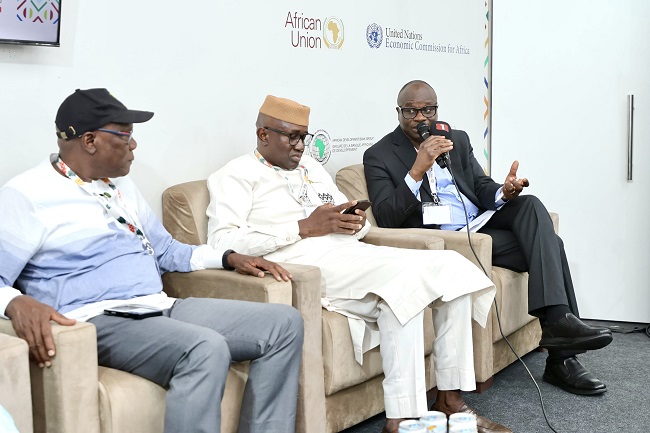
The African Development Bank Group remains a very strong” supporter of the Great Green Wall, said Al-Hamndou Dorsouma (1st on the right), head of the Bank’s Climate and Green Growth division
Sow moderated a session during the climate conference titled “Scaling up finance for the Great Green Wall: from climate ambition to integrated action for Land, Nature and People”. The session was organised by the Pan-African Agency for the Great Green Wall, the African Development Bank Group and the World Food Programme, as a forum to discuss strategies for mobilising large-scale financing, including private and innovative resources. The Pan-African Agency for the Great Green Wall, based in Nouakchott, is the implementing body for the Great Green Wall Initiative.
In January 2021, €19 billion in contributions were announced for the Great Green Wall during a round table organised in Paris alongside the One Planet Summit on biodiversity. The African Development Bank, a leading partner in the initiative, indicated that it would contribute approximately $6.5 billion through its ongoing programmes.
“Fifteen years after its launch, the Great Green Wall is moving from vision to implementation. Millions of hectares have been restored, and thousands of green jobs have been created, but significant gaps in financing and capacity remain. To achieve its goals by 2030, enhanced collaboration between African governments, development partners and the private sector is essential,” argued Mr. Garba, a former Minister of the Environment for Niger.
Sékou Koné, technical advisor to the Malian Ministry of the Environment, representing its minister, believed that political will, the development of a legal framework to protect investments in the Great Green Wall area and an attractive economic environment would encourage other partners and the private sector to invest.
“Our countries must position themselves to access new funds. One example is the Tropical Forest Forever Facility (TFFF), which has just been launched by the Brazilian presidency of COP 30, to which 74 countries have said they will sign up,” he said, echoing support for South-South cooperation.
Participants stressed the importance of strengthening institutional capacities, human resources and the very structure of the agency, to ensure it has all the resources it needs to operate effectively.
Al-Hamndou Dorsouma, the African Development Bank’s manager for Climate and Green Growth, affirmed the institution’s very strong’ support for the Great Green Wall.
“In addition to attracting concessional public resources, the Agency should develop a pipeline of bankable projects in land restoration and climate change adaptation, with a view to mobilising new and innovative financing, including blended finance, carbon markets, green bonds and climate funds, in order to bridge the Great Green Wall’s financing gap,” Doursouma said.
He cited as an example the Climate Action Window created as part of the 16th replenishment of the African Development Fund (ADF-16) in 2023, which mobilised more than $450 million, enabling it to support 41 projects worth $322 million in its first year of operation, with beneficiaries including countries in the Great Green Wall. He called for enhanced coordination and synergy of action among the partners of the initiative to avoid duplication of actions.
Participants in the session emphasised the need for close involvement of local communities and local authorities, as well as strengthening national structures to enable them to access climate finance directly.
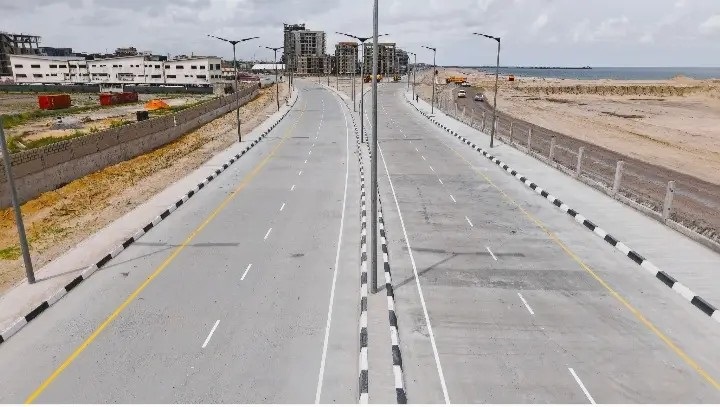
The Federal Government on Friday, December 12, 2025, temporarily opened the 47.47km Section One, Phase One of the Lagos-Calabar Coastal Highway, describing the project as a game changer.
The Minister of Works, Sen. Dave Umahi, inaugurated the section on behalf of President Bola Tinubu, in Lagos.
The 750km Lagos-Calabar Coastal Highway started from Ahmadu Bello Way, Victoria Island in Lagos State and will end in Cross River.
Lagos-Calabar Coastal Highway
It will pass through several states, including Ogun, Ondo, Delta and Bayelsa.
Umahi said at the inauguration that the opening was the realisation of a dream of 27 years.
He noted that President Bola Tinubu opened a portion of the section on May 26, describing it as a major step forward in the implementation of a nationally strategic project.
The minister said that the highway had a reinforced concrete pavement and closed-circuit television cameras, among other features.
He noted that the highway would connect the western and southeastern regions of Nigeria to improve cross-country connectivity and trade relations.
He reiterated that it would create millions of jobs, cut travel time, and drive economic growth.
He said that the Tinubu administration had embarked on some legacy projects in different parts of the country for the advancement of Nigeria.
Earlier, Lagos State Gov. Babajide Sanwo-Olu praised Tinubu for efforts on infrastructure development.
The governor was represented by the state Commissioner for Transportation, Mr. Oluwaseun Osiyemi.
He emphasised that the Lagos-Calabar Coastal Highway would reduce travel time on the corridor and improve economic prosperity of the citizens.
“It is also intended to connect rural areas to urban markets and key economic zones such as the Lekki Free Trade Zone.
“With improved connectivity and reduced travel time, businesses will be able to operate more efficiently, and people will have more time to focus on their work.
“This will lead to increased productivity and economic growth,” Sanwo-Olu said.
He described the highway project as one of the most ambitious and audacious infrastructure projects since Nigeria’s independence.
He thanked the minister for delivering the section and temporary opening it for use, as he promised, to reduce pains associated with road traffic gridlock.
The Oniru (Traditional Ruler) of Iruland, Oba Abdulwasiu Omogbolahan Lawal, expressed gratitude to the Federal Government for the opening.
He said the project represented a significant milestone in national development and was a testament to Tinubu’s good leadership.
The royal father said the highway would enhance mobility and positively impact tourism, agriculture and other sectors.
He noted that the temporary opening would ease movement and reduce congestion for millions of road users during the festive season.
“This is a welcome relief for commuters who have had to deal with pressure on other major roads.
“With this opening, the promise of a more convenient festive season is assured,” he said.
He noted that Mr. Dany Abboud, the Managing Director of Hitech Construction Company, the contractor handling the project, said that the entire 106km stretch of Sections One and Two of the coastal highway would be completed by Dec. 2026.
The traditional ruler whose Iru Kingdom hosts the take-off point of the highway project, pledged continued cooperation with the Federal Government to ensure successful completion.
He commended Umahi, the Federal Controller of Works in Lagos and the project team for dedication, assuring them of the support of traditional institutions on the corridor.
The new, state-of-the-art Dairy Cattle Teaching and Research Centre at Michigan State University has been recognised by the Michigan Green Building Collaborative (MiGBC) as one of the state’s most innovative projects in 2025.
The award was presented on Thursday, Dec. 11 at the MiGBC’s Annual Party & Leadership Awards Ceremony in Grand Rapids.
Awarded projects go beyond conventional design, construction and operations – aligning with the MiGBC’s mission to transform the way buildings and communities are designed, built and operated in a way that improves the quality of life in Michigan.
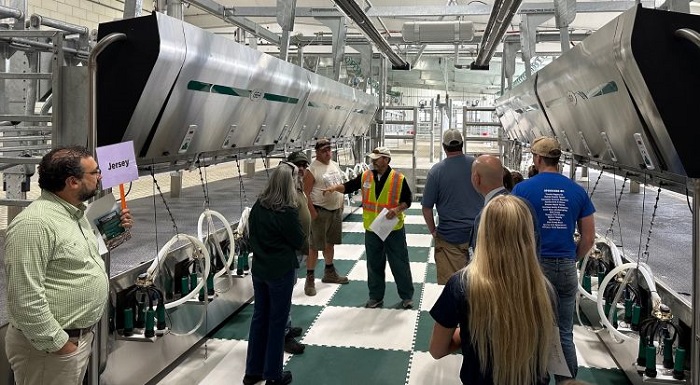
Tour of the Dairy Cattle Teaching and Research Centre
Categories considered by MiGBC include energy efficiency, health and wellness, indoor air quality, resiliency, waste reduction and other innovative approaches.
“We are very excited to honour the MSU Dairy Cattle Teaching and Research Centre as this year’s Innovative Project third-place winner,” said Ally Beshouri, MiGBC communications manager. “The MSU dairy stands as an important example of what can be achieved when sustainability is considered for not only the physical facility but the education, community and positive future that is fostered within.”
The $75 million MSU Dairy Cattle Teaching and Research Centre serves as a national model for agricultural sustainability, hands-on teaching and leading dairy science research.
Expanding teaching and research opportunities is a central goal for the dairy, which will triple the previous herd size to nearly 700 cattle. This allows for growth of current research projects, addressing a backlog of additional dairy-related challenges, providing community outreach on the importance of the dairy industry to Michigan, and further training opportunities for students.
Sustainable features are woven throughout the center. To lessen the carbon footprint and reduce fossil fuel use, all manure is processed through the university’s anaerobic digester. The resulting energy is helping power the dairy, as well as other areas of the MSU campus. Other sustainability-focused aspects include water reclamation, electric vehicle charging capabilities and recycling of sand bedding for cattle.
The State of Michigan provided $30 million in initial funding for the project, but continued support will be needed from donors, corporate partners and other stakeholders.
“The new Dairy Cattle Teaching and Research Center brings MSU to the forefront of dairy science worldwide – advancing research and training the next generation of industry leaders,” said MSU AgBioResearch Director, George Smith. “We appreciate the recognition from the MiGBC because sustainability is critical to the future of dairy production in Michigan. It’s important to point out that our partners have been an essential component of the process, helping to guide our construction efforts to ensure we’re able to address the dairy industry’s most pressing needs.
“We’re extremely appreciative of the State of Michigan’s initial funding, and we’re looking at opportunities for our stakeholders to continue to invest in this revolutionary facility that advances the largest sector of Michigan’s agricultural economy.”
Design partners for the centre included architecture and engineering firm TowerPinkster, agricultural consultant Curry-Wille Associates, and construction manager The Christman Company.
The Federal Government/International Fund for Agricultural Development (IFAD) Value Chain Development Programme (VCDP) says it has created more than 11,000 permanent jobs through its agribusiness support initiatives.
Dr Fatima Aliyu, National Programme Coordinator of VCDP, disclosed this at a media roundtable on Thursday, December 11, 2025, in Abuja.
Aliyu said the programme had generated 11,890 permanent jobs, comprising 3,128 women, 2,710 men and 6,052 youths who now own various agribusiness ventures.
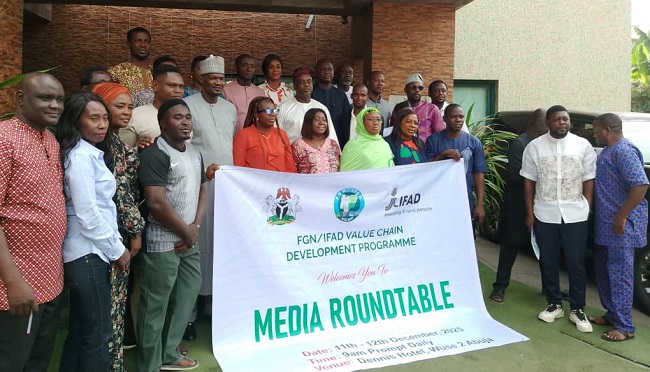
Participants at the IFAD-VCDP Media Roundtable in Abuja
She noted that the intervention had helped reduce rural-urban migration, especially among young people, while also providing income-generating opportunities for vulnerable women and persons with disabilities.
“Our main objective at VCDP is to move smallholder farmers from subsistence to micro enterprises.
“Rice farmers benefiting from the project now produce five to six tonnes per hectare, while cassava farmers record about 30 tonnes per hectare.
“We also trained youth farmers on rice seed and cassava stem production. They now produce and sell rice seeds and cassava stems to communities.
“This has made many of them entrepreneurs, wealth creators and job creators across the benefiting states,” she said.
Aliyu said VCDP attained the milestone through proper profiling of beneficiaries and strong engagement with government at all levels, religious and community leaders, as well as the media.
She added that the programme also prioritised continuous training of farmers on good agricultural practices, the introduction of dry season rice farming and value chain financing, among other interventions.
Aliyu highlighted insecurity, adverse effects of climate change, high input costs driven by inflation, and low literacy levels among farmers, which limit the adoption of innovative farming techniques; as the major challenges affecting the implementation of the VCDP project.
Also speaking, Mr. Nura Lawal, Programme Monitoring and Evaluation Advisor, IFAD-VCDP, Abuja, said the Federal Government/IFAD project focuses on rice and cassava value chains in nine states.
He listed Anambra, Benue, Ebonyi, Kogi, Nasarawa, Niger, Ogun, Enugu and Taraba as the beneficiary states.
According to him, the programme is designed to boost productivity, improve market access, enhance value addition and create jobs.
“VCDP has particular emphasis on empowering women and youth through training, improved infrastructure, climate-smart practices and stronger market linkages for better food security and income,” he said.
In her remarks, Mrs. Vera Onyilo, Knowledge Management and Communication Advisor, IFAD-VCDP, appreciated the media for giving visibility to the project since its inception in 2014.
The Nigerian Upstream Petroleum Regulatory Commission (NUPRC) has issued permits to 28 companies under the Nigerian Flare Gas Commercialisation Programme (NGFCP), marking a significant step to end routine gas flaring and advance climate commitments.
Speaking on Friday, December 12, 2025, at the permit issuance ceremony in Abuja, the Commission Chief Executive, Mr. Gbenga Komolafe, described the development as a strategic point in Nigeria’s energy transition journey.
NGFCP, re-inaugurated in 2022, aims to eliminate routine flaring by allocating flare sites to qualified third-party companies.
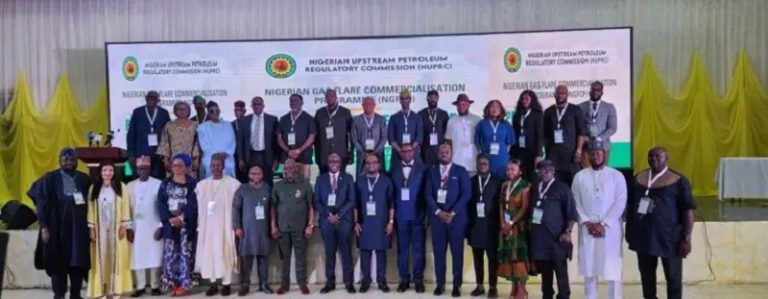
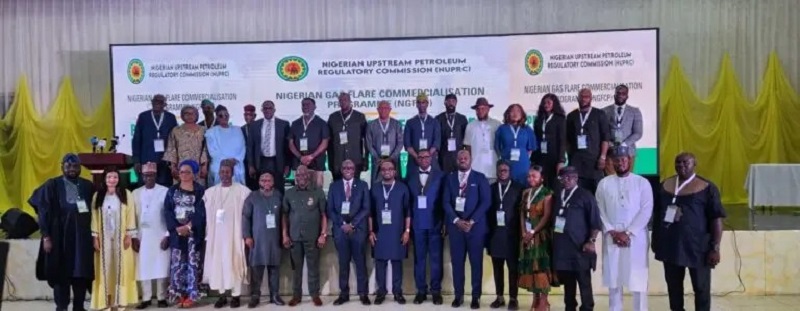
Commission Chief Executive, NUPRC, Mr Gbenga Komolafe (7th left) with awardees and dignitaries at the issuance of the Nigerian Flare Gas Commercialisation Programme (NGFCP) access permit ceremony in Abuja
This gives the companies the capacity to commercialise gas for power generation, petrochemicals, fertiliser production, Liquefied Petroleum Gas (LPG) supply, and industrial use.
Komolafe said the NGFCP remained one of Nigeria’s most important climate action initiatives, designed to convert wasted flare gas into economic value while reducing environmental impact.
He said the permits issued under the 2020–2021 flare gas commercialisation bid round signified the shift from decades of operational challenges to a commercially driven model that would enhance energy security and improve industry efficiency.
“From 300 initial expressions of interest, 139 applicants qualified for the RFP stage.
“Following a competitive and transparent evaluation process, 42 successful bidders were awarded 49 flare sites, an achievement widely recognised for its integrity and rigour.
“Today, we are pleased to announce that 28 awardees have fully executed the required suite of commercial agreements, which include the Connection Agreements, Milestone Development Agreements, and Gas Sales Agreements; and now qualify to receive the Permit to Access Flare Gas.
“These entities represent a strong blend of operational capability, financial readiness, and technological competence,” Komolafe said.
He stated that the redesigned programme had strengthened commercial viability and regulatory consistency, following disruptions caused by COVID-19 and the implementation of the Petroleum Industry Act (PIA).
Highlighting the expected impact of the programme, Komolafe stated that between 250–300 million standard cubic feet of gas currently flared daily will be captured and commercialised.
“Nigeria will cut an estimated six million tonnes of Carbon Dioxide (CO₂) emissions annually, while up to two billion dollars in new investments is anticipated.
“More than 100,000 jobs (direct and indirect) are expected to be created and about 170,000 metric tonnes of LPG will be added annually, providing clean energy access to 1.4 million households.
“Nearly three gigawatts of power-generation potential would be unlocked,” the CCE said.
He also acknowledged the support of development partners including the World Bank, Power Africa, USAID, the U.S. Department of Energy, KPMG, and several financial institutions for their technical, commercial, and capacity-building contributions.
Komolafe emphasised that the issuance of permits marks the beginning and not the end of project execution.
He urged the awardees to accelerate work on engineering, construction, financing, and commissioning, assuring them of continuous regulatory support.
“The value of this programme will be realised only through disciplined project delivery,” he said.
“Together, we will continue to advance Nigeria’s upstream petroleum sector towards greater transparency, efficiency, sustainability, and global competitiveness,” he said.
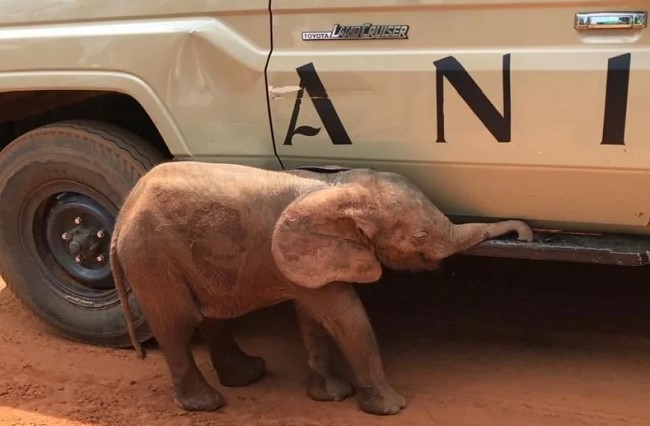
Hours after dawn on Nov. 30, 2025, workers on a routine patrol at Okomu Oil Palm Company in Edo State noticed a figure wandering alone among the trees in Extension 1 of the plantation.
At first, they thought it was a stray calf from a local livestock herd.
But as they drew closer, reality struck–a frail, dehydrated elephant calf, barely two months old, struggling to stand, its ears drooping from exhaustion.
The rescued elephant calf
The discovery sent shockwaves through Edo’s conservation circle.
No one in Nigeria – parks, researchers, or wildlife responders – had ever rescued a forest elephant calf and lived.
Now, suddenly, Okomu had an orphan on its hands again.
Mr. Osaze Lawrence, Conservator of Park at Okomu National Park, provided some clarifications.
“We were told a very young elephant was found walking alone.’’
Lawrence explained that the company kept it, gave it water, and called on the authorities immediately.
“When we arrived with African Nature Investors (ANI), we picked it up and took the first step – attempting to reunite it with its herd,” he said.
ANI foundation has been in partnership with the National Park Service since, engineering a community-led model that has resuscitated the integrity of Okomu National Park.
After retrieving the calf, the conservator of the park said rangers entered deep into the elephant home range, guided only by faint noises they believed came from a nearby herd.
They placed the baby gently on the forest floor; hoping instinct would lead it back.
“At first, it walked some metres into the wild; we stepped back to see if the family would find him.
“But after two hours, there was no sign.
“Later, a bike rider called to say the small elephant had wandered onto the main road again.”
Only then did the team realise the heartbreaking truth: the calf’s mother was gone, and the reunion attempt had failed.
Returning it to the wild would mean certain death – predation, hunger, dehydration, or poaching.
“So we agreed the only humane thing was to rescue it, rehabilitate it, stabilise it, and prepare it for a future return to the wild,” he said.
The calf was moved to ANI’s R1 Base Camp, an operational facility near the park headquarters.
A makeshift rehabilitation space was prepared – quiet, isolated, and close enough to the forest to reduce stress from human presence.
But within 48 hours, the calf’s condition deteriorated.
Dr Faith Amune, a veterinarian with Okomu Oil Palm Company, provided insights.
“He had a very thin line between life and death.
“We were not prepared for it, but duty is duty; we administered emergency medication, and honestly, on that first Tuesday (Dec. 2), it looked like we were losing him,” she said.
The crisis triggered an unprecedented collaboration.
ANI quickly created an SOS WhatsApp group that linked wildlife experts within and outside Nigeria.
Messages flew across time zones – symptoms, photos, hydration levels, recommended milk formulas. Responders realised they needed hands-on expertise.
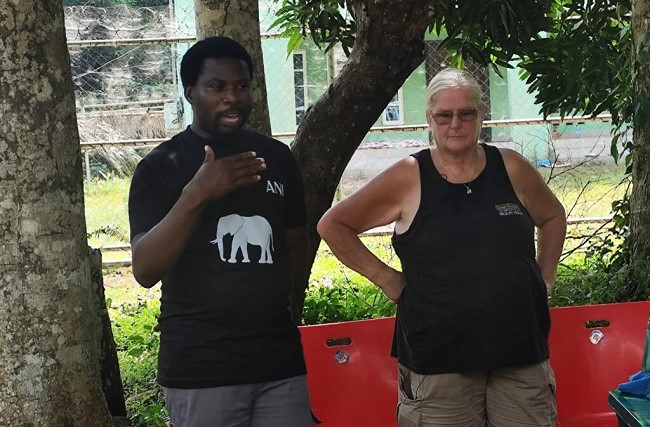
Liz O’Brien, Wildlife Rescue Specialist (right), and Peter Abanyam, ANI’s Project Manager at Okomu while educating rangers on the rehabilitation measures
When wildlife rescue technical consultant Liz O’Brien, a UK-born elephant rehabilitation specialist based in Zambia, received the alert, she acted immediately.
She has spent 15 years working across Africa – Botswana, Kenya, Tanzania, Malawi, Burkina Faso – specialising in orphaned elephants.
She knew the significance of the call; she booked the next flight.
“It is an elephant and when a baby elephant needs help, I go.
“I did not just come to save this calf; I came to train the people here; Africa cannot rely on outsiders flying in.
“The real solution is to build capacity locally.
“If they learn how to handle this one, they will manage the next,’’ she said.
On arrival, O’Brien assessed the calf and immediately began working side by side with local vets, rangers, keepers, and park managers.
She redesigned the milk formula, corrected hydration patterns, and began teaching techniques that normally take years to learn through field exposure.
Dr Adedolapo Oke, another Okomu veterinarian, acknowledged O’Brien’s impact.
“She has decades of experience; you could see immediately that she knows exactly what to do.
“For vets like us, who rarely encounter elephants, it was priceless,” Oke said.
By records, Nigeria’s elephant population has declined drastically over the past century.
From tens of thousands, forest elephants have disappeared from most states due to logging, poaching, and habitat fragmentation.
Today, the Okomu–Omo–Osse landscape hosts the last viable population of critically endangered African forest elephants in southern Nigeria.
Peter Abanyam, Project Manager for ANI at Okomu, said for years, elephants avoided the eastern corridor of the park because of human pressure.
“But recently they have started crossing again. It shows that protection efforts are working,” he said.
Abanyam believes the calf rescue symbolises a larger conservation shift: local communities are no longer passive observers – they are now participants.
Interestingly, one of the most striking developments since the rescue is how communities now perceive the park.
Abanyam recalls how the project integrated him into the community.
“They don’t even call me by my name; they call me ‘ANI’ – because they see the organisation as part of them; that sense of ownership didn’t exist five years ago.
“The awareness is strong now; people know the elephants are theirs to protect,” said ANI’s project manager.
For Lawrence, the Conservator of Park, this is the biggest sign of transformation.
To reinforce boundaries and prevent future human-elephant conflicts, stakeholders are now planning a full demarcation of the park’s southern boundary – a move involving communities, the Edo State Forestry Commission, the Edo Geographic Information System (GIS), and local governments.
“It has become urgent. As elephant numbers stabilise, they need land. If we don’t act now, conflicts will rise,” Abanyam warned.
Behind the scenes, veterinarians worked in shifts around the clock.
“The adrenaline was high; but what matters is consistency – days, weeks, months of follow-up; that is the real challenge,” Oke said.
To wildlife veterinarians, elephant calf care is one of the hardest tasks in the world.
“In global records, nearly 45 percent of rescued calves die.
“They are sensitive; the digestive system is complicated; the psychological trauma is severe,” O’Brien said.
The calf will need specialised milk for two to three years, constant monitoring, hydration therapy, environmental enrichment, and minimal human contact to avoid imprinting.
“It will take four to five years before he can be fully independent; but if you want wild animals, you keep them in the wild – not zoos.
“My hope is to reintroduce him when he’s ready,” the wildlife rescue specialist said.
For Nigeria, the experience is historic.
Dr Abdulrahman Adam, a wildlife vet who flew in from Bauchi to learn on the field, said it was his first elephant calf case.
“In Nigeria, this has never happened before. What I learned here, you cannot get in any classroom,” Adam said.
Beyond the touching story of rescue lies a deeper narrative – Okomu National Park is emerging as a model for conservation in Nigeria.
“When I came in 2022, illegal logging was everywhere.
“But with ANI’s support, we trained 40 rangers, engaged communities, and pushed logging to the barest minimum,” the conservator of the park said.
Now, the Federal Ministry of Environment, led by Balarabe Lawal, and the National Park Service under Dr Ibrahim Goni, are backing the park’s renewed momentum.
The rescue has also strengthened calls to expand protection areas. Nigeria has grown from seven national parks to seventeen, reflecting rising awareness about biodiversity conservation.
“Any community with a valuable forest can approach the National Park Service to upgrade it.
“Tourism, research, environmental benefits – it is all worth it,” Lawrence said.
Standing in the quiet rehabilitation shelter, O’Brien watched the calf sway gently on its feet – more stable, more alert, and more alive.
“We are not there yet; but we are one step on the path,” O’Brien said.
For Lawrence, Abanyam, the veterinarians, and the communities, the calf has become more than an animal; it is a symbol of what collective action can achieve.
“This is a first for Nigeria, and it shows that when the community, NGOs, government and experts come together, wildlife can survive,” Lawrence said.
Summing up the whole effort, O’Brien said, “It takes a village to raise a child; and it takes a village to raise an elephant.”
The Government of Kenya and the United Nations Convention to Combat Desertification (UNCCD) on Friday, December 12, 2025, announced that Kenya will host the next global observance of Desertification and Drought Day, to be held on June 17, 2026, under the theme “Rangelands: Recognize. Respect. Restore.”
Taking place in Kenya, the 2026 observance will highlight the central role of the world’s rangelands in climate resilience, food and water security, biodiversity conservation and the cultural identity of pastoralist and Indigenous communities.
Rangelands cover more than half of the Earth’s land surface and support the lives of two billion people, including 500 million pastoralists, who have stewarded these landscapes for generations.
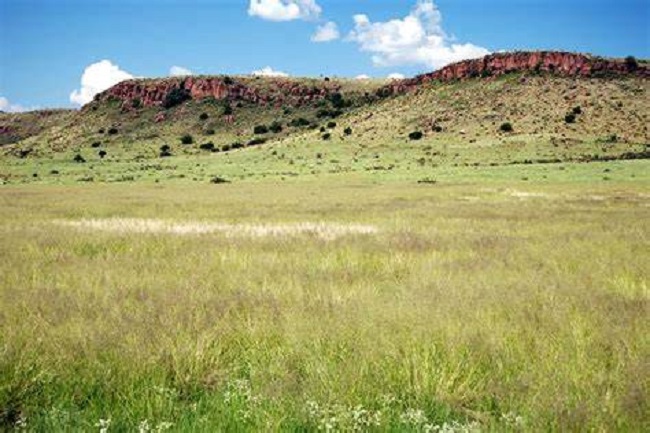
Rangeland
Kenya’s decision to host the global observance was formally announced by Cabinet Secretary for Environment, Climate Change and Forestry, Dr. Deborah Mlongo Barasa, who extended a warm invitation to the international community to join Kenya next year:
“On behalf of the Government of Kenya allow me to extend a warm invitation to all. Next year, Kenya has the honour of hosting the Global Observance of the World Desertification and Drought Day. We warmly welcome all Member States, our partners, civil society and young people to join us as we shine a global spotlight on drought resilience, land restoration and the communities whose lives and livelihoods are shaped by these challenges.”
She added that “the presence of participants will not only enrich the observance but also reaffirm our shared commitment to safeguarding the world’s drylands and supporting the people who depend on them. As we celebrate the International Year of Rangelands and Pastoralists, we hope the global community will stand with Kenya in recognizing the immense value of these landscapes and those who steward them. We look forward to welcoming you to Kenya – as we rally the world to act on drought before drought acts on us.”
UNCCD Executive Secretary, Yasmine Fouad, said: “We thank the Government of Kenya for hosting Desertification and Drought Day 2026 and for shining a spotlight on the world’s rangelands. These landscapes are vital for food, water, biodiversity and climate resilience. Kenya’s leadership comes at a crucial moment, as rangelands face increasing pressure worldwide. By recognising their value, respecting their traditional stewards and restoring rangelands back to health, we can strengthen the livelihoods of two billion people.”
She added that “up to half of the world’s rangelands are degraded, with some disappearing faster than rainforests, placing food security, water availability and pastoralist cultures at risk.”
Rangelands remain among the planet’s most undervalued ecosystems, despite their vast extent and critical importance. The degradation of these landscapes threatens biodiversity, climate regulation and the economies of countries that depend heavily on livestock production and grazing systems.
UNCCD’s recent technical assessments highlight that investing in rangeland restoration can generate returns of up to $35 for every $1 invested, due to the combined ecological and socio-economic benefits.
Coinciding with the International Year of Rangelands and Pastoralists, the 2026 Desertification and Drought Day observance will draw global attention to the need to recognise and value rangelands for the critical functions they provide, respect the traditional stewards who have cared for them for generations, and restore degraded landscapes to secure livelihoods and ecosystem services.
Through 2026 Desertification and Drought Day, countries and communities are invited to:
Recognise: rangelands’ economic contribution to national and regional economies; their role in sustaining biodiversity and wildlife; and the multiple benefits they provide, from regulating water cycles to storing carbon
Respect: pastoralists, Indigenous Peoples and local communities, whose mobility, customary governance systems and ecological knowledge are essential to maintaining the health and productivity of these landscapes
Restore: rangelands by investing in sustainable land and water management, strengthening governance, improving drought preparedness and supporting community-led restoration efforts
Desertification and Drought Day, marked every year on June 17, is the United Nations’ global moment to raise awareness of land degradation and drought, and to mobilise action to protect and restore healthy land.
Desertification and Drought Day 2026 in Kenya will be the first time in nearly a decade that the African continent will host this important global observance. Previous observances took place in Colombia (2025), Germany (2024), USA (2023), Spain (2022), Costa Rica (2021), Republic of Korea (2020), Türkiye (2019), Ecuador (2018), Burkina Faso (2017) and China (2016).
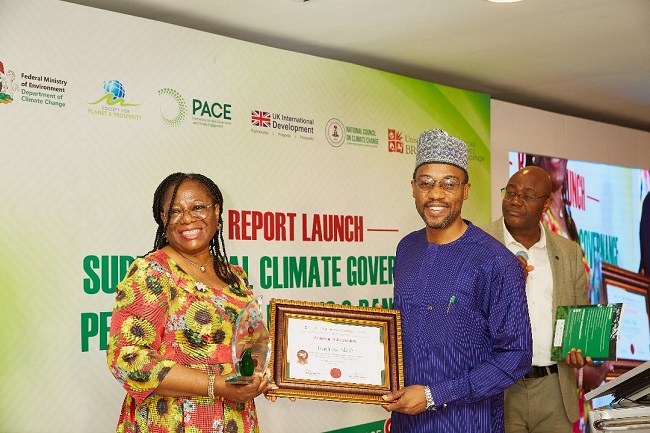
Kaduna State’s emergence as third overall in the 2025 Subnational Climate Governance Performance Rating and Ranking represents an important milestone in our climate journey. Led by the Society for Planet and Prosperity (SPP), in partnership with the Department of Climate Change of the Federal Ministry of Environment the ranking exercise recognises a simple but powerful truth: while climate change is global, its impacts – and therefore many of the solutions – are fundamentally subnational.
For Kaduna, the ranking has been more than a recognition exercise. It has functioned as a mirror, a motivator and a management tool, helping us assess where we stood, where gaps existed, and how deliberately we needed to act. In 2024, Kaduna placed 16th nationwide. In 2025, we moved 13 places upward to third position. This was neither accidental nor symbolic. It was the result of conscious, systematic effort to improve climate governance across all five dimensions assessed by the ranking.
Abubakar Buba, Commissioner for Environment and Natural Resources, Kaduna State
From the outset, we made a strategic decision to use the ranking framework as a roadmap for reform with our efforts supported by UKFCDO PACE. We focused intentionally on strengthening climate institutional arrangements; improving the status of climate policies, action plans and legal frameworks; increasing budgetary allocations; accelerating project implementation and monitoring; and improving public communication and visibility around climate action.
The results of that effort are clearly reflected in our performance. Kaduna recorded 120 points – the highest scores in Climate Institutional Arrangements, signalling the strength of our coordination structures and governance systems. We scored 50 points for budgetary allocation, placing sixth nationwide, and 50 points for online visibility, tying with the top-performing states in this category.
A defining moment in this journey was the unveiling of Kaduna’s 10-year Climate Change Policy in August 2024 – the first of its kind in Northern Nigeria. The policy commits the state to low-carbon, climate-resilient, gender- and youth-responsive development pathways. As His Excellency, Governor Uba Sani, noted at the launch, the policy is designed “to reduce emissions, enhance climate resilience, and integrate climate considerations into state planning.”
However, we recognised early that policy alone does not change lives. Implementation does. This understanding – reinforced by the assessment criteria of the ranking – led to the creation of the Kaduna Climate Change Accountability Mechanism, a multi-stakeholder framework anchored in our Open Government Partnership commitments. Through this mechanism, Technical Working Groups have been established across all 23 Local Government Areas, strengthening coordination, citizen participation and data-driven monitoring at both state and local levels.
On the ground, the impact of this governance shift is already evident.
As one of Nigeria’s leading agricultural producers, Kaduna has prioritised climate-smart agriculture and agribusiness as a pathway to resilience and job creation. Through collaboration with the Federal Government and the African Development Bank under the Special Agro-Industrial Processing Zones (SAPZ) programme, the state is modernising agricultural value chains to boost productivity, increase farmer incomes and generate youth employment. By linking climate resilience with agro-industrial development, Kaduna is reducing rural poverty while lowering vulnerability to climate shocks.
At the community level, we have paired governance reform with direct financial and skills support. In March 2025, Kaduna disbursed $25,000 in community revolving funds to ten communities for climate-smart rain-fed agriculture, complemented by green-skills training for women and youth. These interventions are enabling year-round farming, restoring degraded ecosystems and strengthening household incomes in climate-vulnerable areas.
Recognising the growing risks of rainfall variability, we also launched the Dry Season Agricultural Empowerment Programme in February 2025, distributing 10,000 solar-powered irrigation pumps to smallholder farmers, with priority given to women and other vulnerable groups. This intervention is expanding dry-season production, reducing dependence on diesel pumping, and directly improving food security and livelihoods.
Flooding remains a major climate risk in Kaduna, particularly along the River Kaduna corridor. In response, and guided by vulnerability assessments highlighted in our governance reviews, the state commenced a major drainage desilting and widening programme, covering 200,000 metres of drainage infrastructure, alongside dredging key sections of the river system. These actions are already reducing flood risks, protecting homes and safeguarding economic activity in vulnerable urban and peri-urban communities.
We have also embedded climate action within local development financing drawing from the template developed by the ranking project team. This represents a deliberate shift from top-down budgeting to community-driven development, allowing local people to identify projects that support climate adaptation, mitigation and resilient infrastructure. Looking ahead to the 2026 fiscal year, Kaduna has proposed Project 255 – a ward-level funding model allocating ₦100 million to each of the state’s 255 wards.
Environmental restoration remains a core priority. Under the Greening Kaduna Initiative, the state has committed to planting 10 million trees over four years, with more than two million already planted since 2024. These efforts – spanning urban forest restoration, green corridors, community gardens and school-based tree planting – are reducing heat stress, improving air quality and restoring degraded landscapes across the state.
Taken together, these actions demonstrate how improved climate governance translates into real economic, social and environmental outcomes: higher farm productivity, new green jobs, reduced flood risk, stronger community resilience, improved ecosystems and more inclusive development processes.
We acknowledge that challenges remain. Funding constraints and technical capacity gaps persist, and climate impacts continue to evolve. Yet we remain confident that Kaduna’s governance model is credible, investable and scalable. The progress reflected in the 2025 ranking has strengthened investor confidence and opened new opportunities for national and international partnerships.
We welcome the Subnational Climate Governance Performance Rating and Ranking not merely as a scoreboard, but as a tool for learning, accountability and continuous improvement. The governance framework provided through the ranking has helped guide our reforms while allowing us to tailor solutions to Kaduna’s specific context.
We will continue to refine our systems, deepen implementation and expand impact – guided by evidence, informed by our people and motivated by the urgency of climate change.
Kaduna’s journey to third place is not the end. It is proof that with political will, institutional reform and citizen engagement, rapid and meaningful progress is possible.
By Abubakar Buba, Commissioner for Environment and Natural Resources, Kaduna State