Home Blog Page 167

PENGASSAN-Dangote dispute reduced power generation by 1,100MW – NISO

0

The Nigerian Independent System Operator (NISO) says industrial action within the gas supply chain resulted in reduction in power generation by more than 1,100MW on Sept 28, 2025.

According to NISO’s Management in a statement in Abuja on Tuesday, Sept. 30, available generation in the National Grid fell sharply from over 4,300MW in the early hours of Sept. 28, to about 3,200MW at the lowest point.
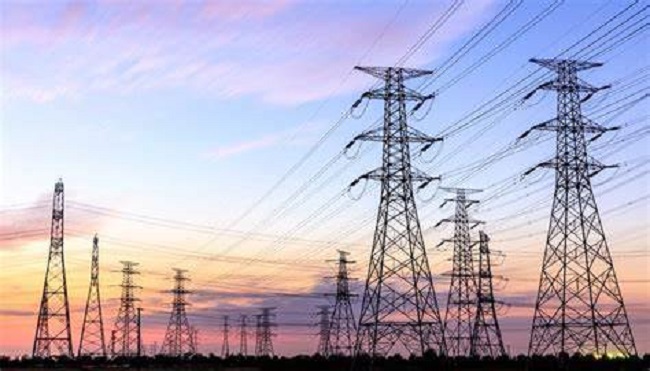
National grid
National grid lines

“NISO wishes to notify the public of recent major generation shortfalls on the National Grid, caused by industrial actions of the Petroleum and Natural Gas Senior Staff Association of Nigeria (PENGASSAN) within the gas supply chain.

“These disruptions triggered widespread gas shortages, reducing available generation from over 4,300 MW in the early hours Sept. 28th to about 3,200 MW at the lowest point,” it said.

NISO said that the development heightened pressure on the grid, prompting emergency measures to stabilise supply and avert a nationwide blackout.

”To mitigate the crisis, the system operator said that it ramped up generation from major hydropower stations, injecting over 400MW to cushion the shortfall from gas-fired plants.

The agency said that it also implemented real-time load adjustments, frequency support measures, and selective load shedding to preserve operational security.

NISO said it promptly deployed contingency measures to preserve the stability, security, and reliability of the National Grid. Key interventions which include

“Hydropower Optimisation: Strategic ramp-ups from major hydro stations, contributing over 400 MW of additional output to cushion the shortfall from gas-fired plants.

“Generation Dispatch and Load Balancing: Real-time load adjustments to match available generation with system demand, while preventing a system frequency collapse.

“Voltage and Frequency Support: Continuous deployment of reactive power compensation and reserve monitoring to safeguard system integrity.

“Demand-Side Management: Selective load shedding, applied as a last resort, to avert a system-wide collapse and ensure fair power distribution,”it said.

According to NISO, these timely actions enabled the it and National Control Centre (NCC) to minimise the impact of the labour-induced gas shortages, sustain operational security, and maintain supply to critical loads, thereby averting a nationwide blackout.

The system operator however reaffirmed its commitment to proactive grid management, operational excellence, and the application of best-in-class practices to guarantee a secure and reliable electricity supply for the nation”.

PENGASSAN attributed its latest action to Dangote Refinery’s alleged unilateral action in sacking over 800 staff members for joining the Association.

The National Executive Council (NEC) of PENGASSAN held an emergency meeting of all its branches on Saturday, and resolved that members should withdraw all services effective 00:01 on Monday..

The federal government has waded into the face-off between the Dangote Refinery and PENGASSAN.

A meeting chaired by the Minister of Finance and the Coordinating Minister of the Economy, Mr. Wale Edun, underscored two recent developments, including the purported suspension of the Naira-for-Crude oil arrangement by the Dangote Refinery, and the concerns raised by PENGASSAN regarding the refinery.

By Constance Athekame
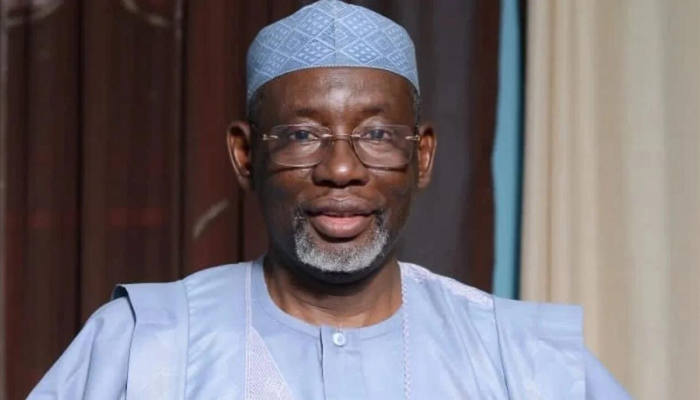
Jigawa approves N575m dyke project to mitigate flooding

The Jigawa State Government has approved N575 million embankment and dyke project to mitigate flooding in the state.

Sagir Musa, Commissioner for Information, Youths, Sports and Culture, said this at the end of the State Executive Council (SEC) meeting, on Tuesday, September 30, 2025, in Dutse, the state capital.

Umar Namadi
Gov. Umar Namadi of Jigawa State

He said embankment would be rehabilitated along Gambara-Waza-Dutse Road, to mitigate flooding, protect the road and ease vehicular movement.

Musa said the gesture was in furtherance of Gov. Umar Namadi administration’s policies aimed at promoting environmental sustainability, economic growth and social development.

“The rehabilitation of the embankment on Waza, located along the Gambara–Waza–Dutse Road, is very vital due to its critical condition and the intervention aims at flood mitigation and protecting a major access route to the state capital. 

“The Waza embankment will serve as a vital infrastructure to protect communities and facilitate movement between rural and urban centres, improve accessibility and economic activity, safeguard lives and property across the affected areas,” he said.

He said the SEC also approved an organogram for the newly established Ministry of Livestock Development.

According to Musa, the ministry is set up to transform the agricultural sector and boost sustainable livestock production in the state.

This, he said, marked a milestone in the implementation of Namadi administration’s development blueprint, aimed at enhancing value chains and creating economic opportunities for rural dwellers.

“The creation and structuring of the ministry align with the Renewed Hope Agenda of President Bola Tinubu, which emphasises agricultural diversification, food security and inclusive economic growth across the nation. 

“With the approved organogram, the ministry is now positioned to commence full operations with a clearly defined structure, enabling it to efficiently coordinate policies.

“It will also initiate programmes and interventions that will drive innovation, improve animal health services and support livestock entrepreneurship across the state,” Musa said.

An organogram is a visual representation of the structure of an organisation. It shows how authority, roles and responsibilities are distributed as well as the link between different departments or individuals.

By Aisha Ahmed

Africa Exploitation Week: Protesters demand $5tr payment from fossil fuel executives

0

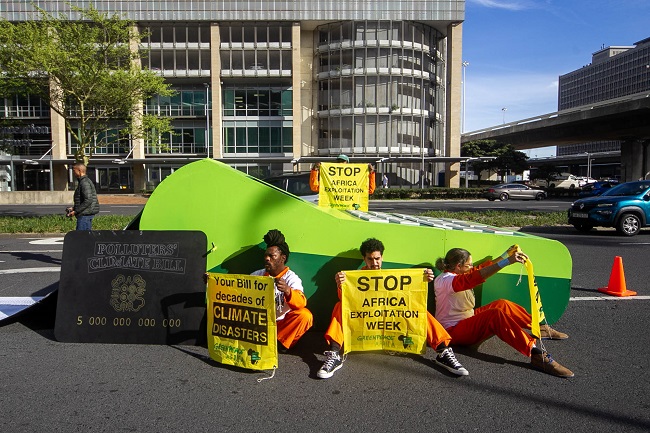
Police removed and dragged away climate activists who had chained themselves to a giant green payment machine outside the Cape Town International Convention Centre in the morning of Tuesday, September 30, 2025, as the protesters demanded oil and gas executives pay trillions in climate damages at what they’re denouncing as “Africa Exploitation Week.”

Several activists in orange jumpsuits were seen being physically dragged across the pavement by multiple officers while shouting “Polluters Must Pay! You owe us a Climate Debt!” as delegates from TotalEnergies, BP, Chevron and other fossil fuel giants entered Africa Energy Week, the continent’s largest oil and gas gathering.

Africa Exploitation Week
Protesting climate activists

The dramatic scenes unfolded as activists attempted to blockade the entrances to the venue, as the pay machine unfurled a long bill featuring the cost of climate disasters worldwide since the Paris Agreement, amounting to $ 5 trillion. However, police quickly moved to remove protesters who were chained to the massive payment machine, which they also carried off the entrance.

As officers dragged activists away, one protester could be heard bellowing “Polluters Must Pay! You owe us a Climate Debt!” while conference delegates in business suits walked past into the venue.

“While police shield polluters at the expense of the people, African communities continue paying the ultimate price for fossil fuel extraction with their lives and livelihoods,” said Sherelee Odayar, Oil and Gas Campaigner at Greenpeace Africa, as she watched fellow activists being removed. “This giant bill represents the true cost of fossil fuel extraction that oil executives have been dodging for decades, and today’s heavy-handed response shows exactly whose interests are being protected.”

The payment machine featured a screen displaying clips from Greenpeace Africa’s documentary “Surviving The Aftermath, Who Pays?”, connecting extreme weather events like last year’s deadly Durban tornado to fossil fuel-driven climate change. The action targets executives from TotalEnergies, BP, Chevron, Woodside Energy, and the African Energy Chamber as they attempt to enter the venue for what activists are calling a week-long celebration of African exploitation disguised as energy development.

The protest followed a covert overnight operation where activists infiltrated hotels housing conference delegates, slipping climate justice flyers under hundreds of doors to deliver an early wake-up call about fossil fuel accountability before executives even arrived at the venue.

“Africa Energy Week is really Africa Exploitation Week – a gathering of corporate vultures circling our continent’s resources while ignoring the renewable energy solutions Africa desperately needs and abundantly possesses,” said Cynthia Moyo, Climate and Energy Campaigner at Greenpeace Africa.

“Africa has some of the world’s greatest solar, wind, and geothermal potential, yet these corporations want to lock us into decades more of fossil fuel dependence that benefits their shareholders while poisoning our communities,” added Moyo.

The action comes as Africa faces escalating climate impacts, from devastating floods in South Africa to prolonged droughts across East Africa, while the continent contributes less than 4% of global emissions but suffers disproportionately from climate consequences.

“The extractive industry has treated Africa as its personal ATM for centuries, extracting wealth while leaving pollution, poverty, and climate chaos in its wake,” Moyo continued. “It’s time for a just transition to renewable energy that serves African people, not foreign profit margins.”

The giant payment machine symbolises the mounting climate debt owed to vulnerable communities worldwide, with activists demanding immediate implementation of a global Polluter Pays Pact to fund climate adaptation and loss and damage compensation.

“Today’s action and heavy-handed police response will not stop our resolve. Oil executives and their police protection can silence us today, but they cannot hide from the trillion-dollar climate debt they’ve created. The bill has come due. World leaders face the choice: make polluters pay or watch the planet burn,” concluded Odayar. 

The protest connects to broader global climate justice campaigns demanding fossil fuel companies pay for loss and damage caused by their products, with similar actions planned worldwide ahead of COP30 negotiations in Brazil.

Customs hands over ₦3.94bn worth of donkey parts to NESREA in Kaduna

0

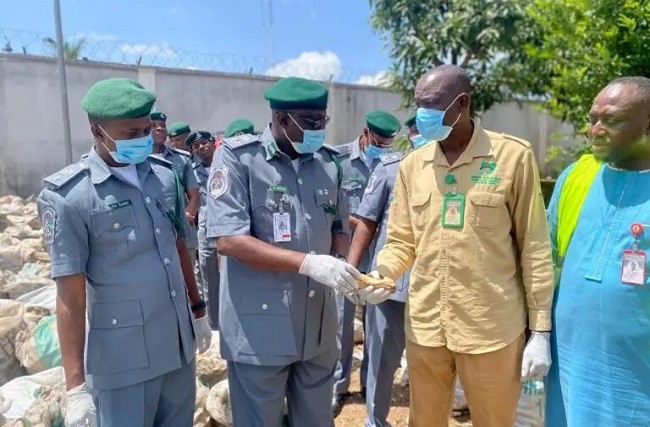
The Nigeria Customs Service (NCS), Federal Operations Unit (FOU) Zone B, Kaduna, has handed over a massive seizure of donkey bones and skins worth over ₦3.94 billion to the National Environmental Standards and Regulations Enforcement Agency (NESREA).

The handover ceremony took place on Tuesday, September 30, 2025, in Kaduna, where the Customs Area Controller, Mr. Aminu Sule, formally presented the confiscated items to the NESREA State Coordinator, Mr. Hene Emmanuel.

NESREA
Customs and NESREA officials at the handing over ceremony

The items included 700 bags of donkey bones valued at ₦1.86 billion and 2,500 pieces of donkey skins valued at ₦2.07 billion, all intercepted in separate operations by the operatives of the unit.

Speaking at the event, Sule decried the illegal trade in donkey parts, warning that it posed serious ecological and socio-economic risks.

“Donkeys are essential to rural communities as a source of livelihood and transport.

“Their indiscriminate slaughter threatens sustainable development,” he said.

Sule emphasised the commitment of the NCS to enforcing environmental protection laws and curbing wildlife crimes, stating that FOU Zone B would not allow Nigeria to become a hub for illegal wildlife trade.

“This seizure is a clear warning to traffickers: FOU Zone B will not relent in the fight against environmental crime,” he added.

The Customs boss highlighted that the operation and successful handover were the outcomes of improved inter-agency cooperation, in line with the Comptroller-General of Customs, Bashir Adeniyi’s ‘Three-Point Agenda of Collaboration, Consolidation, and Innovation’.

He praised the dedication of his officers and partner agencies even as he called for increased support from the public, especially transporters, warehouse operators, and traders to report suspicious activities linked to wildlife trafficking.

Also speaking, NESREA’s State Coordinator, Mr. Hene Emmanuel, commended the Customs service for its vigilance and expressed the agency’s commitment to ensuring proper environmental compliance and protection of endangered species.

Illegal trade in donkey parts, especially skins and bones, has been on the rise in recent years due to growing demand in parts of Asia.

By Hussaina Yakubu

Second subnational climate governance performance ranking gets release date

0

Tuesday, October 14, 2025, has been fixed as the date for the release of the second subnational climate governance performance ranking of the 36 states in Nigeria. This was announced by the Society for Planet and Prosperity (SPP) – the organisation leading the process – and the Department of Climate Change (DCC), Federal Ministry of Environment, Abuja, Nigeria.

Preparatory to the launch, SPP and DCC on September 29, 2025, met for the final time with the Subnational Governance Performance Ranking Expert Review Panel to finalise the results.

FUNAI-VC
Prof. Chinedum Nwajiuba, Chairman of the Review Panel

Building on the success of the maiden edition, the second edition introduces several improvements, including the establishment of a Review and Quality Assurance Panel composed of distinguished national and international climate governance experts, to ensure better accountability and transparency.

The panel was inaugurated in July 2025 with the mandate of upholding the integrity and quality of the ranking process and report.

In his welcome address, Prof. Chukwumerije Okereke, SPP President, thanked the panellists for volunteering their time and expertise to improve and strengthen the ranking process, and expressed great delight at the progress made so far.

“I am pleased with the progress the ranking has made in strengthening subnational climate action. We received extensive feedback from the first edition, and that response, along with the strong cooperation of state governments, demonstrates the growing political will to improve. I am confident this initiative will continue to elevate the standard of climate governance at the state level,” he said.

Members of the panel lauded SPP and the Federal Ministry of Environment for the initiative, which they said will drive genuine climate initiatives in the subnational in a more practical way.

They individually provided feedback on how to improve the process, and collectively called for greater emphasis to be placed on weighting implementation more heavily in future rankings.

Professor Chinedum Nwajiuba, Chairman of the Review Panel, highlighted the need for more efforts in the verification process and emphasised the importance of practical projects aligned with the Paris Agreement goals above just any other projects:

“This is the most beautiful thing that has happened to climate change efforts in a long while. It is a shift from roundtable gatherings to practical implementation, and I must commend the Federal Ministry of Environment and the Society for Planet and Prosperity for making great efforts to hold this ranking for the second time. Often, we find that great initiatives such as this are not sustained beyond the first editions and therefore lose momentum,” he said.

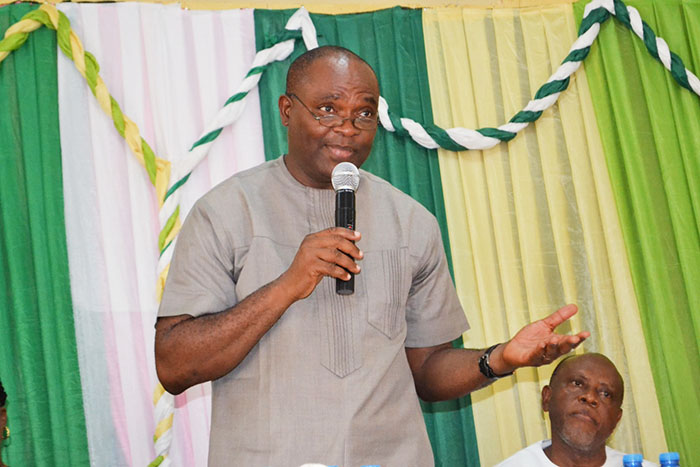
Dr. Mrs. Priscilia Achakpa, Global President of the Women Environment Programme (WEP), and Mrs. Gbemisola Akosa, Executive Director, Centre For 21st Century Issues (C21st), called for the recognition of states that prioritise gender and climate change, suggesting that an honourable mention for such states should be considered.

They commended efforts to integrate their calls for gender mainstreaming in the process, while stating that efforts must be made to measure gender action beyond just capturing them in policy documents.

Mr. Olumide Idowu, Executive Director, International Climate Change Development Initiative (ICCDI), called for a push for the subnational to recognise the voices of the youth in climate policy. According to him, youths have innovative ideas and are those who must bear the brunt of climate impacts in the future. Therefore, the subnational must show how they integrate youths in climate action in a practical way.

This year’s ranking process was initiated on June 24, 2025, with a virtual workshop that brought together climate change desk officers, directors, permanent secretaries, and focal persons from across the states to showcase the updated methodology and project timeline.

The report (also known as the Climate Governance Scorecard), which evaluated all 36 states across five thematic areas: Climate Institutions and Governance, Climate Policy and Action Plan, Climate Project Implementation, Climate Budget and Finance, and Online Visibility, placed Lagos, Gombe, and Ebonyi as the top three performers, while Borno and Ekiti states shared the 4th position in the first edition launched in 2024.

The Climate Governance Scorecard received funding from the European Climate Foundation (ECF) for the maiden edition and is now supported by the UK Foreign, Commonwealth and Development Office (FCDO) under its Partnership for Agile Governance and Climate Engagement (PACE) programme in Nigeria, to enhance climate governance performance at the subnational level by encouraging healthy competition among subnational actors.

The ranking highlights the growing importance of subnational governments in driving global climate action, as recognised in the Paris Agreement.

The high-level launch event in Abuja will be attended by distinguished leaders, including the Minister for Environment, members of the Federal Executive Council (FEC), state governors, state commissioners, NGOs, and international development partners.

The expert review panel is composed of Prof. Chinedu Nwajiuba, Chair of the Board, West African Science Service Centre on Climate Change and Adapted Land Use (WASCAL); Prof. Olukayode Oladipo, Adjunct Professor, UNILAG; Prof. Daniel Gwary, University of Maiduguri; Dr.Eugene Itua, CEO, Natural Ecocapital; Mrs Halima Bawa, Director, National Council Climate Change Secretariat; Dr. Pricilia Achakpa, Global President of the Women Environment Programme (WEP); Mr. Olumide Idowu, Executive Director, International Climate Change Development Initiative; Mr. Amara Nwankpa, Director General (Acting) Shehu Musa Yar’Adua Foundation; Mr. Eghose Omoigui; and Madam Gbemisola Akosa, Executive Director, Centre For 21st Century Issues (C21st).

It is expected that the report will inspire collaborative action among subnational actors, attract private sector and international organisation partnerships for technical support and capacity building, thereby boosting climate actions in the respective states.

By Ugochukwu Uzuegbu, Communication Specialist, SPP

PENGASSAN strike grounds activities at petroleum ministry, agencies

0

The nationwide strike by the Petroleum and Natural Gas Senior Staff Association of Nigeria (PENGASSAN) on Monday, September 29, 2025, grounded the activities of Ministry of Petroleum Resources.

It also paralised activities in the oil and gas agencies and parastatals under it.

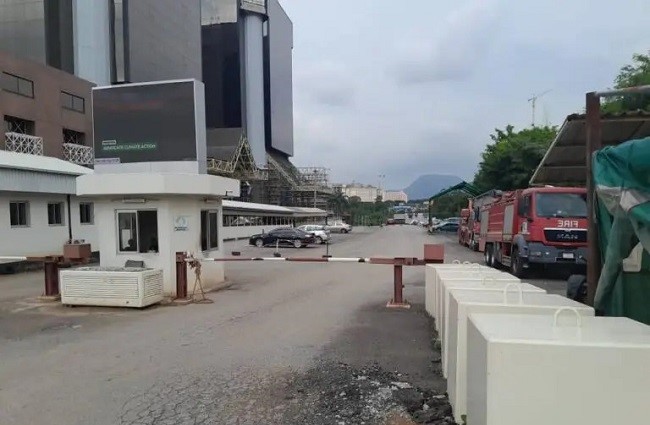
NNPC Towers
NNPC Towers, Abuja

Checks in Abuja revealed that staff of the ministry and its agencies were locked out of their offices by the striking union staff.

The Nigerian National Petroleum Company Limited (NNPC Ltd.) and the Nigerian Midstream and Downstream Petroleum Regulatory Commission (NMDPRA) had their main entrance gate locked and barricaded by PENGASSAN members.

The Nigerian Upstream Petroleum Regulatory Commission (NUPRC) and the Petroleum Technology Development Fund (PTDF) were also under lock and key.

PENGASSAN embarked on strike to protest over the sack of about 800 workers in the Dangote Refinery who allegedly belong to the association.

The union also accused management of the refinery of anti-labour practices and discrimination against local employees, prompting the Federal Government’s intervention.

The refinery had said that the termination of the appointments of some of its workers was due to repeated acts of sabotage that had raised significant safety concerns and affected operational efficiency.

In view of this, PENGASSAN had directed its members to halt supply of crude oil and gas to the Dangote Petroleum Refinery immediately and directed those in the field to down tool.

Meanwhile, at the entrance gate of these agencies, activities were paralysed while, security personnel and union members were seen enforcing the strike directive.

An official of PENGASSAN at the NNPC Ltd, who pledged anonymity, akso confirmed the shutdown of the company in compliance with directive from the striking union, adding that no one was allowed to gain entrance.

Nigerians await the outcome of the meeting of both parties being convened by the Minister of Labour and Employment, Mr. Muhammad Dingyadi, in a move to reconcile them to prevent the crisis from escalating.

Meanwhile, a statement issued by the Dangote Group has said that the National Industrial Court in Abuja has stopped the Petroleum and Natural Gas Senior Staff Association of Nigeria (PENGASSAN) from carrying out its nationwide strike aimed at shutting down the Dangote Petroleum Refinery.

Justice Emmanuel Sublim, in a ruling on Monday, reportedly issued an interim order restraining PENGASSAN and its allies from cutting crude and gas supply to the multi-billion-dollar facility. He warned that the planned strike could deal a heavy blow to Nigeria’s fragile economy.

The order also tied the hands of the Nigerian National Petroleum Company Limited (NNPCL), the Nigerian Midstream and Downstream Petroleum Regulatory Authority (NMDPRA), and the Nigerian Upstream Petroleum Regulatory Commission (NUPRC) from carrying out any directive by PENGASSAN to choke supply lines to the refinery. The case has been adjourned till October 13 for hearing.

Meanwhile, Dangote Petroleum Refinery has assured Nigerians of uninterrupted supply of petroleum products, including petrol, diesel, aviation fuel, kerosene, and cooking gas despite threat by PENGASSAN.

The assurance comes amid reports of a planned attack on the refinery, allegedly involving PENGASSAN members and hired thugs. According to intelligence sources, the plot seeks to disrupt critical units of the facility, particularly those responsible for petrol production.

PENGASSAN had over the weekend ordered its branches in oil majors like TotalEnergies, Chevron, Seplat, Shell Nigeria Gas, Oando and others to shut down all crude oil valves to Dangote Refinery. “All crude oil supply valves to the refinery should be shut. Loading operations for any vessel headed to the refinery should be halted immediately,” the union declared.

In response, Dangote Petroleum Refinery described the directive as “lawless acts and sabotage against Nigeria and its people,” stressing that the union’s claims of anti-labour practices were unfounded. The company reiterated that its recent internal reorganisation was aimed at curbing repeated sabotage within critical units and was not directed at Nigerian staff.

“More than 3,000 Nigerians remain fully employed at the refinery and continue to have unrestricted access to the facility,” the company said, adding that only a very small number of staff were affected by the review process.

Sources confirmed that the refinery has requested heightened protection and surveillance, warning that the alleged plot was at an advanced stage.

“We are calling on security agencies to be on alert as this plan is targeted at crippling the operations of the refinery and preventing the supply of refined petroleum products, especially petrol,” one source noted.

The company further alleged that the planned disruption is part of a broader strategy to undermine Nigeria’s progress in domestic refining and push the country back into dependence on imported fuel.

“Despite the sabotaging acts of PENGASSAN and its allies, Dangote Refinery is determined to continue with uninterrupted production and supply of petroleum products to the Nigerian people and businesses,” noted the source.

The refinery stressed that heightened surveillance is vital as intelligence reveals PENGASSAN’s plot to physically sabotage its facilities, targeting critical units to enforce shutdown threats.

Coastal highway: Landmark Beach, 50-year-old refuse dump delayed project – Umahi

0

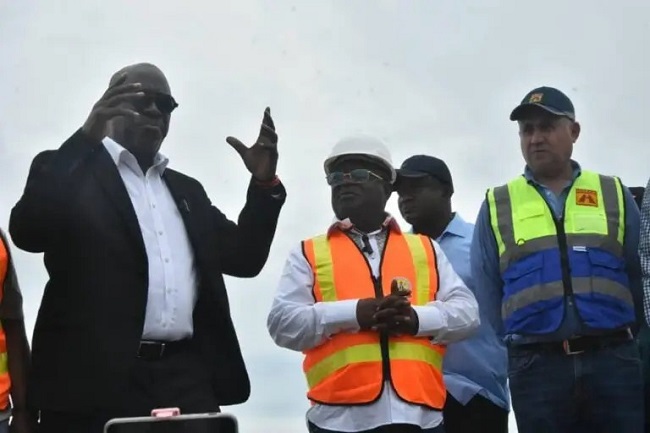
The Minister of Works, Sen. Dave Umahi, has said that a 50-year-old refuse dump with over 10 metres depth and some infrastructure mitigated against the construction of the Lagos-Calabar Coastal Highway for more than four months.

Umahi disclosed this on Monday, September 29, 2025, during an inspection of the highway project along with some personalities from other political parties on Monday in Lagos.

Dave Umahi
Umahi and others during the inspection on Monday

The personalities include Chief Segun Showunmi, a PDP chieftain, who led some civil society activists to accompany Umahi.

“When we started from Kilometre Zero, we encountered Landmark Beach infrastructure and a number of other properties along the way.

“We decided as a responsible ministry to vary the design of the project.

“The implication is that we left the coast and we came to a new alignment that was not designed for the project,” Umahi said.

Contrary to reports, the Landmark Beach on Lagos Island was never demolished to pave way for the project but the shanties around the main structure.

According to the minister, to save Landmark Beach, the decision resulted in splitting the six lanes of the highway into three lanes.

“In doing that, we have saved all the infrastructure of Landmark Beach.

“We also encountered a refuse dump that had been over 50 years old and had over 10 metres depth and spanned two kilometres.

“When we encountered it, we had to stop the work for more than four months,” Umahi said.

He said that tackling the challenge cost the Federal Government N15 billion.

“I have directed that all the videos and drawings must be exposed because additional works are involved and I want those documentaries to be intact.”

The Managing Director of Hitech Construction Company Ltd., Mr. Dany Abboud, emphasised that the highway was split at Kilometre 2.7 to avoid demolition of the Landmark Beach and other properties.

“At this particular point, we merged bathe road, the eastbound and the westbound at Kilometre 5, Section 1.

“We had to create a certain kind of deviation. We deviated at Kilometre 2.7 and we converged again at Kilometre 5,” he said.

The managing director also said that the company encountered a lot of waste materials between Kilometre 3 and Kilometre 9.

According to him, the biggest dump sites were at Kilometre 4 and Kilometre 9.

“We had to excavate to a very big depth and replace it with sand,” he said.

By Lydia Chigozie-Ngwakwe

Sahara Group, NAEC host workshop to drive excellence in energy reporting

0

Sahara Group, in collaboration with the Association of Energy Correspondents of Nigeria (NAEC), has announced its “Making A Difference: Workshop” aimed at championing excellence and sustainability in energy reporting 

Tagged “#M.A.DwithNAEC Workshop”, the annual initiative is designed to support energy reporters to hone both their journalistic craft to effectively drive Nigeria’s energy sector reforms and the global energy transition.

Bethel Obioma
Bethel Obioma, Head of Corporate Communications at Sahara Group

In a joint statement released on Monday, September 29, 2025, Bethel Obioma, Head of Corporate Communications at Sahara Group, and Ugo Amadi, Chairman of NAEC, confirmed that the initiative forms part of activities lined up ahead of the Annual NAEC Energy Conference 2025, scheduled to hold on Thursday, October 9, 2025.

The pre-conference workshop will take place on Monday, October 6, 2025, at Joygate Hotel, Airport Road, Ajao Estate Gate, Lagos.

Speaking on the initiative, Obioma said: “At Sahara, we believe accurate, responsible, and insightful reporting has the power to shape perception, attract investment, and promote transparency in the energy sector. #M.A.DWithNAEC reflects Sahara’s commitment to repositioning the nation’s energy sector for global competitiveness through exceptional reporting.”

He added: “Every headline, news story and analyses shapes perception. By investing in the capacity of energy journalists, we are strengthening the integrity of Nigeria’s energy ecosystem and ultimately, laying the foundation for seamless knowledge sharing and sustainability in energy reporting.”

Amadi noted that the platform would further deepen the knowledge of energy correspondents to effectively play the critical roles of agenda-setting, gatekeeping, and newsgathering.

“As we plan to host our annual conference next week, we are delighted to work with Sahara Group to ensure the success of this laudable initiative. Continuity in learning is one of the values we celebrate at NAEC, we look forward to broadening our perspectives to inspire a culture of reporting that builds trust and drives accountability,” Amadi said.

#M.A.DWithNAEC will feature sessions to be anchored by Obioma; Kingsley Okotie, Head of Corporate Communications at Ikeja Electric Plc; Olabode Sowunmi, Chief Executive Officer of Cabtree Ltd; and Dr. Vincent Nwanma, a member of the Daily Trust Editorial Board.

The Annual NAEC Energy Conference 2025 will bring together policymakers, regulators, industry leaders, and journalists to discuss critical issues shaping Nigeria’s energy future. The workshop will serve as a strategic prelude, ensuring correspondents are equipped to deliver impactful coverage of the conference and beyond.

Tinubu tasks IMF, World Bank, others on climate action funding

0

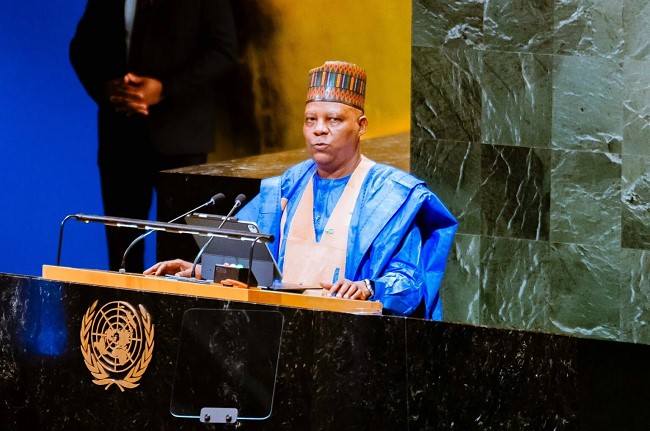
President Bola Tinubu has called on the World Bank, International Monetary Fund (IMF) and African Development Bank (AfDB) to scale up financing for climate action.

Tinubu, represented by the Vice-President, Sen. Kashim Shettima, made the call at a Climate Submit during the 80th Session of the United Nations General Assembly (UNGA), in New York, United States of America.

Kashim Shettima
Vice-President, Sen. Kashim Shettima

The president stated that the climate emergency demands not just words, but courageous and sustained leadership.

Tinubu said Nigeria was mobilising $20 to $25 billion in climate finance by 2030, including green bonds, blended finance, and public-private risk-sharing mechanisms.

Tinubu, therefore, called on global partners to scale up concessional finance, knowledge sharing, and technology transfer, to accelerate not just Nigeria’s transition, but Africa’s contribution to a safer, more sustainable world.

He said, “We aim to unlock at least seven – $10 billion in grants and concessional finance from global partners, while promoting technology transfer, regional energy integration, and green entrepreneurship to drive inclusive growth.

“For Nigeria, a country acutely vulnerable to climate impacts, climate action is not a choice; it is an existential necessity.

“To mobilise resources, we have undertaken significant domestic reforms.

“We have simplified and modernised our tax laws to ease compliance, removed unproductive fossil fuel subsidies, reduced burdens on households and businesses, and enhanced revenue efficiency.

“At the same time, we are strengthening our business environment through legislation and policies that improve the ease of doing business.

“This is to attract private capital and expand opportunities for investment in clean energy and sustainable infrastructure.”

Tinubu said said in March 2025, Nigeria launched the Nigeria Carbon Market Activation Policy, which establishes a robust framework for highintegrity emissions reductions.

He added, “While positioning Nigeria as a credible hub for Article 6, Voluntary and Compliance carbon markets.

“Through this mechanism, our target is to mobilise up to $2.5 billion by 2030 in high-quality credits and related investments.

“We are under no illusion: no country can tackle the climate crisis alone.

“Like other developing nations, Nigeria requires significant support to implement effective mitigation and adaptation strategies.

“We therefore call on International Financial Institutions notably the World Bank, IMF, and African Development Bank to scale up financing for climate action.

“Likewise, developed countries must honour their climate finance commitments, including the $100 billion annually pledged under the Paris Agreement.”

He said that as a demonstration of its unwavering commitment, Nigeria had updated its Nationally Determined Contributions (NDC 3.0), in line with UNFCCC guidance.

Tinubu continued, “This enhanced NDC reflects greater ambition, integrating mitigation and adaptation measures to safeguard our people, protect ecosystems, and accelerate inclusive growth.

“It was formally submitted to the UNFCCC Secretariat on September 21.

“This NDC3.0 departs from the business-as-usual approach to an absolute economy-wide emission reduction, our highest ambition level to date.”

The president said that the targets were better defined and will be supported by an investment plan to accelerate its implementation.

Tinubu added, “Nigeria’s NDC 3.0 commits to:

I. Significantly increasing mitigation and adaptation ambitions with clearer target when compared to NDC2.0.

Within the LULUCF sector, Nigeria aims to lower the deforestation rate by 60 per cent which offers a substantial mitigation potential of 304.8 MtCO2eq.

“While also pursuing a mitigation potential of 34.4 MtCO2eq by increasing forest area through reforestation and afforestation.”

Tinubu said that Nigeria was increasing the adoption and use of cleaner energy systems, especially in manufacturing and industries.

He added, “We are increasing captive generation capacity using cleaner fuels by installing seven GW, 50 per cent renewable.

“And 50 per cent natural gas, for a practical ‘Energy Mix Plan’, on our journey to net-zero by 2060; electrifying key sectors such as public transport, industry.

“We are also while implementing national energy efficiency standards to deliver absolute reductions in energy intensity by 2030.”

The president said that for the first time, “Health” and “Action for Climate Empowerment” have been included as priority sectors in Nigeria’s NDC3.0, demonstrating its commitment to an economy-wide climate governance.

He also said that Nigeria was scaling climate-smart agriculture to reach five million smallholder farms by 2030, with a view to increasing yields by 20 – 30 per cent and expanding drought-resistant crops.

“We are building resilient infrastructure, integrating early warning systems, climate-informed urban planning, and resilient housing to reduce climate-related damages by 50 per cent.

“We plan to restore mangroves, forests, and wetlands to enhance carbon sinks by 200 metric tonnes of Carbon Dioxide Equivalent (MTCO2e), cumulatively by 2030, while protecting biodiversity and livelihoods.

“Nigeria aims to lower the deforestation rate by 60 per cent, which offers a substantial mitigation potential of 304.8 MtCO2eq, while also pursuing a mitigation potential of 34.4 MtCO2eq by increasing forest area through reforestation and afforestation,”Tinubu added.

He said institutionally, Nigeria had established the National Council on Climate Change (NCCC), supported by a cross-ministerial Secretariat, to ensure coherence, accountability, and measurable results.

He reaffirmed that for Nigeria, climate action was not a trade-off between growth and sustainability, it was the pathway to sustainable growth, innovation, security, and shared prosperity.

Tinubu assured that Nigeria was ready to work with all partners, to lead where necessary, and to deliver because the time for climate action is now.

By Salisu Sani-Idris

Nigeria’s Just Transition Guidelines and Action Plan: Pathways for sustainable growth

0

Nigeria stands at a crossroads where the global urgency to decarbonise meets its national imperative for inclusive development. The Just Transition Guidelines and Action Plan (JT-GAP) provides a blueprint to manage the risks of decarbonisation while unlocking opportunities for jobs, innovation, and shared prosperity. The report recognises that energy transition cannot be achieved by technology shifts alone – it must be socially inclusive, economically viable, and environmentally restorative.

Key Findings Across Sectors

Oil and Gas: The oil and gas sector, historically the backbone of Nigeria’s economy, faces acute risks of stranded assets, job losses, and declining revenues as the world moves away from fossil fuels. Communities in the Niger Delta still endure displacement, pollution, and poor infrastructure despite decades of extraction. Without planned diversification, both workers and host communities remain highly vulnerable.

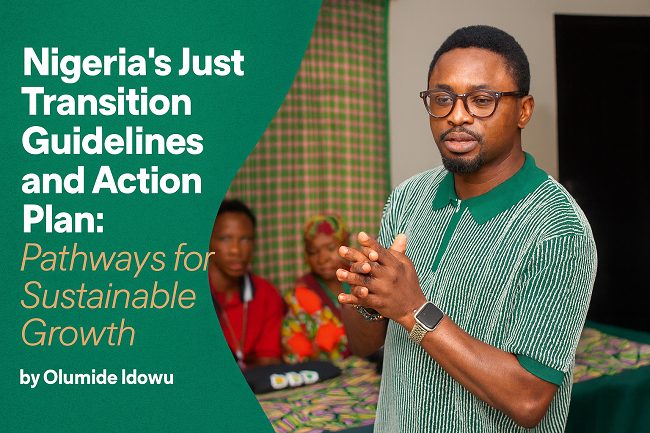
Olumide Idowu
Olumide Idowu

Power and Energy: Nigeria’s power system suffers from aging infrastructure, centralisation of green energy investment, and skills mismatches. Access inequalities persist, with rural and low-income households facing high energy costs and limited access to solar and renewable technologies.

Agriculture and AFOLU (Agriculture, Forestry, and Other Land Use)

Farmers face displacement pressures from land competition between food, bioenergy, and conservation needs. Structural barriers persist for women, youth, and smallholders, particularly in access to land, credit, and training. Poorly managed “climate-smart agriculture” could worsen food insecurity if not accompanied by capacity building and monitoring.

Industry: Industrial areas impose disproportionate health and environmental burdens on low-income communities. Governance gaps – fragmented policies, corruption, and limited inclusivity – prevent fair compensation for land acquisition and restrict resource-rich communities from benefiting from industrial activities.

Transport: The transport sector is hampered by unregulated truck emissions, extortion on port routes, underutilised rail and waterways, and prohibitive costs of electric vehicles (EVs). Limited charging and CNG infrastructure worsen inequalities. However, investment in EV adoption, tax incentives, and better road/rail planning could unlock major opportunities.

Recommendations

  1. Oil and Gas Transition
    • Implement phased retraining for oil workers into renewable energy and green manufacturing.
    • Prioritise remediation in oil-bearing regions and channel a portion of oil revenues into local economic diversification.
  2. Energy and Power
    • Expand decentralised renewable energy projects targeting rural areas.
    • Invest in vocational training for solar technicians, grid engineers, and battery specialists.
    • Develop local manufacturing hubs for renewable technologies to reduce reliance on imports.
  3. Agriculture and AFOLU
    • Support farmers with digital tools, resilient seed varieties, and access to carbon markets.
    • Ensure women and youth gain fair access to land tenure and agricultural credit.
    • Strengthen monitoring of climate-smart agriculture to prevent food insecurity.
  4. Industry
    • Enforce emission standards for cement, steel, and chemical industries.
    • Establish community benefit-sharing frameworks in industrial zones.
    • Incentivise cleaner production through tax breaks and concessional finance.
  5. Transport
    • Roll out incentives (low-interest loans, subsidies) to make EVs affordable.
    • Expand EV charging and CNG stations nationwide with private sector partnerships.
    • Revive and diversify rail and waterway infrastructure to reduce overreliance on road transport.

Contribution to Economic Growth: The JT-GAP can accelerate Nigeria’s economic growth by:

  • Job Creation: Reskilling programmes and green sector expansion will provide opportunities for youth and MSMEs, addressing high unemployment.
  • Diversification: Reducing dependence on oil revenues through renewable energy, green agriculture, and sustainable industries will stabilise the economy.
  • Attracting Investment: Clear just transition policies make Nigeria more attractive for climate finance, green bonds, and impact investment.
  • Improving Health and Productivity: Cutting emissions from oil, industry, and transport reduces disease burden, improving workforce productivity.
  • Inclusive Development: Women, youth, and vulnerable groups gain access to opportunities, helping reduce inequality and unrest.

In conclusion, the Just Transition Guidelines and Action Plan offers Nigeria a roadmap to balance climate ambition with social justice and economic transformation. Implementing its recommendations will not only safeguard workers and communities but also unlock new engines of growth – green energy, sustainable agriculture, clean transport, and resilient industries. By embracing this plan, Nigeria positions itself not just to survive the global energy transition but to thrive within it.

By Olumide Idowu, Founder & Executive Director, ICCDI Africa