Home Blog Page 166

Ivorian Prime Minister, AfDB Chief call on private sector to drive Africa’s transformation

0

Ivorian Prime Minister, Robert Mambé, and African Development Bank (AfDB) President, Sidi Ould Tah, have urged Africa’s private sector to take a leading role in reshaping the continent’s economy, arguing that global trade disruptions offer a chance to strengthen sovereignty and regional value chains.

The two leaders delivered their remarks on Monday, September 29, 2025, at the opening of the 13th CGECI Academy, the flagship annual forum of Côte d’Ivoire’s employers federation, held under the theme “Economic sovereignty: Time for Action.”
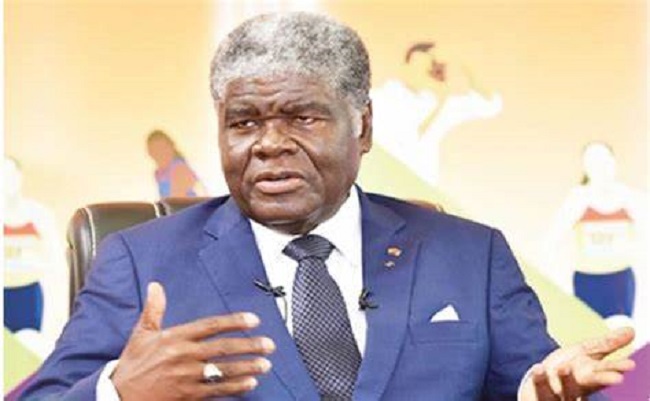
Robert Beugre Mambe
Prime Minister of Cote d’Ivoire, Robert Beugre Mambe

The two-day gathering drew senior government officials, business leaders, and representatives of regional employers’ organizations.

“The time for self-analysis is over; it’s now time for action!” Mambé said.

“We must become aware of our strengths, our weaknesses and our untapped potential, and most importantly, we must establish a synthesis that consolidates our achievements for new prospects that are based on intelligent and dynamic partnerships.”

Mambé stressed that economic sovereignty depends on collective efforts by governments, private investors, young entrepreneurs and consumers.

AfDB President Ould Tah echoed the call, telling participants that Africa must transform global trade turbulence into a “historic opportunity” to process more of its raw materials domestically and build resilient regional markets.

“For Africa, this is not a threat; it is a historic opportunity to establish a stronger, more integrated and more resilient local economy,” he said.

Ould Tah, who took office Sept. 1, outlined a four-pillar strategy for Africa’s development: mobilizing large-scale capital, reforming financial architecture, accelerating job creation, and investing in climate-resilient infrastructure through green industrialisation.

He underscored that governments cannot achieve this transformation alone. “They will also come from the African private sector, which must be central to the strategy,” he said.

The forum comes amid mounting protectionist policies and geopolitical tensions that have put multilateral trade frameworks under strain.

Many African leaders view the moment as critical for boosting intra-African commerce and reducing reliance on external markets.

Ahmed Cissé, president of CGECI, pledged the private sector’s support for continental efforts to restore economic and financial sovereignty through stronger institutional partnerships.

He pointed to the federation’s long-standing collaboration with the AfDB, including the La finance s’engage (Finance Commits) initiative, which has mobilised resources for hundreds of Ivorian start-ups since 2016.

The programme has supported more than 200 young entrepreneurs, nearly one-third of them women.

CGECI represents nearly 80 percent of Côte d’Ivoire’s private sector companies and has positioned itself as a key partner in advancing youth entrepreneurship and innovation on the continent.

By Winston Mwale, AfricaBrief
Ebola cases declining in Kasai Province, but fatality rate remains high

0

The Ebola virus disease outbreak in Kasai Province continues to show signs of decline, though mortality remains high, according to the latest update from health officials.

Since the last situation report, seven new cases – six confirmed and one probable – have been identified in Bulape Health Zone.

Ebola
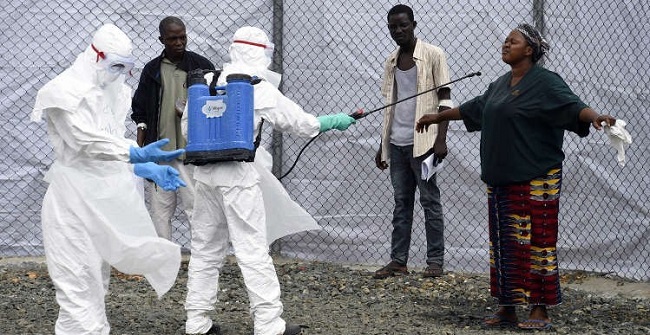
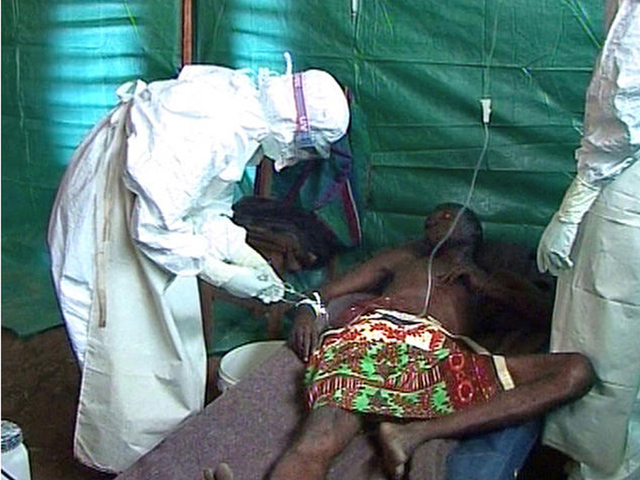
Health workers move to prevent Ebola spread

The cases were detected across three health areas: Bulape (4), Mpianga (2) and Dikolo (1).

During the same period, seven deaths were reported, including three in Dikolo, two in Bulape, one in Mpianga and one in Bulape Communitaire.

As of Sept. 28, health authorities have recorded a cumulative total of 64 cases (53 confirmed, 11 probable), including 42 deaths, giving an overall case fatality ratio (CFR) of 65.6%. Among the confirmed cases are five healthcare workers, three of whom have died.

The outbreak remains confined to six of the 21 health areas in Bulape Zone.

Demographic data show the virus has disproportionately affected women and children.

Women account for nearly 58% of all cases and 57% of deaths. Children under 10 years make up 25% of cases and 31% of deaths, while young adults aged 20–29 years represent another significant share of infections.

While the CFR remains high, there are indications of improvement. Officials reported a decrease in child cases in the past two weeks and a downward trend in mortality as surveillance, early detection and case management improve.

Authorities are continuing to monitor the outbreak closely, with a focus on preventing further spread beyond the affected health areas.

By Winston Mwale, AfricaBrief

West African ministers tout gas as driver of growth at AEW 2025

0

West African energy ministers and project developers opened the African Energy Week (AEW) 2025 conference with a call for an Africa-first approach to gas, underscoring the role of domestic markets in powering sustainable growth.

In a fireside chat sponsored by Kosmos Energy, Senegal’s Minister of Energy, Petroleum and Mines, Birame Soulèye Diop, and Ghana’s Minister of Energy and Green Transition, John Abdulai Jinapor, shared strategies for leveraging natural gas to expand access and lower energy costs.

Russia gas supply
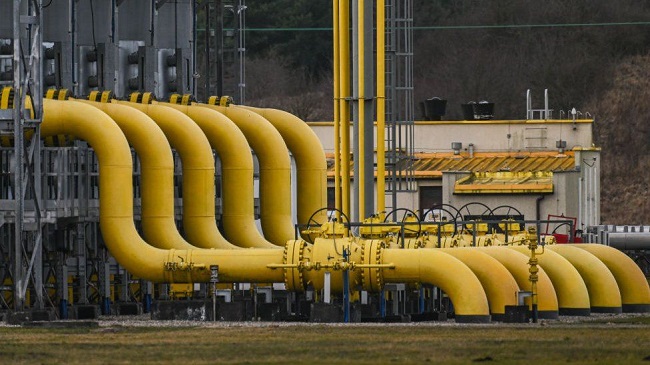
Gas pipelines

“In Senegal, we have a goal to reach universal access to energy by 2029,” Diop said.

“Today, we are a country that exports oil and gas. But the cost to access fuel is still high. We would like to produce more for the country so that we can access resources for electricity. With gas, there are a lot of opportunities.”

Senegal, now an oil and gas producer following the 2024 commissioning of the Sangomar field and the Greater Tortue Ahmeyim (GTA) LNG project, is working to repurpose oil refineries for gas processing.

The GTA, led by BP and Kosmos Energy, began operations with an initial 2.3 million tons per annum (mtpa) capacity, with plans to expand to 5 mtpa. While designed primarily for exports, developers are exploring ways to serve domestic demand.

Kosmos Energy CEO, Andrew Inglis, said the company is prioritising domestic gas supply through projects like Yakaar-Teranga, which targets a final investment decision in 2025.

“Fundamental to the development of Senegal is the use of gas for domestic purposes,” Inglis said. “That is our next agenda: to work with the ministry to expand the scheme to deliver domestic gas.”

Ghana’s Jinapor highlighted his country’s gas-to-power policy, which has made gas the backbone of its energy system.

“Gas is an essential commodity. We have a gas-to-power policy, with gas accounting for 90% of our fuel in Ghana,” he said.

“What we have achieved so far can serve as a model for other economies so that Africa can achieve energy security through gas.”

Kosmos, active in both Senegal and Ghana, has positioned itself as a key partner in advancing regional energy projects.

Inglis said alignment between governments and private investors is vital: “An aligned national agenda is the bedrock of investment. If you are aligned on intent, then delivery is a lot easier.”

The discussion underscored how Africa’s rapidly evolving gas sector can support domestic power generation, reduce energy costs and strengthen energy security, while also reinforcing the continent’s role in global supply.

By Winston Mwale, AfricaBrief
United voices, stronger future: Why Nigerian youth must lead on climate action

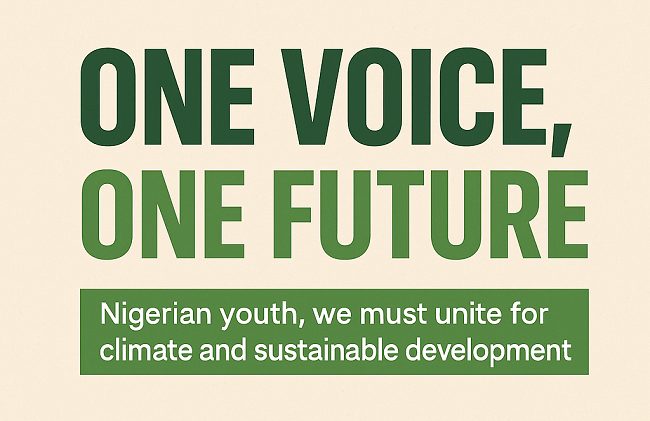
Nigeria’s youth are more than just the future of this country; they are the present. With over 60% of Nigeria’s population under the age of 30, young people hold the power to shape the nation’s destiny in the face of one of its greatest threats – climate change. Yet despite their numbers, creativity, and drive, Nigerian youth remain largely fragmented when it comes to climate and sustainable development advocacy. The time has come to build a united platform that speaks with one voice.

Why Unity Matters

Across the country, young Nigerians are doing extraordinary things. From digital agriculture and renewable energy innovations to grassroots climate justice campaigns, the energy and solutions already exist. But too often, these initiatives operate in silos, duplicating efforts, competing for funding, and struggling to be heard. A unified platform would change that.

Ayodele Oolawande
Minister of Youth Development, Mr. Ayodele Olawande

First, unity would amplify youth voices. A strong, credible platform ensures that decision-makers cannot dismiss youth contributions as scattered or tokenistic. It would institutionalize youth input in climate and development policy processes at national, regional, and global levels.

Second, unity would strengthen collaboration. Instead of reinventing the wheel, youth organisations could share resources, knowledge, and networks. This would make projects more efficient, scalable, and impactful.

Third, unity would position Nigerian youth as continental leaders. Across Africa, platforms like the Consortium of African Youth in Agriculture and Climate Change (CAYACC) are gaining visibility. Nigeria cannot afford to lag behind.

Why It Hasn’t Worked So Far

If the benefits are clear, why has this not happened yet?

One reason is fragmentation. Many youth groups see themselves as competitors, not collaborators. The fight for visibility and funding has created mistrust and weakened collective impact.

Another reason is weak institutional support. Youth-led initiatives often lack backing from government or the private sector, leaving them vulnerable and short-lived. Donor-driven projects are rarely sustained once funding dries up.

Capacity gaps also play a role. While passion abounds, many youth advocates lack training in policy analysis, climate finance, or negotiation – skills needed to influence high-level decisions. Without technical credibility, youth contributions are easily sidelined.

Why Now Is Urgent

Nigeria does not have the luxury of waiting. Climate impacts are accelerating: floods displace thousands annually in the South, while desertification and drought fuel food insecurity and conflict in the North. These crises are not abstract; they are daily realities for millions of Nigerians.

Global momentum also makes this the right time. With COP30 in Brazil and Nigeria’s updated climate commitments (NDCs) on the horizon, youth must organise to influence policy and secure meaningful participation. If they fail to act now, they risk being left out of decisions that will shape the next decades.

Finally, the green economy window is opening. Climate finance and sustainable investments are expanding worldwide. Without a unified youth platform, Nigerian young people will miss opportunities for green jobs, entrepreneurship, and innovation.

The Way Forward

What is needed is clear: a national youth platform rooted in inclusivity, transparency, and accountability. Such a platform should not be tied to individuals or politics but to a shared vision for Nigeria’s climate-resilient future.

Collaboration must replace competition. Working groups on agriculture, energy, finance, and advocacy can allow each youth-led organisation to contribute its strengths. Institutional partnerships with ministries, universities, and private sector actors can ensure sustainability. And investments in training and storytelling will make Nigerian youth both technically credible and publicly visible.

In conclusion, this generation of Nigerian youth cannot afford to stand divided. Climate change is the defining challenge of our time, and it is young people who will live longest with its consequences. The moment to unite, organize, and demand a seat at the table is now. The urgency is real, the risks are high, and the future depends on it.

By Olumide Idowu, Executive Director, ICCDI Africa

PENGASSAN strike threatens economy – NECA

0

The Nigeria Employers’ Consultative Association (NECA) has warned that the ongoing industrial action by the Petroleum and Natural Gas Senior Staff Association of Nigeria (PENGASSAN) could amount to economic sabotage.

NECA’s Director-General, Mr. Adewale-Smatt Oyerinde, made this known in a statement issued to journalists on Tuesday, September 30, 2025, in Abuja, expressing concern about the potential economic impact of the union’s ongoing strike.

Adewale-Smatt Oyerinde
NECA’s Director-General, Mr. Adewale-Smatt Oyerinde

Oyerinde stated that while trade unions had the right to protest and strike, such rights must be exercised responsibly, within legal boundaries, and without harming enterprises or workers’ long-term interests.

“Disputes should be resolved through statutory institutions like the Industrial Arbitration Panel (IAP) and the National Industrial Court of Nigeria (NICN),” he said.

According to him, coercing unwilling parties or disrupting lawful business operations contradicts international labour conventions and poses serious risks to enterprise survival and national security.

He stressed that disruptive actions that threatened national interest were unacceptable in modern labour relations, and NECA would not remain silent as Nigeria’s labour framework faced erosion.

Oyerinde reaffirmed NECA’s commitment to upholding global labour standards and promoting decent work but warned that such standards did not legitimise sabotage, coercion, or economic harm by unions.

He said Nigeria’s fragile economic recovery should not be endangered by reckless industrial actions that risked scaring off investors and ultimately harming the very workers unions claimed to protect.

Oyerinde urged the Minister of Labour and Employment, along with other relevant authorities, to act swiftly, warning that delays could damage job creation, investment flows, and national economic stability.

By Joan Nwagwu

Govt urges stronger commitment to water, sanitation goals

The Federal Government on Tuesday, September 30, 2025, said Nigeria has made progress in providing safe water and sanitation, but warned that stronger commitment is needed to achieve Sustainable Development Goal Six (SDG 6) by 2030.

Minister of Water Resources and Sanitation, Prof. Joseph Utsev, said this in Abuja at the Annual Review Meeting of the third phase of the Accelerating Sanitation and Water for All (ASWA III) project.

ASWA III
Participants at the Annual Review Meeting of the third phase of the Accelerating Sanitation and Water for All (ASWA III) project, in Abuja

Utsev, represented by the ministry’s Permanent Secretary, Mr. Richard Pheelangwa, said ASWA had contributed to measurable improvements in the sector, in spite of ongoing regional challenges.

He noted that ASWA II, launched in 2019, was implemented in six Local Government Areas (LGAs) across Adamawa, Yobe, and Borno states.

“In spite of conflict in the region, ASWA II provided safe drinking water to 900,000 people and sanitation services to 775,880.

“More than 450,000 people were sensitised on handwashing,” he said.

He added that 35 schools and 40 healthcare facilities were equipped with WASH facilities, and Nigeria’s first sector-wide sustainability checks were also conducted under the programme.

ASWA III, he explained, was designed to build on those gains by delivering climate-resilient WASH services to at least 360,000 people in Adamawa and Kaduna States.

“The new phase will focus on system strengthening, clean energy use, market-based delivery, and partnerships, while remaining flexible to address security risks,” he said.

Citing the 2021 WASHNORM survey, Utsev said 67 per cent of Nigerians now had access to basic water supply, and 151 LGAs across 21 states had been declared Open Defecation Free (ODF).

He acknowledged improvements in hygiene and handwashing practices but stressed that more must be done to meet the SDG 6 targets within the next five years.

He urged Adamawa and Kaduna states to take ASWA III implementation seriously and exceed the achievements of the previous phase.

Utsev commended the Government of the Netherlands, UNICEF, and other partners for their continued collaboration and support to the WASH sector in Nigeria.

“We assure you of our commitment to ensuring every investment yields value for the Nigerian people,” he said while declaring the meeting open.

The Dutch Ambassador to Nigeria, Mr. Bengt Van Loosdrecht, applauded Nigeria’s progress under ASWA II and reaffirmed his country’s support for the WASH agenda.

UNICEF Representative in Nigeria, Ms. Waafa Saeed, said the country’s WASH story was changing, with stronger government commitment and community participation driving improvements.

UNICEF Nigeria’s Chief of WASH, Ms. Jane Bevan, and Mr Peem Vandermalen from the Dutch Ministry of Foreign Affairs both underscored the importance of access to clean water and sanitation as a basic human right.

Eight African countries, including Nigeria, are participating in ASWA III, an initiative supported by the Netherlands and UNICEF to expand WASH services in underserved communities.

By Tosin Kolade

Why space technology matters for Africa’s sustainable future

0

As Ghana prepares to host the maiden Ghana Space Conference 2025 in Accra this October, one may ask themselves, why should a developing country like Ghana invest time, energy, and resources into space science and technology?

The answer lies not in rockets or distant planets, but right here in Ghana, in the needs of our farmers, coastal communities, policymakers, and young innovators.

Satellite
A satellite

Space Technology, Everyday Solutions

For too long, space has been seen as a distant frontier for many countries in the Global South, more so in Africa. In reality however, space technology already shapes our daily lives. From the satellite data which presenters use to report on weather information, to that same data helping over 14 million farmers in Ghana decide when to plant and coastal communities when to be wary of storms. Space-based solutions are embedded in our economy and well-being.

Ghana is no stranger to this progress. Our scientists and engineers launched GhanaSat-1, sub-Saharan Africa’s first educational satellite, in 2017 perpetuating the pioneering tradition Ghana is known for since leading sub-Saharan African nations to gain independence from colonialism. Since GhanaSat-1, Egypt, South Africa, Nigeria, Algeria, Morocco, Rwanda, Ethiopia, Angola, Kenya, and Mauritius have launched satellites into orbit.

At Kuntunse, our 32-metre radio telescope now contributes to the world’s largest astronomy project, the Square Kilometre Array, whose contribution to the economy of the country continues to be felt in technological and engineering advancements in areas like data processing and computing, offers substantial educational and capacity building and thus stimulating economic development and local employment.

Institutions like the University of Ghana, the Ghana Meteorological Agency, and All Nations University continue to apply space science in climate monitoring, marine research, and disaster preparedness.

Driving Inclusive Growth

As the world faces climate change, which is hitting sub–Saharan Africa hard and compromising our food security in the midst of the problems brought about by rising urbanisation, space technologies offer scalable and efficient tools.

For example, Earth Observation helps us to monitor deforestation due to ‘Galamsey’. Illegal gold mining causes deforestation and produces mercury pollution in the environment and waters. Tracking these changes can support stakeholders to take action and document the exact scale of devastation. Remote sensing technology has also become useful tool in providing data for precision agriculture.

Farmers are able to get timely and accurate data about soil quality and rainfall, helping them to take informed decisions and post productivity. Satellite communication on the other hand has brought about increased internet access to rural communities, unlocking opportunities for online education and entrepreneurship.

This is not just about science; it is about inclusive development. The Ghana Space Conference set for October 6-8 will highlight the importance of engaging youth and women in Science Technology, Engineering and Mathematics (STEM) and space fields, ensuring that the benefits of innovation reach everyone in Ghana and beyond.

Linking to Policy and Africa’s Growth

The timing of this conference is strategic. Ghana recently launched its National Space Policy (2024), setting a clear vision for regulation, capacity building, private sector engagement, and international partnerships. The Policy aims to harness space technology for economic growth, national security, and sustainable development by improving resource management and coordinating public and private sector efforts.

Key goals include better environmental monitoring, fostering international cooperation, and creating investment and job opportunities in satellite communications, Earth observation, and other space sectors.

With the African Continental Free Trade Area (AfCFTA) headquartered in Accra, Ghana has a unique opportunity to explore how space technologies can support trade efficiency, cross-border collaboration, and industrial growth.

Space is no longer a luxury – it is an economic and developmental necessity.

A Call to Action

The Ghana Space Conference 2025 at the University of Ghana, Accra from October 6-8, 2025, will bring together government leaders, scientists, entrepreneurs, and international experts to deliberate on these opportunities.

This is not just Ghana’s event; it is Africa’s moment to continue demonstrating that the continent is ready to harness the space economy, projected to reach $22.64 billion by 2026.

Policymakers, private sector leaders, academics, students, and the media will all have space at the conference. Together, let us shape a future where space technology empowers every Ghanaian, every African, to live in a safer, more prosperous, and more sustainable world.

By Kwaku Sumah, Managing Director, Spacehubs Africa

Africa Energy Bank moves to close continent’s energy finance gap

0

The African Petroleum Producers’ Organisation (APPO) and Afreximbank shared updates on the establishment of the $5 billion Africa Energy Bank on Monday, September 29, 2025, at AEW: Invest in African Energies, aimed at addressing Africa’s persistent energy financing challenges.

Speaking during a workshop titled Africa Energy Bank Take-Off – Bridging the Financing Gap for Africa’s Energy Sector, Dr. Omar Farouk Ibrahim, Secretary General of APPO, said the bank has made rapid strides in raising funds.

Haytham El Maayergi
Haytham El Maayergi, Executive Vice President of Afreximbank

“We have succeeded in raising a large chunk of the funds we needed to get this bank started. In the last two to three years, we have achieved what no other development bank has in terms of the timeline,” Ibrahim said.

He highlighted the continent’s energy access challenges: “More than 600 million Africans lack electricity… yet we export 75% of our oil production and 45% of gas. If we want energy for our people, then we have to fund the projects.”

Ibrahim emphasised that Africa must lead its own energy financing. “We have a duty to ensure the African continent is not left behind in terms of energy access; in doing so, we cannot continue to look to others to help us. If we get outside support, it should be to supplement what we have done.”

Haytham El Maayergi, Executive Vice President of Afreximbank, noted the continent’s current financing challenges. “Africa is being penalised – we pay more per kilowatt before subsidies than anywhere in the world, because the costs of financing energy projects are higher. When we borrow, we pay more because our credit ratings are not as high… It’s a toll on Africa.”

According to the workshop presentation, Africa currently receives only 4% of global climate investment, while $1.6–$1.9 trillion will be required by 2030 to transition away from fossil fuels. The annual energy finance gap is estimated at $31–50 billion, and fossil fuels still account for 35 – 82% of government revenues in some countries, making closing these gaps critical to achieving energy access and supporting development.

African refining: A promising yet unexploited investment opportunity

0

With political stabilisation, the resolution of internal challenges and the establishment of a stable regulatory framework, the African refining market emerges as one of the most undervalued – and therefore potentially highly profitable – investment opportunities, writes Daniil Moskalev, International Fellow, African Energy Chamber

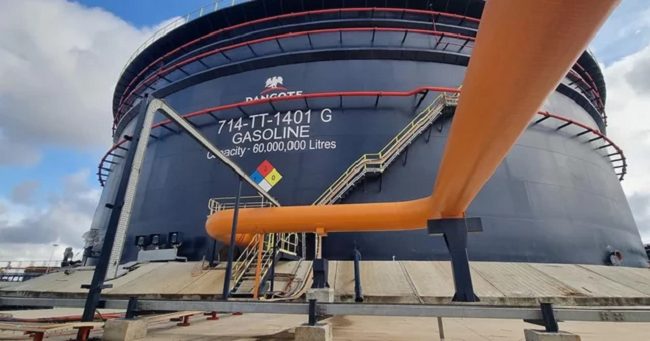
Dangote Refinery
Dangote Refinery

In recent years, the African continent has been characterised by the active commissioning of new refining capacities.

However, despite this, there is a problem with the energy infrastructure on the continent, which leads to the unavailability of refined products.

This unavailability is both a blessing and a curse for the African continent, its people and its quest to make energy poverty history.

While insufficient refining capacity creates serious challenges for domestic consumers and industry, it presents an attractive opportunity for foreign investors, many of whom have yet to fully grasp the continent’s unique advantages.

Africa: The World’s Breadbasket of Crude Oil

In 2026, the upward trend of hydrocarbon production is expected to remain positive, with the African Energy Chamber’s The State of African Energy 2026 Outlook showing that petroleum production will level at about 11.4 million barrels per day (MMboe/d), rising to about 13.6 MMboe/d by 2030.

An increase in petroleum production should correspond with a rise in refining; however, ongoing capacity constraints continue to impact Africa’s refining market, leading to a reliance on imported petroleum.

This impacts countries as they strive to build local industries, create jobs and develop technical expertise in the downstream sector.

Importing refined products costs African countries significantly more than processing crude oil at home, as imports involve added expenses such as shipping, insurance and other costs.

With much of the continent’s refining infrastructure either obsolete or idle, there lies a critical investment opportunity for financiers and project developers.

Increased Population Mean Increased Consumption

Beyond the current challenge of importing refined products, rapidly growing domestic demand must also be considered, as it could increase Africa’s dependence on external energy supplies.

Although Africa is home to 18% of the global population, it consumes less than 5% of the world’s oil products.

Sub-Saharan Africa, in particular, has the lowest per capita usage, underscoring the region’s significant potential for future demand growth (according to information from our report).

The expanding African market, driven by population growth and improving living standards, will provoke an increase in consumption.

Anticipated demand growth offers strong prospects for new refining facilities. Investment in more advanced processing technologies can deliver higher returns for foreign investors while simultaneously meeting Africa’s urgent and growing demand for refined petroleum products.

Ongoing Challenges: The Case of Dangote

Market size and resource availability do not necessarily guarantee sufficient refining capacity. Take the Dangote oil refinery, for example.

Even with its massive scale, this refinery will have only a limited effect on reducing Africa’s fast-rising import reliance.

The continent will continue to face shortages of gasoline, diesel, and jet fuel over the forecast period. In the short term, the capacity of Dangote refinery (617,000 bpd) could partially substitute foreign sources of refined products, but the prioritisation of exports is more attractive for foreign investors; that’s why commissioning of new refinery plants does not address fuel accessibility challenges on the ground.

However, net imports for gasoline and gasoil will widen over the long-term against the backdrop of strong growth in demand and limited additions to refining capacity.

Furthermore, the commissioning of the Dangote refinery is hugely significant for the Atlantic Basin’s oil trade due to export promotion, but it barely makes a dent in Africa’s growing requirement for imported refined products.

As stated in the African Energy Chamber’s Outlook 2026, gasoil net imports are projected to reach just under 1.8 million bpd by 2050, whereas gasoline net imports are forecast to exceed 1.5 million bpd.

Relying on refined imports leaves countries vulnerable to global supply chain disruptions, shipping bottlenecks and sharp price swing risks that become even more severe during times of crisis.

Therefore, the priority of developing domestic energy sovereignty should be to attract downstream investments to meet domestic demand.

So, we need to answer the questions: what can attract investors, and what should we do?

Foreign investments can be attracted if preferential financing conditions, a stable political environment, confidence in profitability and transparency of the terms of the agreements are provided.

When these conditions are partially or fully met, large projects such as The Cabinda Oil Refinery or The Dangote Refinery are born..

What’s Next for African Refining

Given the scale of refining projects, mobilising external financing is vital. There are several prerequisites to attract investment.

Specifically, the availability of crude oil and access to a local domestic market.

But countries need to look beyond this to strengthen regulatory frameworks; leverage public-private partnerships; simplify processes and reduce red tape; demonstrate openness to foreign investors; and be ready to meet companies halfway.

A Timely Opportunity for Strategic Investment

With political stabilisation, the resolution of internal challenges and the establishment of a stable regulatory framework, the African refining market emerges as one of the most undervalued – and therefore potentially highly profitable – investment opportunities for global companies.

An able workforce, a well-developed oil production system and growing demand are presented as outstanding incentives to attract investors to the continent.

Strengthening the trust of external shareholders and investors can lead to an explosive development of the African oil refining industry.

This can become one of the engines that drives African industrialisation.

Capacity building for negotiators strengthens developing nations’ voice in climate advocacy

0

The inaugural pilot of UN Climate Change’s Capacity-Building for Negotiators (CB4N) initiative concluded in Nairobi, Kenya, marking an important milestone in strengthening the voice of developing countries in global climate negotiations.

The training, jointly organised by UN Climate Change, its Regional Collaboration Centres (RCCs), the African Group of Negotiators Expert Support (AGNES), and the Centre for Multilateral Negotiations (CEMUNE) marks a significant step toward more inclusive and effective participation in the international climate change process.

Negotiators
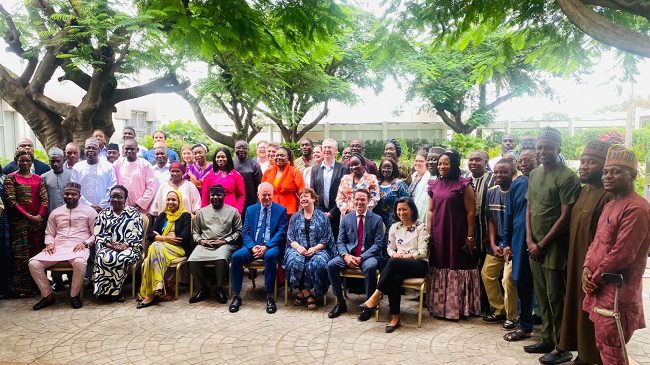
Participants at the UN Climate Change’s Capacity-Building for Negotiators (CB4N) initiative

Held from September 17 to 19, 2025, the training brought together nearly 25 negotiators from across Africa. AGNES’ extensive regional expertise and the RCC’s long-standing role in building regional negotiation capacity were instrumental in ensuring the success of the pilot.

“To succeed, the Paris Agreement needs inclusive and empowered participation from all nations” said UN Climate Change Executive Secretary Simon Stiell. “With CB4N, we are working to enable the negotiators of today and of the future, who will carry this agreement forward. The Nairobi pilot has laid a strong foundation and is ready to be replicated in other regions around the world.”

The training employed a training-of-trainers approachaiming not only at strengthening participants’ individual skills, but also fostering a sustainable team of regional facilitators who will be able to replicate the training in the future. RCC experts co-delivered sessions alongside AGNES facilitators, providing practical, regionally tailored insights.

Over three days, participants enhanced their understanding of the UN Climate Change legal framework, climate science, negotiation techniques and strategic communication. Practical exercises, including simulations, role plays, and scenario-based discussions, ensured a hands-on learning experience. Innovative tools, such as artificial intelligence applications for negotiation support, were also piloted.

The pilot produced several key results: improved negotiation capacities for participants, the expansion of a network of regional facilitators, and the identification of Africa-specific priorities to guide the future roll-out of CB4N. Building on this success, the CB4N initiative, with continued leadership from RCCs and partners, is now ready to be replicated and scaled up in other countries.

“The training was very good. It provided an excellent opportunity to hear from the people who have been in the process long enough, but also worked behind the scenes so that you can understand how things happen,” said Dr. George Wamukoya, lead negotiator on agriculture and team leader of AGNES.

He highlighted how critical these insights are critical for effective participation, “and AGNES is proud to continue partnering with UN Climate Change and RCCs to expand this work.”

Professor Raymond A. Kasei, expert in climate change, hydrology, gender, and modelling, from AGNES, added, “This training-of-trainers programme was exceptionally valuable for both new and experienced negotiators. It highlighted the importance of building the skills of moving beyond entrenched positions toward collaborative problem-solving approaches that acknowledge the urgency of climate action while respecting diverse national circumstances and priorities.”

Patricia Nying’uro, Principal Meteorologist at the Kenya Meteorological Department, and participant in the event, said, “The training shifted my perspective on negotiations, emphasizing respect, collective goals, and practical strategies. The simulation was especially valuable, and I hope more negotiators can benefit from this experience.”

The successful pilot in Nairobi has laid the groundwork for CB4N to be rolled out in other regions, contributing to a more inclusive climate process and drawing on RCCs and its partners to broaden its global reach beyond Africa.