Representatives of member governments and other Global Environment Facility (GEF) stakeholders gathered from October 7 to 9, 2025, in Kasane, Botswana, to review proposed plans for the multilateral trust fund in its ninth funding cycle for the 2026-2030 period.
The GEF can be a “source of hope” for international action on threats to nature, and related environmental threats, the head of the multilateral trust fund told its donor and recipient countries as they held their second formal discussions in preparation for the GEF-9 funding cycle.
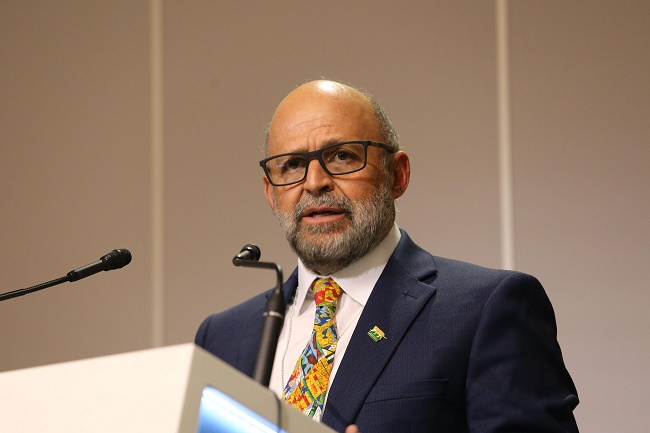
Carlos Manuel Rodriguez, GEF CEO and Chairperson
Addressing representatives of donor and recipient countries, agencies, civil society, and observers from the wider GEF community, CEO and Chairperson, Carlos Manuel Rodriguez, made the case for a robust ninth replenishment that would help deliver a safer, healthier future for people and the planet.
“In uncertain times, it is extremely important that we’re able to give hope for a brighter future,” said Rodríguez. “The GEF, and this crucial ninth replenishment, can be a source of hope and optimism to help achieve global environmental goals and live in harmony with nature.”
“Building on ongoing reforms to increase efficiency and effectiveness, the replenishment takes place as the GEF further evolves towards a whole of government and whole of society approach,” he added.
The GEF-9 investment period, which will span from July 2026 to June 2030, aligns with a crucial time for the world to make progress toward 2030 environmental goals, and growing inter-related threats including climate change, biodiversity loss, and pollution.
Building on the first replenishment meeting held in Paris in May, GEF donors and partners, meeting in hybrid format, held further discussions on the proposed GEF-9 strategic programming directions and policy package, and a draft report by the GEF Independent Evaluation Office on the GEF’s overall performance (OPS8).
The meeting was opened by Phenyo Butale, Minister of International Relations and Acting Minister of Environment and Tourism, Botswana, who highlighted the GEF’s “critical” support in meeting its obligations under the Rio Conventions.
Thanking delegates for their participation, he said, “Your presence here today signals your commitment to ensuring the GEF remains a strong and effective mechanism for financing environmental action across the world – especially in the places and communities that need it most.”
In advance of the meeting, delegates visited Chobe National Park, part of the Kavango-Zambezi Transfrontier Conservation Area (KAZA). As the largest land-based transboundary conservation area in the world, KAZA is among ecosystems that are vital to biodiversity, tourism, and regional stability. GEF-funded projects across the region have helped to improve the ways protected areas are managed and financed.
The replenishment meeting was co-hosted by the World Bank, which is one of the GEF’s 18 partner agencies as well as its trustee, with responsibility for the mobilisation of resources for the trust fund every four years.
The third official replenishment meeting is planned for January 2026, and a pledging meeting is expected to take place next April. A final decision about the size and ambition of the GEF-9 funding envelope is expected to be taken by June 2026.
Lead reviewers under the Paris Agreement’s Enhanced Transparency Framework (ETF) play a crucial role in ensuring the quality and consistency of technical expert reviews of Parties’ Biennial Transparency Reports (BTRs). These reports assess the actions countries have taken to deliver on their climate commitments, and help inform decision-making, attract climate finance, and strengthen national climate policies over time.
BTRs provide key data on national greenhouse gas emissions, progress towards national climate plans (NDCs), as well as information on finance, technology transfer, and adaptation efforts, among others. Successful technical expert reviews of BTRs are essential to assessing progress on climate action and identifying where further efforts and support are needed.
Lead reviewers
The 2025 annual meeting of lead reviewers was held virtually in September, bringing together 63 experts from both developed and developing countries. Observers included the co-chairs of the Paris Agreement Implementation and Compliance Committee (PAICC).
Lead reviewers ensure the quality, objectivity, and timeliness of technical expert reviews, providing continuity and consistency across Parties. They meet annually to discuss ways to improve the efficiency and consistency of the review process.
Since July, lead reviewers have been working in groups to strengthen BTR reviews. During the September meeting, they adopted conclusions aimed at boosting the effectiveness and impact of reviews, while welcoming progress by the UNFCCC secretariat in organizing the 2024-2025 review cycle, including the rollout of simplified reviews for Annex I inventories.
Participants also agreed on guidance covering seven key review areas, including flexibility for developing countries, inventory methods, and the treatment of NDC targets and mitigation measures. The meeting underscored the importance of continued Party support – both financial and through expert nominations – to sustain the review process.
Later this month, UN Climate Change will present the first BTR synthesis report, providing an initial picture of Paris Agreement implementation. The report will highlight progress made in mitigation, adaptation, and support, while identifying areas where additional efforts are needed to achieve the Paris Agreement goals.
The Nigeria Export Processing Zones Authority (NEPZA) has cautioned the Petroleum and Natural Gas Senior Staff Association of Nigeria (PENGASSAN) against actions that contravene Free Trade Zone (FTZ) regulations, reaffirming that strikes and lockouts are expressly prohibited within such zones for a period of ten years from commencement of operations.
The Authority’s Managing Director, Dr. Olufemi Ogunyemi, stated this in Abuja following reports of escalating industrial tensions and “frequent and excessive external union infiltrations” that have disrupted operations at the Dangote Refinery, the country’s largest private industrial complex.
Managing Director, Nigeria Export Processing Zones Authority (NEPZA), Dr. Olufemi Ogunyemi
In a statement signed by Dr. Martins Odeh, Head of Corporate Communications at NEPZA, the agency described the recent shutdown of critical oil and gas facilities by PENGASSAN as unlawful within the context of the Free Trade Zone framework.
PENGASSAN had last week directed its members to down tools over allegations that the Dangote Refinery dismissed about 800 workers who had joined the union. The company, however, denied the figure, maintaining that only a few workers were disengaged “for acts of sabotage” as part of an ongoing organisational restructuring.
Dr. Ogunyemi expressed concern over the escalation of the dispute, noting that the refinery’s FTZ status meant that all labour-related grievances should have been channelled through the Authority.
“Section 18(5) of the Nigeria Export Processing Zones (NEPZA) Act provides that ‘there shall be no strikes or lock-outs for a period of 10 years following the commencement of operations within a Zone, and the Authority shall resolve any trade dispute arising within a Zone,’” he said.
According to him, the provision imposes a 10-year prohibition on strikes and lockouts within Free Zones, while still allowing workers the right to form or join trade unions and engage in collective bargaining.
“We are pleased that the conflict has been de-escalated. Dangote Refinery is a declared FTZ that continues to benefit from tax incentives and customs duty waivers to support the economy, and NEPZA regulates it.
The Free Trade Zone scheme in Nigeria is slightly over 30 years old, and we ought to be familiar with the scheme and the global rules that guide the operation of this world economic model, which aims to accelerate economic development and industrialisation,” he said.
Dr. Ogunyemi emphasised that trade disputes originating within any Free Zone must be referred to NEPZA for resolution, clarifying that this restriction applies solely within the zones and not to the wider Nigerian economy.
He also drew attention to Section 24(1) of the NEPZA Act, which limits the application of external laws within Free Zones, noting that such laws are only operational to the extent that they do not conflict with NEPZA’s enabling Act.
“Consequently, in cases of conflict between the Trade Unions Act (TUA) or Trade Disputes Act (TDA) and Section 18(5), the provisions of Section 18(5) take precedence as the more specific regulation governing Free Zones,” he stated.
The NEPZA chief commended President Bola Ahmed Tinubu for his prompt intervention in resolving the dispute, describing it as a demonstration of responsive governance and a commitment to safeguarding a critical national asset.
“It is a sign of President BAT’s maturing democracy that this has been resolved quickly without deleterious effects on our economy,” he said.
Dr. Ogunyemi reiterated that while industrial relations are part of the process of economic transformation, stakeholders must operate within the legal and administrative frameworks designed to protect investments and ensure the sustainability of industrial growth within the Free Zones.
According to recent Nigerian media reports and a statement by the oil regulator itself, the Nigerian Upstream Petroleum Regulatory Commission (NUPRC) has cancelled the approval for TotalEnergies $860 million sale of its share in the Renaissance Africa Energy Company Joint Venture to Chappal Energies. The Joint Venture was managed by Shell prior to the sale of the Shell Petroleum Development Company to Renaissance.
Although public details are scarce as to the collapse of the Total-Chappal deal, media reports record the NUPRC spokesperson as confirming that Chappal Energies failed to raise the funds, and as a result TotalEnergies reportedly did not fulfil its requirement to pay regulatory fees and cover funds for environmental rehabilitation and future liabilities.
TotalEnergies
In a reaction to the development, a group of 106 representatives of Nigerian and international civil society organisations, community groups and concerned citizens haswelcomed NUPRC’s enforcement of the regulations it is mandated to enforce but regretted that it has taken months for the decision to enter the public domain.
“The Nigerian public has a right to be informed of such developments as and when they occur,” the campaigners stated.
They went further: “Now that the Total-Chappal deal has been revealed to have been founded on sand, the question arises why did the deal obtain ministerial consent in the first place? And, if Ministers gave approval for a deal that was without foundation, what other permissions have been similarly granted?
“In particular, the cancellation of the Total-Chappal sale calls into question President Tinubu’s decision to over-rule NUPRC’s advice that the sale of SPDC to Renaissance did not meet the regulatory requirements. That advice is understood to have rested on concerns over Renaissance’s technical and financial ability to pay for the historic liabilities of SPDC for cleaning up pollution from its operations and facilities, which are likely to run into tens of billions of dollars.
“We therefore call for the Shell-Renaissance deal to be subject to independent review. If NUPRC’s concerns were indeed well founded, there is a huge risk that the Nigerian people will end up having to pick up the tab for cleaning up SPDC’s mess. We also call for the release of the Environmental Evaluation Studies (EES) for each sale, and also the S&P assessment that was reportedly commissioned by NUPRC to assess the sale of SPDC to Renaissance.
“Democracy is not a spectator sport. It rests on the active involvement of citizens. As we mark the posthumous birthday of Ken Saro-Wiwa on 10th October and approach the 30-year memorial of the Ogoni-9, we demand action against these companies and their abusive practices.
“We call on civil society groups and parliamentarians to take up the call for the government to take urgent measures to ensure that the legacy of pollution caused by international oil companies is immediately cleaned up to international standards. And that the companies pay, not the Nigerian state and its peoples. It is unacceptable that the companies should profit at the expense of Nigeria.”
A damning investigative report presented at the 13th Pan-African Conference on Illicit Financial Flows and Taxation (PAC) on Thursday, October 9, 2025, alleges British American Tobacco Kenya may have evaded up to $28 million in taxes through a mysterious gap between cigarette production and reported sales.
The report, titled “Missing Millions: A Cross-Examination of British American Tobacco Kenya’s Tax Bill,” reveals discrepancies of up to 9.6 billion Kenyan shillings ($93 million) in the company’s revenue statements for 2017 and 2018.
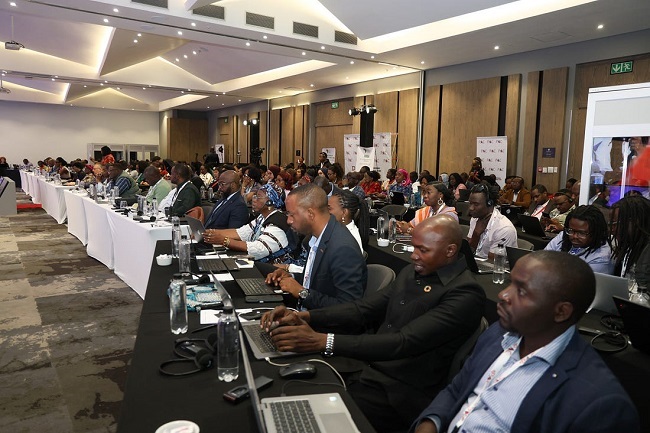
A cross-section of participants during the event
Marcel Metze, director and editor at The Investigative Desk, presented the findings during a side session on financing climate action at the 13th Pan-African Conference on Illicit Financial Flows and Taxation.
“We’re talking about somewhere between 18 and 28 million packs, which was somewhere between 10 and 20% of annual domestic production in Kenya,” Metze said.
“We call these the missing millions of cigarettes. We don’t know where they went.”
The report calculated the missing cigarettes’ sales value at approximately $94 million.
Production vs. Sales Discrepancy
The investigation conducted a meticulous cross-examination of British American Tobacco Kenya’s annual reports; production data submitted to the Kenya Revenue Authority and independent sources including the World Health Organisation and World Bank.
Metze outlined a seven-step analysis process to examine the discrepancies.
“If BAT Kenya produced 100 packs of cigarettes in 2016 and sold 100 packs, which was happening at that time, this changed in the years after,” Metze said.
“Production went down to 72%, but sales went down to 61%. So they sold less than they produced.”
The investigation found that, in 2017, British American Tobacco Kenya reported a 7% decline in domestic sales volume while production data showed a 2.3% increase, with an estimated retail value of 13 billion shillings – 37% more than the 9.5 billion shillings revenue declared.
In 2018, the discrepancy expanded further. Production data suggested up to 16.8 billion shillings in revenue against the company’s reported 11 billion shillings.
Cumulatively from 2016 to 2021, domestic production declined 28% while sales volumes reportedly fell 39%, defying market trends from Euromonitor and WHO data showing slower consumption drops due to tobacco’s addictive nature.
Tax Implications
Metze said the investigation verified excise payments and found them correctly reported — the only data point without discrepancies.
“The reporting of that is correct. It’s the only issue in which we find that,” he said.
However, when comparing potential revenue from entire production against reported sales, notable differences emerged in 2017, 2018 and 2019.
The investigation accounted for potential stockpiling of overproduced cigarettes but found minimal impact.
“The effect of that was only minimal. No real impact,” Metze said.
“They could explain only a small part of the missing cigarettes, the missing millions.”
Even using conservative revenue estimates with high retail margins and zero inventory value, unexplained revenue gaps remained.
“We found that the tax value of the missing cigarettes, especially in the years 2017 and 2018, was somewhere between 660 million and 2.9 billion Kenyan shillings, which is about $6.5 million to $28 million,” Metze said.
Company Response and Impact
British American Tobacco Kenya rejected the allegations when the report was published in February, stating it “pays all taxes in line with applicable laws” and attributing discrepancies to “other costs not paid to BAT Kenya.”
The company refused to provide details, citing commercial confidentiality.
Metze said the report generated significant attention.
“The BAT Kenya campaign reached more than 200 million people, which is a huge number,” he said.
“There was global attention for the report across Africa but also the United States and UK.”
The Kenya Revenue Authority announced an investigation following publication but has not released results.
“We haven’t heard anything of that investigation since, so we don’t know what’s still going on, whether there are any results,” Metze said.
Shortly after the investigation announcement, British American Tobacco Kenya announced two directors would leave the company.
Excise-Led Pricing Strategy
The investigation found British American Tobacco Kenya maintained stable revenues despite declining sales through price increases matching government excise raises.
“One of the reasons that BAT Kenya could keep its revenue at the same level is that they raised their prices in accordance with the government prices in excises,” Metze said.
“It’s as simple as that. Excise-led pricing, we call that.”
The company’s dividends increased 65% from 2017 to 2020 despite reported volume declines.
Contradicting the Illicit Trade Narrative
British American Tobacco Kenya blamed declining sales on what Metze called a “perfect storm” narrative – porous borders, illicit trade, economic challenges and excise hikes.
However, the investigation found contradictions.
“Illicit trade allegedly rose to 25% of the market in 2020, yet competitor Mastermind’s share remained static, and overall consumption didn’t plummet as claimed,” Metze said.
The company’s revenues stayed stable or grew on an inflation-adjusted basis despite the alleged market challenges.
“We see that the number of Kenyans that die of smoking each year would be 12,000,” he said. “That’s a lot of people.”
While smoking rates have declined, the number of smokers has grown.
The investigation documented farmer exploitation in Kenya’s Migori region, where most tobacco is grown.
“For small farmers, life has remained difficult,” Metze said.
“They don’t profit from the profits the companies make. They need to take loans for seeds, pesticides, fertilizers, which keep them just barely on the level or even below that.”
The report estimated damage to the Kenyan economy at $333 million per year – eight times British American Tobacco Kenya’s profit.
Follow-Up Investigation
Metze announced a new investigation examining trade between British American Tobacco Kenya and British American Tobacco Uganda, focusing on potential tax avoidance.
“We are investigating the trade between BAT Kenya and BAT Uganda, where we have a focus on the tax avoidance that might be taking place in this trade,” he said.
The project, supported by the University of Bath and Tax Justice Network Africa, is expected to take 18 months to two years.
“We see again in this trade large discrepancies between reported production, production that is done in Kenya for Uganda, and what is actually imported into Uganda,” Metze said.
“We also have clear indications of profit shifting from Kenya to Uganda.”
He noted the Netherlands plays a role because Uganda has a favorable tax treaty with the country.
“More details, of course, you will have to wait for,” Metze said, indicating publication is planned for early 2026.
Conference Context
The presentation occurred during a side session organized by the African Forum and Network on Debt and Development and the Centre for Economic and Social Rights, focusing on financing climate action and addressing the debt-illicit financial flows nexus.
The argument centered on lost revenues from illicit flows that could fund sustainable development and climate adaptation.
The 13th Pan-African Conference, themed “Honouring a Legacy, Building a Future: A Decade of the HLP Report,” commemorates the 2015 High-Level Panel on Illicit Financial Flows led by former South African President Thabo Mbeki.
That landmark report found Africa loses at least $50 billion annually through illicit flows – 65% from commercial practices, 30% from criminal activity and 5% from corruption.
Corporate Structure
The investigation profiled British American Tobacco Kenya’s complex structure within the broader BAT Group, with subsidiaries in Kenya, the Netherlands and the United Kingdom, facilitating potential profit shifting.
British American Tobacco dominates Africa’s tobacco market with 50% to 80% market share in many countries and 70% to 80% in Kenya, Nigeria and South Africa.
The company exports from Nairobi to 20 markets across the continent.
The report referenced British American Tobacco’s history of tax avoidance, including a 2020 investigation titled “Big Tobacco, Big Avoidance.”
Debt and Climate Finance Connection
Conference experts tied the findings to the debt-illicit financial flows nexus, noting illicit flows cost Africa $100 billion to $240 billion annually according to OECD estimates.
Panelists argued that properly collected tobacco taxes could generate revenues for green transitions and climate adaptation.
They advocated integrating anti-illicit flow measures into climate finance strategies, with British American Tobacco Kenya’s alleged avoidance exemplifying how extractive industries drain funds needed for development priorities.
Regional Hub Expansion
British American Tobacco elevated its Nairobi operation as a regional hub in 2023, positioning for growth across Africa’s youth-heavy demographic despite health warnings about smoking.
Kenya’s Trade Minister Moses Kuria’s 2023 social media post praising tobacco as a tax contributor drew criticism as echoing the industry narrative.
Kenya’s Economic Context
The findings come as Kenya, classified as a lower-middle-income economy, grapples with budget deficits, large debts and International Monetary Fund-mandated reforms.
Aggressive tax avoidance by multinationals reduces government income amid rising civil unrest over tax hikes on ordinary citizens.
While taxes on Kenyans increased in 2023 and 2024, annual excise adjustments for cigarettes were halted – a move the report criticized as favoring big tobacco.
Farmer Exploitation Details
The investigation documented conditions for contracted farmers in Migori region who receive overpriced inputs on loan and labor intensively for six months.
After deductions, families earn around 20,000 shillings ($140) annually – equivalent to 38 cents per day, below the extreme poverty line of $2.15.
In 2023, amid British American Tobacco Kenya’s record 6.9 billion shillings in profits, farmer pay was cut 20% to the lowest level in five years.
Health risks include respiratory issues from curing tobacco in smoke-filled huts. Farmers cannot eat their crop, worsening food insecurity.
Research by economist Peter Magati shows tobacco farmers operate at losses when labor costs are factored in, while those switching crops double their incomes.
The World Health Organisation’s Tobacco-Free Farms initiative has helped more than 2,000 farmers transition to beans for the World Food Programme, but 36,000 remain in tobacco cultivation.
Call for Accountability
The presentation at the Pan-African Conference underscored calls for stronger accountability measures against corporate tax avoidance.
Session participants recommended strengthening tax cooperation, linking debt relief to illicit flow curbs and mobilizing domestic resources for climate finance.
The conference’s focus on the High-Level Panel Report’s decade-old legacy emphasized unfinished business in stemming illicit flows to build resilient futures.
As Africa faces climate vulnerabilities and debt burdens, the British American Tobacco Kenya case illustrates how corporate evasion undermines development progress.
Whether Kenya Revenue Authority acts on the investigation’s findings remains uncertain, but the presentation signals growing pressure for accountability in extractive industries across the continent.
The four-day conference continues through Friday at the Sandton Convention Centre.
It is co-hosted by the African Union Commission, U.N. Economic Commission for Africa, Africa Tax Administration Forum, Tax Justice Network Africa and the Economic Justice Network.
The “Missing Millions” report was authored by Tim Luimes and Mirjam van der Puijl of The Investigative Desk, with editing by Marcel Metze.
The former Speaker of the House of Representatives and former Governor of Katsina State, Aminu Bello Masari, has lamented the yawning gap between campaign promises by politicians and realities of governance on the ground.
Delivering the Keynote Address at the 9th Annual Conference of the Guild of Corporate Online Publishers (GOCOP) in Lagos on Thursday, October 9, 2025, Masari, who spoke on the theme: Reconciling Campaign Promises with Governance Realities: Challenges and Prospects, listed four conditions to bridge such gaps in the interest of democracy.
Aminu Masari giving his keynote at the 2025 confab organised by the Guild of Corporate Online Publishers (GOCOP).
To Masari, political actors must campaign with responsibility, insisting that such campaign promises should be realistic cost and achievable within the available resources.
“Unrealistic pledges made merely to capture the mood of the electorate should be challenged and exposed. Only then can we begin to elevate our political culture and make sure that the process justifies the end. Second, governance must be anchored on strong institutions. With capable institutions, policies can be implemented more consistently and transparently.”
According to him, the third leg must imbibe honest communication with citizens by political leaders. He tasked leaders to explain the trade-offs, why certain promises may take longer, why resources must be reallocated and how progress will be measured.
“Fourth, citizens themselves, including civil society and the media, must understand realities and properly communicate those realities in addition to holding leaders accountable. They should track promises, and demand transparency instead of creating sensational headlines to attract followers, especially now that the number of followers translates into monetary gain.”
Looking at the challenges before political leaders in fulfilling campaign promises, the former Katsina State governor named limited resources, competing demands and unexpected crises.
“Many manifestos are aspirational documents, not grounded in the reality of available resources or institutional capacity. Fiscal constraints are also a big factor. Campaign promises hinge on the resources available to any country. In many African nations, and more specifically in our case, budgets are still heavily dependent on a single commodity: oil. Yet, as we all know, the price of oil is beyond our control. It is volatile, shaped by global market forces, geopolitical tensions, and other complex and unpredictable factors.”
Masari said beyond resource volatility, there are also unforeseen emergencies that force governments to reorder their priorities with COVID-19 as a vivid example. He said such emergencies consume time, energy and resources and compel governments to suspend plans and promises across all sectors, resulting in campaign promises suffering in the long run.
“Here in Nigeria, insecurity remains a persistent challenge. It undermines production, disrupts livelihoods and reduces national revenues. It compels the government to divert enormous resources toward security operations. Another major issue is weak institutions. Even when funds are available, corruption, bureaucracy and inefficiency can derail delivery.”
He concluded that reconciling campaign promises with governance realities is not just about avoiding embarrassment for politicians but about protecting the integrity of democracy itself. The keynote speaker warned that if citizens repeatedly see promises made and broken, they lose faith in the system.
“But if they see even modest progress explained honestly and delivered consistently, they will continue to believe in the promise of democracy. Let our promises be realistic, our expectations be modest, our governance transparent and our accountability strong. In doing so, we can transform hope into progress, and democracy into a vehicle of real change.”
Masari commended the EXCO and members of GOCOP on its 9th anniversary and consistently created platforms for the people to have honest conversations about the future of our democracy.
“This is where journalism at its best, and more specifically GOCOP in this digital age, becomes indispensable. You and your profession are the bridges between the leaders and the people. You shape narratives, hold leaders accountable and track progress.”
The Eko Electricity Distribution Company (EKEDC) has appealed to stakeholders, customers, and communities within its franchise area to join efforts in combating energy theft and vandalism of power infrastructure.
Speaking at the Agbara Customer Engagement Forum held on Thursday, October 9, 2025, in Lagos, EKEDC’s Acting Managing Director, Mrs. Rekhiat Momoh, stressed the importance of collective responsibility in addressing the growing menace of energy crimes.
Participants at the EKEDC Agbara Customer Engagement Forum
Momoh, who was represented by Mrs. Iyiola Ezichi, Head of Customer Experience at EKEDC, noted that energy theft and vandalism hampered electricity distribution and threatened national development.
Stakeholders at the forum represented the Agbara Business Unit, which includes Agbara, Aiyetoro, Aradagun, Badagry, Igborosun, and Oko-Afo zones.
Momoh said the event was designed to foster dialogue with customers, listen to their concerns, and seek collaborative solutions to persistent challenges in power supply and infrastructure maintenance.
She acknowledged complaints from customers, which included delayed meter installations, fallen poles, overloaded transformers, unresponsive fault reporting systems, and perceived over billing.
“We’ve heard the customers and are actively working to resolve these issues through continued infrastructure investment and community engagement,” Momoh said.
She added that EKEDC has committed millions of naira toward power infrastructure upgrades across both rural and urban communities to improve service delivery.
Momoh also urged communities to avoid unsafe practices such as building under power lines and patronising unqualified electricians.
“Customers must be safety conscious – hire certified electricians, avoid walking under high-tension wires during rainfall, and never allow non-EKEDC staff to tamper with connections.”
On the issue of energy theft, she warned that illegal connections and meter bypassing resulted in higher electricity bills for compliant customers.
“We implore residents to expose perpetrators in line with the ‘see something, say something’ principle,” she added.
She also appealed for greater vigilance and community support in protecting installations from cable theft and vandalism.
Reiterating EKEDC’s zero-tolerance policy on energy crimes, Momoh warned that offenders will face full legal consequences.
She noted that the company continued to invest in modern infrastructure to strengthen supply and eventually deliver uninterrupted electricity daily .
Also speaking at the forum, Mr. Madukiei Obiamaka, Head of EKEDC’s Group Extension High-Cost Generating Project, highlighted ongoing investments in power projects across several communities.
He warned customers against employing unauthorised technicians – commonly referred to as “NEPA 2” – due to the dangers and illegality of such practices.
He also emphasised household electrical safety, warning against overloading sockets and using wet hands with appliances.
Community leaders also voiced support for EKEDC’s initiatives, Mr. Festus Eweka, Chairman of the Agbara Consumer Consultative Forum, urged residents to stop vandalising power infrastructure and instead, take ownership of community assets.
Similarly, Mr. Omokaro Emmanuel, Chairman of the Agbara Estate Infrastructure Technical Committee, encouraged EKEDC to enhance outage communication and adopt advanced fault-detection systems.
He praised the forum as an important platform for peaceful resolution of ongoing power issues.
EKEDC reaffirmed its commitment to expanding infrastructure, enhancing safety, and improving electricity distribution through customer-focused policies and continued stakeholder engagement.
Meanwhile, the Ibadan Electricity Distribution Company (IBEDC) has expressed its commitment to exploring embedded generation and alternative energy partnerships to ensure a more stable power supply, especially for critical business zones.
Managing Director, IBEDC, Mr. Francis Agoha, said this on Thursday in Ibadan during a breakfast meeting with Maximum Demand (MD) customers from the Ibadan region.
Agoha noted that the move would help reduce dependence on the national grid and enhance reliability for industrial clusters.
Embedded generation refers to power produced within the distribution network, right where it is needed, instead of relying on transmission from distant plants through the fragile national grid.
Embedded plants serve local areas directly.
The meeting provided IBEDC customers with the opportunity to physically present their complaints and challenges regarding stable power supply needed to run their businesses.
Issues discussed included customer band allocation and supply hours per day, high voltage, incessant power outages, and fluctuations, among others.
Agoha assured consumers that IBEDC had begun implementing digital monitoring systems that would provide near real-time visibility of power supply performance at customer endpoints.
According to him, the initiative will enable faster fault detection, proactive maintenance, and transparent service reporting.
“This meeting is particularly significant because it coincides with the celebration of Customer Service Week 2025, a global event dedicated to appreciating customers and the professionals who serve and support them.
“The theme for this year’s celebration, ‘Mission: Possible,’ captures our renewed energy toward making the impossible possible by delivering the quality, reliable, and consistent power supply that Nigerians deserve.
“We are institutionalising a structured Key Account Management model that integrates regular engagements, both physical and virtual, to ensure continuous feedback, better planning, and shared accountability between IBEDC and its premium customers.
“The challenges in Nigeria’s power sector are well known. However, we firmly believe that collaboration is the bridge to improvement.
“When customers and service providers work as partners, the solutions we develop are more sustainable and impactful.
“Feedback from this meeting will form the foundation for our service improvement roadmap and future engagements across our franchise area,” he said.
Agoha further stated that each Maximum Demand (MD) customer had been assigned a dedicated relationship manager to ensure faster complaint resolution, proactive communication, and tailored service delivery.
The event also featured a question-and-answer session on several power-related issues, including effective collaboration and communication channels between IBEDC and customers, prompt electrical fault detection, and the replacement of outdated equipment, among others
We have always been concerned about words. Words are powerful. They help us communicate events that unfold around us. They are building blocks for action. They aid mobilisation. They can be tools for organising, control, or even of colonisation and exploitation. Negotiations at local, national and global levels often enter quagmires due to disputes over words and their meanings. A word can have multiple meanings and with a little inflection a benign word can turn into an insult and ignite a wildfire
Global actions can be forever delayed due to manipulation of perceptions that make emergencies appear to be less so. An example is the framing of the climate crisis as global warming. If the crisis had been labelled global heating or climate chaos, it would probably have garnered serious attention. Warming can be a nice thing because most people love keeping warm.
Nnimmo Bassey
For years, climate campaigners have demanded a fossil fuels phase out. Rather than do that, COP26 came up with the idea of a phase down of unabated coal power and phasing out of inefficient fossil fuel subsidies, not phasing out of fossil fuels. A phase down should have pulled someone’s face down in shame. After kicking and screaming, COP28 in the United Arab Emirates ended up with an agreement to move away from fossil fuels in energy systems with the objective of achieving net-zero emissions by 2050. This was the agreement that the UNFCCC characterised as a pointer to the “Beginning of the End” of the Fossil Fuel Era.
With that sort of wordsmithing negotiators and some campaigners came off celebrating that the word ‘fossil’ was mentioned, not caring whether it would be phased down or phase out. To avoid dumping coal, we were told we can have clean coal. Cutting carbon emission at source was suddenly considered an uneconomic way of thinking and the preferred path became carbon offsetting.
So, polluters are permitted to carry on polluting provided they can show that an equivalent of their emissions is compensated for by those who pollute less or by mechanisms that can capture or bury such pollutions. Another sleight of hand was played by pushing a concept of net zero down gullible throats even though everyone knows that net zero is not zero.
At another level we have seen how colours have been used to lull the world to sleep while escalating the exploitation and marketisation of Nature. The green economy was quickly followed by the blue economy. There are blue, green, grey, turquoise, and other colours of hydrogen. All these are plied to show that a choice of colour can clear your conscience and allow a particular action to be acceptable or to attain certain degrees of acceptability.
It was in recognition of the potency of words that Oil Companies turned to calling themselves Energy Companies. If oil tends to soil anyone’s hand, certainly what energy does is to strengthen you. So, Energy Corporations swagger into the communities and continue their polluting activities with reckless abandon.
Polluters have not only adopted colours and words to hide their crimes, sometimes they simply subvert the meaning of words that previously provided moorings for a drifting world. A key word in this bracket is sustainability. Truth be told, the meaning of the word is now thrown into the air. The United Nations Brundtland Commission in 1987 defined sustainability as “meeting the needs of the present without compromising the ability of future generations to meet their own needs.” That original definition ought to stick to our memories and keep us on guard so that subverted definitions do not become acceptable and thus aid dysfunctions to become normalised. An example is when an oil company issues an annual “sustainability report” while mindlessly engaging in persistent ecological destruction or ecocide.
This led Health of Mother Earth Foundation to adopt a hyphenated Sustain-Ability so that we emphasise that anything that does not sustain the ability cannot be termed sustainability. Another hyphenated word is re-source which eliminates the consideration of the gifts of nature as mere commodities but require that we recognise the sources, return to the sources and see them as what they are both tangibly or otherwise.
How about when a military establishment announces that they would carry out an environment-friendly warfare?
The climate arena births many words, besides the ones already mentioned, that we must be wary of. Such words include decarbonisation as a process of moving in a low carbon economy. The wedlock to carbon is so strongly welded by capital that there appears to be no life beyond carbon. This is why the possibility of defossilization appears anathema to carbon moguls.
Most people agree that an energy transition is vitally essential if we are to avoid catastrophic climate change. That transition basically refers to a shift from fossil fuels to renewable energy sources. There is however plenty of acrobatics over what constitutes green or renewable energy resources. There are pundits who argue that nuclear power is renewable, ignoring its hazardous life cycle – from cradle to its dubious grave. Someone may even argue that hydroelectric energy, hydrogen, nuclear or thermonuclear energy are clean energy modes.
The necessity of a shift from dirty to renewable energy has triggered a rush for the minerals required for the process. The extractivist mindset that drives capitalism, and violence threw up a powerful word to numb the sensibilities and permit destructive mining of the minerals. That word is “critical”. The key resources needed for renewable energy components are thus termed critical minerals.
The connotation is that if you stop or slow down the extraction of these minerals you can be accused of being against the transition to renewable energy. This subtle label permits violence, displacement and environmental genocide in many nations and territories, but especially in the Democratic Republic of Congo. Nothing is clean or “renewable” if it reproduces patterns of territorial exploitation and degradation epitomised by fossil fuels extraction.
The power in the use of words and the subversive twist of meanings requires epistemic challenges, including the creation of new words and phrases. New words are birthed so regularly that older people sometimes have difficulties understanding the language of youths. In Nigeria words creep into common vocabulary through music, movies and street yarns. Such new words include japa and kpai. To japa means to emigrate out of one’s country, while kpai means to die, and to kpai something means to kill that thing.
The call for epistemic reclamation of the true meaning of certain words is an anti-colonial enterprise. We also see this in the concept of thingification as espoused by Aimé Césaire in his “Discourse on Colonialism,” where he characterised thingification as a situation where a colonised subject is reduced to a thing, objectified along with the land and resources, and used as a commodity. Our reading here is that we can forfeit our very being when words are used to invisibilise us or our territories.
In our struggle to have community-centred just energy transition we believe that the primary focus must be to keep fossils in the ground. To do this requires bold actions and a robust challenge on our imaginaries. One approach is to learn from the David and Goliath battles that communities and territories have successfully waged against corporate giants and their allied political structures. We propose a learning from the Ogoni people of the Niger Delta, Nigeria and the Waraoni people in the Yasuni territory of Ecuador. With due deference to their rugged resistance to the claws of fossil fuel extraction machines we call this resistance Ogonizing and Yasunizing. The clarion call is for the world to Ogonize and Yasunize.
As a working definition we see Ogonize and Yasunize to mean “a call for the protection of territories with natural or cultural diversity threatened by serious environmental impacts such as from oil and gas extraction, open cast mining, and other mega-projects.”
Here is the background to the birthing of these words. Yasuni is a territory in Ecuador where the people voted in a national referendum in 2023 to keep the oil in the ground. Over 59% of voters chose to end oil extraction activities in the Ishpingo, Tiputini, and Tambococha (ITT) oil fields, located inside the Yasuni Park. Ogoni is a territory in the Niger Delta where the people halted oil extraction in 1993 by declaring Shell a persona non grata.
This move led to the militarisation of Ogoniland and the execution of Ken Saro-Wiwa who was the leader of the Movement for the Survival of Ogoni People (MOSOP) and eight other Ogoni leaders on November 10, 1995. Because the people have remained ogonized (and are not agonising) they have stood their ground and rejected efforts by colonial extractors to return to the oil fields of Ogoniland.
To Ogonize and to Yasunize is to reject the culture of poverty and death and to stand for the wellbeing of Mother Earth and her children. It is to stand for Ubuntu, Etiuwem and buen vivre.
It is a decolonial struggle against authoritarian extractivism.
By Nnimmo Bassey, Director, Health of Mother Earth Foundation (HOMEF)
This article provided the talking points used by Nnimmo Bassey at the Wisdom Gathering hosted by Health of Mother Earth Foundation at the OND Conference Hall, Benin City, Nigeria on Wednesday, October 8, 2025
As the International Union for Conservation of Nature (IUCN) World Conservation Congress opened on Thursday, October 9, 2025, Members are preparing to vote on a historic motion that could redefine the future of global conservation by tackling the world’s biggest threat to nature: fossil fuels.
UAE President receives participants in 2025 IUCN World Conservation Congress
If adopted, the motion would make the IUCN the first major environmental body to formally call for international cooperation toward a Fossil Fuel Non-Proliferation Treaty – a new global framework to stop fossil fuel expansion, equitably phase out existing production, and enable a just transition for workers and communities.
Ralph Regenvanu, Minister of Climate Change of Vanuatu, says: “Vanuatu knows what is at stake. Our islands are on the frontline of this crisis. That is why we became the first country to call for a global Fossil Fuel Non-Proliferation Treaty – to phase out fossil fuels fairly and support a just transition. With the recent ICJ Advisory Opinion, it is now clear: states have legal obligations to prevent climate harm. This is our chance to act together.
“Phasing out fossil fuels could reduce extinction risks by 75% and free up billions for biodiversity protection. By supporting Motion 42, we can show that the conservation movement is ready to confront the fossil fuel crisis head on.”
Fernanda Carvalho, WWF Global Climate and Energy Policy Head, says: “Fossil fuels are not just heating the planet – they’re dismantling the natural systems that sustain life – and the longer we delay action, the deeper the damage. The IUCN has a historic opportunity to address a main cause of both the biodiversity and climate crises.
“The planet can’t afford to wait another four years. Motion 042 is our chance to turn the tide. It will be a critical step toward ending this harm at its source and restoring the balance between climate, nature, and people, and we urge all IUCN members to support it.”
Kumi Naidoo, President of the Fossil Fuel Non-Proliferation Treaty Initiative, says: “Ending fossil fuels is not just climate action. It is biodiversity conservation at its most crucial. By passing Motion 42, IUCN will be the first major environmental body to put fossil fuel supply front and centre on the conservation agenda. This is about science, justice, and ensuring our collective survival. It is the leadership needed to set new norms, to shift what the world thinks is possible, and to inspire governments to follow.”
For decades, the IUCN has guided global conservation efforts through resolutions and recommendations that influence international environmental law. However, none have directly addressed fossil fuel supply, despite the clear link between the biodiversity and climate crises. The fossil fuel industry is already responsible for over 50% of ocean acidification and widespread habitat destruction. A successful vote on Motion 42 would mark a turning point – embedding fossil fuel phaseout into conservation policy alongside nature protection and climate goals.
The proposal is supported by the World Wide Fund for Nature (WWF), the Fossil Fuel Non-Proliferation Treaty Initiative, and a growing coalition of governments, civil society organisations including BirdLife International and COICA, Indigenous leaders, and youth movements urging IUCN to take bold leadership.
An oil spill from an 8-inch crude delivery pipeline at Oil Mining Lease 29 (OML 29) has polluted Nembe communities around the Santa Barbara River in Bayelsa State.
The OML 29 asset is operated by Nembe Exploration and Production Company Limited, formerly Aiteo Eastern Exploration and Production Company Limited.
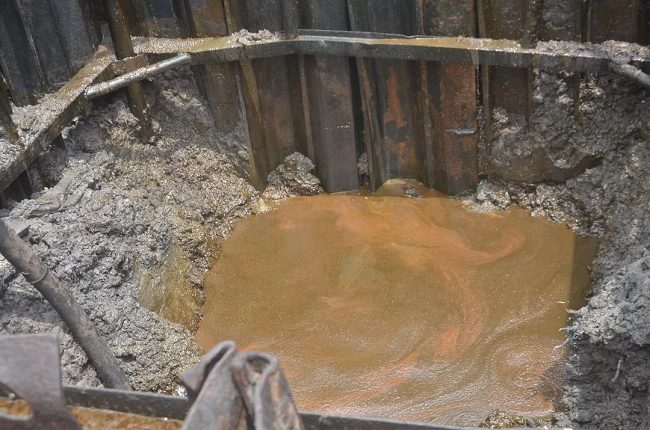
Oil spill in Nembe, Bayelsa State
The leak at Tora area in Nembe occurred on October 1, 2025, discharging a yet-to-be ascertained volume of crude stress into the Santa Barbara River and adjourning areas.
According to a letter to the operator of OML 29 by the legal counsel to the Opu Nembe Kingdom signed by Mr. Iniruo Wills, Managing Partner of Ntephe Smith and Wills, the spill has adversely impacted the people who depend on the Santa Barbara River.
The letter was in response to an invitation to a Joint Investigation Visit (JIV) to the spill site to ascertain the cause and volume of the spill.
The oil firm had confirmed the oil spill in a letter Ref: NEPCo/HSE-JIV/2025/04 dated October 5, which proposed a JIV for October 6.
The Nembe communities in a response to the letter kicked against the October 6 date and opted for October 9.
“We remind you, as you are quite aware of already that the community requires and deserves decent notice to assemble a competent JIV team, some of whom usually come from Lagos, Port Harcourt and/or Yenagoa, in order to ensure due diligence and avoid or countervail the perennial practice of manipulating the JIV process and suppressing critical information.
“Please note that our clients demand a thorough and competent investigation of this spill, and adequate management (including swift post-spill assessment and remediation).
“Beyond this spill, for the records, we demand on behalf of our clients again for a top-level engagement (Company, Community Technical Team, and Regulators) for a lasting overall framework to put a stop to this unbearable and continual burden.” the letter read in part.