The Raw Materials Research and Development Council (RMRDC) has unveiled a new policy framework aimed at achieving a minimum of 30% value addition on all exports of local raw materials. The initiative is designed to boost the competitiveness of Nigeria’s Small and Medium Enterprises (SMEs) and enhance the nation’s industrial base.
Deputy Director, Process Equipment Maintenance Division of RMRDC, Obassi Ettu, disclosed this at the Business Session of the pre-9th Annual Conference of the Guild of Corporate Online Publishers (GOCOP) held in Lagos, on Wednesday, October 8, 2025.
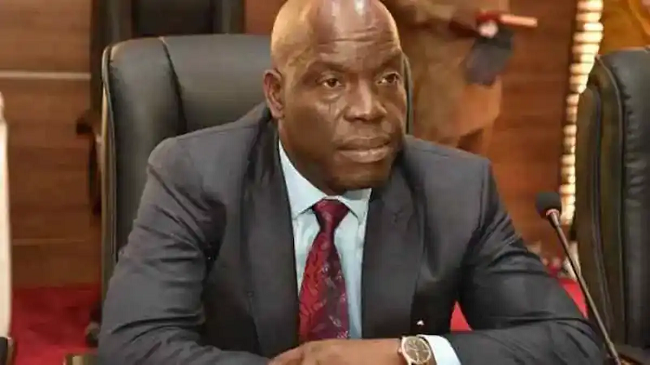
Deputy Director, Process Equipment Maintenance Division of RMRDC, Obassi Ettu
According to him, the policy became necessary because many of Nigeria’s raw materials have the potential to yield multiple products, yet are often exported in their unprocessed form, depriving the country of significant economic value.
“Some of these materials can produce three or four end-products, but importers only pay for one. This is why we are insisting that at least 30% of value must be added locally before export,” Ettu explained.
He further revealed that the Council is deepening international collaboration through an ongoing partnership with China focused on capacity building and seedling development.
“We send our staff to China annually for training. It has been impactful. For instance, we have developed 13 varieties of sweet sorghum and are currently conducting toxicological tests to ensure their safety for human consumption,” he said.
Ettu expressed concern over Nigeria’s continued importation of raw materials despite its vast natural endowments, stressing that RMRDC now advises the Federal Government on which materials to restrict or substitute for local alternatives.
“We have adopted a policy of applied, commercialised research and development (R&D). Through reverse engineering, we’ve developed technologies for processing various raw materials locally,” he stated.
Describing RMRDC as a “child of circumstance” born out of Nigeria’s past economic downturns, Ettu said the Council’s present mission is to harness and transform the country’s abundant raw materials into viable industrial inputs.
Looking ahead, he noted that RMRDC’s focus is on wealth creation through practical innovation.
“We are experimenting with tomato seeds that households can grow and sell to nearby restaurants. But for these initiatives to succeed, we need a system that ensures policy continuity to consolidate the gains we’ve made,” Ettu concluded.
The Editor-in-Chief and Chief Operating Officer of Premium Times, Mr. Muskilu Mojeed, has called on the Nigerian government to provide sustained support for professional journalists, emphasizing their critical role in bridging the gap between campaign promises and governance realities.
Mojeed made this appeal during a panel session at the 9th Annual Conference of the Guild of Corporate Online Publishers (GOCOP), held in Lagos on Thursday, October 9, 2025, with the theme: “Reconciling Campaign Promises with Governance Realities: Challenges and Prospects.”
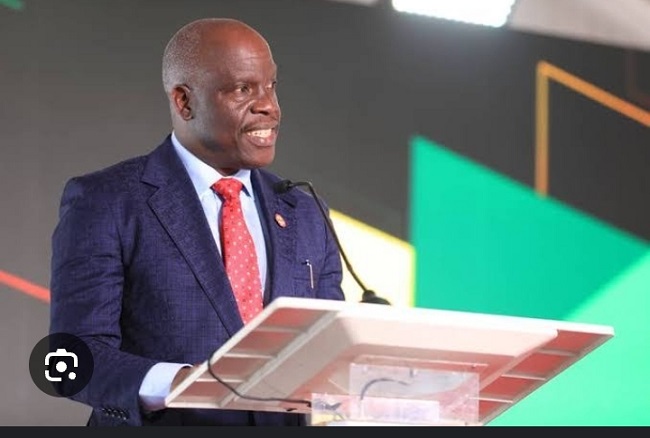
Editor-in-Chief and Chief Operating Officer of Premium Times, Mr. Muskilu Mojeed
According to him, despite the indispensable role of the media in democracy, government support remains minimal.
The government hardly gives us support. The fact is, everyone needs the media, especially when in power and even more when out of power,” he stated.
The award-winning journalist stressed that the media must be empowered to effectively serve as the voice of the people and watchdog of society.
While acknowledging the palliatives extended to some media houses during the COVID-19 pandemic, particularly through debt waivers, Mojeed argued that such gestures were not enough and urged the government to do more to strengthen the sector.
He also decried the poor quality of leadership in the country, noting that many politicians come into office unprepared for the responsibilities of governance.
“There’s a clear disconnect between campaign promises and actual delivery,” he lamented.
Mojeed further encouraged journalists to embrace technology and innovation, describing them as vital tools for enhancing accountability and reinforcing the media’s role in promoting transparency and good governance.
The Nigerian Upstream Petroleum Regulatory Commission (NUPRC) says the nation’s crude oil and condensates production fell to an average of 1.581 million barrels per day (bpd) in September 2025. The commission disclosed this in a statement on Saturday, October 11, citing official statistics released by its Head of Media and Strategic Communication, Eniola Akinkuotu.
NUPRC attributed the drop to a three-day industrial action by the Petroleum and Natural Gas Senior Staff Association of Nigeria (PENGASSAN), which led to the shutdown of several production and export facilities.
Oil
It added that scheduled turnaround maintenance at two strategic facilities also contributed to the decline in output.
According to the data, the 1.581 million bpd figure for September comprised 1.39 million bpd of crude oil and 191,373 bpd of condensates.
“In September, the industry recorded total crude oil and condensate production of 47.43 million barrels, reflecting a 1.61 per cent year-on-year increase in average daily production.
“This shows a slight improvement from the 1.55 million bpd recorded in September 2024, indicating gradual progress.
‘However, on a month-on-month basis, September’s output marked a 3.09% drop compared to 1.63 million bpd recorded in August 2025,” the commission noted.
It said in spite of the setback, Nigeria achieved 93 per cent of its OPEC crude oil production quota of 1.5 million bpd in September.
It further said during the review month, peak combined production (crude and condensate) reached 1.81 million bpd, while the lowest was 1.35 million bpd.
The NUPRC said an analysis of production by the top eight streams in September showed Forcados Blend accounted for 15.86 per cent of total output, followed by Bonny Light at 13.31 per cent, and Qua Iboe at 9.88 per cent.
It said Escravos Light contributed 8.96 per cent, Bonga Crude delivered 6.83 per cent, Agbami Condensate made up 4.94 per cent, Erha Crude accounted for 4.55 per cent, while Amenam Blend contributed 4.2 per cent of total production.
The Director-General of the National Emergency Management Agency (NEMA), Mrs Zubaida Umar, has appealed for stronger collaboration with stakeholders on disaster management.
Umar made the call at a sensitisation lecture organised by the agency in commemoration of the Customer Service Week in Sokoto.
The event, with a theme: “Mission Impossible”, was organised as part of 2025 customer service week activities.
Participants at the NEMA sensitisation lecture in Sokoto
Umar, represented by the Zonal Head, Alhaji Aliyu Kafindangi, said: “The heart of a successful agency lies on its commitment to delivering exceptional and satisfactory services to its customers and stakeholders.
”In our case, those we served are often the most vulnerable members of society, victims of emergencies and disasters.
“Our customers, whether they are victims of natural disasters, displaced persons, or communities impacted by disasters, rely on us for timely, efficient, and compassionate assistance.”
She observed that, as emergency managers, the quality of services the agency delivered was akin to a difference between life and death.
She added that NEMA activities covered millions of Nigerians whose lives and livelihoods depend on agency’s efficiency, empathy, and professionalism.
“NEMA is responding to disasters, coordinating humanitarian relief, managing internally displaced persons’ camps, and strengthen community resilience.
“Our success is measured by the trust and satisfaction of the people we serve,” Umar added.
She explained that NEMA mandate demand more than just coordination of emergency response, it further demands excellence in every action and integrity in every process.
The director-general said that quality assurance ensures that every relief effort reaches the right people, at the right time, with the right resources.
“Compliance to strengthen public trust and aligns our humanitarian interventions with national policies and international standards,” he said.
According to her, the customer service week is a global awareness initiative that recognises the essential role of customer service in organisations and the people who provide those services.
She underscored the importance of recognising the contributions of each customer towards achieving the overall mission.
”Whether you are in the frontline of disaster response, logistics, planning or administration, your work is an integral part of emergency management.
”It is through your effort that we are able to coordinate swift and effective responses to disasters/emergencies across the country,” she confirmed.
The DG commended the staff of the agency for their resilience and proactive efforts in discharging their duties, adding that their professionalism and dedication speaks volumes about NEMA’s core values of service, integrity and humanity.
Speaking also, the Nigerian Security and Civil Defence Corps (NSCDC) representative, Mr Benjamin Tijjani, said service to humanity is a calling not just a responsibility which needed coordination, response, providing relief to affected persons and strengthening the preparedness.
Tijjani highlighted that the collective mission is to make the impossible possible and to ensure that hope endures even in the most challenging circumstances.
Stakeholders pledged collaborative efforts toward strengthening a service culture where every Nigerian, no matter their circumstance, feels heard, valued, and supported.
The event also featured display of disaster response and safety working tools, presentations, questions and answers.
The lecture was attended by the officials of Federal Road Safety Corps (NSCDC), Police, Federal and State Fire Service, Read Cross Society, Emergency Nurses Association of Nigeria, and state government among others.
Nearly one-third of the Earth’s land surface has already been profoundly transformed by human activity, leaving ecosystems degraded and fragmented, according to the Global Land Outlook Thematic Report on Ecological Connectivity and Land Restoration, launched on Saturday, October 11,2025, at the International Union for Conservation of Nature (IUCN) World Conservation Congress in Abu Dhabi, UAE.
Produced by the United Nations Convention to Combat Desertification (UNCCD) and the Convention on the Conservation of Migratory Species of Wild Animals (CMS), the study shows that Earth’s landscapes are interconnected like a living mosaic, held together by the movement of species and the natural flow of water, nutrients and energy. But, today, these lifeline networks of rivers, forests and grasslands – are increasingly under threat, disrupting and diminishing the functioning of natural systems
Asian elephant family with baby elephant walking through the meadow in the morning. According to the report, lifeline networks of rivers, forests and grasslands are increasingly under threat
The findings are stark: more than 60 per cent of the world’s rivers have been diverted or dammed. One striking example is the Mekong River: once the world’s most productive inland, fishery is now fragmented by dams, disrupting fish migrations and threatening the food security of millions. Another is the Serengeti–Mara, where fences and expanding agriculture are constricting the ancient migrations of wildebeest and other wildlife, jeopardising one of the planet’s last great natural spectacles.
Roads, railways and cities continue to carve up habitats – leaving only small, isolated patches of nature behind. Globally, the road network is projected to expand by 60 per cent by 2050, putting even more pressure on ecosystems.
This loss of connectivity harms both nature and people alike. It weakens soil, shrinks harvests, worsens water shortages and leaves communities more exposed to droughts, floods and wildfires. Today, land degradation already affects up to 40 per cent of the planet, putting nearly half of humanity at risk. The way we grow food – combined with expanding infrastructure, pollution and climate change – is fragmenting landscapes and driving deforestation, biodiversity loss and breakdown in ecosystem functions.
UNCCD Executive Secretary, Yasmine Fouad, stressed the urgency of action: “Life on our planet depends on healthy land and water systems-not only for nature, but for people. When these ties are broken, it is the most vulnerable who suffer first. This report shows that restoring ecosystems also means restoring the links between them- we must ‘connect to restore and restore to connect.”
Healthy ecosystems are nature’s own infrastructure. They keep water flowing, protect communities from extreme weather and secure food and drinking supplies. When landscapes are restored at scale, they also lock away carbon, reduce disaster risks, protect biodiversity and create jobs.
Echoing this, CMS Executive Secretary, Amy Fraenkel, noted: “Conservation of the habitats that wild animals depend on is important for their survival, but it is not enough. Unless the ecological networks that wild animals rely on are restored and reconnected, migratory species of animals such as big cats, antelopes, freshwater fish and birds will continue to decline, with many species already critically endangered. These animals are integral parts of healthy, well-functioning ecosystems that nature and human communities rely on. Protecting these pathways is protecting our shared future.”
UNCCD Chief Scientist, Barron Orr, warned that delay is costly: “When soils are depleted and rivers polluted, recovery is slow and costly. Prevention and large-scale restoration are far more effective than waiting for collapse and then trying to repair it.”
Building on this warning, countries are urged to act. Ecological connectivity must be included in land, water and infrastructure planning.
Successful models already exist the European Green Belt stretches through 24 countries from northern Europe to the Balkans and the Mediterranean, forming one of the world’s largest ecological networks. In Costa Rica, a national system of wildlife corridors has reconnected forests, brought back species like jaguars and supported eco-tourism and local livelihoods. In Bolivia, Indigenous communities are restoring connectivity through traditional agroforestry practices, enriching biodiversity while improving incomes, showing how local knowledge and rights are central to resilience.
At the halfway point of the UN Decade on Ecosystem Restoration (2021–2030), leaders are reminded that land, biodiversity and climate goals can only be achieved by working together. This aligns with the Kunming-Montreal Global Biodiversity Framework, which calls for restoring 30 per cent of degraded ecosystems by 2030 and securing the integrity and connectivity of the world’s natural systems.
This is not only about saving nature – it is about repairing the web of life that people everywhere depend on.
As part of activities marking World Habitat Day 2025, the Nigerian Conservation Foundation (NCF) sat with Mr. Adedamola Ogunsesan, the organisation’s Director of Technical Programmes, to discuss how Nigerian cities can navigate the twin challenges of urban migration and climate change. In this conversation, he shares actionable insights on sustainable housing, waste management, and community participation underscoring the need for policies that balance growth with environmental resilience
Mr. Adedamola Ogunsesan, the NCF’s Director of Technical Programmes
How can Nigerian cities like Lagos and Abuja adapt to the growing challenges of urban migration and climate change?
Urban migration is a global phenomenon not unique to Nigeria. From New York to London and Lagos, cities are magnets for economic opportunity, which naturally drives population growth. The real question is how we prepare for it.
For Nigeria, especially in Lagos and Abuja, the key lies in creating climate-resilient urbansystems through government policies. Initiatives like the Lagos Blue Rail and Bus Rapid Transit (BRT) system are excellent examples. When more people use mass transit, the pressure on roads and urban infrastructure decreases. The goal is to provide efficient, sustainable transport that keeps cities functional even as they expand.
With over 20 million Nigerians lacking adequate housing, what sustainable approaches can help bridge the housing deficit without harming the environment?
To close the housing gap sustainably, we must build vertically, not horizontally, especially in coastal cities like Lagos where land is scarce. Expanding outward destroys natural buffers and worsens flooding. Building upward preserves green spaces and reduces land pressure.
We must also integrate nature-based solutions into urban design such as flood control systems, urban greenery, and eco-friendly building materials. The Green Recovery Nigeria (GRN) Programme, a 30-year NCF initiative, aligns perfectly with this vision. Through reforestation, afforestation, and natural regeneration, GRN aims to restore 25% of Nigeria’s forest cover. This doesn’t just heal ecosystems – it reduces urban heat, absorbs carbon, and enhances liveability in our cities.
Flooding and waste management remain major urban issues. What environmental strategies can make our cities more resilient to these recurring problems?
Awareness. Consistent, wide-reaching awareness is the foundation. People must understand that environmental negligence is costly. But awareness alone isn’t enough. Our infrastructure must evolve to handle today’s population realities.
Effective waste management is also critical. As cities grow, so does waste generation. We need to institutionalise circular economy practices that convert waste into resources. Encouraging small-scale enterprises that turn waste into wealth creates jobs and reduces landfill pressure.
Interestingly, floodwaters themselves hold potential – they can power turbines or support controlled irrigation if managed properly. But to do this, we must map floodplains accurately and involve communities in flood risk planning. Participatory early-warning systems will help people respond faster and turn what seems like disaster into opportunity.
How can community participation and local innovation contribute to building sustainable and inclusive habitats in Nigeria?
Sustainability only works when people understand it. During one of my field visits to Hadejia, a farmer defined sustainability to me in the simplest way possible: “Chop today, chop tomorrow.” That phrase stayed with me.
Communities must see environmental protection as an investment in their own future, not a distant government agenda. When locals appreciate the ecosystem services around them like water, soil, forest, they become co-managers of sustainability. From there, solutions grow from the bottom up, influencing subnational and eventually national policy.
Looking ahead, what key policy or environmental actions should Nigeria prioritize to achieve truly resilient and sustainable urban living by 2030?
Urban planning must integrate ecosystem thinking. Each landscape whether coastal, savannah, or arid demands tailored strategies. In lowlands, we should protect wetlands while developing around them. In the north, where desertification is advancing, we need green corridors and afforestation.
The guiding principle should be resilience and adaptability; ensuring our cities can absorb shocks without collapsing. If we design cities with nature, not against it, we’ll have stronger, more livable habitats for generations to come.
Finally, what message would you like to leave with Nigerians this World Habitat Day?
Building sustainable cities isn’t the government’s job alone, it’s everyone’s responsibility. Every act of conservation, every properly disposed waste, and every tree planted adds up. If we each play our part, we can create cities that are not just habitable, but truly alive.
Interview by Chinelo Okoli. Editing by Olusomi Oduguwa
The Managing Director of the Niger Delta Power Holding Company (NDPHC), Jennifer Adighije, has commended President Bola Ahmed Tinubu for his administration’s commitment to revamping Nigeria’s power sector, following his recent approval of the defrayment of the ₦4 trillion legacy debts owed to generation companies (GenCos).
Recall that, in July 2025, President Tinubu met with chief executives of all power generation companies, where he emphasised the need for patience from GenCos and financial institutions. The President had also disclosed that government agencies were engaging audit and legal firms to scrutinise the ₦4.7 trillion claims.
L-R: Bello Babayo Bello, Executive Director, Networks, NDPHC; Managing Director/Chief Executive Officer NDPHC, Jennifer Adighije; and Executive Director, Corporate Services, NDPHC, Omoregie Ogbeide-Ihama, in Lagos during the NAEC Award presentation to NDPHC as Power Company of the Year
Speaking at this year’s National Association of Energy Correspondents (NAEC) Energy Conference in Lagos on Thursday, October 9, 2025, Adighije described the President’s approval as a landmark decision that would go a long way in restoring the financial health of the sector.
“With the funds available, we at NDPHC – given our unique mandate as the government’s intervention entity in the power sector – plan to deploy a significant portion of these recovered funds toward converting our power plants from open-cycle to combined-cycle operations,” she said.
“This will not only enhance efficiency but also diversify our generation mix, aligning with Nigeria’s Energy Transition Plan,” she added.
Adighije further noted that the power sector is currently undergoing a major transition, moving towards bilateral trading and the implementation of a cost-reflective tariff regime.
“What this means for us is that we are beginning to see increased liquidity within the sector, which in turn is making it more bankable and attractive for investment,” she explained.
“For us in the power generation space, we understand that cash flow drives efficiency and sustainability. Improved liquidity ensures that generation companies are better positioned to reinvest in the power sector,” Adighije said.
She reaffirmed NDPHC’s commitment to supporting ongoing reforms in the sector and called for sustained collaboration among all stakeholders to ensure energy security and economic growth.
Meanwhile, the association conferred on NDPHC the Power Company of the Year Award.
To achieve the national production target of 2.5 million BOPD by 2027, the Nigerian Upstream Petroleum Regulatory Commission (NUPRC) said it has facilitated renewed activity across mature assets.
Speaking on Thursday, October 9, 2025, in Lagos at the Annual Conference of the Association of Energy Correspondents of Nigeria (NAEC), the Commission Chief Executive, Gbenga Komolafe, said these interventions are projected to deliver incremental volumes exceeding one million barrels of oil per day, a key milestone toward achieving the national production target of 2.5 million BOPD by 2027.
Gbenga Komolafe, the Chief Executive of NUPRC
He noted that the NUPRC and other stakeholders are working to address the challenges hindering oil production.
Speaking on the topic “Nigeria’s Energy Future and the Role of NUPRC in Driving Upstream Oil and Gas Industry’s Rebound”, Komolafe who was represented by a Director at NUPRC, Paul Osu, maintained that there is need to protect the nation’s energy infrastructure and uphold the principles of transparency, accountability and efficiency that define its regulatory mandate.
He said, “As we look to the future, our priorities remain to sustain Nigeria’s upstream rebound, achieve 2.5 million BOPD by 2027, strengthen gas.
“Through these efforts, the commission is not only driving the rebound of the oil and gas industry but also shaping Nigeria’s long term energy future.”
According to him, a sustainable rebound also demands secure infrastructure and credible measurement systems.
To this end, he said the Commission has collaborated with security agencies, private contractors and community stakeholders in implementing the Upstream Measurement Regulation and the Advance Cargo Declaration Regulation.
He stated that the result is a remarkable 90 per cent reduction in crude oil theft from over 102,000 barrels per day in 2021 to 9,600 barrels per day as of September 2025.
Speaking further Komolafe also said that the Commission through the Host Communities Development Trust (HCDT) has successfully inaugurated over 90 Trusts across the Niger Delta, ensuring that development funds flow directly to communities.
He said, “This model not only secures local ownership, but also guarantees peace, stability and continuity in production, key pillars for sustained energy security.
According to him, “The rebound we are witnessing in Nigeria’s upstream sector is not by chance.
“It is the outcome of deliberate regulatory design, anchored on transparency, efficiency and inclusiveness. The Commission’s strategic vision aligns with Nigeria’s broader economic goals and global sustainability commitments.
“At the same time, we are advancing Nigeria’s gas agenda as part of the ‘Decade of Gas’ and the nation’s energy transition pathway,” he said.
Komolafe also noted that Natural gas remains our most reliable transition fuel, a catalyst for industrialisation, power generation and clean energy substitution.
He maintained that by promoting gas monetisation, flare elimination and gas-based investments, the Commission is reinforcing Nigeria’s commitment to a just and balanced energy transition.
On the global stage, he said the context reinforces this direction, adding that the IEA projects that upstream investment will surpass $580 billion in 2025, making a steady recovery from pandemic lows.
He urged NAEC members and the wider press community, to continue ensuring that their reports are factual, verified and development oriented.
Komolafe noted that responsible reporting strengthens investor confidence and preserves national reputation, adding that misinformation on the other hand, can distort progress and discourage investments.
The Federal Capital Territory (FCT) will host the Africa Climate Forum (ACF) 2025 to bring together stakeholders across the continent to develop practical solutions for Africa’s green transition.
Prof. George Nwangwu, Director-General of the Global Centre for Law, Business and Economy (GCLBE), disclosed this on Friday, October 10, in Abuja.
Prof. George Nwangwu, Director-General of the Global Centre for Law, Business and Economy (GCLBE)
He said the two-day event, scheduled for Oct. 14 to Oct. 15, would bring together governments, investors, innovators, businesses, financial institutions and civil society to discuss how Africa can build a cleaner, fairer and more resilient future.
“Now in its third year, the Forum, organised by GCLBE, has become a key platform for turning climate ideas into action,” Nwangwu said.
He added that this year’s theme, “Bolder, Greener and Better Steps: Closing Transition Gaps in Africa”, focuses on helping African countries move from talk to tangible results.
Nwangwu noted that while progress had been made in renewable energy and climate policy, major gaps remained, especially in funding, technology and capacity.
“ACF 2025 will focus on closing these gaps by linking local priorities with global opportunities for finance, innovation and trade.
“The discussions will also examine how new international rules, including the European Union and United Kingdom Carbon Border Adjustment Mechanisms, could affect African exports, industries and jobs,” he said.
According to Nwangwu, the Forum will feature keynote speeches, policy sessions, side events, networking meetings and a Deal Room to connect project owners with investors and financial partners.
He said the event’s Marketplace would showcase innovative clean technologies from Africa and around the world.
“Together, these activities aim to move conversations from promises to projects; cutting emissions, improving energy access and creating jobs.
“Africa has moved past awareness; the real work now is financing, coordination and execution, and that is what this Forum seeks to drive,” Nwangwu said.
He added that participants are expected from government, finance, academia and the private sector, with the organisers projecting stronger partnerships and more investments in green projects through the ACF Deal Room.
Since its first edition in 2023, Nwangwu said, the ACF had grown into one of the continent’s most respected platforms for climate action.
“With tighter global climate rules and pressure to deliver results, ACF 2025 is expected to demonstrate how Africa can move beyond challenges to real, home-grown solutions for a greener global economy,” he said.
The Global Energy Alliance for People and Planet (GEAPP) has commended the Federal Government’s efforts towards achieving the Mission 300 target. Minister of Power, Chief Adebayo Adelabu, disclosed that Nigeria is making significant progress in implementing the policy, with a focus on deploying solar-powered irrigation systems to farmers across the country.
Speaking during a visit to the Federal Ministry of Power on Monday, October 6, 2025, GEAPP African Director and Leader of Delegation, Labna Bhyani, commended the Minister for what the Nigerian Government has achieved within the time the Minister assumed office, particularly his efforts towards achieving the Mission 300 target.
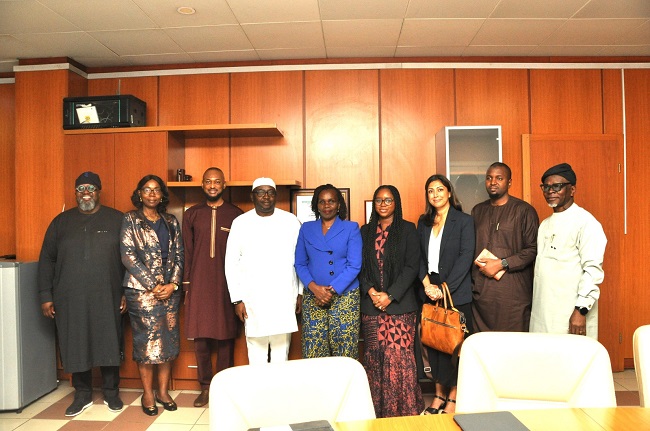
Members of the Global Energy Alliance for People and Planet (GEAPP) during a visit to the . Minister of Power, Chief Adebayo Adelabu
She said the organisation is impressed with Nigeria’s progress in policy reforms, grid, and off-grid programmes. GEAPP has pledged to provide technical assistance to support Nigeria’s Mission 300 initiatives, particularly in monitoring and tracking progress.
“Our mission here is to get a first-hand information on how you are progressing on the programme and even though we do not give loan like the World Bank and the African Development Bank, as we are just philanthropic, we will provide assistance where we feel we need to, to help you provide clean energy to your people. We are really impressed with what we have heard from you.
“You have made a significant progress in your policy reforms such as in your grid and off grid programmes. It is important for us to get involved in the area of technical assistance that you have mentioned, and I think we can provide collaboration and partnership in that area,” Bhayani said.
The Minister had earlier spoken, while receiving the delegation, on the Federal Government’s efforts towards achieving the Mission 300 objectives which aims to provide electricity to 300 million Africans by 2030.
Adelabu said the government is focusing on the transformation of the agricultural sector of the economy, through the deployment of solar powered irrigation system to farmers across Nigeria, adding that this forms part of the strategies towards the implementation of energy access to 300 million Africans by the end of 2030.
He said as a signatory to Mission 300 in Dar es Salaam, Tanzania, in January this year and having presented its National Energy Compact, Nigeria will revolutionise, through the provision of the non-grid solar powered energy, agriculture and other small-scale businesses, at the rural level in achieving energy access to the large population of rural dwellers.
He called on foreign partners to provide technical assistance to Nigeria in the implementation of the Mission 300, saying: “We so much need the technical support for us to be able to monitor and track different parts and locations in the country, so that, at any time, we can measure our achievements for data collection. Even though we have made significant progress in the implementation of this policy, there are lots of gaps to be filled so that it will not just be rhetoric. We must fully implement it.”
Expatiating on how the programme can make effective impact on energy access to the rural areas, Adelabu told the delegation that “in the area of agriculture for instance, we want to focus on irrigation to our rural farmers. In this case, we want to deploy thousands of solar powered pumps to help rural farmers to boost productivity. We will also follow up with the deployment of solar powered storage facilities because, when they produce more than what can be consumed, storage becomes a challenge as the products go bad quickly.
“We want to be able to achieve this for our rural farmers, using the non-grid method to power processors, planters, harvesters and other farm implements. In the same way, we will provide solar powered access to small scale businesses in our rural areas such as patent medicine stores and others that require energy. Through this, we move them to clean energy and enhance their productive capabilities.”
According to the Minister, Nigeria is moving in the right direction in the implementation of the policy “in partnership with the Ministry of Finance but still looking for partnership that can drive the implementation faster.
“We have established key pillars of the compact. About two months ago, we held our first stakeholders meeting. We are taking energy access to a lot of rural communities in their primary health care programmes. We have secured funding from India to achieve these.
“We are enhancing grid extension and expansion through programmes such as the Presidential Power Initiative (PPI), which has generated additional 700 megawatts for us, we are moving to the first phase of the Siemens project, which will also add additional 7000 megawatts to our generation and also stabilise it. We are also moving towards achieving the cost reflective tariff.
“Our metering initiative is going on so that our consumers can get the accurate value of their consumption as the estimated billing is a rip off on them. These and so many other activities have been embarked upon towards achieving mission 300 by 2030. But just as I said, we need your support, your cooperation and partnership for us to move ahead,” Adelabu said.