The Lagos State Government has expressed readiness to partner with investors in converting municipal solid waste to energy, wealth and liquid waste.
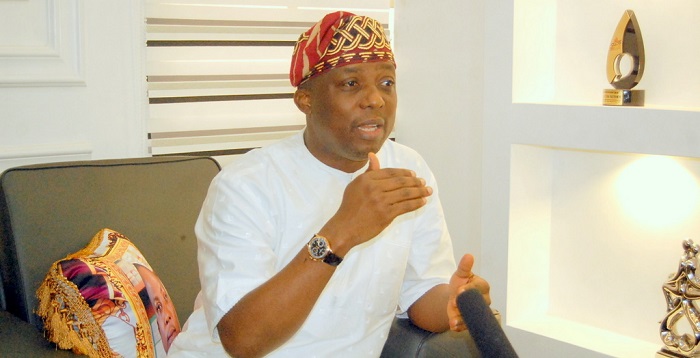
Commissioner for Environment, Mr. Tokunbo Wahab, made this known in a statement signed by the Director of Public Affairs in the ministry, Mr. Kunle Adeshina.
Commissioner for Environment and Water Resources, Mr. Tokunbo Wahab
Wahab said that the present administration in Lagos State had set up a climate adaptation and climate resilience plan encapsulating its vision and policies.
He added that the state had carried out two pre-feasibility studies on waste-to-energy and waste water projects to demonstrate its commitment.
He said that, with a population of over 20 million generating 13,000 metric tonnes of waste daily, the state was adopting a sustainable climate-friendly approach.
“We now see waste as a resource for wealth and a resource for energy because the quantum of waste that ends in our landfill sites will become very minimal.
“As a state, we have set up policies and laws that enable us as a sub-national to reach out to neighbouring countries where they have expertise,” Wahab said.
He noted that the state government signed a contractual agreement 18 months ago with a Ghana-based company.
According to him, the agreement will take 4,000 metric tonnes of municipal waste out of the 13,000 generated daily.
He said that the agreement would lead to conversion of waste to wealth, composite fertilisers and recyclable plastics, as well as setting up of a transfer station for the most challenging parts.
“If that contractual obligation is successfully carried out, we seek to also decommission one of our biggest landfills at Olusosun and Solous.
“All these are symbols of progress of collaboration,” he said.
The commissioner said that Lagos, as a coastal city, was exposed to the effect of climate change, sea level rise, heavy rainfall and excessive heat.
“All these bring about flash flooding when there is tidal lock due to the inability of water to discharge into its sources,” he said.
He said that aerial geographic information showed that the original landmass of Lagos, which was 3,577 square metres. had increased to 4,050 square metres.
Wahab attributed this to massive reclamation of wetlands and lagoon water bodies for real estate construction.
He said that Lagos State had been exercising its legal powers to check excesses coming with the human activities.
The commissioner, at the weekend, featured as a panelist at the Harvard University Climate Action Week.
The event had “Rising Seas, Resilient Communities, Climate Adaptation Strategies in West Africa” as its theme.
The 30th session of the Conference of the Parties (COP30) to the United Nations Framework Convention on Climate Change (UNFCCC) will take place in mid-November 2025 in Brazil’s Amazon region. Heads of state, government delegations, business leaders, and scientists will gather in the city of Belém to negotiate climate action.
Indigenous associations, environmental and human rights organisations have reportedly united for the People’s Summit for Climate Justice to make their voices heard. The highlight will be a day of protest on November 15 in Belém, where several organisations, including the Rainforest Rescue, will be present on the ground.
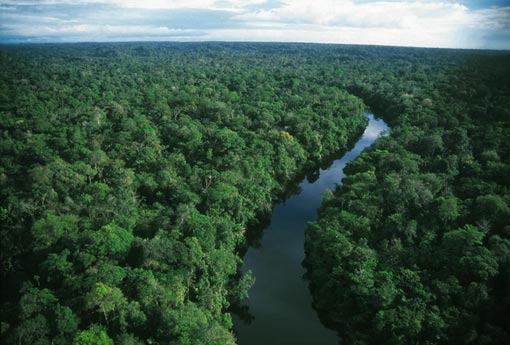
The Amazon rainforest
According to Rainforest Rescue, the tropical rainforests are essential for humanity, biodiversity, and the global climate. Covering 6 million km2, Amazonia is said to be the world’s largest rainforest – more than the area of all EU countries combined.
“From the vast canopy, enormous amounts of water constantly evaporate to form rain clouds. In this way, Amazonia helps stabilise the global water cycle and the climate.
“At the same time, it stands at the heart of global forest destruction, biodiversity collapse, and escalating threats to both nature and human rights,” said John Hayduska of Rainforest Rescue.
According to the group, the homeland of hundreds of Indigenous peoples is under threat. It adds that agribusiness, logging, and mining are destroying ecosystems and the foundations of life for local communities, even as deep social inequality, violence, and abuse of power are widespread.
“The Amazon rainforest is approaching a tipping point beyond which there can be no recovery. South America’s great ‘rain machine’ could collapse – with global consequences for us all. We cannot let this happen,” stated Hayduska.
At COP30 in Brazil, he wants governments to commit to decisive measures to confront the global climate crisis and protect rainforests.
“We are calling for real and just solutions,” Hayduska said, seeking support for the demands of the People’s Summit, and an endorsement of a petition.
The petition
To: governments, heads of state and government, and delegations to the UN climate summit COP30 in Brazil
Ladies and Gentlemen,
With people from every corner of the globe, I urge you to make binding decisions at the United Nations Climate Change Conference in Brazil in November 2025 that truly confront the climate crisis. Seize this moment – take meaningful action to curb global warming and protect the world’s forests for generations to come.
Together with the participants of the People’s Summit, I call for:
Ending the production and burning of fossil fuels – responsible for more than two-thirds of the emissions fueling global warming.
Consistent and uncompromising protection of forests from deforestation.
Swiftly reaching international agreements for a just energy transition, led by the wealthiest nations.
Establishing true environmental and climate justice; false solutions often most severely affect those who have contributed least to global warming.
Full respect for human rights – including the rights of Indigenous and traditional communities to ancestral land and the sovereignty to shape their own food systems.
Recognising nature as a subject of rights and safeguarding biodiversity for the future.
We stand at a turning point. Not tomorrow, not someday. Now is the time for concrete decisions – and your leadership is essential.
Close partnership and collaboration among African oil and gas producing countries are some of the strategies that would enable sustainable development of Africa’s oil industry, according to discussants at the Africa Content Forum, a segment at the 2025 Africa Oil Week holding in Accra, Ghana.
The Executive Secretary, Nigerian Content Development and Monitoring Board (NCDMB), Felix Omatsola Ogbe, delivered the keynote address at the forum. Represented by the Director, Corporate Services, Dr. Abdulmalik Halilu, the Executive Secretary pointed out that no single African country can fully develop its local content potentials and support her the oil and gas industry without the collaboration of other nations, hence the need for close partnership with other nations.
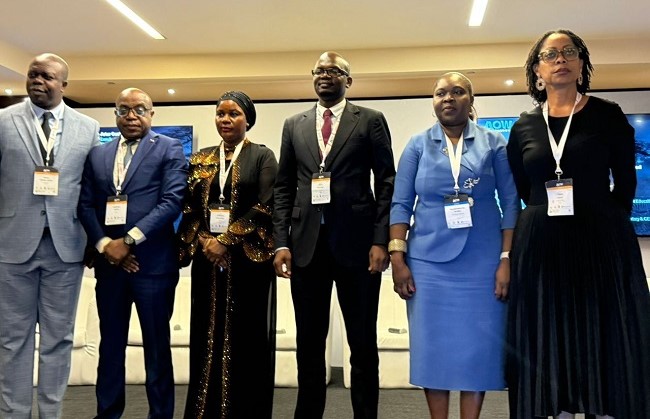
Some participants at the 2025 Africa Oil Week in Accra, Ghana
He pointed out that the Africa continent holds more than 10 percent of global crude oil reserves and eight percent of proven natural gas resources, and is also host to critical resources for renewable energy. He argued that the continent’s oil and gas wealth must fuel intra-country trade, industrialisation, value retention and prosperity, rueing the current situation where many African countries export raw materials to more developed countries across the globe, whereas there is minimal inter-country trade within the continent.
Speaking on the need for consolidation and scaling of local content programmes beyond borders, Halilu canvassed for an enduring policy framework with full complements of governance and enforcement oversight as well as Human Capital Development and cross border deployment as critical pillars. He noted that the continent must continue to reward efforts focused at technology development as local content policy without research and development will remain static.
On cross border partnerships and collaboration, the Director posited that “Africa’s diverse capabilities are its greatest strength with strong collaboration. Just as a Boeing or Airbus is built with components from different countries, we can build a thriving African energy sector by specialising and trading with one another, where each country specializes in areas where it has a comparative advantage”.
Halilu reiterated the need for mindset change of seeing local content as social responsibility initiative but about ensuring that capital stays within our borders, and our nations build the technological and industrial capacity to compete on a global scale.
“Let us build an African energy sector that is owned, operated, and sustained by Africans. A sector that provides jobs for our youth, creates wealth for our nations, and brings true prosperity to our continent,” he said.
The forum featured four panel sessions and was attended by policymakers, oil and gas operating and service companies, original equipment manufacturers (OEMs) and other stakeholders from various Africa countries and other continents.
The first session focused on strategies for African content growth, and the panelists recommended that the future of the continent lies in deliberate planning, strong policies, and the courage to take bold steps that position African solutions at the center of Africa’s development.
The second session examined African capacity and expertise, while the third session discussed cross-border projects and knowledge exchange. Panelists underscored the power of partnership, the necessity of breaking silos, and the immense potential of sharing best practices to accelerate progress across our markets.
The fourth session focused on funding African content and was moderated by the General Manager, Corporate Communications, NCDMB, Dr. Obinna Ezeobi.
Discussions on the panel highlighted strategies for attracting sustainable funding for oil and gas projects, and the need for African oil and gas companies to decarbonize their operations and comply with environmental, social and governance (ESG) regulations.
Other themes included innovative funding options that are available in the continent and how companies can position themselves appropriately to access them.
The NCDF model was also showcased, highlighting how it has been applied successfully to grow capacities and capabilities in the Nigerian oil and gas industry.
From the Niger Delta to Lamu, from Johannesburg to Dakar, communities across Africa joined the global “Draw the Line” mobilisations, sending a powerful message: Africa will not be a sacrifice zone for fossil fuels.
As part of over 600+ actions in more than 85 countries worldwide, including more than 100 across Africa – thousands on the continent rejected fossil fuel expansion, elite corruption, and corporate capture, while uplifting the solutions Africa needs: community-led renewable energy, food sovereignty, democracy, and dignity.
Draw The Line campaign in Kenya
From Nairobi, where a carnival filled the streets with music, costumes, and banners calling for an end to fossil fuel colonialism, to Johannesburg, where workers, youth and faith leaders marched together linking the rising cost of living to energy injustice, to Cotonou, where artivists transformed public spaces into powerful murals and performances against oil and gas expansion, Africans showcased both resistance and creativity. These mobilisations highlighted that the fight for climate justice is not only about survival, but also about reclaiming culture, community, and hope.
The mobilisations come at a crucial moment. World leaders will meet at the UN General Assembly in September, just six weeks before COP30 in Belém, Brazil – a summit that will define whether the world keeps the promise of 1.5°C alive.
Across Africa, communities made it clear that fossil fuel colonialism must end, that polluters must pay their climate debt, and that the future lies in decentralised, locally owned renewable energy systems.
The actions linked the climate crisis to everyday struggles with food insecurity, energy poverty, unemployment, and shrinking civic space, showing that climate justice is inseparable from democracy, human rights, and peace.
Regina Baiden, Africa Regional Director of 350.org, said: “Africa is on the frontlines of a crisis we did not create, yet we are paying the highest price through floods, droughts, cyclones, and heatwaves. This week, our communities have drawn the line and said: no more fossil fuel colonialism, no more debt traps, no more false solutions. We are demanding a just transition that puts people before polluters, prioritises renewable energy that is community centered, and guarantees our right to live in dignity.”
Christian Hounkannou, Africa Francophone Organiser at 350.org, said: “Fossil fuels are destroying our lands, poisoning our waters, and threatening our food systems, while ordinary people are left in poverty. What we are building instead are African solutions like solar projects that power schools and hospitals, agroecology that sustains our farmers, and people-led movements that defend our democracy. This mobilisation is just the beginning. As we head into COP30, our demand is simple but urgent: cancel illegitimate debt, make polluters pay their climate debt, and fund the transition our people deserve.”
As the world turns to COP30, Africa’s message is clear: “The time for empty promises is over. Leaders must end fossil fuels, unlock real climate finance, and put communities at the heart of the transition.”
Hundreds of climate advocates on Saturday, September 20, thronged the streets of Abuja for the Abuja Climate March 2025, joining a global call to #DrawTheLine against climate injustice, inequality, environmental destruction, and poverty.
The march, convened by the Global Initiative for Food Security and Ecosystem Preservation (GIFSEP) alongside other civil society organisations (CSOs) with support from Oxfam in Nigeria, brought together citizens demanding urgent action on climate justice.
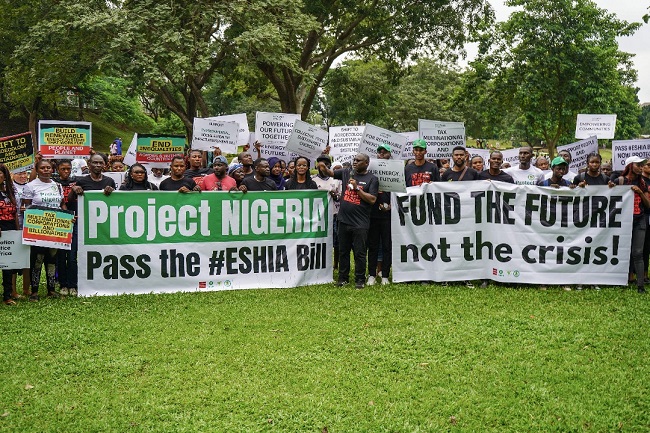
Draw The Line campaign in Abuja
Starting from Millennium Park, participants marched through major roads in Abuja, raising placards with bold messages such as “Fund Our Future, Not the Crisis,” “Cancel the Debt,” and “Deliver on Climate Finance.” Their voices echoed a clear demand: stop using public funds to support destructive industries that fuel floods, heatwaves, hunger, and poverty and, instead, invest in building a safer, fairer, and more sustainable future for all Nigerians.
The marchers also called on the National Assembly to expedite passage of the Environmental, Social and Health Impact Assessment (ESHIA) Bill, which is considered critical to safeguarding communities and ecosystems.
In his remarks, Dr. Michael Terungwa David, Executive Director of GIFSEP, emphasised that Nigerians must rise as active citizens.
“Our future cannot be mortgaged to the profits of industries that destroy lives and livelihoods. Only active citizens can reclaim our future and ensure justice for generations yet unborn,” he said.
The Federal Government of Nigeria says it has activated the economic empowerment of no fewer than 10 million women to achieve its one trillion-dollar economy ambition.
Minister of Women Affairs and Social Development, Imaan Sulaiman-Ibrahim, disclosed this at a high-level sideline event of the 2025 United Nations General Assembly (UNGA) in New York, U.S.A.
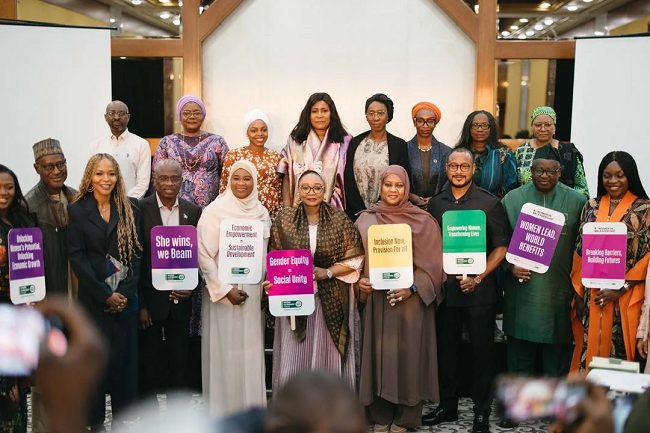
Participants at the high-level sideline event of the 2025 United Nations General Assembly (UNGA) in New York
The event is themed: “Scaling Women’s Economic Empowerment: Financing Inclusive Growth for Peace, Development, and Human Rights – Lessons from Nigeria for Women Project.”
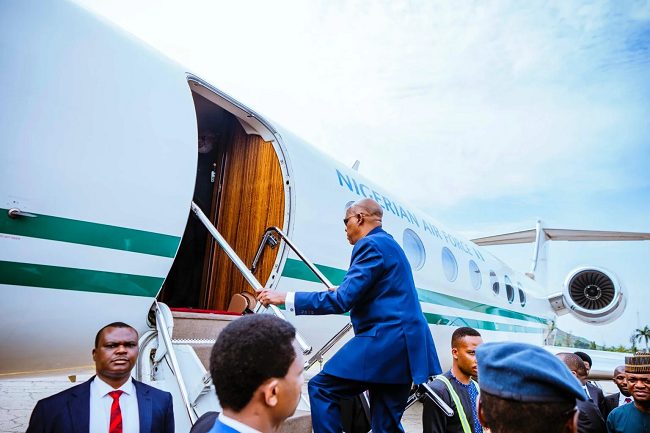
Vice-President Kashim Shettima departed Abuja on Sunday, September 21, 2025, for New York to represent President Bola Tinubu at the 80th session of the UNGA.
Speaking at the event, the minister said the economic empowerment is being achieved through targeted projects, initiatives, programmes, and interventions focused on women.
She said that one of the key vehicles being utilised for the empowerment is the Nigeria for Women Project ((NFWP).
According to her, NFWP, under the leadership of President Tinubu, is currently the nation’s most significant women’s economic empowerment platform.
“In phase one, we mobilised over 460,000 women into Women Affinity Groups (WAGs) across multiple states.
“These groups have collectively saved over an average of N4.9 billion of their own money and have inter-loaned significantly to expand businesses, cover health costs, and pay school fees.
“In addition, over 330,000 women have accessed livelihood grants, while thousands have been linked to formal financial institutions, national ID, and health insurance schemes,” she said.
The minister said after the successful pilot launch in six states, the ministry had scaled up and opened up to all states.
“It is critical to highlight, that while this model borrows from the most successful global experiences, we have wholly adapted it to Nigerian realities.
“The Women Affinity Groups that are created under the programme have become platforms of voice, social capital, and economic agency.
“They are changing the texture of communities, lowering household vulnerability, and strengthening our democracy from below, ” she said.
The minister told delegates and partners at the event that the ministry realised that “investing in women’s entrepreneurship will transform not just incomes but also nutrition, education, and community stability”.
She said that, based on that understanding, the government consolidated its empowerment approach into a single delivery architecture that integrated agriculture, clean energy, logistics, digital access, mobile services, amongst others.
“We call this the Renewed Hope Social Impact Interventions – 774 (RH-SII774).
“This programme is envisioned as a transformative, gender-responsive initiative that will directly impact over 50 million women, children, families, and vulnerable persons across all 774 Local Government Areas of the Federation.
“It provides a unified national platform to tackle systemic issues such as gender inequality, family instability, digital exclusion, child vulnerability, and economic disempowerment.
“It is a full-scale transformation of how social protection and women’s economic empowerment are delivered in Nigeria,” she said.
Earlier, the Chairman, Nigeria Governor’s Forum, Gov. Abdulrahman Abdulrazak of Kwara State, said investments in women empowerment are not only a moral imperative, but an economic necessity for peace, prosperity and shared growth.
Abdulrazak, represented by Gov. Hyacinth Alia of Benue State, said in Nigeria and around the world, when a woman thrives, family, communities and entire communities thrive.
The governor noted that the Nigeria for Women Programme (NFWP) is a powerful demonstration of what sustained target financing could achieve.
“The programme is a collaboration among the Federal Government, State Ministries, the World Bank and other partners.
“It began in six states and it is now active in 15 states with commitments from 32 states in overall
“To date, more than 46,000 women have organised into 22,000 Women Affinity Groups, saving over N4.4 billion and channelling these resources into small businesses that are transforming families and community alike,” he said
The Minister of State for Federal Capital Territory, Dr Mariya Mahmoud, commended President Tinubu for his support and unwavering commitment to women Inclusivity and youth development in Nigeria.
“So many policies and initiatives have been put in place to empower women at the national and sub-national levels on women empowerment,” she said.
For his part, Gov. Dauda Lawal of Zamfara State said his administration gave special attention to women empowerment.
He added that women were the major beneficiaries of almost all the empowerment programmes in the state.
Other dignitaries at the event included Plateau Governor Gov. Caleb Mutfwang, Minister of Housing and Urban Development, Ahmed Dangiwa and the First Lady of Zamfara State, Hajiya Huriyya Lawal,
The Charge d’Affaires at the Permanent Mission of Nigeria to the United Nations, Samson Itegboje, and Prof. Kabir Mato were also at the event.
President Tinubu’s administration has set a target for Nigeria to become a $1‑trillion economy by 2030.
This goal is part of his administration’s broader “Renewed Hope Agenda’ economic plan under a policy called “Nigeria First”.
The Vice President, in April, inaugurated the Interministerial Committee to drive the process of achieving the goal.
Nigeria LNG Ltd. (NLNG) has won the 2025 Best Corporate Training Partner Award by the Oil and Gas Trainers Association of Nigeria (OGTAN).
The award was presented at the 4th edition of the OGTAN Human Capital Development (HCD) Awards, held in Lagos.
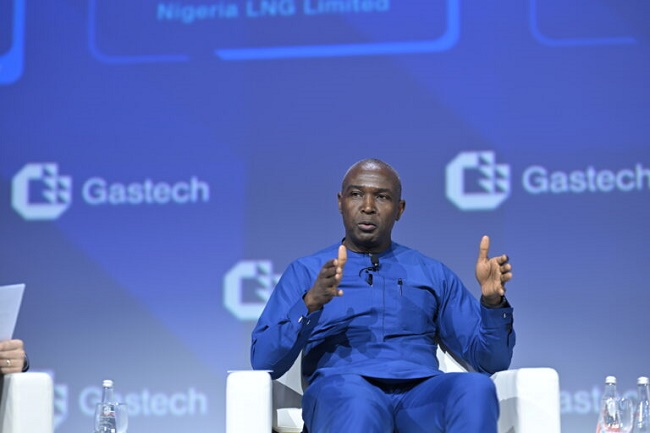
Managing Director, Nigeria LNG Ltd. (NLNG), Dr Philip Mshelbila
Dr Sophia Horsfall, NLNG’s General Manager, External Relations and Sustainable Development, disclosed this in a statement issued in Port Harcourt on Friday, September 20, 2025.
According to the statement, the award recognises NLNG’s longstanding commitment to workforce development, skills transfer, and capacity building within Nigeria’s oil and gas industry.
Receiving the award on behalf of NLNG, Mr. Emmanuel Uleh, Head of Nigerian Content Compliance Assurance and Monitoring, reaffirmed the company’s strong commitment to human capital development.
He said that NLNG viewed capacity development not only as a Nigerian Content obligation but also as a central part of its corporate social responsibility (CSR) agenda, particularly in education.
“At inception, NLNG deliberately promoted local capacity development by training Nigerian technicians and operators for the operation and maintenance of its Bonny Island plant,” Uleh said.
He noted that this strategy had yielded remarkable results, with NLNG now boosting a 100 per cent Nigerian management team and workforce that is over 95 per cent Nigerian.
He said NLNG had empowered thousands of Nigerians with industry-relevant skills, vocational training, and formal education support through strategic partnerships and targeted initiatives.
Uleh said that more than 600 Nigerians had been trained in Nigeria and South Korea in highly technical areas including naval architecture, shipbuilding, welding and fabrication under the Bonny Gas Transport Plus Project.
According to him, a collaboration with the Nigerian Content Development and Monitoring Board (NCDMB) and OGTAN, the company has trained over 150 people through its asset projects.
He said that under the Train 7 Project’s Human Capital Development programme, more than 400 Nigerians were undergoing training, including 140 in plant maintenance and 200 community youths preparing for future operations.
Uleh further noted that NLNG’s CSR programmes continued to prioritise education as a driver of national development by awarding scholarships to students at post-primary and undergraduate levels.
“The company is also supporting postgraduate studies abroad in highly technical fields critical to Nigeria’s growth. NLNG’s contributions align with national development goals and sustainability priorities,” he said.
According to him, the company’s efforts reflect its vision of being a globally competitive energy company, inspiring a sustainable future.
Since inception, the OGTAN HCD Awards have celebrated organisations and individuals making measurable and impactful contributions to human capital development.
Shelton Climate Awareness Initiative (SCAI), a non-governmental organisation (NGO), in collaboration with the Global Plastic Action Partnership, has embarked on a clean-up exercise at the Liberty Water Dam in Jos, Plateau State.
The founder of the NGO, Mrs. Lara Eseyin, said on Saturday, September 20, 2025, in Jos that the aim of the exercise was to tackle the growing problem of plastic pollution and conserve biodiversity.
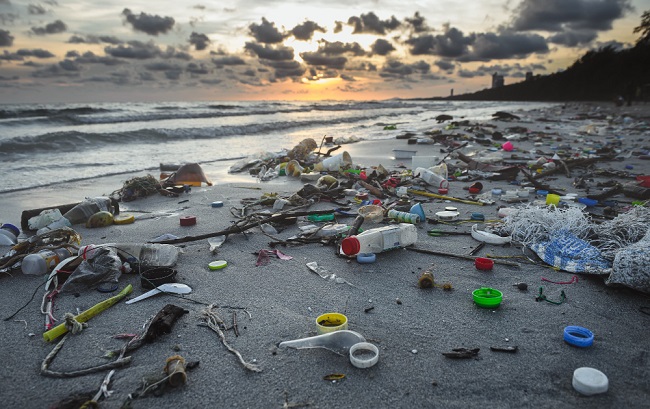
Plastic pollution
Eseyin stated that the exercise was also to ensure that the water, which served as a raw material for the Jos Water Services Corporation (JWSC), was safe from plastic pollutants.
The founder further said that besides cleaning the environment, the organisation had also embarked on creating awareness and behavioural change campaigns about plastic menace in the environment.
She said that the general public was being educated on what could be done to reduce and recycle the plastics if necessary.
According to her, 100 recycling bins had been distributed in various communities in the Jos-Bukuru metropolis.
Similarly, Mr. Frank Eseyin, the NGO’s Director of Operations, said the exercise would be sustained and carried out every quarter of the year.
In his remarks, Mr. Apollos Samchi, JWSC Managing Director (MD), commended the NGO for its initiative in cleaning the environment, particularly the Liberty Dam environment.
Samchi said that the Liberty Dam, which served as one of the corporation’s sources of raw water supply, was one of the most endangered dams due to human activities such as mining, farming and encroachment by block-making industries.
According to him, the state government had spent ₦1.2 billion in 2025 on the purchase of water treatment chemicals to ensure residents had access to potable water.
He noted that the rising cost of treatment was largely due to human activities such as farming, illegal mining, and the indiscriminate dumping of plastic waste around the dam.
The MD, therefore, urged residents to take environmental protection seriously, stressing that preserving water sources was critical for sustainable development.
The plastic cleanup exercise was also carried out at Jos Wildlife Park, Maiadiko Market, and the Abbattoir Market.
Community members were encouraged to adopt eco-friendly practices such as recycling, reusing, and reducing single-use plastics.
Vice-President Kashim Shettima, on the directive of President Bola Tinubu, is leading Nigeria’s delegation to the 80th session of the United Nations General Assembly (UNGA), holding in New York, United States of America. He departed Abuja, Nigeria, on Sunday, September 21, 2025.
This is contained in a statement issued by Mr. Stanley Nkwocha, Senior Special Assistant to The President on Media and Communications (Office of The Vice President), on Sunday in Abuja.
Vice-President Kashim Shettima
The session will hold from Monday, Sept. 22 to Sunday, Sept. 28.
Nkwocha said: “Shettima is scheduled to join other leaders at the global event to commemorate the 80th anniversary of the United Nations slated for Monday, Sept. 22 at the UN headquarters in New York.
“The Vice-President will also join other dignitaries at the high-level general debates from Tuesday, Sept. 23 to Sunday 28.”
Nkwocha also said that, on behalf of President Tinubu, Shettima would also deliver Nigeria’s national statement on Wednesday, Sept. 24, between 3:00p.m. and 9:00p.m., New York time.
“Besides, the Vice-President will attend a special event on Climate for Heads of State and Government to be hosted by the UN Secretary-General on Wednesday, Sept. 24, from 2p.m. to 6p.m.
“Nigeria is expected to announce its new Nationally Determined Contributions (NDCs) under the Paris Agreement,” he said.
Nkwocha also said Shettima was slated to attend the high-level roundtable of the Global Champions on Adequate and Affordable Housing to be hosted by the President of Kenya on Sept. 24 and attend to other bilateral meetings and events.
He disclosed that, after attending UNGA, the Vice-President would leave for Frankfurt, Germany, to meet with officials of the Deutche Bank before returning to Nigeria.
The Minister of Innovation, Science and Technology, Chief Uche Nnaji, has inaugurated the National Energy Master Plan Implementation Committee (NEMiC) in a major step towards repositioning Nigeria’s energy sector.
This is contained in a statement issued in Abuja on Saturday, September 20, 2025, by Dr Robert Ngwu, the Minister’s Senior Special Adviser.
L-R: Chief Executive Officer, Energy Commission of Nigeria, Dr Mustapha Abdullahi, Minister of Innovation Science and Technology, Chief Uche Nnaji; and Mr. Nurudeen Yakubu, Group CEO, Nor Group Ltd.
He quoted the minister as tasking the committee with the responsibility of spearheading the country’s transition to a cleaner, more inclusive and sustainable energy future.
The inauguration marked the beginning of the full implementation phase of the National Energy Master Plan (NEMP).
Nnaji said the committee should deliver real impact to households, industries, and communities nationwide.
“The National Energy Masterplan is not just a document; it is a blueprint for transforming our energy landscape. NEMiC must fast-track the deployment of energy solutions that are reliable, affordable, and climate-friendly.
“The work you do will directly influence Nigeria’s economic growth, social progress, and environmental sustainability,” the minister said.
Nnaji expressed optimism that the committee would deliver on the assignment.
“The decisions and actions taken by this Committee will define Nigeria’s energy trajectory for decades to come.
“This is a responsibility of the highest order, and I am confident NEMiC has the capacity, the vision, and the commitment to rise to the occasion,” he said.
Dr Mustapha Abdullahi, the Chief Executive Officer of the Energy Commission of Nigeria (ECN), on behalf of members of the committee formally submitted the implementation roadmap to the Minister.
Stakeholders say the inauguration of NEMiC represents a bold, strategic move to accelerate universal energy access, drive industrialisation, and position Nigeria as a continental leader in clean energy development.
Present at the event were Mr. Michael Oluwagbemi, Managing Director, Presidential CNG Initiative; and Jide Awolowo, Investments Facilitation Coordinator of the Initiative.
Top executives from global power and engineering companies such as Mainstream Energy Solutions Limited, China Machinery Engineering Co. (CMEC), Power China International Group, and Energy China were also in attendance.
Amb. Abaka Johnson Philbert, alongside representatives of international development organisations, including UNIDO and UNDP, attended the event, among others.
NEMP is a comprehensive framework designed to guide Nigeria’s energy diversification, strengthen energy security and align national development with global climate action goals.
Constituted on Oct. 17, 2024, by the Energy Commission of Nigeria (ECN), NEMiC is tasked with mobilising funding and investing in renewable energy infrastructure.
It is also has the responsibility of accelerating the deployment of technologies that expand access to reliable and affordable power.
The committee would oversee projects across solar, wind, hydro, biomass, and other emerging technologies.
It would do that while also advancing the operationalisation of the National Energy Fund meant to channel resources into domestic energy efficiency and infrastructure projects.
It is estimated that over 80 million Nigerians lacking reliable electricity and more than 90 per cent of households depending on biomass for cooking.
Stakeholders, therefore, say that the Master Plan offers an opportunity to close the long-standing gaps while unlocking new economic frontiers.