Nigeria, along with Eswatini, Jordan, Tunisia and Honduras, submitted its updated Nationally Determined Contribution (NDC 3.0) to the United Nations Framework Convention on Climate Change (UNFCCC) secretariat on Monday, September 22, 2025.
Simon Stiell, Executive Secretary of the United Nations Climate Change, described Nigeria’s updated Nationally Determined Contribution (NDC) as a “significant step forward” in the country’s energy and climate transition.
Mr. Simon Stiell with the Minister of Environment, Malam Balarabe Abbas Lawal
Stiell, in a statement on Monday, said the clean energy economy presented Nigeria with an opportunity to usher in “a new era of economic growth.”
He described the plan as one that could create jobs, attract investment, and harness the potential of its youthful population.
“Every country is now in a race to realise the benefits of clean energy.
“By setting clear goals, including near-term targets to reduce emissions towards achieving net zero by 2060, Nigeria is sending a clear signal to the world: development and climate action go hand in hand,” Stiell said.
The UN climate chief also hailed Nigeria’s effort to strengthen inclusivity in its plan, noting that “involving more and more of society in climate action makes its plan stronger.”
Stiell emphasised that Nigeria’s revised plan sends “a clear signal to the world” that climate action and development were mutually reinforcing rather than contradictory.
The council had said that the updated NDC would be submitted to the UN agency before the 30th Conference of Parties on the United Nations Framework Convention on Climate Change (COP30) in November.
The third contribution, tagged: NDC 3.0, was unveiled and validated in August following a workshop on Aug. 27, organised by the National Council on Climate Change (NCCC).
The Lagos State Physical Planning Permit Authority (LASPPPA) on Monday, September 22, embarked on a road sensitisation campaign to educate residents on compliance with planning permit laws ahead of its 2025 stakeholders’ engagement.
The roadshow was aimed at creating awareness on the importance of adhering to physical planning regulations.
L-R: The General Manager, LASPPPA, Mr Kehinde Osinaike; Special Advised to the Governor on Electronic Geographic Information System (e-GIS), Dr Babatunde Olajide; Commissioner for Physical Planning and Urban Development, Dr Olumide Oluyinka and Oluwole Sotire, Permanent Secretary of the ministry during roadshow to create awareness on physical planning permits organised by LASPPPA on Monday in Lagos
LASPPPA, an agency under the Ministry of Physical Planning and Urban Development, kicked off the procession from its headquarters in Ikeja GRA.
Using public address systems, officials explained how timely compliance with planning laws guarantees equity in investments, ensures proper urban planning, prevents building collapse, and supports government in managing city growth.
Their officials stressed that approvals are mandatory before construction, demolition, remodelling or change of ownership of properties, warning that non-compliance attracts sanctions.
Residents were urged to avoid touts and instead register online, visit LASPPPA headquarters or any of its district offices across the state to obtain approvals within 10 days.
They also invited the public to the forthcoming stakeholders’ engagement on Friday with the theme: “Planning Permit: The Rebirth.”
Earlier, the Commissioner for Physical Planning and Urban Development, Dr Olumide Oluyinka, received LASPPPA officials at his office in Alausa.
He addressed the gathering on the importance of sensitisation before joining the roadshow alongside the ministry’s Permanent Secretary, Mr. Oluwole Sotire, and other top government officials.
Speaking with journalists, Oluyinka said the campaign was designed to tackle low awareness about the value of planning permits.
“It will be an ongoing exercise because we must take this message right to the grassroots. Our people in riverine areas and local communities must also know and appreciate the importance of planning permits,” he said.
The commissioner explained that planning approvals help the state monitor development patterns and expand infrastructure to meet residents’ needs.
“You can’t drive a new car without registering it. If you buy a phone with a SIM card, it won’t work after a few days if it isn’t registered.
“The same applies here. There is no individual anywhere in the world without a birth certificate. For a building, that permit is its birth certificate, and every structure must have it,” he added.
Also speaking, the Special Adviser to the Governor on Electronic Geographic Information System (e-GIS), Dr Babatunde Olajide, and the Permanent Secretary, Sotire, urged residents to be good ambassadors by complying with planning laws.
They outlined the benefits of compliance and warned that violations or inaction could negatively affect the wider society.
The General Manager of LASPPPA, Mr. Kehinde Osinaike, said the campaign was building on successes recorded from previous sensitisation drives.
He noted that compliance levels had risen as reforms had simplified the process of obtaining approvals.
“There has been a marked increase in submissions of planning permits and issuance of approvals,” he said.
A fuel attendant in Maryland, Mr. Mazi Alphonsus, commended the campaign.
“If they continue like this, people will not make mistakes,” he said.
Alphonsus added that it was “heartbreaking” to complete a building in error, especially given current economic realities, only to face the risk of demolition.
The procession began from LASPPPA Headquarters, Ikeja GRA through Ikeja under bridge, Oba Akran, Agidingbi, Alausa, Oregun Road, Opebi Road, Sheraton, Maryland and its environs.
Fresh from their landmark victory in the Teepsa 5/6/7 case – where the courts set aside authorisation for another deep-water drilling project – The Green Connection and Natural Justice are warning of an even bigger threat to people, the ocean and the climate.
This time, the organisations are challenging TotalEnergies’ proposal to drill what would be the world’s deepest offshore well in the Deep Western Orange Basin (DWOB South).
An offshore well
The Green Connection’s Strategic Lead, Liziwe McDaid, says that the scale of the project is staggering: “If approved, this would mean drilling at depths of nearly 3,900 metres, only 211 km off the coast of Saldanha – home to many indigenous small-scale fisher families. It would be reckless to put their livelihoods and our marine heritage at risk.”
According to McDaid, the Draft Environmental and Social Impact Assessment Report (DESIAR) reveals several governance failures.
“What is particularly concerning is how the report downplays the risk of catastrophic oil spills and makes unsubstantiated claims that a blow-out could be capped in just 20 days, while experts warn it could take months at these depths. A spill of that scale could devastate fisheries and wipe out tourism jobs and could even spread into Namibian waters.
“This month we celebrate our heritage, and this weekend the world turns to Coastal Clean-Up and Zero Emissions – yet this project could unnecessarily put people’s culture, the ocean, and climate action at risk if approved,” she explains.
“Some of the most concerning aspects of the DESIAR are that it seems to ignore cumulative climate impacts and appears to perpetuate injustice against marginalised communities, due to the lack of meaningful engagement with those who will likely be affected. Many fisher communities report that, as a result of meeting locations, they were not reached, while others report that they were only afforded limited consultation – as crucial baseline data was not shared in accessible formats.
“This may undermine people’s constitutional rights, especially since this is yet another project that could lock South Africa into a costly, carbon-heavy path that may be wholly at odds with climate science and the country’s just transition commitments, and which could negatively impact the marine ecosystems that coastal communities rely on,” adds McDaid.
The DESIAR also appears to present inflated economic benefits, but most skilled jobs could go to foreign contractors, which may leave locals with only short-term, low-paid work. In contrast, coastal fishing and tourism – proven, sustainable drivers of jobs and GDP – could be placed at risk.
The organisations also emphasise that impacts on marine biodiversity are barely assessed, even though the deep ocean plays a critical role in regulating the climate and sustaining fisheries. Noise pollution is similarly overlooked, with the report dismissing the risks of seismic blasts and drilling noise that can disorient whales, drive fish from their feeding grounds, and threaten endangered turtles and seabirds.
Legal Advisor at The Green Connection, Shahil Singh, adds, “The law is clear, Environmental Impact Assessments (EIAs) must consider the full life cycle of a fossil fuel project, not just the exploration phase. By failing to properly address this, the report could mislead the public into thinking exploration is harmless, when in reality it is often the first step towards large-scale oil and gas extraction. The recent Teepsa 5/6/7 judgment confirmed this principle, with the courts making it clear that weak and incomplete assessments will not stand. These flaws may strike at the heart of the report’s credibility and could be grounds for legal challenge.”
South Africa already faces a strict carbon budget. Any new oil and gas production may push national emissions beyond Paris Agreement commitments, which could undermine climate obligations and possibly expose the country to potential EU/UK carbon border tariffs. The International Court of Justice recently reaffirmed that governments have a duty to prevent climate harms, yet the DESIAR does not appear to make any attempt to calculate full life-cycle greenhouse gas emissions.
Furthermore, multiple exploration and drilling projects are already underway in South African and Namibian waters. Each one could add pressure to fragile marine ecosystems, yet the DESIAR appears to treat them in isolation. Experts warn this approach is equivalent to approving multiple factories to discharge into the same river while claiming each has “minimal impact.”
“Additionally, calling gas a ‘transition fuel’ is misleading because, with gas, comes methane – which is estimated to be over 80 times more potent than CO₂ at trapping heat in the atmosphere over a 20-year period, which may leak throughout the production cycle. Moreover, buying into gas takes us backwards, at a time when we should be investing in clean, affordable renewables – especially as the high cost of gas infrastructure and reliance on global markets could result in more expensive electricity for ordinary South Africans. True development should be people-centred – uplifting communities, restoring balance with nature, and securing livelihoods – not gambling with our oceans and heritage for short-term profit,” adds McDaid.
Nigeria’s decision to earmark SIN taxes – levies on alcohol, tobacco, and sugary drinks – for health financing, signals a firm commitment to prioritising citizens’ health. It also aligns with long-standing calls from Nigerian public health advocates and the World Health Organisation (WHO).
The move could not be timelier. Earlier this year, a major investigation revealed that Nigerians spend about N1.92 trillion (roughly $1.26 billion) annually seeking treatment for non-communicable diseases (NCDs). Almost 30 percent of deaths in the country are linked to NCDs, with tobacco, alcohol, and sugary drinks among the biggest culprits.
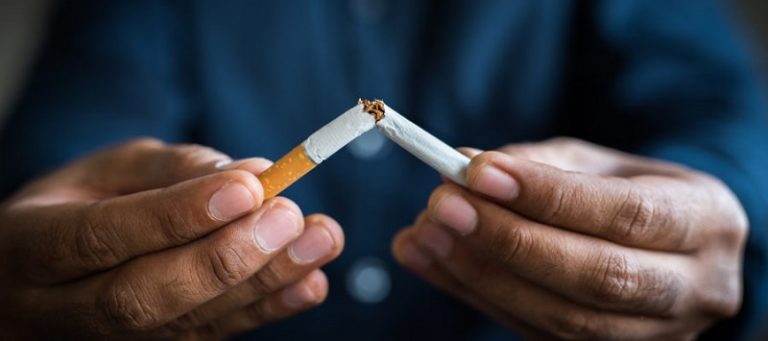
Tobacco
Tobacco use alone fuels a raft of debilitating diseases: cancers of the lung, mouth, bladder, and colon; heart disease and stroke; chronic respiratory illness like COPD; type 2 diabetes; ectopic pregnancy; and premature, low birthweight babies. Globally, tobacco kills more than seven million people annually – 300,000 in Africa alone. Eight in ten smokers live in low- and middle-income countries like Nigeria, feeding Big Tobacco’s multi-billion-dollar profits. In 2015, the six largest cigarette firms raked in $62 billion in profits – more than the annual budgets of several small nations.
These resources bankroll relentless marketing campaigns, youth-targeted advertising, lobbying against regulations, and deceptive promotion of so-called “reduced risk” products such as vapes, heated tobacco, snus, and nicotine pouches. Far from solving the problem, these new products hook a new generation on nicotine while undermining tobacco control efforts.
Yet Nigeria’s funding for tobacco control remains pitifully low. In 2024, following persistent advocacy, the government allocated N13 million to the Tobacco Control Fund (TCF) – but this falls far short of the about N300 million minimum required to operationalise it.
If Nigeria is serious about reducing tobacco’s deadly toll, it must explore innovative financing tools – including holding the industry itself to account.
In 2024, the Canadian government reached a landmark C$32.5 billionsettlement with three tobacco giants – JTI-Macdonald Corp., Rothmans, Benson & Hedges, and Imperial Tobacco Canada. The payout compensates provinces, territories, and former smokers for decades of healthcare, social, and economic costs caused by tobacco. The deal, finalised in August 2025, capped a 27-year legal battle that proved the industry can be held liable for its deception and harm.
The Canadian settlement echoes the United States’ historic 1998 Master Settlement Agreement, where four leading tobacco firms agreed to pay $206 billion over 25 years (with payments continuing indefinitely).
For Nigeria, these precedents offer a roadmap. As WHO’s tobacco control chief Adriana Blanco Marquizo put it, the Canadian deal has “far-reaching” global implications – demonstrating that Big Tobacco can be forced to pay for its destruction.
Nigeria already has some experience. In 2023, the Federal Competition and Consumer Protection Commission (FCCPC) fined British American Tobacco parties $110 million for breaching public health regulations – the largest fine ever issued by the regulator. This shows legal action is possible on home soil.
But to scale up, Nigeria needs legal groundwork, such as building airtight cases around healthcare costs, drawing on Canada and U.S. litigation. Civil society mobilisation is also key. Groups like Corporate Accountability and Public Participation Africa (CAPPA) and the Nigerian Tobacco Control Alliance (NTCA) are necessary to sustain advocacy pressure. Robust data is also critical to document the true cost of tobacco – hospitalisations, lost productivity, premature deaths. Furthermore, international collaboration with global networks that have taken on Big Tobacco before will smoothen the process and help to counter Big Tobacco’s legal tactics.
Nigeria should also emulate Canada’s Tobacco Claims process, which allows individuals who developed illnesses because of smoking, or from second-hand smoke (SHS), or family members of those who died from tobacco-related diseases to seek compensation directly, with no upfront legal fees. This is separate from the recent settlement funds. Such an approach would bring justice to victims while amplifying public support.
Perhaps the toughest fight is not against cigarettes but against the new wave of smokeless products and vapes, which Big Tobacco falsely markets as safer. Any Nigerian settlement must explicitly fund counter-marketing campaigns, research, and enforcement to dismantle this harmful narrative. Canada was careful to exclude industry-backed “harm reduction” foundations from its deal. Nigeria must follow suit.
Nigeria’s young population is already a prime target for flavoured vapes and e-cigarettes. Failure to act risks a generation addicted to nicotine, burdened by disease, and robbed of potential. But success could deliver a turning point – funding healthcare, empowering advocacy, and saving millions of lives.
The question is whether Nigerian leaders will put lives above the lobbying power of Big Tobacco. Canada has shown it can be done. If Nigeria follows through – with political will, legal rigour, and strong civil society support – it can not only transform its health financing but also send a powerful message across Africa that the era of tobacco impunity is over.
By Robert Egbe, tobacco control advocate at Corporate Accountability and Public Participation Africa (CAPPA)
The indigenous communities of Afor Clan in Ndokwa East Local Government Area of Delta State are facing an urgent environmental and constitutional crisis due to Sterling Oil Exploration & Energy Production Co. Ltd.’s controversial pipeline project.
Despite strong community opposition and ongoing legal proceedings, the company is said to have proceeded with construction through residential areas, raising concerns about environmental safety, proper consultation, and constitutional violations.
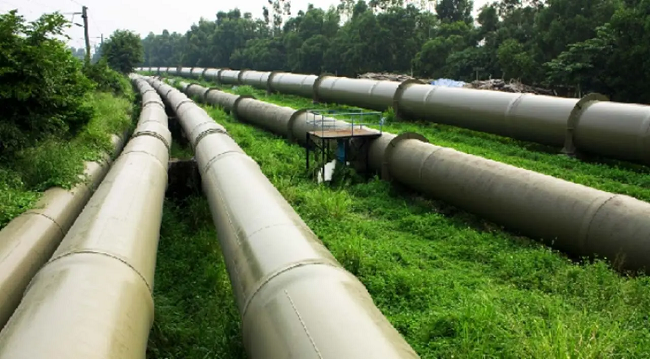
Oil pipeline
Sterling Oil began exploration activities in the Afor Clan communities five years ago. In April 2025, the company returned to secure permissions for a pipeline running in these locations to its Flow Station in Beneku, which would affect five communities: Okolori-Afor, Ogbetitit-Afor, Umuachi-Afor, Ogbedigbo-Afor, and Obetim-Uno.
The pipeline is located near the Health Centre, as well as homes, schools, and it passes through farms. The route through which the pipeline would follow had initially been laid out by the community through a map it designed to accommodate the company showing the safer options.
The pipeline runs less than 100 metres from the only health centre serving the entire Afor region, thereby depriving communities of their only healthcare access. This poses environmental risks, threatening water sources, biodiversity, and agricultural lands, as well as significant safety concerns due to the potential for explosions, leaks, and contamination.
During a community visit, it was discovered that the community has a history of legal disputes with the company. Multiple protest letters have been submitted to Sterling Oil by the communities, although no response has been received. The communities, however, have secured legal representation through qualified law firms, and a petition to the National Assembly has been submitted through Nnamdi Eziechi (Ndokwa/Ukwuani Constituency).
However, the petition is still pending a final hearing at the National Assembly, and Sterling Oil has reportedly proceeded with excavation despite ongoing legal proceedings, without addressing the concerns of the communities or responding to legal communications.
The company’s actions appear to violate human rights, with the initial plan being to route the pipeline behind Owoi Creek, an undeveloped and safer area. The company has allegedly failed to present a mandatory Environmental Impact Assessment (EIA) to the affected communities, nor has it engaged in meaningful dialogue with legitimate community representatives. The project reportedly violates Sections 43 and 44 of Nigeria’s 1999 Constitution, which guarantee citizens’ rights to own property and protect against forceful takeover of landed properties.
Mr. Cletus Ifeadime, President of Afor United, the umbrella organisation representing the affected communities, noted: “We are not against oil and gas development, but we cannot accept a pipeline running through our homes, schools, and health facilities, Sterling Oil promised to route the pipeline behind Owoi Creek, away from residential areas, but instead they are bulldozing through our towns.”
Also, Amb. Chukwuyenum Kind Uzor, Secretary of Afor United, who joined in protesting the location of the pipeline, mentioned: “When we protested the route change in April, they brought soldiers to chase us away and continued with their plans. This is not how responsible companies should engage with host communities. The pipeline will traverse our developing residential areas, which will result in irreparable environmental damage and harm to local biodiversity, the legal petition states.
“We demand strict adherence to our position on this matter, including adequate compensation and community development projects as stipulated in the Petroleum Industry Act 2021.”
Dr Otive Igbuzor, a human rights advocate, further calls for the review and audit of Sterling Oil’s environmental compliance, verification of proper consultation procedures, and Assessment of alternative route feasibility.
“This situation represents a critical test of Nigeria’s commitment to environmental protection, constitutional rights, and corporate accountability. Immediate intervention is required to prevent a potential environmental disaster and protect the constitutional rights of Nigerian citizens in Delta State. The convergence of environmental risks, constitutional violations, and corporate overreach demands urgent attention from government authorities, regulatory bodies, and civil society organisations.”
The executive director of HOMEF, Dr Nnimmo Bassey, noted: “We keep seeing this utter disregard of the welfare of our communities and any regard to their environment. Sterling Oil Exploration & Energy Production Co. Ltd has no right whatsoever to place its pipeline close to the community when the community has offered them a safer, better route that doesn’t endanger them. What does Sterling Oil Exploration & Energy Production Co. Ltd want? To bomb the peaceful community? They should stop work immediately and reroute the pipeline.”
The communities require immediate action to be taken, which includes the following:
The cessation of all construction activities by Sterling Oil, pending proper consultation and agreements. The re-routing of the pipeline behind Owoi Creek is as initially planned.
Comprehensive Environmental Impact Assessment conducted by accredited agencies.
Meaningful community consultation with legitimate stakeholders, and adequate compensation and community development projects as stipulated in the Petroleum Industry Act 2021.
The communities further demand that the company stick to the community-proposed route behind Owoi Creek, as this will ensure minimal impact on residential areas, water sources, and livelihoods. They demand inclusive dialogue with all affected communities, and
Regular updates and community involvement in decision-making.
Civil society groups recommend that the following recommendations be made to all concerned parties: for government authorities to immediately intervene and halt construction pending a proper environmental assessment, begin an investigation into Sterling Oil’s compliance with Nigerian environmental laws, and enforce the constitutional rights and property protections of the Afor communities.
During the United Nations General Assembly (UNGA) in New York City, Colombia has announced its plan to host the First International Conference for the Phase-Out of Fossil Fuels in April 2026. The landmark conference will provide a global platform for countries to cooperate on strategies to phase out oil, gas and coal extraction, complementing and reinforcing the Paris Agreement.
It also aligns with the historic International Court of Justice Advisory Opinion (ICJAO), which recognises States’ legal obligation to protect the climate, including by addressing fossil fuel production.
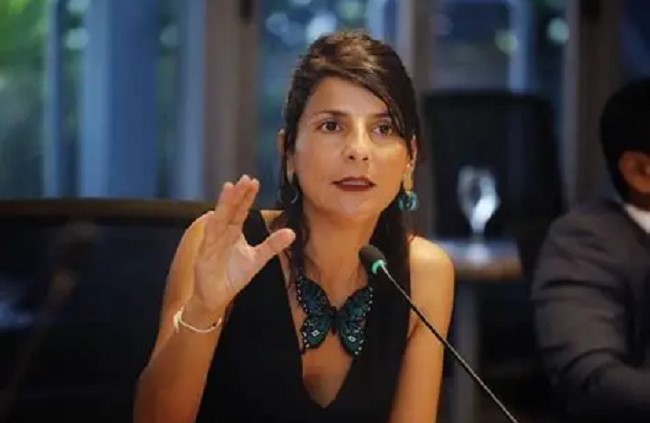
Irene Vélez Torres, Minister in Charge of Environment and Sustainable Development of Colombia
The decision to convene the conference was reached by the 17 countries participating in discussions to develop a Fossil Fuel Non-Proliferation Treaty. Participating nations agreed to advance a series of diplomatic conferences starting in 2026, with the goal of fostering international cooperation for a just transition away from fossil fuels.
Irene Vélez Torres, Minister in Charge of Environment and Sustainable Development of Colombia, said: “Colombia is proud to host the First International Conference for the Phase-out of Fossil Fuels in 2026. This historic gathering will be a pivotal moment for the Global South to lead the charge in transforming our energy systems and addressing the intertwined crises of climate and justice. Together, we will chart a path that prioritises life, equity, and sustainability over destruction and inequality. This is our moment, our mandate – to build a future beyond fossil fuels and ensure reparative justice for everyone.”
Ralph Regenvanu, Minister for Climate Change, Energy, Environment and Disaster Management of Vanuatu, said: “For vulnerable nations like Vanuatu and our other Small Island States, the phase-out of fossil fuels is not merely an environmental imperative, it is an existential one. This conference represents a pivotal step towards forging a common roadmap, ensuring that no community or nation is left behind as we build a resilient, sustainable future that protects our people, our economies, and our planet.”
Tzeporah Berman, Founder and Co-Chair of the Fossil Fuel Non-Proliferation Treaty Initiative, said: “This announcement from Colombia signals a bold and necessary step towards climate leadership. The proposed Fossil Fuel Treaty is gaining momentum, and this conference offers a vital opportunity to translate growing support into concrete action, accelerating our shift towards a more sustainable and just energy future for all.”
The conference will serve as a strategic space for dialogue among diverse stakeholders across all sectors – including government representatives, experts, rural and Indigenous Peoples, Afro-descendant communities, civil society, climate advocates, industry leaders, and academia – to explore viable, fair, and equitable pathways for transitioning to sustainable, diversified and accessible energy. Focused on fostering robust and structural transformations, the summit aims to facilitate a planned, just, and sustainable phase-out of fossil fuels.
This announcement marks the first political step towards the formal launch of the conference, with further details to be unveiled at COP30 in Belém. During a High-Level Ministerial Meeting, participating nations will outline the contours of the 2026 conference, and issue a joint political declaration, solidifying their commitment to decisive action in confronting the climate crisis: through a just and equitable transition away from fossil fuels, one that recognises the need for a structural shift in our socioeconomic model.
The idea of a global conference builds upon successful examples of previous diplomatic summits that have led to increased international cooperation and treaty negotiations to address major global threats including the Mine Ban Treaty (Ottawa Process); the Convention on Cluster Munitions (Oslo Process); and the Treaty on the Prohibition of Nuclear Weapons, for which a series of three conferences, known as the Humanitarian Initiative, shifted the framing of nuclear weapons from one of security to a humanitarian discourse, leading to successful treaty negotiations within the UN General Assembly.
This announcement comes at a critical moment, amplified by the release of the 2025 Production Gap Report today. The findings reveal a stark misalignment between global fossil fuel production plans and the levels essential to limiting global warming to 1.5°C. According to the report, government projections for 2030 indicate fossil fuel production will surpass Paris Agreement-compliant levels by more than 120%, and by 2050, production is expected to exceed necessary levels by 4.5 times for a 1.5°C pathway.
This systemic failure to reduce fossil fuel production demands even more drastic future cuts to meet Paris targets, underscoring the urgent need for a swift and decisive global transition away from fossil fuels.
The Young Advocates for a Sustainable and Inclusive Future (YASIF), the Federal Ministry of Environment, and civil society groups have called for a wide range of public awareness campaigns to help address the challenges of poor waste disposal and its impact on Nigeria’s economy.
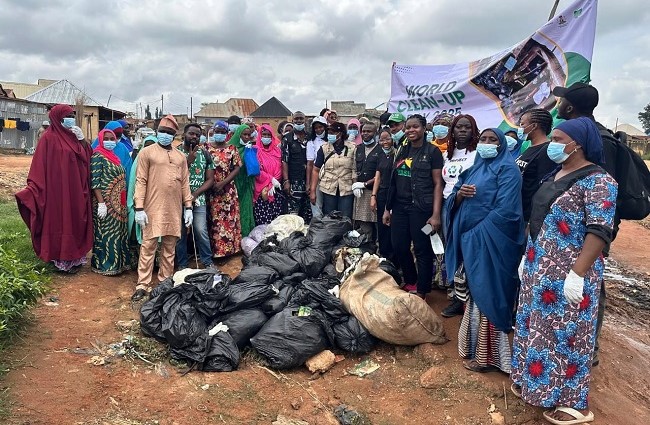
The group, which referred to waste as wealth, made the call on Friday, September 20, 2025, just after a cleanup exercise in Karonmajiji, a small community on the outskirts of Abuja, the capital of Nigeria, as part of its activities to celebrate this year’s World Cleanup Day.
Participants at a cleanup event in Karomonjiji, Abuja, gathered to commemorate the 2025 World Cleanup Day. This event was organised by the Young Advocates for a Sustainable and Inclusive Future (YASIF) in collaboration with the Federal Ministry of Environment
It continued by saying that Nigeria will be more than halfway to tackling the problem and accomplishing its sustainability objective if it can persuade its citizens to realise this hidden truth.
Blessing Ewa, the founder of YASIF, told EnviroNews in an interview that the desire to confront the aforementioned problem actually motivated her organisation to earlier sensitise some selected women in the community on waste upcycling and recycling, and most of them reported that they were already earning income from the skills they had acquired.
According to her, the women leader informed her in a conversation that many of their members have generated over N150,000 each from selling some of their products which they made from pure water sachets.
Ewa said this is “what they previously considered as waste.” This gesture reveals how pleased the women are with the training, which has not only provided them with knowledge about environmental sustainability but has also enriched their pockets by allowing them to earn money from recycling agencies that buy their products.
She expressed her happiness at the development, which she says her establishment anticipates because of its impact in positioning the beneficiaries as pacesetters of ecological conservation.
In a similar vein, Lawrence Okechukwu, an assistant chief chemical engineer with Solid Waste Management and Technology in the Federal Ministry of Environment’s Department of Pollution Control, underscored the pressing need to change the stereotype that waste is typically associated with into its true value as an economic asset.
When asked about his thoughts on using the law to solve the issue, he strongly expressed his belief that people will be more reluctant to commit crimes if there is a shift in public perception ofwaste. So, for him, there is no need to go to such lengths because the majority of the people being referred to are already poor and require the environment for empowerment.
“The primary concern is reorientation; with effective reorientation, this issue can be addressed at its roots – that is my honest opinion,” he stated, commending YASIF for its efforts in working with women and young people to help them recognise that they can profit from the items they no longer need.”
On her part, Mrs. Rita Nnaji, assistant director of the Environmental Education and Awareness division with the National Environmental Standards and Regulations Environmental Enforcement Agency (NESREA), acknowledged that her institution has regulations that deal with waste control, which spell out penalties that can be used to punish offenders.
This can be done by requiring the person or group to clean up the mess, taking them to court, or even providing them with an abatement notice, she continued. If the problem is not resolve, the offenders can be arrested.
Like Ewa and Okechukwu, she supported the idea that public education should be the first step in resolving the crisis and urged the people of Karomonjiji to form a task force unit that would not only enforce good waste management principles but also ensure coordinated monitoring to protect the environment.
“All the communities have to set a day aside, which is compulsory, so that everybody will be mandated to clean up the environment,” she noted in her response to what she would do differently if in the position to put things into the right perspective.
Zainab Musa, the women’s leader of Karomonjiji, who spoke on their behalf, expressed gratitude for identifying the community for the cleanup exercise, especially given how filthy the neighbourhood is.
She reported that more than 50 women participated in the cleanup initiative, which impressed the Hakimi, the community’s traditional leader, after he watched the women’s efforts.
Musa bestowed blessings on YASIF for training women in the locality, specifically for empowering them to own a small shop where they produce and sell items created from waste products.
“People may look at what they have given to us as small, but we do really appreciate it, and thank God,” the women leader said, urging the government and stakeholders to support YASIF’s efforts by providing additional resources to expand their work.
To summarise, promoting sustainability through a waste management culture requires grassroots communities to consider themselves as environmental advocates rather than vulnerable groups or victims of environmental degradation.They must realise that everyone has a responsibility to play in trash management because a mountain of waste requires everyone to dump waste together, and a clean community requires everyone to practise waste management.
Governments at New York Climate Week commit to a tidal wave of climate action as ocean continues to absorb 90% of the excess heat from global warming
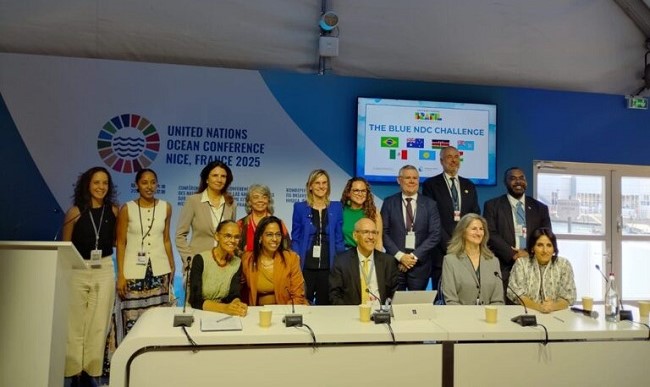
At a ministerial-level New York City Climate Week event on Monday, September 22, 2025, Chile, the UK and Madagascar committed to the Blue NDC Challenge, underscoring both the economic and environmental value of protecting the ocean. The initiative urges coastal nations to integrate ocean-focused actions into their climate plans – nationally determined contributions (NDCs) – ahead of COP30.
The was inaugurated at the United Nations Ocean Conference in Nice, France, in June 2025
The NDCs are the cornerstone of global climate action under the UN Framework Convention on Climate Change (UNFCCC), serving as investment plans and the primary tool for limiting global warming. With these new members, the Blue NDC Challenge now counts 10 countries, joining leaders including Brazil, France, Australia, Fiji, Kenya, Mexico, Palau, and the Republic of Seychelles.
Brazil and France launched the initiative alongside these inaugural members at the United Nations Ocean Conference in Nice, France this past June; Brazil will be hosting COP30 in November. The initiative is supported by Ocean Conservancy, the Ocean & Climate Platform, and the World Resources Institute.
Studies have shown that ocean-based climate solutions can deliver up to 35% of the emissions reductions needed to keep global temperatures from spiking. By signing on to the Blue NDC Challenge, countries commit to integrating the ocean into their national climate strategies or implementation plans, examples of which may include:
Sustainably managing, conserving, and restoring coastal and marine ecosystems;
Phasing out offshore oil and gas production;
Expanding clean ocean energy such as offshore wind, wave, and tidal power;
Cutting emissions and strengthening resilience in maritime sectors, including the shipping and seafood industries; and
Supporting sustainable, climate-resilient fisheries and aquaculture.
The Blue NDC Challenge is part of an overall effort spearheaded by Brazil to ensure the ocean plays a central role in the upcoming climate talks in Belem, Brazil. In addition to absorbing excess heat, the ocean has absorbed close to 30% of the annual CO2 emissions from human activities since the beginning of the Industrial Revolution.
Governments that join the Challenge will receive support from a wide range of partners and initiatives, including the NDC Partnership hosted by World Resources Institute as well as the Ocean Breakthroughs, which is co-led by the Marrakech Partnership for Global Climate Action and the UN High-Level Climate Champions.
Together, they aim to boost investment and action in ocean-based solutions to help achieve a net-zero, resilient, and nature-positive future by 2050. The Blue NDC Challenge effort is funded through the Ocean Resilience and Climate Alliance (ORCA) and has been endorsed by WWF-Brazil.
“The ocean is our unsung resource hero, and it’s encouraging to see so many countries recognise its vast, untapped potential to help stabilise our climate. The ocean offers a trove of solutions – from offshore wind to green shipping to restoring ecosystems – that countries can implement today to reach their national climate targets,” said Janis Searles Jones, CEO of Ocean Conservancy. “Now is the time for more countries to join this historic initiative and recognise that the ocean is a powerful and essential ally in our efforts to tackle the climate crisis.”
“On the road to Belém, the Blue NDC Challenge ensures the ocean is more than a backdrop – it is a driver of climate action. This is how we move from ambition to implementation and make COP30 the turning point the Planet truly needs,” saidLoreley Picourt, Executive Director of the Ocean & Climate Platform.
“The ocean is the world’s greatest ally in the fight against climate change, but only if we put it at the heart of climate action. The Blue NDC Challenge is gathering momentum because countries see that the ocean is not a side issue, but central to meeting climate goals and delivering benefits for people and nature,” saidTom Pickerell, Global Director of the Ocean Programme at the World Resources Institute and Head of the Secretariat for the High Level Panel for a Sustainable Ocean Economy.“At New York City Climate Week, we want to see more nations to step forward and commit to ocean-based action, turning the ambition, we saw at UNOC into implementation ahead of COP30.”
The Lagos State Government has expressed readiness to partner with investors in converting municipal solid waste to energy, wealth and liquid waste.
Commissioner for Environment, Mr. Tokunbo Wahab, made this known in a statement signed by the Director of Public Affairs in the ministry, Mr. Kunle Adeshina.
Commissioner for Environment and Water Resources, Mr. Tokunbo Wahab
Wahab said that the present administration in Lagos State had set up a climate adaptation and climate resilience plan encapsulating its vision and policies.
He added that the state had carried out two pre-feasibility studies on waste-to-energy and waste water projects to demonstrate its commitment.
He said that, with a population of over 20 million generating 13,000 metric tonnes of waste daily, the state was adopting a sustainable climate-friendly approach.
“We now see waste as a resource for wealth and a resource for energy because the quantum of waste that ends in our landfill sites will become very minimal.
“As a state, we have set up policies and laws that enable us as a sub-national to reach out to neighbouring countries where they have expertise,” Wahab said.
He noted that the state government signed a contractual agreement 18 months ago with a Ghana-based company.
According to him, the agreement will take 4,000 metric tonnes of municipal waste out of the 13,000 generated daily.
He said that the agreement would lead to conversion of waste to wealth, composite fertilisers and recyclable plastics, as well as setting up of a transfer station for the most challenging parts.
“If that contractual obligation is successfully carried out, we seek to also decommission one of our biggest landfills at Olusosun and Solous.
“All these are symbols of progress of collaboration,” he said.
The commissioner said that Lagos, as a coastal city, was exposed to the effect of climate change, sea level rise, heavy rainfall and excessive heat.
“All these bring about flash flooding when there is tidal lock due to the inability of water to discharge into its sources,” he said.
He said that aerial geographic information showed that the original landmass of Lagos, which was 3,577 square metres. had increased to 4,050 square metres.
Wahab attributed this to massive reclamation of wetlands and lagoon water bodies for real estate construction.
He said that Lagos State had been exercising its legal powers to check excesses coming with the human activities.
The commissioner, at the weekend, featured as a panelist at the Harvard University Climate Action Week.
The event had “Rising Seas, Resilient Communities, Climate Adaptation Strategies in West Africa” as its theme.
The 30th session of the Conference of the Parties (COP30) to the United Nations Framework Convention on Climate Change (UNFCCC) will take place in mid-November 2025 in Brazil’s Amazon region. Heads of state, government delegations, business leaders, and scientists will gather in the city of Belém to negotiate climate action.
Indigenous associations, environmental and human rights organisations have reportedly united for the People’s Summit for Climate Justice to make their voices heard. The highlight will be a day of protest on November 15 in Belém, where several organisations, including the Rainforest Rescue, will be present on the ground.
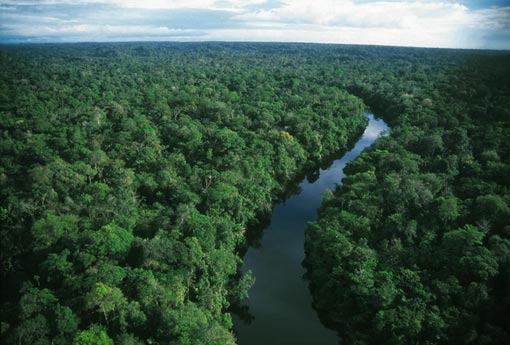
The Amazon rainforest
According to Rainforest Rescue, the tropical rainforests are essential for humanity, biodiversity, and the global climate. Covering 6 million km2, Amazonia is said to be the world’s largest rainforest – more than the area of all EU countries combined.
“From the vast canopy, enormous amounts of water constantly evaporate to form rain clouds. In this way, Amazonia helps stabilise the global water cycle and the climate.
“At the same time, it stands at the heart of global forest destruction, biodiversity collapse, and escalating threats to both nature and human rights,” said John Hayduska of Rainforest Rescue.
According to the group, the homeland of hundreds of Indigenous peoples is under threat. It adds that agribusiness, logging, and mining are destroying ecosystems and the foundations of life for local communities, even as deep social inequality, violence, and abuse of power are widespread.
“The Amazon rainforest is approaching a tipping point beyond which there can be no recovery. South America’s great ‘rain machine’ could collapse – with global consequences for us all. We cannot let this happen,” stated Hayduska.
At COP30 in Brazil, he wants governments to commit to decisive measures to confront the global climate crisis and protect rainforests.
“We are calling for real and just solutions,” Hayduska said, seeking support for the demands of the People’s Summit, and an endorsement of a petition.
The petition
To: governments, heads of state and government, and delegations to the UN climate summit COP30 in Brazil
Ladies and Gentlemen,
With people from every corner of the globe, I urge you to make binding decisions at the United Nations Climate Change Conference in Brazil in November 2025 that truly confront the climate crisis. Seize this moment – take meaningful action to curb global warming and protect the world’s forests for generations to come.
Together with the participants of the People’s Summit, I call for:
Ending the production and burning of fossil fuels – responsible for more than two-thirds of the emissions fueling global warming.
Consistent and uncompromising protection of forests from deforestation.
Swiftly reaching international agreements for a just energy transition, led by the wealthiest nations.
Establishing true environmental and climate justice; false solutions often most severely affect those who have contributed least to global warming.
Full respect for human rights – including the rights of Indigenous and traditional communities to ancestral land and the sovereignty to shape their own food systems.
Recognising nature as a subject of rights and safeguarding biodiversity for the future.
We stand at a turning point. Not tomorrow, not someday. Now is the time for concrete decisions – and your leadership is essential.