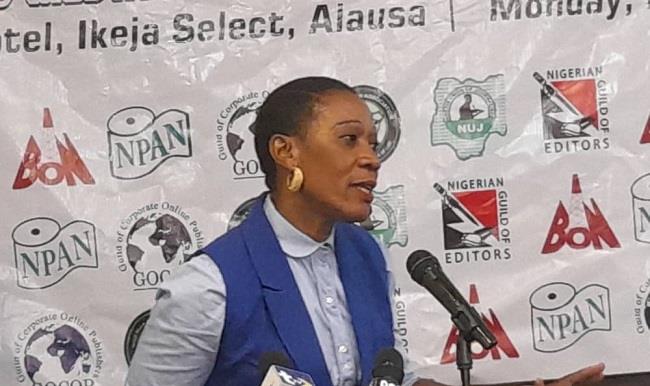
The Guild of Corporate Online Publishers (GOCOP) has announced that Chief Samuel Ortom, former Governor of Benue State, will serve as one of the panelists at the upcoming GOCOP 2025 Conference.
The conference theme is “Reconciling Campaign Promises with Governance Realities: Challenges and Prospects.”
The panelists
A press statement by GOCOP publicity secretary, Ogbuefi Remmy Nweke, disclosed that the panel discussion will feature esteemed panelists, including Prof. Abiodun Adeniyi, Registrar, Base University, Abuja; Prof. Abigail Ogwezzy-Ndisika, 2025 Director, Institute of Continuing Education (UNILAG); Prof. Chidi Amuta, Journalist/CEO, Wilson & Weizmann Associates; and Alhaji Lanre Issa-Orilu, Director-General, National Orientation Agency.
The conference, he said, would take place on October 9, 2025, at 10:00 a.m. at the Radisson Blu Hotel, Ikeja, Lagos.
He recalled that GOCOP had earlier announced that the keynote speaker will be Aminu Bello Masari, former Speaker of the House of Representatives and immediate past Governor of Katsina State.
Indigenous-owned integrated energy company, Heirs Energies, is set to make an impact at the Africa Energy Week (AEW) 2025, taking place from September 29 to October 2, 2025, in Cape Town, South Africa.
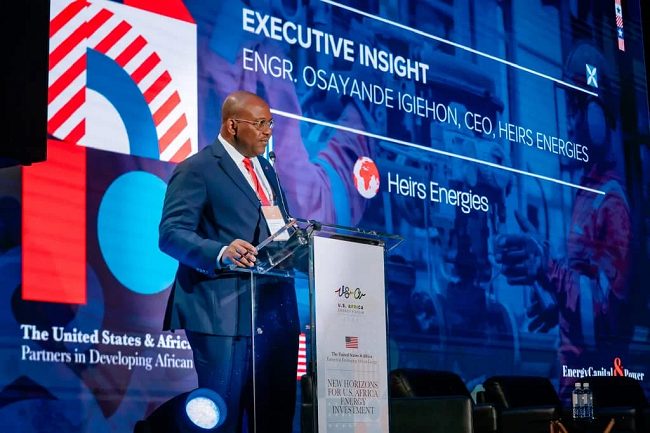
Represented by CEO Osa Igiehon and Executive Director/CFO Sam Nwanze, Heirs Energies will join global policymakers, investors, and industry leaders to shape critical conversations around Africa’s energy future.
Chief Executive Officer of Heirs Energies, Mr. Osa Igiehon
While spotlighting indigenous excellence, Igiehon will feature in two high-level sessions, listed to include:
Frontier Plays Within Africa’s Mature Basins (September 30, 2025): exploring how African independents can transform mature assets into engines of growth, drawing from Heirs Energies’ turnaround of OML 17 into a benchmark for African-led operational excellence.
Invest in the Republic of Congo Roundtable (October1, 2025): sharing insights from Nigeria’s experience to help frontier regions accelerate development through brownfield excellence, community engagement, and investor confidence.
“At Heirs Energies, we don’t just believe Africa’s mature and frontier assets hold promise, we have proven it. The OML 17 turnaround shows that with the right governance, innovation, and local execution, indigenous operators can unlock value where others saw decline. We’ve turned challenges into engines of growth, and that is the model we want to see replicated across Africa,” said Igiehon.
Nwanze, who will address asset divestments and financing, will on October 1 join the Navigating Asset Divestments in Africa’s Upstream Sector panel, discussing strategies for financing African independents and de-risking mature assets. He will spotlight Heirs Energies’ distinctive Africapitalism approach – combining financial discipline with purpose-driven impact.
“The divestment wave creates opportunities for African players to lead, but credibility is key. Success depends on structuring investable projects, building trust with partners, and embedding impact into every deal,” Nwanze noted.
Heirs Energies’ participation at AEW underscores the Africapitalism philosophy of Heirs Holdings Group Chairman Tony O. Elumelu, CFR, which positions the private sector at the heart of Africa’s transformation by creating both economic prosperity and social wealth.
From doubling production at OML 17 within 100 days, to ensuring every molecule of gas produced powers Nigerian homes and industries, Heirs Energies says it has shown what’s possible when African companies take the lead.
The company submitted: “Our story is one of resilience, innovation, and purpose – proving that indigenous operators can match and exceed global standards while creating lasting impact in our communities. As we look ahead, we remain committed to shaping Africa’s energy future with excellence, responsibility, and shared prosperity.
“Heirs Energies Limited is Africa’s leading indigenous-owned integrated energy company, committed to meeting Africa’s unique energy needs while aligning with global sustainability goals. With a strong focus on innovation, environmental responsibility, and community development, Heirs Energies leads in the evolving energy landscape and contributes to a more prosperous Africa.”
The Nigerian Upstream Petroleum Regulatory Commission (NUPRC) has approved $510 million Sales Purchase Agreement (SPA) by TotalEnergies Exploration and Production Nigeria Ltd.
This agreement allows the transfer of TotalEnergies’ entire 12.5 per cent contractor interest in Oil Mining Lease (OML) 118 to Shell Nigeria Exploration and Production Company (SNEPco), and Nigerian Agip Exploration Limited (NAE).
The commission disclosed this on Thursday, September 26, 2025, in a statement by its Head of Media and Strategic Communications, Mr. Eniola Akinkuotu.
According to the agreement, TotalEnergies will transfer 10 per cent of its interest to SNEPco at a cost of $408 million, while NAE will pay $102 million for the remaining 2.5 per cent.
Akinkuotu said that pursuant to Section 95 of the Petroleum Industry Act (PIA 202), the commission carried out due diligence on SNEPco to ascertain their financial capacity and technical competence.
“SNEPco and NAE have demonstrated both technical and managerial competence to optimally contribute to the upstream operations (explore, develop and produce) in OML 118. They already maintain a participating interest in the asset.
“Based on the presentations and documents submitted, there is a clear evidence that they have access to funding to meet their financial obligations,” he said.
He said TotalEnergies, a committed operator in Nigeria’s vibrant upstream sector, also paid the statutory application fee for the deal.
The spokesman said that SNEPCO and NAE would bear the decommissioning and abandonment liabilities owed by TotalEnergies to the Federal Government of Nigeria, with respect to the divested interest.
He said the divestment was subject to a ministerial consent in line with Sections 95(1), (2), (7), (11) and 12 of the Petroleum Industry Act, 2021.
According to Akinkuotu, the commission expects SNEPco and NAE to pay five per cent and two per cent respectively of the transaction purse on the total value of 510 million dollars as premium on ministerial consent and processing fees.
The assignees are also to give an undertaking in favour of the commission that they will bear all the decommissioning and abandonment liabilities and the host community liabilities owed by TotalEnergies.
More than 1.8 billion people worldwide live in areas with a significant risk of floodingdue to climate change and human interventions, according to the World Risk Report released on Wednesday, September 24, 2025.
In 2024, it said there were a total of 142 disasters caused by flooding, making that the second most common trigger of disasters after storms.
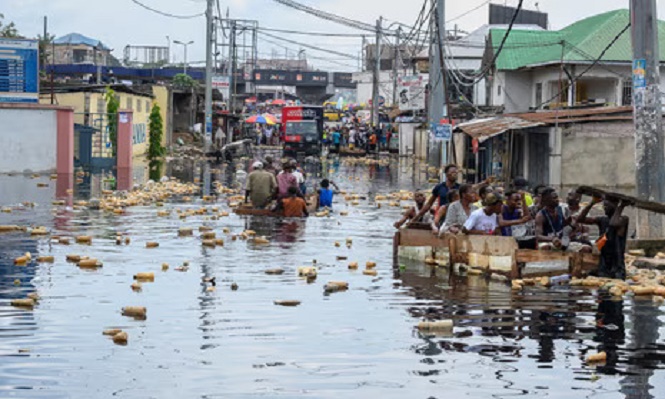
Flooding in DR Congo
The Spanish region of Valencia was especially affected in October 2024, when more than 220 people lost their lives following heavy rainfall and flooding.
The consequences of natural disasters are exacerbated by climate change, urban expansion and environmental destruction.
This is according to the authors from the Institute for International Law of Peace and Armed Conflict (IFHV) at Ruhr University Bochum in Germany.
It is also the umbrella organisation Alliance Development Works, which comprised 11 development aid organisations.
Inequality a factor even in wealthy countries
“Global risk drivers include social inequality, structural vulnerability and weak healthcare systems,” the report states.
This applies even to wealthy countries, for example, when savings are made in key societal sectors.
Prevention can mitigate many consequences, the authors wrote.
The key is to have good preparedness before the rains with warning systems and shelters for people in neighbourhoods where training is organised, and provisions made to route the water.
The Wildlife Justice Commission (WJC) on Thursday, September 25, 2025, published a new report examining whether wildlife trafficking is treated with the seriousness it deserves in national legal systems.
The report provides an assessment of how the UN Convention against Transnational Organised Crime (UNTOC) has been incorporated into domestic legislation, and how effectively it is being implemented to tackle wildlife trafficking. With transnational criminal groups increasingly controlling wildlife trafficking, the need for stronger action is clear.
Olivia Swaak-Goldman, Executive Director of the Wildlife Justice Commission
The report is titled: “Is wildlife trafficking being treated as serious crime? A review of criminal offences, penalties, and implementation of the United Nations Convention against Transnational Organised Crime.”
“This report reflects both the progress made and the challenges ahead in ensuring wildlife trafficking is treated as the serious transnational crime it is. Its findings are a call to action for sustained strategic enforcement, international cooperation, and investment in the tools and partnerships proven effective in disrupting organised crime,” said Olivia Swaak-Goldman, Executive Director of the WJC.
The UNTOC provides a legal framework for international cooperation to combat organised crime, including measures against money laundering and corruption, confiscation of criminal proceeds, mutual legal assistance, joint investigations, and the use of special investigative techniques such as controlled deliveries and undercover operations.
Its effectiveness in tackling wildlife crime and other environmental offences, however, depends on States incorporating its provisions into national law and enforcing them robustly.
The report narrows knowledge gaps in how the Convention has been incorporated into national legislation and implemented in practice. It provides best practices, challenges and recommendations to inform multilateral policy discussions on preventing and combatting serious forms of wildlife trafficking.
Drawing on research from 19 countries most affected by the rhino horn trafficking supply chain, the report analyses the criminalisation and penalisation of wildlife offences in domestic legislation, and how key UNTOC provisions have been incorporated in domestic law and implemented in practice.
Through a selection of 10 rhino horn trafficking cases, the research also illustrates how enforcement and sentencing plays out in practice, providing lessons that extend beyond the rhino horn trade to the global fight against wildlife trafficking and other environmental crimes.
Over 120 heads of state and ministers convened at the UN Climate Summit this week, where over 100 countries pledged to update their national climate commitments (NDCs) ahead of COP30 in Belém, Brazil. Among them were most major emitters, including China and the EU. So far, only 49 NDCs have been formally submitted, covering nearly a quarter of global emissions.
Even with many NDCs still outstanding, announcements made on Wednesday, September 24, 2025, show the world is moving forward, yet still falling dangerously short, placing COP30 as the moment to confront the shortfall.
Taye Atskeselassie Amde, President of the Federal Democratic Republic of Ethiopia, addresses the Climate Summit 2025
Andreas Sieber, Policy and Campaigns, 350.org, said: “This UN Climate Summit made two things clear: despite geopolitical upheaval, most countries are still moving forward under the Paris Agreement. But the pledges fall far short of what’s needed to keep 1.5°C alive. COP30’s credibility will hinge on how it closes this gap in climate ambition.
“A cover decision in Belém is the most credible vehicle to do so, and the Brazilian presidency must now drive a process that delivers across the board: from phasing out fossil fuels to scaling up finance.”
Key Announcements included:
China: President Xi Jinping announced a new 2035 target to reduce emissions by 7–10% from their peak level.
European Union: Committed to submit its NDC ahead of COP30, with an indicative 2035 target of 66.25–72.5% below 1990 levels.
Pakistan: Pledged an unconditional 15% cut in projected GHG emissions;
Palau: Announced a 44% emissions reduction by 2035 compared to 2015 levels.
Australia: Set a new goal to cut emissions by 62–70% by 2035 compared to 2005 levels.
Barbados: Called for a globally coordinated methane reduction agreement to “buy time” for rapid decarbonisation research; announced a national Resilience and Regeneration Fund, with citizens contributing 2.5% of GDP and the government 3.5%.
Republic of the Marshall Islands (RMI): Reaffirmed commitment to cut emissions by at least 58% by 2035 compared to 2010 levels.
The summit showed that the Paris process is still alive, but without a clear plan to phase out fossil fuels and finance a just transition, leaders risk betraying the millions already living with the escalating climate crisis.
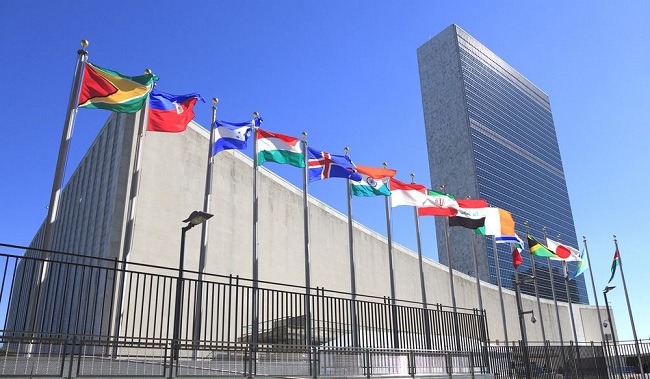
The designation was announced on the sidelines of the 80th Session of the UN General Assembly, as nations gather to address key issues affecting humanity, including the triple planetary crisis of climate change, nature, land and biodiversity loss, and pollution and waste.
Amber Valletta
Valletta, a proud member of the Cherokee Nation, is a fashion industry icon who has achieved extraordinary success in acting, entrepreneurship, and activism. Through her career, Valletta has been on the cover of more than 100 international Vogues and has starred in Hollywood blockbuster films and TV series.
“It is an incredible honour to be named a UNEP Goodwill Ambassador,” said Valletta. “This role represents both a personal milestone and a profound responsibility. My work as an environmentalist has always been rooted in the belief that we each have the power to protect and restore our planet. As part of the United Nations mission, I hope to use my platform to amplify urgent environmental issues, champion solutions that create real impact, and inspire collective action toward a more just, healthy, and sustainable world.”
For many years, Valletta has lent her voice to the world of ethical and sustainable fashion. Her work in the field includes founding the online platform Master & Muse, offering stylish and ecologically responsible fashion and partnering with major brands on sustainable capsule collections. Her co-founded film production company, A Squared Films LLC, has also produced numerous films supporting progressive social and environmental themes.
“UNEP is proud to welcome one of the world’s most iconic supermodels to our family – not only as a fashion figure, but as a passionate environmental advocate,” said UNEP Executive Director Inger Andersen. “Sustainable fashion is not just some trend, but a rapidly growing movement tackling the mounting footprint of the fashion and textile sector on our environment. Amber’s advocacy shows that style can be redefined to be in greater harmony with ecosystems. Her voice and experience, which bridges culture with climate issues, will help turn awareness into the action we need.”
Valletta was appointed in 2020 as British Vogue’s first-ever Contributing Sustainability Editor and the Fashion Institute of Technology’s Sustainability Ambassador. In 2022, she was invited to host the annual World Oceans Day conference at the United Nations, where she emphasized the need for many industries to invest in conservation efforts.
Close to 100 countries – including nearly 40 Heads of State and Government – on Wednesday, September 24, 2025, announced, committed to finalising, or set out their commitment to implementing their new climate targets ahead of COP30 in Belém, Brazil this November.
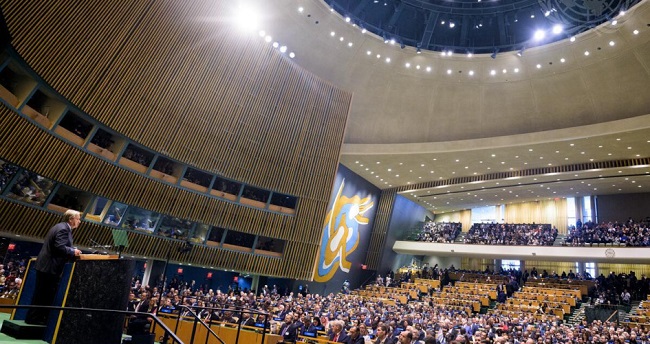
The announcements came at a Climate Summit convened by UN Secretary-General António Guterres and President Luiz Inácio Lula da Silva of Brazil on the margins of the 80th session of the UN General Assembly.
UN Secretary-General António Guterres addressing the Climate Summit
“The science demands action. The law commands it. The economics compel it. And people are calling for it,” declared the UN Secretary-General in his opening statement.
New Commitments Covering Majority of Global Emissions
Around 100 Parties to the Paris Agreement representing two-thirds of global greenhouse gas emissions have now either submitted or unveiled new Nationally Determined Contribution (NDC) targets – setting out their commitments to accelerate climate action.
For the first time, several major economies including China – the world’s largest emitter – as well as Nigeria announced economy-wide emissions reduction targets covering all greenhouse gases and all sectors. Other nations detailed ambitious renewable energy goals, plans to curb methane emissions, strategies to safeguard forests, and measures to phase out fossil fuels.
Leaders emphasised that accelerating the energy transition can unlock jobs, growth, and energy security. Developing countries, meanwhile, underscored the importance of incorporating adaptation, resilience, and loss and damage measures within their NDCs, stressing the urgent need for scaled-up financing to meet and surpass their ambitions.
A Decade of Acceleration Must Begin in Belém
While Wednesday’s pledges mark progress, leaders acknowledged that ambition gaps remain to keep 1.5C in reach and deliver on finance and adaptation. Solutions Dialogues held throughout the week by the United Nations and Brazil highlighted that the technologies and tools needed to decarbonize energy, transport, and industry, protect forests, and strengthen resilience are already available. The challenge now is to accelerate scale.
With COP30 just weeks away, the Secretary-General urged all countries yet to finalise their NDCs to do so without delay: “COP30 in Brazil must conclude with a credible global response plan to get us on track.”
Closing the Climate Summit, the Deputy Secretary-General, Amina Mohammed, said, “Leaders across the world have stood together to show that even at a moment of division and uncertainty, the resolve and determination to fight the climate crisis is alive and strong.”
Solutions Dialogues
A series of Climate Solutions Dialogues were convened by the UN, Brazil and other partners were held in the days before the Climate Summit, to identify the concrete solutions that can accelerate the implementation of the Paris Agreement, while strengthening multilateralism and connecting climate action to people and businesses.
The dialogues brought together governments, international institutions, civil society, business, and finance leaders on a range of issues related to climate action:
The International Institute of Tropical Agriculture (IITA) says it has released more than 200 improved crop varieties in collaboration with Nigerian Research Institutions and other partners.
Dr Simeon Ehui, Director-General, IITA, and Regional Director, Continental Africa, CGIAR, said this at the 3rd International Conference of the Nigerian Plant Breeders Association (NPBA) in Abuja.
Dr Simeon Ehui, Director-General, IITA
The conference, hosted by IITA, has as its theme “Crop Improvement for Food Security, Sustainable Agricultural Systems and Environment.”
Ehui further said that the organisation has mentored and nurtured the next generation of scientists through the International Association of Research Scholars and Fellows (IARSAF) platform.
He said that IITA in collaboration with NPBA remain committed to sustaining career growth for young professionals in plant breeding and related crop improvement disciplines.
The D-G commended plant breeders, researchers, scientists and others for the groundbreaking work they have advanced in fields, laboratories and classrooms across the nation and continent.
Emphasising that they cannot rest on the past laurels, saying that the next chapter of plant breeding demands bold, coordinated action in the areas of resilience, nutrition and equity, collaboration and demand-led breeding.
According to him, the organisation must develop crops able to withstand heat, drought, salinity and emerging pests and this is not just science, it is survival.
He said, “We must not only produce more food, but we must also produce better food that nourishes, diversifies diets and empowers smallholder farmers, especially women and youths.
“Plant breeding is too important to be left to breeders alone. We must break down silos and draw insights from across disciplines, including plant health, nutrition, climate adaptation, markets and social science.
“On demand led breeding, he said that strong engagement with the private sector is essential to ensure that innovation reaches farmers and markets effectively.
“Plant breeding is about the farmer in a drought-prone village, the child who needs a more nutritious meal and the young breeder who will carry this work forward.
“Every seed we improve carries the promise of a better life for someone, somewhere.”
Ehui urged stakeholders to bear in mind that the future is not written but bred, nurtured and cultivated through collective efforts.
The D-G further urged them to envision a world where no farmer fears a failed harvest, no child goes hungry and no community is left behind in the pursuit of agricultural innovation.
“Together, we can turn these dreams into seeds and those seeds into solutions,” he said.
Ehui said that IITA was delighted to host colleagues from across Nigeria, Africa and beyond whose works are central to our shared ambition: a food-secure, climate-resilient future powered by innovation.
“In the next few days, we will tackle the pressing challenges that plague us, climate variability, pests and diseases, nutrition, sustainable intensification.
“The delivery of quality seed to farmers while showcasing the breakthroughs that modern breeding, genomics, biotechnology and data science make possible.”
He identified the theme as timely, adding that agriculture is faced with climate change, biodiversity loss and the urgent need for resilient, efficient systems.
“Within these challenges lies extraordinary opportunity. Plant breeding, with its rich history and rapidly evolving technologies, is not merely about better crops it is about safeguarding our food, our livelihoods and our planet.
“Over the past century, plant breeders have quietly been heroes of progress producing high-yielding, pest resistant and climate-smart varieties for food security. The Green Revolution dramatically increased yields and saved millions from famine.
“Advances in genomics, CRISPR editing and precision phenotyping have turned the unimaginable into everyday practice.
“Breeding for nutritional quality has delivered crops enriched with vitamins and minerals, combating hidden hunger.
“Improved seed systems ensure farmers receive safe, clean, high-quality seeds when needed. These achievements remind us that innovation in plant breeding is innovation for humanity.”
President Bola Tinubu has directed the National Security Adviser (NSA), Nuhu Ribadu, to begin engagement with Ogoni communities, NNPCL, and stakeholders to finalise restarting oil operations.
The President stated this on Wednesday, September 24, 2025, at the Presidential Villa while receiving the report of the Ogoni Consultations Committee.
L-R: NSA, Nuhu Ribadu, President Bola Tinubu, Gov. Siminalayi Fubara of Rivers and Chairman, Ogoni Dialogue Committee, Prof. Don Baridam at the State House, Abuja on Wednesday
“I am directing the NSA to immediately begin engagement with the Ogoni people and NNPCL, its joint venture partners and all relevant stakeholders with a view to finalising modalities to begin operation,” Tinubu said.
The President stressed that ongoing dialogue and reconciliation remained essential to achieving lasting peace, justice, and development in Ogoniland.
“I urge the Ogoni people across classes, communities and generations to close ranks, put this dark chapter behind us and move forward as a united community with a single voice,” Tinubu said.
He pledged his administration’s support for peace, environmental cleanup, and economic revival in the region.
“I am encouraged by the overwhelming consensus of Ogoni communities to welcome resumption of oil production under the equitable terms.
“The government will deploy every resource to support your people in this march toward shared prosperity,” Tinubu added.
Recalling that the immediate past administration handed operating of the Ogoni oil fields to NNPCL and its joint venture partners, the President pledged to build on that decision.
He also directed the Minister of Environment to incorporate pollution remediation into ongoing dialogues with the Ogoni people.
Tinubu also used the occasion to posthumously honour late Ogoni leaders Albert Badey, Edward Kobani, Theophilus Orage, and Samuel Orage, collectively known as the “Ogoni Four” with the Commander of the Order of the Niger (CON).
Earlier, Ribadu said the consultations engaged all four Ogoni zones and the diaspora, focusing on structured participation, accelerated cleanup, and sustainable development.
In an interview with State House Correspondents after the event, Ribadu reaffirmed Tinubu’s commitment to peace, stability, and inclusive growth across the Niger Delta.
He assured of strict implementation of directives aimed at consolidating peace and addressing past injustices.
“Peace is being restored already, and Nigerians will soon see the benefits, not just in Ogoniland but across the Niger Delta and beyond,” Ribadu promised.
Prof. Don Baridam, Chairman of the Dialogue Committee, described the report as reflecting the collective will of the Ogoni people.
He urged the formation of an inter-agency task force to implement the report’s recommendations as a blueprint for progres.
Also speaking, Gov. Siminalayi Fubara of Rivers State, stated that the confidence-building measures implemented by the President has led to an improvement in the work done on the East-West Road, among other projects.
He said that establishment of the Federal University of Environment and Technology in Rivers, was also a positive step in the right direction.
Oil exploration in Ogoniland was suspended in 1993, after protests over environmental damage, culminating in the 1995 execution of Ken Saro-Wiwa and eight other activists.