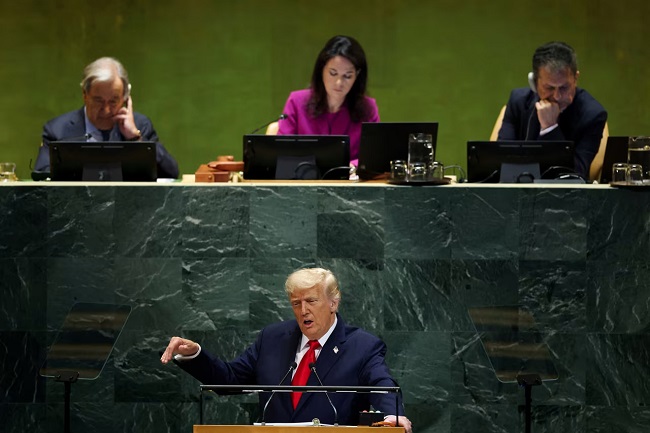
The Pan-African Climate Justice Alliance (PACJA) has condemned remarks made by the U.S. President Donald Trump on Tuesday, September 23, 2025, at the United Nations General Assembly, where he dismissed climate change as the “greatest con job ever perpetrated on the world” and called the carbon footprint “a hoax”.
PACJA described such statements as “scientifically false and morally indefensible”
US President Donald Trump addresses the 80th United Nations General Assembly
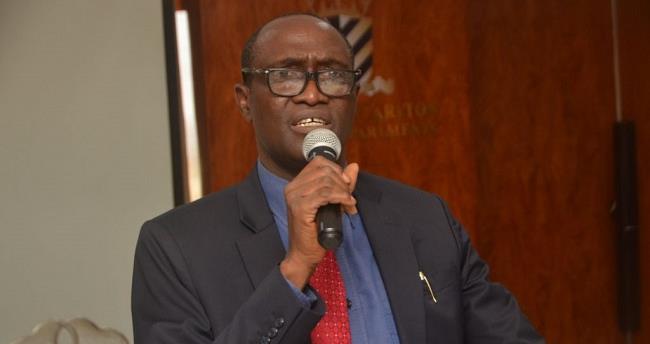
Dr. Mithika Mwenda Executive Director, PACJA, submitted in a statement that, for millions of Africans, climate change is not a debate, but a daily reality.
“From prolonged droughts in the Horn of Africa, to deadly cyclones in Mozambique, to unprecedented floods displacing communities in West Africa, the crisis is exacting a devastating toll. Africa contributes the least to global emissions yet bears the brunt of its impacts. When powerful leaders mock the climate emergency, they undermine the global solidarity urgently needed to save lives and livelihoods,” said Mwenda.
He pointed out that Trump’s rhetoric emboldens climate denial, delays global action, and distracts from the responsibility of industrialised nations to lead in reducing emissions.
“The science is clear: without decisive mitigation, Africa faces a future of deepening hunger, water stress, conflict over scarce resources, and forced migration. Denying this reality is an insult to the children who go to bed hungry after crops fail, to the women walking longer distances for water, and to the young Africans whose futures are shrinking under the weight of an unjust crisis.”
PACJA called on all responsible leaders to reject climate denialism in every form.
“The global community cannot afford to treat science as opinion or justice as optional. We remind world leaders that the Paris Agreement was not built on ideology, but on evidence and fairness. Its survival depends on recognising that addressing climate change is not charity, it is justice,” stated the group, adding:
“We urge the United Nations, governments, and civil society worldwide to reaffirm their commitment to climate action, to stand with vulnerable communities, and to expose rhetoric that risks the lives of billions. It is our collective duty to uphold and amplify the truth: that climate change is real, urgent, and inseparable from the struggle for justice and survival.
“On our part, we will continue to mobilise African voices to ensure that no amount of rhetoric, no matter how powerful the speaker, derails the urgent task of protecting lives, ecosystems, and the future of our planet.”
Nigeria, a nation rich in a diverse tapestry of ecosystems, stands at a critical juncture in its economic and environmental development. For too long, financing nature has been framed as a cost – a burden on the national budget. However, this perspective is fundamentally flawed.
Protecting and restoring our natural heritage is not a cost; according to the African Development Bank (AfDB), it is our single greatest economic opportunity, capable of unlocking a staggering $1.4 trillion annually for the continent. The core question isn’t whether we should finance nature, but how we can use data and innovative frameworks to transform our natural wealth into a bankable asset class.
Dr Eugene Itua
The Integrated Reality: Where Nature, Climate, and Economy Converge
The first step is to reject the false dichotomy between nature and climate. In Nigeria, they are not separate issues – they are deeply intertwined, affecting our economic survival and prosperity in profound ways. This is a truth businesses are increasingly learning.
Nature as Infrastructure: Protecting mangrove forests along our coasts isn’t just about biodiversity; it’s a core business strategy. These mangroves act as living seawalls, shielding billions of dollars’ worth of coastal infrastructure from rising seas and storm surges. They decide if a fishing village thrives or is washed away.
Nature as Economic Regulator: Our forests don’t just store carbon; they regulate the rainfall that our farms, and by extension our entire economy, depend on. A strong climate strategy, in turn, advances nature goals. A corporate push for carbon neutrality, for example, incentivises investment in nature-based carbon credits, directly funding the conservation and restoration projects that secure these vital ecosystem services.
Recognising this, institutions like the AfDB are now championing the bold idea of recalibrating our GDP to include our green wealth for the first time. Green wealth refers to the economic value derived from our natural resources and ecosystems. Imagine if the value of the Cross River National Park were counted with the same gravity as barrels of oil. This isn’t just an environmental metric – it’s a powerful financial asset that changes everything.
Building the Framework: From Raw Data to Actionable Intelligence
Powerful ideas alone don’t move mountains; they need a solid foundation built on data, strategy, and collaboration. Nigeria is already laying these crucial cornerstones.
Data-Driven Tools (The “Compass”)
To translate strategy into investment, we need concrete, data-driven tools. The mission of the recently launched African Green Economy and Sustainability Initiative (AGESI) is… As an African-led “think tank” with its first office established in Nigeria, AGESI is designed to accelerate the continent’s transition to a green economy.
Its flagship initiative is the Green Opportunity Index (GOI). The GOI acts as a strategic compass for both investors and policymakers. It provides a granular, sector-specific view of the green economy, assessing everything from the enabling policy environment to market readiness and human capital. For an investor, it helps identify where to deploy capital for maximum impact and return. For the government, it serves as a diagnostic tool to pinpoint and address policy bottlenecks, shifting the conversation from abstract potential to concrete performance.
Unlocking the Capital: Institutions and the “Finance Stack”
With a clear strategy and data-driven tools in place, the final piece is unlocking the necessary capital. This requires leadership from major financial institutions and a more sophisticated approach to funding. The AfDB’s clear message is that Africa is not poor, but its capital is underutilised. To move the needle, we must influence the systemic processes that govern capital flows.
The future lies in building a “finance stack” – a blended approach where no single instrument is expected to do all the work. The most successful and scalable projects will combine:
Grants to de-risk initial stages.
Concessional loans for development and expansion.
Market instruments, such as carbon and biodiversity credits, can generate long-term revenue streams.
This combination of public and private sector collaboration – where governments provide the enabling environment and businesses integrate natural capital into their core strategies – is the engine that will power Nigeria’s green economic transformation.
Ultimately, success will be measured when “nature finance” is no longer a niche conversation but a mainstream, bankable asset class, and Nigeria empower its businesses to become market leaders in the global green economy.
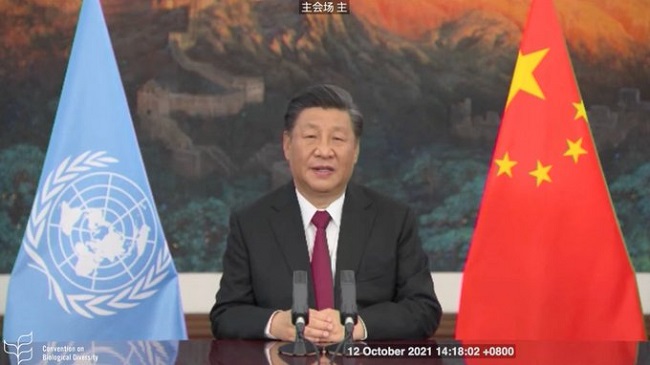
Speaking at the UN Climate Summit on Wednesday, September 24, 2025, Chinese President, Xi Jinping, announced China’s updated national climate pledge (NDC) under the Paris Agreement.
In his address, he outlined the key elements of the new target, confirming that China would reduce its economy’s greenhouse gas emissions by 7-10% by 2035 from peak levels, striving to do better.
President Xi Jinping addressing the leaders’ summit of the 15th meeting of the Conference of the Parties to the Convention on Biological Diversity via a video link
Key newly outlined Elements in China’s updated NDC:
A binding economy-wide emission reduction target of 7-10% by 2035 from peak levels, “striving to do better”.
Expand national emission trading market to heavily emitting sectors
Increase share of non-fossil fuels in total energy consumption to over 30%
Further Background:
Earlier in 2025, President Xi Jinping confirmed that China’s new NDC will cover the entire economy and encompass all greenhouse gases.
With estimated emissions of 15.8 Gt CO₂e in 2024, China stands as the world’s largest emitter, accounting for roughly 32% of global greenhouse gas emissions.
According to UNEP analysis, China could reduce emissions by at least 28-37% by 2035
2025 marks a turning point: China’s emissions have now peaked, with clear signs of structural decline – hence 2025 is likely to serve as the base year for the target.
In a reaction, Andreas Sieber, Associate Director of Policy and Campaigns, 350.org, said: “China’s new climate target is both underwhelming and transformative. Reducing emissions by 7-10% by 2035 from peak levels falls short of what the world needs, yet it anchors the world’s largest emitter on a path where clean-tech defines economic leadership.
“With its booming renewable sector, climate ambition is now squarely in the country’s self-interest. China has often under-promised and over-delivered. Now the real test lies in the next Five-Year Plan, which must go further: phasing out coal, accelerating renewables, and ensuring frontline communities benefit from the energy transition.”
Chuck Baclagon, 350.org Asia Finance Campaigner, said: “Typhoon Ragasa, now battering southern China after devastating the Philippines and Taiwan with winds peaking around 260 km/h, makes it painfully clear that climate change is no longer a prediction but a lived emergency. China’s new climate targets mark modest progress but still fall far short of true leadership. As the world’s largest emitter and a clean-tech superpower, Beijing must deliver rapid cuts at home – phasing out coal, scaling up renewables, and placing frontline communities at the heart of transition.
“What China does beyond its borders also matters: its overseas energy investments and infrastructure financing in Asia are the real tests. Ultimately, the strongest barometer of a country’s seriousness on climate action is its energy policy – how it chooses to invest, or divest, in fossil fuels now defines its legacy.”
In May 2025, I received an unusual mail. It was an invitation from a public relations firm in South Africa, one I had never heard of, to attend a programme in Cape Town. They would provide logistical arrangements. All that was required, was that I write and publish at least two articles related to the event and help amplify it across my networks.
On examining the flyer attached, I discovered it was for a Big Tobacco event, designed to promote their so-called smokeless but nicotine-laden products. It is probable that similar invitations were sent to selected journalists across Africa.
Alternatives to cigarette smoking can create a big impact on health in society
However, this is only one strand of a broader strategy. In recent times, the tobacco industry has been sponsoring media workshops presented as training on harm reduction, while pushing articles across digital platforms that cast emerging tobacco and nicotine products in a favourable light. These activities are carefully packaged as knowledge-sharing, but their underlying intent is to steer how tobacco commodities are framed in public conversations.
Big Tobacco continues to draw from its notorious playbook of tobacco advertising, promotion, and sponsorship (TAPS) to design programmes and shape narratives that hoodwink unsuspecting groups and downplay the deadly effects of its products. Where it cannot act openly, as in Nigeria and several other World Health Organisation (WHO) signatory countries which have banned TAPS, it deploys underhand tactics to undermine the restrictions.
The TAPS ban exists for a good reason. Every year, more than 29,000 Nigerians lose their lives to tobacco-related diseases. Globally, tobacco use claims over 7 million lives.
On this World Lung Day, themed “Healthy Lungs, Healthy Life”, we are reminded that tobacco remains one of the biggest threats to lung health, and Nigeria cannot afford complacency. Worldwide over 1 million people die due to lung cancer each year. It is estimated that cigarette smoking explains almost 90 percent of lung cancer risk in men and 70 to 80 percent in women. Furthermore, whether smoked, vaped or chewed, tobacco harms nearly every organ in the body, but its most devastating damage is to the lungs and the heart.
Currently, Big Tobacco is aggressively pushing what it calls Tobacco Harm Reduction (THR). Through this discredited concept, it lobbies to openly market nicotine-containing products, such as vapes, e-cigarettes, heated tobacco products (HTPs), smokeless nicotine pouches and other electronic nicotine delivery systems (ENDS). These are presented as solutions to the very epidemic that Big Tobacco created and continues to fuel.
The claim is that these addictive products will help tobacco users quit, delivering a so-called smoke-free future.
But this is simply not true.
Smokeless tobacco, often branded by the industry as “safer”, has been linked to multiple health problems. It is a known risk factor for cancers of the mouth, throat, and pancreas, and contributes to heart problems and gum disorders. It can increase risk of early delivery and stillbirth, cause nicotine poisoning in children and heighten the risk of death from heart disease and stroke.
For a country like Nigeria, where healthcare systems are already overstretched, the tobacco burden is both a health crisis and an economic one. Treatment costs are prohibitive. Families are driven into poverty paying for care, while the country loses productivity from premature deaths. Research shows that Nigeria spends far more on treating tobacco-related illnesses than it earns from the tobacco industry’s profits and taxes. In short, tobacco drains our economy, health, and future.
The situation is even more worrisome considering Nigeria’s growing challenges with other forms of drug abuse. Yet, tobacco companies continue to flood our markets with cigarettes and smokeless tobacco, targeting young people as replacements for those killed or disabled by addiction.
Nigeria is a signatory to the WHO’s Framework Convention on Tobacco Control (FCTC), yet enforcement remains weak. To make World Lung Day meaningful, the country must strengthen enforcement of existing tobacco laws, including restricting sales to minors and applying robust oversight to emerging tobacco and nicotine products, so that no loopholes allow the industry to escape accountability.
Governments at all levels ought to also raise taxes on tobacco products to 100 percent as advocated by civil society, to reduce use, especially among youth.
Furthermore, investment in cessation support is critical, so that smokers and chewers who want to quit have access to affordable treatment and counselling.
In addition, farmers need support to transition to alternative crops, so they are not trapped in the tobacco economy.
There is no safe form of tobacco. To protect our lungs, we must reject Big Tobacco’s deceptive strategies and shun its products in every form.
And yes, in case you’re wondering, I did not honour the invitation.
By Robert Egbe, tobacco control advocate at Corporate Accountability and Public Participation Africa (CAPPA)
A report issued by a UN-convened expert group finds that tackling the climate and sustainable development crises together could unlock efficiencies at scale and reduce government spending needed to address these crises by nearly 40 per cent.
“Harnessing Climate and SDG Synergy: Quantifying the Benefits”, the third global report prepared by the independent Expert Group on Climate and SDG Synergy, was launched on Wednesday, September 24, 2025, ahead of the Climate Summit during the UN General Assembly High-Level Week, at a time when progress towards achieving climate targets under the Paris Agreement and the Sustainable Development Goals (SDGs) is far off track.
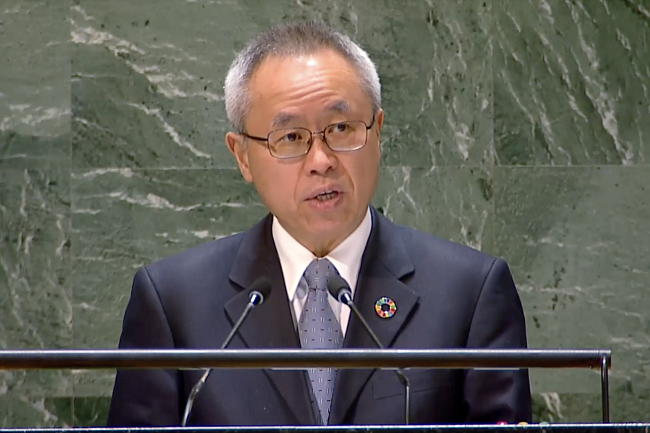
Li Junhua, United Nations Under-Secretary-General for Economic and Social Affairs
The finance gap for SDG action exceeds $4 trillion annually and over $6 trillion annually for climate action.
“The climate and development crises are not separate – they are deeply interconnected, and so must be their solutions,” UN Under-Secretary-General for Economic and Social Affairs, Li Junhua, and Executive Secretary of UNFCCC, Simon Stiell, stated jointly in the preface of the report, representing the two agencies that co-convene the expert group.
Declaring that the report shows that “we have the solutions and roadmap” for a more integrated approach, they issued a call for cooperation across ministries and sectors – for a whole-of-society approach.
“Let us seize this moment of opportunity for transformative change, for people and planet,” they concluded.
The expert report comes at a crucial time: 2025 presents a critical window to maximise the potential of synergistic action, as countries prepare new national climate commitments under the Paris Agreement, some of which are being announced at the Climate Summit. These Nationally Determined Contributions (NDCs) can be a key mechanism, the report states, to align climate action with sustainable development and the SDGs.
Citing two examples of co-benefits, the report urges that NDCs should include action on biodiversity and recognize the positive health impacts in cities of reducing emissions and air pollution.
The report suggests that tailoring synergistic strategies to country-specific development and climate objectives ensures that investments are targeted where they are needed most, and that climate action delivers multiple social, economic and environmental benefits.
Currently, “fragmentation across governance, finance and policy continues to hinder progress,” the report states, “necessitating reforms for effective and inclusive action.”
Stating that private sector investment is vital, the report makes the argument that by aligning incentives, demonstrating economic value and reducing risk through synergistic action, governments can leverage private funding to magnify the impacts.
Growing Evidence
The report’s conclusions are based on statistical modelling, using the cost of meeting the greenhouse gas emission reduction objective of fulfilling all NDCs as well as achieving certain development targets measured by the Human Development Index. By contrast, synergistic allocation of funds could reduce total government spending by up to 37 per cent, according to the modelling. The expert group intends to broaden the analysis in future reports to add other benefits, including social values, such as lives saved.
The report expands the growing body of evidence on the clear benefits of synergistic policies and action, building on the expert group’s global reports the past two years, as well as detailed thematic reports examining specific synergies that can yield major impact. It cites examples showing that:
Nature-based climate solutions such as conserving biodiversity and restoring ecosystems could deliver up to 37 per cent of cost-effective CO2 mitigation by 2030;
City policies such as fossil-fuel phase-out, and encouraging cycling and walking as well as plant-based diets can deliver major co-benefits for climate and health;
Integrating disaster insurance into development plans can boost resilience, considering that in Africa only 0.5 per cent of disaster losses are insured, and each 1 per cent rise in coverage brings countries 5.8 per cent closer to achieving the SDGs.
Political momentum on climate and SDG synergies has been building, including through annual conferences, with increasing recognition of the need to break down the silos that are holding back progress urgently needed. The recommendations in the report will continue to be advanced in various forums, including at Climate COP30 coming up in Brazil in November.
The 17-member expert group, drawn from diverse backgrounds and research institutions, is co-led by Luis Gomez Echeverri (International Institute for Applied Systems Analysis) and Heidi Hackmann (CREST, Stellenbosch University).
CSR-in-Action, a sustainability and ESG consultancy with global multi-stakeholder convening expertise, has entered into a strategic collaboration with Carbon Direct Inc., a leading science-based carbon management firm, to accelerate Africa’s transition to a low-carbon pathway.
The new collaboration, under a Memorandum of Understanding (MoU), will provide African businesses, investors, and governments with access to advanced carbon accounting, reporting, and risk management support, as well as tools in line with and beyond international frameworks such as the GRI, TCFD, and ISSB.
Dr. Julio Friedmann, Chief Scientist, Carbon Direct, and Dr. ‘Bekeme Olowola, Group Chief Executive of CSR-in-Action
Importantly, it will extend beyond strategy to support practical implementation, helping organisations deploy emission-reducing technologies, secure climate finance, and build hands-on capacity in areas such as carbon capture, utilisation, and storage (CCUS).
CSR-in-Action’s proven track record in governance and sustainability advocacy, spanning initiatives like Nigeria’s Community Engagement Standards, the Earth Women documentary (winner of the 2023 Global Impact Documentary Award), and its widely referenced CSR-in-Action Report on Sustainability Reporting, provides a strong foundation for this new chapter.
Working closely with Carbon Direct strengthens its ability to deliver decarbonisation implementation support, carbon credit and offset advisory (such as flare gas recovery and mangrove restoration), and applied training programmes tailored to Africa’s energy and industrial sectors.
Carbon Direct, globally recognised for developing science-driven carbon solutions, brings deep expertise in carbon removal, accounting, and industrial decarbonisation.
“Our principles, tools, and practical experience put us in a unique position to help organisations make and manifest ambitious but actionable climate commitments,” said Dr. Julio Friedmann, Chief Scientist, Carbon Direct.
According to Dr. ‘Bekeme Olowola, Group Chief Executive of CSR-in-Action, the strategic relationship addresses a critical need.
“African businesses and governments don’t just need roadmaps, they need practical, financeable solutions, training and hands-on expertise, to implement them. Through this collaboration, we are equipping stakeholders with the tools, knowledge, and access to experts required to deliver measurable decarbonisation outcomes,” Olowola said.
The new collaborative effort will open up access to Carbon Direct’s global expertise, enabling African organisations to align with regulatory expectations, pursue climate finance for challenging projects, and embed decarbonisation knowledge across their teams.
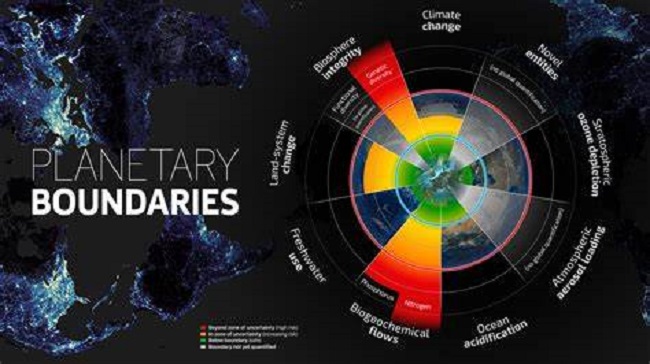
A new report from the Planetary Boundaries Science Lab at the Potsdam Institute for Climate Impact Research (PIK) reveals that seven of the nine critical Earth system boundaries have now been breached, one more than last year.
“More than three-quarters of the Earth’s support systems are not in the safe zone. Humanity is pushing beyond the limits of a safe operating space, increasing the risk of destabilising the planet,” says PIK Director, Johan Rockström.
Planetary boundaries define the safe operating space for humanity
The seven breached boundaries are: Climate Change, Biosphere Integrity, Land System Change, Freshwater Use, Biogeochemical Flows, Novel Entities, and Ocean Acidification (new in 2025).
All of these seven boundaries show worsening trends. Only Ozone Depletion and Aerosol Loading remain in the safe zone.
Oceans in focus: a seventh boundary breached
The 2025 Planetary Health Check reveals a stark new development: the Ocean Acidification boundary has now been assessed as breached for the first time. This shift, driven mainly by fossil fuel burning and worsened by deforestation and land-use change, is degrading the oceans’ ability to act as Earth’s stabiliser. This marks the seventh boundary transgressed, pushing humanity further beyond the safe zone for civilisation.
The 2025 Planetary Health Check shows Ocean Acidification has now gone beyond what is considered safe for marine life. Marine ecosystems are already feeling the effects. Cold-water corals, tropical coral reefs, and Arctic marine life are especially at risk as acidification continues to spread and intensify.
Since the start of the industrial era, the ocean’s surface pH has fallen by around 0.1 units, a 30-40 percent increase in acidity, pushing marine ecosystems beyond safe limits. Tiny sea snails known as pteropods are already showing signs of shell damage. As an important food source for many species, their decline affects entire food chains, with consequences for fisheries and ultimately for people.
“The movement we’re seeing is absolutely headed in the wrong direction. The ocean is becoming more acidic, oxygen levels are dropping, and marine heatwaves are increasing. This is ramping up pressure on a system vital to stabilise conditions on planet Earth,” commented Levke Caesar, Co-lead of Planetary Boundaries Science Lab, and one of the authors of the report.
“This intensifying acidification stems primarily from fossil fuel emissions, and together with warming and deoxygenation affects everything from coastal fisheries to the open ocean. The consequences ripple outward impacting food security, global climate stability, and human wellbeing,” added Caeser.
Sylvia Earle, renowned oceanographer and Planetary Guardian, said: “The ocean is our planet’s life-support system. Without healthy seas, there is no healthy planet. For billions of years, the ocean has been Earth’s great stabiliser: generating oxygen, shaping climate, and supporting the diversity of life. Today, acidification is a flashing red warning light on the dashboard of Earth’s stability. Ignore it, and we risk collapsing the very foundation of our living world. Protect the ocean, and we protect ourselves.”
Planetary Boundaries show rising risks and urgency to protect Earth’s life-support systems
The nine boundaries together form Earth’s operating system, the interconnected life-support processes that must stay within safe limits to keep humanity safe and the natural world resilient. Scientists monitor these boundaries through key measures, much like vital signs in a health check, to track the planet’s condition. The findings point to accelerating deterioration and growing risk of irreversible change, including a higher risk of tipping points.
Boris Sakschewski, Co-lead of the Planetary Boundaries Science Lab and report author, added: “The interconnections between the planetary boundaries show how a planet under pressure both locally and globally can impact everyone, everywhere. Securing human wellbeing, economic development, and stable societies requires a holistic approach where collaborations to find solutions across all sectors need priority.”
Good policies and international cooperation have made a difference
Only two boundaries remain within safe boundaries: loading of aerosols (air pollution) and the stratospheric ozone layer. Decades of international action, like the Montreal Protocol and shipping regulation, show that policy can turn the tide. Global aerosol emissions are declining, although South and East Asia, and parts of Africa and Latin America, still face significant and dangerous particulate pollution, while the ozone layer has largely recovered.
PIK Director, Johan Rockström, said: “We are witnessing widespread decline in the health of our planet. But this is not an inevitable outcome. The drop in aerosol pollution and healing of the ozone layer, shows that it is possible to turn the direction of global development. Even if the diagnosis is dire, the window of cure is still open. Failure is not inevitable; failure is a choice. A choice that must and can be avoided.”
President JM Santos, Co-Vice Chair of the Planetary Guardians, said: “We are facing a planetary emergency. The breach of the Ocean Acidification boundary is a stark scientific warning and a moral call to action. Without healthy oceans, peace, prosperity and stability are at risk everywhere. We must act now with courage and collaboration to safeguard this life-support system for future generations.”
Paul Polman, Co-Vice Chair of the Planetary Guardians, said: “Crossing the ocean boundary underlines the fragility of our global economy and the urgency of change. Business, governments and civil society cannot afford delay. Just as we have seen with the ozone layer, coordinated action works. We need to apply the same resolve to restoring planetary health and protecting the ocean.”
Hindou Oumarou Ibrahim, Chair of the Planetary Guardians, said: “Indigenous Peoples have safeguarded forests, water, and biodiversity by living within nature’s limits, guided by knowledge passed from our ancestors. Today, the Planetary Boundaries science confirms what Indigenous Peoples have always known: when we push beyond these limits, we put all life at risk. To heal our planet, we must unite science and traditional knowledge, respecting the wisdom of those who live closest to the land and waters.”
Okomu Oil Palm Company Plc and Edo State Government say they have partnered to launch a regeneration programme for the cultivation of over 3,000 forest trees in Ovia South West Local Government of the state.
Mr. Akpele Maxwell, Director of Plantation, Edo State State Forestry Commission, disclosed this on Wednesday, September 24, 2025, during an interactive session with stakeholders.
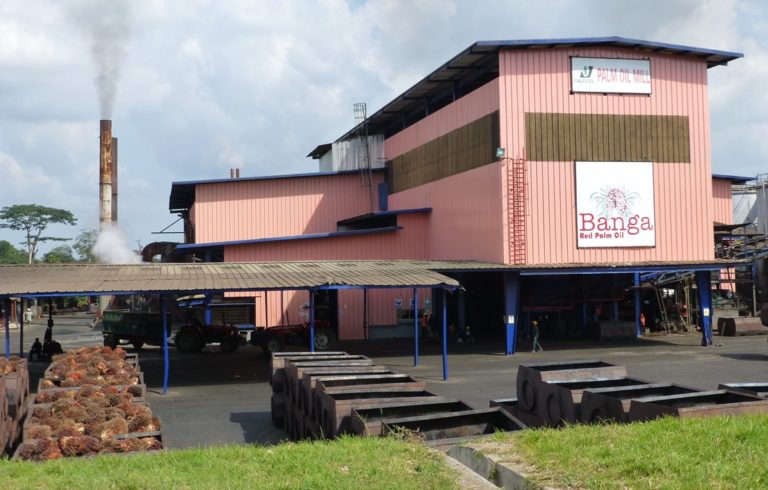
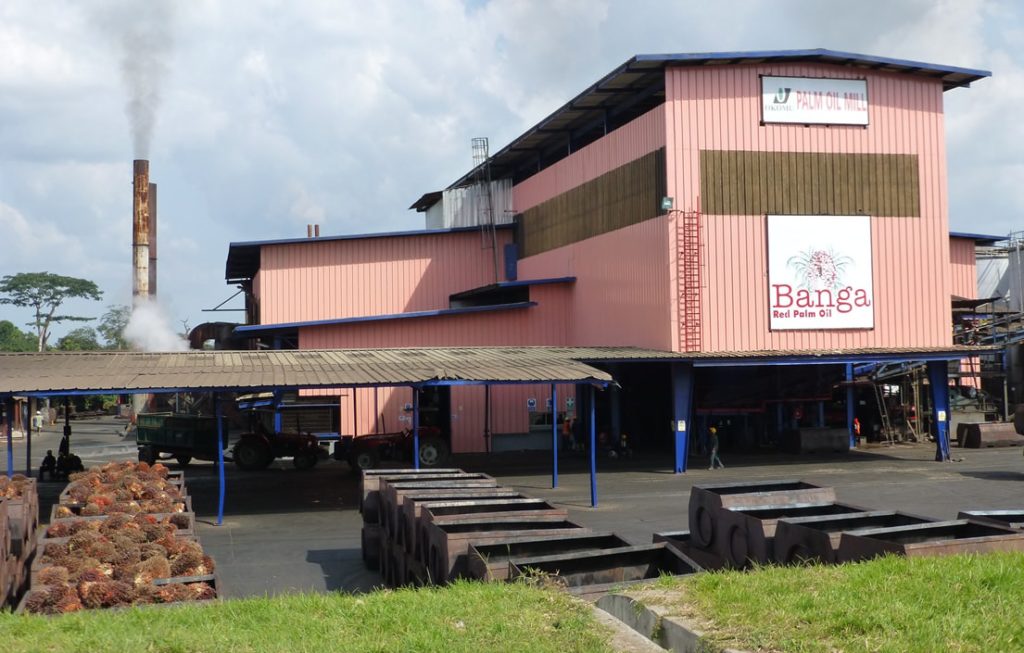
Okomu Oil Company Plc
Also involved in the regeneration programme are agricultural investment outfit (the IDH) and some communities in Ovia South West.
Maxwell said the state government was committed to protecting and restoring its ecosystem through strategic partnerships.
According to him, the initiative will roll out in phases, beginning with the planting of forest trees across Gbole-Uba Community, Paul, Magdalene, and Bisi camps as well as Osayamwen Community.
“This programme, if properly implemented, will not only regenerate depleted forests but will also improve means of livelihoods in participating communities and the state at large,” he said.
He explained that while forest areas were being replanted, existing farmers would continue farming alongside the new trees, with government assurances that their crops would not be destroyed.
Mr. Ogwu Abraham, Senior Programme Manager at IDH, noted that the project aligned with the non-profit’s mission of promoting sustainable agriculture and improving rural livelihoods.
“This partnership with Okomu Oil and the Edo government is part of our wider programme in the Okomu landscape to strengthen both farmers’ welfare and forest protection,” Abraham said.
Also speaking, Mr. Billy Ghansah, Smallholder Coordinator for Okomu Oil, highlighted the company’s commitment to conservation.
“Okomu Oil has set aside about 3,000 hectares of its concession as protected forest areas.
“Despite challenges of illegal logging and encroachment, we are confident that this new roadmap will bring all stakeholders together to safeguard forests within our concession and beyond,” Ghansah said.
Community representatives, including Alex Sese of Gbole-Uba, Dada Magdalene of Magdalene Camp, Edomie Precious of Paul Camp, and John Aghayere of Osayamwen Community pledged their support to the project.
“We are reassured that our crops will coexist with the forest trees. If everyone keeps their commitments, Edo will soon become a reference point for forest regeneration in Nigeria,” Sese said on behalf of the stakeholders.
At the close of the session, stakeholders unanimously agreed to kick-start the project with the planting of 3,000 trees, with communities taking full ownership of the regeneration effort.
The German Government has pledged to support Lagos State and other states in Nigeria in embedding climate change adaptation into their development plans.
Mr. Johannes Lehne, the Deputy Ambassador of Germany to Nigeria, disclosed this on Wednesday, September 24, 2025, in Lagos at the Sub-National Dialogue on Mainstreaming Climate Change Adaptation into State Development Plans.
German Deputy Ambassador to Nigeria, Mr. Johannes Lehne
The event was organised by the Deutsche Gesellschaft für Internationale Zusammenarbeit (GIZ) in partnership with the Lagos State Office of Climate Change and Circular Economy (LOCCE).
Lehne said that the focus on embedding climate change adaptation into development plans would be on renewable energy, institutional capacity, and sustainable infrastructure.
He said Lagos had made progress in integrating sustainability into its development strategies, stressing that Germany would provide technical expertise and financial support to expand ongoing efforts.
“We are in Lagos to participate in this seminar on the adaptation of climate change policies into subnational plans. This is a very important event and we support Lagos in this planning process.
“We congratulate the city for the progress made and we will support them with expertise and with money for further success,” he said.
The envoy highlighted solar power as a key area of partnership with Lagos.
“In Lagos, we are looking at photovoltaic systems, especially for traffic management, home solar systems and also for energy production, not only for the citizens but also for the government.
“There will be financing windows to implement this,” Lehne added.
He noted that Germany had supported Nigeria for more than 50 years across all regions, tailoring programmes to the specific needs of states from Sokoto to Lagos, Niger to Anambra, and Port Harcourt to Borno.
“Different regions face different challenges, from desertification in the North to flooding in the South, and we have designed responses accordingly.
“For us, Nigeria is a key partner in Africa’s energy transition,” he said.
Lehne also pointed to recent federal initiatives such as the carbon market activation policy, which he described as a forward-looking step that could strengthen Nigeria’s economic resilience while creating opportunities for investment in the green economy.
“This approach will help secure both economic strength and climate resilience while placing Nigeria at the forefront of Africa’s role in the global energy transition,” he said.
Dr Markus Wagner, GIZ Country Director for Nigeria and ECOWAS, said climate change was already having devastating effects across the country, making adaptation urgent.
“In Nigeria, tens of millions already experience the harsh impacts of climate change and its risks such as droughts, floods and advancing desertification.
“These realities are reminders that adaptation is not optional but urgent,” Wagner said.
He explained that while the Federal Government had taken strides through the National Development Plan (2021-2023), the National Adaptation Plan, and the Climate Change Act, much remained to be done at state levels.
“To take concrete actions, states need to develop policy frameworks that integrate climate action into their development plans and annual budgets,” he said.
He noted that GIZ was partnering with Lagos and other states to build capacity, close institutional gaps and align policies with both national frameworks and international agreements like the Paris Accord.
On his part, Mr. Sam Egube, Deputy Chief of Staff to the Lagos State Governor, said the dialogue was an opportunity for states to learn how to align development plans with climate action.
“In Lagos, we have a 30-year development plan that is secured by the people and the House of Assembly. No budget goes to the Assembly without being traced to the plan, and this keeps us on track,” Egube said.
He described Lagos as both vulnerable and strategic, noting its low-lying geography and its role as a magnet for migrants fleeing instability and climate pressures in other parts of Nigeria.
“If we do nothing, the climate situation will cost Lagos about 26 billion dollars. However, with just $8 billion, we can take action.
“That is why we are inviting partners, even though we are not waiting for them, because Lagos is already taking deliberate steps,” he said.
Egube listed ongoing state projects such as the development of deep seaports, investment in tree planting and mangrove restoration as well as food system security.
“Lagos State Government has also embarked on electric-powered water vessels under the Eco-Omi Project, and the decentralisation of emergency response systems.
“Lagos needs to be given a special status because we carry the burden of the nation.
“We are inviting partners, even though we are not waiting for partners, because we are taking deliberate steps in all our respective budgets, we are inviting partners to come.
“We talked about the Eco-Omi Project, putting almost 35 new electric-powered vessels on our waterways. We’re talking about our investment in tree planting and mangrove development, and that’s going on from time to time.
“Lagos is Nigeria’s best chance for success. It is an economic behemoth and must be treated as a national asset, not just as a state,” he said.
The two-day dialogue brought together state officials, international partners and private sector actors to design strategies for mainstreaming climate change adaptation into development plans.
They will also identify pilot projects for implementation in selected states.
Present at the event were the German Deputy Ambassador to Nigeria, Mr Johannes Lehne; stakeholders in the industry and representatives of the National Council on Climate Change (NCCC) led by its Director-General, Mrs. Omotemioye Majekodunmi.
Others are the Lagos State Commissioner for Energy, Mr. Biodun Ogunleye; Special Adviser to Lagos State Governor on Climate Change and Circular Economy, Mrs. Titilayo Oshodi; Director-General, Budget Office of the Federation, Mr. Taminu Yakubu; and the Director-General, Nigeria Governors Forum, Prof. Olalekan Yinusa, among others.
The Kano-Jigawa branch of the Manufacturers Association of Nigeria (MAN) has hailed the Dangote Refinery and Petrochemicals for its role in revitalising struggling companies in Nigeria.
According to the Association, the refinery’s intervention through the reduction of diesel prices and the steady availability of petroleum products has provided significant relief to manufacturers grappling with high energy costs.
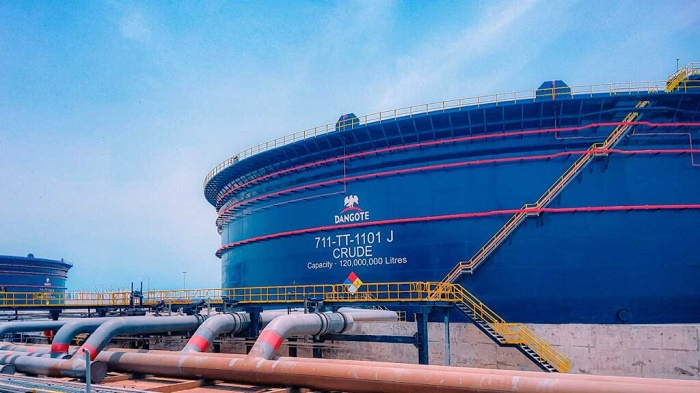
Dangote Refinery
Speaking on the sideline of the ongoing MAN Annual Products Exhibition, taking place at Sani Abacha stadium in Kano, the branch Chairman of MAN Kano and Jigawa, Muhammad Bello Isyaku Umar, said that these measures are already helping “dying companies come back to life” by reducing production expenses, stabilising operations, and sustaining jobs.
The Association explained that access to affordable diesel is critical to the survival of many small and medium-scale industries in Nigeria, particularly those outside the national grid or in areas plagued by inconsistent power supply.
“By improving supply and easing cost pressures, the Dangote Refinery is not only supporting the survival of existing firms but also laying the foundation for industrial growth and competitiveness in the region,” he said.
MAN reiterated its commitment to partnering with the refinery and other stakeholders to strengthen the manufacturing sector, describing the Dangote Refinery as a game-changer in Nigeria’s quest for industrial sustainability and self-reliance.
He said Dangote Refinery continues to inspire confidence in the Nigeria’s manufacturing sector.
The Dangote Industries Limited is one of the major sponsors of the 2025 MAN Exhibition in Kano.
Umar said the exhibition brought together top manufacturers, entrepreneurs, policymakers, and consumers in a showcase of innovation, quality, and resilience in the nation’s economy.
He explained that the refinery would reduce the country’s reliance on imported petroleum products while supporting local manufacturing.
The MAN chairman disclosed that MAN is already exploring areas of partnership with the Dangote Refinery to enhance energy supply and strengthen industrial growth nationwide.
He commended the Dangote Group for its partnership and contribution to the growth of the Association and the country’s economy.
The chairman noted that the Dangote Group has been a consistent partner with the association for over five years, describing the company as an indispensable stakeholder in the industrial sector.
The theme of this year’s exhibition is “Made in Nigeria: Revitalising Local Industries for Economic Growth”.
According to him, no exhibition or trade fair organised by MAN is complete without the presence of Dangote products, which remain some of the most affordable, qualitative, and dependable in the market.
Umar said the exhibition brought together top manufacturers, entrepreneurs, policymakers, and consumers to showcase innovation, quality, and resilience in the nation’s economy.
The chairman commended the Dangote Refinery, describing it as a major boost to Nigeria’s economy and industrial sector.
A major feature of this year’s show was the presence of the Dangote Group, whose diverse range of products has become a household name across Nigeria and beyond.
Dangote products displayed at the event include Dangote Cement, Dangote Sugar, Dangote Salt and seasoning, and Dangote Fertiliser, among others.
Participants at the event also highlighted the role of Dangote Group in job creation, infrastructure development, and its contribution to government revenues through taxes and Corporate Social Responsibility (CSR).
During the opening ceremony, Kano State governor, Alhaji Abba Kabir Yusuf, represented by commissioner of commerce and industry, Alhaji Shehu Wada Sagagi, said the occasion was not just an exhibition of goods and services, but a bold statement that Nigeria’s future lies in production, innovation and self-reliance.
He said that, for decades, Kano has been a centre of trade and industry, and that the gathering once again affirms the state’s central role as the industrial hub of northern Nigeria.
He commended MAN for sustaining, what he described as “important platform where local producers and entrepreneurs come together to showcase their ingenuity, resilience and creativity.”