Home Blog Page 153

NLNG, NCDMB celebrate 122 graduates of Train 7 Human Capital Development Programme

0

Nigeria LNG Limited (NLNG) in collaboration with the Nigerian Content Development and Monitoring Board (NCDMB) on Friday, September 26, 2025, achieved a major milestone in the Nigerian Content development commitment, with the close-out of Train 7 Project Human Capital Development (HCD) Advanced Training Programme, at the plant complex in Finima – Bonny Island.

The training ends officially on Tuesday, September 30, with the departure of the trainees from its plant facility in Bonny Island.
NLNG
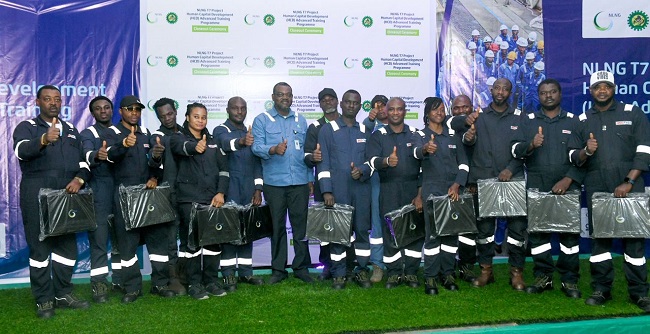
Graduates of the NLNG, NCDMB training programme

The HCD programme, run under the guidance of the NCDMB, is a Federal Government initiative to build capacity for the oil and gas industry and fulfil the Nigerian Oil and Gas Industry Content Development (NOGICD) Act’s requirement on human capital development.

A total of 122 trainees, having completed prior HCD Basic Training Programmes, were approved by the NCDMB to participate in the rigorous three-month on-the-job training (OJT) within NLNG facilities, covering both graduate and vocational categories. The training programme focused on development of technical expertise in plant and facility management, amongst other competencies, and has positioned the trainees to take advantage of future opportunities within the oil and gas industry.

Speaking at the ceremony, the NLNG Train 7 Project Director, Ali Uwais, represented by Joshua Anemeje, the NLNG Train 7 Project Corporate Liaison Manager, described the advanced training programme as a testament of the resilience, discipline, and growth of the trainees. He congratulated the trainees for their commitment to excellence and urged them to take advantage of future opportunities within the oil and gas industry.

“This programme is about building a new generation of Nigerian professionals who will shape the oil and gas sector for decades to come. Its successful completion with a zero-incident safety record reflects not only your dedication but also NLNG’s uncompromising culture of ‘Safety First and Always’, and its operational excellence,” Joshua said.

He further commended the role of NCDMB as a strategic partner in driving Nigerian Content targets and capacity development in the industry. He also commended the training partners, Candix Engineering Nigeria Limited, AOS Orwell, Arco Marine and Engineering Limited, Dover Engineering and Amaiden Energy Nigeria Limited, who ensured the trainees got a world class OJT experience and HR management.

“Today is proof that strategic collaboration delivers impact. Through our collaboration with NCDMB and our training partners, we are shaping the future by investing in people, strengthening capacity, and laying the groundwork for sustainable national prosperity,” he added.

Joshua encouraged the graduates to leverage their skills to create value in Nigeria’s energy sector and beyond. He added that the investment in building their skills was made by the Federal Government of Nigeria via the NLNG Train 7 Project Human Capital Development Programme for which they are expected to take maximum advantage.

In his comments, the NCDMB’s General Manager Human Capital Development (HCD), Esueme Dan Kikile, Esq, expressed delight on the conclusion of the training programme, which produced a pool of skilled and globally competitive workforce, knowledgeable in key areas such as instrumentation, electrical, mechanical, lifting and rigging activities, and fabrication, preventive and corrective maintenance, and can compete globally in the oil and gas industry and its linkage sectors.

In addition, the programme is another important milestone in the collective journey towards building a skilled Nigerian workforce for the oil and gas industry and its linkage sectors.

Kikile described Train 7 Project as one of the largest gas infrastructure developments in Africa, noting that it not only created jobs but also provided a platform to groom young Nigerians with advanced technical and managerial competencies.

“This training provided hands-on experience on a live LNG project that complimented your academic and theoretical knowledge. This training further exposed trainees to specialized advanced technical disciplines, project management, health and safety, and emerging technologies critical to the future of the industry,” he added.

“It is my delight to note that 27 have received special recognition awards for their aptitude during the programme, out of which six who were very exceptional have been offered automatic employment by AOS Orwell, one of the training partners,” he said.

He charged the trainees to utilise the rare skills they have acquired to contribute meaningfully to the Nigerian oil and gas industry and national economy, and serve as good ambassadors of the programme, contributing meaningfully to Nigeria’s industrial growth.

He lauded the NLNG and all other partner companies for their unwavering commitment to Nigerian Content development, referencing several other initiatives the Board is partnering NLNG to deepen local content implementation in the Nigerian oil and gas industry. Awards were also presented to all the deserving trainees as part of the programme.
PENGASSAN’s directive will trigger fuel queues, price hikes, revenue loss – Dangote

0

Dangote Petroleum Refinery has warned that the recent directive issued by the Petroleum and Natural Gas Senior Staff Association of Nigeria (PENGASSAN) to cut crude oil and gas supplies to the refinery could plunge Nigerians into fresh rounds of fuel scarcity while inflicting huge revenue losses on the government.

In a statement released on Saturday, September 27, 2025, the refinery described the directive as “criminal, reckless, and an act of economic sabotage” that, if enforced, would disrupt the production and nationwide supply of critical petroleum products, including petrol, diesel, aviation fuel, kerosene, and cooking gas.

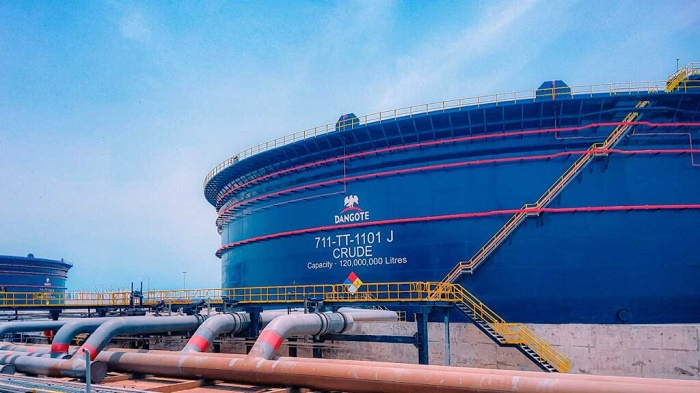
Dangote Refinery
Dangote Refinery

The company stressed that these products are indispensable to daily life and the economy, warning that Nigerians at every level, from households to businesses and industries would bear the brunt of shortages. It noted that a sudden disruption in supply will translate into insufferable hardship for millions of Nigerians.

“The products that would be disrupted and stopped include but are not limited to aviation fuel, petrol, kerosene, diesel and cooking gas – all products that are used and required by all stripes of Nigerians and persons living in Nigeria, whether high and mighty or lowly and ordinary. In what circumstance would it be justified for PENGASSAN to so disrupt and introduce insufferable hardship into the living conditions of Nigerians? None that we can see,” the company said.

“The follow up question is, in whose interest and on whose behalf is PENGASSAN directing and intending to inflict such anarchic and criminal disruption upon the Nigerian society and persons living in Nigeria? Most certainly, not in the interest of the Nigerian State and/or the Nigerian public and citizens,” it added.

Beyond the immediate hardship on citizens, Dangote Refinery warned that the government’s revenue would also be dented, given the refinery’s status as one of the country’s largest taxpayers and contributors to both federal and state coffers. The company said any pause in operations would stall contributions to the national purse and undermine investor confidence in Nigeria’s oil and gas sector.

The statement noted, “This is also economic sabotage against the Nigerian State at multiple levels. Dangote Refinery is the only refinery of its type in Africa and ordinarily should be the pride of all Nigerians as well as the governments of Nigeria. It should ordinarily have special protection and status and indeed qualifies as a strategic national asset.”

It added that an irreparable injury to the Dangote Refinery such as PENGASSAN has directed constitutes a national embarrassment to the country and a disincentive to external investors who ordinarily would have been encouraged by the success of Dangote Refinery to contemplate investing in Nigeria’s oil and gas sector or generally.

“PENGASSAN may also not be aware that Dangote Refinery is one of the largest contributors to the revenue purse of the Nigerian governments – both Federal and sub-nationals. That contribution is currently threatened by PENGASSAN and would of course be paused if and as soon as and for as long as the PENGASSAN directive is implemented by its branches,” it noted.

The statement also noted that PENGASSAN had no legal authority to interfere in supply contracts between the refinery and its vendors, insisting that the action undermined the rule of law.

“Absolutely no law gives PENGASSAN the right to direct its branches to ‘cut off’ gas and crude oil supplies to Dangote Refinery or at all. There is also no law in our statute books that would support or enable the PENGASSAN branches having to ‘cut off’ gas and crude oil supplies to Dangote Refinery or at all. Besides, it constitutes a criminal conduct for PENGASSAN or its members to disrupt and/or interfere howsoever in the contract between Dangote Refinery and its various vendors for the supply of gas and crude oil to the Refinery.

“Those supply contracts were not entered into with PENGASSAN; they were entered into by Dangote Refinery with third party vendors and suppliers and PENGASSAN has no right whatsoever to disrupt and/or interfere with the performance of those contracts.”

Calling on the Federal Government and security agencies to act swiftly, the refinery urged Nigerians to take note of the “unquantifiable and irredeemable hardship which PENGASSAN wishes to inflict on all of us” if not checked, warning that fuel queues, energy shortages and price hikes could quickly resurface.

It urged PENGASSAN to submit to amicable and legal resolution and not resort to economic sabotage and mob action that could introduce mayhem and chaos and easily translate into anarchy.

In a related development, Dangote Petroleum Refinery has announced the resumption of Premium Motor Spirit (PMS), commonly known as petrol, sales in Naira, following the intervention of the Chairman of the Naira-for-Crude Transaction Committee.

In a statement, the refinery confirmed: “Following the intervention of the Naira for Crude Transaction Committee Chairman, we are pleased to inform you of the resumption of PMS Sales in Naira commencing Immediately

“You may kindly proceed to place your orders in Naira for both self collection and free delivery of PMS to the earlier advised locations across the country,” it said.

The company explained that the temporary suspension of Naira-denominated petrol sales, announced on Friday and initially scheduled to take effect from Sunday, September 28, has been lifted.

Dangote Refinery urged customers to disregard the earlier suspension notice, assuring that sales would continue without interruption to guarantee affordable petrol supply for Nigerians.

Enforcement of planning laws in Trade Fair Complex within our jurisdiction – Lagos

0

The Lagos State Government has reaffirmed its mandate to enforce physical planning laws within its jurisdiction, including the Trade Fair Complex in Ojo.

Commissioner for Physical Planning and Urban Development, Dr. Oluyinka Olumide, said that the government’s position was backed by the Supreme Court judgment of 2003 and the Lagos State Urban and Regional Planning and Development Law 2019, as amended, which empower the state to regulate and enforce Physical Planning Laws.

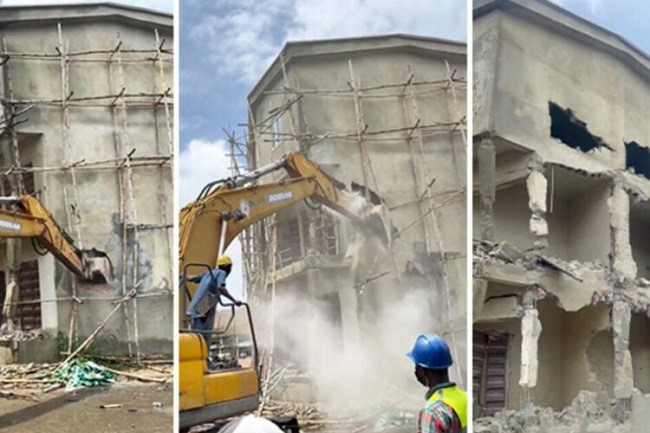
Demolition
Demolition of illegal buildings at Trade Fair Complex in Lagos

The Commissioner stated that the location of the Trade Fair Complex on Federal Government land did not exempt developers from obtaining necessary planning permits from the Lagos State Government or adhering to the State physical planning laws.

“We have acted decisively to halt further development of unapproved and unsafe buildings in the Complex as a livable, organised, orderly and sustainable built environment is crucial to achieving our T.H.E.M.E.S.+ Agenda,” he said. 

He reiterated that the Trade Fair Complex had a history of non-compliance with building regulations and had refused to cooperate with the efforts to bring it into voluntary compliance despite several warnings, including the request in November 2023 for building constructions within the area to be regularised with the Lagos State Ministry of Physical Planning and Urban Development.

This enforcement exercise is part of the state government’s regular efforts to promote safety, livability, and well-being across the State, and not just within the Trade Fair Complex.

The Lagos State Government, on Thursday, commenced the demolition of illegal and defective structures at the Trade Fair Complex in Ojo, in order to restore order and enforce its physical planning laws.

It was gathered that about 19 buildings were pulled down at the New Mandela Plaza, within the popular Trade Fair Complex in Lagos.

The state government said the structures were without statutory approvals, defective structures and built on road setbacks and drainages.

Confirming the demolition exercise, the Senior Special Assistant on New Media to Governor Babajide Sanwo-Olu, Jubril Gawat, in a post on X, said the operation was targeted at “illegal developments, structures without statutory approvals, defective structures, and buildings erected on road setbacks and drainages.”

Gawat said the government took the action because the unapproved structures were haphazardly built in the complex.

According to him, “The Lagos State Government has begun removal of illegal developments, structures without statutory approvals and defective structures, and structures built on road setbacks and drainages in the Trade Fair Complex, Ojo Local Government area.”

It was further gathered that the operation was jointly carried out by the Ministry of Physical Planning, Lagos State Building Control Agency, Lagos State Urban Renewal Agency, and the Lagos State Physical Planning Permit Authority.

They were supported during the exercise by officials from the Office of Infrastructure, members of the Lagos State House of Assembly, and security agencies.

Bulldozers were seen pulling down marked structures, while some traders and shop owners looked on with concern over the impact on their businesses.

The Sanwo-Olu administration had warned residents against building any structure without proper approvals or blocking drainage channels, pointing out that the violations were contributing to incidents of flooding in the metropolis, traffic congestion, and urban disorder in Lagos.

Ogoni re-entry, beacon of reconciliation through collaboration – NNPC

0

The Nigerian National Petroleum Company Limited (NNPC Ltd.) says re-entry into Ogoniland marks a historic turning point for Nigeria, not just in terms of oil production, but reflects President Bola Tinubu’s Renewed Hope Agenda.

Speaking during the presentation of the Ogoni Consultations Report at the State House in Abuja, Tinubu said that the re-entry reflected the government’s recognition of their sacrifices.

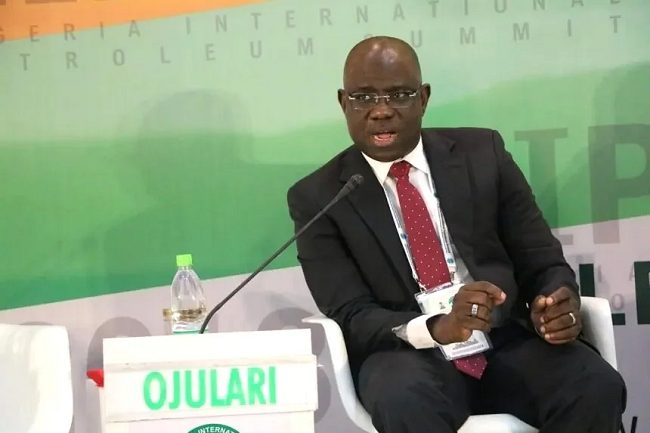
Bayo Ojulari
Group Chief Executive Officer of NNPCL, Bayo Ojulari

According to a statement on Friday, September 26, 2025, by Andy Odeh, Chief Corporate Communications Officer, NNPC Ltd., the President acknowledged that the Ogoni people have endured long years of pain.

“This milestone reflects the spirit of the President’s Renewed Hope Agenda, which commits to building a stronger country, attracting responsible investment and ensuring community development for national progress.

“We are not, as a government, taking lightly the years of pain endured in Ogoniland. We recognise that, otherwise we would not be here today. We declare with conviction that hope is here and is back with us,” Tinubu said.

Mr. Bashir Ojulari, Group Chief Executive Officer, NNPC Ltd., reiterated the President’s sentiments, describing the development as a re-affirmation of NNPC’s commitment to the Ogoni re-entry plan and a bold step towards justice, healing and national prosperity.

He emphasised that the re-entry demonstrates that Nigeria can confront its past, honour the sacrifices of its communities and forge a new path with a vision of prosperity and justice for all.

“The re-entry into Ogoniland is not just about oil and gas. It is about justice, healing, and charting a new future for our nation,” Ojulari said.

“Ogoni re-entry can be seen as both a test and an opportunity for the country. It demonstrates that equity can exist in national development, and oil can co-exist with environmental stewardship and inclusive nation-building.

“This milestone is a practical example of how President’s Renewed Hope Agenda translates into reality by strengthening our country, creating conditions for responsible investment, while prioritising the prosperity of host communities,” he said.

Ojulari acknowledged the pivotal leadership of the National Security Adviser, Malam Nuhu Ribadu, in convening a committee that brought diverse stakeholders together, creating the platform for dialogue and consensus that made this breakthrough possible.

He also praised the work of Prof. Don Baridam and members of the Presidential Committee, who engaged tirelessly and transparently with relevant parties to produce a report that showed fairness and inclusivity.

“The lesson is that this journey cannot be driven solely by production volumes. It must be anchored on justice, equity, sustainability, and most importantly, collaboration with the very people whose land bears this wealth,” he said.

Ojulari was categorical that, in resuming operations in Ogoni, NNPC Ltd. will continue to build trust by prioritising community engagements with key stakeholders, investing in infrastructure and empowering local enterprise.

He confirmed that NNPC has already began initiatives in road construction, infrastructure upgrades and economic empowerment programmes designed to rebuild trust and demonstrate accountability in an inclusive manner.

“NNPC Ltd. is determined to transform Ogoni land from a symbol of conflict into a beacon of reconciliation, renewal, and sustainable progress,” he concluded.

In his remarks, Ribadu said sustainable progress was possible and proven through collaboration with all parties concerned.

Ribadu said that the report was the outcome of an intensive, methodical and transparent engagement.

Baridam, on behalf of the Committee, thanked the President for his unwavering commitment to the well-being of the Ogoni people, adding that through diplomacy and relentless insistence on dialogue, host community trust was earned, and hope restored.

By Emmanuella Anokam

PENGASSAN expresses concern over alleged mass sack at Dangote Refinery

0

The Petroleum and Natural Gas Senior Staff Association of Nigeria (PENGASSAN) has expressed concern over the alleged mass sack and intimidation of workers at the Dangote Petroleum Refinery and Petrochemicals after joining PENGASSAN.

This is contained in a letter to the Zonal Chairman of PENGASSAN Lagos Zone and jointly signed by members of the Caretaker Committee (CTC) of the newly unionised branch on Thursday, September 25, 2025, in Abuja.

Dangote Refinery gate

The signatories include Mr. Eseoghene Choice, CTC branch secretary, and Mr. Abdulfaitai Muhammed, CTC branch chairman, on behalf of the union.

The committee alleged that management on Thursday night issued a termination notice addressed to “all staff” of the refinery; a few hours after workers affirmed their membership of PENGASSAN during a verification meeting.

“We regret to inform you that at about 9:59 p.m., workers received a mass termination email,” it said.

The committee alleged that management withdrew staff buses, forcing members to spend as much as ₦4,000 on transportation, and denied them entry into the refinery premises while expatriates were allowed access.

It added that, at about 6:30 p.m., staff members who had joined PENGASSAN were denied entry into the refinery and were informed it was on the orders of Alhaji Aliko Dangote,” it stated.

The CTC also accused the management of targeting union leaders for arrest and intimidation.

“We intercepted an internal directive ordering the arrest and detention of the CTC chairman by the General Manager of Human Asset Management. This is a direct act of intimidation against union leaders,” it alleged, “it said.

The committee also described the action as a violation of Section 40 of the 1999 Constitution (as amended), which guarantees workers the right to freedom of association.

“These events clearly amount to targeted intimidation and victimisation of workers for exercising their constitutional rights to freedom of association,” it added.

Meanwhile, Mr. Femi Adekunle, Chief General Manager of Human Asset Management at Dangote Group, said the reorganisation followed multiple cases of reported sabotage across refinery units that posed major safety risks.

He said management was left with no choice but to carry out a total reorganisation of the refinery, resulting in the disengagement of the affected staff, effective Thursday.

In a statement issued on Friday, the Dangote Petroleum Refinery attempted to clarify recent reports concerning the ongoing reorganisation within its facility, adding that the exercise is not arbitrary.

It stressed that it has become necessary to safeguard the refinery from repeated acts of sabotage “that have raised safety concerns and affected operational efficiency”.

The statement reads:

“The foregoing decision was taken in the best interest of the Refinery as result of intermittent cases of sabotage in the various units of the Refinery with dire consequences on human life and related safety concerns.

“We remain vigilant to our internal systems and vulnerabilities to ensure the long-term stability of this strategic national asset. It is imperative to protect the refinery for the benefit of Nigerians, our partners across Africa, and the thousands of people whose livelihoods depend on it.

“Over 3,000 Nigerians continue to work actively in our Petroleum Refinery, at present. Only a very small number of staff were affected, as we continue to recruit Nigerian talent through our various graduate trainee programmes and experienced hire recruitment process.

“We recognise and uphold internationally accepted labour principles, including the right of every worker to freely decide whether or not to join a union. Our commitment to workers’ rights is unwavering.

“The Dangote Petroleum Refinery exists to serve Nigerians, to strengthen Africa’s energy independence, and to create decent, sustainable jobs. We will continue to work in partnership with our employees, regulators, and stakeholders to uphold the highest standards of safety, transparency, and accountability.”

By Joan Nwagwu

17 countries commit to plans to scale up electricity access as Mission 300 expands

0

Seventeen African governments on Friday, September 26, 2025, committed to reforms and actionable plans to expand electricity access as part of Mission 300 – an ambitious partnership led by the World Bank Group and African Development Bank Group that aims to connect 300 million Africans to electricity by 2030.

At the Bloomberg Philanthropies Global Forum, national Energy Compacts – practical blueprints that guide public spending, trigger reforms, and attract private capital – were endorsed by Benin, Botswana, Burundi, Cameroon, Comoros, the Republic of the Congo, Ethiopia, Gambia, Ghana, Guinea, Kenya, Lesotho, Mozambique, Namibia, São Tomé and Principe, Sierra Leone, and Togo.

Bloomberg Philanthropies Global Forum
At the Bloomberg Philanthropies Global Forum, 17 African governments signed Energy Compacts under the Mission 300 initiative on the margins of UNGA 80 in New York

“Electricity is the bedrock of jobs, opportunity, and economic growth,” said World Bank Group President Ajay Banga. “That’s why Mission 300 is more than a target – it is forging enduring reforms that slash costs, strengthen utilities, and draw in private investment.”

Since the launch of Mission 300, 30 million people have already been connected, with more than 100 million in the pipeline.

“Reliable, affordable power is the fastest multiplier for small and medium enterprises, agro-processing, digital work, and industrial value-addition,” said African Development Bank Group President, Dr Sidi Ould Tah. “Give a young entrepreneur power, and you’ve given them a paycheck.”

National Energy Compacts are at the core of Mission 300, developed and endorsed by governments with technical support from development partners. Tailored to each country’s context, these practical blueprints integrate three core tracks – infrastructure, financing, and policy.

Earlier this year, Energy Compacts were endorsed by Chad, Côte d’Ivoire, Democratic Republic of Congo, Liberia, Madagascar, Malawi, Mauritania, Niger, Nigeria, Senegal, Tanzania, and Zambia – together pledging to make more than 400 policy actions to strengthen utilities, reduce investor risk, and remove bottlenecks.

The World Bank Group and the African Development Bank Group are working with partners including the Rockefeller Foundation, Global Energy Alliance for People and Planet (GEAPP), Sustainable Energy for All (SEforALL), and the World Bank’s Energy Sector Management Assistance Programme (ESMAP) trust fund to align efforts in support of powering Africa. Many development partners and development finance institutions are also supporting Mission 300 projects through co-financing and technical assistance.

Duma Boko, President of Botswana, said: “This National Compact is our shared pledge to ensure accessible, reliable and affordable energy as a basic human need, to transform our economy and create jobs, and to electrify our journey to an inclusive high-income country.”

Paul Biya, President of the Republic of Cameroon: “The government of the Republic of Cameroon is committed, through its Energy Compact, to a determined transition towards renewable energies, promoting inclusive universal access and sustainable development based on partnerships and ambitious reforms to build a low-carbon future.”

Azali Assoumani, President of the Union of the Comoros: “The Comoros Energy Compact is a call for collective action to achieve universal access to electricity by 2030, in order to ensure the country’s emergence in dignity, equity, and shared progress.”

Denis Sassou Nguesso, President of the Republic of Congo: “In addition to abundant sunlight and gas resources capable of generating more electricity, the Republic of Congo has a certified hydroelectric potential of nearly 27,000 MW and more than 100,000 MW currently under study. The Energy Compact will enable Congo to achieve universal access to electricity, supply industries in special economic and mining zones, and export surplus energy to other countries.

“Harnessing this renewable and sustainable energy will cover more than one-third of Africa’s electricity needs. Since Congo has liberalised the electricity sector, investors are invited, within the framework of Mission 300, to establish themselves and engage in profitable and sustainable business.”

Taye Atske Selassie, President of Ethiopia: “Our National Energy Compact exemplifies Ethiopia’s unwavering dedication to ensuring universal, affordable, and sustainable energy access for all. By unlocking our vast renewable resources, strengthening regional interconnections, we aim to foster inclusive growth domestically and propel Africa’s collective momentum toward ending energy poverty. Together, we are committed to building a resilient, equitable, and sustainable energy future for generations to come.”

Adama Barrow, President of The Republic of The Gambia: “The Gambia’s Energy Compact reaffirms our commitment to universal electricity access by 2030, scaling renewables, strengthening infrastructure, integrating the private sector and improving sector governance. Through partnerships, it aims to transform power supply – ensuring reliability, affordability, and sustainability for all citizens.”

John Dramani Mahama, President of the Republic of Ghana: “Ghana believes universal energy access is key to empowering businesses, reducing poverty, and creating equal opportunities. This goal can only be achieved through strong government–private sector partnerships, supported by an enabling environment for sustainable investment.”

Mamadi Doumbouya, President of the Republic of Guinea: “The Republic of Guinea reaffirms its commitment to guaranteeing, by 2030, universal access to reliable, clean, and affordable electricity, while providing sufficient capacity to support national industrialisation, particularly in the mining sector, through a transparent and constructive partnership with the private sector.”

William Ruto, President of the Republic of Kenya: “Energy is a key enabler under the infrastructure component of Kenya’s Bottom-Up Economic Transformation Agenda. The Energy Compact anchors our commitment to achieve universal access to electricity and clean cooking and transition our grid to full reliance on clean energy by 2030.”

Sam Matekane, Prime Minister of the Kingdom of Lesotho: “Mountain winds blow, waters flow, the sun shines brightest – Lesotho, the kingdom in the sky. Universal access to renewable energy is our proud imperative. Experience elevation with agility and scale. Be part of our journey and pride. Invest in Lesotho.”

Daniel Chapo, President of Mozambique: “Mozambique is on track to achieve Mission 300 targets and consolidate our role as a regional powerhouse through export of our abundant, affordable and clean energy. We welcome support from partners to achieve universal access, promote economic growth and green industrialisation, and increase regional trade and integration.”

Julius Maada Bio, President of Sierra Leone: “Our M300 Compact is the most ambitious and comprehensive energy infrastructure initiative ever developed for Sierra Leone. Powered by evidence-based solutions and data, this single plan for Sierra Leone’s energy transformation holds the greatest promise for unlocking sustainable and inclusive development for our people.”

Faure Essozimna Gnassingbé, President of the Togolese Republic: “We guarantee reliable, affordable and clean electricity for all, and access to clean cooking. This Compact massively mobilises the private sector to accelerate our industrialisation and make Togo a competitive energy hub.”

Américo d’Oliveira dos Ramos, Prime Minister, São Tomé and Principe: “Our Compact provides a forward-thinking framework to fuel a sustainable and inclusive model of economic growth for Saotomeans. We are enacting strong reforms and developing innovative business models to raise US$190 million from the private sector to finance this objective.”

Edouard Bizimana, Minister of Foreign Affairs, Burundi: “The Republic of Burundi has set ambitious targets for access to electricity and clean cooking to improve the economic and social development of its population. Private sector participation is crucial to achieving these goals.”

Journalists in Abuja capacitated on climate reporting at CFSF, ILO forum

0

Media practitioners in Nigeria have been tasked with producing in-depth investigative reports on climate change to elicit fact-based interventions by policy makers.

This charge was given to media participants from a host of news organisations in Abuja that were trained on climate change and just energy transition at a two-day journalism training on climate change and just energy transition organised by the Citizens Free Service Forum (CFSF) and the International Labour Organisation (ILO).

Journalism training
Participants at the CFSF and ILO journalism training on climate change and just energy transition, in Abuja

The event was facilitated by a team of experts in investigative journalism, trade union activism and the development field.

At the training which held at the United Nations Building in Abuja, Executive Director of CFSF, Comrade Sani Baba, said that the organisation conceived the training based on its belief that the media is key not only in informing the public as part of its watchdog role, but also in instigating robust discourse that would ultimately translate to policy responses and actions.

Represented by Mohammed Bomoi, the Deputy Director, Programmes of the CFSF, Sani Baba said that the indispensability of the media in addressing the environment and climate crisis informed the prioritisation of education and training in Article 6 of the United Nations Framework Convention on Climate Change (UNFCCC), which Nigeria has signed and ratified.

He explained that education and training are useful resources for governments, civil society and the media to encourage different stakeholders to work collaboratively in advancing climate change actions.

The trade unionist explained that Nigeria, like most African countries and countries of the Global South, carries the biggest burdens of the climate impacts, hence the subjects the trainees would dwell on would also serve to amplify the big as well as the less reported impacts of environmental degradation and climate change on workers.

The first presentation on The Science of Climate Change and the Evolution of the Struggle for Just Transition, was delivered by Comrade Echezona Asuzu, Coordinator, Nigeria Labour Congress (NLC) Climate Change, Green Jobs, and Just Transition Programme, who revealed that the earlier stages of the climate crisis to the industrial revolution in the late 1700s and mid 1800s when machines started replacing the work of man and man also needed to feed more mouths at the shortest time frame.

Asuzu stressed that the industrial revolution era began disastrous extractive processes that altered the balance of the ecosystem and nature with massive increase in greenhouse emissions like no other time before then. The dependence on fossil fuels and its impacts continued to spiral, leading to the clamor by the scientific community for global action to halt the increasing emissions to save the planet from extinction.

He explained that the agitations started yielding positive results with the initiation of the Kyoto Protocol, an international treaty under the United Nations Framework Convention on Climate Change (UNFCCC) adopted in 1997 which came into force from 2005. Under the protocol, countries pledged to reduce greenhouse gas emissions through a framework that included mechanisms like the Clean Development Mechanism (CDM) to help meet targets.

The Kyoto Protocol gave way for the Paris Agreement, a legally binding international treaty on climate change, adopted in 2015, which aims to limit global warming to well below 2 degrees Celsius, preferably to 1.5 degrees Celsius, above pre-industrial levels. The Paris Agreement also requires countries to set their own climate action plans, called Nationally Determined Contributions (NDCs), which become more ambitious over time in a five-year cycle.

Speaking on Contemporary Environmental Degradation and Climate Change Issues in Nigeria, Executive Director of the Renevlyn Development Initiative (RDI), Philip Jakpor, said that the most common imageries that come to the mind of journalists whenever climate change is mentioned include cyclones, hurricanes, forest fires, desertification and melting glaciers.

Jakpor pointed out that the focus of most of the reports in the indigenous media are usually climate impacts outside the country with little attention paid to Nigeria’s climate instigated developments.

The RDI director said that the unreported or under-reported climate issues in Nigeria include the drying Lake Chad which was 25,000 square kilometres in the 1960s and now well below 1,500 square kilometres, the Great Green Wall initiative which is supposed to build resilient ecosystems in 11 states of Nigeria but is neither here nor there in terms of implementation, and Ayetoro Community in Ondo State, which continues to cede land to the menacing Atlantic Ocean, among others.

He lamented that the issues he listed had implications such as loss of livelihoods, loss of lives, displacement, food security concerns and even corruption which he said could be dug up if the journalists follow their lead on the quantum funds that Nigerian states get from the Ecological Fund and budgetary allocation to address flooding etc.

He tied the climate crisis to the industrialisation models foisted on the world by the Global North which relies almost exclusively on fossil fuels extraction.

He also made two other presentations – Basics of Reporting Climate Issues in Nigeria, and The Art of Storytelling, both of which introduced the trainees to steps they must adopt to be able to investigate and write good climate and environment stories.

Taking a cue from his presentation, Elijah Iklaga made a presentation on Interpreting Global Politics for Climate Justice into National Realities, which dwelt extensively on implementing policies that address the uneven impacts of climate change by prioritising adaptation, mitigation, and funding for vulnerable communities and Global South nations.

Other interventions came from David Boys, Deputy General Secretary of Public Services International (PSI), who advised the trainees to publish well-researched reports that can be useful for policy makers to make laws rooted in facts. He also spoke on the importance of strong public institutions in checkmating the activities of corporations that have the financial muscle to compromise the system.

ILO representative, Stephen Agugua, in his vote of thanks, said that the training would greatly impact on the quality of climate and environment reports from the trainees.

Agugua also restated the commitment of the global body in working with the media to amplify the largely unreported impacts of climate change on frontline communities and the workspace which are largely neglected in news reports.

By Olalekan Anjolaiya

UNGA 2025: Nigeria urges global investors to tap into reformed oil sector 

0

Minister of State for Petroleum Resources (Oil), Sen. Heineken Lokpobiri, has called on global investors to seize emerging opportunities in Nigeria’s rapidly transforming oil sector.

Lokpobiri said this in his keynote remark at the United States–Nigeria Council’s session on oil sector collaboration, held on the sidelines of the ongoing United Nations General Assembly (UNGA) in New York.

Heineken Lokpobiri
Heineken Lokpobiri, Minister of State for Petroleum Resources (Oil)

According to a statement on Thursday, September 26, 2025, by his Special Adviser, Media and Communication, Nneamaka Okafor, the minister highlighted Nigeria’s renewed policy focus and market potential.

He cited strong reforms, enhanced production capacity and regional influence as key drivers of growth.

“At the heart of Nigeria’s renewed energy agenda is a clear and deliberate policy direction to open our oil sector to deeper, smarter, and more strategic partnerships.

“The time to invest is not just now – it is ripe,” Lokpobiri said.

According to him, for over 10 years, prior to the coming of President Bola Tinubu, Nigeria did not have any new investment in the oil sector.

“But with the reforms we have carried out, which have created an atmosphere that is globally competitive and attractive, we now have new investments running into billions of dollars.

“All inactive blocks during the period of no investments are in the basket now and up for grabs.

“We have longstanding relationship with U.S. and U.S. companies, beyond these relationships, there are new opportunities for new investors, both in the upstream sector and other sectors,” he said.

The Minister said that, under the leadership of Tinubu, Nigeria’s oil sector had witnessed significant progress, including increased production output and a more attractive investment climate.

“Thanks to bold reforms and globally competitive fiscals, Nigeria has significantly ramped up production and repositioned itself as a dependable energy hub across West Africa and the continent,” he said.

Lokpobiri attributed this transformation to the successful implementation of the Petroleum Industry Act (PIA), which he described as a robust, investor-friendly legal framework that is driving growth and restoring investors’ confidence.

He, however, reiterated Nigeria’s commitment to energy transition efforts, affirming that the country would continue to leverage its fossil fuel reserves to finance its energy mix, while adhering to international climate agreements.

“We are fully aligned with the Paris Agreement, and remain committed to cleaner, more sustainable exploration.

“Our doors are open, our laws are clear, and our environment is conducive – now is the time for U.S. and global investors to become part of Nigeria’s energy success story,” Lokpobiri said.

Finance commitments under Energy Compacts reach $1.6tr, with $284bn already mobilised

0

New commitments to boost renewable energy and increase access to electricity and clean cooking technologies by 2030 have brought the finance and investment pledged through the United Nations to $1.6 trillion, with $284 billion already mobilised, according to the fourth edition of the Energy Compacts Annual Progress Report released on Wednesday, September 25, 2025.

The report, which was launched at the EnergyNow SDG7 Action Forum on the margins of the UN General Assembly, shows expanding action under the Energy Compact voluntary commitments on both energy access and transition. Of the $284 billion mobilised or deployed since 2021 through the Compacts, the majority has been private sector investment in renewable power generation.

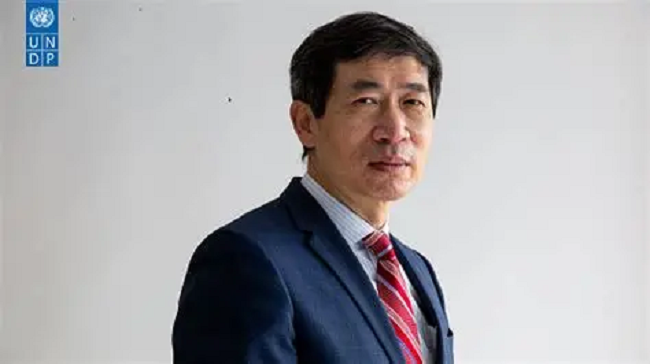
Haoliang Xu
Haoliang Xu, Acting Administrator of UNDP and Co-Chair of UN-Energy

The report cites figures from the 2025 Tracking SDG7 Report that over $4 trillion total investment is needed annually to reduce the ranks of 660 million people living without electricity and over 2 billion still cooking with polluting fuels, while setting the world on a climate action trajectory towards net-zero emissions by 2050 and averting ever-worsening climate impacts.

“The world is entering a decisive moment for energy,” noted the leadership of UN-Energy – Haoliang Xu, Acting Administrator of UNDP and Co-Chair of UN-Energy; Damilola Ogunbiyi, the Special Representative of the UN Secretary-General for Sustainable Energy for All and Co-Chair of UN-Energy; and Li Junhua, Under-Secretary-General of the UN Department of Economic and Social Affairs, which serves as the Secretariat for UN-Energy.

“Choices made today will determine not only whether we achieve our climate and development goals, but also how future generations experience prosperity, equity, and security,” the three UN-Energy leaders added. “The Energy Compacts are proving that transformation is possible (..), that solutions to advance the global energy transition are no longer abstract — they are investment-ready and being scaled, adapted, and delivered.”

Expanding results on energy transition and access

Progress on achieving affordable and clean energy for all – Sustainable Development Goal (SDG) 7 – has been moving forward, but not at the scale and pace needed to meet the deadline of the 2030 Agenda or the climate targets under the Paris Agreement. The Energy Compacts progress report outlines commitments from governments and the private sector, which include planned spending by countries for both domestic and international action to increase energy access, efficiency and renewables, as well as private sector investment slated in these areas.

Since the Energy Compacts were launched in 2021- in connection with the UN High-level Dialogue on Energy – 209 commitments have been registered and substantial results generated, according to the report.

By providing new and improved electricity connections, Energy Compact proponents have enhanced electricity access for 285 million people, a significant increase of 108 million people in the past year. Progress on enhancing clean cooking access by Energy Compact proponents remains slower, with 33 million people added since 2021, up from 23 million last year. The latest Tracking SDG7 Report showed that population growth in Sub-Saharan Africa continues to outpace access gains, leaving approximately 14 million additional people without clean cooking solutions every year.

Updated figures also show how Energy Compacts have had positive impacts on a wide range of SDG goals, such as improving electricity access at over 10,400 health facilities (SDG3), and by helping to deploy over 2.8 million electric vehicles and over 336,000 charging stations (SDG11).

The report includes guidance on how national governments, regions and cities, private companies, financial institutions, UN agencies and civil society organisations can submit their own Energy Compact commitments through an online process.

The report notes that, as countries roll out their updated national climate commitments under the Paris Agreement, incorporating energy targets through national Energy Compacts can serve as an important tool, citing Indonesia and Nepal as examples.

Case studies in the report highlight the diversity of Energy Compacts, ranging from a woman-led, solar-powered digital community centre in Guatemala to a Japanese business that enables customers to track the source of their electricity, as needed to work towards 24/7 carbon-free energy.

The report was prepared by UN-Energy, the coordination mechanism which includes nearly 30 UN and international organisations that work on energy issues, with data compiled and analysed by Sustainable Energy for All (SEforALL).

Nigeria, 100 others unveil NDCs climate plan at UN General Assembly

0

Leaders from Nigeria and 100 other countries have announced and reiterated new national climate action plans at a summit on the sidelines of the 80th UN General Assembly in New York.

The summit was convened by Secretary-General António Guterres alongside President Luiz Inácio Lula Da Silva of Brazil, host of the COP30 conference, which will be held in November 2025 in the Amazonian city of Belém.

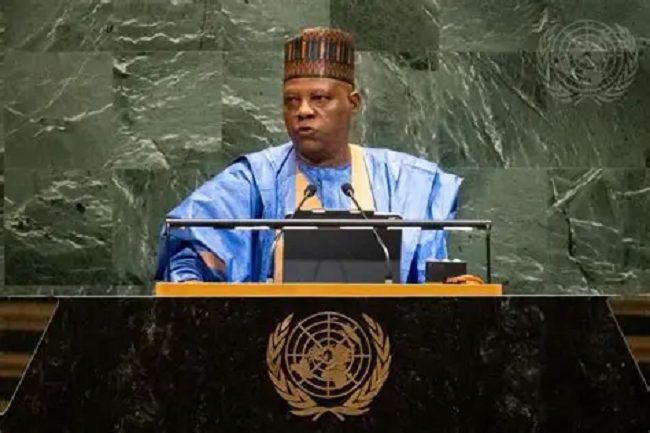
Kashim Shettima
Vice President Kashim Shettima announced Nigeria’s new National Determined Contributions (NDCs) during the UN Climate Summit at the UN General Assembly 2025

At the climate meeting for Heads of State and Government, Vice President Kashim Shettima announced Nigeria’s new National Determined Contributions (NDCs) under the Paris Agreement.

In a strong show of momentum, major economies – including China, the world’s largest emitter, and Nigeria – unveiled economy-wide targets to slash emissions across all greenhouse gases and sectors, making pledges that signal a more unified push toward deep decarbonisation.

Meanwhile, other nations stepped forward with bold commitments: scaling up renewable energy, cracking down on methane, protecting vital forests, and accelerating the phase-out of fossil fuels.

Together, these announcements mark a turning point in global climate ambition, setting the stage for COP30 and a decade of decisive action.

At the outset of the summit, leading climate scientists Johan Rockström and Katharine Hayhoe provided a stark assessment of global efforts so far to honour the Paris Agreement, the landmark 2015 treaty that seeks to limit global temperature rise to 1.5 degrees Celsius above pre-industrial levels.

Ten years on, greenhouse gas emissions that cause global warming continue to rise, and annual global temperature change exceeded 1.5 degrees for the first time last year.

“This is a deep concern,” said Professor Rockström, chief scientist at Conservation International. “An even deeper concern is that warming appears to be accelerating, outpacing emissions.”

Yet it is still possible to meet the 1.5-degree goal, and the two experts highlighted solutions, including transitioning from fossil fuels to clean energy sources and transforming food systems to eliminate waste.

“We cannot prevent this catastrophe alone. But together, we can. By setting stronger targets, moving on faster timelines, and making deeper commitments,” said Professor Hayhoe, a winner of the 2019 UN Champions of the Earth Prize.

Under the Paris Agreement, governments are required to submit climate plans called Nationally Determined Contributions (NDCs) laying out bold action for the next decade.

The treaty has made a difference, the Secretary-General said, as projected global temperature rise dropped from four degrees to less than three over the past 10 years, if current plans are fully implemented.

“Now, we need new plans for 2035 that go much further, and much faster,” he said.

“Delivering dramatic emissions cuts aligned with 1.5 degrees; covering all emissions and sectors; and accelerating a just energy transition globally.”

He stressed that COP30 “must conclude with a credible global response plan to get us on track” and outlined five crucial areas for action: accelerating the transition to clean energy, drastically cutting methane gas emissions, forest conservation, cutting emissions from heavy industry, and ensuring climate justice for developing nations.

With just a few weeks until COP30, President Lula wondered “whether the world will arrive in Belém with its homework done.”

He said that “the energy transition opens the door to a productive and technological transformation comparable to the Industrial Revolution” and NDCs “are the road map that will guide each country through this change.”

For its part, Brazil has committed to reducing all greenhouse gas emissions between 59 per cent and 67 per cent, covering all sectors of the economy, he said, and continues efforts to end deforestation by 2030.

At the meeting, President Xi Jinping of China announced that, by 2035, the country would reduce economy-wide net greenhouse gas emissions by seven to 10 per cent from peak levels.

The country would also increase the share of non-fossil fuels in total energy consumption to over 30 per cent, expand wind and solar power capacity sixfold compared to 2020 levels, and make “new energy vehicles” the mainstream in new vehicle sales, he said in a video message.

Meanwhile, “the clean transition is moving on” in the European Union, where emissions are down nearly 40 per cent since 1990, said European Commission President Ursula von der Leyen.

European countries are also “doubling down on global partnerships” and will remain the world’s largest providers of climate finance, she said, while also mobilising up to 300 billion Euros to support the clean energy transition worldwide.

For Belize, the 1.5-degree goal “is not an aspiration” but “a threshold between hope and hardship, between flourishing communities and forced displacement, between shared prosperity and irreversible loss,” Prime Minister Johnny Briceño, said.

Its new NDC covers concrete actions, such as expanding renewable electricity generation to cover 80 per cent of domestic needs by 2035, restoring some 25,000 hectares of degraded forest, and planting a million trees over the next three years.

“But let me be clear, ambition can only succeed if matched by support for small climate vulnerable nations like Belize.

“This means scaled up, predictable finance; accessible technology and genuine partnerships,” he said, noting that “success depends on all of us acting with unprecedented urgency, solidarity and climate justice.”

By Cecilia Ologunagba