The Nigerian Mining and Geosciences Society (NMGS) has urged relevant authorities to ensure mandatory geoscientific investigations before mining activity is carried out in the country.
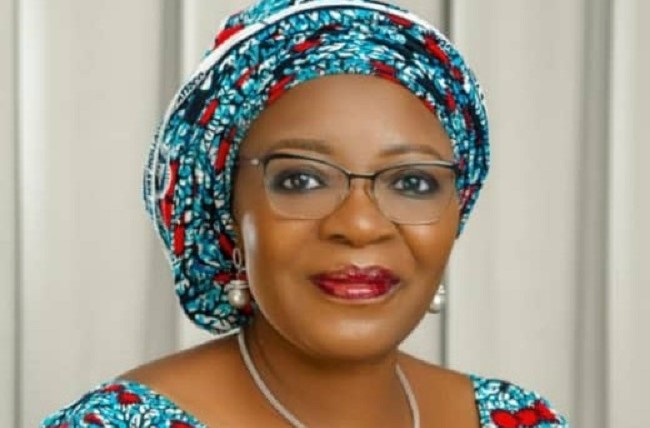
The President of the Society, Ms. Rose Ndong, made the remark on Saturday, January 24, 2026, in Uyo, Akwa Ibom State, at a press conference which was part of activities marking the 261st National Council Meeting of NMGS.
Ndong said that such investigations would not only serve as a foundation for sustainable infrastructure development, but enhance environmental management.
President, Nigerian Mining and Geosciences Society (NMGS), Ms. Rose Ndong
She decried the level of illegal mining activities in the country, saying that aside the economic loss Nigeria had suffered, the environmental degradation had been worrisome.
Ndong raised concerns over pushbacks from the people who engaged in such practices when confronted, and advocated more sensitisation of the public to curb the menace.
“NMGS will continue to advocate for mandatory geoscientific investigations as a foundation for sustainable infrastructure development.
“We are looking at how these minerals can be extracted safely without making it so chaotic.
“It’s not just our body, there are other bodies that are working with us as partners in sensitising people, especially women and young children that are being used in some of these areas or sites,” Ndong said.
She also added that the 61st Annual International Conference & Exhibition (AICE), Uyo 2026, would be held in March to advance geoscientific knowledge and professional practice in the country.
She said the theme of the conference would be “Optimising Efficiency, Sustainability and Resilience in Resources Management and Infrastructure Development.”
The president said that the theme reflected the urgent need to responsibly manage Nigeria’s natural resources while building infrastructure that would be safe, durable and climate-resilient.
“The Annual International Conference and Exhibition (AICE) is NMGS’s flagship event and one of the largest geoscience gatherings in Africa.
“The Uyo 2026 Conference is significant in several respects as it will provide a forum for knowledge exchange between academia, industry, and government.
“It will showcase emerging technologies and innovations in geosciences, strengthen Nigeria’s profile in global geoscientific discourse as well as support evidence-based policymaking in resources and infrastructure development,” Ndong said.
She commended Gov. Umo Eno of Akwa Ibom for the systematic transformation of statement geo-tourism assets to economic and scientific values in his Arise Agenda.
Ndong said that Akwa Ibom had demonstrated commendable commitment to geo-tourism and sustainable environmental development.
“A notable example is the ARISE Palm Resort, which harmoniously integrates natural landscapes, geological features, recreational and tourism infrastructure.
“In addition, the state’s waterfront developments, extensive coastline, beach sands, wetlands, and estuarine systems represent significant geo-tourism assets with both economic and scientific value.
“Akwa Ibom is also endowed with beach and construction sands, clay, laterite, gravel prospects, and other industrial minerals, groundwater and surface water resources,” she said.
She said the conference would provide an opportunity to scientifically showcase and promote the resources of the state to investors, researchers, and policy makers.
The National Environmental Standards and Regulations Enforcement Agency (NESREA) has launched an investigation into allegations of illegal logging in Ekuri community forests in Akamkpa Local Government Area of Cross River State.
The action followed petitions by civil society organisations, the Rainforest Resource & Development Centre (RRDC) and the Panacea for Developmental and Infrastructural Challenges for Africa Initiative (PADIC-Africa), which accused Ezemac International Limited of carrying out unauthorised logging activities in Old and New Ekuri forests.
In the petitions, RRDC, led by its Executive Director, Prince Odey Oyama, and PADIC-Africa, headed by Dr. Martins Egot, a community leader in New Ekuri, alleged that, between January 9 and 12, 2026, Ezemac deployed heavy machinery into the community forest without consent or lawful forest allocation.
Community forest: NESREA is investigating alleged illegal logging in Ekuri community forest. Photo credit: UNDP Cambodia/Chansok Lay/Oddar Meanchey
They claimed that two bulldozers, an excavator and four to five heavy-duty trucks were moved into the forest to fell mature trees within what they described as a protected ecological corridor, adding that the operations were unplanned, unsustainable and lacked valid export authorisation.
RRDC called on NESREA to carry out an urgent compliance and enforcement inspection, investigate the company’s export-related activities, and assess its compliance with the Environmental Impact Assessment Act and the NESREA Act.
The group urged the agency to impose sanctions where violations are established, warning that failure to act could undermine existing presidential directives on logging.
In a similar petition, PADIC-Africa alleged that community forest governance in Ekuri was being undermined through intimidation, claiming that law enforcement actions appeared to favour corporate interests over environmental protection and community rights.
Dr. Egot said the New Ekuri community was demanding the immediate withdrawal of all Ezemac equipment from the forest, a transparent investigation into the legality of the company’s activities, an independent environmental damage assessment, and an injunction restraining the company and its agents from accessing the forest pending the conclusion of investigations.
Confirming the investigation, the Director and State Coordinator of NESREA, Comrade Raymond Anunobi, said officials of the agency were in Cross River State on the directive of the Director-General, Prof. Innocent Barikor, to verify the allegations contained in the petitions.
“We are here to ensure that environmental laws are enforced and properly regulated. We assure Nigerians that justice will be done,” Anunobi said.
He warned that any individual or organisation found culpable would be sanctioned in line with the law, adding that NESREA had commenced its mandatory investigation process. He also urged communities and civil society groups to promptly report environmental violations to the agency to enable timely intervention.
Responding to the allegations, the Chief Executive Officer of Ezemac International Limited, Mr. Ezenwa Igwe, denied any wrongdoing, insisting that his company was not involved in illegal logging in the New Ekuri protected community forest.
“I have a permit. I generate revenue for both the state and local governments, and I employ over 180 workers across Cross River State. I operate a standard factory,” Igwe said.
He also denied logging for export, stating that all processing is done within the state. “I recycle my wood and do not take timber outside Cross River. I process my wood in Ugep where I make doors. If my operations were illegal, the Forestry Commission would not issue me documents or allow me to operate,” he added.
Meanwhile, the Cross River State House of Assembly is expected to meet with all parties on January 27, 2026, to hear from them and work towards resolving the dispute.
The Rural Electrification Agency (REA) and Lotus Bank have reached a strategic milestone in their collaboration to deepen financing for energy access across Nigeria.
Following a high-level meeting on Wednesday, January 21, 2026, the two institutions announced plans to transition from project-based support to a large-scale, dedicated financial framework.
The engagement focused on the Distributed Access through Renewable Energy Scale-up (DARES) programme.
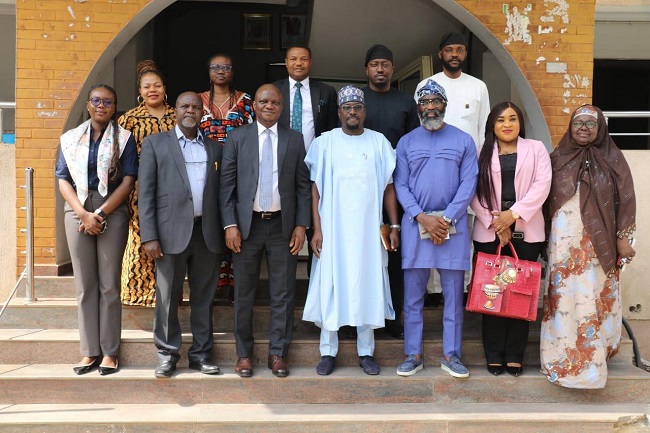
Officials of Rural Electrification Agency (REA) and Lotus Bank at the high-level meeting
While Lotus Bank has already been active in supporting individual projects under this initiative, the new phase of the partnership will see the bank establish its own dedicated DARES financing facility.
During the session, the Managing Director of the REA, Dr Abba Aliyu, challenged the bank’s leadership to adopt a bold approach by setting a clear global funding target for the facility.
The agency emphasised the need for strong internal standards and a design that prioritizes the ability of developers to scale their operations quickly.
“That level of intentionality is exactly what the sector needs if we’re serious about moving from pilots to impact at scale,” the REA Managing Director noted.
The shift reflects a growing trend among forward-thinking Nigerian financial institutions that are increasingly viewing renewable energy as a bankable and commercially viable sector rather than strictly a social good.
Both organisations are now working toward the signing of a formal Memorandum of Understanding (MoU) to institutionalise the partnership. This agreement is expected to provide the structured capital necessary to accelerate the deployment of clean energy solutions to underserved and unserved communities nationwide.
The REA remains optimistic that this collaboration will serve as a model for other commercial banks building the necessary momentum to bridge Nigeria’s energy deficit through sustainable, private-sector-led investment.
The Nigerian Midstream and Downstream Petroleum Regulatory Authority (NMDPRA) says the prices of petrol, diesel and Liquefied Petroleum Gas (LPG) will continue to decline nationwide.
The Authority’s Chief Executive, Mr. Saidu Mohammed, stated this on Sunday, January 25, 2026, in Ogbele community, Ahoada East Local Government Area of Rivers State, during an inspection of Aradel Holdings Plc facilities.
Mohammed attributed the expected price reduction to rising supply, increased competition and sustained private sector investments in the oil and gas sector.
NMDPRA Authority’s Chief Executive, Mr. Saidu Mohammed
According to him, Nigerians are gradually moving towards affordable energy as improved supply continues to drive price stability.
“The more supply we have, the lower the price, and this is already evident as petrol has dropped from about N1,000 to N800 per litre due to competition,” he said.
Mohammed explained that the removal of fuel subsidy had allowed market forces to function properly, improving efficiency across the downstream sector.
“Sustained competition, rather than subsidies, will guaranty adequate supply of petrol and gas at affordable prices for Nigerians,” he added.
He stressed the need for additional refineries with advanced conversion capacity to produce diesel, fuel oil, naphtha, LPG and petrol.
The NMDPRA chief said Nigeria’s ambition extended beyond local consumption to exporting petroleum products to Africa, Europe and the Americas.
“However, domestic demand must first be adequately met by local operators before large-scale exports can commence,” he said.
Mohammed noted that President Bola Tinubu strongly supported a free-market economy, recalling that subsidy removal was the President’s first major policy decision.
According to him, the policy unlocked private sector participation and stimulated investments across the oil and gas value chain.
On the state-owned refineries, Mohammed said their operational conditions largely remained the responsibility of the Nigerian National Petroleum Company Limited (NNPCL).
NMDPRA, he said, was engaging NNPCL to ensure the delivery of crude oil and petroleum product to the Port Harcourt and Warri refineries reserves.
“Delivery of products to the reserves and restoring loading activities at the refineries will boost local economies and revive product distribution within host communities.
“Once product loading resumes, Nigerians will begin to feel the economic impact, even before full refinery operations,” he said.
Mohammed added that Nigeria’s economic growth depended heavily on the rapid expansion of locally owned midstream assets.
He said facilities inspected during his three-day operational tour across Rivers demonstrated that Nigerians had the capacity to design, finance, build and sustainably operate world-class energy infrastructure.
He singled out Aradel Holdings, nothing that the company had proven that Nigerians could efficiently operate a refinery sustainably without foreign operatorship.
Mohammed disclosed that Aradel’s ongoing expansion would enable the loading of petrol from its facility before the end of 2027.
“Aradel has supplied gas to Nigeria Liquefied Natural Gas (NLNG) for about 13 years, alongside also operating an 11,000-barrels-per-day refinery.
“The company also runs a virtual gas pipeline, producing compressed natural gas distributed across several parts of Nigeria,” he said.
He urged further investments in refining, noting that the Dangote Refinery alone could not meet domestic, continental and global demand.
He described the midstream sector as Nigeria’s strongest driver of economic growth, capable of stimulating manufacturing, power generation, transportation and other productive sectors.
Mohammed gave the assurance that the NMDPRA would continue to provide regulatory incentives to attract large-scale investments into the midstream sector.
Responding, Managing Director of Aradel Holdings, Mr. Adegbite Falade, thanked NMDPRA for its regulatory support and confidence in operators
Falade said the company remained committed to expanding refining capacity, commercialising gas and eliminating routine gas flaring.
“We are not overwhelmed by rising demand, as the company is already expanding its refining capacity beyond current levels.
“Aradel aims to be part of the long-term solution to Nigeria’s energy supply challenges. Nigerians should expect continued scaling, local value addition and prioritisation of domestic energy needs,” he said.
Nigeria’s efforts to negotiate with bandit groups continue to fail in achieving lasting peace, according to recent research by the Centre for Development Communication (CDC). The study focused on Otukpo in Benue State, Barkin Ladi in Plateau State, and Yagba West in Kogi State, areas heavily affected by banditry.
Through 36 interviews with men, women, youth leaders, security personnel, and NGO representatives, the research uncovered systemic weaknesses in the country’s negotiation approach.
A central finding is that Nigeria’s strategy is largely transactional. Negotiations focus on amnesty, cash payments, logistics, or temporary ceasefires, rather than addressing the root causes of violence.
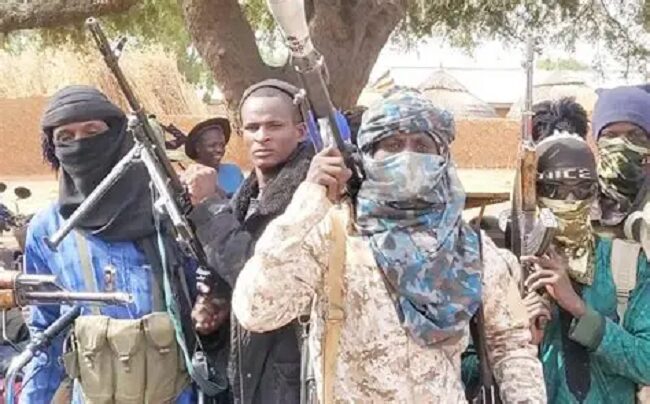
Bandits
Participants explained that terminating disputes without resolving underlying issues only ensures that conflicts resurface. Youth leaders and local residents emphasised that genuine progress requires participatory negotiation processes designed by experts who place communities – not politicians – at the centre.
Communication failures further undermine the legitimacy of peace efforts. Negotiations are elite-driven, state-centric, and heavily militarised, leaving communities largely excluded. Women, farmers, pastoralists, and local mediators are rarely recognized as active peace actors.
This exclusion fosters mistrust and erodes confidence in state-led dialogue. Communities are often portrayed as passive victims, while bandits are framed solely as criminals, oversimplifying complex realities and weakening transformative peacebuilding.
The research also highlighted the neglect of indigenous knowledge systems. Traditional arbitration, inter-communal dialogue, shared resource arrangements, and culturally rooted accountability mechanisms have historically managed conflict, yet they are sidelined. Social realities such as land pressure, governance breakdown, rural marginalisation, and historical grievances are often ignored, limiting the effectiveness of negotiations.
Participants stressed that lasting peace requires more than temporary agreements. Conflict transformation demands shifts in relationships, narratives, and power dynamics. Dialogue must go beyond ending violence to repair trust, empower communities, and foster ownership of peace processes. Without participation, ceasefires collapse because they fail to address the conditions that make violence a rational choice.
Based on these findings, CDC recommends reframing negotiations as participatory processes that include women, youth, farmers, pastoralists, and local mediators in dialogue design, monitoring, and decision-making. Community narratives and social realities must guide policy reforms and locally grounded peace frameworks.
Communication should be used as a tool for inclusion and systemic change, restoring dignity, building trust, and fostering shared ownership of peace. Sustained listening platforms, dialogue, and narrative repair initiatives are essential to redefine communities as active agents of peace.
Unless these deliberate shifts are implemented, Nigeria’s banditry negotiations will continue to produce temporary ceasefires rather than achieving sustainable conflict transformation. Genuine, people-centered, and participatory communication is the missing link that can turn negotiation into long-term peace.
By Audu Liberty Oseni, Director, Centre for Development Communication
The Ekiti State Environmental Protection Agency (EKSEPA) has warned residents of the Oye-Ekiti area to desist from burning and dumping refuse in drains and waterways.
The Chairman of the agency, Mr. Bamitale Oguntoyinbo, issued the warning in an interview on Sunday, January 25, 2026, in Oye-Ekiti.
Oguntoyinbo explained that refuse dumped in drains often leads to blocked waterways, which in turn causes flooding during the rainy season.
Gov. Biodun Oyebanji of Ekiti State
According to him, blocked waterways create serious problems and result in huge financial costs for both the community and the government.
Oguntoyinbo disclosed that the state government spent millions of naira on dredging waterways during the 2025 rainy season to curb flooding in various communities and towns across the state.
The EKSEPA boss advised shop owners, landlords, and caretakers to ensure that refuse from their premises is disposed of at designated dump sites.
He also urged clinics and hospitals to properly dispose of medical waste to prevent environmental and health hazards.
Oguntoyinbo stressed that dumping refuse in waterways is a bad habit that can cause flooding and negatively affect other residents during the rainy season.
He warned that anyone caught dumping refuse in drains or waterways would be arrested and made to face the wrath of the law.
The Lagos State Government has described its recent demolitions exercise in Makoko and other communities as efforts geared towards protecting live and property of the citizens.
The government said the intervention was also to ensure environmental safety and sustainable urban development across the state.
This is contained in a statement signed by the Commissioner for Information and Strategy, Mr. Gbenga Omotoso, after an engagement designed to foster dialogue between the government and residents on Sunday, January 25, 2026, in Lagos.
Makoko demolition
Omotoso described the demolitions in the affected settlements as necessary interventions aimed at preventing disasters, improving safety, and repositioning Lagos as a resilient and sustainable megacity for future generations.
Responding to criticisms describing the exercise as anti-poor, Omotoso said: “The actions were driven by safety, environmental protection and security concerns, particularly structures erected beneath high-tension power lines and along critical waterways.”
According to him, no responsible government will permit habitation under power cables or obstruction of waterways.
“The measures were preventive, not punitive, and intended to avert disasters and safeguard the long-term future of Lagos.”
Omotoso disclosed that the affected communities had been engaged for over five years, noting that laws require buildings to be at least 250 metres away from power lines.
He maintained that fallen cables into waterways could cause catastrophic disasters.
Contributing, the Special Adviser to the Governor on e-GIS and Urban Development, Mr. Olajide Babatunde, explained that the demolitions followed safety assessments and longstanding urban planning regulations.
According to him, the demolitions align with a broader urban regeneration blueprint.
He listed successful relocation such as Oko Baba, where residents were moved to modern estates, and urged adherence to planning regulations to avoid future conflicts.
Socio-Economic Rights and Accountability Project (SERAP) has filed a lawsuit against the Minister of Power, Mr. Adebayo Adelabu, and Nigerian Bulk Electricity Trading Plc. (NBET), Abuja “over the failure to account for the missing or diverted N128 billion of public funds from the Ministry of Power and NBET.”
The allegations are documented in the latest annual report published by the Auditor-General on September 9, 2025. Corruption contributes significantly to the frequent grid collapses, as Nigerians last week witnessed the first grid collapse of 2026, plunging the country into darkness.
In the suit number FHC/ABJ/CS/143/2026 filed last Friday at the Federal High Court, SERAP is seeking: “an order of mandamus to direct and compel Mr. Adelabu and NBET to account for the missing or diverted ₦128 billion from the ministry of power and NBET.”
Minister of Power, Mr Adebayo Adelabu
SERAP is also seeking: “an order of mandamus to direct and compel Mr Adelabu and NBET to disclose details of how the missing or diverted ₦128 billion was spent including the dates of disbursement and the purported beneficiaries or contractors, who received the money as well as their registered business names and addresses.”
SERAP is seeking: “an order of mandamus to direct and compel Mr. Adelabu and NBET to disclose the full names, official designations, and offices of all public officers who authorized, approved, or otherwise participated in the release of the missing or diverted ₦128 billion in the ministry of power and NBET.”
In the suit, SERAP is arguing that: “Nigerians continue to pay the price for the widespread and grand corruption in the power sector. There is a legitimate public interest in ensuring justice and accountability for these grave allegations.”
SERAP is also arguing that, “granting the reliefs sought would contribute to tackling corruption in the power sector and addressing the persistent breakdown of transmission lines in the country, as well as improving access of Nigerians to regular and uninterrupted electricity supply.”
SERAP is arguing that, “granting the reliefs sought would also strike a blow against the impunity of those responsible for the missing or diverted public money meant to provide Nigerians with access to regular and uninterrupted electricity supply.”
According to SERAP, “Ordinary Nigerians continue to pay the price for corruption in the electricity sector–staying in darkness, but still made to pay crazy electricity bills.”
The lawsuit filed on behalf of SERAP by its lawyers, Kolawole Oluwadare, Kehinde Oyewumi, and Andrew Nwankwo, reads in part: “These grim allegations by the Auditor-General suggest a grave violation of the public trust, the Nigerian Constitution 1999 [as amended] and international anticorruption standards.
“According to the recently published 2022 audited report by the Auditor-General of the Federation, the Federal Ministry of Power failed to account for over N4.4 billion [N4,404,647,938.53] ‘transferred to Mambilla, Zungeru and Kashimbilla project accounts by the Ministry.
“There was ‘no evidence of how the funds were expended.’ The Auditor-General fears ‘the money may have been diverted.’ He wants the money recovered and remitted to the treasury.
“The Ministry also paid over N95 billion [N95,415,183,701.83] to ‘some contractors for various projects.’ But ‘there was no document on the payments, and no evidence that the projects existed and were executed.’ The Auditor-General fears ‘the money may have been diverted.’ He wants the money recovered.
“The Ministry paid over N33 million [N33,557,959.00] ‘for foreign travels’, but ‘without any approvals.’ The money ‘was paid as estacode, flight tickets, visa fees and other allowances to enable the minister and his aides to attend the World Utilities Congress at Abu Dhabi and Huawei innovation land exhibition in Dubai.
“The travels ‘were never approved by the Secretary to the Government of the Federation or the Head of Civil Service.’ The Auditor-General fears ‘the money may have been diverted.’ He wants the money recovered and remitted to the treasury.
“The Ministry failed to account for over N230 million (N230,795,255.27) being ‘expenditure on the GIGMIS platform.’ The Auditor-General fears ‘the money may have been diverted.’ He wants the money recovered and remitted to the treasury.
“The Ministry also paid over N282 million (N282,672,576.53) as ‘non-personal advances to various staff of the ministry for the procurement of goods and services.’ But the ‘payments were beyond the statutory threshold of N200,000.00.’ The Auditor-General fears ‘the money may have been diverted.’ He wants the money recovered.
“The Nigerian Bulk Electricity Trading Plc., (NBET) Abuja also ‘irregularly awarded contracts for over N427 million (N427,491,866.16). There was ‘no evidence of advert placements in the procurement journal’.
“The Auditor-General fears ‘the contracts may have been awarded to incompetent contractors’, resulting in ‘loss of government funds.’
“NBET ‘irregularly transferred over N7 billion (N7,620,840,000.00) into purported sub-accounts of unnamed beneficiaries.’ There was also ‘no authority for such payment, contrary to the Financial Regulations.’
“NBET claimed it paid over N9.3 billion (N9,336,986,697.17) to Egbin Power PLC ‘as outstanding payment on GenCos for Power Sector Reform Programme.’ But there ‘was no document to authenticate the genuineness of the transactions.’ The Auditor-General fears ‘the money may have been diverted.’ He wants the money recovered.
“NBET paid over N8 billion (N8,027,355,487.20) ‘to some beneficiaries’ but ‘without entering the transaction into the payment vouchers register and the vote book.’ The Auditor-General fears ‘the money may have been diverted and misapplied.’ He wants the money recovered and remitted to the treasury.
“NBET also reportedly ‘awarded contracts of over N420 million (N420,665,525.65) to eleven ineligible consultants.’ The payments ‘were for various consultancy services such as technical support on power plant capacity testing of 5 power plants.’ But there was ‘no evidence that the services paid for were rendered.’
“The ‘engagement of the consultants also failed to meet due process as required by the Procurement Act.’ The Auditor-General fears ‘the money may have been diverted.’ He wants the money recovered and remitted to the treasury.
“NBET also failed to account for ‘payments of over N45 million [N45,851,647.92] as contingency, logistics and security charges for six contracts.’ The payments were ‘made without any application from the contractors and without any approval.’
“There was ‘no breakdown of the expenditure’. The Auditor-General fears ‘the money may have been diverted’ or the payments ‘may be for work not done.’ He wants the money recovered and remitted to the treasury.
“NBET spent over N61 million (N61,775,659.75) from the capital vote on consultancy services but without any provision made for it in the approved capital budget of the company.’ The ‘payments were also made without any approval for virement.’ The Auditor-General fears ‘the money may have been diverted’ or ‘may have been misapplied.’ He wants the money refunded to the treasury.
“NBET also ‘irregularly awarded contract of over N39 million (N39,661,081.83) for the supply and installation of a video conferencing solution to the NBET office.’ But ‘there was no evidence of any work done.’
“The same contract ‘was re-awarded to another contractor without any open competitive bidding, such as advertisement, quotations, and financial bid evaluation.’ There was also ‘no evidence that any job was completed.’
“NBET ‘paid over N49 million (N49,995,000.00) for the supply of three units of Toyota Corolla, 2019 model’, but the contract was awarded without any approval.’ There was ‘no Bureau of Public Procurement approval, minutes of tenders board approvals and technical and financial evaluation reports.’
“NBET also ‘paid over N8 million [N8,744,186.05] as legal fees to a legal practitioner.’ But the payment was ‘without the approval of the Minister of Justice and Attorney General of the Federation.’”
“NBET also ‘irregularly paid over N8.9 million [N8,928,000.00] for the professional development program of five officers working in the organization.’ The payment ‘was made as reimbursement of the balance of the course fee.’ The Auditor-General fears ‘the money may have been diverted.’ He wants the money recovered.
“NBET also spent over N1 billion [N1,100,279,895.20] ‘as extra-budgetary spending’, but without any approval from the Minister of Finance and the National Assembly.’ The Auditor-General fears ‘the money may have been misappropriated and misapplied.’ He wants the money refunded and remitted to the treasury.
“NBET also ‘paid over N110 million (N110,556,502.00) to companies and retail supermarkets for staff to pick items and promotion packages for Easter and Salah between 2021 and 2022.’ The payments ‘were made without any document.’
“Section 13 of the Nigerian Constitution imposes responsibility on the ministry of power and NBET to conform to, observe and apply the provisions of Chapter 2 of the constitution. Section 15(5) imposes the responsibility on the ministry and NBET to abolish all corrupt practices and abuse of power.
“Article 26 of the UN Convention against Corruption which Nigeria has ratified requires the ministry of power and NBET to ensure ‘effective, proportionate and dissuasive sanctions’ in cases of grand corruption.
“Article 26 complements the more general requirement of article 30, paragraph 1, that sanctions must take into account the gravity of the corruption allegations.”
No date has been fixed for the hearing of the suit.
Two things made Nigeria’s attendance at this year’s Abu Dhabi Sustainability Week Summit (ADSW 2026) very remarkable. One, it showed how the sequence of actions by Nigeria’s leader, President Bola Ahmed Tinubu, undergirded his determination to pave a promising future for the country’s energy transition agenda.
Secondly, the fact of the President’s consistent attendance, which made it easy for him to attract the hosting of Investopia 2026 to Nigeria, and the unveiling of the Nigeria’s Carbon Market Framework, combined to make the country the cynosure of all delegations at the seven days event.
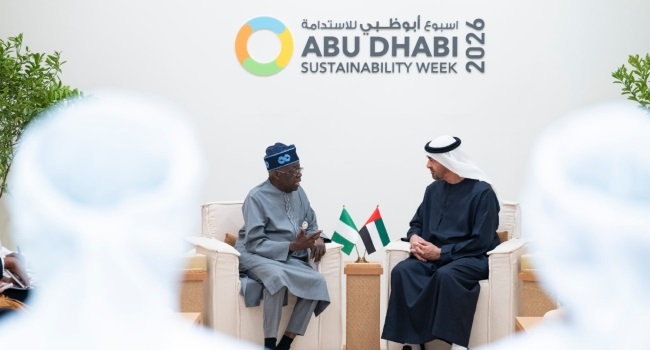
President Bola Tinubu (left) and President of the UAE, Sheikh Mohamed bin Zayed Al Nahyan (R) in Abu Dhabi for Abu Dhabi Sustainability Week. Photo credit: X@officialABAT
The Investopia, which is expected to be co-hosted by Nigeria and the United Arab Emirates, in Lagos in February, this year, will showcase Nigeria as an investors’ haven, especially its pedigree as home to over 250 million persons and Africa’s most populous nation.
Bouyed by its significant population of well-educated youths and easy access to ECOWAS and the rest of Africa, Nigeria indeed is the go-to place as far as access to market and networking is concerned.
Although it came at a great personal cost, I was happy I made it to the Abu Dhabi meet, where the International Renewable Energy Agency (IRENA) Assembly preceded the talks on the Sustainability Week. As I sat through the President’s address, I quickly recalled his 2025 observations. The President had declared at the ADSW2025: “The fight against Climate Change is not merely an environmental necessity, but a global economic opportunity to reshape the trajectory of our continent and the global energy landscape.” Further, he stressed that “to succeed, we must innovate, collaborate and decisively collaborate as a global community.”
I recalled also, how in the course of his inaugural address at the Eagle Square, Abuja, on May 29, 2023, the President had stated: “Our government shall also work with the National Assembly to fashion an omnibus jobs and prosperity bill. This bill will give our administration the policy space to embark on labour-intensive infrastructural improvements, encourage light industry and provide improved social services for the poor, elderly and vulnerable.”
At every turn in the activities of the ADSW 2026, it was evident that President Tinubu’s consistent push for environmental renewal undergirded his belief that energy transition was the key to future prosperity.
That could explain why during his 2024 Budget Speech in November 2023, he declared that “we have strategically made provisions to leverage private capital for big-ticket infrastructure projects in energy, transportation and other sectors.
“This marks a critical step towards diversifying our energy mix, enhancing efficiency and fostering the development of renewable energy sources…”
Of course, knowing that here was a President who signed into law the Electricity Bill barely eight days after taking office, made me recall the rigours the House of Representatives and I, under the efficient leadership of Speaker Femi Gbajabiamila, went through to deliver Nigeria’s signature law, the Climate Change Act 2021.
So far, the Nigerian leader has continued to build on that foundation to catapult the country’s profile in the emerging global energy economy. And all that showed during the ADSW 2026.
By assenting to the Electricity Act of 2023, the President dismantled decades of suffocating centralised control over power and invited states and the private sector to finally build. It was the first tangible signal that this administration might approach its promises as a blueprint, not a bromide.
What is more, as Nigeria approached the COP28 climate summit, the directive to relevant agencies was sharp and singular: secure substantial international funding and partnerships to bolster the national energy transition plan. The mandate was to move from advocacy on the global stage to securing concrete, actionable commitments.
At the Abu Dhabi Sustainability Week, therefore, the President reinforced my conviction that Nigeria’s prosperity depends on a fundamental shift to clean, reliable energy. ADSW showed that indeed, the polished global conversation had finally moved from declarations to the gritty mechanics of delivery.
Verging on the core of this progressive conversation is the continuing search for how nations are building on their ambitious promises. Nigeria’s leader did not disappoint. President Tinubu was there live, not as a passive potentate, but as a leader actively involved and leading the charge, providing directions and proffering workable strategies.
The fact of his 2025 and 2026 consecutive physical presence did much to impact on the atmosphere in a way no policy paper could. It signaled to every investor, diplomat, and executive present that Nigeria’s energy transition is not a side project managed by mid-level officials, but a top priority owned and driven from the very highest level of government.
“Nexus to Next: All Systems Go,” that was the theme of the ADSW 2026. To Nigeria, that phrase carried a particular, almost painful, weight. Our systems – the grid, the financial architecture, the regulatory environment energy, human capital – have infamously not been “going” for a long time. Our message was that we are finally, seriously, rewiring them, and we are using the global green transition as the master blueprint for this overhaul.
We came forward with proofs and specifics: That the 2023 Electricity Act is no longer just a landmark legislation. It is the thriving legal bedrock, which allows a company to construct a solar mini-grid for a hospital in rural Abia, Nasarawa, Borno, etcetera without pleading for federal permission. We are talking about a decisive shift from theoretical potentials to practical, on-the-ground projects.
In plain terms, it could be seen that Nigeria was particular about energy financing. Our pitch was built for the financial pragmatists in the room. We did not ask for aid or concessionary pity; we presented a business case, complete with the instruments we had already built and tested.
A Sovereign Green Bond, oversubscribed by 82 per cent, was cited as proof that the market was listening. A five-hundred-million-dollar Distributed Access through Renewable Energy Scale-up (DARES) was highlighted as capital that is well established, managed, and ready to deploy. A seven-hundred-and-fifty-million-dollar programme with the World Bank, already in motion, aims to bring clean electricity access to over seventeen million Nigerians.
The takeaway from ADSW 2026 for other countries is that Nigeria has progressed from making pledges to creating the financial machinery to fulfil them. The country has clearly set the structure for global connectivity and revenue inflow.
The gamechanger
It was a bang: The signing of the Nigeria-United Arab Emirates Comprehensive Economic Partnership Agreement (CEPA), came through as the gamechanger. Here was a hard negotiated, and ratified trade deal. The UAE will eliminate tariffs on over seven thousand Nigerian products, and Nigeria will do the same for about six thousand UAE products.
This agreement also signals the creation of qualitative jobs, particularly for Nigeria’s young population, in agriculture real estate, digital banking, retail and infrastructure financing. Can you beat that? Consider what that means for a moment.
To a furniture manufacturer in Lagos, a certified cocoa processor in Ondo, or an assembler of electronics in Nnewi, one of the most significant barriers to entering one of the world’s most affluent and connected markets has just been dismantled.
This is the most decisive policy push for a post-oil, industrialised economy I have witnessed in a generation. It will masterfully transform Nigeria’s green transition from an internal development goal into a compelling global trade and investment opportunity.
In the conference hall, you could almost see the recalibration happening in real-time behind the eyes of the assembled investors and partners.
Yet, amidst this powerful forward thrust, the most intellectually resonant moment for me was one of direct and necessary challenge: President Tinubu turned to the custodians of global development finance, reminding them that their prevailing model has become fundamentally flawed.
He argued persuasively that shackling developing nations with ever more sovereign debt to build the very solar grids, climate-resilient agriculture, and infrastructure the whole world needs is neither morally fair nor operationally sustainable.
President Tinubu’s proposal for innovative blended finance was, in essence, a clarion call to rebalance the scales of risk. It framed the conversation not as a plea for concessionary terms, but as a strategic renegotiation of the partnership between global capital and emerging economies.
The audacity of this position carried significant weight precisely, because of the groundwork he had just laid. For the preceding hour, his presentation had systematically dismantled the old narrative. He had not outlined a list of needs; he had catalogued a portfolio of ready opportunities, established governance frameworks, and concrete financial instruments. He had demonstrated that Nigeria arrived at the table not as a supplicant, but as a serious and credible counterparty, fundamentally changing the context of the tasks that followed.
Lessons
Nigeria’s presence at the ADSW 2026 had rich lessons. First, credibility is a currency minted through consecutive, verifiable action. Nigeria’s voice carried an unfamiliar weight in those rooms because it was backed by a trail of veritable policies: The Climate Change Act, the Electricity Act, the oversubscribed green bonds, the National Climate Change Fund, our Pilot Electric Mobility Project, National Carbon Market Activation Policy, etcetera. The President’s personal stewardship on that global stage was the final, unmistakable stamp on that currency.
Second, true progress lies in deliberate connection. We are finally, seriously attempting to systematically link power generation to job creation, our vast rare earth minerals to domestic manufacturing, and foreign investment to the development of local skills. This is the integrated, forward-thinking industrial strategy we disastrously failed to build during the oil boom. The green transition, ironically, is our nation’s second chance to get it right.
Finally, and most importantly, there is more crucial work to be done. If Abu Dhabi was the international exhibition hall where we displayed the blueprint and the prototypes, our country has become the workshop floor where we must now manufacture the future at scale.
The landmark trade deal with the UAE is a paper victory if our businesses cannot innovate, scale, and produce goods of competitive quality to seize the opportunity. The billion-dollar funds are empty vessels without a robust, transparent pipeline of professionally managed, bankable projects to absorb the capital.
To me, as the sponsor of the Nigeria’s Climate Change Act 2021, leaving the fine city of Abu Dhabi my mind revolved around challenges the country faces in ensuring that we meet the lofty expectations the global energy community has come to place on due to President Tinubu’s highwater offerings.
With the President’s commitment and determination, we can rest assured that come COP31, the world will be pleased to learn how far Nigeria and its energy transition advocate, President Bola Tinubu, have doubled down on its successes.
They call it “All Systems Go”. From my vantage point in Abu Dhabi, it seems Nigeria has, against considerable odds and history, managed to get its key systems to the Launchpad, and begun the ignition sequence.
President Tinubu’s closing statement, “Let me close by reassuring the international business community that Nigeria is ready for business,” captures the mind of a leader that is confident of his strategies. A bright future awaits.
By Rep Sir. Sam Onuigbo, a member of Governing Board of the North East Development Commission (NEDC), who attended the ADSW2026 in Abu Dhabi
I walked into the exhibition thinking I understood waste, bins, trucks, recycling slogans, and policy gaps. I walked out realising that what we often call “waste management” in Nigeria is actually people management. And most of the people doing the work are invisible.
The project exhibition and dialogue, titled “Capturing Realities and Empowering Change: Informal Waste Work in Abuja’s Circular Economy”, was held in Abuja on January 22, 2026, and convened by the Nigeria Green Academy fellows Mr. Aniebiet Obot and Mr. Eugene Yakubu Shichetwith support from the Heinrich Böll Stiftung, Nigeria.
It brought together informal waste workers, policymakers, private sector actors, civil society, and development partners. But more than that, it brought stories into the room. Stories that do not usually make it into policy documents.
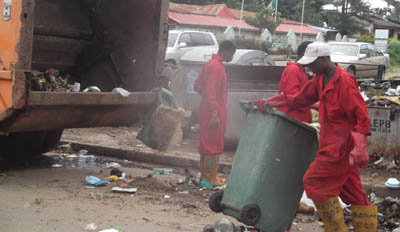
Officials of one of the AEPB waste evacuation contractors, on duty in Garki Area of Abuja
From the beginning, the tone was different. This was not about presenting perfect solutions. It was about naming reality. One of the strongest moments for me came during the keynote address by Mr. Aniebiet Obot. He spoke about how informal waste work sustains families far beyond. Many waste workers send money back home.
They support siblings, parents, and their children. Some are responding to loss of livelihoods caused by climate change, desertification, and insecurity, especially in the Northeast. Waste picking in this context is not a temporary hustle; it is a livelihood strategy in a country where options are shrinking.
We often talk about unemployment in abstract numbers. But here, the numbers had faces. In Abuja alone, there are over 10,000 informal waste workers. That is not a fringe group, that is a workforce. Yet they remain largely criminalised, stigmatised, and excluded from formal planning.
During the first panel discussion on lived realities of informal waste workers, an informal waste worker, Mr. Hamisu Jamiu, described his daily experience. He has worked in the sector for over 10 years. He spoke about harassment by security personnel, lack of protective equipment, and the absence of any formal identification that could help people recognise him as someone providing a public service, not committing a crime.
Still, he was clear about one thing. This work feeds his family. It puts food on the table. It keeps life moving. Listening to him, I realised how often policy conversations erase dignity. We debate systems but forget the cost of exclusion on real bodies.
Other panelists reinforced this point from different angles. Representatives from the recycling sector acknowledged their reliance on informal waste workers. Government officials spoke about the need for organisation, structure, and professionalism, while also recognising that current systems are fragmented and weak. Everyone, in one way or another, admitted the same truth. The system already depends on informal labour. Pretending otherwise only makes it more fragile.
One comment from the participants stayed with me. She suggested leadership and capacity-building training for informal waste workers. Not just skills training, but advocacy, organisation, and cooperative development. The idea was simple. When people are better structured, they do not have to wait to be included. They can claim space, negotiate partnerships, and respond to opportunities on their own terms.
The second discussion, which focused on policy and practice integrating the informal sector, showed that inclusion is not theoretical. Private sector actors shared examples of programmes that work with women, youth, and informal waste workers. From supporting women to earn income through recycling, to projects that use waste as a form of currency to pay school fees for children and communities, the message was clear. When informal waste workers are supported, the benefits ripple outward.
What became obvious by the end of the event is this. Nigeria’s waste system is not broken because informal workers exist. It struggles because they are excluded from protection, planning, and investment. Informal waste workers already collect, sort, and recover materials at a scale the formal system cannot match. They reach communities others do not. They keep recyclables circulating. They hold the circular economy together, quietly. The real failure is governance that refuses to recognise what is already working.
As I left the exhibition, I kept thinking about how often we chase “innovative solutions” while ignoring the people who have been solving the problem all along. Inclusion, in this context, is not charity. It is practicality. Recognition, protection, and partnership are not radical demands. They are the minimum required for a waste system that is fair, efficient, and human.
This exhibition did not just capture realities. It asked an uncomfortable question. If informal waste workers disappeared tomorrow, what would Abuja and Nigeria in general look like?
I think we already know the answer.
By Chibundum Chioma Udeh, Project Officer, Saabi Finding Impact Consulting