Home Blog Page 136

Lagos tops, as 2025 Subnational Climate Governance Ranking is released

0

For the second year in a row, Lagos State has topped the table in the annual Subnational Climate Governance Performance Rating and Ranking exercise. This was announced on Tuesday, October 14, 2025, during the launch of the second edition of the report, in Abuja.

Speaking during the unveiling of the top performing states, the Minister of Environment, Malam Balarabe Abbas Lawal, said Lagos polled a total of 315 points to come first. Katsina, with 310 points, and Kaduna, with 305 points came second and third respectively.
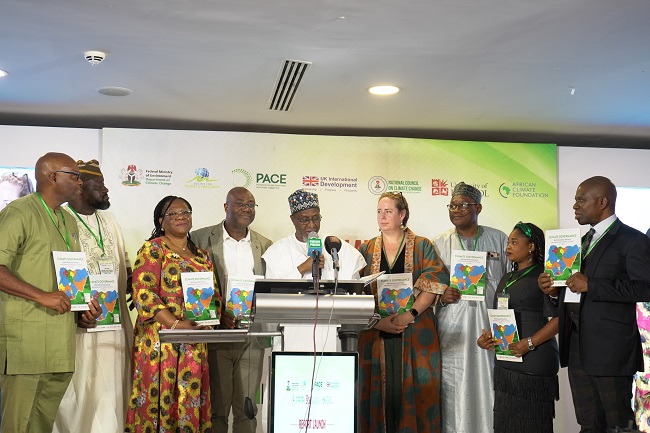
Subnational Climate Governance Ranking
Minister of Environment, Malam Balarabe Abbas Lawal, with project officials at the launch of the second edition of the report, in Abuja

An initiative of the Department of Climate Change, Federal Ministry of Environment, in collaboration with the Society for Planet and Prosperity (SPP), the Subnational Climate Governance Rating and Ranking project seeks to motivate subnational climate action by measuring the extent of states’ actions using five thematic areas, listed to include: States’ Climate Institutional Arrangements; Status of Climate Policies, Action Plans, and legal frameworks at the State Level; Budgetary Allocation to Climate Change Projects; Climate Project Implementation and Monitoring; and Online Visibility and Publicity on Climate Change Issues at the State-level.

Explaining the rationale behind this, the President of the Society for Planet and Prosperity, Professor Chukwumerije Okereke, stated that the five thematic areas represent critical pillars of climate action. Therefore, an interrogation of States’ efforts along those lines will spur action and provide guidance on the path States must toe.

In her speech, the Director General of the National Council on Climate Change, Barrister Tenioye Majekodunmi, described the ranking as a critical milestone in Nigeria’s journey towards a robust grassroot driven climate action.

“This second ranking stands as a testament to the growing political will and commitment demonstrated by our state governments. The National Council on Climate Change as the apex regulatory body, is committed to translating the highest national ambition into local realities, and your performance is central to that mission,” she said.

This was further echoed by the First Secretary for Climate Diplomacy, UK Foreign Commonwealth and Development Office (FCDO), Samantha Harrison, during her goodwill message.

“We know that subnational actors are the heartbeat of climate action. Without them, our policies remain spreadsheets on paper. Effective climate governance at the subnational level is not just beneficial, it is essential,” she said.

This year’s edition saw Kano and Enugu states breaking into the top five by making tremendous improvements from their outing last year.

Initiated in 2024, the rating and ranking project has helped create healthy competition and collaborative actions amongst states in Nigeria. Reflections from States and other stakeholders reveal that the initiative has been very impactful.

Accordingly, Dr. Dahiru Muhammad Hashim, Commissioner, Ministry of Environment and Climate Change, Kano State, affirmed: “Kano welcomes this platform as an opportunity to showcase progress, foster collaboration, and inspire greater ambition. The Ranking strengthens healthy competition, promotes knowledge exchange, and reinforces the urgency of addressing the climate crisis at the subnational level, where the impacts are most immediate and the solutions most impactful.”

Mr. Tokunbo Wahab, Commissioner, Ministry of the Environment and Water Resources, Lagos State, represented by Olakunle Olamidosu Rotimi-Akodu, the Special Adviser to the Governor on Environment, stated: “For Lagos, the ranking boosts our commitment to building resilience, driving green growth, and embedding climate action into every part of our economy. We value this initiative not only for the healthy competition it encourages among states but also for the opportunities it creates for collaboration and shared progress. Lagos State remains determined to lead by example, making sure that our climate actions deliver sustainable development and a better quality of life for our people.”

Donor agencies have also seen the initiative as an important measuring board which helps provide guidance on what form of intervention States need to boost climate action.

Professor Anthony Nyong, Director of Climate Change and Green Growth at the African Development Bank, sees the exercise as an “innovative approach to strengthening subnational climate governance in Nigeria, fostering accountability, and catalysing green growth and climate- resilient development across the continent.

It provides a valuable model for evidence-based policymaking and investment alignment to accelerate Africa’s just climate transition.” Nigeria’s subnationals remain the frontliners in the country’s efforts at addressing climate change. They are therefore critical for any meaningful impact to be made. The rating and ranking project seeks to inspire greater action.
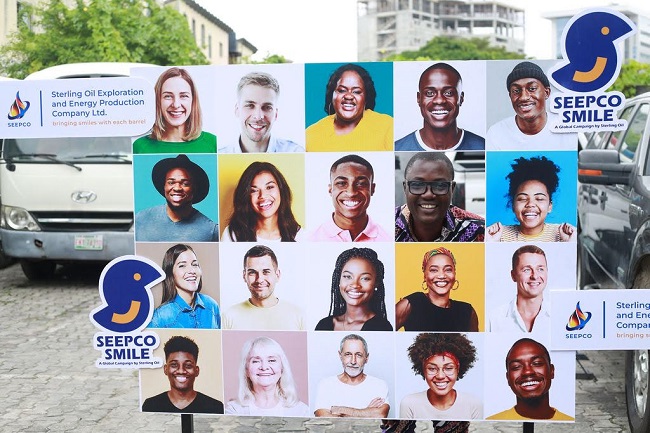

SEEPCO, NAEC launch ‘Bringing Smiles with Each Barrel’ sustainability campaign

In what appears to be major push to integrate environmental, social, and governance (ESG) values into Nigeria’s energy landscape, Sterling Oil Exploration and Energy Production Company Limited (SEEPCO) has launched its flagship “Global Sustainability Campaign” in partnership with the Association of Energy Correspondents of Nigeria (NAEC).

The initiative, themed “Bringing Smiles with Each Barrel,” was unveiled at the NAEC Annual Conference held on Thursday, October 9, 2025, in Lagos. The event was attended by industry leaders, and media executives.

Speaking at the flag-off, representatives of Sterling Oil described the campaign as a defining step in the company’s journey towards building a more inclusive and sustainable future through measurable social impact.

SEEPCO
A SEEPCO ‘Bring Smiles with Each Barrel’ campaign poster

“We take pride in flagging off this project where our joint initiatives and impact will get their deserved voice. Without bandeing loud, we will continue to bring our sustainability initiatives together channel every effort into a purposeful movement – one that brings real-life transformational activities for smiles that sustain,” said Aveek Biswas, Head, Corporate Communications, SEEPCO.

According to SEEPCO, the campaign embodies its enduring commitment to sustainability, innovation, and social transformation – values that have defined its over 20-year journey in Nigeria’s oil and gas industry.

“At Sterling Oil, we measure success not only by business growth but by the positive impact we create for our team members, communities, and the environment. Our commitment to sustainability goes beyond compliance – it is about responsibility, measurable progress, and shaping a sustainable future,” Biswas emphasised.

The campaign, designed to promote cross-sector collaboration, will spotlight sports, culture, art, health, gender equality, and environmental conservation as tools for nation-building, empowerment, and talent development. SEEPCO said these areas form a vital part of its vision for sustainable national growth.

SEEPCO also reaffirmed its position as one of Africa’s fastest-growing exploration and production companies, noting its resilience in navigating tough terrains where many others have exited.

“Our vision is to grow continuously as a social enterprise that contributes to national development, respects communities, and creates value for all stakeholders,” the company noted.

The “SEEPCO Smile” campaign – as it is fondly branded – celebrates Nigeria’s 65 years of resilience and progress, while reinforcing SEEPCO’s mission to blend industrial excellence with human-centered development.

“The pinnacle is to bring a meaningful and lasting smile – representing our belief of ‘Bringing Smiles with Each Barrel.’ It is a campaign crafted to envision millions of lasting smiles that sustain across the globe,” Biswas stated.

Industry stakeholders and NAEC members commended SEEPCO’s commitment to ESG and sustainable energy practices, describing the collaboration as a model for private-sector leadership in social responsibility.

The event concluded with a call for broad stakeholder participation to ensure the success of the campaign and its vision to create a future “where no one is left behind.”

UN calls for urgent action to end homelessness

Homelessness is rising in every region and must be addressed as a structural crisis rooted in inequality, unaffordable housing, and weak social protection, according to a new United Nations report presented to the General Assembly.

Prepared by UN-Habitat on behalf of the UN Secretary-General, the report Inclusive Policies and Programmes to Address Homelessness urges governments to shift from short-term emergency responses to long-term, rights-based housing solutions.

Homelessness
Homelessness
A systemic problem, not an individual failure

Millions of people worldwide still lack secure and adequate housing. Conflicts, climate impacts and rising living costs are worsening the situation, while many forms of “hidden homelessness” remain uncounted. A rights-based global definition, now being developed through a UN-Habitat-led expert process, aims to close these data gaps and strengthen accountability.

Promising shifts in policy

Across regions, more governments are adopting housing-led and prevention-focused approaches, such as integrated social protection, community-driven housing, and rental mediation. Local authorities are playing a key role, driving innovation through inclusive urban planning.

The report warns that punitive measures like forced evictions and criminalizing people in public spaces only deepen exclusion. Instead, countries are urged to strengthen tenure security and uphold human rights in urban development.

Housing and dignity at the centre of policy

Countries that link housing with robust social protection systems are better able to prevent homelessness and support long-term stability. Expanding universal access to social protection, particularly for marginalized groups, is essential to tackling root causes.

The Secretary-General calls on governments to adopt rights-based data systems, end criminalization, invest in permanent and affordable housing, and integrate prevention across health, education, justice, and social protection systems.

By treating housing as a human right and focusing on prevention and inclusion, the report concludes, governments can move from managing homelessness to ending it for good.

GCF, CABEI, EU commit $800m to finance Costa Rica’s electric train

0

The Green Climate Fund (GCF), the Central American Bank for Economic Integration (CABEI), and the European Union, through its Global Gateway strategy, have come together to fully finance the “Construction, Equipment, and Start-up of Lines 1 and 2 of the Costa Rica Electric Train System” for $800 million.

GCF is co-financing $178.7 million and donating another $21.3 million of the CABEI’s $550 million investment, which is also supported by $250 million from the European Investment Bank. Thanks to a credit scheme with highly competitive interest rates and grace periods, this initiative is a fiscally responsible project that saves Costa Rica resources and requires no annual subsidy.

Costa Rica
Electric train in Costa Rica

The project will include two lines comprising 51 kilometres of double track; one running from Paraíso Cartago to San José, and another between San José and downtown Alajuela. Also included are the procurement of 28 new electric units, 30 stations, two completely new terminals, and nine overpasses, which will allow for continuous, high-quality service, with buses running every 10 minutes, every day of the week.

“The electric train is no longer just a dream or a promise left on paper. Today it is a concrete and viable decision, financially backed by three international entities that believe in Costa Rica and its people. Unlike previous proposals that could not be sustained, this one is solid, fiscally responsible, and will not require a state subsidy. Because the train of progress does not wait – this is a train we can all board,” emphasised the President of the Republic, Rodrigo Chaves.

GCF Director of the Department of Latin America and the Caribbean Region, Kristin Lang, said: “This project is a big step forward for Costa Rica. Using the country’s nearly 100 per cent clean, renewable energy to power the new trains will cut harmful GHG emissions and make travel safer and faster. The Green Climate Fund is proud to partner with CABEI and the Government of Costa Rica to build a modern and sustainable transport system for the people of San José Greater Metropolitan, with an annual average of 68 million passengers expected to benefit from the services.”

European Commissioner for International Partnerships, Jozef Síkela, said: “I would like to congratulate Costa Rica and its government on their decision to promote a modern, sustainable, and cost-effective public transport system, in which the European Union has been a strong partner in this vision. The support announced today will ensure a state-of-the-art electric train, with direct support to INCOFER, to maintain the highest standards of quality and environmental impact. This support reflects what Global Gateway stands for: investing alongside our partners in sustainable development that generates concrete benefits.”

CABEI Executive President, Gisela Sánchez, emphasised: “CABEI is proud to accompany Costa Rica in the development of a project that builds a more just and sustainable future for all.” Together with our strategic allies, the Green Climate Fund and the EIB, we have joined forces to fully finance this national project, which will transform the lives of more than three million people and mark a turning point in the history of urban mobility.”

For his part, the Vice-President of the European Investment Bank (EIB), Ioannis Tsakiris, said: “This project is a great example of strategic cooperation between the European Union and Costa Rica, where for the first time the European Investment Bank is co-financing alongside the Green Climate Fund and the CABEI. The EIB reaffirms its commitment to supporting solid projects that improve connectivity, sustainability, and economic growth.”

Álvaro Bermúdez Peña, Executive President of INCOFER, stated: “We set out to optimise this project with a clear vision: to deliver a solid proposal to Costa Ricans, aligned with the real needs of the population and without unnecessarily indebting the country. It not only represents technical progress, but also a commitment fulfilled to Costa Rica.”

The project will prioritise the integration of multiple modes of transportation, with stations designed to provide efficient access to bus stops, taxis, and bicycle spaces. Critically, it is estimated that the operation of the national project will result in a reduction of 6.54 million tCO2 of greenhouse gas emissions, among other benefits – roughly equivalent to getting 1.5 million cars off Costa Rica’s roads.

Three entrepreneurs awarded UNEP Young Champions of the Earth prize

The UN Environment Programme (UNEP) and American cleantech CEO Chris Kemper have announced the selection of three environmental entrepreneurs from India, Kenya and the United States as the 2025 Young Champions of the Earth.

Winners are recognised for groundbreaking contributions that advance a global circular economy and improving environmental outcomes by treating wastewater, expanding access to clean water, tackling plastic pollution, and creating sustainable alternatives to conventional materials. Award recipients will receive seed funding, mentoring, communications support, and a global platform to showcase and scale their solutions.

UNEP Young Champions of the Earth
2025 UNEP Young Champions of the Earth: Jinali, Joseph, and Noemi

The Young Champions programme, which UNEP founded in 2017, was re-launched in 2025 in partnership with Mr. Kemper, who in 2023 was designated as UNEP’s Advocate for Partnerships to mobilise resources and action around today’s most urgent environmental issues. Mr. Kemper is the Chairman, Founder and CEO of U.S. climate tech company Palmetto and a climate philanthropist. Through the support of The Christopher Kemper Foundation, this year Mr. Kemper co-founded Planet A, a new YouTube channel to drive environmental awareness and action.

This year’s Young Champions of the Earth winners each received US$20,000. They were opportuned to compete in the first-ever Planet A pitch competition for a business growth grant of US$100,000 and a possible seed investment of US$1 million committed to a future fundraising round. Planet A is filming the competition, and the Young Champions’ leading up to it, to be released on Planet A’s YouTube channel in October.

The 2025 Young Champions of the Earth are:

●      Jinali Mody (28, India): Jinali is a biochemistry graduate from St. Xavier’s College in Mumbai and the Yale School of Environment. She founded Banofi Leather, an India-based women-led company aiming to make the fast fashion business sustainable by producing leather alternatives made from banana crop waste. Compared to conventional leather, Banofi drastically reduces water use, toxic waste, and CO₂ emissions.

●      Joseph Nguthiru (27, Kenya): A climate-tech engineer, Joseph’s company HyaPak converts the invasive species hyacinth in Lake Naivasha into packaging bags and biodegradable seedling wrappers. By replacing single-use plastic products, HyaPak makes agricultural lands healthier and offsets CO₂ emissions.

●      Noemi Florea (24, US): Climate innovator Noemi has founded Cycleau, a compact water reuse system, in consultation with dozens of marginalized communities. The company transforms greywater into drinking water. Retrofitted under sinks, showers, and laundry units, Cycleau significantly reduces wastewater, using much less energy than alternative systems.

 “The lives of our children and our children’s children are already being dramatically impacted by the triple planetary crisis of climate change, biodiversity loss and pollution and waste. I commend these inspiring Young Champions of the Earth for their innovations, for the benefit of this and future generations,” said Inger Andersen, Executive Director of UNEP.

The Young Champions of the Earth prize is UNEP’s flagship initiative on youth engagement. Since 2017, it has recognised 30 young trailblazers – activists, entrepreneurs, and environmental innovators under the age of 30 – for their outstanding ideas to protect the environment.

“I’m honored to support the Young Champions programme in my philanthropic role with the United Nations; over 5,000 amazing entrepreneurs around the world were interested in the program – all of whom are seeking to make a positive impact on the planet. It was difficult to select only three winners for the 2025 Young Champions program, but these three leaders stood out for their passion, drive, execution and innovation,” said Mr. Kemper, who participated in the selection of this year’s winners.

“A huge congratulations to Jinali, Joseph, and Noemi for their successful achievements and in winning this highly competitive award,” he added.

UN report calls for responsible financing, investment in energy transition minerals

0

The financial system, governance and regulation of mineral exploration and mining must be reformed to ensure greater capital flows and a clean energy transition, say the authors of a new report by the UN Environment Programme-hosted International Resource Panel. With mineral extraction rising to 50% of annual global raw material extraction up from 31% in 1970, financing responsible mining will be critical to a successful and fair energy transition. 

Mineral extraction has increased five-fold since 1970, and the market for critical energy transition minerals – the building blocks of clean energy technologies like solar panels, wind turbines, and batteries – is expected to continue expanding rapidly. In 2023 alone, the demand for materials such as nickel, cobalt, graphite, and rare earth elements saw increases of between 8 and 15 per cent. In the case of lithium, demand by 2050 will be equivalent to 9 times the 2022 world production.

Janez Potočnik
Janez Potočnik, Co-Chair of the International Resource Panel

This report, “Financing the Responsible Supply of Energy Transition Minerals for Sustainable Development”, analyses demand, production, trade, and financing of key minerals, highlighting high-concentration regions such as Africa, China, and South America, and presents a series of recommendations for driving finance and investment into responsible mining. 

“The demand for minerals and metals needed for the energy transition requires a mining industry that contributes to sustainable development, while respecting human rights and the environment. Through sustainable finance, responsible mining can become the default, not the exception,” said Janez Potočnik, Co-Chair of the International Resource Panel. 

A capital-intensive and high-risk industry, mining relies on diverse sources of finance – public, private or a mixture of both – for each stage of a project, including the closure of mines, as well as upstream activities in the minerals and metals value chain, such as mineral-processing facilities, metallurgical plants, and metal refineries. 

A survey conducted for this report among large-scale mining-related companies confirms that maintaining environmental standards is perceived to be expensive, but most companies considered that this would add less than 25% to their operational costs. However, most respondents believe that environmental, social and governance reporting will attract new investors. In this context, the large investments required by mining companies put the financial sector in a strong position to exert pressure on companies to take account of their Environmental, Social, and Governance (ESG) performance.

The report also notes that enhancing circularity in the sector could curb demand for additional energy transition minerals. Measures such as recycling targets, government-backed financing and extended tax provisions for recycling infrastructure, incentives for eco-design, or green bonds to fund recycling facilities can reduce the need for virgin materials. Public-private partnerships, public awareness campaigns, and the creation of a global database for former and operating mining tailings facilities are also part of the recommended approaches.

Still, even with far-reaching circularity measures, the scale of investment required is significant. According to the International Energy Agency, achieving net zero by 2050 would require investments in mining energy transition minerals of up to $450 billion by 2030 and $800 billion by 2040.

The report also recommends improvements in ESG outcomes in artisanal and small-scale mining. It calls for increased transparency, formalising labour through locally tailored licensing procedures, capacity building, tax incentives, funding, technical support, more local participation, and access to geological and geospatial data. An international sustainability framework for this industry could help manage environmental and social risks and improve access to formal sources of finance in the artisanal and small-scale mining sector. 

Finally, the report highlights the importance of rewarding responsible mining practices, not only for companies, but also for the communities hosting these activities. Current ESG efforts often go unnoticed or uncompensated in global markets. To address this, the International Resource Panel recommends government-backed certification and incentive schemes, including favourable fiscal policies and improved market access.  

To encourage ESG performance, the report specifically recommends:

  • Strengthen financial institutions’ capacity to recognise and finance mining operations that meet high ESG standards.
  • Develop a digital product passport for all mineral commodities and their value chains, including ESG information, on the basis of a standard reporting protocol.
  • Report financial and ESG outcomes on a site-by-site, gendered and “shared value” basis by mining companies, that also takes indigenous rights into account, following an agreed industry-wide protocol.
  • Include mining that meets high ESG standards in the list of sectors that qualify for “sustainable finance” and “climate finance” in finance taxonomies.
  • Link mining investments and financing to climate and nature-positive requirements, with mining excluded from protected areas.
  • Allow companies with validated ESG transition plans to access sustainable and climate finance.
  • Use fiscal, financial, and monetary policies to support investment in responsible mining and infrastructure, and to promote the circular use of metals in society.
  • Implement a global ad valorem levy on all companies to fund a Mining Sustainable Development Fund that supports training, capacity-building, legal assistance for developing countries, research, innovation projects, and technology transfer.
  • Establish a global database for mine tailings facilities and track the potential availability of minor (or companion) metals.
  • Forge mutually beneficial partnerships between the communities and countries that host the mines and the importing and processing countries.

The report will contribute to advancing the work of the Panel on Critical Energy Transition Minerals, convened by the UN Secretary-General, which details guiding principles on critical energy transition minerals, as well as the 2024 commitment by the International Council of Minerals and Metals (ICMM) for ‘nature-positive mining’ and the seventh session of the UN Environment Assembly’s resolutions on minerals. 

Rules for managing emission reversal risks agreed by UN Body

0

A UN body tasked with operationalising the Paris Agreement’s international carbon market has agreed rules that deal with the risk that emission removals credited under the mechanism might later be reversed.

Known as the Article 6.4 Supervisory Body, it is responsible for establishing the rules and infrastructure for the Paris Agreement Crediting Mechanism. This mechanism will allow countries and other actors to cooperate in reducing greenhouse gas emissions by generating high-integrity carbon credits, while also supporting sustainable development.

Martin Hession
Martin Hession, Chair of the Article 6.4 Supervisory Body

At a recent meeting in Bonn, the Supervisory Body made substantial progress on a draft reversal standard, which sets out how to account for and manage situations where emission removals are later lost. It implements a key standard on removals agreed by countries at COP29 in November 2024.

“Getting to this point wasn’t easy – there were strong views on all sides and some very tough decisions to make,” said Martin Hession, Supervisory Body Chair.

“But we’ve landed on a standard that provides a firm foundation for addressing reversal risk in line with science. It also recognises the need for practical solutions to address the longer term. I trust that stakeholders will engage to ensure that we meet and deliver on the highest standards.”

Key points of discussion included how long projects storing emissions should be monitored for possible reversals, how to define “negligible” risk, what alternatives including full remediation and risk guarantees could allow projects to exit liability.

The new rules require for the monitoring of risks over a period to be approved by the Supervisory Body and provide incentives for investors to manage risk through monitoring and an insurance pool. They also lay out options to repay the risk early or pass it on to third party offering robust insurance and guarantees.

The rules were agreed on the basis that project methods, monitoring timeframes, and tools for both risk management and compensation will be grounded in the best available science and kept under continuing review.

Other matters

The Supervisory Body agreed a Common Practice Analysis Tool, which helps check whether a type of project is already widespread in a region, ensuring that credits are only given for projects that go beyond what is already happening, a concept known as “additionality.”

Additionally, the Body agreed to accredit four further independent auditors tasked with validating and verifying projects – also known as a Designated Operational Entities (DOEs).

Next steps

The Supervisory Body will meet again virtually from October 29 to 30, 2025, when it aims to adopt its first methodology under the Paris Agreement Crediting Mechanism.

At COP30, under CMA agenda item 15(b), countries will consider the Supervisory Body’s annual report to the CMA and can respond to the recommendations from the Body and provide additional guidance on the operation of the mechanism.

Geoffroy Citegeste: Let’s keep migratory birds soaring

0

For centuries, bird migration has awed humanity. Every year, millions of birds travel thousands of kilometres, transversing continents in search of feeding, breeding and resting grounds. During these sojourns, these birds provide critical ecosystem services including pollination, and pests control.  Additionally, through birdwatching birds contribute billions of dollars to the tourism sector in many countries around the world. Every year, the world celebrates World Migratory Bird Day (WMBD) in May and October, to raise awareness about birds and the plight they face while migrating along routes known as flyways.

Africa is home to a number of flyways, including the East Atlantic Flyway (EAF) which extends from the Arctic, down the western flanks of Europe, and reaching the southern tip of the African Atlantic coastline, spanning 49 countries. Along the EAF, are key sites which support a large number of migratory waterbirds including the Banc d’Arguin National Park in Mauritania, Bijagós Archipelago in Guinea-Bissau – recently added to the UNESCO World Heritage Site, in addition to the Saloum Delta and Djoudj National Parks in Senegal. Together, these sites host almost three million migratory birds, underlining their importance.

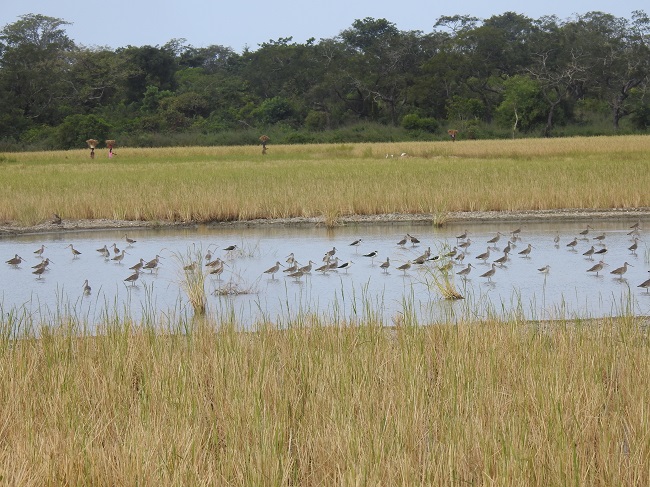
Black-tailed Godwits
Black-tailed Godwits in Cussana-Cussenthe, Guinea Bissau

However migratory bird numbers are plummeting in the EAF, driven by various threats including deforestation, infrastructure development, industrial agriculture, overfishing and climate change among others. Further, critical sites including wetlands, grasslands and forests which host key populations of migratory bird species are disappearing at an alarming rate.

To address this challenge, BirdLife and Partners established the East Atlantic Flyways Initiative (EAFI) in 2015. EAFI focuses on improving conservation efforts and strengthening capacity of conservation partners through a local to global conservation approach along the flyway.  In Senegal, Mauritania and Guinea- Bissau, EAFI partners are leading on the conservation of the Black-tailed Godwit, classified as Near Threatened on the IUCN Red List.

In Senegal’s 273 ha Tocc Tocc Community Nature Reserve, and 17,000 ha Lac de Guiers, both critical sites for migratory birds, EAFI support has enabled protection of critical sites for migratory birds, while improving livelihoods for local communities.  In Guinea Bissau’s 119,700 ha Rio Mansôa and Gêba estuary, more than 3600 people have benefitted from capacity building on biodiversity management.

In addition, BirdLife and partners are involved in the International Climate Initiative (IKI) funded Climate-Resilient East Atlantic Flyway’ (CREAF) programme which aims at protecting critical wetlands sites for birds and peoplewhile empowering local communities along the flyway.Additionally, there is need for concerted efforts from various stakeholders including local communities, policy, and decision makers to identify and implement relevant solutions to conserve these critical habitats along the EAF.

Migratory birds connect communities, and landscapes across borders. As we celebrate migratory birds, let us renew our commitment to protect these majestic creatures for posterity.

By Geoffroy Citegeste, East Atlantic Flyways Initiative (EAFI) Manager at BirdLife International; email: geoffroy.citegetse@birdlife.org

Shell invests in Nigeria offshore gas development

0

Shell Nigeria Exploration and Production Company Limited (SNEPCo), a subsidiary of Shell plc, together with Sunlink Energies and Resources Limited, have taken a final investment decision (FID) on the HI gas project offshore Nigeria.

When completed, the project will supply 350 million standard cubic feet (approximately 60 thousand barrels of oil equivalent) of gas per day at peak production to Nigeria LNG (NLNG; Shell interest 25.6%), which produces and exports liquified natural gas (LNG) to global markets. Production is expected to begin before the end of this decade.

Peter Costello
Peter Costello, Shell’s Upstream President

“Following recent investment decisions related to the Bonga deep-water development, today’s announcement demonstrates our continued commitment to Nigeria’s energy sector, with a focus on Deepwater and Integrated Gas,” said Peter Costello, Shell’s Upstream President. “This Upstream project will help Shell grow our leading Integrated Gas portfolio, while supporting Nigeria’s plans to become a more significant player in the global LNG market.”

The increase in feedstock to NLNG, via the Train 7 project that aims to expand the Bonny Island terminal’s production capacity, is in line with Shell’s plans to grow its global LNG volumes by an average of 4-5% per year until 2030. It will also bolster NLNG’s contribution to Nigeria’s national economic development goals, including jobs in construction and operations.

The HI field was discovered in 1985 and lies in 100m of water depth around 50km from the shore. The current estimated recoverable resource volumes of the HI project are approximately 285 mmboe (million barrels of oil equivalent). 

Innoson to build CNG plant in Bayelsa

0

Nigerian vehicle manufacturer, Innoson Vehicles Manufacturing (IVM) Limited, has disclosed plans to establish a Compressed Natural Gas (CNG) assembly plant in Bayelsa State.

The Managing Director and Chief Executive Officer of the firm, Chief Innocent Chukwuma, stated this when he visited Gov. Douye Diri in Yenagoa on Monday, October 13, 2025.

The Innoson CEO said the investment would boost the state’s transportation sector as well as provide training and create jobs.

Innoson
Managing Director and Chief Executive Officer of IVM, Chief Innocent Chukwuma (right), with Gov. Douye Diri of Bayelsa State

He stated that the initiative would also promote cleaner and greener environment and enhance the country’s capacity to meet its renewable energy target by 2030.

In his presentation, the company’s Corporate Communications Manager, Mr. Kamsi Ejiofor, explained that the objective is to introduce modern CNG buses, ambulances and vehicles that would enhance mobility and public efficiency in the state.

According to him: “the plant will generate 1000 jobs and thousands of direct opportunities in assembly, maintenance, logistics and local manufacturing as well as boosting Bayelsa’s economy by enhancing its industrial base.”

Ejiofor said: “The usage of CNG vehicles will save cost from fuel and maintenance, improve health, cleaner air and lead to innovation in Bayelsa, making the state a clean energy and tech pioneer in Nigeria.”

Responding, governor Diri commended Chukwuma for the decision to site the CNG conversion plant in the state, noting that the investment would help grow Bayelsa’s industrial base.

While expressing his administration’s commitment to collaborate with the vehicle manufacturing firm, Diri described the initiative as a welcome development towards moving the state’s economy from consumption to production.

He said the investment was timely, nothing that procurement of CNG vehicles was in the state government’s budget projection for 2026 and expressed delight over the economic impact of such investment, particularly in the area of job opportunities.

Diri noted that his administration was putting in place the necessary infrastructure to support investments in Bayelsa and urged other investors to emulate Innoson to invest in the state.

“It is a welcome development for CNG vehicles plant to be sited in Bayelsa. We are ready to partner with you.

“One area that l am interested in is the CNG aspect. The world is moving towards renewal energy because of environmental pollution.

“My administration was considering purchasing CNG buses to run our upland transport system. Your coming is timely because it is part of our projections for 2026.

“I assure you that we are putting in place the right environment to enable investments thrive in terms of peace and security, infrastructure and our independent power supply, which will ensure uninterrupted electricity,” he said.

Diri also announced an implementation committee to interface with the company.

The committee has Secretary to the State Government, Prof. Nimibofa Ayawei, as chairman while other members are the Commissioner for Trade and Investment, Jones Ebieri, his Information and Finance counterparts, Mrs. Ebiuwou Koku-Obiyai and Maxwell Ebibai respectively.

Others are the Commissioner for Justice and Attorney-General, Biriyai Dambo (SAN), Preye Broderick (Transport), Mazi Johnson Onuma (General Duties), as well as the Special Adviser on Investment, Owanari Harry, and the Technical Adviser on Entrepreneurship, Charity Kens Godwin.

By Shedrack Frank