Home Blog Page 137

Govt designing national risk financing framework for disaster prevention – Shettima

Vice-President Kashim Shettima says President Bola Tinubu’s administration is developing a National Disaster Risk Financing Framework to guarantee timely funding for prevention and preparedness.

Shettima said this at the 2025 International Day for Disaster Risk Reduction (IDDRR) themed “Fund Resilience, Not Disasters”, organised by the National Emergency Management Agency (NEMA), and held on Monday, October 13, in Abuja.
IDDRR
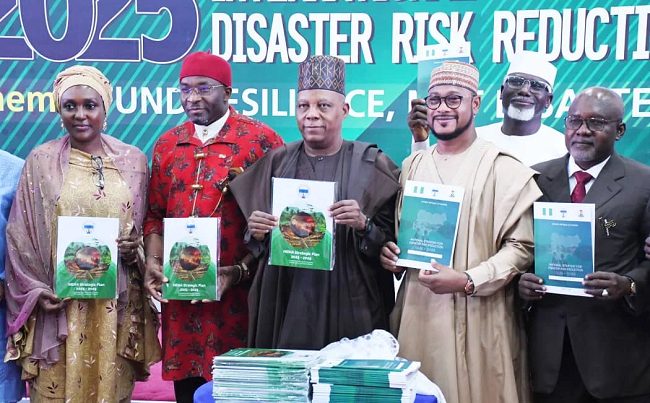
VP Kashim Shettima with officials at the ceremony to observe the 2025 International Day for Disaster Risk Reduction (IDDRR)

He also said that the administration was deepening partnerships with development partners, the private sector, and research institutions to drive innovation and resilience building at all levels.

“If we fail to invest in resilience, we will continue to spend our scarce resources cleaning up after crises instead of building lasting prosperity.

“President Bola Tinubu emphasises this need to treat resilience as a national policy.

“We are integrating disaster risk reduction into every sector—from agriculture and infrastructure to education and health.

“This is as we are expanding early warning systems to ensure that communities receive timely alerts before floods, droughts, or disease outbreaks occur.

“We are strengthening state and local emergency management agencies through training, technology, and coordination support,” the vice-president said.

Shettima, however, said that commitment alone was not enough, adding, “We must match our words with action and our policies with funding.”

“To fund resilience is to invest in drainage systems, not relief camps; to build stronger schools and hospitals, not temporary shelters.

“Asi, to support farmers with climate-smart tools, not just food aid after floods; and to train and equip our first responders before the sirens start to wail.

“This is the shift we must make—from reacting to crises to anticipating and preventing them.”

He stated that resilience cannot be guaranteed by government alone, saying, ” It is built by all of us.

“It is reflected in how we plan our cities, in how businesses protect their workers, and in how communities share information and look out for one another.

“This is why our private sector must see itself as a partner in prevention, embedding risk reduction into corporate planning and investment decisions.”

Shettima said that academia and research institutions also bear the responsibility of helping the government generate the data, innovation, and practical research needed to prepare for a safer future.

“We count on them to shape the knowledge that guides our decisions. And we expect our civil society to hold us accountable, to raise awareness, and to mobilise citizens around the shared responsibility of preparedness.

“But none of these efforts will yield results unless we empower and support our communities to take ownership of their safety.

“They are the foundation of whatever strategy we adopt and the heartbeat of our national resilience.

“Distinguished ladies and gentlemen, the decades of disasters our nation and the world have endured must inspire us to move from sympathy after disasters to strategy before they happen.

“We must replace reaction with readiness and fear with foresight,” the vice-president said.

He commended NEMA, partners, and all who continue to play their role in keeping Nigerians safe and in building a nation that is ready – not just for today but for tomorrow.

The Minister of Humanitarian Affairs and Poverty Reduction, Mr. Yusuf Sununu, highlighted the importance of disaster risk management in Nigeria.

He emphasised the need for a comprehensive and holistic approach to address the challenges posed by disasters.

According to him, Nigeria has suffered significantly from disasters, including flooding, drought, landslides, insurgency, and banditry, which have complicated humanitarian and poverty reduction efforts.

He stressed the need for a comprehensive and holistic approach to disaster risk management, involving all stakeholders.

Sununu also called for empowering local communities to prepare for and respond to disasters.

“A nation that cannot absorb shock and takes longer time to recover will definitely have prosperity far from it.

“We need to reduce our reliance on external funding and look inward to reduce shortfalls and improve domestic mobilisation of funds,” he said.

The minister listed several initiatives by the government to address disaster risk management and poverty reduction, which  included the Conditional Cash Transfer programme, which had reached over N8.1 million households in Nigeria.

“There is also a plan to provide 21,000 Nigerians with interest-free and collateral-free loans of N300,000 each to support dry season farming and mitigate the effects of flooding,”he added

The Director-General, NEMA, Mrs. Zubaida Umar, called for increased funding for disaster risk management to build resilience in the country.

She emphasised the need for a proactive, preventive, and well-financed disaster risk management framework.

According to her, NEMA had developed two landmark policy instruments, which are the NEMA Strategy Plan (2025-2029) and the National Disaster Risk Reduction Strategy (2025-2030).

“Let us collectively rethink how we fund resilience; to move from reactive, ad-hoc funding of disasters to a multi-stakeholder financing architecture that supports prevention, preparedness, and sustainable recovery.

“Resilience must be mainstreamed across sectors from agriculture, water resources, energy and infrastructure to finance, education, and health,” she said.

The Country Director of PLAN International Nigeria, Dr Charles Usie, in a keynote address,  highlighted key observations and recommendations for increasing disaster risk reduction funding in Nigeria.

He, however, called for increased transparency in disaster risk management.

Usie further cited limited accountability and disclosure in NEMA’s projects and funding.

He recommended improving data collection, management, and dissemination to design effective financial protocols and investment strategies.

The country director also advocated improved coordination among the stakeholders, with a clear segregation of roles and responsibilities.

“We are unable to continue to talk about increased funding where we have not been able to look at how to perform it as a way of performing it.

“NEMA must prioritise financial transparency by publishing their budgets, allocations, and expenditure details as much as possible,” Usie urged.

By implementing the above recommendations, Nigeria can build a financial backbone necessary for lasting stability and protecting development gains.

By Salisu Sani-Idris and Philomina Attah
Nigeria launches net zero nature project to combat climate change

0

Nigeria on Monday, October 13, 2025, launched the Net-Zero Nature-Positive Project (NZNP) to address climate change challenges and achieve its net-zero emissions target by 2060.

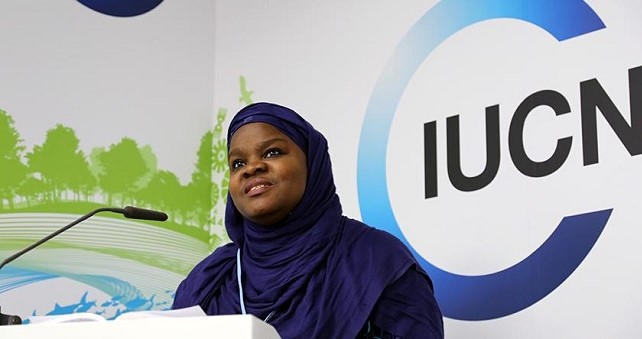
Speaking at the NZNP inception workshop, the Director of Forestry, Federal Ministry of Environment, Halima Bawa-Bwari, noted that the project marks a pivotal moment in the collective journey toward a climate-resilient and rich in biodiversity and inclusive in its development.

Halima Bawa-Bwari
Director, Department of Forestry, Federal Ministry of Environment, Mrs. Halima Bawa-Bwari

Bawa-Bwari said that through the NZNP project, Nigeria would strengthen institutional coordination and boost biodiversity, restore degraded ecosystems, and unlock investment pipelines that prioritise nature-positive, low-carbon development.

“NZNP project offers a unique opportunity to address these challenges in an integrated and transformative way.

“Today marks a pivotal moment in our collective journey toward a future that is not only climate-resilient but also rich in biodiversity and inclusive in its development.

“Nigeria’s commitment to a net-zero, nature-positive future is not just aspirational, it is grounded in action from updating our newly submitted Nationally Determined Contributions (NDCs).

Bawa-Bwari stated that the NDCs would reflect more ambitious climate targets, and actively investing in nature-based solutions that deliver both mitigation and adaptation benefits.

“Our efforts should go beyond emissions reduction. This programme represents a powerful platform to accelerate those efforts,” she said.

Also speaking, Ms. Elsie Attafuah, the United Nations Development Programme (UNDP) Resident Representative in Nigeria, said that NZNP is a movement that reflects Nigeria’s bold commitments to achieve Net Zero emissions by 2060.

Attafuah, who was represented by Mr. Blessed Chirimuta , the Deputy Resident Representative of UNDP, added that NZNP project would conserve 30 per cent of Nigeria’s land and marine ecosystems by 2030.

She said that the project would ensure that the Niger Delta, embed environmental accountability and to channel investment toward green growth.

Attafuah stated that climate change is already disrupting lives and livelihoods, biodiversity loss is accelerating, and vulnerable communities are bearing the heaviest burdens hence the urgency is real.

“The Niger Delta, especially Rivers and Bayelsa, stands at the front lines of these challenges.

“Through this project, we wil work with state governments in Rivers and Bayelsa to integrate net-zero and nature-positive strategies into development planning.

“Partner with women’s cooperatives and youth networks, ensuring they are not only beneficiaries but leaders of the green transition.

She reaffirmed UNDP’s commitment, from the creeks of Bayelsa to the bustling cities of Rivers, and indeed across the entire nation, so that the Net Zero Nature Positive Project becomes a model for Africa and the world.

The NZNP Project in Nigeria is a global initiative funded by the Global Environment Facility (GEF) and implemented in partnership with the United Nations Environment Programme (UNEP) and the UNDP.

Also, in an address of welcome, Mrs. Nkechi Aneke-Agnes, Director, Planning, Research and Statistics in the Ministry of Environment, said that NZNP Accelerator is one of the 11 Integrated Programmes under GEF-8 cycle.

“This is aimed to accelerate the implementation of nature-positive and net-zero pathways by investing in nature and new technologies.

Aneke-Agnes, who is also the Operational Focal Point of GEF, said that the launch is a significant step to Nigeria’s transition to a Net Zero and Nature Positive future by promoting ecosystem restoration, expanding access to clean energy and de-risking sustainable investments.

“The project will also support Nigeria’s vision in achieving the NDCs, Nature Positive Commitment by 2030 and Net Zero emission target by 2026.

Similarly, Dr Nkemdirim Odoya, Director, Department of Forestry, Rivers Ministry of Environment, assured the state’s support for UNDP on the project.

“Rivers houses a unique species of elephant that you cannot find in any part of Nigeria and so this project is a welcome development,” she said.

Mrs. Susan Uyadongha, the Director of Forestry, Bayelsa State Ministry of Environment, said that the project aligns perfectly with the state’s commitment to environmental sustainability, biodiversity conservation and climate resilience.

By Abigael Joshua

New report reveals deep injustices at the heart of renewable energy push

A new report by CAN International exposes how the transition to renewable energy is systematically overlooking people’s needs and rights, as well as countries’ sovereignty. 

The study, which analyses recent developments in 16 countries, finds that the current transition is failing to be just and equitable, prioritising profits over people, and de facto replicating the same old injustices of the fossil fuel industry.

Renewable energy
Renewable energy

Four rich countries, together with their corporations, are continuing to engage in extractivist practices: Canada and Australia (extracting transition minerals), Germany (pushing for a risky and unlikely “green” hydrogen market) and Japan (extracting forests, under the claim of scaling up “renewable” energy). China and the UAE follow suit.

Across the 16 countries analysed, 47% of the prospective renewable energy capacities would come from “giga” projects (>1GW). The report exposes how these projects – among other export-oriented projects developed by and for foreign companies – pose significant risks for local communities and workers and divert essential resources from needed domestic action.

Jacobo Ocharan, Head of Political Strategies at CAN International, said: ‘’The transition to renewables is being built on the same flawed foundation of extraction and exclusion that defined the fossil fuel era. A people-centered, equitable approach supported by strong public policies, international cooperation, and alternative ownership models is essential to ensure that the benefits of renewable energy are widely shared, and its risks minimised.’’ 

Janet Milongo, Energy Transition Senior Manager at CAN International, said: ‘’We must fundamentally shift course. This requires systemic change, and international and national policies that put people first and hold corporations and governments accountable. As documented in the report, successful alternatives already exist, such as the solar rooftop boom in Pakistan, the widespread adoption of ‘balcony solar’ kits in Germany, and a growing number of renewable energy projects led by Indigenous Peoples and communities in Canada and Australia. We need bold policies to urgently scale up these solutions, with justice at their core – ensuring that no one is left behind.”

With a series of upcoming multilateral moments (NDCs assessment, COP30, G20 summit), the report provides recommendations to governments and policymakers:

  • Establish a Just Transition Global Mechanism at COP30 to foster international cooperation around renewable energy and transition minerals.
  • Strengthen international and national policies to hold corporations accountable, mandate human rights due diligence, and community engagement.
  • Support community-led renewable energy and alternative models of ownership, and ensure that Indigenous Peoples, tenants, poorer and rural households are not left behind.

Julie Ducasse, Renewable Energy Coordinator at CAN International, lead author, said: “In too many places, the private sector is turning potential benefits (local jobs and ownership, lower bills, improved access to energy, economic diversification) into missed opportunities. It is time for countries and communities to reclaim these benefits. This is not a distant ideal: when the right policies and incentives are in place, locally driven and people-led projects are thriving. This is also not a matter of justice only: without the active participation of communities and households, the transition will simply not happen at the scale and pace needed.” 

Caroline Avan, Head of Programme, Natural Resources and Just Energy Transition, Business & Human Rights Resource Centre, said: The case has never been clearer: a people-centered energy transition is the only way to deliver a fast and fair energy transition. As the Renewable Energy Tracker clearly demonstrates, we are at a tipping point: renewable energies are not only the essential infrastructures of our future global energy system, but they also have the potential to contribute to advancing human rights, build a fairer global economic order and achieve climate justice for all. The time is ripe for convergence of actions between policymakers, companies and civil society.”

Frosina Antonovska, Climate and Energy Policy and Network Coordinator for Western Balkans, CAN Europe, said: “While countries in the Western Balkans are still struggling to develop their coal phase-out strategies and advance just transition toward a renewable-based, decentralised and nature-friendly energy system, they now face an additional challenge – the growing pressure of foreign extractivism interests. To ensure that the benefits of the transition are shared equitably, people and local communities must be at its core. Otherwise, we risk deepening existing inequalities and vulnerabilities and ultimately undermining any climate justice efforts.”

Stefan Gsänger, Secretary General of World Wind Energy Association, said: “The third edition of the Renewable Energy Tracker is an impressive piece of work and an important tool for measuring countries’ progress towards a worldwide transformation to 100% renewable energy. It is especially useful that this year’s edition also analyses socio-economic progress, including community energy.”

Sunil Acharya, Just Transition Campaign Manager, Recourse, said: “A just transition cannot be outsourced to private investors. International Financial Institutions (IFIs) claim to enable clean energy but continue to push a failed privatisation model. They must stop funding false solutions and instead back public and community-led renewable energy systems that deliver affordable power and energy sovereignty.” 

Pre-COP in Brasília marked by calls to phase out fossil fuels

0

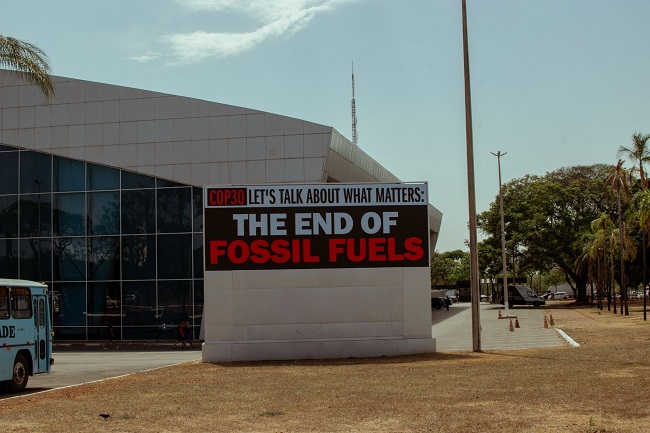
Delegates from member countries were welcomed in Brazil’s capital with billboards urging that the issue be included in the Pre-COP discussions

Less than a month before the United Nations Climate Change Conference, COP30, which will take place in Belém (PA), a crucial issue for the planet still hangs in the air, with no sign that it will be properly addressed: the gradual phase-out of fossil fuels. There is a real risk that a deal on this will once again be left out of the final declaration, repeating the failure of COP29, which was marked by the strong presence of pro-oil lobbyists.

Pre-COP30
One of the billboards urging that fossil fuels phase-out be included in the Pre-COP discussions. Photo credit: Bárbara Cruz

The burning of fossil fuels accounts for 70% of greenhouse gas emissions driving the climate crisis. That is why, at COP30, it is imperative for nations to reach a consensus on an ambitious plan with clear, concrete targets to progressively reduce the use of oil, gas, and coal, coupled with a just energy transition.

To reinforce this message, civil society organisations put up billboards across Brasília, which this week is hosting more than 30 heads of delegations for the Pre-COP – the last high-level meeting before Belém. The goal is to remind them that a real solution to the climate crisis necessarily involves ending the fossil fuel era.

At COP28 in 2023, the Global Stocktake (GST) – the Paris Agreement’s global progress assessment – recognised the shift away from fossil fuels as an urgent action for this critical decade. Countries also committed to tripling renewable energy capacity and doubling energy efficiency by 2030.

However, the lack of more ambitious commitments by countries, combined with a complex geopolitical landscape – marked by the rise of the far-right and inadequate, insufficient, and unjust international climate finance – will put governments’ climate pledges to the test. This scenario underscores the need for greater political and diplomatic pressure to ensure the next steps deliver clear and binding commitments.

It is essential for all negotiators to work effectively toward the success of COP30. A meaningful outcome must ensure progress in halting and reversing deforestation and forest degradation, as well as advancing all aspects of the COP28 energy package – including a just, orderly, and equitable transition away from fossil fuels. Implementation must be accelerated, which requires increased investment and support, including robust financial flows for a just energy transition in developing countries.

New report tracks growing risks of Earth system tipping points

0

Widespread coral reef die-off marks the world’s first climate tipping point, according to a new report by 160 scientists. The Global Tipping Points Report 2025 highlights mounting risks across Earth’s systems, from melting glaciers and ice fields to slowing ocean currents, ice sheets and rainforests under pressure. The report was led by the University of Exeter with contributions from the Potsdam Institute for Climate Impact Research (PIK) and 85 other institutions.

Beyond coral reefs, the report highlights the risks, consequences, and governance challenges around Earth system tipping points. These span a variety of scales, from those with local impacts like glaciers and small ice fields to those with consequences at the continental and global scale, such as major ocean circulations, the polar ice sheets, and the Amazon rainforest.

African Glacier
Melting glacier

Current global warming of around 1.3-1.4 °C already exceeds the estimated tipping point for warm-water coral reefs. Several critical Earth system components, including land permafrost, the Greenland ice sheet, the West Antarctic ice sheet and the North Atlantic subpolar gyre, may reach their tipping points once temperatures rise just above 1.5 °C. 

“We have more and more evidence for tipping points in all these different systems,” warns PIK scientist Sina Loriani, who has co-led a new, updated section on the latest state of science on Earth system tipping points. “There is an increasing risk that we kick off feedback loops that amplify and accelerate changes in the Earth system.” 

The report finds that widespread die back of the Amazon rainforest, due to the combined stress of climate change and deforestation, could be triggered at a lower temperature than previously thought, with the lower end of the estimated range now at 1.5°C. This highlights the need for urgent action.

“We must minimise both how far and how long we overshoot 1.5°C. Every fraction of a degree, and every year above that threshold, increases the risk of triggering irreversible tipping points,” says Nico Wunderling, scientist at PIK and Goethe University Frankfurt and also a report co-section lead.

Case study underscores the outsized impact that crossing tipping points will have

A case study on Áakʼw Tʼáak Sítʼ, also known as the Mendenhall Glacier, near Juneau, Alaska (USA) highlights the substantial risks of crossing tipping points even in relatively small-scale systems like glaciers and small ice fields. In Juneau, increasingly large glacier lake outburst floods from Áakʼw Tʼáak Sítʼ set successive records in 2023, 2024 and 2025, causing tens of millions of dollars of damage and presenting serious adaptation and governance challenges for the region.

“The tragic situation in Juneau underscores the outsized impact that crossing tipping points will have on cities, local communities, and indigenous peoples everywhere, as they will bear the burden of adapting to continued environmental change. The quick and resilient actions of many – from building temporary flood barriers, to sourcing mutual aid and investing in long-term planning – demonstrate the complex network of stakeholder and rightsholder groups that must engage to achieve ‘real-world’ adaptation,” said PIK scientist Donovan Dennis, who led the case study.

Not just warnings: the report identifies positive changes too

The 160 authors of the report argue that the nature of abrupt and irreversible Earth system tipping points mean they pose a different type of threat to other environmental challenges, and that current policies and decision-making processes are not currently adequate to respond.

However positive changes have been observed with the rapid up take of solar photovoltaics, wind power globally, and in the adoption of electric vehicles, battery storage and heat pumps in leading markets. The report shows that these technologies are already rapidly transforming energy systems, but further acceleration – e.g. via positive social and economical tipping points – is needed to halt and reverse global warming in time to avert triggering other tipping points. 

Link to the report: https://global-tipping-points.org/resources-gtp

Dangote Cement officially launches operations in Côte d’Ivoire

0

Dangote Cement, a subsidiary of the group founded by Aliko Dangote, has officially launched its operations in Attingué, some 30 kilometres from Abidjan, Côte d’Ivoire. The announcement was made on Wednesday, October 8, 2025, by Serge Gbotta, Managing Director of Dangote Cement Côte d’Ivoire, at the Novotel Abidjan-Marcory.

Covering an area of 50 hectares, the plant has a production capacity of 3 million tonnes of cement per year, making it one of the group’s largest facilities outside Nigeria.

Dangote Cement
Sales and Marketing Director, Stephane Tchimou; Legal and Compliance Director, Francophone Africa, Romina M. Orlando; Chijioke Nwobi, Human Resources Director; Dangote Cement Ivory Coast CEO, Serge Gbotta; Plant Director, Loius Raj

This strategic project, with an estimated investment of 100 billion CFA francs, embodies Aliko Dangote’s vision of building a self-sufficient Africa that is less dependent on imports and capable of transforming its own resources into world-class finished products.

With this facility, Côte d’Ivoire becomes the 11th African country to host a Dangote Cement production unit. The group, which has a total capacity of 55 million tonnes per year on the continent, intends to contribute to the development of Ivorian infrastructure and meet the growing demand for construction materials, driven by rapid urbanisation and major construction projects in the country.

According to forecasts, the Attingué plant could generate more than 1,000 direct and indirect jobs. This represents a significant boost for young people in Côte d’Ivoire, but also for the ecosystem of local SMEs – transporters, building tradespeople, retailers, suppliers and subcontractors.

At the launch ceremony, the Chief Executive Officer (CEO) of Dangote Cement Côte d’Ivoire reiterated the company’s philosophy: “Our ambition is clear: to offer Ivorians internationally-standard cement, produced locally, at a competitive price. The Attingué plant is not just an industrial unit, it is a symbol of confidence in the future of Côte d’Ivoire and a commitment to sustainable development alongside local communities,” said Mr Gbotta.

The CEO also highlighted the training programmes that the company intends to set up for young Ivorian engineers and technicians through the Dangote Academy, with a view to strengthening local skills in industrial management.

For his part, Stéphane Tchimou, Commercial Director of Dangote Cement Côte d’Ivoire, emphasised the direct impact of this facility on construction industry players and distributors: “We know that Ivorian masons, craftsmen and contractors need reliable, high-performance cement that is available without interruption. It is for them that we have chosen to establish one of our largest units here. Our distribution network will be structured to ensure proximity and availability in all regions of the country,” he said.

He added that the company plans to put support mechanisms in place, including credit facilities and commercial assistance, to support small retailers and boost the value chain.

Beyond the purely industrial aspect, Dangote Cement promises community initiatives around the Attingué plant: opening access roads, drinking water supply projects, support for local health facilities. The company is demonstrating its commitment to sustainable and inclusive development, in partnership with local authorities and certain NGOs.

‘The risks in Africa are often exaggerated. In reality, this continent is full of opportunities. Our role is to tell a new story, that of an Africa that produces, innovates and builds for its children,’ sums up Aliko Dangote, founder of the group.

With its premium cement available in several grades (CPJ 32.5R for masonry, CPJ 42.5N for buildings and CPA 52.5 for large structures), Dangote Cement intends to establish itself as a trusted partner for the Ivorian construction industry.

The Attingué plant, designed to be at the cutting edge of technology, should enable the country to significantly reduce its cement imports and eventually become a regional hub for production and export.

It should be noted that Dangote Cement’s arrival in Côte d’Ivoire is not just about opening a factory. According to the businessman, it is a promise of shared growth, job creation and knowledge transfer. Between industrial ambition, economic opportunities and social commitment, the Nigerian giant wants to help write a new chapter in the history of construction in Côte d’Ivoire.

Epe 2025: How Nigerian youths are redefining Africa’s climate story

0

Twenty young Nigerian changemakers from over five states across Nigeria have come together to set a bold agenda on how Africa narrates its current impact and climate future.

Their gathering, which was at the instance of an event organised by the Human and Environmental Development Agenda (HEDA Resource Centre), in Lagos, was superintendent by seven facilitators spanning television, online media, food and waste advocacy, all aimed at equipping participants with tools to connect climate science with storytelling that resonates across communities.

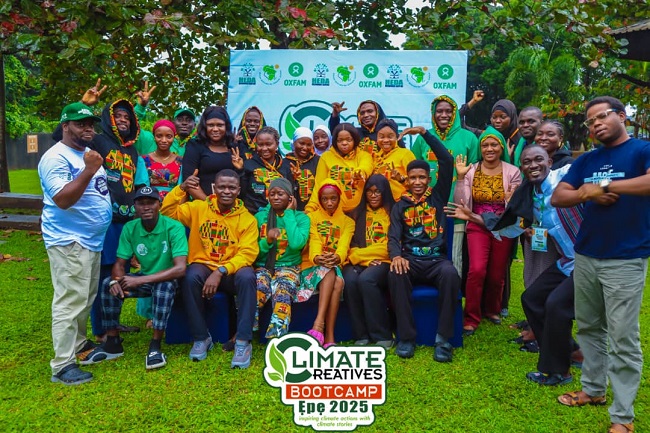
Epe 2025 Creative Climate Bootcamp
Participants in the Epe 2025 Creative Climate Bootcamp, organised by the Human and Environmental Development Agenda (HEDA Resource Centre) in Lagos

Its theme, “Creatives Climate Bootcamp, Epe 2025,” focuses on how to address some of Africa’s most pressing environmental challenges such as climate security, food waste and production, and the role of geo-spatial technology in advancing climate adaptation and mitigation.

“We are not just training young leaders, we are empowering the next generation of climate communicators who will change the way Africa sees and responds to climate change” said Mr. Sulaimon Arigbabu, HEDA executive secretary.

The bootcamp blended technical knowledge with creative practice, linking science with art to amplify urgent messages. Food and waste champions demonstrated sustainable alternatives to reduce losses in agricultural value chains, while media professionals such as Mayowa Adebote mentored participants on how to frame narratives that can influence policy and shift public perception.

The programme also featured a pitch session with award-winning film director, Tigerfire Rose, award-winning photographer Mayowa Adebote, and Dr. Olaide, who served as judges, with the air quality group coming first and food waste to compost group being the runner-up.

For many of the participants, the experience was transformative. “I came here thinking climate change was about distant policies. Now, I see how data, media, and creativity can bring it closer to home for Nigerians,” one attendee stated.

While speaking to EnviroNews, Rachel Ramson, a journalist with Silverbird said that through the HEDA climate creatives bootcamp, she has learned how to report on climate change in a way that respects scientific consensus while also exploring economic, cultural, and political complexities.

“Rather than pushing a single narrative, I now focus on elevating underreported voices, presenting competing perspectives clearly, and highlighting solutions alongside challenges. Ultimately, the training reinforced that journalism plays a key role in climate action – not by taking sides, but by shining light on facts, context, and consequences, allowing the public and policymakers to make more informed decisions,” she said.

On winning the pitch, one of the team members, Kikelomo Lawal, said in a community of 100 people, air quality is spoken rarely and according to World Health Organisation (WHO), globally 99% people are affected by unhealthy air. For her and her team, this triggered the need to design a solution that can combat air pollution, mitigate emissions in cities, and enhance quality air flow for young people.

“We are excited to win because we are passionate about air quality; it’s our field, we live and breathe in it. We integrated mobile sensor in our project when compared to fixed sensors that covers about 2 kilometres,” Lawal hinted.

As Africa battles the twin pressures of climate insecurity and external emissions, initiatives like this underscore the role of youth in driving climate discourse. With Nigeria’s vast population of under-30s, the potential for grassroots-led storytelling to influence adaptation and resilience strategies is enormous.

The HEDA Resource Centre says this bootcamp is only the beginning. Plans are underway to expand the pitch innovations of young climate narrators across more states by equipping them with the tools not only to tell Africa’s climate stories but to shape the solutions for continental impact.

By Nsikak Emmanuel Ekere

Town planners call for Abuja master plan restoration

The Nigerian Institute of Town Planners (NITP) has called on government agencies, developers, and urban stakeholders to return to Abuja’s original Master Plan to address rising urban challenges.

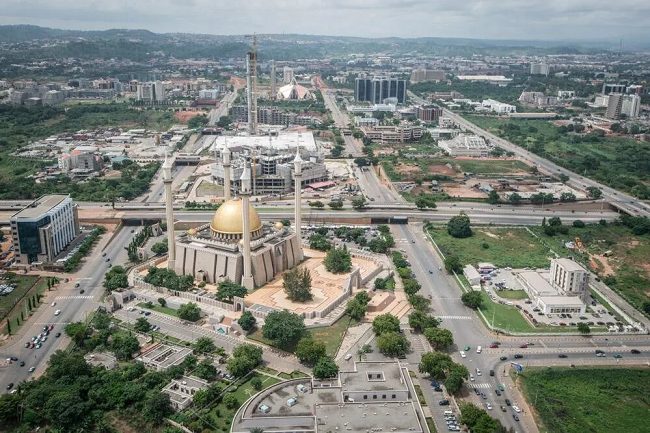
FCT NITP Chairperson, Mrs. Queen Philips, in her message marking the World Habitat Day and World Cities Day in Abuja on Monday, October 13, 2025, said restoring the plan would help eliminate irregularities in the Federal Capital Territory.

Abuja
Abuja

Philips attributed Abuja’s worsening urban crisis to illegal constructions, blocked drainages, and land allocations done without professional input, stressing the need for expert-guided urban management and planning decisions.

She explained that Abuja faced growing pressure from population increase, poor infrastructure, informal settlements, climate-related threats, and land-use conflicts, which continued to erode the capital’s planned urban structure.

Philips identified flood-prone zones like parts of Asokoro, Guzape, and Trademore as examples where disregard for professional planning layouts had led to increased vulnerability and environmental hazards.

According to her, professional planning bodies are often sidelined by elite interests in Abuja, which contributes to chaotic development and increasing environmental and social risk across the FCT.

She revealed that the institute was currently seeking an audience with FCT Minister Nyesom Wike to offer expert guidance on restoring the Abuja Master Plan and preventing further urban decline.

Philips commended Wike’s infrastructure and road development efforts, adding that professional planning input would complement those achievements and reduced risks like flooding and forced displacement.

She emphasised that truly smart cities must serve the people.

“Technology should serve people, not drive exclusion,” Philips said, urging inclusive, sustainable planning approaches across all sectors of development.

She confirmed that the NITP had sent a formal letter to Wike requesting a meeting, expressing hope that both parties shared a common vision to restore the original Master Plan.

Immediate past NITP National President, Nathaniel Atebije, warned that continued neglect of urban planning would cripple national growth.

Atebije stressed that Nigeria must urgently address its urban planning failures to create livable, sustainable cities, saying the current crisis could be reversed with proper planning and stakeholder cooperation.

By Angela Atabo

NiMet predicts three-day sunshine, cloudiness from Monday

0

The Nigerian Meteorological Agency (NiMet) has predicted sunshine and cloudiness from Monday, October 13 to Wednesday, October 15, 2025, across the nation.

NiMet’s weather outlook released in Abuja envisaged sunny skies on Monday with patches of clouds over the northern region.

It anticipated prospects of isolated thunderstorms with light rains over parts of Taraba and southern Kebbi states during the morning hours.

cloudy weather
Cloudy weather

“Later in the day, isolated thunderstorms with moderate rains are expected over parts of Taraba, Adamawa, Kaduna, Borno, Bauchi, Gombe, Kebbi and southern Sokoto states.

“For central region, cloudy skies with spells of sunshine are expected with prospects of morning thunderstorms with moderate rains over parts of Niger, Benue, Plateau and Kogi states.

“Later in the day, isolated thunderstorms with moderate rains are anticipated over parts of the Federal Capital Territory, Niger, Kogi, Kwara and Nasarawa states,“ it said.

According to NiMet, cloudy atmosphere is anticipated over the southern region with prospects of morning thunderstorms and light rains over parts of Ogun, Ondo, Ekiti, Imo, Ebonyi and Abia states.

It forecast isolated thunderstorms with moderate rains over most parts of the region later in the day.

NiMet predicted sunny skies on Tuesday with patches of clouds over the northern region during the morning period.

It envisaged isolated thunderstorms with moderate rains over parts of Kaduna, Taraba, Bauchi, Southern Kano, Southern Jigawa and Adamawa states later in the day.

The agency anticipated sunny skies with patches of clouds over the central region.

NiMet forecast morning thunderstorms with light rains over parts of Nasarawa, Kwara, Kogi, the Federal Capital Territory, Niger and Benue states.

According to it, isolated thunderstorms with moderate rains are anticipated over part of Nasarawa, the Federal Capital Territory, Niger and Kogi states later in the day.

“For southern region, cloudy atmosphere is anticipated over the southern region with prospects of morning rains over parts of Ogun, Ondo, Ebonyi, Lagos, Cross River, Rivers, Bayelsa and Akwa Ibom Sstates during the morning hours.

“Later during the day, isolated thunderstorms with moderate rains are anticipated over parts of Imo, Ebonyi, Abia, Oyo, Ekiti, Osun, Cross River, Rivers and Akwa Ibom states,” it said.

NiMet predicted sunny skies on Wednesday with patches of clouds over the northern region and thunderstorms with light rain over parts of Taraba State during the morning hours.

The agency envisaged isolated thunderstorms with light rains over parts of Kaduna, Adamawa and Taraba states later in the day.

According to the forecast, cloudy atmosphere with intervals of sunshine is anticipated over the central region with chances of thunderstorms and light rains over parts of Niger, Kwara and Benue states during the morning period.

The agency predicted isolated thunderstorms with moderate rains over parts of Kogi, Benue, Niger, Nasarawa and the FCT later in the day.

“Cloudy atmosphere is anticipated over the southern region with prospects of thunderstorms with light rains over parts of Cross River, Akwa Ibom, Rivers and Bayelsa during the morning hours.

“Later in the day, thunderstorms with moderate rains are anticipated over most places in the region,” it said.

NiMet urged the public to drive under rain with caution, ensure that loose objects are fastened to avoid collision and disconnect electrical appliances from electrical sockets.

It further urged the public to stay away from tall trees to avoid impact from falling branches and broken trees.

“Farmers should avoid leaching of nutrients by refraining from applying fertiliser and pesticides right before the rains.

“Airline operators are advised to get airport-specific weather reports (flight documentation) from NiMet for effective planning in their operations.

“Residents are advised to stay informed through weather updates from NiMet by visiting www.nimet.gov.ng’’ Nimet said.

By Gabriel Agbeja

Cooking gas: Consumers, retailers clamour for availability, price stability

0

Some consumers and retailers of Liquefied Petroleum Gas (LPG), popularly known as cooking gas, have called on the Federal Government to ensure steady availability and price stability of the product.

They spoke on Monday, October 13, 2025, in Abuja and Ibadan in reaction to the recent surge in LPG prices, following the face-off between the Dangote Refinery and petroleum workers’ unions.

Cooking gas
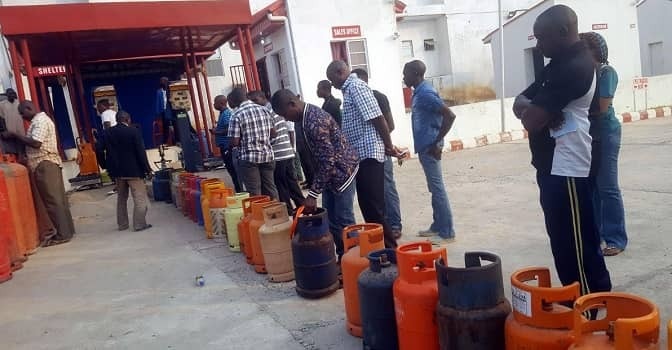
A queue of aspiring cooking gas buyers in Ibadan

The respondents said though the queues and scarcity were gradually easing, government’s intervention was needed to restore full product circulation and regulate pricing.

The Nigerian National Petroleum Company Limited (NNPC Ltd.) had linked the price hike to a temporary disruption in gas loading and distribution during the Petroleum and Natural Gas Senior Staff Association of Nigeria (PENGASSAN) strike.

The strike, prompted by the dismissal of Nigerian workers at the Dangote Refinery, led to several days of halted operations, jetty delays, and what NNPC described as an “artificial” price surge.

The strike was suspended on Oct. 1, following government’s intervention.

Before the crisis, LPG sold for between N1,100 and N1,200 per kg in the FCT, but prices spiked to between N1,400 and N1,800 per kg in some locations, amid worsening scarcity attributed to supply shortfalls.

According to checks, there are no queues at the private outlets in Gwagwalada, Kubwa, Lugbe and Nyanya-Karshi axis, while short queues are seen at NIPCO refilling outlets at Nyanya-Karshi axis, which has maintained N1,080 per kg.

Mrs. Rose Peters, a consumer, expressed displeasure after queuing for few hours at NIPCO along Nyanya-Karshi axis before refilling, adding that it was so due its low price.

Another consumer, John Okoro, who decried the high prices being witnessed, urged the government to ensure its affordability in view of its push for penetration and utilisation of clean energy in the country.

“I live in Gwagwalada; though there are no queues or scarcity but currently, the product sells at N1,400 per kg against N1, 200 per kg sold before the crisis; I expect normalcy,” she said.

Mr. Emmanuel Ekesi, a consumer who called for proper regulation of the prices, decried the fact that Nigerians seized the opportunity created by the strike to hike prices.

Ekesi said he bought gas at Shafa station at Lugbe at N1,500 per kg.

On his part, Mr. Promise Ajujumbu, Chief Executive Officer, Promise of God Gas, said its scarcity and price hike began when the unions embarked on strike, leading to supply disruptions across outlets, in spite of fragile supply chain.

Ajujumbu, who is the Public Relations Officer of the Liquefied Petroleum Gas Retailers Association of Nigeria (LPGAR), Nyanya Unit, said though the strike caused a supply gap and getting the product had been difficult as tankers queue for days.

According to him, the situation is easing gradually, while full product circulation is being expected.

He appealed to the government to collaborate with the Dangote Refinery to enable affordable price of the product since the refinery sells at N780 per litre to marketers.

A gas plant operator in Ibadan who pleaded anonymity explained that the issue started with LPG scarcity, which later resulted in increase of the price. According to him, the scarcity and hike in price of cooking gas was caused by disruption in supply as a result of an industrial action by PENGASSAN which has since been called off. While the strike was resolved, the distributions in supply chain has caused long queues at LPG filling stations with inconsistent prices across the nation.

Embattled buyers on a long queue in the Oyo State capital have also expressed how deeply they’ve been affected by the scarcity and increase, stressing that the currently unstable price is now between N1,700 – N1,800 per kg whereas it used to be N1,100 per kg, and with that, buying the cooking gas after a long queue is not certain. They urged the government to find a lasting solution to the problem.

Reacting to the altercation between PENGASSAN and management of the refinery, Vice President Kashim Shettima has blamed the members of PENGASSAN for holding the nation to ransom over what he described as a minor labour dispute, stressing that it was totally unnecessary. 

He had however declared that the 650,000-barrel-per-day Dangote Refinery is of critical importance to Nigeria and must be supported at all costs.

By Emmanuella Anokam and Omowunmi Abraham