The National Environmental Standards and Regulations Enforcement Agency (NESREA) says it has destroyed 700 sacks of donkey parts handed over to it by the Nigerian Customs Service (NSC) in Kaduna.
This is contained in a statement by Mrs. Nwamaka Ejiofor, the Assistant Director, Press, NESREA on Wednesday, October 15, 2025, in Abuja.
Comptroller Muhammed Yusuf of MMAC showcasing seized donkey genitals
She said this was in compliance with environmental regulations and safety protocols.
Ejiofor said the destruction of the donkey bones and skins took place on Oct. 3, 4, and 6 in Kaduna.
“Two facilities were utilised for the incineration of the bones, while the skins were buried in a designated area.
“The exercise was conducted in the presence of regulatory officers and in accordance with environmental standards,”s he said.
She said the success of the exercise was made possible through the collaboration of NESREA and the NCS.
Ejiofor said they ensured that the destruction was carried out in a safe and environmentally responsible manner which marked a notable achievement in the efforts to combat wildlife trafficking and protect endangered species.
“The destruction was carried out under strict safety protocols to prevent any potential environmental or health risks.
“Personal protective equipment was worn by personnel involved in the exercise, and measures were taken to minimise the risk of exposure to any potential biohazards,” she said.
Ejiofor recalled that NESREA in July incinerated over one hundred bags of donkey genitals handed over by the Nigerian Customs Service in Abuja.
The Director-General of NESREA, Prof. Innocent Barikor, who lamented the declining donkey population in Nigeria, warned that they are gradually going extinct.
Barikor reiterated the firm stance of the Nigerian Government against illegal exploitation of donkeys.
He said that though donkeys are considered domestic animals, yet their demand by illegal traffickers for medicinal purposes and aphrodisiac led to an executive order by the Federal Government to curtail its commercialisation.
Barikor said that the destruction of the donkey parts by NESREA and NCS was intended to discourage illicit trade in donkey.
He expressed appreciation to the NCS for the strong support for the war against illegal trade in endangered species.
In what appears to be a landmark step toward sustainable mobility, Chart Eco Global Services, in partnership with Ogata Global Resources, is facilitating an environmental milestone at the University of Lagos (UNILAG) – with a projected reduction of over 120 metric tons of carbon dioxide (CO₂) emissions by the end of 2025.
The initiative, launched in January 2025, is the result of a collaborative effort between Chart Eco Global Services, Ogata Global Resources, and the UNILAG, with the university providing an enabling environment for the transition to a cleaner transport system.
Prof. Folasade Ogunsola, Vice-Chancellor, UNILAG, inaugurating buses using solar energy and electricity
The UNILAG Electric Vehicle (EV) Initiative has been described as an example of how innovative partnerships can drive measurable climate action. In its first six months, the initiative operated with an initial fleet of 10 electric buses, covering more than 102,000 kilometres and achieving a carbon reduction of 16.78 metric tons of CO₂.
Following this success, 20 additional electric buses were introduced, bringing the total fleet to 30, with a projected annual mileage of 700,000 kilometres and a total reduction of approximately 124 metric tons of CO₂ by year-end 2025.
These emission savings are equivalent to planting and nurturing about 5,600 trees in a single year, underscoring the profound environmental benefit of transitioning from fossil-fuel vehicles to electric mobility.
Speaking on the progress, Chief Executive Officer of Chart Eco Global Services, Mr. Itunuoluwa Okusami, expressed delight over the measurable impact of the initiative:
“This project is a proof of concept for decarbonizing Nigeria’s heavily polluted transport sector. The amount of carbon we’ve prevented from entering the atmosphere is inspiring, but even more importantly, it shows that this model can be scaled across schools and communities nationwide to make an even bigger impact,” he said.
Chief Executive Officer of Ogata Global Resources, Mr. Henry Eke, noted that the initiative aligns with both environmental and economic needs:
“This initiative is timely, especially given the current economic realities. The electric buses provide a more affordable and sustainable transport option while contributing to a cleaner and healthier environment,” Eke stated.
Environmental expert, Dr. Okwong Walter of the TETFund Centre of Excellence in Biodiversity Conservation and Ecosystem Management (TCEBCEM), UNILAG, verified the integrity of the emissions report and commended the university’s commitment to sustainability. He added that the initiative would significantly improve air quality in and around the campus.
The emissions data were calculated and verified by Chart Eco Global Services, a sustainability organisation that helps institutions reduce their greenhouse gas (GHG) emissions by integrating cutting-edge decarbonisation solutions into their operations. The analysis adhered to internationally recognised standards, including the UK DEFRA, US EPA, and IPCC 2006 Guidelines, ensuring accuracy and global best practices.
The emissions tracking tool was based on the GHG Protocol for mobile combustion, developed by Clear Standards Incorporated in collaboration with the World Resources Institute (WRI), and reviewed by experts at TCEBCEM, UNILAG.
The promoters disclosed that, through the partnership, Chart Eco Global Services and Ogata Global Resources have demonstrated that with collaboration, innovation, and commitment, Nigeria’s transportation sector can take decisive steps toward sustainability. The University of Lagos continues to play a pivotal role by providing an enabling environment that supports groundbreaking initiatives aligned with the United Nations Sustainable Development Goals (SDGs) – particularly Climate Action (SDG 13), Affordable and Clean Energy (SDG 7), and Sustainable Cities and Communities (SDG 11).
Dangote Industries Limited has once again reaffirmed its dominance as Nigeria’s Most Valuable Brand, emerging at the top of the Top 50 Brands Nigeria 2025 ranking for the eighth consecutive year.
The latest report, now in its 13th edition, highlights the most admired and resilient brands powering Nigeria’s economy. Dangote achieved a Brand Strength Measurement (BSM) Index of 86.3, maintaining its position as Africa’s leading industrial conglomerate and the most trusted brand in Nigeria.
Dangote Industries headquarters in Ikoyi, Lagos, Nigeria
This recognition echoes the Group’s consistent commitment to industrial excellence, innovation, and impact across key sectors such as cement, sugar, salt, fertiliser, and now, petroleum refining.
Speaking on the achievement, Mr. Anthony Chiejina, Group Chief Branding and Communications Officer, Dangote Industries Limited, said: “This recognition is a testament to our consistent investment in quality, innovation, and brand integrity. At Dangote, we believe that the soul of business is not just in making profit, but in making people happy by creating opportunities, empowering communities, and contributing meaningfully to Nigeria’s industrial transformation. Our brand promise remains rooted in trust, excellence, and service to humanity.”
The 2025 ranking also celebrates the growing strength of indigenous brands, with seven of the top 10 positions occupied by Nigerian companies, a testament to the competitiveness and resilience of local enterprises in a challenging economic environment.
According to Top 50 Brands Nigeria, brands were assessed using seven key indicators, including popularity, category leadership, innovation, quality, and corporate social responsibility to produce the final BSM Index score.
The platform’s Chief Brand Analyst and convener, Taiwo Oluboyede, noted that strong brands remain vital to national development.
“Brand is not just an essential component of an organisation the brand is the organisation. For something that is that important, there is always the need for periodic assessment and evaluation. That’s what this ranking represents, a mirror that reflects how strongly brands are performing in the hearts and minds of Nigerians,” Oluboyede said.
“With operations spanning multiple industries and a growing global footprint, Dangote continues to embody the spirit of industrial transformation, driving local production, job creation, and regional competitiveness.”
Dangote Industries Limited, earlier in the year, won three awards at the 15th annual Brand Africa 100 ceremony, including the Most Admired African Brand title at Africa Hall in Addis Ababa.
In Visepo Model Village under Traditional Authority Mpherembe in Mzimba, Malawi, Rabecca Nkhata, a 43-year-old farmer, is rewriting the narrative of women in agriculture through hard work, resilience, and determination.
With support from the Royal Norwegian Embassy through Find Your Feet under the NCA-DCA Malawi Joint Country Programme’s Transform Project, Rabecca has turned her small-scale farm into a thriving agribusiness – and inspired her entire community in the process.
As a member of a 72-member farmers’ group, she benefited from access to loans, agricultural training, and other empowerment initiatives provided by the project.
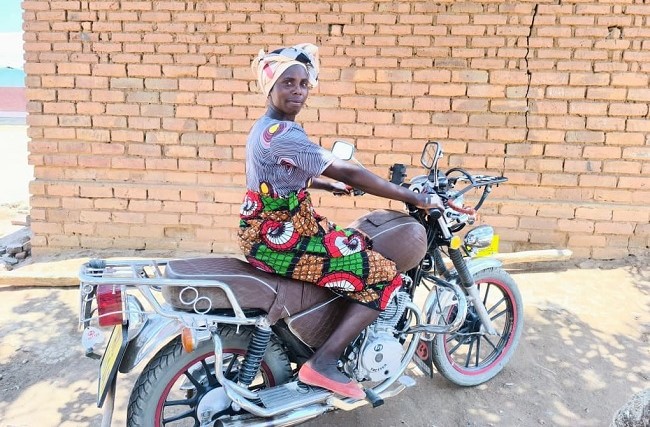
Rabecca Nkhata on her motorbike
Her efforts bore fruit during the 2024/2025 farming season, when she harvested 400 tins of maize and several bales of tobacco, earning K12 million in total.
After repaying her loan and paying workers, Rabecca walked away with K7 million in profit – money she used to purchase a motorbike and modern farming equipment to boost her productivity.
What makes Rabecca’s story even more remarkable is that she achieved all this without her husband’s help.
“I wanted to empower myself and fellow women in my village,” she said proudly.
“I believe women can achieve anything with the right mindset and support.”
Her determination has not only changed her own life but has also motivated other women in her community to pursue self-reliance and financial independence.
Community Transformation
Village Headman Israel Mithi hailed the project for transforming livelihoods in Visepo.
“Our lives have truly changed,” he said.
“We now have enough maize, livestock, and gardens. We don’t lack anything at all.”
He added that many households can now afford to pay school fees and meet other basic needs without difficulty.
The farmers’ group, which now boasts K3.5 million in savings, plans to purchase another maize sheller – a crucial piece of equipment that has made maize shelling easier and created a new source of income for the community.
Neighbouring villages now pay K1,000 per 50kg bag to use the sheller, turning it into a small but sustainable business venture.
Looking Ahead
As the Transform Project nears its conclusion, community members say they are determined to sustain its gains.
“We really appreciate it from the bottom of our hearts,” said Village Headman Mithi.
“We are not stopping – we’ll continue working hard so that those who brought this project here will never regret it.”
Rabecca’s story stands as a powerful testament to women’s potential in agriculture.
Her success shows that, with access to resources, training, and supportive structures, rural women can lift themselves – and their communities – out of poverty.
On Thursday, October 16, 2025, a group will embark on a 3,000 km (1,864-mile) river journey from Coca, Ecuador to Belem, Brazil to draw attention to the role of Indigenous Peoples in safeguarding the climate – and the threats these communities face despite their role in keeping the planet livable.
The Yaku Mama Flotilla, a global coalition of over 60 Indigenous, territorial, and ally organisations, led by Indigenous Peoples from around the world with a special focus on the Amazon, is launching a historic 3,000 km river journey from Ecuador to COP30 in Belém, Brazil. The journey symbolises the fight for climate justice, a fair energy transition, and the end of the fossil fuel era, highlighting that real solutions to climate change emerge from the territories.
In a call for true climate justice, the Yaku Mama Flotilla will sail from the Andes to the Amazon on its way to COP30 in Belem
The flotilla is departing from the City of Coca, Ecuador, traveling over 3,000 km through Amazonian rivers and communities on its way to COP30.
Participants include Indigenous leaders from different continents, representing communities that are guardians of forests and rivers, uniting their voices to demand fair and binding climate policies.
Oil exploration in the Pan-Amazon overlaps with 441 ancestral territories and 61 natural protected areas (InfoAmazonia/Arayara). Peru recorded 831 oil spills between 2000 and 2023, and Ecuador 1,584 between 2012 and 2022, while projects like the FZA-M-59 block at the mouth of the Amazon have been rejected due to biodiversity risks. This situation underscores the urgency of a just and binding energy transition.
The journey denounces extractivism and the impacts of fossil fuel exploitation while highlighting living solutions from the territories: sustainable forest management, ancestral science, community monitoring, and sustainable productive practices.
Indigenous peoples manage or hold rights to a quarter of the Earth’s land surface, which includes 37% of intact natural lands and a third of the planet’s forest landscapes. Biodiversity remains more stable in these areas than in similar ecosystems outside of them, proving that Indigenous peoples not only defend their territories but also play a critical role in global climate governance.
Governor Ademola Adeleke has announced a new breakthrough as Osun State has been ranked 6th out of 36 states in Nigeria in the 2nd Edition of the Sub-national Climate Governance Performance Ranking Report, an initiative of the Federal Government of Nigeria with support from the Society for Planet and Prosperity (SPP).
The report provides a comprehensive assessment of how Nigerian states are implementing climate policies, strengthening institutional frameworks, and driving local climate action. It serves as a key tool for accountability, innovation, and collaboration toward achieving a sustainable and resilient future for all Nigerians.
Gov. Ademola Adeleke of Osun State
In the 2025 edition, Osun State achieved a total score of 265, marking what looks like an exceptional leap from 30th position in 2024 to 6th position, and emerging as the second-best performing state in the South-West region after Lagos State.
This remarkable improvement, according to state officials, underscores the vision and strategic investments of Gov. Adeleke, whose administration has made climate change, circular economy, renewable energy, and environmental sustainability a core pillar of governance and development.
Under the Governor’s leadership, the state has implemented several transformative initiatives, including:
Increased budgetary allocation to climate change projects and programmes;
Establishment of a Department of Climate Change and Renewable Energy within the Ministry of Environment and Sanitation;
Implementation and monitoring of climate-related projects across local governments;
Integration of climate education and environmental awareness into schools;
Regular capacity building for state and local climate officers; and
Enhanced coordination and dialogue with the Federal Ministry of Environment and other national/international agencies.
Osun State also ranked high nationwide in online visibility for climate change governance, reflecting growing transparency and public engagement in the state’s environmental programmes.
Speaking at the unveiling event held at Bon Hotel Octagon, Abuja, which had in attendance the Minister of Environment, the Director-General of the National Council on Climate Change (NCCC), and other distinguished stakeholders, the Commissioner for Environment and Sanitation, accompanied by the Director of Climate Change and Renewable Energy, received the award on behalf of the State Government.
They dedicated the achievement to the good people of Osun State and to the Governor, in recognition of his commitment to environmental sustainability and climate action.
Mallam Olawale Rasheed, Spokesperson to the Governor, said in a statement: “Special commendation also goes to the Director-General and Special Envoy of the Governor on Climate Change and Renewable Energy, Professor Chinwe Obuaku-Igwe, whose leadership, resilience, and strategic coordination have been instrumental in positioning Osun State on the national map as a forward-looking and ambitious sub-national actor in climate governance.
“The Osun State reaffirms its commitment to advancing climate action, renewable energy transition, circular economy initiatives, and sustainable development programs that will ensure a greener, cleaner, and more resilient Osun for present and future generations.”
Meanwhile, Kano State appears to have recorded one of the most dramatic improvements in Nigeria’s climate governance history, moving from 35th to 4th position in the 2025 Subnational Climate Governance Performance Ranking.
The state’s Commissioner for Environment and Climate Change, Dahir Hashim, announced the development in a statement issued on Tuesday, October 15, in Kano, describing it as a product of “deliberate reforms, strengthened institutions, and community-driven programmes.”
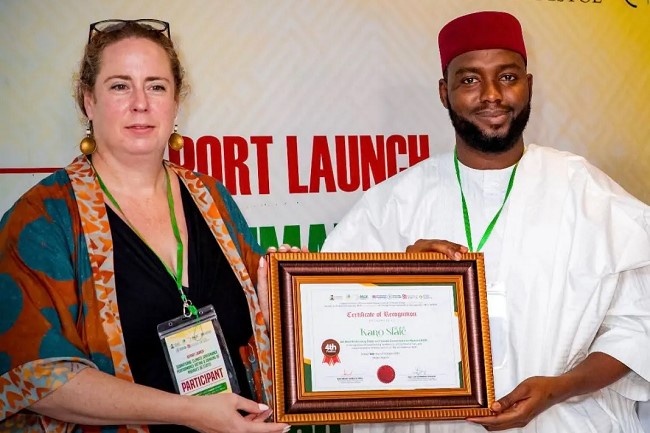
Kano State receiving an award during the National Climate Governance Ranking release ceremony in Abuja
According to Mr. Hashim, the achievement reflects the state government’s commitment to building a responsive governance system that addresses both “the global urgency of climate change and the local realities of our people.”
He said that, over the past year, the government had expanded climate-smart infrastructure and deepened environmental governance through the implementation of the Kano State Climate Change Policy.
The commissioner highlighted several key initiatives that contributed to the ranking boost – including renewable energy deployment across public institutions, urban greening projects under the state’s Urban Renewal Programme, and large-scale afforestation and erosion control efforts across local communities.
“These initiatives have laid the foundation for resilience, cleaner energy transition, and inclusive growth,” Mr. Hashim stated.
He emphasised that the recognition was a testament to the collective efforts of the ministry’s teams, local governments, community leaders, civil society groups, and development partners who have worked together to advance climate action in the state.
“I am deeply proud to share that Kano State has recorded one of the most remarkable transformations in Nigeria’s climate governance history – moving from 35th position in the previous year’s ranking to 4th in the 2025 edition,” he said.
Mr. Hashim commended the Minister of Environment, Balarabe Abbas-Lawal, and the Federal Ministry of Environment for their leadership in advancing subnational climate governance. He also lauded the Society for Planet and Prosperity (SPP), and the University of Bristol, United Kingdom, for spearheading the ranking initiative that promotes “healthy competition, collaboration, and accountability” among states.
He attributed the milestone to the visionary leadership of Governor Abba Kabir Yusuf, whose commitment to sustainability, he said, had placed climate action at the heart of Kano’s development agenda.
“Our gratitude equally goes to the UK-FCDO Partnership for Agile Governance and Climate Engagement (PACE) Project and other development partners for their continued technical and institutional support to Kano’s environmental transformation journey,” he added.
Global agriculture company Alltech broke ground on Tuesday, October 14, 2025, on a new $4.6 million, 15,000-square-foot manufacturing facility that will produce biological fertilisers and crop inputs, providing farmers with an environmentally responsible alternatives to traditional chemical fertilisers and helping reduce reliance on imported, synthetic inputs.
Located on the campus of Alltech’s global headquarters, the facility will be the company’s first U.S. manufacturing plant dedicated solely to producing crop science technologies. Modeled after Alltech Crop Science (ACS) facilities in Brazil and Spain, the Kentucky site will produce more than 66,000 gallons of biological fertilisers per shift per month and create at least six new full-time jobs. It will also manufacture more than 30 natural products designed to help farmers enhance soil and crop vitality.
Dr. Mark Lyons, president and CEO of Alltech
The project is supported by a $2.34 million grant from the USDA Fertiliser Production Expansion Programme (FPEP). The $500 million FPEP initiative, launched in 2022 in response to supply chain disruptions and rising fertiliser prices, aims to expand the production, availability and affordability of domestic fertiliser and nutrient alternatives and reduce reliance on imported synthetic fertilisers.
Alltech’s project was selected for its innovative approach to soil and crop health. Made with beneficial microorganisms, the company’s biofertilisers improve soil fertility, stimulate root development, enhance nutrient uptake and support a healthier soil microbiome, enabling farmers to maintain productivity while reducing environmental impact.
“This facility represents the next phase in scaling our biological innovations for agriculture,” said ACS vice president Dr. Steve Borst, who leads the project. “By expanding production here in Kentucky, we can bring farmers natural, science-based solutions that improve soil health, strengthen crops and reduce reliance on synthetic fertilisers. We’re grateful to the USDA and to our state and local partners for their support in making this vision a reality.”
In addition to supporting U.S. farmers in reducing dependence on imported synthetic fertilizers, the new crop science facility will enable ACS to expand the reach of its natural agronomic technologies across both the U.S. and international markets. Leveraging Alltech’s more than four decades of expertise in microbial fermentation and nutrigenomics, ACS delivers environmentally responsible alternatives to traditional chemical applications. These biological solutions restore soil balance, strengthen soil health, maximise crop yields, improve plant resilience, promote stewardship and create long-term value across the food chain.
Nationally, this project’s impact enables the export of domestic technologies, driving international uptake of U.S. products and supply chain resiliency for U.S. growers. In addition, Alltech’s new facility will be instrumental in growing the offering of its in-market sustainable technologies domestically and internationally.
The project aligns with Alltech’s purpose of “Working Together for a Planet of Plenty®,” which unites the agri-food community in creating science-based solutions that provide nutrition for all, revitalise local economies and replenish the planet’s natural resources.
“Fermentation has always been at the heart of our business, and this facility allows us to apply that expertise in new ways to support crop health, productivity and sustainability,” said Dr. Mark Lyons, president and CEO of Alltech. “We’re proud to strengthen our presence at our global headquarters in Kentucky, creating an innovation and manufacturing centre that will serve U.S. farmers, strengthen our local community and continue to advance the science of agriculture.”
The groundbreaking ceremony featured remarks from Rocky Adkins, senior advisor to Kentucky Gov. Andy Beshear; David West, Jessamine County judge-executive; and Alex Carter, mayor of Nicholasville. Alltech’s FPEP grant application was endorsed by Gov. Beshear, Mayor Carter and Judge West, along with U.S. Sen. Mitch McConnell and U.S. Rep. Andy Barr.
“Alltech has been a leader in the agriculture industry for nearly half a century and has provided Kentuckians with good, quality manufacturing jobs over the years,” Adkins said. “This project shows that companies are continuing to choose Kentucky as their home and as a prime place to do business. I want to congratulate Alltech on their new expansion and we look forward to seeing their success continue.”
“Alltech continues to set the standard for innovation in Kentucky’s agricultural economy,” said Congressman Barr, who supported Alltech with a letter of support for the company’s USDA grant application. “I’m grateful to Dr. Mark Lyons and the Alltech team for their persistence and dedication to expanding right here in Jessamine County. This grant will help expand production capacity, strengthen supply chains, and create more opportunities for Kentuckians.”
The event was also attended by leaders of more than 70 global agri-food companies who traveled to Kentucky for Alltech Presidents Club, an annual gathering that convenes industry leaders for peer-to-peer learning, thought-provoking discussion and collaboration on some of the most pressing issues facing agriculture and the agri-food industry.
The President of the Nigerian Gas Association (NGA), Mr. Akachukwu Nwokedi, has called for bold, coordinated action to unlock Nigeria’s immense gas potential and drive the nation’s industrial renaissance.
Speaking at the 3rd Edition of the Gas Investment Forum (GIF 2025), held on October 7, 2025, at the Oriental Hotel, Lagos, Mr. Nwokedi reaffirmed NGA’s unwavering commitment to positioning natural gas as the cornerstone of Nigeria’s economic transformation and sustainable growth.
President of the Nigerian Gas Association (NGA), Mr. Akachukwu Nwokedi
The event, themed “Charting New Opportunities: For Investment, Growth and Industrialisation,” brought together key industry leaders, investors, and policymakers.
“Natural gas is no longer just a fuel – it is an economic multiplier,” Mr. Nwokedi declared. “It powers energy access, enhances food security, enables clean cooking, strengthens industrial competitiveness, and deepens regional integration. Above all, it serves as our collective bridge to a low-carbon, high-impact economic future.”
He applauded President Bola Ahmed Tinubu’s administration for making gas development a central pillar of Nigeria’s energy and industrial policy. He also welcomed the participation of the President of the International Gas Union, describing it as a testament to the growing global recognition of Nigeria’s role in the global energy transition.
Emphasising the need to move from rhetoric to results, Mr. Nwokedi urged all stakeholders to focus on translating Nigeria’s estimated 200+ trillion cubic feet of proven gas reserves into tangible socio-economic value.
“This forum offers more than dialogue – it is a launchpad for ideas, partnerships, and investments that turn potential into performance,” he noted. “By fully harnessing our gas resources, we can ignite innovation, create sustainable jobs, enhance industrial productivity, and drive inclusive national growth.”
Nwokedi further called on participants to seize the momentum to design actionable strategies and policy frameworks that will position the gas sector as a driver of Nigeria’s industrialisation, diversification, and global competitiveness.
He commended the forum’s organisers, partners, and sponsors for sustaining this vital industry platform. He emphasised NGA’s role as a bridge between government, industry, and investors, working to accelerate the pace of policy reforms, infrastructure development, and market-driven investments that can unleash Nigeria’s gas economy.
Founded in 1999, the Nigerian Gas Association is the umbrella professional body for stakeholders across Nigeria’s gas value chain. As a chartered member of the International Gas Union (IGU), the NGA advocates for policies, partnerships, and investments that promote the sustainable development and utilisation of natural gas to drive industrialisation, economic growth, and improve quality of life across Nigeria and Africa.
Vice-President, Kashim Shettima, says Nigeria’s energy transition journey under President Bola Tinubu’s administration is unlocking an investment opportunity of over $410 billion between now and 2060.
Shettima said this on Tuesday, October 14, in Abuja at the inaugural Nigerian Renewable Energy Innovation Forum (NREIF) 2025.
According to the Vice-President, the investment will position Nigeria as the heartbeat of Africa’s renewable energy revolution.
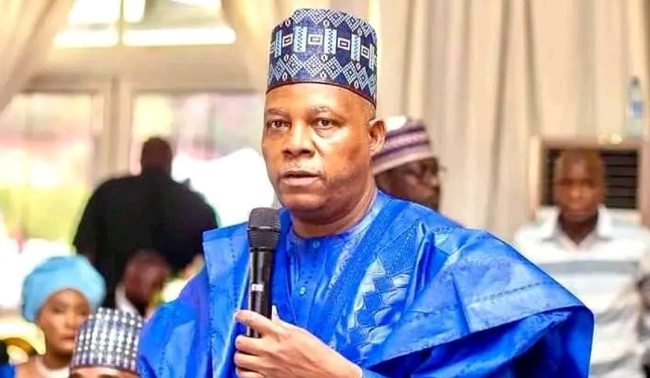
Alhaji Kashim Shettima, Vice President of Nigeria
Shettima said that over $23 billion is needed to expand energy access and connect the millions of Nigerians who still live in energy poverty.
The Vice-President noted that as the world sails fast towards net zero, Nigeria and Africa must not be left behind.
“We have too much at stake. We are blessed with the minerals that power clean technologies, and Nigeria brings to the table youth, ambition, and untapped renewable potential.
“Let us seize this moment. Let us affirm that Nigeria is ready, ready to harness her resources, unlock her capital, and become the vibrant heartbeat of Africa’s renewable energy revolution.
“Nigeria’s energy transition is targeting an investment opportunity of over $410 billion between now and 2060, with over $23 billion needed to expand energy access and connect the millions of Nigerians who still live in energy poverty.”
According to him, beyond access lies the nation’s grander ambition, which is to deliver a power system capable of 277 gigawatts of total installed capacity by 2060.
“This ambition demands more than investment; it demands innovation, local capacity, and commitment,” he added.
He assured investors, development partners and other stakeholders at the forum of President Tinubu’s commitment to consolidating policy foundations that would lead to a renewable energy market that is self-sustaining.
“We are enhancing incentives for local manufacturing, streamlining regulatory frameworks, and deepening collaboration with State Governments, investors, and development partners.
“This is with a view to de-risk private capital and accelerate the emergence of a self-sustaining renewable energy market.
“Nigeria first’ industrial strategy demands that the future of Africa’s renewable energy supply chains be anchored indigenously.
“From solar panel assembly lines in Lagos to battery recycling hubs along our industrial corridors, Nigeria must not only participate in this revolution but lead it.”
Shettima hinted at the Federal Ministry of Power’s readiness to develop policies that would lay the foundation for a more decentralised, competitive, and inclusive electricity market.
The Vice-President, however, noted that efforts to prioritise energy transition cannot succeed without the private sector.
He called on development partners and Original Equipment Manufacturers to localise technologies, strengthen value chains, and invest in skills and knowledge transfer.
“We count on our State Governments to champion renewable industrial clusters and serve as engines of green growth across the federation.”
Shettima urged participants at the forum to reach agreements, forge partnerships and consolidate a national roadmap that would unfold the over $400 million investment in Nigeria’s renewable energy manufacturing value chain into a reality.
He announced that, through the engagements facilitated under the forum, more than 400 million dollars in new investment commitments are being mobilised into Nigeria’s renewable energy manufacturing value chain.
“These include solar panels, smart meters, battery storage, and recycling facilities. These investments are projected to create over 1,500 direct jobs across multiple states and reflect growing global confidence in Nigeria’s clean energy industrialisation drive. ”
The Minister of Power, Chief Adebayo Adelabu, said the forum marks a new chapter in Nigeria’s energy transformation pathway that highlights the role of innovative partnership in targeting significant amounts of local solar energy production capacity.
Adelabu said the government’s multipronged approach is aimed at addressing Nigeria’s structural challenges and unlocking private capital in the bid to transform the entire energy sector value chain.
He described the Integrated National Electricity policy as a comprehensive sector-wide policy framework that is aimed at strengthening gains recorded in the sector, including the decentralisation of the value chain.
The world has officially crossed its first climate tipping point due to unchecked greenhouse gas emissions, scientists warned on Monday, October 13. The 2025 Global Tipping Point Report produced by 160 researchers across 23 countries warns that coral reefs, vital ecosystems that support a quarter of all marine life and protect hundreds of millions of people, are now in irreversible decline due to ocean warming and acidification. It also indicates other tipping points, including the Amazon rainforest, are at severe risk.
The report warns that the 1.5-degree threshold enshrined in the Paris Agreement will be breached within 10 years without a rapid and urgent decline in greenhouse gas emissions. This news comes just weeks before COP30 in Belém, Brazil, a pivotal moment for global climate negotiations, where local traditional communities and Indigenous Peoples are demanding a seat at the table at the summit.
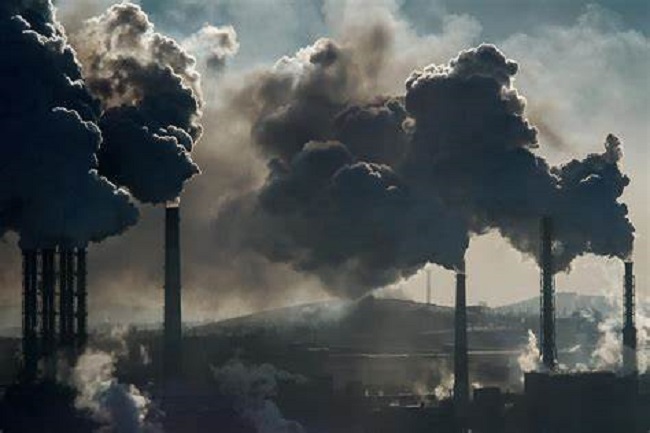
The world has officially crossed its first climate tipping point due to unchecked greenhouse gas emissions
These groups are currently leading restoration projects that regenerate land, store carbon, and protect biodiversity in solidarity with communities the world over whose ecosystems and livelihoods are at risk.
Officials of environment watchdog group, 350.org, are expressing reservations over the development.
Anne Jellema, Executive Director at 350.org, says:“This is a heartbreaking loss. Future generations will inherit empty seas where magical kaleidoscopes of life once thrived. This irreversible collapse is a preview of what we’re about to lose next: rainforests, glaciers, entire species. COP30 must be the moment leaders choose to stop fossil fuels and protect what can still be saved.”
Fenton Lutunatabua, Deputy Head of Regions at 350.org, says:“This is not only an ecological tragedy but a profound injustice for the communities who did the least to cause this crisis. From the Pacific to the Caribbean and the Indian Ocean, people are at risk of losing their food systems, cultures, and livelihoods due to warming oceans and rising seas. Now more than ever we must draw the line to keep the 1.5 degree warming threshold intact.
“At COP30, the most polluting countries need to step up and stop putting profits over people and the planet. We’re tired of excuses and delays.”
Norly Mercado, Asia Regional Director at 350.org, says:“In Southeast Asia alone, more than 120 million people rely on the Coral Triangle’s rich marine habitats for food and income. These frontline communities have faced increasing hunger and declining incomes for years. This report only confirms their lived realities and warns us of the even greater destruction ahead. But the fight isn’t over. The renewable energy revolution is here, reimagining Asia’s future. At COP30, world leaders must deliver what the science now demands – an end to fossil fuels – or condemn future generations to a world without coral reefs and the life they sustain.”
350.organd partners are demanding COP30 deliver:
A rapid phaseout of fossil fuels, with no new oil, gas, or coal projects.
Increased finance and reparations for communities on the frontlines of climate loss and damage.
Protection and restoration of biodiversity through rights-based conservation led by Indigenous Peoples and local communities.