Home Blog Page 126

NCDMB to train over 10,000 Nigerians in high-demand oil skills

0

Spurred by the resurgence of big-ticket investments and new projects in the Nigerian oil and gas industry, the Nigerian Content Development and Monitoring Board (NCDMB) has unveiled a special Human Capital Development (HCD) Programme that would train over 10,000 young graduates and technicians in top 10 high-demand skills in the sector.

Termed NCDMB Oil and Gas Field Readiness Training Programme, the intent is to prepare and equip the next generation of Nigerians with practical skills for top careers in the oil and gas industry and position them to take part actively in the oil and gas projects recently launched by some international and indigenous operating oil and gas companies.
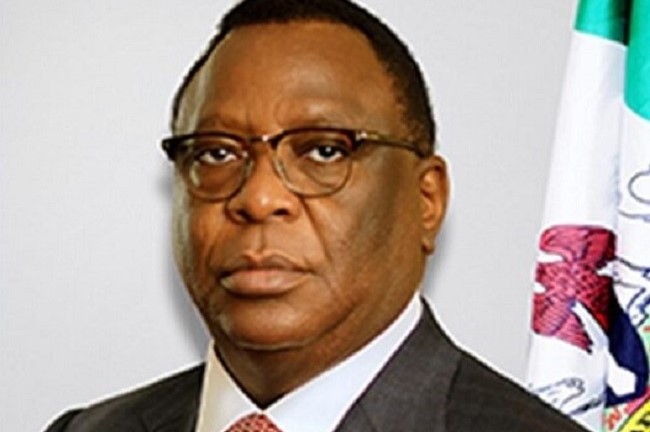
Felix Omatsola Ogbe
Felix Omatsola Ogbe, head of the NCDMB

Announcing the Oil and Gas Field Readiness Training Programme on Friday, October 24, 2025, NCDMB’s Executive Secretary, Felix Omatsola Ogbe confirmed that the Programme would close skill gaps extracted from the review of applications for Expatriate Quotas by industry operators.

The top career paths were equally identified from engagements with key industry stakeholders, including Petroleum Technology Association of Nigeria (PETAN), Oil Producers Trade Section (OPTS), and Petroleum Contractors Trade Section (PCTS). NCDMB also relied on its knowledge of the portfolios of major upcoming projects and considered reports of previous skill gaps studies conducted by sister agencies like the Petroleum Technology Development Fund (PTDF).

The top-10 skills for the Field Readiness Programme are: Sub-sea Engineers (wellheads, flowlines, umbilicals, sub-sea trees, etc.); Underwater Welders; Control and Automation Engineers (including cementing, well controls, and rig operations); Helicopter Pilots; Seamen/Sailors (including vessel mechanics/electricians); Production and Maintenance Engineers (Control Room Operators, Maintenance Crew); QA/QC Engineers (including NDT Levels 1,2, and 3); Geoscience Engineers (including Seismic, Geophysics, Wellsite Geology, etc.) and Digitization and Digitalization (AI, ML, IoT, Big Data, Cloud Computing, Drones, etc.)

NCDMB efforts, Ogbe explained, is informed by Section 10(1b) of the Nigerian Oil and Gas Industry Content Development (NOGICD) Act, 2010, which stipulates that “Nigerians shall be given first consideration for training and employment in the work programme for which the Nigerian Content Plan was submitted by an industry operator.”

The programme is only open to participants aged below 35 years, who possess OND/HND/BSC in Petroleum, Mechanical, Chemical, Electrical, Civil, Gas, Welding and Metallurgy. Other applicable fields are Geology, Geophysics, Computer Sciences/ Engineering and other science related disciplines.

Providing further guidance, NCDMB’s Director of Capacity Building, Bamidele Abayomi, explained that the skills gap closure programme would be implemented over a two- to three-year period, during which the gaps would be re-assessed to ascertain if the top 10 skills should be adjusted or continued.

He confirmed that most of the skills gap closure would be for a minimum of 12 months, while some will be for longer durations. The programme will have four key segments, namely, classroom training, laboratory/workshop practical, skills certifications, with emphasis on hands-on work experience, which will entail a minimum of six months on-the-job-training (OJT) carried out in partnership with service companies to impart necessary skills on participants and make them field-ready.

He announced that at least three service companies will partner the Board for each of the skill area and HSE certifications, while the soft skills will be delivered by anchor trainers and OGTAN registered training providers. 

Trainees that complete the programme and assessed as competent and field-ready shall be included in the Board’s skills database for circulation to service and operating companies in fulfilment of the NOGICD Act.

He assured that participants would be provided with pre-mobilisation medicals, monthly stipends, PPEs, and requisite insurance coverage to ensure they are well-supported and can focus on learning.

The October 14, 2025 announcement of Final Investment Decision (FID) on US$2 billion HI Field Gas Project by Shell Nigeria Exploration and Production Company (SNEPCo), and Sunlink Energies and Resources Limited, was the latest in a portfolio of new mega projects, following US$550 million UBETA Gas Project by Total Energies, launched in September 2024, and Bonga North Deepwater, worth US$5 billion, announced by SNEPCO in December 2024. 

The already announced projects and others in the funnel are direct outcomes of the three Presidential Directives (PD) pronounced by President Bola Ahmed Tinubu for the oil and gas industry in March 2024. The Directives were accelerated by the revised and fast-tracked Nigerian Content Contracting Guidelines deployed by the NCDMB, which is unlocking long delayed major investments, helping to actualise Mr. President’s Renewed Hope Agenda Economic blueprint towards a US$1trillion economy.
Nigeria environment outlook 2025: Stakeholders chart path for greener future

0

THE 2025 edition of the Nigeria Environment Outlook, convened by Environment Africa Magazine in collaboration with the Federal Ministry of Environment, brought together top government officials, industry experts, and sustainability advocates in Lagos on Friday, October 17, 2025, to drive Nigeria’s transition towards a greener, more resilient future.

The conference, themed “Shaping a Greener Present for a Sustainable and Resilient Future,” focused on practical strategies for strengthening environmental governance, accelerating green innovation, and promoting public–private partnerships across key sectors.

Delivering his opening remarks, the Convener and Editor-in-Chief of Environment Africa Magazine, Mr. Sam Nwosu, said the event serves as both a mirror and a compass for Nigeria’s environmental journey – reflecting the nation’s progress while charting a path for action.

Nigeria Environment Outlook
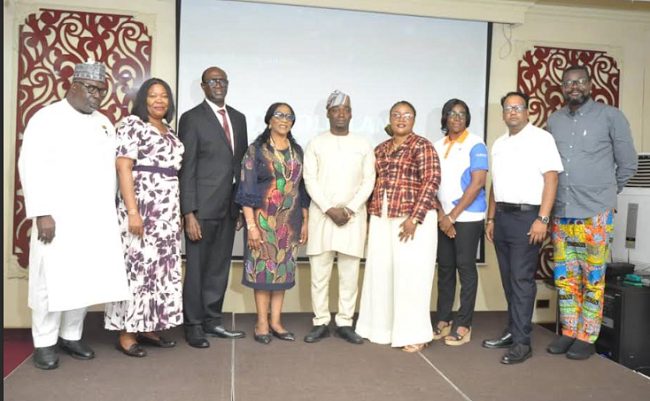
Dignitaries at the 2025 Nigeria Environment Outlook in Lagos

“We gather not only to assess Nigeria’s environmental landscape but to honour the Top 100 Environmental and Sustainability Professionals who are shaping the future of sustainability in our nation,” Nwosu said.

 “This platform is data-driven, policy-focused, and solution-oriented – a rallying point for collaboration between government, business, and civil society,” he added.

A key highlight of the programme was the unveiling of the Top 100 Environmental and Sustainability Professionals in Nigeria (2025 Edition) – a recognition honouring exceptional individuals advancing green growth, policy innovation, and environmental resilience nationwide.

Ministry of Environment Reaffirms Support for Collaboration

Also speaking, Dr. Iniobong Abiola-Awe, Director, Department of Climate Change, Federal Ministry of Environment, congratulated the organisers for their consistent efforts in promoting environmental protection and sustainability across Nigeria.

She emphasised the need for deeper collaboration and knowledge sharing to strengthen climate action, clean energy innovation, and the responsible management of natural resources.

“The Ministry remains fully committed to supporting all stakeholders and professionals here today,” she said.

 “Our shared resolve and unity of purpose will be the foundation for building a more sustainable and resilient country.”

Dr. Abiola-Awe commended the Nigeria Environment Outlook platform for fostering partnerships that align with the national climate agenda and pledged the ministry’s continued engagement in advancing environmental governance and sustainability.

Itua Calls for Radical Incentives to Unlock Nigeria’s Green Wealth

Delivering the keynote address, the Executive Director of the African Green Economy Strategy Institute (AGESI), Dr. Eugene Itua, called for bold policy reforms and radical incentives to support businesses investing in the circular economy.

Dr. Itua, who also serves on the Advisory Board of the UNDP’s Africa Green Business and Financing Initiative, said Nigeria’s forests, water bodies, sunshine, and innovative youth represent an “undiscovered Green Wealth” that must be harnessed for sustainable prosperity.

“Our ecosystems are under siege,” he said. “We face threats to our homes, food security, and our children’s future. For too long, we’ve treated the environment as a problem to be managed rather than an opportunity to be maximised.”

He urged that environmental governance evolve from “reactive regulation to proactive innovation,” stressing that the gap between policy formulation and implementation remains the nation’s greatest weakness.

Women’s Leadership and Inclusion in Climate Action

In her goodwill message, Chief (Mrs) Anita Nana Okuribido, President of the Women in Renewable Energy Association (Nigeria), highlighted the crucial role of women in advancing climate resilience and innovation.

“Women’s ingenuity and resilience are at the forefront of environmental progress,” she said.

 “Energy poverty has the face of a woman – from cooking to small enterprises, women are the most affected by energy deficits. Therefore, gender inclusion must be central to climate action.”

Recognition of Environmental Excellence

Among those honoured in the Top 100 Environmental Professionals (2025 Edition) were: Dr. Adedolapo Fasawe, Mandate Secretary for Health and Environment Services, FCTA; Chief Akpabio Essien, General Manager (Safety), NNPC Ltd; Mr. Tokunbo Wahab, Lagos State Commissioner for Environment and Water Resources; Engr. Chukwuemeka Woke, Director-General, NOSDRA; Balarabe Abbas Lawal, Minister of Environment; Prof. Joseph T. Utsev, Minister of Water Resources and Sanitation; Prof. Charles Anosike, Director-General, Nigerian Meteorological Agency (NiMet); and Dr. Alex Aigbe, Africa Clean Up Initiative.

Outlook as a Catalyst for Change

The 2025 Nigeria Environment Outlook was supported by the Federal Ministry of Environment and powered by NatureHedge, with participation from the private sector, academia, and civil society.

In his closing remarks, Nwosu described the initiative as a growing movement for environmental accountability and transformation.

“Let this be more than an event – let it be a spark that ignites partnerships, influences policy, and elevates Nigeria’s environmental agenda across all sectors,” he said.

Why we’re expanding our refinery to 1.4m barrels daily – Dangote

0

President of Dangote Industries Limited, Aliko Dangote, has explained that the decision to expand the Dangote Petroleum Refinery from 650,000 barrels per day (bpd) to 1.4 million bpd is driven by emerging opportunities across Africa, growing regional demand for cleaner fuels, and Nigeria’s evolving policy environment that encourages local refining.

Speaking at a media briefing in Lagos, Dangote said the $20 billion facility, already the largest single-train refinery in the world, will more than double its capacity within the next three years, making it a global leader in petroleum refining and a major driver of Africa’s industrial renaissance.

Dangote
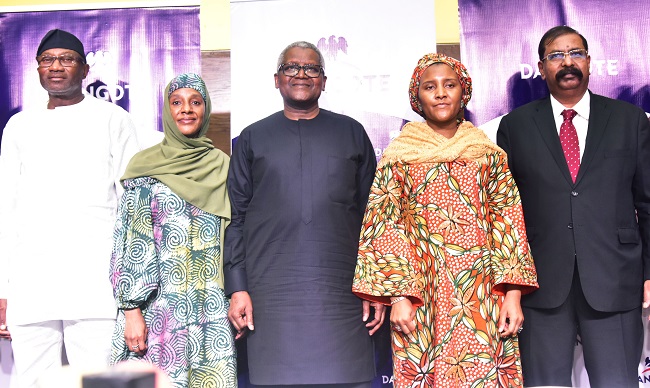
L-R: Chairman, FBN Holdings Plc, Femi Otedola; Executive Director, Operations, Dangote Sugar Refinery Plc, Mariya Aliko Dangote; President/CE, Dangote Industries Limited Aliko Dangote; Group Executive Director, Commercial Operations, Dangote Industries Limited, Fatima Aliko Dangote; Vice President, Oil & Gas, Dangote Industries Limited, Devakumar Edwin; during the World Press Conference on the expansion of Dangote Petroleum Refinery to 1.4m bpd capacity, Polypropylene production from 900,000mt to 2.4m mt per annum, further enriching the production of linear alkylbenzene a key ingredient for the production of detergent, and additional production of base oils, in Lagos on Sunday, October 26, 2025.

“This expansion reflects our confidence in Nigeria’s future, our belief in Africa’s potential, and our commitment to building energy independence for our continent and the world. It also is about confidence in Nigeria, in Africa, and in our capacity to shape our own energy future,” Dangote said. “It is the dream of President Bola Ahmed Tinubu GCFR, for Nigeria to emerge as one of the major suppliers of petroleum products in the world. And with his strong backing through his policies, we are taking on the challenge to make this happen”

According to him, the expansion reflects the group’s belief in Africa’s potential to achieve energy security and transform its economy from being an exporter of raw crude to a hub for refined petroleum products.

Dangote revealed that the expansion project would be executed over the next three years and would be financed through a mix of cash flow, public listing, and strategic investors. When completed, the refinery will surpass India’s Jamnagar Refinery, currently the world’s largest facility, cementing Nigeria’s position as a global refining hub.

He said the refinery will also expand its polypropylene production capacity from 900,000 metric tonnes to 2.4 million metric tonnes per annum, further boosting the output of linear alkylbenzene, a key ingredient in detergent manufacturing, along with additional production of base oils.

“With this expansion, the refinery transitions from producing Euro V to Euro VI fuel standards, meeting the highest global environmental benchmarks,” he said. “We will also expand our power generation capacity to 1,000 megawatts, ensuring complete operational self-sufficiency. More than 85% of our workforce will be Nigerians, with continuous investment in skills development and technology transfer. Our commitment to safety, sustainability, and local participation remains unwavering throughout every phase of the expansion.”

Highlighting the economic impact of the project, Dangote said the expansion would further strengthen Nigeria’s energy security, reduce foreign exchange outflows, and save the country billions of dollars annually that would otherwise go into importing refined products.

He estimated that the refinery’s revenue could exceed $55 billion annually, making it one of the most valuable industrial assets on the African continent.

Dangote reaffirmed plans to list a significant portion of the refinery’s shares on the Nigerian Exchange (NGX) within the next year, describing it as part of efforts to democratise ownership and allow Nigerians to share in the value creation.

“Our main listing will be here in Nigeria to give Nigerians value,” he said. “We want the Dangote Refinery to be the golden stock of the Exchange. Listing outside Nigeria is secondary to us. We want this to be a national asset in every sense. This is a step towards broader ownership and market transparency. Therefore we call on all Nigerians to seize this window, to benefit from this golden opportunity. Our long-term goal remains clear: to build Africa’s leading integrated energy and petrochemical hub, the first of its kind on the continent.”

He said the refinery’s strong cash flow, profitability prospects, and strategic positioning would make it attractive to both local and global investors.

“This expansion will create additional jobs, support thousands of SMEs, and deepen our industrial base. Our goal has never been just to refine oil, but to refine opportunities for our people,” he said. “It is a vote of confidence in Nigeria, in the reforms of President Bola Ahmed Tinubu’s administration, and in the ability of Africans to build and manage world-class infrastructure.”

He expressed gratitude to President Tinubu and the Federal Government for supporting industrialisation policies such as Nigeria’s First, Naira-for-Crude, and the One-Stop Shop initiatives, which he said have emboldened investors to take on transformative projects.

He also commended the government’s intervention in mediating recent disruptions at the refinery linked to union activity and sabotage attempts, calling it a demonstration of effective collaboration between the public and private sectors.

Despite not yet recouping the initial investment in the 650,000 bpd phase, Dangote said the group is focused on long-term transformation rather than short-term returns.

“Refining is a long-term project. We are expanding because we believe in Africa,” he said. “Without this refinery, Nigeria would still be buying dollars at ridiculous rates and depleting our reserves to import fuel.”

He emphasised that Nigeria’s pump price remains among the lowest in the region despite the refinery’s production of higher-quality, cleaner fuels that have reduced toxic dumping in the country.

Dangote emphasised that the refinery has already made a difference by stabilising local fuel supply, helping to strengthen the naira, and preventing capital flight.

“Nigerians today buy petrol at roughly half the price of what our neighbours pay, and it is even cheaper than in Saudi Arabia,” he noted. “Our product is of higher quality, meeting Euro VI standards, and it has significantly reduced the dumping of toxic fuel into our market.”

As Nigeria approaches the festive season, Dangote assured the public that there would be no fuel scarcity or price hike during the ember months, despite recent global price increases.

“In the last three days, we have witnessed an eight per cent spike in global oil prices,” he said. “But I want to assure Nigerians that the Dangote Refinery is fully committed to maintaining uninterrupted supply of petrol throughout the festive period. For the first time in many years, Nigerians can look forward to a Christmas and New Year free of fuel anxiety.”

Dangote praised the Federal and Lagos State Governments for their continued support, along with the company’s host community in Lekki and its financial and technical partners.

“This expansion is not just about capacity; it is about confidence — in our people, in our government, and in our continent,” he said. “Together, we are building a stronger Nigeria and redefining what is possible for Africa.”

He called on other investors holding refinery licences to emulate the example, urging collaboration in achieving President Tinubu’s vision of making Nigeria the refining hub of Africa.

“When Africa builds its own capacity, it builds its own destiny,” Dangote concluded.

Organic waste: An untapped solution to Nigeria’s methane contamination

0

When asked how Nigeria can effectively engage climate actors to achieve its 30% methane emission reduction target by 2030, Yusuf Kelani, Special Assistant to President Bola Tinubu on Climate Change Matters, stated, “It is tough, but we are not going to give up.”

It will be extremely challenging if Nigeria, a country with a pollution estimate of over 223 million as of 2023, or 2.7% of the total world population, produces 32 million tonnes of solid waste each year, with only about 20-30% of it being collected and properly treated. This means that 70–80% ends up in open dumps, drains, or informal disposal sites.

Methane
Participants at the one-day stakeholder engagement workshop on data mapping of climate actors and the inception workshop on methane emission reduction in Nigeria, hosted by the Office of the Special Assistant to the President on Climate Change Matters and SRADev Nigeria in Abuja

The danger is that poorly managed organic waste emits methane, a potent greenhouse gas (GHG) that contributes 19% of the country’s emissions. Scientifically, it has also been proven that methane is 80 times more potent than CO₂ over 20 years and accounts for approximately 20 per cent of total GHG emissions.  Landfills alone constitute 11% of global methane emissions, a worrisome situation that has triggered both local and international attention.

With this clear understanding of the problem, Nigeria, as a signatory to the Global Methane Pledge, has been making efforts to deliver on its commitment of a 30% methane reduction target by 2030.  One such effort is the Multi-solving Action to Methane Reduction in Nigeria (MAMRN) project, which seeks to mitigate methane emissions in the country by advocating for sustainable waste management, building policy frameworks, and enhancing capacity at both national and sub-national levels.

Kelani believes that to properly address the issue, it is important to first identify those who are working in the space to ensure effective coordination in the process. According to him, this is because many projects are being carried out in the field by many actors, but their effects are not being properly documented.

“Well, it’s about trust in the system and confidence in government efforts and activities. That’s basically the challenge,” he said during a one-day stakeholder engagement workshop his office organised in collaboration with the Sustainable Research and Action for Environmental Development (SRADev Nigeria) on Friday, October 24, 2025, in Abuja, Nigeria’s capital, to map climate actors and kick-start a conversation on how to advance dumpsite methane emission reduction across the country.

Although, many people focus more on the problems rather than the solutions whenever discussions around waste pollution are raised. Dump sites are seen as something of a threat to the community, yet they offer several empowerment opportunities in turning waste into wealth if well harnessed. The Lowering Organic Waste Methane (LOW-Methane) Initiative, which Nigeria is part of, aims to cut at least 1 million metric tonnes of annual methane emissions well before 2030 and unlock over $10 billion in public and private investment.

So, how to ensure that there’s a robust engagement within that area such that it becomes something positive is one significant question that the presidential aide strongly believes must be answered to move the country’s waste sector forward. Answers on the right technologies that will gradually put this waste into possible uses for people, especially young people, women and those who are very active within the ecosystem, are all required.

“We will continue to carry out the process and ensure that we achieve our targets,” Kelani assured, because his office, he explained, is existing for the first time. “I really wish to leave a landmark achievement in there.”

Achieving Nigeria’s methane emissions reduction ambition is truly imperative, particularly in safeguarding public health, protecting the environment, and meeting its international climate commitments.

Mallam Balarabe Lawal, Nigeria’s minister of environment, said his ministry has been promoting various mitigation agendas to tackle the problem of methane contamination in the country.

Nigeria’s updated Nationally Determined Contributions (NDCs 3.0) and Long-Term Low Emission Development Strategies, sector-specific methane guidelines, a National Action Plan on Short-Lived Climate Pollutants, and the ministry’s partnership with the Africa Policy Research Institute (APRI) are just a few of the policy initiatives the federal government has implemented to combat methane pollution.

“They provide platforms to translate actionable measures tailored to the waste management value chain, ensuring that national efforts remain cohesive, informed, and results-driven,” the minister, who was represented by Mrs. Asmau Jibril, an Assistant Director with the Department of Climate Change in the ministry, stated.

The importance of developing a landfill methane action plan for Nigeria cannot be overemphasised, according to Dr. Leslie Adogame, Executive Director, (SRADev) Nigeria, because countries like the USA, the European Union, the UK, Brazil, Canada, the United Arab Emirates (UAE), and Chile have all implemented action plans.

There is no doubt that Nigeria’s methane emission crisis can be combated if the right innovation is deployed and ecosystem created. Lagos State has proven this through initiatives such as the Land Carbon Registry and the Air Quality Monitoring Network across all local government areas.

These economic solutions clearly demonstrate that sub-national entities can deliver measurable, data-driven climate action that complements national commitments under the Global Methane Pledge and the Paris Agreement.

By Etta Michael Bisong, Abuja

SPP enlightens subnational climate desk officers on GHG inventory

0

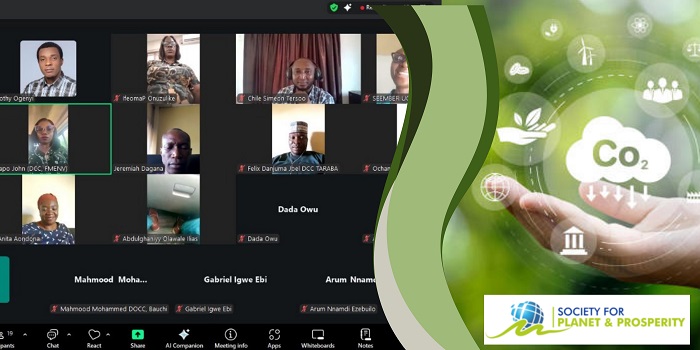
The Society for Planet and Prosperity (SPP) and the Department of Climate Change (DCC) of the Federal Ministry of Environment have trained climate change Desk Officers from the 36 states of the federation on Greenhouse Gas Inventory Compilation and Emission Reporting. The training followed the release of the 2025 Subnational Climate Governance Performance Rating and Ranking and is designed to strengthen technical capacity, improve data quality and reporting standards, and deepen federal–state collaboration on emissions accounting and reporting.

In her opening remarks, the Director of DCC, Dr Iniobong Abiola-Awe, reminded the Desk Officers of the importance of prioritising the fight against climate change at the subnational level and maintaining accurate data collection methods.

SPP GHG Training
Participants at the SPP subnational climate desk officers training on GHG inventory

Dr. Abiola-Awe emphasised the need to foster inter-agency collaboration and align budgets with national and state priorities. She encouraged participants to collaborate, share experiences, and commit to practical actions to strengthen national climate capabilities and contribute to regional and international commitments.

“As you embark on this journey of capacity building, I encourage the spirit of collaboration and openness, share experiences respectfully, and commit to practical and result-oriented action,” she said.

The training, which was facilitated by SPP’s Executive Director, Mr. Edwin Oghenemere Orugbo, covered the IPCC framework, emission accounting principles, and the process of data collection and estimation.

Participants were encouraged to engage in practical sessions and interactive discussions to gain more in-depth knowledge of the topic.

In his presentation, Mr. Orugbo emphasised the importance of climate action and the basics for attracting climate finance. He also discussed the gases of concern, including carbon dioxide, methane, nitrous oxide, and fluorinated gases, and the need to consider all greenhouse gases when compiling inventories at the state level.

According to Mr. Orugbo, the IPCC greenhouse gas inventory framework and emission accounting principles consider four main source categories: energy, industrial processes, agriculture/forestry, and waste, along with the core principles of transparency, accuracy, consistency, and comparability. He detailed the process of data collection and emission factor calculations, including a basic calculation formula for determining greenhouse gas emissions.

Mr. Orugbo stressed the need to capture metadata for each dataset and use reliable sources for emission factors, such as the UNFCCC and IPCC websites. The discussion highlighted the role of subnational inventories in enabling data-driven climate policies and the importance of collaboration for sustainability and transparency.

The participants shared their opinions on the necessary institutional arrangements, including legal frameworks, data sharing protocols, and partnerships between state MDAs. They outlined technical requirements, including data management systems, estimation tools, and field monitoring equipment, as well as the need for a dedicated Monitoring, Reporting, and Verification coordinator and sector-specific data officers.

They also highlighted the importance of proper quality assurance/quality control procedures and metadata management, while addressing capacity building needs for training on IPCC methodologies and data collection procedures as some of their immediate needs to ensure that they can develop and manage GHG emission inventory at the subnational level.

Responding to their queries on behalf of DCC, Dolapo John, Principal Scientific Officer at DCC, promised the department’s readiness in supporting the states with the capacity needs, using the IPCC software.

The greenhouse gas inventory compilation and emission reporting session is one of a series of capacity-building trainings organised by the Society for Planet and Prosperity to equip subnational Desk Officers with the right knowledge to ensure climate resilience is sustained at the subnational level. This session was moderated by Mr. Timothy Ogenyi, Senior Policy Analyst (Climate Change), SPP.

Next in the series of SPP’s intervention on capacity building for the subnational are trainings on “Designing Effective Monitoring & Evaluation Systems for State Climate Action” and “Climate Finance.”

The SPP says it is committed to the initiative with support from the European Climate Foundation (ECF).

By Ugochukwu Uzuegbu (Communication Officer, SPP) and Elochukwu Anieze (Senior Policy Analyst, SPP)

IITA, UN strengthen partnership to accelerate food security, agricultural transformation in Nigeria

The International Institute of Tropical Agriculture (IITA) has reaffirmed commitment to advancing agricultural transformation and food security in Nigeria through stronger research-backed partnerships and coordinated action.

During a recent mission to Abuja, IITA Director General and CGIAR Regional Director for Continental Africa, Dr Simeon Ehui, met with Mr. Mohamed Malick Fall, the United Nations Resident and Humanitarian Coordinator for Nigeria, for a high-level dialogue on strengthening collaboration for sustainable agriculture, youth agripreneurship, and food systems resilience.

Dr Ehui highlighted IITA’s major research milestones and the Institute’s impact in addressing key challenges in Africa’s agrifood systems – particularly in the areas of soil health, seed systems, and plant health. He also showcased successful innovations such as the award-winning Semi-Autotrophic Hydroponics (SAH) technology, which enhances crop propagation and productivity across regions.

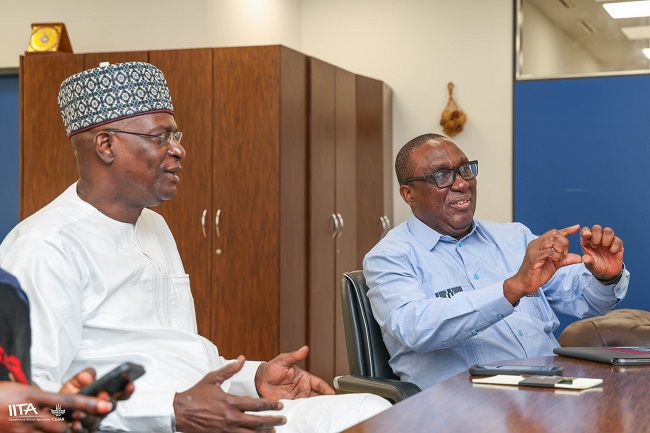
ITA
IITA Director General and CGIAR Regional Director for Continental Africa, Dr Simeon Ehui, with Mr. Mohamed Malick Fall, the United Nations Resident and Humanitarian Coordinator for Nigeria

“For IITA, the biggest challenge remains scaling—taking proven technologies from the lab to farmers at a much larger scale,” Dr Ehui stated. “This is why strategic partnerships are essential. We are committed to working closely with development partners like the United Nations to ensure that Africa becomes food-sufficient.”

In his remarks, Mr. Fall emphasised the UN’s commitment to supporting Nigeria’s agricultural transformation as part of its broader effort to accelerate progress toward the Sustainable Development Goals (SDGs).

“This visit has been high on my list – to not only connect with IITA but to create a bridge between us,” he said. “For a country like Nigeria, agriculture is the biggest channel for economic transformation if the right investments are made.”

The meeting underscored a shared vision between IITA, CGIAR, and the United Nations to deliver science-driven, inclusive, and sustainable solutions that strengthen food systems and improve livelihoods across Africa.

COP30: Youth leaders, climate advocates develop action plans, policy recommendations

0

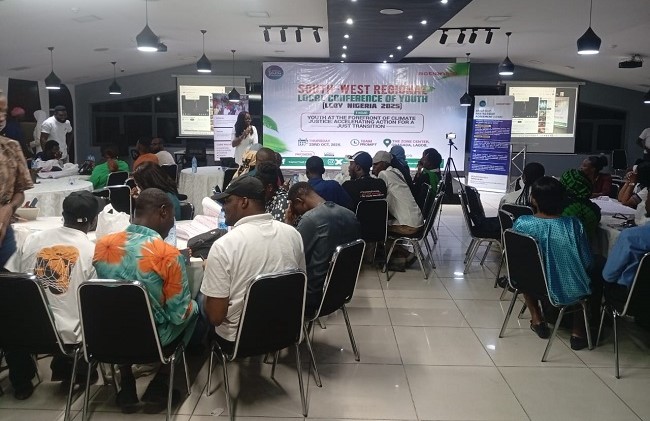
Ahead of the COP30 Summit, the Inspired Youth Network (IYN), in collaboration with the Local Conference of Youth (LCOY) Nigeria Organising Team, organised a South-West Regional Consultative Meeting for youth leaders, climate advocates, and organisations to deliberate on pressing climate issues, develop action plans, and produce policy recommendations contributing to Nigeria’s climate action agenda.

The event, themed “Youth at The Forefront of Climate Justice: Accelerating Action for a Just Transition,” was funded by the non-governmental organisation ActionAid and held on Thursday, October 23, 2025, at the Zone Centre in Gbagada, Lagos State.

Inspired Youth Network (IYN)
Participants at South-West Regional Consultative Meeting for youth leaders and climate advocates in Lagos

Attendees included the Permanent Secretary to the Ministry of Agriculture and Food Systems, represented by Mr. Idris Adelakun; the Ministry of Environment and Water Resources, Lagos State, represented by Deputy Director of Climate Change, Mrs. Zubair Azeezat; Bolaji Lawal; Youth Ambassador Obadare Adenekan; Special Adviser to the Lagos State Government on Climate Change and Circular Economy; Director of Climate Change and Environmental Planning, Bankole Michael; and carefully selected youths and farmers across the South-West region.

The Director of Climate Change and Circular Economy, Bankole Michael, commended the youths passion for consistently impacting society and pledged continuous support to climate action, environmental sustainability and youth led advocacy.

The event deliberated on policies yet to be implemented regarding sustainable adaptation and agriculture, renewable energy, youth innovation and leadership, climate education and gender inequality, urban sustainability, circular economy, and climate finance.

According to the Local Conference of Youth representative, Balikis Salaudeen, the event aimed to ensure youth inclusivity in the climate policies that would be tabled at COP30, and it would take place across the six geopolitical zones in Nigeria.

The COP30 Summit is scheduled to take place on November 10-21, 2025, in Brazil, with the Brazilian government hosting and promising to improve organisation and foster deeper reflection on climate change, strengthening the Paris Agreement, and international cooperation.

By Omowumi Abraham

BAN Toxics’ community parade amplifies global call to end lead poisoning

0

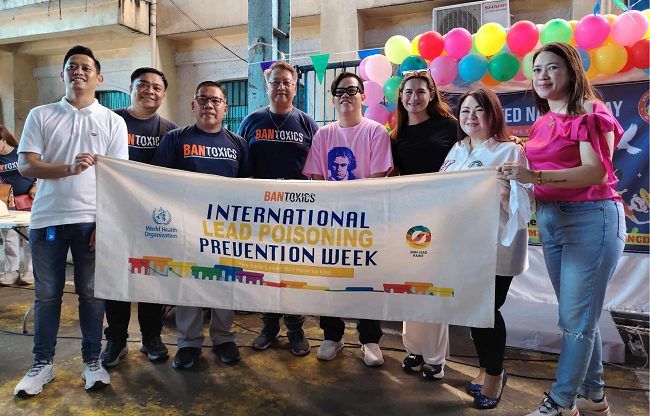
In observance of International Lead Poisoning Prevention Week 2025 (#ILPPW2025), marked globally from October 19–25, environmental justice organisation, BAN Toxics, in partnership with Barangay Officials and residents of Barangay Tatalon in Quezon City, capital of the Philippines, organised a community parade and awareness drive against lead poisoning on Friday, October 24.

The event brought together more than 600 participants, including children, parents, teachers, barangay officials, and local residents, in a united call to eliminate lead exposure, protect children’s health, and safeguard the environment. It was held in conjunction with Barangay Tatalon’s United Nations Day celebration, reinforcing themes of global solidarity and community action.

Lead Poisoning
Participants at the community parade and awareness drive against lead poisoning

The parade highlighted children from five local daycare centres, all dressed in vibrant international costumes while carrying banners and placards advocating for a global ban on lead in children’s products and consumer goods. Educational materials were distributed, and interactive activities were held to raise awareness on the health risks of lead exposure and to promote lead-safe environments.

This year’s #ILPPW2025 theme, “No safe level: Act now to end lead exposure,” echoes the World Health Organisation (WHO) campaign message that any level of lead exposure is harmful, especially for children. In addition to banning leaded paint, other key sources of exposure must also be addressed, such as toys, cosmetics, traditional medicines, spices, ceramics, recycled batteries, and unsafe water systems.

“No level of lead exposure is safe. Lead can be found in household paint, school furniture, toys, and even playground equipment,” said Thony Dizon, Advocacy Officer at BAN Toxics. “Lead contamination affects our air, water, and soil, and contributes to widespread #LeadPoisoning. This community action is a powerful reminder of our shared responsibility to protect our children’s future.”

In its market monitoring from September to October this year, BAN Toxics purchased various toys such as playsets, dolls, toy cars, and animal figurines, priced between ₱50 and ₱150 from vendors in Baclaran, Pasay City and other public markets in Metro Manila. Using a Vanta C Series XRF Analyzer, the group tested 215 toy samples, all of which were found to contain lead levels ranging from 100 parts per million (ppm) to as high as 6,000 ppm. All toys exceeded regulatory limits, violating DAO 2013-24, or the DENR Chemical Control Order for Lead and Lead Compounds, which prohibits the use of lead in toy production and sale.

WHO identifies lead poisoning as a major global health concern, particularly for young children who absorb 4–5 times more lead than adults from the same source. Due to their frequent hand-to-mouth behaviors and natural curiosity, children are at higher risk of ingesting lead from contaminated dust, soil, and paint. Lead exposure can have irreversible and sometimes fatal consequences, including lower IQ, learning difficulties, behavioral disorders, developmental delays, anaemia, kidney damage, heart disease, and even death in severe cases.

As lead paint remains one of the largest sources of lead exposure globally, BAN Toxics joins the movement in calling on governments to #BanLeadPaint. Building on the Global Alliance to Eliminate Lead Paint’s Model Law, momentum is growing for countries worldwide to adopt legally binding controls on lead in paint. Over 40 countries have already introduced new regulations restricting lead paint, underscoring the urgent need for global action.

“Lead poisoning is preventable,” Dizon emphasised. “Through community-driven initiatives like this, we are able to educate, empower, and advocate for stronger policies that protect both human health and the environment. We are proud to stand with Barangay Tatalon and echo the global call to end lead exposure, once and for all.”

BAN Toxics says it will continue to be an advocate for the elimination of toxic chemicals, especially those that affect children. The organisation actively works closely with communities, local governments, and policymakers to push for a toxics-free and waste-free future.

COP30: Over 150 US businesses back stronger energy efficiency goals

As countries announced updated pledges to the Paris Agreement at the United Nations this September, more than 150 U.S. businesses and organisations delivered a letter to the incoming COP30 Presidency of Brazil to affirm their commitment to deploy demand-side solutions in the United States and to partner with governments toward achieving the global goal to double the rate of energy efficiency improvements by 2030. 

The Alliance to Save Energy and the Business Council for Sustainable Energy (BCSE) sent the letter to COP30 President Ambassador André Corrêa do Lago. The industry letter brings together 152 signatories, including large companies, small businesses, and trade associations across all sectors of the energy value chain. Businesses supporting the letter represent manufacturers of insulation, heating and cooling, refrigeration, lighting, and digitalization technologies; energy service companies, finance providers, project developers, and consultancies; renewable energy, energy storage, and energy end-users; chemicals; building materials suppliers and construction firms; and more. 

Lisa Jacobson
Lisa Jacobson, president of the Business Council for Sustainable Energy (BCSE)

“Governments must see that companies are staying the course and committed to delivering the technology solutions needed to double the rate of energy efficiency improvements in five years,” said Lisa Jacobson, president of the Business Council for Sustainable Energy (BCSE). “Saving energy while growing the global economy is good business. Now is the time for continued public-private partnerships to seize on this interest and make real progress toward unlocking new energy resources, improving reliability, and lowering costs worldwide.” 

Brazil, as host of the 2025 UN Climate Change Conference (also known as COP 30) from November 10 – 21, is prioritising actions to meet UN goals to decarbonise the world’s energy system, which include doubling the rate of energy efficiency improvements. Both the Alliance to Save Energy and BCSE will travel to COP30 in Belém to meet with governments and stakeholders. Together, they will build out strategies to partner with the U.S. private sector to reduce emissions and strengthen community resilience. 

“As we face growing demand in the United States, energy efficiency is really the first fuel because it can be deployed quickly, offers a significant return on investment, and lowers energy costs for all the world’s communities,” said Paula Glover, president and CEO of the Alliance to Save Energy. “Building massive energy generation projects and transmission is proving to be time consuming and costly, and that’s why we are seeking a doubling of energy efficiency within five years.” 

The International Energy Agency predicts that doubling the global rate of energy efficiency improvements will lower energy bills in advanced economies by one third, create 4.5 million new jobs, and meet 40% of the emissions reductions required by the Paris Agreement. Plus, the letter’s signatories highlight that increased efficiency will meet growing energy demand, improve grid resilience, and increase energy security. 

Bob Hinkle, CEO of Metrus Energy, an energy-as-a-service provider and signatory to the letter, emphasized how energy efficiency is both a solution and an investment opportunity. 

“As an energy project investor, Metrus is keenly aware of the need to scale energy efficiency upgrades to meet growing energy demand, replace aging infrastructure and mitigate the worst effects of climate change,” Hinkle said. “Doubling the rate of energy efficiency is good for the economy, good for businesses and, as this broad coalition of signatories demonstrates, it is a ready-now solution that just makes sense.” 

Click here to read the full letter. 

Examining World Bank’s AgriConnect to transform global agriculture

0

At the recently concluded Annual Meetings of the IMF and World Bank Group in Washington D.C., the World Bank unveiled its flagship agricultural initiative, “AgriConnect”.

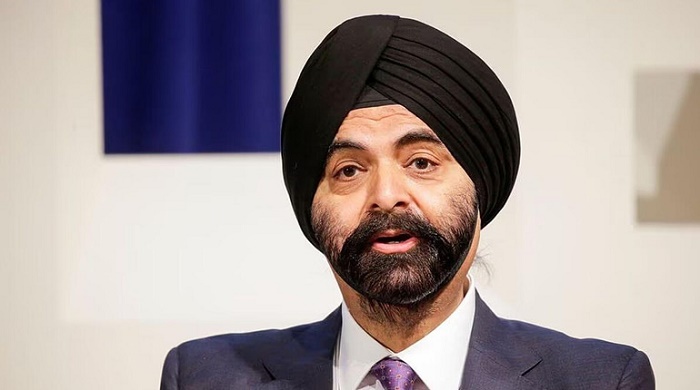
The President of the World Bank Group, Ajay Banga, explained that the flagship initiative is designed to boost global agricultural productivity and enable smallholder farmers to move from subsistence to commercial production.

According to Banga, AgriConnect was conceived to transform smallholder farming into a viable engine of economic growth, job creation, food security, and value-chain development in developing countries.

Ajay Banga
Ajay Banga, World Bank President

In particular, it seeks to support 500 million smallholder farmers who produce the majority of the world’s food but still operate largely at subsistence levels.

Furthermore, the initiative aims to double the World Bank’s annual investment in agribusiness to nine billion dollars by 2030, while also mobilising an additional five billion dollars from development partners.

Banga noted that the initiative was building an ecosystem around cooperatives to integrate financing for farmers and SMEs, link producers to markets, and harness digital tools such as “small AI”.

This, he added, is underpinned by a pledge to double agricultural financing and attract further resources through strategic partnerships.

He stressed that agriculture had always been central to development.

“Today, the challenge is not only to grow more food, but also to turn that growth into a business that delivers higher incomes for smallholder farmers and creates opportunities across entire economies,” he said.

Banga further observed that over the next 10 to 15 years, about 1.2 billion young people in developing countries would come of age, yet only 400 million jobs were projected to be created.

“Hundreds of millions will either power the global economy or spill over into unrest and migration. That is why the World Bank Group has made job creation our central mission,” he explained.

He noted that although jobs ultimately come from the private sector, they do not all start there.

“Countries move along a continuum: early on, the public sector drives job creation; over time, private capital and entrepreneurship take the lead.

“Our three-pillar strategy reflects that arc of building infrastructure and skills; creating predictable regulations and a business-friendly environment; and supporting investors with risk tools that crowd in capital,” he added.

According to Banga, the World Bank sees potential in five priority sectors of infrastructure, agribusiness, healthcare, tourism, and value-added manufacturing.

However, he noted that agribusiness remains central to both job creation and meeting the projected 50 per cent rise in global food demand over the coming decades.

Moreover, he highlighted that Africa holds 60 per cent of the world’s uncultivated arable land and could significantly boost yields on already cultivated land.

“Latin America already produces enough food for well over a billion people, but faces infrastructural challenges.

“Across Asia, smallholder farmers manage most farmland; an enormous base that can be lifted with better technology, finance, and market access,” he said.

Banga noted that globally, 500 million smallholder farmers produce 80 per cent of the world’s food, yet many remain trapped in subsistence due to inadequate electricity, storage, training, and access to markets.

Similarly, Pakistan’s Finance Minister, Muhammad Aurangzeb, shared insights on his country’s Agri-Finance and Climate Resilience Reforms.

He underscored the crucial role of agriculture in Pakistan’s economy, which contributes nearly one-fourth of GDP and supports millions of small farmers.

He reaffirmed the government’s policy shift from control to facilitation and empowerment, enabling the private sector to drive agricultural growth.

Ongoing initiatives, he said, aim to enhance productivity, access to finance, and value-chain development from production and storage to exports.

“When the full value chain is considered, agriculture contributes nearly 40 per cent to Pakistan’s GDP,” he added.

In the same vein, Guinea’s Minister of Agriculture, Mariama Cire Sylla, emphasised the need for financing and infrastructure reform to empower smallholder farmers and attract investment in alignment with AgriConnect’s goals.

Earlier in 2025, the World Bank published a Guinea Economic Update highlighting the nation’s economic progress.

The report commended Guinea’s fiscal discipline and economic performance, which helped it secure a B+ credit rating from Standard & Poor’s in September 2025.

However, it noted that while growth was encouraging, it had not yet translated into significant poverty reduction, stressing that domestic resource mobilisation remained critical for long-term development.

Meanwhile, the International Fund for Agricultural Development (IFAD) pledged to transform the lives of at least 70 million small-scale farmers through the AgriConnect initiative.

The IFAD President, Alvaro Lario, explained that the initiative aims to create jobs in agribusiness, transform livelihoods, and strengthen global food security.

The project will be implemented in collaboration with the World Bank, African Development Bank (AfDB) and the Inter-American Development Bank (IDB).

“Our investments have led to higher incomes, bigger yields, and better market access for small-scale food producers.

“Delivering that triple impact, we will target at least 70 million people in rural and fragile areas,” Lario stated.

He added that IFAD, alongside other multilateral development banks, governments, and private sector partners, shared a common ambition to connect small-scale producers to markets and turn rural areas into engines of growth, jobs, and food security.

Lario highlighted that IFAD brings nearly five decades of experience investing in rural communities, particularly in remote and fragile regions where poverty and hunger are most severe.

“These communities, home to 80 per cent of the world’s poorest people, face challenges from climate shocks to limited access to inputs, technologies, and finance, despite immense untapped potential,” he said.

He observed that meeting the rising global food demand, projected to increase by nearly 60 per cent by 2030, could generate an estimated 10 trillion dollars in annual economic opportunities by 2050.

He also noted that Africa’s agribusiness sector could reach one trillion dollars by 2030.

Furthermore, Lario pointed out that 1.2 billion young people would enter the job market in developing countries over the next decade, adding that agri-food systems already provide employment for 40 per cent of the global workforce.

In addition, the African Development Bank (AfDB) reaffirmed its partnership and support for AgriConnect.

Its President, Sidi Ould Tah, noted that the initiative aligns closely with the Bank’s own programmes aimed at transforming smallholder farming through technology, finance, and value addition.

He mentioned AfDB’s related efforts such as the Special Agro-Industrial Processing Zones (SAPZ), Agri-Food SME Catalytic Financing Mechanism (ACFM), and ENABLE Youth Programme.

These initiatives are designed to improve infrastructure, reduce investment risks, and provide financing to agri-SMEs and young entrepreneurs.

“These initiatives focus on improving infrastructure, de-risking private capital, and supporting farmers and SMEs to increase productivity and create jobs,” he said.

As the World Bank, AfDB, and their partners roll out large-scale agricultural initiatives, some Nigerians have raised concerns over the discontinuation of the Anchor Borrowers’ Programme (ABP).

The scheme, launched by the Central Bank of Nigeria (CBN) in November 2015, was designed to provide financing support for smallholder farmers.

The ABP was designed to boost production, link smallholder farmers with agro-processors, and reduce Nigeria’s dependence on food imports.

Its objectives, which closely mirror those of AgriConnect, included increasing agricultural output, promoting food security, creating rural jobs, and enhancing farmers’ access to credit.

However, the programme was phased out in 2023 and replaced under the new CBN Development Finance Framework.

The framework aims to streamline agricultural financing through deposit money banks and other financial institutions, rather than through direct government interventions.

All in all, the launch of AgriConnect reflects a renewed global resolve to make agriculture a driver of inclusive growth, food security, and rural development.

However, for initiatives of this scale to achieve meaningful impact, experts say they must align with country-level priorities and lessons from past experiences.

In Nigeria, many believe that the phase-out of the Anchor Borrowers’ Programme offers valuable insights into the challenges of sustaining agricultural financing and ensuring equitable access for smallholder farmers.

By harmonising local policies with global initiatives such as AgriConnect, Nigeria and other developing nations can strengthen their agricultural systems, boost productivity, and build more resilient rural economies.

By Kadiri Abdulrahman, News Agency of Nigeria (NAN)