26.4 C
Lagos
Monday, February 9, 2026
Home Blog Page 12

Nigeria inaugurates committee on national biodiversity conservation

0

The Federal Government of Nigeria on Wednesday, January 28, 2026, inaugurated a revised National Biodiversity Strategy and Action Plan (NBSAP) to conserve and address biodiversity challenges in the country.

Malam Balarabe Lawal, Minister of Environment, said this at the inauguration of the revised NBSAP committee in Abuja.

“This inaugural meeting therefore provides an important opportunity to take stock of progress made so far in implementing the NBSAP, to clarify roles and expectations, and to agree on priority actions going forward.”
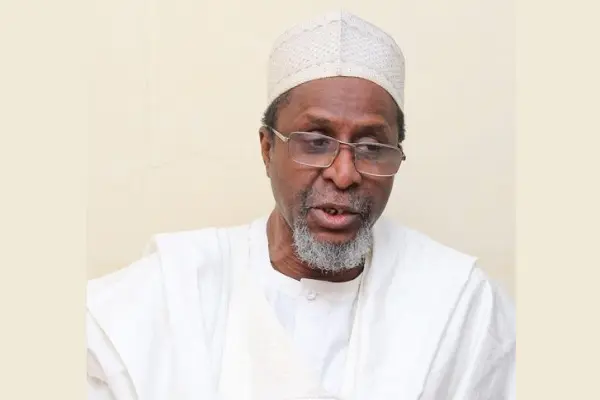
Balarabe Lawal
Malam Balarabe Lawal, Minister of Environment

Lawal, who was represented by Mrs. Halima Bawa-Bwari, the Director, Forestry Department in the Ministry, assured that government remained fully committed to provide the necessary policy support and leadership required for the successful implementation of the NBSAP.

“The revised NBSAP provides us a national roadmap for addressing these challenges in a coordinated, inclusive, and results-oriented manner, in line with national priorities.

“It is in recognition of this need that government has put in place structures and inclusive implementation mechanism being harnessed through the Committees being inaugurated.

“Let me reiterate that at this point that the Inter-Ministerial Committee on Biodiversity, the National Biodiversity Coordination Committee, and the National Biodiversity Technical Committee, each have distinct but complementary roles.”

Lawal urged the committee members to provide strategic direction, technical leadership, coordination, and accountability for NBSAP implementation.

“These committees are designed to ensure a whole-of-government and whole-of-society approach, promote coherence across sectors, mobilise resources, track progress, and support evidence-based decision-making at the highest levels.

“It also offers a platform to strengthen collaboration among Ministries, Departments and Agencies, as well as with non-state actors, recognising that biodiversity is a cross-cutting issue that touches all sectors of our economy and society.

“Together, they are expected to provide strategic direction, technical leadership, coordination, and accountability for NBSAP implementation,” the minister said.

Earlier, Bawa-Bwari said that biodiversity is the foundation of our livelihoods, food security, climate resilience, and cultural identity.

Bawa-Bwari, who was represented by Mr. Labaran Ahmed, Deputy Director, Forestry, said that the inauguration marked a significant milestone in Nigeria’s collective journey to safeguard, restore, and sustainably manage the rich biodiversity that defines our nation’s natural heritage.

“Please be reminded that the NBSAP is not merely a policy document, it is a national commitment to ensuring that our forests, wildlife, wetlands, and ecosystems continue to thrive for generations to come.

“The inauguration of these committees signals the transition from planning to action. It is a call to duty and an opportunity for us to translate strategies into tangible results.

“Forests are home to countless species, they regulate our climate, and they provide essential services to communities across the country. Yet, they are under increasing pressure from deforestation, unsustainable exploitation, and climate change,” she said.

Bawa-Bwari reiterated that these committees, being inaugurated, would reverse these trends and promote sustainable practices that balance conservation with development.

By Abigael Joshua
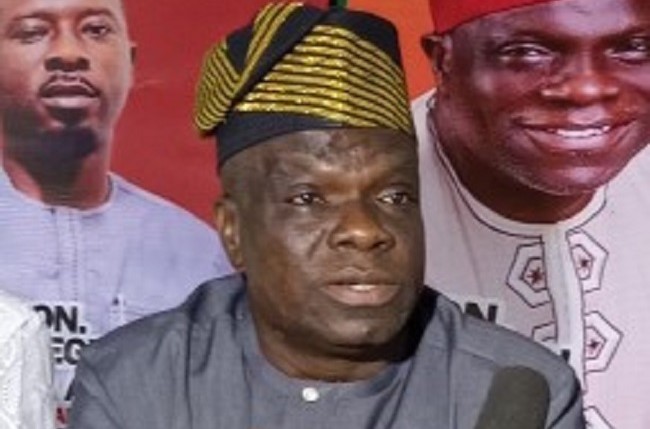
Ikorodu West Council seals shops over indiscriminate dumping of refuse

Ikorodu West Local Council Developmental Area (LCDA), Lagos State, has directed the council’s Environmental Department to seal shops for 20 days over indiscriminate dumping of refuse on roads.

The Chairman, Mr. Sulaimon Olanrewaju, on Wednesday, January 28, 2026, gave the directive to seal shops along the NBC Road Corridor, Ebute Police Post Junction, Ipakodo, Ikorodu.

The order came after Olarenwaju led efforts to clear trash illegally dumped on the road median by residents.

Sulaimon Olanrewaju
Chairman, Ikorodu West Local Council Developmental Area (LCDA) Mr. Sulaimon Olanrewaju

He said his administration is committed to safeguarding public health and upholding environmental standards, ensuring continued public awareness of the hazards and health implications of indiscriminate refuse dumping.

“I met with the shop owners daily for one week, passionately pleading for compliance to prevent disease outbreaks and environmental pollution.

“This decisive action follows a repeated, flagrant, and unacceptable defiance of environmental laws by some business operators despite my multiple interventions and personal appeals.

“This administration is fundamentally committed to the health and sustainable development of Ikorodu West.

“We will not plead endlessly, while public health is jeopardised,” Olarenwaju said.

According to him, the council has intensified efforts to address waste disposal challenges and ensure a cleaner environment.

The chairman urged residents and business owners to partner with the council to maintain proper waste disposal practices.

“Utilise the assigned Lagos State Waste Management Authority private sector partnership operators.

“Together, let us build a cleaner, healthier, and more prosperous Ikorodu West,” Olarenwaju said.

By Adepote Arowojobe

Group backs Adelabu on free meter, berates DISCOs

The Minister of Power, Adebayo Adelabu, has been commended for his decision to ensure free distribution of meters to Nigerian electricity consumers. 

In a statement on Tuesday, January 27, 2026, and signed by its officials, Fred Ojinika and Tunde Olaoye, the Nigerian Human Rights Community (NHRC), a coalition of 130 civil society and community-based groups across the country, said the decision of the Minister was in the best interest of Nigerians.

Adebayo Adelabu
Minister of Power, Mr Adebayo Adelabu

The Minister of Power, Adelabu had said that the meters were procured under the World Bank-funded Distribution Sector Recovery Programme and must be installed for consumers free. Even though the meters were expected to be free, DISCOs continue to extort between N200,000 to N350,000 from Nigerians as fees for meters.

Describing the statement as the “best new year gift” of the Minister, the coalition said the pronouncement of the Minister has received full support from the civil society, industrialists and all electricity users.

“The decision is in favour of energy consumers. Some of the DISCOs are notorious for incompetence, greed and economic rape of the people. The Minister has taken the right decision. It helps democracy and economic justice in Nigeria.”

The rights coalition said DISCOs often claim the meters are free but would ask for between N250,000 to N350,000 for the meter to be connected to their system.

The group said its offices across the country are inundated with complaints of exploitation and deliberate destruction of meters either through intentional power surges of physical damage in order to force electricity consumers to direct electricity billing.

“The Minister has set a good standard. We condemn the action of the DISCOs. It is a deliberate attempt to exploit Nigerians and destroy the industrial foundation of the country. We urge Nigerians to rise up and defend their rights,” the NHRC said.

The coalition said only few of the DISCOs mean well for Nigerians.

“‘Ikeja Electric and many of them are out for primitive accumulation of wealth. They are not partners in progress of Nigeria. Many of them are obstacles to the progress of Nigeria. At present, they are indirectly instigating the Nigerians masses against the Federal Government through arbitrary billing and imposition of cut-throat tariffs on Nigerians.

“This has forced many Nigerians to abandon electricity for either solar, lantern or even candles. Even those who use electricity are afraid to put on their fans, security lights and other relevant equipment in their homes.”

The NHRC said it is ready to mobilise Nigerians against DISCOs by occupying their offices through mass action to compel them to respect the dignity of Nigerians.

Nigeria, GEF, UNEP partner to reduce plastic pollution

0

The Federal Government is partnering with the Global Environment Facility (GEF) and the United Nations Environment Programme (UNEP) to reduce the consumption of single-use plastic water sachets in Nigeria.

Prof. Innocent Barikor, Director-General of the National Environmental Standards and Regulations Enforcement Agency (NESREA), made the disclosure at the Inception Meeting of the GEF Child Project 11193 on Tuesday, January 27, 2026, in Abuja.

Speaking on the objectives, Barikor said: “The project, Circular Solutions to Plastic Pollution in Nigeria, is designed to reduce plastic sachet water consumption while ensuring that Nigerians continue to have access to safe drinking water.”

NESREA
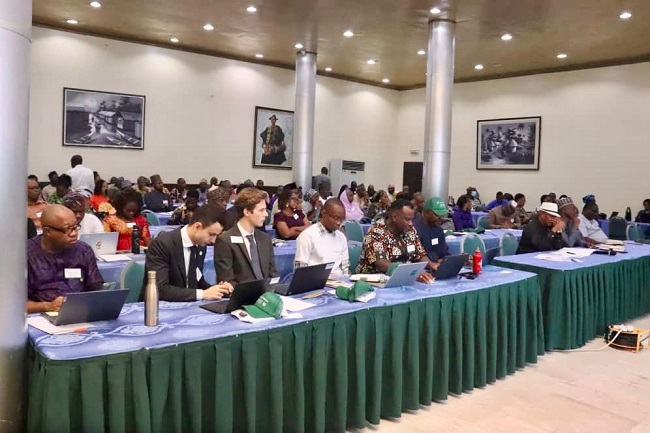
A view of participants at the at the Inception Meeting of the GEF Child Project 11193 on Tuesday in Abuja

He described the meeting as a major milestone in Nigeria’s ongoing efforts to tackle plastic pollution.

“Single-use plastic sachets have become a convenience for many, but they have also become a serious environmental burden,” he said.

Barikor highlighted the scale of the challenge, saying Nigeria consumes over 2.5 billion litres of sachet water annually, produced by more than 32,000 manufacturers.

“While this has helped bridge gaps in access to drinking water, it has also caused blocked drains, flooding, ecosystem degradation, and serious public health risks.”

He emphasised that GEF Child Project 11193 represents a “strategic and transformative intervention” that aligns with Nigeria’s national environmental priorities and NESREA’s mandate to protect the environment for present and future generations.

“Our collective action today is a step toward a cleaner, healthier, and more sustainable Nigeria. Together, we can turn the tide on plastic pollution and protect our ecosystems for generations to come.”

In a goodwill message, Evelyn Swain of GEF said: “GEF is proud to support Nigeria in its journey to reduce the consumption of single-use plastic sachets.

“Nigeria is not only a participant in this Integrated Programme but also a leader whose experience can help shape global solutions to plastic pollution.”

Swain, represented at the meeting by Anna Blanpain, Senior Environmental Specialist and Plastic Reboot Coordinator at GEF Secretariat, added: “We believe Nigeria’s innovative approaches can inspire other countries facing similar challenges.”

Isabella Vanderbeck of UNEP emphasised Nigeria’s key role in global efforts to tackle plastic pollution.

“Life without plastic is truly fantastic. Let us hit the ground, let us do away with plastic, and let us set an example for other nations,” she said.

Mrs. Zuliat Mohammed, Chief Scientific Officer at the Federal Ministry of Water Resources and Sanitation, reiterated her ministry’s commitment.

“We are ready to collaborate with NESREA to ensure the success of this project. This programme will help Nigeria eliminate single-use plastic products from our environment,” she said.

By Doris Esa

WHO urges schools worldwide to promote healthy eating for children

0

Healthy food in schools can help children develop healthy dietary habits for life, according to the World Health Organisation (WHO), which released a new global guideline on evidence-based policies and interventions to create healthy school food environments.

For the first time, WHO is advising countries to adopt a whole-school approach that ensures food and beverages provided in schools and available throughout the broader school food environments are healthy and nutritious.

Childhood overweight and obesity are rising globally, while undernutrition remains a persistent challenge. Schools are on the front line of this double burden of malnutrition. In 2025, about one in 10 school-aged children and adolescents – 188 million – were living with obesity worldwide, surpassing for the first time the number of children who are underweight.

Tedros Ghebreyesus
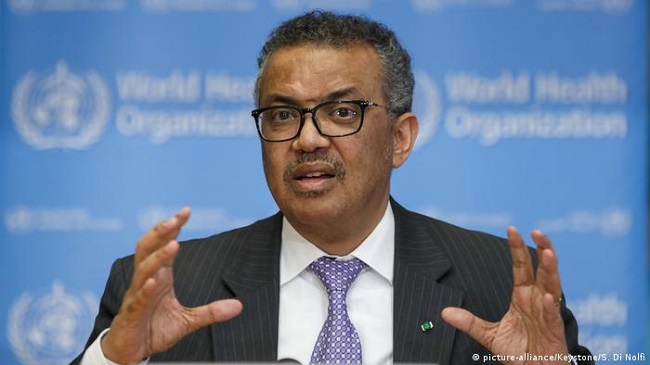
Dr. Tedros Adhanom Ghebreyesus, Director-General, World Health Organisation (WHO)

“The food children eat at school, and the environments that shape what they eat, can have a profound impact on their learning, and lifelong consequences for their health and well-being,” said Dr Tedros Adhanom Ghebreyesus, WHO Director-General. “Getting nutrition right at school is critical for preventing disease later in life and creating healthier adults.”

Healthy dietary practices begin early in life. Children spend a significant portion of their day in school, making it a critical setting for shaping lifelong dietary habits and reducing health and nutrition inequities.

Today, an estimated 466 million children receive school meals globally, yet there remains limited information available about the nutritional quality of the food they are served.

In the guideline, WHO recommends that schools improve food provision at schools to promote greater consumption of foods and beverages that support a healthy diet. Specifically:

  • Setting standards or rules to increase the availability, purchase and consumption of healthy foods and beverages, while limiting unhealthy foods (strong recommendation);
  • Implementing nudging interventions to encourage children select, purchase and consume healthier foods and beverages (conditional recommendation). Nudging interventions can include a change to the placement, presentation or price of food options available to children.

Policies alone are not enough, and monitoring and enforcement mechanisms are essential to ensure that guidelines are implemented effectively and consistently in schools.

According to the WHO Global database on the Implementation of Food and Nutrition Action (GIFNA), as of October 2025, 104 Member States had policies on healthy school food, with almost three quarters including mandatory criteria to guide the composition of school food. However, only 48 countries had policies that restrict the marketing of foods high in sugar, salt or unhealthy fats.

WHO convened a diverse, multidisciplinary group of international experts to develop this guideline through a transparent and evidence-based process. This work forms a cornerstone of WHO’s broader mission to create healthy food environments and is implemented as part of global initiatives such as WHO acceleration plan to stop obesity and the nutrition-friendly schools initiative.

The guideline is designed to support action at both local and national levels, recognising that subnational and city authorities play a key role in advancing and implementing school food initiatives.

WHO will support Member States to adapt and implement the guideline through technical assistance, knowledge-sharing and collaborations.

Electricity: National grid collapses again, second time in 2026

The Eko Electricity Distribution Company (EKEDC) notified its customers that there was a system collapse at about 10.48am on Tuesday, January 27, 2026.

The company said this in a notice to its customers on Tuesday on its official X handle.

It said: ”Dear Valued Customer, kindly be informed that there was a system collapse at 10.48am Tuesday morning which resulted to a loss of power across our network.

National grid
National grid lines

”We are currently working with our partners as we hope for the speedy restoration of the grid.

”We will keep you updated as soon as power supply is restored.”

There was also a system collapse on Friday which resulted in loss of power supply across electricity distribution networks.

Türkiye appoints Samed Ağırbaş as COP31 Climate High-Level Champion

0

COP31 President-Designate, Murat Kurum, on Saturday, January 24, 2026, appointed Samed Ağırbaş as Climate High-Level Champion ahead of the UN Climate Conference (COP31) in Antalya, Türkiye, in November.

While diplomats work on negotiating policies to advance the UN Climate Convention and the Paris Agreement, Ağırbaş will focus on the complementary arena where much of today’s climate progress is being driven on the ground: cities, regions, businesses, investors and civil society groups whose decisions shape emissions, infrastructure and community resilience.

Samed Ağırbaş
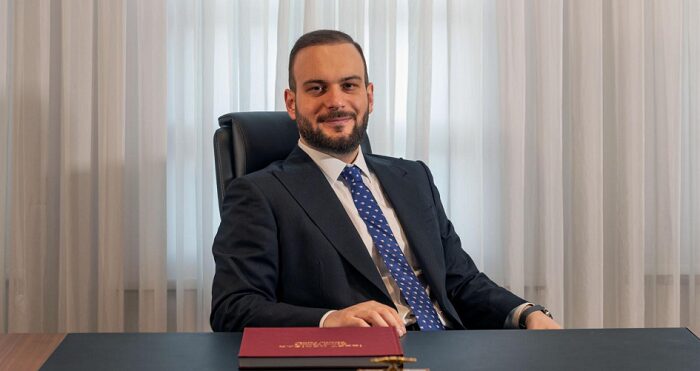
Samed Ağırbaş, COP31 Climate High-Level Champion

This work is coordinated through the Global Climate Action Agenda and the Marrakech Partnership for Global Climate Action – a framework that brings together voluntary climate efforts and connects them with the official UN climate process. Ağırbaş will help lead this work alongside the COP31 Presidency and Dan Ioschpe, the COP30 Climate High-Level Champion.

Murat Kurum, Türkiye’s Environment, Urbanisation and Climate Change Minister, COP31 President-Designate, said: “I congratulate him on his new assignment, and I sincerely believe that he will make significant contributions to the success of the COP 31 process.”

Currently, Ağırbaş serves as chairman of the Zero Waste Foundation in Türkiye and president of the Zero Waste Forum. He has been a leading voice on waste reduction, sustainable cities and youth entrepreneurship, including through leadership roles at the Istanbul Metropolitan Municipality Youth Assembly and UN Habitat. 

Simon Stiell, Executive Secretary of the United Nations Climate Change Secretariat (UNFCCC), said: “Mr. Ağırbaş brings a valuable combination of experience, with a strong understanding of the multilateral process through his work with UN-Habitat, complemented by leadership in the private and philanthropic spheres through the Zero Waste Foundation. This breadth of perspective will be critical in supporting the delivery of practical, implementable solutions that connect climate action to the issues people care about most: living standards, health, secure energy, and economic growth.”

Ağırbaş’ appointment comes after the Global Climate Action Agenda brought together 400 major climate initiatives at COP30, organised around priorities such as clean energy, forests, food systems, cities, human development and finance – areas identified as critical by the Paris Agreement’s Global Stocktake on climate progress.

At COP30, the Climate Action Agenda stakeholders published 120 plans to speed up climate solutions, backed by significant capital. Those include a trillion-dollar investment pipeline for energy grids and storage; $6.7 billion committed to forest protection under the new Tropical Forests Forever Facility; and programmes targeted at protecting hundreds of millions of people from floods, droughts and air pollution.

Ioschpe said: “COP30 proved that climate action can move at the speed of the real economy. The Action Agenda is driving trillions of dollars in investment, alongside plans to deliver on sustainable fuels, protect billions of hectares of land, and clean up our cities. Mr. Ağırbaş is stepping into leadership at the right moment, backed by an ambitious and solutions-focused climate action ecosystem.” 

About the Climate High-Level Champions 

In 2015, at the landmark UN Climate Conference (COP) in Paris, governments of the world established the Climate High-Level Champions role. The Champions’ focus is to mobilize ambitious climate action from businesses, financial institutions, cities, regions, civil society and communities to support governments in achieving the goals of the Paris Agreement.

The Champions – each serving a two-year term and passing the baton from COP to COP – act as a bridge between non-State actors and national governments and are now guided by a five-year vision for accelerating implementation through the Global Climate Action Agenda.

Lagos, MTN to transform Obalende into modern bus transport hub

The Lagos State Government says it has approved transformation of the Obalende bus stop into a modern bus transport hub,  sponsored by MTN as a Corporate Social Responsibility (CSR).

This is disclosed in a statement by the Commissioner for the Environment and Water Resources, Lagos State, Mr. Tokunbo Wahab.

He said the transformation would affect the Obalende loop, underbridge and adjoining lay-by, ensuring a fit into the Lagos state Mega-City.

Y’ELLO Bus Park
An impression of the Obalende Y’ELLO Bus Park

“Gov. Babajide Sanwo-Olu has approved transformation of the Obalende bus stop into a modern bus transport hub.

“This will transform the Obalende loop, underbridge and adjoining lay-by, ensuring a fit into the Lagos state Mega-City.

“The project will be fully sponsored by MTN as a CSR contribution to the development of Lagos State,” he said.

Wahab added that the proposed transformation on which work would soon start, will include organised and regulated bus operations as well as well-labelled location signage.

“The hub to be named Y’ELLO Bus Park will feature installation of solar panels to support long-term energy efficiency and reduce carbon footprint,” he said.

He added that the new transport hub would have provisions for a recyclables drop-off station to promote waste management and recycling.

“Tree planting is also planned to improve air quality and enhance the visual appeal of the environment.

“Also to be included are road camps for LAWMA Sweepers and Security Agencies including KAI and Neighbourhood Agency,” he said.

Wahab said features of the new transport hub also included Food and Beverage Kiosks for passengers, ticketing Booths and public toilets to eradicate open defecation.

He explained that the project is community-centred to improve the health, well-being, security and aesthetics of the Obalende area, ultimately helping to reduce the crime rate.

“The proposed hub will also contribute to protecting the integrity of the McGregor Canal,  which often gets heavily silted and blocked, leading to frequent clean-up efforts by the State Ministry of the  Environment and Water Resources” the commissioner explained.

Wahab said the space currently being used as the Obalende Bus Stop had grown to be one of the busiest transport hubs in Lagos.

He added that the place served as a major gateway connecting Ikoyi, Victoria Island and as a conduit to the Mainland through the Third Mainland Bridge.

“Over time, rapid urbanisation, population growth and informal economic activities have altered the area’s character with the prevalence of activities.

“Illegal activities such as illegal trading, improper waste management, unauthorised use by non-state actors, lack of greening and landscaping, open defecation, shanties and illegal structures, vagrants,” he said.

Sanwo-Olu visited the site on Feb. 18, 2024, confirming the sad reality of a deviation from the vision of Lagos as a megacity.

He also saw the deteriorating aesthetics of the area that was affecting security, public health, ease of movement and overall livability, especially as Obalende connected to strategic business districts in Lagos.

Following his visit, there had been several interventions to restore order to the area with the most recent enforcement and cleanup in December 2025 and January 2026 by the Ministry of Environment and Water Resources.

By Olaitan Idris

Groups stage protest for, against ban of alcohol in sachets

0

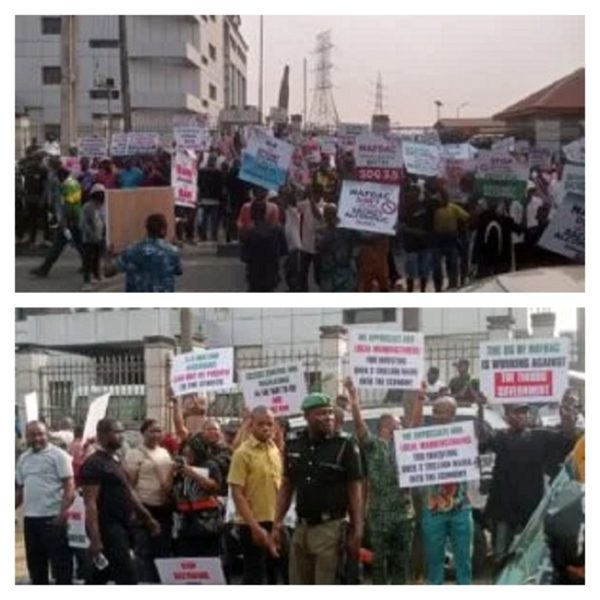
Protesters against the ban on alcohol in sachets and pet bottles and protesters in support of the ban on Tuesday, January 27, 2026, stormed the Lagos office of National Agency for Food and Drug Administration and Control (NAFDAC) at Isolo in lagos.

Both groups displayed various placards with contrasting messages in support of and against NAFDAC’s decision to stop manufacturers from producing alcoholic beverages in sachets and pet bottles below 200ml.

EnviroNews had earlier reported that NAFDAC’s Director-General, Prof. Mojisola Adeyeye, on Jan. 21, during a media parley, told newsmen that NAFDAC had started enforcing the ban on alcohol in sachets.

Sachet alcohol
Protesters against the ban on alcohol in sachets and pet bottles and protesters in support of the ban on Tuesday in Lagos

Adeyeye stated that the enforcement would continue, stressing that only government legislation could halt the action.

Protesters in support of NAFDAC’s action carried placards urging the agency to maintain the ban.

Their messages included: “NAFDAC do the needful, our lives are precious”; “NAFDAC don’t let them kill us with sachet alcohol”; “Alcoholic sachet drinks, killing Nigerians”, among others

Protesters against the ban displayed placards with inscriptions “Director-General of NAFDAC of working against the administration of President Bola Tinubu”, “NAFDAC stop working for multi-nationals and protect indigenous manufacturers”, and others.

Mr. Babatunde Adeshina, who spoke on behalf of the group backing the NAFDAC decision, said the group was against the unchecked circulation of, and access to alcohol among young Nigerians.

Adeshina noted that the group’s agitation was driven by national interest and concern for Nigeria’s future.

He said:”As concerned Nigerians, we are not against alcohol consumption, all we are against is the production and sales of alcohol in sachets.

“These alcoholic beverages in small quantities have ruined the lives of many especially teenagers and youth and the impact on public health is visible for all to see.

“That is why we are here to support NAFDAC.”

He urged the agency to follow the enforcement to the end, adding that a lot of Nigerians were solidly behind them.

A coalition of consumer rights advocates led by Mr. Olufemi Lawson, had staged a protest on Monday at NAFDAC Lagos Office, describing the planned enforcement as “economically insensitive and not well thought out”.

Security men were on ground at the NAFDAC premises to prevent chaos and ensure safety of both groups.

By Kemi Akintokun

Nigeria battles multiple disease outbreaks across six zones – NCDC

0

The Nigeria Centre for Disease Control and Prevention (NCDC) has said that Nigeria is currently responding to multiple infectious disease outbreaks across all six geopolitical zones.

The diseases include diphtheria, cholera, Lassa fever, and measles.

Dr Jide Idris, Director-General, NCDC, made the disclosure on Tuesday, January 27, 2026, during a three-day Stakeholder Workshop on Preparedness and Response to Public Health Emergencies, organised by the agency, in collaboration with UNICEF and the WHO.

Idris noted that these outbreaks are compounded by climate-related and humanitarian emergencies, as well as broader structural factors such as population mobility, rapid urbanisation, pressure on health systems, and persistent inequities in access to essential services.

Dr Jide Idris
Director-General of NCDC, Dr Jide Idris

“Preparedness is not defined by the absence of outbreaks, but by the capacity to anticipate risk, detect threats early, coordinate effectively across sectors and levels of government, and respond in a timely, equitable, and evidence-driven manner,” he said.

The NCDC boss highlighted the centre’s role as Nigeria’s national public health institute, established by law in 2018, to provide technical leadership for the prevention, detection, and response to public health threats.

He emphasised that the centre works in close collaboration with the Federal Ministry of Health, state governments, sister agencies, and development partners to strengthen the country’s health security architecture.

“Over the years, Nigeria has made deliberate investments to enhance its emergency preparedness, including the implementation of the International Health Regulations (2005) Monitoring and Evaluation Framework, the adoption of the National Action Plan for Health Security 2.0, operationalisation of the Integrated Disease Surveillance and Response (IDSR) 3rd Edition, and the ongoing implementation of the 7-1-7 outbreak detection and response approach,” he said.

However, he acknowledged that persistent challenges remain, particularly in coordination across sectors, data integration, logistics, workforce readiness, sustainable financing, and alignment of partner support with nationally defined priorities.

The three-day workshop, according to him, is designed as a technical and policy-oriented platform to examine how Nigeria’s preparedness and response systems function, identify bottlenecks and enablers, and strengthen coherence across frameworks, institutions, and investments.

He urged participants to engage with intellectual honesty and technical depth, adding that the success of the meeting would be measured by its ability to produce an actionable, nationally owned roadmap to strengthen early detection, improve response coordination, and enhance resilience at both national and sub-national levels.

He commended partners for their collaboration and the government for its leadership in advancing health security.

By Abujah Racheal

×