31.7 C
Lagos
Saturday, February 28, 2026
Home Blog Page 10

Dangote Foundation supports 3,704 students with uniforms, learning materials

0

Aliko Dangote Foundation, in collaboration with Dangote Petroleum Refinery and Dangote Fertiliser Limited, has distributed school uniforms, bags, sandals and writing materials to primary school pupils in their host communities in Ibeju Lekki, Lagos State, as part of its education support programme.

A total of 1,323 pupils, including children with special needs, benefited from the five-day distribution exercise under the first phase of the intervention. Beneficiary schools include Local Government Primary School, Ilege; Okunraye Community Primary School; Idotun Community Primary School; Olomowewe Community Primary School; and Lekki Community Primary School.
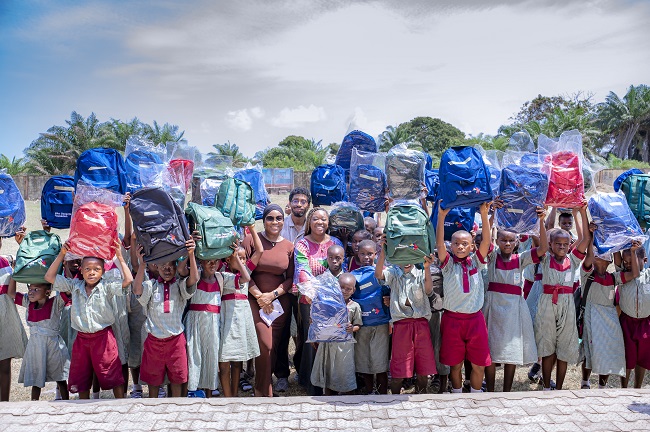
Aliko Dangote Foundation
Aliko Dangote Foundation staff with pupils during the distribution of school uniforms, bags and writing materials to primary school pupils in Ibeju Lekki

The programme will also extend to secondary schools, bringing the total number of beneficiaries to 3,704. In addition, scholarships will be awarded to 443 students, including 33 in tertiary institutions, alongside vocational training programmes for youths in the host communities.

The Managing Director and Chief Executive Officer of Aliko Dangote Foundation, Zouera Youssoufou, stated that the initiative reflects the vision of its founder, Aliko Dangote to invest in education and nurture future leaders.

“We believe education remains the most powerful tool for transforming lives and communities. This intervention is not just about uniforms, bags or writing materials. It is about giving every pupil in our host communities a fair opportunity to learn and succeed by reducing the burden on parents. Our commitment is long term. By investing in these children today, we are investing in future leaders who will shape Nigeria’s tomorrow,” she said.

Speaking on the broader scope of the intervention, the Head, Social Performance of Dangote Petroleum Refinery and Petrochemicals, Mojisola Ogunleye, said education remains a key pillar of the company’s community development strategy.

She disclosed that 3,704 students across four secondary schools and five primary schools are benefiting from the first phase of the programme. The second phase will include scholarships and the distribution of textbooks and additional learning materials.

Ogunleye added that 443 students have been selected for scholarships, comprising 33 university students and 410 secondary school students.

“In addition, 22 community youths with SSCE have been upskilled and trained in the City & Guilds Certification Programme in Electrical Engineering, Levels 1, 2 and 3 and will be officially presented their certificates issued by the institution from London,” she said.

The Head Teacher of Local Government Primary School, Ilege, Mrs. Adenigba Margaret Aderemi, commended the Foundation for the intervention, noting that many pupils previously struggled with inadequate learning materials and worn-out uniforms.

She said the gesture would improve enrolment and classroom participation, explaining that some children had dropped out due to the embarrassment of wearing torn uniforms, while others engaged in menial jobs to afford basic school supplies.

“This is a big burden that has been taken off the shoulders of many parents. There will be improved enrolment. Many pupils will return to school because of this gesture,” she added.

She described the intervention as a major boost to education in the community and urged other organisations to emulate the initiative.

The programme has also provided economic opportunities for residents. Ms. Aminat Aderonke Salabu, one of the local tailors engaged to produce the uniforms, praised the Foundation for awarding the contracts within the host communities.

According to her, the engagement has significantly improved her income and enabled her to advance her personal building project.

“I have started developing a self-contained apartment and a shop on a quarter of plot that I have from the profit I made from the first phase. I am grateful to the Foundation for empowering and supporting us to grow,” Salabu added.
IEA meeting: Guterres wants govts to advance action to manage fossil fuels transition

0

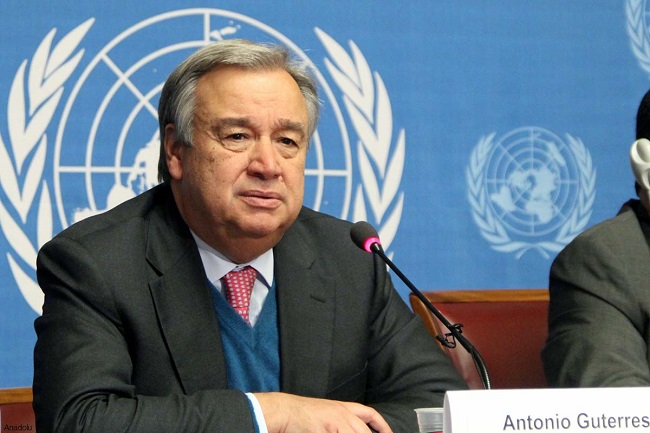
In a video message to the 2026 International Energy Agency (IEA) Ministerial Meeting in Paris on Wednesday, February 18, 2026, the United Nations Secretary-General, António Guterres, called on governments to advance coordinated international action to manage the global transition away from fossil fuels.

In his address, Guterres urged producer and consumer countries, developed and developing nations, as well as public and private finance actors, to come together to sequence the decline of fossil fuel investment with the rapid scale-up of clean energy – with clear milestones, strong finance for developing countries, protection for workers and communities, and alignment with the 1.5°C limit.

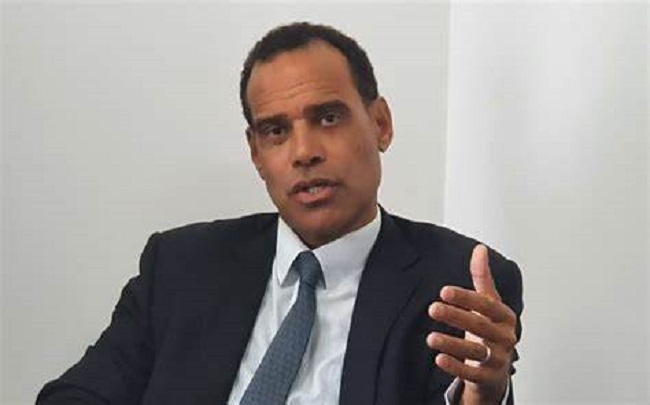
António Guterres
United Nations Secretary-General, António Guterres

His words: “I am pleased to address the International Energy Agency’s Ministerial Meeting.

“We have entered the age of clean energy.

“Renewables are now the cheapest, fastest and safest source of new electricity almost everywhere.

“Investors know it: last year, two trillion US dollars flowed into clean energy – nearly twice as much as into fossil fuels.

“Those who lead this transition will lead the global economy of the future.

“Yet some fossil fuel interests remain hell-bent on slowing progress;

“Spreading disinformation; pretending that a transition is unrealistic or unaffordable.

“Let’s tell it like it is:

“The world’s addiction to fossil fuels is one of the greatest threats to global stability and prosperity.

“Three-fourths of humanity lives in countries that are net importers of fossil fuels;

“Dependent on energy they do not control – at prices they cannot predict;

“Watching development budgets siphoned into fuel bills;

“At the constant mercy of geopolitical turmoil and supply disruptions.

“This insecurity is baked into the system.

“We must stop treating the transition away from fossil fuels as taboo.

“Delay will only breed instability. 

“History is littered with the wreckage of failed transitions – broken economies, scarred communities, and lost opportunities.

“We face a choice: 

“Design the transition together – or stumble into it through crisis and chaos. 

“That is why today, I am calling for a dedicated global platform for honest dialogue on transitioning away from fossil fuels.

“This platform must bring together producers and consumers, developed and developing countries, public and private financial institutions and civil society.

“It must be a space to sequence the decline of fossil fuel investment with the rapid scale-up of clean energy;

“And to deliver a global transition plan that aligns investment, energy security and climate goals – with concrete milestones and robust finance, particularly for developing countries;

“This shift must be fair, orderly, affordable, and aligned with 1.5°C – protecting workers and communities and connecting hundreds of millions of people to modern energy services.

“I urge you to help us create this platform and move faster, together.

“This is how we cut emissions, strengthen energy security, power development, and build lasting stability.

“The IEA has helped make the clean energy transition undeniable.

“Now let’s make it unstoppable.”

Reacting to the speech, Alex Rafalowicz, Director of the Fossil Fuel Treaty Initiative, said: “This is welcome leadership and vision from the UNSG. The development of this platform is already happening. 18 countries are actively participating in discussions on a Fossil Fuel Treaty to establish mechanisms that can allow all countries to engage in, and commit to, a faster and fairer phase out of fossil fuels.

“The First Conference on Transitioning Away from Fossil Fuels, to be held in Santa Marta, Colombia, is the first stop on this journey and all countries that are seriously committed to the 1.5C limit should be there. We expect that out of Santa Marta we will have more proposals and commitments that can feed into the COP Presidency Roadmap and into broader processes, like the development of a new Treaty to deliver the global just transition plan we need.”

Campaigners flay Japan’s US oil and gas investments

0

As part of a trade deal, US President Donald Trump’s administration announced that Japan will finance $36 billion worth of projects, including an Ohio natural gas-fired plant set to be the US’ largest, and an oil export facility in Texas. 

The Ohio gas plant, to be operated by a subsidiary of Japan’s SoftBank Group, aims to cater to power-hungry data centres, while the Texas GulfLink deepwater crude oil export facility is expected to generate $30 billion in annual US crude exports.

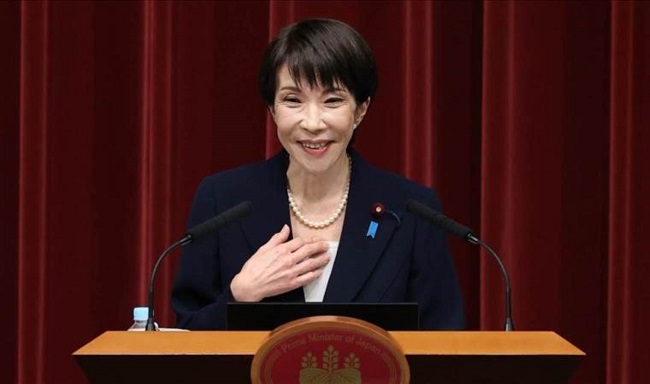
US officials said that these projects would strengthen US global energy dominance, while Japan Prime Minister, Sanae Takaichi, said that it would lead to mutual economic security and growth. 

Sanae Takaichi
Japan Prime Minister, Sanae Takaichi

But environmental compaigners have frowned at the development, with 350.org saying that Japan’s oil and gas investments in the US are unwise in a world that’s preparing to transition away from fossil fuels. 

Masayoshi Iyoda, 350.org Japan Campaigner, said: “Pouring money into costly US fossil fuel projects makes no sense when the world is moving fast toward cleaner, more affordable energy. Prime Minister Takaichi is not demonstrating Japan’s economic strength, she is showing that Japan will follow Washington’s lead even at the planet’s expense. PM Takaichi must rethink the outdated assumption that fossil fuels equal growth. These investments lead to stranded assets, heat up the planet, and undermine the real economic growth Japan needs.

“Japan should instead build on its technological advantages and invest in renewable energy as its path to long-term economic growth and security. PM Takaichi has spoken about reducing Japan’s dependence on imported fossil fuels – financing US oil and gas projects sends the opposite message. It also risks betraying young people who voted for a better future, not one made worse by the climate crisis.” 

Climate change: Countries urged to support Vanuatu’s proposed UN resolution

0

Vanuatu has tabled a draft resolution to the UN to formally endorse last year’s International Court of Justice advisory opinion on climate change. Despite pressure from big polluters to stall the momentum from international law to action, island nations like Vanuatu continue to push for accountability.

The current draft resolution responds to the unanimous ICJ advisory opinion on climate change, which among others confirmed that:

Ralph Regenvanu
Ralph Regenvanu, Minister of Climate Change Adaptation, Meteorology & Geo-Hazards, Energy, Environment and Disaster Management for the Republic of Vanuatu
  • The 1.5°C limit is legally binding, not aspirational, and must guide all state conduct.
  • States have binding obligations under customary international law to prevent foreseeable climate harm and resulting rights violations – obligations that apply to all countries, including those that have withdrawn from the Paris Agreement.
  • Fossil fuel subsidies, exploration licenses, and continued production can breach international law.
  • Climate harm can be attributed to individual states, and states cannot escape liability by asserting that they are only one of many releasing greenhouse gases.
  • States must regulate private actors, including fossil fuel corporations whose emissions cause harm, including transboundary devastation.

Fenton Lutunatabua, 350.org Programme Lead Pacific & Caribbean, said: “Six months ago, this advisory opinion was unanimous, meaning all agreed that countries have the legal responsibility to avoid climate harm and are liable for the damages if they fail to do so. This decision put the fossil fuel industry, and the governments that enable them, on notice. It is crucial, for all of us on the frontlines, that this notice be turned into concrete action.

“The world may think that the climate crisis is confined to islands like ours in the Pacific, but the reality is that it is impacting everyone – from heatwaves in Australia to wildfires in the US. As people that have lived this reality for decades, we are urging the international community to grasp this opportunity to avoid the worst of it. Global cooperation to solve this crisis is in everyone’s best interest.” 

Anne Jellema, Executive Director of 350.org, said: “Vanuatu’s leadership is a powerful reminder that climate justice is not abstract, it is rooted in law, responsibility, and lived reality. The International Court of Justice has made clear that protecting people and the planet is a legal obligation, not a choice. This UN resolution is about turning that clarity into action.

“At a time when some governments are trying to delay and deny, island nations are showing what true leadership looks like: standing up for fairness, accountability, and a livable future for all. Communities on the frontlines should not have to pay the price for pollution they did not cause. The world now has both the moral and legal mandate to act, governments must rise to that moment.”

Liquid gas association calls for LPG to be central to global energy agenda

0

The World Liquid Gas Association (WLGA) is participating in International Energy Agency (IEA) Energy Access and Clean Cooking Ministerial Meetings taking place from February 18 to 19, 2026, in Paris, highlighting liquefied petroleum gas (LPG) as the fastest scalable pathway to universal clean cooking access across the developing world.

The Ministerial High-Level Dialogue on Advancing Energy Access and Clean Cooking Solutions chaired by the Netherlands’ Deputy Prime Minister Sophie Hermans, serves as a critical milestone following the landmark 2024 Summit on Clean Cooking in Africa.

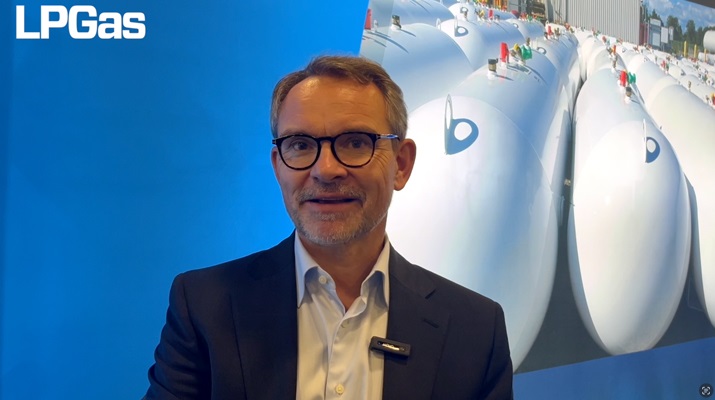
James Rockall
World Liquid Gas Association (WLGA) CEO, James Rockall

Since then:

  • $470 million has been disbursed across 22 African countries to accelerate the deployment of clean cooking fuels, with $2.2 billion pledged.
  • LPG has driven around 70% of global clean-cooking gains since 2010. It is abundant, affordable, and deployable today, unlike large-scale electrification and many alternative energy solutions.
  • Approximately 900 million Africans still lack access to clean cooking fuels, resulting in severe health impacts (particularly for women and children), widespread deforestation, and substantial losses in economic productivity. Roughly four in five people in Africa and 90% of schools relying on firewood or charcoal for cooking,

James Rockall, Managing Director and CEO, World Liquid Gas Association, joins global energy leaders including Dr. Fatih Birol, Executive Director, IEA and the Chris Wright, Secretary of Energy, United States at the Ministerial, which serves as a prelude to the second Summit on Clean Cooking in Africa set to take place from July 9 to 10, 2026, in Nairobi, Kenya. Discussions will focus on identifying priority policy, financing, and delivery actions that may be translated into Government or private sector commitments, to be presented at the next Summit.

Rockall said: “Over 25 countries and 23 organisations are attending these Ministerial Meetings at the IEA underscoring the urgency of this foundational issue for Africa and the world.

“LPG has driven approximately 70% of global clean-cooking gains since 2010 and if we are to get serious about universal access to clean cooking solutions by 2030 then we need to move faster. If we align policy, regulation, and finance, we can move millions of households off traditions fuels within this decade – not in 2040. The industry stands ready to deliver. The question is whether policy will move at the same speed as the need.”

WLGA will convene the global LPG industry in Istanbul from October 12 to 16 under the theme ‘Resilience in a Changing World’ with Dr. Fatih Birol, set to deliver the keynote speech.

The IEA’s World Energy Outlook, released in November 2025, reveals that progress on clean cooking access has decelerated in recent years. While 100 million people gained access to clean cooking in 2023, this represents a decline from 120 million in 2019. Accelerating this rate of change is crucial, as household air pollution from traditional cooking methods causes premature deaths and transitioning to clean cooking solutions could reduce these fatalities by nearly two-thirds globally by 2040.

In the Global South LPG offers a clean and cost-effective energy solution to communities deprived of access to grid electricity. This transformative fuel humanises access to energy, creating substantial benefits for over a billion people, primarily women and girls, who reside in areas where reliance on unsustainable biomass and other hazardous fuels for cooking persists. This not only contributes to mitigating climate change but also enhances overall quality of life.

Remittance of 1% Nigerian content levy still mandatory – NCDMB

0

The Nigerian Content Development and Monitoring Board (NCDMB) on Tuesday, February 18, 2026, reminded operators, contractors, and service companies in the upstream sector of the Nigerian oil and gas industry of their mandatory obligation to remit one percent (1%) Nigerian Content Development Fund (NCDF) levy into the bank accounts officially designated by the Board.

In a statement at the Nigerian Content Tower, Yenagoa, Bayelsa State, the Executive Secretary of NCDMB, Felix Omatsola Ogbe, explained that the NCDF is established under Section 104 of the Nigerian Oil and Gas Industry Content Development (NOGICD) Act, 2010 as a dedicated fund for the development of Nigerian content in the oil and gas industry.

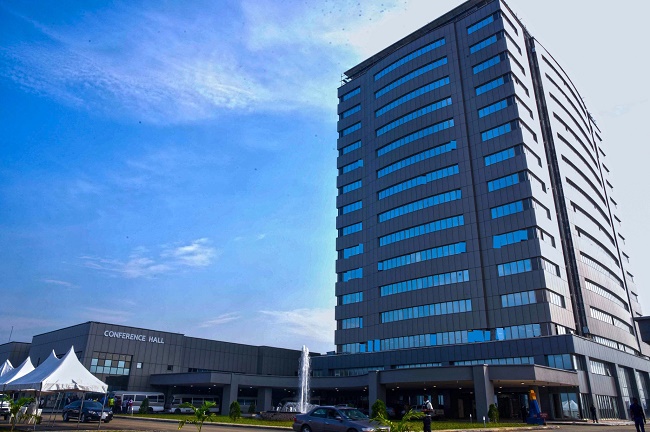
Nigerian Content Tower
Nigerian Content Tower, Yenagoa, Bayelsa State

He reiterated that covered entities are bound to remit one percent (1%) of the value of every upstream contract, adding that NCDMB is vested with the exclusive authority for the management and administration of the fund.

Funds generated under the NCDF are deployed to support indigenous oil and gas contractors and service companies, to finance capacity development and training in the industry, to enable access to affordable finance for indigenous participation, and to drive sustainable growth across the oil and gas value chain.

Ogbe clarified further that “the NCDF is a ring-fenced statutory development fund created by a specific Act of the National Assembly,” adding that it is “not classified as Federal Government revenue payable into the Consolidated Revenue Fund and its collection and administration are expressly governed by Section 104 of the NOGICD Act.”

He stressed that all remittances of the one percent (1%) NCDF levy must be made strictly into the accounts officially designated by the NCDMB, pointing out that “any remittance made outside the accounts formally designated by the NCDMB “shall not be recognized as valid payment of the one percent (1%) NCDF Levy under the Act.”

He urged companies to ensure strict compliance and to seek clarification from the Board where necessary prior to effecting any remittance. The Executive Secretary assured industry stakeholders that the Board remains committed to transparency, accountability, and the effective utilization of the Fund for the growth and sustainability of Nigerian Content in the oil and gas industry.

Furthermore, the NCDMB has announced that obtaining the Nigerian Content Development Fund Compliance Certificate (NCFCC) has become a key requirement for accessing the Board’s regulatory services and approvals.

The NCDF Compliance Certificate is issued to companies to confirm their full compliance with statutory obligation to remit one per cent (1%) of the value of every contract awarded in the upstream sector of the oil and gas industry.

The Board stated that “without a valid NCDF Compliance Certificate, access to regulatory documents, certifications, approvals, and clearances issued by NCDMB shall not be granted.” Some of these include Nigerian Content Equipment Certificate (NCEC), approvals and clearances for projects and contracts, and other regulatory documents issued by the Board.

The agency advised oil and gas industry stakeholders to regularise their NCDF remittance status, apply promptly for the document and ensure continuous compliance to avoid disruptions to operational schedules.

The Board said the process of obtaining the NCFCC is fully digital and accessible via the NCDMB online portal. It advised all eligible companies to submit relevant contract and remittance information, upload evidence of NCDF payments, complete verification and compliance review, and obtain the Compliance Certificate upon confirmation.

According to NCDMB, obtaining the NCDF Compliance Certificate matters because it is a validation of a company’s standing with the Board, and serves as a mechanism for promoting transparency, accountability, and sustainable Nigerian content development.

Sterling Oil, Lagos mobilise 550 pints of blood in two-day blood donation drive

0

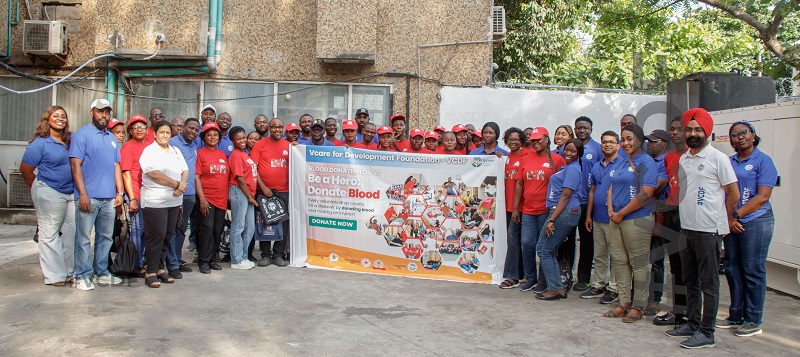
Nigeria requires between 1.8 and 2 million units of blood annually but meets just 25 to 30 percent of its need. The shortage affects emergency care, sickle cell treatment, and maternal health where severe bleeding after childbirth is a leading cause of death. Hence, the need for blood is constant, and the gift of blood donation makes the difference between life and loss.

Sterling Oil Exploration and Energy Production Company Limited (SEEPCO) corporate social responsibility efforts enabled Vcare for Development Foundation (VCDF) to conduct annual blood donation drives since 2022 to inspire and strengthen the culture of voluntary blood donation. It is organised in partnership with the Lagos State Blood Transfusion Service (LSBTS), and Nigerian RedCross, Lagos Chapter.

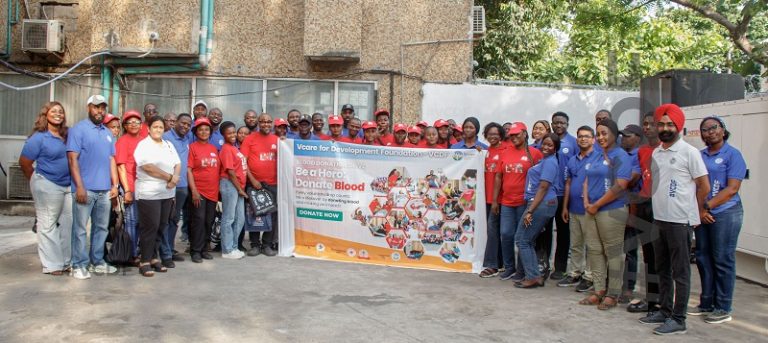
Blood Donation
A group of blood donors

It is noteworthy that a laudable record of 550 blood donors, of which 35% were first time donors, was achieved on February 6 and 7, 2026. This achievement builds on a steady climb over the past four years. VCDF recorded exponential increase from 98 donors in 2022, 147 in 2023, 268 in 2024, and 341 in 2025. These earned VCDF the Blood Donation Champion Award from Lagos State Blood Transfusion Service. The success is inseparable from the commitment of SEEPCO’s volunteers and blood donors.

The cumulative donation now stands at 1,404 donors. Each donor represents the growing willingness to overcome myths and religious concerns that once discouraged blood donation. Intense mobilisation efforts, awareness drives, community engagement activities, responses to frequently asked questions, and other social and behaviour change communication components adopted improved prospective donors to register. These were also instrumental in reshaping perception, and behaviour towards blood donation.

“Although I had myths that discouraged me from donating earlier, but these have been corrected by awareness, confidence, and voluntary participation. Thanks to the intense awareness activities. I am a third time donor,” said Vivian a blood donor.

“I voluntarily donated because my wife has benefitted from blood donation when she lost so much blood during childbirth. I appreciate the practical guidance provided to blood donors to ensure safe and healthy donation practices,” submitted Noah, also a blood donor.

“I felt fulfilled after donating blood because I was encouraged by the right information, and guidelines. I appreciate the care I received which made my experience smooth and memorable as a first-time donor,” stated Ismail, another blood donor.

For over four years, Sterling Oil has collaborated with VCDF and other health organisations across its operating locations to deliver impactful healthcare outreach programmes and regular medical camps. These initiatives address common health issues such as high blood pressure, cough, malaria, typhoid, skin diseases, and other ailments across different LGAs, providing free consultations, medicines, and basic laboratory tests on the spot.

In this series, the 2026 Blood Donation Drive has shown that it is possible to break barriers, inspire action, and save lives, while encouraging voluntary donations, strengthening community engagement, and building a reliable pool of blood donors for hospital emergencies, all contributing to overall community wellness.

Sterling Oil maintains a strong focus on building a sustainable and socially responsible business, contributing to national development, respecting host communities, and creating lasting value for stakeholders. The company’s sustainability efforts are driven by steady, impact-focused progress and a strong commitment to environmental stewardship, reflected in initiatives that support afforestation, promote greener fuel alternatives, and strengthen safe and efficient workplace practices.

In the same spirit of responsible corporate citizenship, Sterling Oil says it remains dedicated to enabling positive public-health outcomes through its Corporate Social Responsibility (CSR) programmes, adding that VCDF will continue to leverage SEEPCO’s support to advance impactful social initiatives aimed at promoting a healthier Nigeria.

Breathing in micro plastics can cause inflammation, damage lungs, study warns

0

New research has showed that breathing in micro plastics can cause inflammation and damage to the lungs.

This potentially increases the risk of respiratory diseases such as asthma, chronic obstructive pulmonary disease, pulmonary fibrosis and lung cancer, a statement from Australia’s University of Technology Sydney (UTS) on Tuesday, February 17, 2026, said.

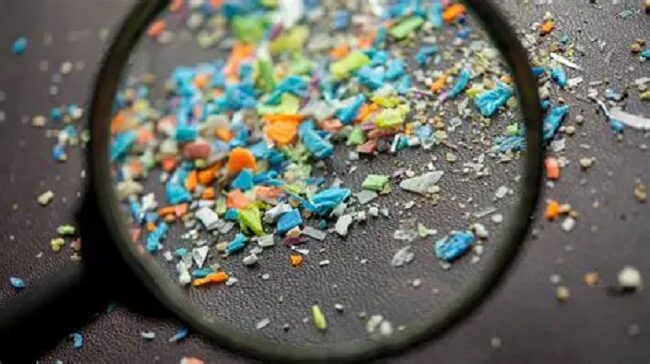
Microplastics are tiny plastic particles, typically less than 5 millimeters in size, that persist in the environment and can accumulate in ecosystems and the human body.

Microplastics
Microplastics

World Health Organisation data links air pollution to around 7 million premature deaths yearly, and airborne micro plastics from synthetic carpets, clothing and household dust may worsen respiratory risks, it said.

“Micro plastics are tiny fragments of plastic, smaller than 5mm, that are released when larger plastic items break down or shed fibers,” said lead author, Keshav Raj Paudel, a UTS senior researcher on chronic respiratory diseases.

“The lungs are particularly vulnerable to micro plastic damage due to their large surface area and limited ability to clear particles, particularly smaller ones that travel deep into the lungs,” he said, adding lung cancer tumors contain more micro plastics than healthy tissue.

Pollution: Groups unveil Nigeria Plastic Brand Audit Report

0

The Global Alliance for Incinerator Alternatives (GAIA) and the Break Free From Plastic Movement (BFFP) on Tuesday launched the Nigerian Plastic Brand Audit Report (2018–2024), highlighting corporate contributions to plastic pollution.

The organisers, at a media briefing in Lagos on Tuesday, February 17, 2026, described plastic pollution as an urgent environmental and public health crisis.

Speaking on behalf of the group and its partners, Mr. Weyinmi Okotie, Clean Energy Campaigner for GAIA, said Nigeria generates about 2.5 million tonnes of plastic waste annually, with only a fraction recycled.

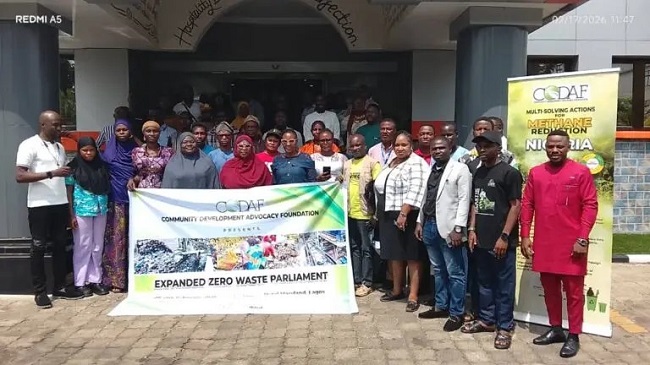
Nigeria Plastic Brand Audit Report
Participants at the unveiling of Nigeria Plastic Brand Audit Report, 2018-2024 on Tuesday in Lagos

Okotie said a nationwide citizen-science audit was conducted during community clean-ups across eight cities in seven states, namely Osogbo, Jos, Ughelli, Warri, Port Harcourt, Lagos, Uyo and Benin City.

According to him, the report shows that 298,174 pieces of plastic waste were audited to identify the most common items and the brands responsible for their production.

“The findings showed that sachets, particularly water sachets, were the most prevalent waste items, followed by plastic bottles, bags and wrappers,” Okotie said.

He said the report findings estimated that about 60 million water sachets are discarded daily in Nigeria, amounting to over 20 billion annually, many of which clog drains and worsen flooding.

He said the audit identified Coca-Cola and PepsiCo as leading multinational brands linked to plastic pollution across surveyed cities.

“Other major contributors named were Nestlé, Rite Foods, CWAY Group and several local table-water producers.”

He noted that in cities such as Lagos, plastic waste contributes significantly to blocked drainage systems, leading to recurrent flooding that destroys homes and livelihoods.

He said existing policies, including the National Policy on Plastic Waste Management and state-level single-use plastic restrictions, remain weakly enforced nationwide.

He called on federal and state governments to adopt binding plastic reduction targets under the proposed global plastics treaty and strengthen Extended Producer Responsibility (EPR) frameworks.

“The groups urged mandatory national EPR standards requiring producers and importers to assume full financial responsibility for plastic waste management while integrating waste pickers into formal systems.

“They also demanded that multinational and local companies reduce plastic production, invest in reuse and refill systems, and phase out toxic, non-recyclable packaging.

“Civil society organisations were encouraged to continue exposing polluters and reject incineration as a false solution to plastic pollution.

“The plastic crisis in Nigeria is driven by a throwaway culture fueled by the fossil fuel industry. Delay is no longer an option,” Weyinmi Okotie added.

Other members of the group included Green Knowledge Foundation, Centre for Earth Works, Sustainable Research and Action for Environmental Development, and other partners.

By Fabian Ekeruche

ACReSAL supports 2,000 Gombe farmers with climate-resilient seeds

0

No fewer than 2071 farmers in Gombe State have benefited from the Agro-Climatic Resilience in Semi-Arid Landscapes (ACReSAL) Project in the state within the past 15 months.

The state Coordinator of ACReSAL, Dr Sani Jauro, disclosed this in an interview in Gombe on Tuesday, February 17, 2026, while speaking on the success of the project in the agriculture sector.

Abdulhamid Umar
Abdulhamid Umar, National Project Coordinator, Agro-Climatic Resilience in Semi-Arid Landscapes (ACReSAL)

Jauro said that climate change had become a threat to almost every aspect of life, particularly the agriculture sector which provides the food that sustains humanity.

He said it was therefore imperative for farmers to be empowered towards helping them build resilience against climate change and its devastating impact on food security and their livelihoods.

He said it was in that regard, that farmers in the state were supported with climate-resilient seeds and other agricultural inputs to boost food security, enhance productivity, and adapt to climate change pressures.

According to him, one of the reasons for supporting the farmers is to help them boost productivity as well as their incomes to support their households.

”We have distributed drought-resistant seedlings to about 55 farmer clusters across the state with a total number of 2071 farmers reached.

”These varieties are designed to withstand late onset or early cessation of rainfall, enabling farmers to record better harvests even under irregular weather patterns,” he said.

Jauro added that ACReSAL had also supported the agriculture sector in the state through mechanisation of farming practices to reduce manual labour in farms.

He said that multipurpose tractors were procured and distributed to the Local Government Areas for local farmers to access at subsidised rates.

He noted that since many of the farmers couldn’t afford such equipment, ACReSAL provided the equipment to assist them in cultivating larger farmlands within short period.

”What will ordinary have taken nearly three weeks of manual labour can now be completed in a short period; and given the challenges of climate change, timely land preparation is critical,” he said.

Speaking further on ACReSAL’s impact on agriculture, the project coordinator said that rehabilitation of the Balanga Dam Canal was being carried out and on completion of the second phase, it would boost irrigation farming.

He it would also open opportunities for thousands of farmers to engage in year-round farming, adding that this would contribute to food supply stability, lower market prices, and increased employment.

Jauro also disclosed that through ACReSAL’s intervention, a training hub for extension specialists had been established.

He said that the essence of the initiative was to provide extension workers in the state with up-to-date knowledge, practical techniques, and hands-on training.

According to him, the hub will enhance their ability to assess soil health, interpret environmental indicators, and provide timely advisory services to farmers.

Jauro commended Gov. Inuwa Yahaya for providing the needed support for ACReSAL to carry out the interventions to boost food security, water supply and environmental management in the state.

By Peter Uwumarogie

×