No fewer than 2071 farmers in Gombe State have benefited from the Agro-Climatic Resilience in Semi-Arid Landscapes (ACReSAL) Project in the state within the past 15 months.
The state Coordinator of ACReSAL, Dr Sani Jauro, disclosed this in an interview in Gombe on Tuesday, February 17, 2026, while speaking on the success of the project in the agriculture sector.
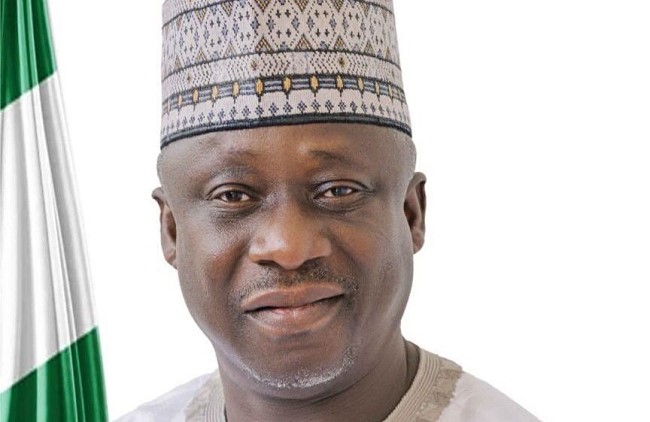
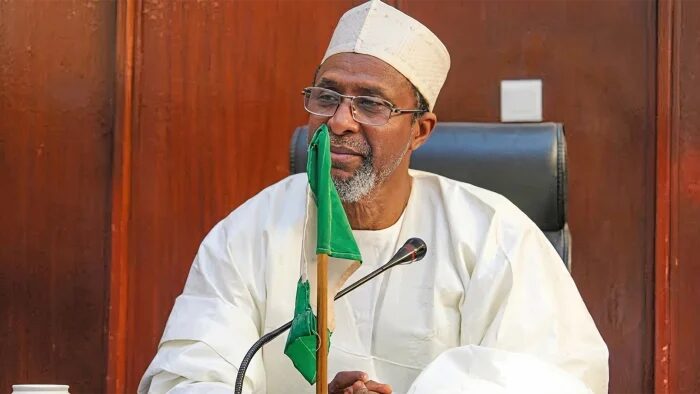
Abdulhamid Umar, National Project Coordinator, Agro-Climatic Resilience in Semi-Arid Landscapes (ACReSAL)
Jauro said that climate change had become a threat to almost every aspect of life, particularly the agriculture sector which provides the food that sustains humanity.
He said it was therefore imperative for farmers to be empowered towards helping them build resilience against climate change and its devastating impact on food security and their livelihoods.
He said it was in that regard, that farmers in the state were supported with climate-resilient seeds and other agricultural inputs to boost food security, enhance productivity, and adapt to climate change pressures.
According to him, one of the reasons for supporting the farmers is to help them boost productivity as well as their incomes to support their households.
”We have distributed drought-resistant seedlings to about 55 farmer clusters across the state with a total number of 2071 farmers reached.
”These varieties are designed to withstand late onset or early cessation of rainfall, enabling farmers to record better harvests even under irregular weather patterns,” he said.
Jauro added that ACReSAL had also supported the agriculture sector in the state through mechanisation of farming practices to reduce manual labour in farms.
He said that multipurpose tractors were procured and distributed to the Local Government Areas for local farmers to access at subsidised rates.
He noted that since many of the farmers couldn’t afford such equipment, ACReSAL provided the equipment to assist them in cultivating larger farmlands within short period.
”What will ordinary have taken nearly three weeks of manual labour can now be completed in a short period; and given the challenges of climate change, timely land preparation is critical,” he said.
Speaking further on ACReSAL’s impact on agriculture, the project coordinator said that rehabilitation of the Balanga Dam Canal was being carried out and on completion of the second phase, it would boost irrigation farming.
He it would also open opportunities for thousands of farmers to engage in year-round farming, adding that this would contribute to food supply stability, lower market prices, and increased employment.
Jauro also disclosed that through ACReSAL’s intervention, a training hub for extension specialists had been established.
He said that the essence of the initiative was to provide extension workers in the state with up-to-date knowledge, practical techniques, and hands-on training.
According to him, the hub will enhance their ability to assess soil health, interpret environmental indicators, and provide timely advisory services to farmers.
Jauro commended Gov. Inuwa Yahaya for providing the needed support for ACReSAL to carry out the interventions to boost food security, water supply and environmental management in the state.
A Report published on Tuesday, February 17, 2026, by the European Scientific Advisory Board on Climate Change says the European Union must urgently intensify and better coordinate its preparations for escalating climate-related risks.
“Weather- and climate-related extreme events are already causing severe losses across Europe,” said Ottmar Edenhofer, chair of the advisory board.
“Extreme heat alone has resulted in tens of thousands of premature deaths in recent years.”
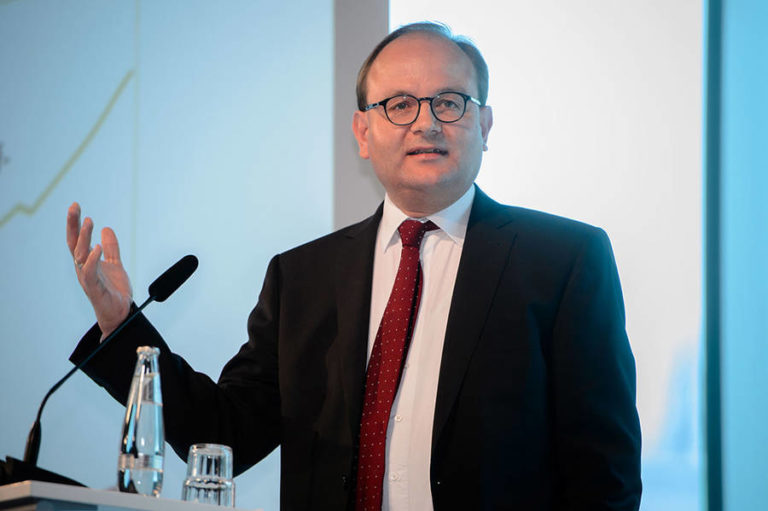
Ottmar Edenhofer
Edenhofer said that in addition to environmental damage, climate-related disasters are causing substantial economic losses, averaging around 45 billion euros (53.3 billion) annually.
He said the Copenhagen-based body warned that risks are likely to intensify, noting that Europe is warming at roughly twice the global average rate.
It added that the impacts are already being felt across all regions of the bloc.
While reducing greenhouse gas emissions remains essential, the board stressed that adapting to climate change is equally critical.
Among its recommendations, the advisory board called for mandatory and harmonised climate risk assessments across EU institutions and member states.
It also urged the adoption of a clear “vision for a climate-resilient EU by 2050,” increased mobilisation of public and private investment, and the integration of climate risks into all areas of policymaking.
The report further advised that the EU should prepare for a range of future scenarios and establish continuous monitoring and evaluation of adaptation measures to strengthen long-term resilience.
The Federal Housing Authority (FHA) has inaugurated a four‑storey, N8 billion mall to boost employment and business in Abuja.
Managing Director of FHA, Oyetunde Ojo, during the inauguration on Tuesday, February 17, 2026, in Abuja, said the mall is a four-floor suspended structure comprising 59 shopping spaces and a penthouse, fully serviced with modern amenities.
He noted that the project had been abandoned but was revived following President Bola Tinubu’s directive to complete stalled projects.
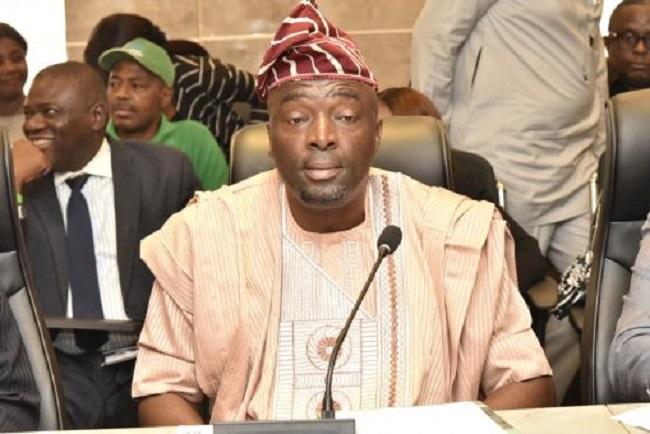
The Managing Director of the Federal Housing Authority, Oyetunde Ojo
“The mall is the tallest within the FHA estates and it is expected to generate employment for about 500 people, thereby contributing to poverty reduction and economic expansion.
“Our mandate as management is anchored on the Renewed Hope Agenda.
“This goes beyond the provision of affordable and livable houses to include facilities that create a conducive business environment for Nigerians living and doing business in our estates,” he said.
Ojo noted that the project was delivered through a public-private partnership arrangement, adding that no direct government funds were used.
“We provided the land, our partners built, and individuals invested by buying into the project. In terms of value, the project is worth between N6 billion and N8 billon.”
Ojo said that the Authority planned to replicate similar commercial facilities across all FHA estates nationwide.
He also disclosed that another complex had been developed from the old FHA site office in Lugbe to improve staff working conditions and generate additional revenue for the Authority, including office space for the FHA Mortgage Bank.
The Secretary to the Government of the Federation (SGF), Sen. George Akume, while inaugurating the mall, commended the FHA for transforming into a performing agency focused on its core mandate of housing delivery.
“It is pleasing to note that the FHA is now poised to meet its responsibilities. The resolve we are witnessing is what Nigeria needs to overcome its challenges,” Akume said.
He added that the Federal Government was creating an enabling environment to support economic growth, improved security, and reduced cost of living.
The SGF reaffirmed that housing remains a top priority of the Tinubu administration, noting that the creation of the Ministry of Housing and Urban Development is aimed at addressing Nigeria’s housing deficit.
Akume assured the FHA of continued government support and urged the Authority to replicate such amenities across the country for the benefit of Nigerians.
Member States of the World Health Organisation (WHO) concluded a weeklong round of negotiations on draft annex for Pathogen Access and Benefit Sharing (PABS) – a key component of the WHO Pandemic Agreement.
The fifth meeting of the Intergovernmental Working Group on the WHO Pandemic Agreement (IGWG) – set up by the World Health Assembly (WHA) last year to negotiate the PABS annex – wrapped up over the weekend after productive discussions from February 9 to 14, 2026.
To ensure the world can respond swiftly and effectively to future pandemics, countries must be able to rapidly detect pathogens with pandemic potential and share their genetic sequence information and materials. This timely action enables scientists to accelerate the development of essential tools such as diagnostic tests, treatments, and vaccines.
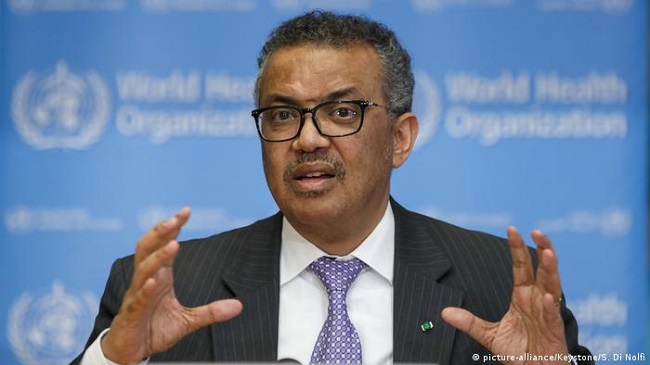
Dr. Tedros Adhanom Ghebreyesus, Director-General, World Health Organisation (WHO)
The PABS system is designed to promote equitable access based on public health need by facilitating the rapid and timely sharing of pathogen materials and genetic sequence data, and on an equal footing, the rapid, timely, fair and equitable sharing of benefits arising from these.
“Countries this week have again shown their steadfast commitment to getting the Pathogen Access and Benefit Sharing annex done,” said IGWG Bureau co‑chair Ambassador Tovar da Silva Nunes, of Brazil. “We now have a clear vision for streamlining the text, while ensuring that the more contentious elements receive the necessary consultation.”
Member States will resume negotiations again next month as they advance towards the May deadline, when the outcome of their work will be presented to the WHA.
“As we conclude the fifth meeting of the Intergovernmental Working Group, I want to thank delegations for their serious and constructive engagement. It is clear that important differences remain, but there is a shared recognition of what is at stake,” said IGWG Bureau co-chair, Mr. Matthew Harpur, of the United Kingdom.
“With time running short, the coming weeks will be critical in bridging the remaining gaps and delivering a Pathogen Access and Benefit Sharing annex that is fair, effective, and fit for purpose,” added Harpur.
The WHO Pandemic Agreement was adopted by Member States last year to correct global weaknesses exposed by the COVID-19 pandemic and strengthen international coordination and collaboration. A legally binding international instrument, it is designed to make the world safer and more equitable in the face of future pandemics.
“Adopting the Pandemic Agreement last year was a huge testament to global cooperation, and we need to build on that momentum. Strong multilateralism remains essential as countries have to face future pandemics together, collectively,” said WHO Director‑General Dr Tedros Adhanom Ghebreyesus.
“Recognising the steady progress being made, I am confident that they will reach an agreement on the Pathogen Access and Benefit Sharing annex in time for the World Health Assembly in May this year,” added Dr Ghebreyesus.
Alongside negotiations on the annex text and dialogues aimed at building consensus, Member States also engaged with relevant stakeholders, including representatives from the private sector, academia, laboratories and sequence information databases.
Water and sanitation appear to have moved decisively to the centre of Africa’s political agenda.
At the High-Level Side Event on “Assuring Sustainable Water Availability and Safe Sanitation Systems to Achieve the Goals of Agenda 2063”, held on the margins of the 39th Ordinary Session of the Assembly of the African Union, African leaders launched the Africa Water Vision 2063 and Policy on February 15, 2026 – marking a decisive step from political recognition to coordinated continental delivery.
The launch of the Vision and Policy signals a strategic shift: water and sanitation are no longer treated merely as sectoral challenges, but recognised as fundamental for economic transformation, climate resilience, regional integration and long-term prosperity.
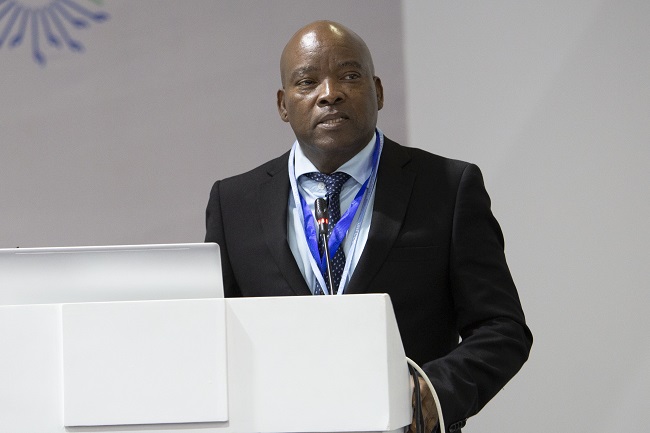
Moses Vilakati, AU commissioner for agriculture, rural development, blue economy and sustainable environment
A Continental Framework for Transformation
The Africa Water Vision 2063 and Policy establishes a shared continental direction to:
Secure sustainable water availability
Ensure safe sanitation systems for allMmobilise climate-resilient investment
Strengthen governance and accountability
Advance transboundary cooperation.
The launch of the Africa Water Vision 2063 and Policy followed its endorsement during the Ordinary Session of the Heads of State and Government. The Vision and Policy become the basis for elaborating:
The continental implementation framework aimed at advancing the goals of Agenda 2063; and
The Africa’s Common Position and contribution to the UN 2026 Water Conference, accelerating global progress on SDG 6.
Anchored in eight strategic pillars – from universal access and sustainable water availability to resilient ecosystems, trusted data systems, human capital development and cooperative basin management – the Vision and Policy provide a coherent blueprint for delivery across sectors and borders.
Leaders Call for Investment, Implementation and Results
At the beginning of the launch of the Vision and Policy, Mahmoud Ali Youssouf, Chairperson of the African Union Commission, who was represented by Moses Vilakati, AU Commissioner for Agriculture, Rural Development, Blue Economy and Sustainable Environment (ARBE), described the moment as historic.
He said: “The decision by the Heads of State and Government to dedicate 2026 to water and sanitation marks a historic turning point to the African Continent. Investing in water and sanitation is not a cost. It is one of the highest returns on investments Africa can make. If we secure water and sanitation, we secure Africa’s economic transformation.”
Presenting the Action Framework for the 2026 Theme of the Year, Moses Vilakati, AU Commissioner ARBE, emphasised that the focus now is implementation.
“This Theme is designed to accelerate implementation,” he said, warning that “Africa is currently off track in achieving its water and sanitation commitments… The sector remains significantly under-financed.”
Commissioner Vilakati stressed that success will ultimately be measured by delivery “and by how many African citizens gain access to safe water, safe sanitation, and resilient services.”
Speaking on behalf of AMCOW, Dr Cheikh Tidiane Dièye, Minister for Hydraulic and Sanitation of Senegal and President of AMCOW, framed the Vision as transformative.
He said: “This is not merely a sectoral vision and policy. It is a continental strategy for prosperity, peace and resilience. Today, we are not simply launching a document – we are inaugurating a new era of continental determination.”
The official launch was led by Hakainde Hichilema, President of the Republic of Zambia, who was represented by Collins Nzovu, MP, Zambia’s Minister of Water Development and Sanitation.
The President recalled the mandate entrusted to him by the Assembly, saying: “Today, we fulfill that mandate.”
He described the Vision as: “not just a policy, but a transformative blueprint.” He also described water as Africa’s most vital strategic resource: “It is the lifeblood that sustains our people, the energy that powers our industries, and the common thread that binds our nations together”.
President Hichilema further underscored the urgency of water cooperation: “With 90% of our surface water crossing borders, cooperation is no longer an option, it is our only path to survival. The Africa Water Vision 2063 and Policy serve as our “Common Position” integrating water into the African Peace and Security Architecture to ensure that our shared basins remain engines of regional integration rather than sources of conflict”.
In launching the vision, he also underscored the need to confront inaction and deal with the annual water investment gap in Africa estimated at $30 billion and called on every leader, partner and citizen of Africa to embrace the Vision and Policy.
The European Union supports this continental ambition through Blue Africa Action, co-funded with the Government of Germany and implemented in partnership with the African Union Commission and AMCOW. The initiative contributed to the development of the Africa Water Vision 2063 and Policy and continues to support its implementation.
From Lessons to Leadership
The Africa Water Vision 2063 & Policy builds on lessons from the Africa Water Vision 2025 and continental monitoring mechanisms, including AMCOW’s WASSMO reporting process. These assessments have highlighted both progress and persistent gaps – reinforcing the need for stronger accountability and accelerated implementation.
A Call to Collective Delivery
With its endorsement, the Africa Water Vision 2063 & Policy now sets a clear direction for Member States, Regional Economic Communities and partners to translate political commitment into measurable impact. Clearly, African leaders are convinced that securing water and sanitation means securing Africa’s future.
Kwaku works with a tight calendar; making a routine business trip every week between Kumasi and Accra, the kind professionals make without a second thought.
On this typical Tuesday, he takes an early morning flight from Kumasi for meetings in Accra, with an evening return flight to Kumasi for another early-morning engagement the next day that could unlock a significant business deal.
By mid-morning upon arriving in Accra, the sun blazed with unusual intensity, draining energy from anyone forced to move between appointments.
Kofi Adu Domfeh
Kwaku dashed from one office to another as the sun burnt hot and harsh, but stayed focused on finishing his work to catch his evening flight back to Kumasi.
But without a warning, the clouds gathered. What had been scorching skies just hours earlier began to darken as clouds gathered fast and thick, rolling in with surprising speed. Within minutes, the atmosphere flipped from heatwave to storm warning.
Then came the rain; a torrential downpour. By the time Kwaku reached the airport, the announcement board read flight delayed. Then what he feared hit him; his flight cancelled.
The same skies that had scorched him hours earlier had now grounded him completely.
Despite his careful planning, he could not return to Kumasi that evening, missing a scheduled meeting for the following day.
In just one day, Kwaku experienced two extremes – intense heat and a disruptive storm – both powerful enough to alter personal and professional outcomes.
What once felt like isolated weather incidents now seem connected, part of a broader pattern of climate volatility that was becoming harder to ignore.
Climate change is no longer an abstract headline or distant environmental debate; it is operational risk, an economic loss and human disruption happening in real time.
UN Climate chief calls for new era of climate action
On Thursday February 12, 2026, the UN Climate Change Executive Secretary, Simon Stiell, addressed a press conference hosted by the COP31 President Designate, Minister Murat Kurum in Istanbul, Türkiye, where he stated that climate action can deliver stability in an unstable world of arms and trade wars.
“We find ourselves in a new world disorder. This is a period of instability and insecurity. Of strong arms and trade wars. The very concept of international cooperation is under attack. These challenges are real and serious.
“Climate action can deliver stability in an unstable world of arms and trade wars. In the face of the current chaos, we can, and must, drive forward a new era of international climate cooperation,” he said.
The UN Climate Change’s plan for a new era of climate action was divided into three eras: first was to uncover the problem and respond; and the second was to get serious about solutions in building the Paris Agreement.
Stiell acknowledged the Agreement did not solve the climate crisis but showed that nations can deliver change on a major scale when they stand together.
“In the decade since Paris, clean energy investment is up tenfold – from two hundred billion dollars to over two trillion dollars a year. And, in 2025, amidst all the economic uncertainty and gale-force political headwinds, the global transition kept surging forward: clean energy investment kept growing strongly and was more than double that of fossil fuels.
“Renewables overtook coal as the world’s top electricity source. The majority of countries produced new national climate plans that will help drive their economic growth up and – for the first time – global emissions down. And, at COP30, nations said with one voice: the global transition is now irreversible, the Paris Agreement is working, and together we will make it go further and faster,” he emphasised.
Trump challenges climate science
While the UN Climate chief is strongly advocating climate adaptation for resilience building, US President Donald Trump has continued his attack on climate science by revoking a landmark ruling that greenhouse gases endanger public health
The key Obama-era scientific ruling in 2009 underpins all US federal actions on curbing planet-warming gases.
The Environmental Protection Agency (EPA) decided that key planet-warming greenhouse gases, including carbon dioxide and methane, were a danger to human health.
But the reversal, according to the White House, is necessitated by the drive to make cars cheaper with an expected ease in the cost of production.
“This radical rule became the legal foundation for the Green New Scam, one of the greatest scams in history,” said President Trump, who has snubbed the Paris Agreement on Climate Change twice.
The exit of US from the Paris Agreement means that America will no longer be bound by the agreement’s requirements, such as submitting plans to reduce carbon emissions.
As the world’s second-largest greenhouse gas emitter behind only China, environmental groups say the latest move by the US is by far the most significant rollback on climate change, amidst skepticism of the potential cost savings being touted by the Trump administration.
The Third Era of Climate Action
The UN Climate Chief has observed an unprecedented threat to the decade of international climate cooperation that has delivered more real-world progress.
“From those determined to use their power to defy economic and scientific logic, and increase dependence on polluting coal, oil and gas – even though that means worsening climate disasters and spiralling costs for households and businesses. These forces are undeniably strong, but they need not prevail,” stated Stiell.
His solution to the chaos and regression is for countries to stand together, building on successes and working more closely with businesses, investors, and regional and civic leaders to deliver more real-world results in every country.
This is the third era of climate action; an era to speed-up and scale-up implementation of actions.
“It must start with a relentless focus on delivering – or even exceeding – the targets agreed in the first global stocktake, in 2023. Doubling energy efficiency and tripling clean energy by 2030. Transitioning away from all fossil fuels, in a just, fair and orderly manner. Strengthening resilience and reducing vulnerability, and ensuring more climate finance reaches people everywhere, especially the most vulnerable,” said Stiell.
The expectation is for countries to be on track to meet the commitments by the second global stocktake in 2028, in boosting resilience, growing economies, and slashing emissions.
“The fact is climate adaptation is the only path to securing billions of human lives, as climate impacts get rapidly worse,” said Mr. Stiell. “As climate disasters hit food supplies and drive inflation, resilient supply chains are crucial for the price stability populations are demanding. And they are increasingly unforgiving of governments who don’t deliver it.
“So more than ever, climate action and cooperation are the answer: not despite global instability, but because of it. There is a huge amount of work before us, this year and in the years to come.”
As vulnerable people and communities in Africa are already suffering the extremes of weather conditions, the UN conference of parties (COP31) in Antalya is expected to deliver for people, prosperity and planet.
For professionals like Kwaku, what used to be a routine of moving between two cities for work has suddenly felt uncertain; the weather is no longer background noise, it is deciding outcomes.
Amidst the reality of climate science and the challenge to the impact of the science, what would a new world disorder of climate change mean for people like Kwaku?
Kofi Adu Domfeh is a journalist and Climate Reality Leader| adomfeh@gmail.com
The Federal Government is actively taking steps to address ozone layer depletion by prioritising the adoption of green, energy-efficient, and low-Global Warming Potential (GWP) cooling systems.
Malam Balarabe Lawal, the Minister of Environment made this known in Abuja on Tuesday at a two-day Capacity Building Workshop on Green Procurement for Sustainable Cooling Systems in Nigeria.
Lawal, who was represented by Mr. Idris Abdullahi, the Director of National Ozone Office said that green procurement is the purchase of products and services that have a reduced environmental impact throughout their life cycle compared to conventional alternatives.
Malam Balarabe Lawal, the Minister of Environment
“Cooling is no longer a luxury. It is a critical enabler of productivity, public health, food security, and economic growth.From hospitals and laboratories to offices, schools, and food preservation systems, cooling underpins essential services.
“Today, refrigeration and air-conditioning systems account for between 40 and 60 per cent of electricity consumption in many buildings.
“Unfortunately, much of this demand is still met with inefficient equipment that consumes excessive power and uses refrigerants that contribute to ozone depletion and climate change,.
“The Sustainable Research and Action for Environmental Development SRADev Nigeria in partnership with the National Ozone Office of the Federal Ministry of Environment is to Promote Fast Action to Reduce Emissions of Fluorinated Greenhouse Gases (F-Gases) and Ozone depleting Substances (ODS) in Nigeria.”
The minister said that many developing countries are currently navigating a crucial transition away from ozone-depleted substances, foliates and fluorinated greenhouse gases, essential towards sustainable climate-friendly alternatives in its refrigeration and air-conditioning sector.
“The Kigali Amendment to the Montreal Protocol provides a global framework to reduce the use of hydrofluorocarbons, offering both environmental and economic benefits.
“The Montreal Protocol, ratified by Nigeria, remains the world’s most successful environmental treaty,” Lawal said.
“Implementing this commitment requires not only policy reforms but also utilisation of green procurement principles into public sector decision making,” he said.
Lawal said that green procurement refers to the process through which public authorities integrate environmental conservation into their purchasing decisions.
“So therefore, it is a very powerful tool contributing to the country’s energy conservation, environmental protection, international climate agreements like the National Energy Determined Contribution,” he said.
Mr. Tom Nickson, a representative from the Environmental Investigative Agency (EIA) UK, said that the choices that governments around the world make to support the adoption of sustainable cooling technologies is going to help shape their environmental legacy for decades to come.
“Sustainable cooling is a cornerstone for climate action, and public procurement holds immense power to drive the transitions towards climate-friendly, energy-efficient cooling solutions.
“By prioritising green procurement, we can reduce energy consumption, cut greenhouse gas emissions, and set a powerful example for markets and communities around the world,” Nickson explained.
Dr Leslie Adogame, Executive-Director of SRADev Nigeria, said that it was pertinent to build strong national awareness and capacity for green procurement among national policy actors.
He added that it was also necessary to explore opportunities for policy reforms, and support integration of sustainable cooling systems into climate action strategies in Nigeria.
Mr. Gerald Njume, the Regional Principal Climate Change and Green Growth Officer African Development Bank, stated that it is very important that the bank is key in terms of supporting Nigeria in this drive.
Mr. Yusuf Kilani, the Special Adviser to the President on Climate Matters, said that the workshop came at the right time, adding that also from the Office of the President, are efforts to achieve zero environmental sustainability in all sectors.
Green Energy International Limited and Lekoil Nigeria Limited have clarified their position regarding recent media reports on a court matter stemming from a commercial dispute with a service provider, stating that the issue is already subject to arbitration in line with contractual agreements between the parties.
In a joint statement issued on Tuesday, February 17, 2026, both companies said the dispute relates to a contractual claim currently undergoing resolution through arbitration, as provided for under the terms of their agreement with the service provider.
Lekoil Nigeria Limited
They explained that the sums referenced in certain media reports remain unliquidated and are still under review and audit pursuant to the contractual arrangements between the parties. As such, the companies noted that the amounts being reported are subject to determination by an arbitral tribunal.
According to the statement, prior to the interim court application reported in the media, both companies had already commenced proceedings before the Federal High Court in Suit No. FHC/L/CS/225/26. The filing included an application for an anti-suit injunction aimed at safeguarding the agreed arbitration process.
The companies disclosed that the processes were duly filed and served on the service provider, H-PTP, before the subsequent court proceedings referenced in media publications.
Green Energy and Lekoil Nigeria stressed that the matter is currently under active judicial and arbitral consideration, making it inappropriate to provide further comments at this stage.
Despite the ongoing dispute, the companies reassured stakeholders that their operations remain unaffected.
“Both Green Energy and Lekoil Nigeria continue to operate their assets safely and in full compliance with applicable regulatory and contractual obligations. There has been no disruption to operations,” the statement said.
They further affirmed their commitment to pursuing their rights through the appropriate legal and arbitral channels, adding that they reserve the right to take action against any inaccurate or defamatory statements published in connection with the dispute.
The development comes amid heightened scrutiny within the oil and gas sector over contractual disputes and enforcement of arbitration clauses, with industry observers closely watching how courts balance ongoing arbitration proceedings with parallel judicial applications.
However, with both judicial and arbitral processes now underway, the final resolution of the matter will depend on the outcomes of the respective legal proceedings.
Dangote Group has signed a $400 million construction equipment agreement with XCMG Construction Machinery Co., Ltd., one of China’s leading manufacturers of construction machinery, in a move set to accelerate the expansion of the Dangote Petroleum Refinery & Petrochemicals from 650,000 barrels per day to 1.4 million barrels per day, positioning it to become the largest refinery in the world.
The agreement will enable the Group to acquire additional wide range of advanced construction equipment to support ongoing and forthcoming projects across refining, petrochemicals, agriculture and large-scale infrastructure development. The new equipment will complement existing assets deployed for the refinery expansion, which is expected to be completed within three years.
Dangote Refinery gate
Beyond refining, the expansion programme will see polypropylene production increase from 900,000 metric tonnes per annum to 2.4 million metric tonnes per annum. Urea capacity in Nigeria will be tripled from 3 million to 9 million metric tonnes per annum, in addition to the 3 million metric tonnes per annum capacity in Ethiopia, strengthening the Group’s position as the largest urea producer globally.
Production capacity for Linear Alkyl Benzene (LAB) will also be increased to 400,000 metric tonnes per annum, positioning the Group as the largest producer in Africa and strengthening supply to the detergent and cleaning agents manufacturing industry. Additional base oil production capacity also forms part of the broader expansion programme.
In a statement, the Group described the agreement as a strategic investment aimed at deepening its construction footprint and accelerating its ambition to build a $100 billion enterprise by 2030.
“The additional equipment we are acquiring under this partnership will significantly enhance execution across our projects. With this investment, we are positioning ourselves to become the number one construction company in the world,” the statement said.
Dangote Group is currently accelerating expansion and regional market development as it advances toward its long-term vision of building a $100 billion enterprise by 2030.
The Nigerian Upstream Petroleum Regulatory Commission (NUPRC) has warned the public against activities of fraudulent individuals who peddle contract offers purportedly on its behalf.
A statement on Monday, February 16, 2026, by Eniola Akinkuotu, Head, Corporate Communication and Media, NUPRC, said these unscrupulous individuals used tactics such as name-dropping and misinformation on social media to deceive members of the public.
According to Akinkuotu, they do so with the sole intention of extorting money from them and are hereby warned to desist from such acts.
Mrs. Oritsemeyiwa Amanorisewo Eyesan, the Commission’s Chief Executive, NUPRC
To set the record straight, he said, all contract being processed at the NUPRC were done transparently and strictly in line with the Public Procurement Act, 2007 and other extant regulations.
“Therefore, anyone who transacts with a third party in order to gain an imaginary undue advantage within the NUPRC does so solely at their own risk.
“For information on any procurement, visit the NUPRC website – www.nuprc.gov.ng – or local newspapers for tenders to bid,” he warned.