35.6 C
Lagos
Saturday, February 28, 2026
Home Blog Page 9

Experts hail Tinubu’s oil revenue order as bold fiscal reset, urge legislative backing

0

Stakeholders in oil and gas industry have commended President Bola Tinubu’s Executive Order on oil and gas remittances, describing it as a decisive fiscal reform.

In separate interviews in Lagos on Thursday, February 19, 2026, the stakeholders, however, cautioned that its lasting impact would depend on constitutional alignment and legislative clarity.

On Feb. 18, President Bola Tinubu signed an Executive Order directing the restructuring of oil and gas revenue remittances to the Federation Account.
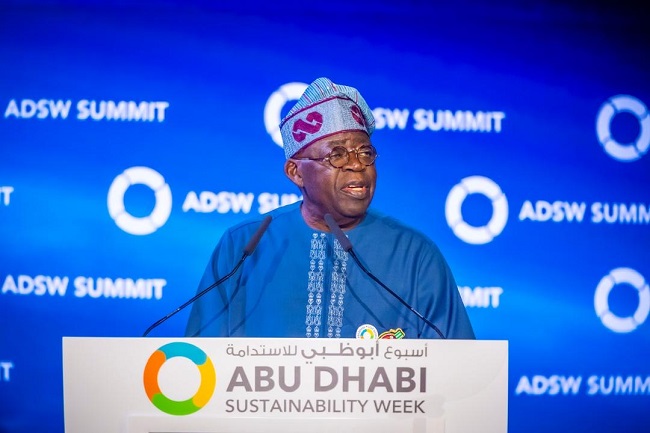
President Bola Tinubu

Experts said that the decision signaled one of the most significant fiscal interventions since the enactment of the Petroleum Industry Act (PIA).

Prof. Wumi Iledare, Professor Emeritus of Petroleum Economics and Policy Research at the Louisiana State University Centre for Energy Studies, described the move as a legitimate and timely public finance reform.

“Strengthening remittance accountability and improving visibility of petroleum inflows are critical national priorities.

“In a period marked by budgetary strain and debt sustainability concerns, safeguarding public revenues and curbing inefficiencies are not optional, they are imperative,” he said.

Iledare said that the Executive Order seeks to reduce discretionary retention of oil revenues and improve statutory remittances to the three tiers of government.

The don said that direct remittance of royalty from oil, oil tax and profit oil into the Federation Account could significantly enhance transparency and reduce intermediation bottlenecks.

According to Iledare, the reform has the potential to reinforce fiscal discipline, but warned that some aspects intersect directly with statutory provisions of the PIA.

“Key fiscal instruments – including the Frontier Exploration Fund, the Midstream and Downstream Gas Infrastructure Fund, and Production Sharing Contract (PSC) frameworks are creations of the National Assembly,” the petroleum expert said.

He said that the substantive alterations may require legislative amendments to ensure constitutional coherence.

“While Section 5 of the Constitution empowers the President to implement and enforce laws, changes to statutory fiscal frameworks ideally require legislative action to guarantee institutional certainty,” Iledare said.

He stressed the technical necessity of distinguishing between contractual revenue allocations embedded in PSC agreements, retained earnings of NNPC Limited, and statutory earmarked funds established under the PIA.

“Clarity is essential to avoid conflicting contractual entitlements with discretionary fiscal practices,” he said.

Beyond fiscal adjustments, Iledare raised a broader governance question. Is the Executive Order a prelude to an amendment of the PIA?

“Recent board appointments to regulatory institutions under the Act were widely welcomed, yet observers note limited visible institutional movement since then.

“If reforms focus narrowly on revenue enhancement without strengthening governance effectiveness, structural weaknesses in the sector may persist.

“Sustainable reform requires both fiscal efficiency and institutional credibility. Presidential Executive Orders must reinforce and not dilute the Petroleum Industry Act,” he said.

Also, Dr Ayodele Oni, Partner and Chair of the Energy & Natural Resources Practice Group at Bloomfield Law, also described the Order as a major fiscal reform step aimed at improving transparency and optimising petroleum revenue flows to the Federation.

He noted that Sections 80 and 162 of the Nigeria’s Constitution support the principle that federation revenues be paid into the designated Federation Account.

However, he framed the central debate as procedural.

Oni questioned should such changes be implemented solely through executive action, or through amendments to the PIA by the National Assembly?

“There are two perspectives – One suggests certain PIA provisions may conflict with the constitution, meaning the Executive Order realigns processes accordingly.

“The other maintains that if provisions are unconstitutional, it is for the judiciary to nullify them and for the legislature to enact corrective measures.

Like Iledare, Oni underscored that statutory constructs such as the Frontier Exploration Fund and existing PSC frameworks, which he said were established by parliamentary law and therefore require legislative backing for substantive modification.

He highlighted the longstanding institutional tension arising from NNPC Limited’s dual role as commercial operator and concessionaire, a structural complexity within the post-PIA framework.

Oni also said that the reforms designed to strengthen NNPC’s commercial identity, must be anchored in clear legal principles and predictable governance mechanisms.

“In the short term, the Order may affect NNPC’s revenue streams and serve as incentive to greater operational efficiency, but long-term success depends on constitutional and legislative alignment,” he said.

According to Oni, Nigeria’s petroleum sector remains central to national economic stability, accounting for the bulk of foreign exchange earnings and a substantial share of public revenues.

By Yunus Yusuf
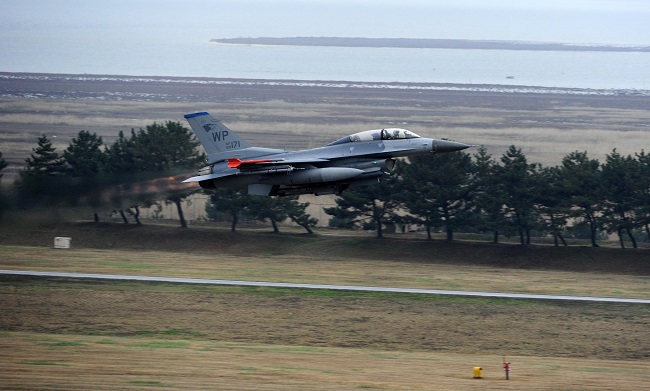
Large-scale oil spills reported at U.S. military bases in South Korea

0

Two large-scale oil spills were recently reported at United States (U.S.) military bases in South Korea, Yonhap news agency said on Thursday, February 19, 2026.

According to U.S. Forces Korea (USFK), about 11,000 gallons (around 41,600 liters) of fighter jet fuel leaked from a storage tank at a major U.S. Air Force base in Gunsan.

The leakage was approximately 180 kilometers south of the capital, Seoul.

U.S. Air Force base
U.S. Air Force base in Gunsan

The 8th Fighter Wing of the U.S. Air Force said it had taken steps to contain and remediate the pollutants.

It added that there was no immediate risk to the health and safety of residents in nearby communities.

An investigation into the cause of the incident is ongoing, Yonhap reported.

Separately, on Feb. 5, an unspecified volume of fuel was reported to have leaked at another U.S. Air Force base in Osan, about 60 kilometers south of Seoul.

Under the bilateral Status of Forces Agreement, the South Korean government retains ownership of land and facilities used by U.S. forces, while granting the U.S. military the right to use designated bases.

PENGASSAN calls for engagement to safeguard oil sector stability, cautions against political interference

0

The Petroleum and Natural Gas Senior Staff Association of Nigeria (PENGASSAN) has called for continued stakeholder engagement following the Federal Government’s executive order restructuring oil and gas revenue remittances.

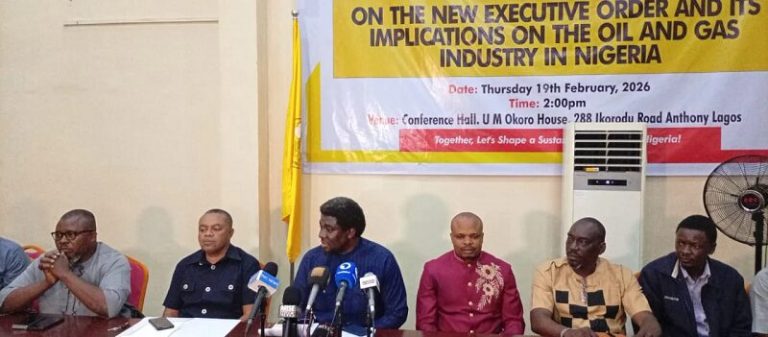
PENGASSAN President, Mr. Festus Osifo, made the call on Thursday, February 19, 2026, in Lagos during a news conference on the executive order and its implications for the oil and gas industry.

Osifo said it was important to sustain stability and investment in the sector.

PENGASSAN
PENGASSAN President, Mr. Festus Osifo, in the company of PENGASSAN officials during the press briefing in Lagos

He noted that the industry remained central to Nigeria’s economic stability and emphasised the importance of policy clarity to sustain investment momentum and operational confidence.

Osifo explained that the Petroleum Industry Act (PIA), enacted in August 2021, was designed to provide regulatory clarity, improve fiscal transparency and strengthen investor confidence after years of declining investments.

“We worked with stakeholders and legislators to ensure a law that would stabilise the industry and incentivise global investment,” he said.

According to him, sustained collaboration among government, regulators, operators and labour unions remains essential to maintaining growth and competitiveness in the sector.

“There is intense global competition for investment capital, and policy clarity helps Nigeria remain an attractive destination,” the president  added.

He noted that the oil and gas industry had supported Nigeria’s economy for decades, accounting for a significant share of foreign exchange earnings and government revenue.

Osifo emphasised that protecting the sector’s stability is closely linked to safeguarding jobs and livelihoods across the value chain.

“This industry must continue to grow. When the industry grows, jobs are protected and the broader economy benefits,” he said.

He stressed that continued dialogue and policy alignment would help preserve the gains recorded in recent years and strengthen long-term investor confidence.

“We must sustain the progress achieved and ensure that reforms continue to support growth, efficiency and national development,” he said.

Osifo said stakeholder cooperation and policy consistency would help ensure long-term growth, operational efficiency and investor confidence in Nigeria’s oil and gas sector.

Similarly, PENGASSAN) has cautioned against what it termed growing political interference in Nigeria’s oil and gas industry.

Osifo claimed that the executive order could weaken the Nigerian National Petroleum Company Limited (NNPCL), discourage investors and ultimately affect ordinary Nigerians.

He alleged that the executive order was introduced without broad consultation with key industry stakeholders, heightening concerns about transparency and regulatory certainty.

“We were not adequately consulted. When policies of this magnitude are introduced without engagement, it creates uncertainty, and uncertainty is the enemy of investment,” he said.

Osifo expressed concern about what he described as increasing political interference in NNPCL’s operations, warning that excessive control could undermine professional management.

He said the company had seasoned professionals who understood the industry’s technical and commercial dynamics.

“But when political considerations override professional judgement, efficiency suffers,” Osifo said.

He argued that insulating NNPCL from undue interference would strengthen its balance sheet, improve transparency and enhance its appeal to global investors.

“If we remove unnecessary political influence, NNPCL can compete effectively with its global peers. That alone would send a powerful signal,” he said.

Osifo linked the sector’s health to the stability of the naira, noting that exchange rate volatility raised import costs and eroded purchasing power.

“When the naira weakens, import costs rise immediately. Equipment, services and refined products become more expensive.

“But when oil and gas earnings grow and are properly managed, they strengthen the currency,” he said.

According to him, a stable oil sector would support the naira, improve wages and enhance living standards.

“The industry is not isolated from the economy. Its performance determines the strength of our currency and the welfare of our people,” he said.

Osifo noted that oil and gas investment across Africa remained competitive, with capital flowing to jurisdictions offering regulatory clarity and stable policies.

“Oil and gas investment is long-term and capital-intensive. Investors will not commit billions of dollars where policies shift unpredictably,” he said.

He cited Nigeria’s marginal field programme, noting that many awarded licences had struggled to reach production, placing financial institutions under pressure.

“When marginal licences fail to convert to production, banks are exposed. That weakens confidence across the financial system,” he said.

Osifo stressed that any executive action must align with the Petroleum Industry Act to avoid negative investor signals.

He warned that regulatory unpredictability could push investors towards more stable jurisdictions.

“We cannot afford capital flight at this time. Nigeria is competing for global energy investment,” he said.

Osifo said PENGASSAN would convene its National Executive Council to review the order and develop an engagement strategy.

“We will engage the government, the Attorney-General, regulators and stakeholders. Our goal is constructive dialogue, not confrontation,” he said.

He reiterated that safeguarding the industry was vital to national development.

“This industry funds infrastructure, education and healthcare. If we weaken oil and gas, we weaken the foundation of other sectors,” he said.

As Nigeria faces economic headwinds, Osifo said preserving regulatory stability in the strategic sector was imperative.

“In oil and gas, stability is prosperity. We must get it right,” he said.

By Yunus Yusuf and Florence Onuegbu

LAWMA deepens strategic partnership with NAN on waste management advocacy

0

The Lagos Waste Management Authority (LAWMA) has reaffirmed its commitment to strengthening strategic media collaboration with the News Agency of Nigeria (NAN) to enhance public sensitisation and promote responsible waste management across Lagos State.

The Managing Director/Chief Executive Officer of LAWMA, Dr. Muyiwa Gbadegesin, stated this during a courtesy visit to NAN’s Lagos Operations Office at the National Arts Theatre, Iganmu on Wednesday, February 18, 2026, describing the engagement as a strategic follow-up to the existing partnership between both institutions and noting that collaboration with credible media organisations remained essential to driving behavioural change in a rapidly growing megacity like Lagos.

LAWMA
Managing Director/Chief Executive Officer of LAWMA, Dr. Muyiwa Gbadegesin (right), with Managing Editor and Acting Head of Lagos NAN Operations, Mrs. Ifeyinwa Omowole

He disclosed that Governor Babajide Sanwo-Olu had approved the engagement of 300 Environmental Health Officers across wards in the state to strengthen grassroots advocacy and compliance monitoring, stressing that residents who undermined environmental regulations would be sanctioned in accordance with the law.

Gbadegesin highlighted LAWMA’s collaboration with the Lagos Metropolitan Area Transport Authority (LAMATA) under a Public-Private Partnership framework to support the deployment of Compressed Natural Gas (CNG)-powered waste collection trucks aimed at improving operational efficiency and reducing carbon emissions.

He added that the government’s waste-to-wealth initiative was progressing steadily, with plans to replicate the biodigester model deployed at Ikosi Fruit Market in other markets as part of LAWMA’s transition to a circular economy framework, designed to reduce landfill pressure and generate useful by-products.

Addressing service delivery under the Private Sector Participation (PSP) framework, he stated that 27 non-performing PSP operators had been disengaged in 2025, while 22 others were on final notice to improve performance or face similar action as maintaining high operational standards remained non-negotiable.

Gbadegesin also announced plans for a strategic retreat with the Lagos State House of Assembly to review the Environmental Management and Protection Law of 2017 to align it with emerging environmental realities and evolving waste management challenges.

Earlier, the Managing Editor and Acting Head of Lagos NAN Operations, Mrs. Ifeyinwa Omowole, commended LAWMA for the visit and reaffirmed NAN’s commitment to supporting the Authority’s initiatives through sustained media coverage while encouraging subscription to NAN’s PR Wire service to amplify its programmes and milestones.

StopEACOP coalition welcomes climate trial against TotalEnergies in France

0

The StopEACOP coalition has welcomed the opening of France’s first major climate trial against an oil and gas multinational, as proceedings began on Thursday, February 19, 2026, at the Paris Court of Justice.

Since 2020, a coalition of advocacy organisations, Notre Affaire à Tous, Sherpa, France Nature Environnement alongside the City of Paris, has asked French courts to require TotalEnergies to drastically cut its greenhouse gas emissions and reduce hydrocarbon production. 

However, French prosecutors have intervened in support of TotalEnergies, arguing the duty of vigilance framework shouldn’t extend to climate change. 

TotalEnergies
TotalEnergies

StopEACOP Campaign Coordinator, Zaki Mamdoo, condemned the move, stating, “It is deplorable that the French prosecutor is actively trying to narrow the interpretation of this new law to protect an oil major from climate accountability.”

As one of the world’s largest historical emitters and among the top global oil and gas companies, TotalEnergies continues to plan production growth of around 3% per year, while maintaining the majority of its investments in fossil fuels until at least 2030. The company is linked to dozens of major new fossil fuel projects worldwide, despite clear scientific consensus that no new expansion is compatible with limiting warming to 1.5°C.

One such project, the East African Crude Oil Pipeline (EACOP), is a 1,443 km pipeline under construction to transport crude oil from The Great Lakes Region in Uganda to the Port of Tanga in Tanzania. Developed by TotalEnergies and CNOOC, it aims to begin exports in 2026 but has faced significant environmental and human rights criticism and years-long delays after dozens of global financial institutions distanced themselves from the project.

Balach Bakundane, a community organiser with the EACOP Host Communities Organisation, said: “We have heard the promises and targets, but on the EACOP route we live the reality. Families pushed off of their land, livelihoods disrupted, fear used to silence those who speak out. This case matters because it asks whether TotalEnergies can keep expanding oil and gas with no consequences. If there is to be justice, then we need to draw a line in the sand. No more expansion. No more impunity. No more profiteering at our expense.”

This hearing will finally be held, six years after the case was filed, as TotalEnergies has used many procedural arguments to try to escape from its liability. In parallel, delays have also been piling up in the other court case against TotalEnergies – likely based on the French duty of vigilance law, filed by Ugandan affected people as well as five Ugandan and French civil society organisations.

Thursday’s hearing of the “Total climate case” comes at a pivotal moment for global climate accountability. Courts around the world are increasingly recognising that climate change poses a direct threat to fundamental rights, and that major fossil fuel producers cannot be exempt from responsibility.

Recent landmark decisions and advisory opinions by bodies such as the International Court of Justice and the European Court of Human Rights have clarified that both states and corporations have duties to prevent foreseeable climate harm.

For the first time in France, judges will be asked to decide whether an oil and gas multinational can be legally compelled to reduce fossil fuel production, not merely disclose risks or set voluntary targets. This case moves climate litigation beyond promises and pledges toward concrete, enforceable obligations.

A ruling in this case could mark a turning point, helping shift climate litigation from a focus on governments alone to cases capable of reshaping the business models of the world’s largest fossil fuel companies. What the Paris court decides may influence similar cases far beyond France.

“The decision from this court will travel and be felt far beyond France, including here along the EACOP route where communities carry the heaviest costs. We hope that the court does not set a standard that enables further expansion and exploitation while we are made to live with the damage. The law must mean something in the real world, lest it mean nothing at all.” said Brighton Aryampa, Environment and Human Rights Lawyer with Youth for Green Communities, Uganda.

UCLG Africa: North Africa selects representatives for continental, global bodies

0

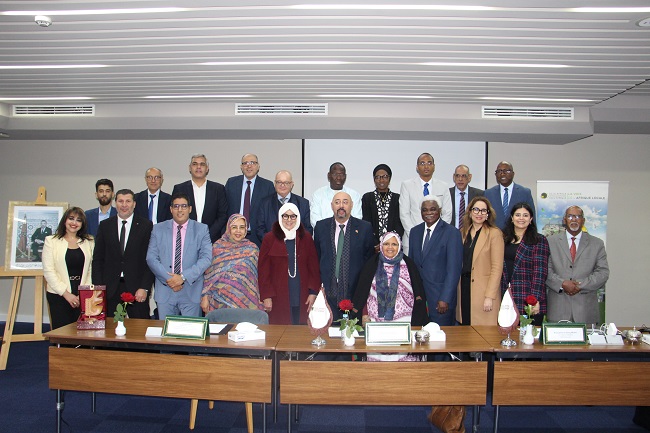
The pan-African organisation United Cities and Local Governments of Africa (UCLG Africa) held its Regional Caucus for North Africa from February 9 to 10, 2026, in Tangier, Morocco. The caucus was hosted by the Municipality of Tangier, which welcomed participants and provided logistical support for the proceedings.

Regional caucuses form part of the preparation process for the elective General Assemblies of UCLG Africa and UCLG World. They bring together members from each region to discuss the challenges and prospects facing UCLG Africa, as well as Africa’s contribution to UCLG World. They also define the region’s political position regarding the implementation of the African Union’s Agenda 2063 and the United Nations’ global agendas.

UCLG Africa
Members of the Regional Caucus for North Africa of the United Cities and Local Governments of Africa (UCLG Africa)

Regional caucuses further enable each region to nominate candidates for various governance bodies within UCLG Africa and UCLG World.

The North Africa Regional Caucus brought together representatives from the Moroccan Association of Municipal Council Presidents (AMPCC), the Association of Moroccan Regions (ARM), the Moroccan Association of Prefectural and Provincial Council Presidents (AMPCPP), the Association of Mayors of Mauritania (AMM), the Nouakchott Region, the Mauritanian Association of Regions (AMR), and the National Association of Municipalities of Libya (ANML). The Network of Locally Elected Women of Africa (REFELA) and the Network of Young Elected Local Officials of Africa (YELO) from the region also participated in the meeting.

The opening of the proceedings was marked by speeches from Mr. Mounir Lymouri, President of the Moroccan Association of Municipal Council Presidents (AMPCC) and Mayor of Tangier, and Ms. Fatimetou Abdel Malick, President of UCLG Africa and President of the Nouakchott Region (Mauritania).

“Holding these caucuses in Tangier is part of a special and meaningful dynamic. It is fully in line with the perspective of the World Congress of United Cities and Local Governments (UCLG), which Tangier will have the honour of hosting from June 22 to 25, 2026. The regional caucuses are a highlight in the life of UCLG Africa.

“They provide an opportunity to take stock of the challenges and prospects facing our organisation, to strengthen regional cohesion, to prepare for upcoming elections, and to better position our local and regional authorities in African and global forums. Above all, they are a space for political dialogue between elected officials, serving a concrete and action-oriented pan-Africanism of territories,” said Mr. Lymouriin his welcome address.

The President of UCLG Africa praised the commitment of the members from the North Africa region.

“Your presence in Tangier demonstrates your commitment to UCLG Africa. Thanks to you, UCLG Africa has become the political organisation representing the voice of local and regional governments across the African continent. The journey over the past 20 years to establish UCLG Africa as the legitimate political representative of local and regional governments in Africa has not been without challenges. The financial crisis that emerged in 2023 provided our organisation with an opportunity to restructure. This moment coincides with the appointment of a new Secretary General and the renewal of our governing bodies.

“The caucuses organised in preparation for the General Assembly therefore provide an opportunity to reaffirm our commitment to the organisation and to redefine and strengthen our working relationships. I invite you to engage in frank and constructive discussions on the issues and challenges to be addressed, as well as on the strategic directions for the revitalisation of our organisation,” said Ms. Fatimetou Abdel Malick.

Discussions during the caucus enabled participants to present proposals to address the challenges facing local and regional authorities in North Africa. They reaffirmed their commitment to strengthening UCLG Africa as the political voice of local and regional authorities on the continent.

In this regard, participants welcomed the signing, in September 2024, of the Memorandum of Understanding between the African Union Commission and UCLG Africa. They also reaffirmed the importance of organising UCLG Africa’s flagship event, the Africities Summit, every three years as the leading platform for dialogue on decentralisation and territorial governance in Africa. Participants further expressed their determination to promote and strengthen decentralised cooperation among members and their associations in North Africa and beyond.

They welcomed the establishment by the Kingdom of Morocco of the African Fund for Support to International Decentralised Cooperation between Local Authorities (FACDI) and commended the financial support it provides to South-South inter-African decentralized cooperation projects, particularly between Moroccan local authorities and their counterparts across the continent.

They called on other countries in North Africa and beyond to establish similar mechanisms to promote inter-African cross-border decentralised cooperation and city and regional diplomacy as drivers of African integration rooted in territories, contributing to the realisation of the “Africa of the Peoples” envisioned in Agenda 2063 of the African Union. Participants also proposed sharing Morocco’s experience in disaster prevention and management as a good practice.

The caucus participants resolved to ensure a strong and sustained presence of representatives from their region at meetings of UCLG Africa and UCLG World bodies, so that the perspectives of local governments in North Africa are adequately reflected in the policies and strategies of these organisations.

On the second day of the meeting, the caucus selected the candidates that the North Africa region will present to the various bodies of UCLG Africa, whose members will be elected at the organisation’s General Assembly scheduled for March 23–25, 2026, in Nouakchott, Mauritania.

North Africa is required to nominate nine candidates to the Pan-African Council of UCLG Africa, three candidates to the Executive Committee, one candidate to represent the region on the Financial Management Committee, and one candidate for the position of Vice-President of UCLG Africa for the North Africa Region.

The caucus also nominated candidates from the region for elected positions within UCLG World, including President, Co-President, Treasurer, and Chair of the Gender Equality Committee.

The next UCLG Africa caucus will be the Southern Africa Regional Caucus, to be held in Harare, Zimbabwe, from February 27 to 28, 2026.

Overcrowding, urban growth accelerating infectious diseases in Nigeria – UNILAG VC

0

The Vice-Chancellor (VC) of the University of Lagos (UNILAG), Prof. Folasade Ogunsola, says overcrowded communities in Nigeria, like those in other African countries, are accelerating the transmission of infectious diseases.

Ogunsola said that this was due to limited access to clean water, sanitation, and proper waste disposal, particularly in urban centres.

She made the statement while delivering the 1st Distinguished Lecture of the Federal University of Health Sciences (FUHSI), Ila-Orangun, Osun State.

Folasade Ogunsola
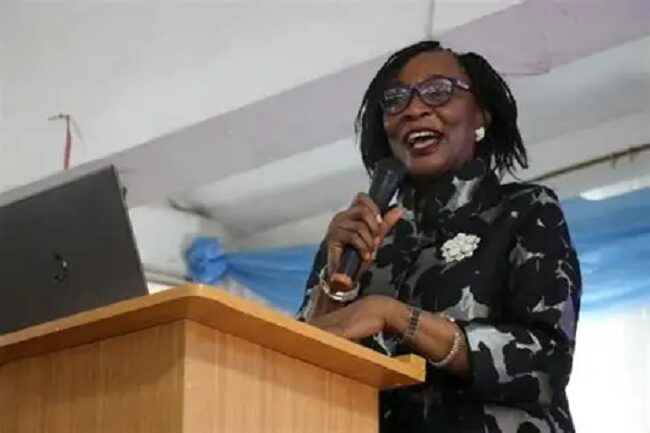
Vice-Chancellor (VC), University of Lagos (UNILAG), Prof. Folasade Ogunsola

The lecture was themed, “Climate Change, Cities and Infections: The Triple Nexus Shaping Urban Health.”

Ogunsola said in many such settlements, families shared communal toilets, makeshift drainage systems, and polluted streams – conditions which turned minor infections into widespread public health threats.

“African cities are transitioning into hotspots for climate-driven infections due to the sheer speed of their expansion and the fragility of the systems meant to support them.

“As cities grow outward and upward, infrastructure such as sanitation, drainage, and healthcare services lag behind, creating environments where diseases can spread easily and rapidly.

“Our cities are expanding faster than the systems designed to protect the health of the people living in them.

“When entire communities share limited water, toilet facilities, and drainage systems, infections spread with remarkable speed,” she said.

She added that rising temperatures recorded across the continent had a direct effect on the behaviour and survival of disease-carrying vectors.

“Warmer climates allow mosquitoes, flies, and other vectors to breed faster, spread more widely, and live longer, enabling them to transmit diseases year-round rather than seasonally.

“Mosquitoes, flies, and other vectors are thriving in warmer, stagnant environments created by rapid urban growth,” the VC said.

Ogunsola also noted that air pollution had become one of the most dangerous and underestimated drivers of respiratory infections in African cities.

“With millions relying on diesel generators, firewood, and fossil fuels, exposure to polluted air weakens immunity and aggravates chronic illnesses, especially among children and the elderly,” she said.

She urged governments, institutions, and communities to collaborate and adopt proactive measures to safeguard the continent’s future.

Ogunsola emphasised the importance of climate adaptation policies, expanded research, technological innovation, and robust public health surveillance systems.

According to the VC, the way forward lies in informed planning, stronger climate policies, investment in research, and a united resolve to safeguard the health of African cities.

Earlier, the Vice-Chancellor of FUHSI, Prof. Akeem Lasisi, emphasised that the maiden lecture was not only timely, but essential for a continent currently grappling with environmental and public health instability.

Lasisi stressed that Nigeria, like many African nations, was already witnessing the consequences of shifting weather patterns, extreme heat, and overcrowding in emerging urban centres.

“This topic is not just academic; it is a lived experience already unfolding around us,” he said.

By Victor Adeoti

After 37 fatalities, Nigeria seals mine over deadly gas leak

0

The Minister of Solid Minerals Development, Dr Dele Alake, has ordered the sealing of mining located in Zuraq, Wase Local Government Area (LGA) of Plateau State.

Alake gave the directive in a statement by his Special Assistant on Media, Segun Tomori, on Wednesday, February 18, 2026, in Abuja.

Wase LGA Chairman, Hamisu Anani, confirmed that at least 37 miners died and 25 were hospitalised in the early hours of Tuesday.

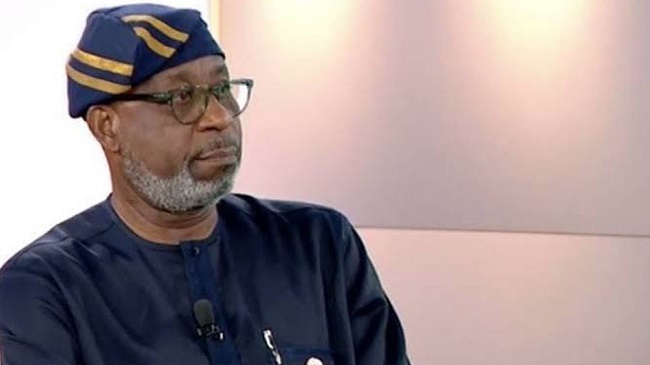
Dele Alake
Dr Dele Alake, Minister of Solid Minerals Development

The victims were exposed to gaseous emissions while allegedly mining at an underground mining site in Zurak.

The minister said the closure of areas covered by Mining Licence 11810 operated by Solid Unit Nigeria Limited owned by Abdullahi Dan-China in Zuraq, was necessary to contain the situation and conduct investigations.

He said that he had dispatched a team of officials and investigators led by the ministry’s Permanent Secretary, Yusuf Yabo, to probe the remote and immediate causes of the incident and recommend sanctions.

According to him, the team also includes experts in mining, environmental compliance and artisanal cooperatives.

Alake assured that he was co-ordinating the team and the support services to ensure effective management of the situation.

“The actions were taken as preliminary reports indicated that the company ceded the pit where the incident took place to the community to mine following agitations by villagers for empowerment.

“It was gathered that the area was an abandoned Lead site with the stored mineral prone to emissions of sulphuric oxide.

“Unaware of the poisonous nature of the emissions, the villagers reportedly engaged in extraction while inhaling the gaseous substance.

“ML 11810 lies between longitudes 10.34.45, and 10.35.50 and latitudes 9.13.45, 9.14.40,” he said.

Alake said more updates would be provided as investigations progress.

He condoled with Plateau governor, Caleb Mutfwang, over the loss, describing it as unfortunate incident of innocent citizens who died trying to earn a living.

By Martha Agas

Coalition commits to advancing climate justice in Nigeria

0

Nigeria Climate Justice Alliance (NCJA), a coalition of civil society organisations, community groups, youth movements, researchers, and media actors, has reaffirmed its commitment to advancing climate justice in the country.

The alliance made the commitment in a communique issued in Abuja at the end of its two-day 2026-2030 Strategic Action Plan Review and Coordination Workshop held from February 16 to 17, 2026.

The communique was jointly signed by Dr Joseph Onoja of Nigeria Conservation Foundation, Dr Michael David, Global Initiative for Food Security and Ecosystem Preservation, and Dr Grace Alawa of Sustainable Action for Nature.

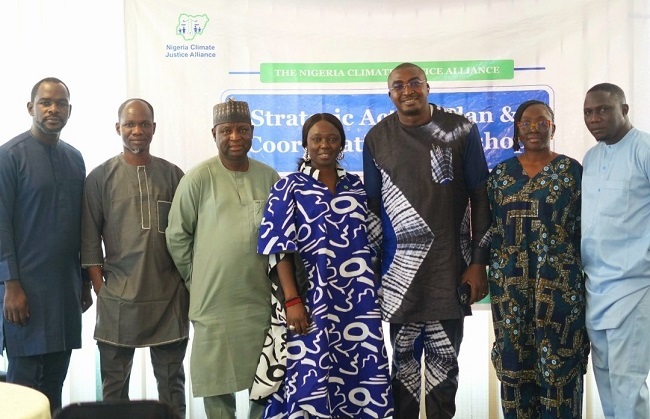
Nigeria Climate Justice Alliance (NCJA)
Participants at the Nigeria Climate Justice Alliance (NCJA) 2026-2030 Strategic Action Plan Review and Coordination Workshop

Other signatories are Mr. Zinta Akpoko of Bridge That Gap Initiative, Mr. Udochukwu Egwim of South Saharan Development Organisation, Patience AKaase of Women Empowerment Programme and Ahmed Tiamiyu of Community Action Against Waste.

According to the communique, the alliance would advance climate justice by strengthening community voices, protecting ecosystems, promoting equity, and holding duty-bearers accountable for climate action.

The civil society-led coalition added that it would work to promote climate justice by strengthening community voices, influencing policy processes, and supporting inclusive and sustainable responses to climate change in Nigeria.

The group observed that climate change has continued to exacerbate social and economic inequalities across Nigeria, with disproportionate impacts on frontline communities where resilience capacities are lowest.

It noted with concern that local communities, women, and youth are often compelled to engage in livelihood practices such as deforestation.

This action, according to the coalition, inadvertently exacerbates climate change, thereby trapping them in a vicious cycle of increased vulnerability.

It noted that weak coordination among civil society actors remains a critical barrier, significantly limiting collective influence on climate policy formulation and hindering equitable access to climate finance.

It explained that the developed action plan was part of strategies to strengthen collective climate justice action in Nigeria by improving coordination among members.

The members also agreed on priority actions to respond to the growing climate crisis and its impacts on vulnerable communities.

The coalition equally recognised the urgent need to transition towards people-centred, community-led, and justice-based climate solutions that prioritise the most vulnerable and address the root causes of inequality.

It agreed that CSOs and social enterprises should not work in silos, hence the need to strengthen the alliance’s vision.

According to the group, true climate justice needs to integrate gender inclusivity and people with disabilities.

NCJA, therefore, called on government institutions, development partners, the private sector, and the media to support inclusive, transparent, and people-centred climate action in the country.

It affirmed its strategic plan as the guiding framework for collective climate justice action.

The coalition agreed to strengthen its governance, coordination structures, accountability mechanisms, and establish functional working committees on public advocacy and change, resource mobilisation, knowledge and capacity building, and coordination.

It further agreed to develop a joint NCJA Action Roadmap with clear priorities, timelines, responsibilities and scale up coordinated advocacy to influence climate policies, promote a just transition, and amplify community voices.

It equally resolved to pursue joint resource mobilisation and strategic partnerships to support community-driven climate solutions and strengthen knowledge sharing, learning, and capacity building among members of the alliance.

By Philip Yatai

TotalEnergies outlines growth focused, long-term strategy for Nigeria at NIES 2026

0

The Managing Director, TotalEnergies EP Nigeria Limited, Mathieu Bouyer, has reaffirmed the company’s commitment to expanding Nigeria’s energy supply while reducing the carbon intensity of its operations.

Mr. Bouyer made the remarks during a panel session titled “Capitalising on Africa’s Global Upstream Momentum” at the 9th Nigeria International Energy Summit (NIES 2026), held on Wednesday, February 4, in Abuja, where industry leaders examined investment trends and opportunities across the continent’s oil and gas sector. 

According to Mr. Bouyer, TotalEnergies’ strategy in Nigeria is built around two core pillars: growing oil and gas production and expanding electricity generation through integrated power solutions, in line with the Company’s global ambition of delivering more energy with less emission.

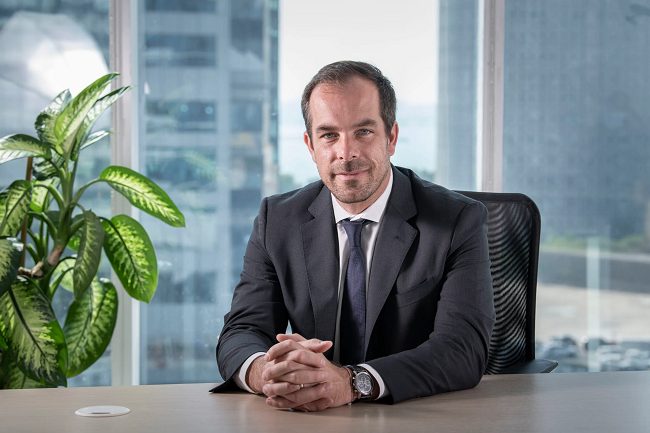
Matthieu Bouyer
Matthieu Bouyer, Country Chair and Managing Director, TotalEnergies

“Our strategy is about growing energy as a whole,” Mr. Bouyer said, noting that Nigeria remains a key market within TotalEnergies’ global portfolio and continues to compete with other countries for upstream investment capital.

Mr. Bouyer explained that the company’s immediate priority was maximising value from its existing assets, spanning onshore gas and offshore oil and gas developments. He highlighted the recently sanctioned Ubeta Gas project, which is designed to deliver up to 300 million cubic feet of gas per day, alongside several additional projects currently under evaluation.

On sustainability, Mr. Bouyer disclosed that TotalEnergies eliminated routine gas flaring across all its Nigerian operations since 2023, marking a major milestone in its emissions reduction programme. He said that the company has deployed advanced methane detection technologies, including its own proprietary technology AUSEA, which was developed to monitor emissions in real time and enable rapid intervention.

In addition to the deployment of AUSEA, Mr. Bouyer added that TotalEnergies EP Nigeria Limited has also installed 2,500 Permanent Emission Monitoring Systems (PEMPs) across all its production sites in Nigeria.

He also announced plans to commission a five megawatt solar power plant at OML 58 to supply electricity to the Ubeta Gas Project, describing it as one of the world’s first near net zero gas developments. 

Bouyer underscored the importance of partnerships with Nigerian companies, describing collaboration with local operators as critical to accelerating project delivery and unlocking value for the broader economy.

He cited long standing joint ventures with AMNI, Conoil, and Sapetro, pointing to flagship projects such as Egina FPSO and Akpo Condensate as evidence of successful cooperation between international and indigenous operators. He also disclosed ongoing work with Conoil to appraise deep offshore resources, alongside planned exploration drilling with Sapetro. 

“When we work with local partners, it enables us to move faster and create value, not just for ourselves, but for the country,” Mr. Bouyer said.

Beyond the plenary discussions, Bouyer and members of his management team also engaged with students from three schools who visited the TotalEnergies exhibition booth at NIES 2026, reinforcing the company’s focus on knowledge transfer, skills development, and nurturing future energy professionals.

×