

Secretary General, Catholic Secretariat of Nigeria, Rev. Fr. Michael Banjo, has said that effective policymaking is central to achieving a just energy transition in the country.
He said this at the GreenFaith Nigeria Multifaith and Multisectoral Forum on Nigeria’s Just Energy Transition Plan in Abuja on Thursday, May 7, 2026.
“Yet, as we move towards cleaner energy, we must not repeat the old pattern of development that benefits a few while burdening the poor.
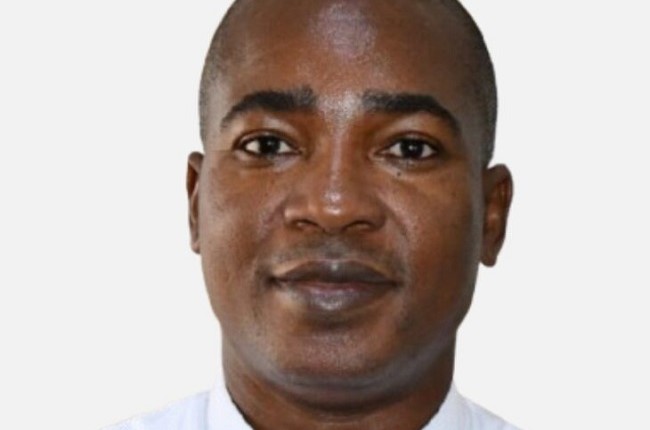
“Nigeria’s energy transition must be treated not merely as an economic agenda, but as a moral and developmental responsibility.
“The theme of this forum, ‘Faith, Justice, and Power: Advancing an Inclusive Just Energy Transition in Nigeria,’ is therefore both timely and urgent.
“Energy is not a luxury. It is tied to life, health, education, work, food security, industrial growth, national stability and human dignity,” Banjo said.
He added that Nigeria was at a pivotal moment requiring energy for homes, hospitals, schools, farms, industries, small businesses and places of worship, alongside jobs and investments that expand opportunity.
Banjo said Nigeria’s energy transition should be seen not only as an economic agenda but also as a moral and developmental responsibility.
According to him, the Catholic Secretariat of Nigeria is ready to collaborate with GreenFaith to promote environmental protection and a just energy transition.
“We therefore call on government at all levels to formulate clear, consistent and just policies that protect affected communities, support small businesses, expand clean and affordable energy, and create decent jobs,” he said.
He added that such policies should ensure that no part of the country was left behind in the energy transition process.
Banjo also urged investors, development partners, financial institutions and the private sector to ensure renewable energy investments were guided by conscience.
“So that the new energy economy does not reproduce old injustices in cleaner language, but promotes local capacity, affordable financing, community ownership, skill development, transparency and accountability,” he said.
He emphasised that responsibility for environmental protection extended beyond government and institutions to individual citizens.
Banjo called on Nigerians to adopt environmentally responsible habits such as proper waste disposal, water conservation and reducing plastic and paper waste.
He also urged citizens to plant trees, keep drainages clear and avoid blocking waterways with waste or illegal structures.
“We must keep our markets, schools, churches, mosques, motor parks and public spaces clean, avoid littering them, provide proper waste bins, and maintain their surroundings,” he said.
He added that such places must be kept free from pollution and blocked drainage to protect public health and the environment.
He said the presence of GreenFaith Africa members underscored that climate and energy challenges were not only Nigerian issues but global and human concerns.
Banjo also said development must be measured not only in economic terms but by how well societies protected vulnerable populations affected by energy poverty and climate change.
He cited biblical teachings, noting that creation was a sacred trust given to humanity for responsible care and stewardship.
Banjo highlighted environmental challenges across Nigeria, including oil pollution in the Niger Delta, desertification in the North, erosion in the South-East and flooding in riverine communities.
He said those challenges showed that environmental degradation directly affected human dignity, livelihoods and security.
Banjo commended GreenFaith Africa, GreenFaith Nigeria and the Kukah Centre for promoting climate justice and interfaith collaboration.
Also speaking, Sheikh Ibrahim Lithome, a Muslim scholar and Chairman of GreenFaith Africa, said the organisation united people of different faiths to promote climate justice.
“We know that because of our activities, our selfishness, and the many things that we are doing, we have polluted the environment,” he said.
He added that religious teachings should guide efforts to address environmental challenges and energy transition.
Mr. Seyifunmi Adebote, Communication and Promotion Officer at the Embassy of Sweden, also urged religious leaders to sensitise their followers to environmental protection.
By Abigael Joshua