

Residents of Suleja Local Government Area in Niger State have lamented the poor and inadequate services of the waste management authorities in the area.
They said the situation has led to mounting refuse heaps, environmental pollution and growing health concerns within the community.
Speaking on Wednesday, May 6, 2026, the residents said the situation had worsened over time, especially around designated dumping points within residential areas.
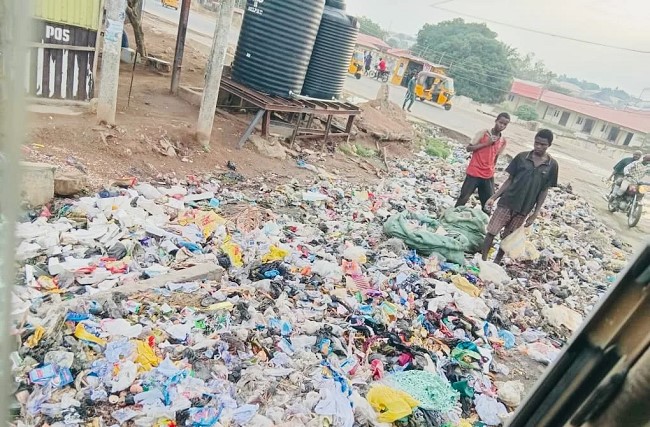
Mr. Abass Tijani, a resident, said those living close to the dumpsite are the worst affected.
“As our houses are close to the place, when breeze blows, the dirt comes back into our houses, littering the environment and forcing us to keep cleaning our surroundings all over again,” he said.
He also raised concern about the persistent stench from decaying waste.
“The smell is another major problem because everything dumped here starts to decay, thereby polluting the whole place. Even when we burn it, it pollutes the air we breathe in,” Tijani added.
He warned that the situation could pose serious health risks, especially for vulnerable persons.
“I pity people battling asthma because this can trigger an attack and can lead to serious issues or even death,” he said.
Tijani further noted that the area, now used as a dumpsite, was originally a road used by both vehicles and pedestrians.
“There was a road there before people started pouring dirt there. This situation now hinders vehicle owners from accessing the route,” he said.
Mrs. Justina Dantani, a trader, described the dumpsite as “a shame”, saying Suleja, as a commercial centre, should have an effective waste management system.
“The truck meant to come and pack all this trash never comes here. Even the ones at the expressway are not always evacuated,” she said.
“They leave it until it starts spilling onto the road before they come to clear it. How much more are the places that are far from the road?”
She added that residents are often left with no option but to tolerate illegal dumping.
“We can’t even stop people from dumping refuse here because there is no alternative place to chase them to. This is really affecting us internally and externally,” she said.
Mrs. Rebecca Owolabi, a businesswoman, said the situation had led to frequent disputes with people who dump refuse near her uncompleted building.
“I have stopped people from pouring dirt here, but they refused to yield, resulting in quarrels and even fights,” she said.
“I have decided to let them be and started burning it, but the smell affects my family and neighbours, which is not good for our health”.
She blamed the situation on poor enforcement and inconsistency in waste management.
“If the government had been consistent with the management and control of waste, people would not be dumping refuse just anywhere,” she said.
Mr. Oluwanifemi Adeduji, a student, said the situation had deprived families of outdoor relaxation due to the unbearable stench.
“We like sitting outside at night to get fresh air because of the heat inside, especially when there is no electricity, but we can’t because the smell is unhealthy,” he said.
“The odour is so terrible that at times we just go back inside. It is unbearable.”
The residents appealed to the government to strengthen waste management policies and ensure strict enforcement to curb indiscriminate dumping in the area.
Residents in parts of Abuja have consistently complained about delayed evacuation of refuse, indiscriminate dumping, and the environmental and health risks linked to blocked drainage channels and the accumulation of waste in public spaces.
The situation is more severe during the rainy season, when improper waste disposal worsens flooding and increases the risk of water contamination.
Although the FCT Administration continues to operate through its environmental and sanitation agencies to improve waste collection services, challenges such as limited coverage, inadequate equipment, and poor public compliance persist.
Environmental stakeholders have therefore called for stricter enforcement of sanitation laws, increased investment in waste management infrastructure, and sustained public awareness campaigns to promote proper waste disposal across the capital territory.
By Adesewa George