

Environmental activists in Rivers State have decried the environmental degradation prompted by persistent oil spills and the slow pace of cleanup efforts, causing health challenges in the Niger Delta.
The activists, who made the remark while responding to a survey on Niger Delta environmental degradation, maintained that the situation remained widespread in the region due oil exploration and poor regulatory oversight.
An environmental activist, Mr Olu Wai-Ogosu, said oil prospecting activities had severely damaged vegetation along coastlines, rendering farmlands unproductive and destroying fishing grounds that once sustained local communities.
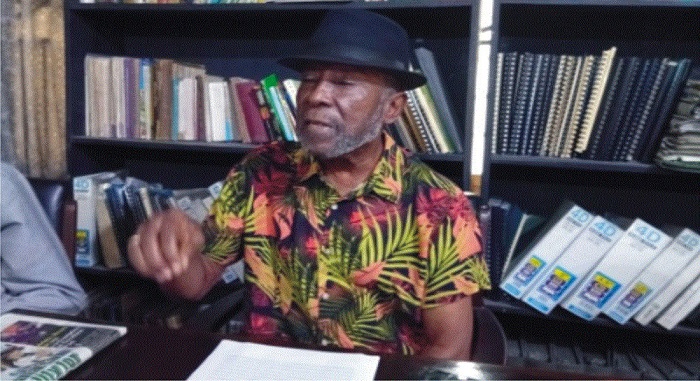
‘’Many rural communities in states such as Bayelsa and Rivers have been adversely affected by oil exploration activities that have disrupted ecosystems and livelihoods,’’ he said.
Wai-Ogosu explained that the creation of oil channels from one point to another had also altered natural waterways, and sometimes cutting off parts of communities from their traditional lands and resources.
“Today, you go to several communities and perceive fumes of hydrocarbon in the air. That means people are inhaling these substances daily,” he said.
He added that residents also ingest contaminated substances through vegetables, fruits and other food items exposed to hydrocarbon pollutants, noting that surface water and rainwater sources are heavily contaminated with hydrocarbons and associated heavy metals.
The environmentalist also linked increasing cases of petroleum-related illnesses to prolonged exposure to hydrocarbon pollution.
‘’Ongoing research by environmental groups has suggested a possible connection between hydrocarbon pollution and rising cancer cases, particularly breast cancer, in some communities in the Ogoni area of Rivers state,’’ he said.
Wai-Ogosu, also the President of the Movement for the Survival of the Ogoni People (MOSOP), said fishing, which used to be a major source of livelihood in the region, had also been severely affected as pollution had destroyed fish breeding grounds.
“Before, people could easily fish around their communities, but today, those fishing grounds have been eliminated. The natural food chain has been broken,” he said.
Wai-Ogosu lamented that despite the release of the United Nations Environment Programme (UNEP) Report on Ogoniland, many of its recommendations were yet to be fully implemented more than a decade later.
He added that communities like Oloibiri, where oil was first discovered in commercial quantity in 1950, had experienced environmental degradation without corresponding development.
He said that during the 1970 and 1980 when industrial development began expanding in Nigeria, companies operating in environmentally sensitive areas often focused more on safety issues in their reports while neglecting environmental concerns.
Wai-Ogosu called for a review of the Petroleum Industry Act (PIA) to ensure greater participation and benefits for host communities in oil and gas operations in the Niger Delta region. He said the current framework, particularly the three per cent allocation to host community development trusts, did not adequately address environmental damage and socio-economic challenges faced by communities affected by oil exploration.
He welcomed the recent decision by President Bola Ahmed Tinubu on financial reforms in the oil sector, saying that such developments should provide an opportunity to revisit the PIA for better implementation.
The environmentalist said the review would ensure that host communities had stronger representation and participatory roles in the operations of oil companies in their areas.
“We believe host communities should not be treated as bystanders but as key stakeholders in the oil industry operating in their areas,” he said.
Wai-Ogosu advocated for the allocation of about 7.5 per cent equity in a petrochemical project to make them direct stakeholders in the venture, saying that such arrangement would reduce tensions between oil companies and host communities.
He also called for engagement of host communities’ participation in maintenance and other operational activities while urging the communities to establish credible and knowledgeable committees to educate residents about their rights and responsibilities under the PIA.
He urged oil-producing communities to develop structures that would enable them to effectively manage proceeds from equity participation and other benefits.The environmentalist advised that Community Development Committees (CDCs) should be composed of dedicated individuals capable of promoting transparency and accountability in managing development funds.
Wai-Ogosu urged the Federal Government to strengthen the legal framework of the Hydrocarbon Pollution Remediation Project (HYPREP), which is responsible for the clean-up of polluted sites in Ogoni Land.‘
’HYPREP should be empowered to operate with clear legal authority, submit its budget directly to the National Assembly and report to the presidency to enhance accountability,’’ he said.
He urged the agency to distance itself from political interference and praise singers and adhere strictly to transparency, credible investigation of project failures and strict adherence to environmental standards in order to achieve improve public confidence.
Speaking on PIA, Mr. Nnimmo Bassey, an environmentalist, stated that the Petroleum Industry Act (PIA) did not adequately address environmental pollution issues or sufficiently protect communities from pollution impacts.
He said that oil spills continued to occur in several communities across the Niger Delta, citing a major spill caused by a blowout at the Ororo-1 oil field pipeline in Awoye community, off the coast of Ondo in 2020.
He said, ‘’The oil well has been spilling and burning since then, six years later the situation has not changed’’ and added that more complex polluted sites had remained unaddressed decades after contamination occurred.
Bassey noted that the only cleanup effort currently underway was the Ogoni cleanup project being implemented under the Hydrocarbon Pollution Remediation Project (HYPREP), saying, ‘’only a few simple polluted sites had been remediated.’’
He noted that President Bola Tinubu had attempted to address some concerns in the PIA through executive orders halting the deduction of 30 per cent oil profits for frontier exploration.
However, he said a comprehensive review of the Act would have been a more effective approach.
Also speaking, Mr. Celestine Akpobari, an environmental rights activist, blamed oil companies and government agencies for failing to adequately address environmental degradation, saying that many pipelines across the Niger Delta were ageing and needed replacement.
He recalled a visit by the National Security Adviser (NSA), Mallam Nuhu Ribadu, and the Ministers of Environment and Works to the Benya community in Ogoniland in December following an oil spill.
“Months after the visit, nothing has been done for the affected community,” he said.
Akpobari also criticised oil companies for divesting from onshore assets without addressing environmental damage allegedly caused by their activities in the region.
“The International oil companies that polluted the region are selling their assets and leaving the cleanup responsibility to smaller firms,” he said.
He said abandoned oil wells continued to contaminate farmlands, rivers and drinking water sources, citing the historic Olobiri oil well site as an example of long-standing environmental pollution.
‘’Those abandoned wells are still polluting farmlands and water sources to this day: oil authorities are more focussed on crude oil extraction than protecting communities, only interested in taking oil out and selling it,” he said.
Akpobari also criticised the pace of the Ogoni cleanup project, noting that the United Nations Environment Programme (UNEP) recommended a $1 billion take-off fund for the cleanup exercise.
On Tinubu’s executive order affecting the Nigerian National Petroleum Company Ltd (NNPCL), Akpobari downplayed its significance., saying, “Whether the money goes to the federation account or NNPCL, it will not make much difference.”
By Desmond Ejiba and Precious Akutemadu