

A coalition of Civil Society Organisations have raised concerns over the proposed routing of the 700-kilometre Lagos–Calabar Coastal Highway, through the Stubb’s Creek Forest Reserve in Akwa Ibom State.
The group, comprised of 70 organisations, at a news conference in Abuja on Wednesday, January 21, 2026, tagged, “#Save StubbsCreek Campaign”, warned that the move could cause irreversible environmental damage in the area.
Dr Kelechukwu Okezie, Executive Director, Neighbourhood Environment, described the move as inconsistent with the reserve’s legal status and conservation mandate.
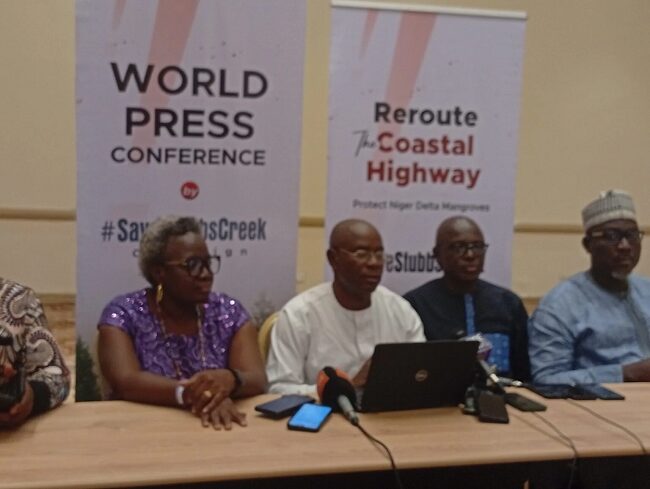
Okezie explained that the Stubb’s Creek Forest Reserve, established in 1930, was regarded as one of Nigeria’s most ecologically significant mangrove–freshwater ecosystems, providing biodiversity conservation, coastal protection, flood control and livelihoods for host communities.
According to him, routing a major infrastructure project through the reserve will worsen deforestation, disrupt hydrological systems and threaten already stressed ecosystems impacted by abandoned road projects and industrial developments in the area.
He also argued that advancing the highway without a comprehensive Environmental and Social Impact Assessment (ESIA) violates Nigeria’s environmental laws and constitutional obligations.
He called on the Federal Ministry of Works to reroute the highway away from the reserve and urged the Federal Ministry of Environment to conduct and release a comprehensive ESIA for the project.
The executive director equally called on the Akwa Ibom State Government to reverse its decision and reaffirm the protected status of the Stubb’s Creek.
He said: “Sustainable development must not come at the expense of ecological collapse and climate resilience in the Niger Delta.
“True development must not come at the cost of ecological collapse and heightened climate vulnerability.
“Protecting Stubb’s Creek is not an obstacle to development, but rather an investment in climate resilience, environmental justice, and the long-term wellbeing of present and future generations in Akwa Ibom and the wider Niger Delta.”
Also speaking, Tijah Bolton-Akpan of Policy Alert pointed out that the forest hosts rare floral and faunal species, many of which were already threatened with extinction.
Bolton-Akpan added that the forest had been sustaining livelihoods for generations through products such as palm produce and other forest resources.
He traced the degradation to earlier infrastructure development efforts, including an abandoned superhighway project that opened up the forest to illegal logging and exploitation, leaving communities unable to access resources they once depended on.
On his part, Mr. Ben Usang, Chairman, Cross River Civil Society Network, pointed out that forest conservation could bring financial resources to both the federal government and the communities living around it.
“We will continue to appeal to the government to rescind its decision because of the importance of the forest to local communities,” he said.
By Perpetua Onuegbu