

The Federal Government of Nigeria on Monday, January 12, 2026, in Abuja lauded Global Environment Facility’s (GEF) support to tackle environmental challenges in the country.
Minister of Environment, Malam Balarabe Lawal, said this at the National Capacity Building Workshop on Project Oversight for GEF, Operational Focal Point (OFP) and Implementing Partners in Nigeria.
“The Global Environment Facility has remained a long-standing and strategic partner to Nigeria in addressing our critical environmental challenges.”
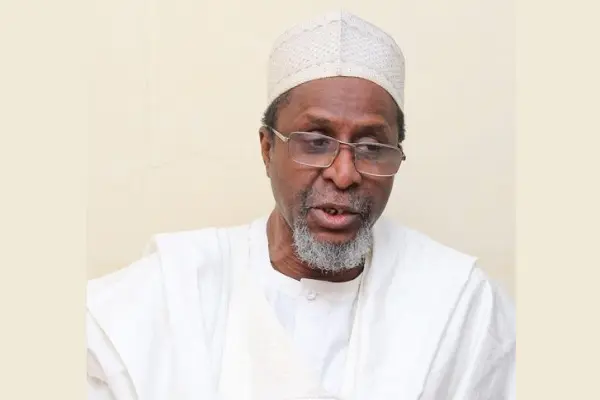
He said that the workshop underscored the Federal Government’s unwavering commitment to strengthening environmental governance, improving project delivery, and ensuring that Nigeria maximises the benefits of global environmental financing.
Lawal, who was represented by the Permanent Secretary in the ministry, Mr. Mahmud Kambari, said that the nation faced a complex mix of environmental issues.
“These environmental issues according to him, ranges from desertification encroachment on the northern frontiers, plastic pollution which threatens Nigeria’s cities and waterways.
“Biodiversity loss across key ecosystems, oil contamination in the Niger Delta, to climate change risks that continue to endanger lives and livelihoods.
“These challenges demand not only financial resources, but also strong institutional capacity to plan, implement, monitor, and oversee projects effectively.
“In this regard, GEF-supported projects have played a significant role in advancing environmental sustainability in Nigeria.”
The minister said that through its interventions, GEF had supported biodiversity conservation initiatives that have helped conserved over 500 indigenous plant species.
He said that it had also promoted sustainable forest management, and strengthened community-based conservation efforts across the country.
“In the area of climate change mitigation, GEF projects have focused on renewable energy, energy efficiency, and sustainable land-use practices, contributing meaningfully to Nigeria’s climate action goals.
“GEF has also been instrumental in addressing land degradation by supporting initiatives that promote sustainable agriculture, restore degraded landscapes, and enhance food security and ecosystem health,” Lawal said.
The permanent secretary in his remarks noted that the workshop was the outcome of the shared desire to strengthen Nigeria’s engagement with GEF.
Kambari was represented by Mrs. Nkechi Aneke, Director, Department of Planning Research and Statistics in the ministry.
Kambari said the workshop was also to ensure that Nigeria was fully equipped to manage its portfolio to international standards.
The permanent secretary noted that with more than three decades of partnership with the GEF, Nigeria continued to benefit from programmes and projects that address biodiversity conservation.
“Climate change mitigation and adaptation, land degradation control, international waters management, and the reduction of chemicals and waste.
“However, achieving real impact requires more than funding, it requires coordination, technical competence, and strong oversight,” the permanent secretary said.
Kambari commended the funding support of GEF in collaboration with the Tropical Biology Association (TBA) for facilitating the workshop.
Dr Michael David, the Executive Director of the Global Initiative for Food, Security and Ecosystem Preservation (GIFSEP), said that the training was part of GEF’s initiative.
David said the initiative was to provide some financial support and capacity building to over 144 countries with GEF operational focal point offices.
“So here in Africa, the Tropical Biology Association is leading the work in 25 countries while the African Wildlife is organising this same training in 29 other countries.
“So it’s basically for the OFP to strengthen oversight. Project oversight is important,” David explained.
He lauded GEF’s initiative to address biodiversity loss, climate change and pollution as well as its support for environmental sustainability in Nigeria.
By Abigael Joshua