Home Blog

Africa’s critical minerals: Mwenda calls for bold shift from extraction to regional industrialisation

As Africa prepares for the 12th session of the Africa Regional Forum on Sustainable Development (ARFSD‑12) holding from April 28 to 30, 2026, in Addis Ababa, Ethiopia, the conversation around the continent’s critical minerals has taken centre stage.

Speaking at the official pre‑ARFSD‑12 session, Dr. Mithika Mwenda, Executive Director of the Pan African Climate Justice Alliance (PACJA), delivered a compelling call for Africa to rethink its long‑standing role in the global minerals economy.

His message was clear: Africa can no longer afford to remain trapped at the bottom of the value chain.
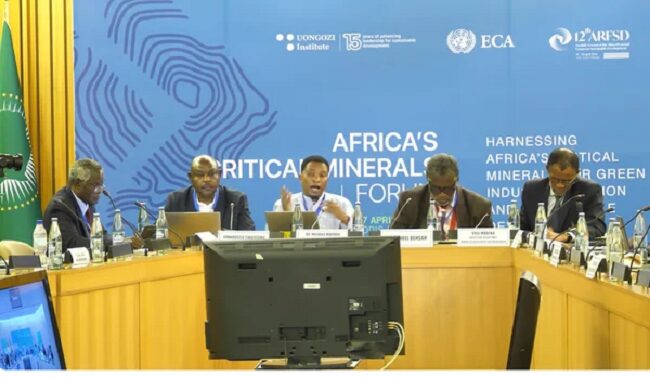
Mithika Mwenda
Dr. Mithika Mwenda, Executive Director of the Pan African Climate Justice Alliance (PACJA), speaking at the official pre‑ARFSD‑12 session

For decades, global narratives have celebrated Africa as a continent “rich in natural resources”. Yet, as Dr. Mwenda pointed out, this abundance has not translated into prosperity. Instead, Africa remains largely confined to the first step of the global value chain – extraction – while the real wealth is captured elsewhere through processing, manufacturing, and high‑value trade.

“The uncomfortable truth,” he stressed, “is that Africa’s resource wealth has not delivered meaningful economic transformation.”

Beyond Extraction: A New Vision for Beneficiation

Dr. Mwenda argued that the global shift toward green technologies – from electric vehicles to renewable energy storage – presents Africa with a rare opportunity. Critical minerals such as cobalt, lithium, manganese, and rare earth elements are in high demand. But to benefit, Africa must break away from the traditional extractive model.

He emphasised that beneficiation – the processing and transformation of raw minerals – must be understood not as a narrow technical intervention but as a comprehensive industrial strategy.

“Beneficiation requires more than machinery,” he noted. “It demands reliable energy, efficient logistics, skilled labour, supportive trade policies, and access to markets.”

Without these foundational elements, he warned, Africa risks replicating the same extractive patterns of the past, only this time under the banner of “cleaner” operations.

Regional Value Chains: The Only Viable Path

A central theme of Dr. Mwenda’s statement was the need for regional cooperation. No African country, he argued, can industrialise on the strength of its mineral deposits alone. Some nations have minerals but lack energy; others have ports but limited industrial capacity. Only by pooling strengths can the continent build competitive value chains.

He highlighted promising examples already taking shape. The Democratic Republic of Congo and Zambia are jointly developing a regional battery value chain, aiming to move from exporting cobalt and copper to producing battery precursors and components. The Lobito Corridor – linking Angola, DRC, and Zambia – is another strategic initiative designed to connect mineral‑rich regions to global markets.

However, Dr. Mwenda cautioned that such corridors must prioritise industrial development, not simply faster export routes.

“Development corridors should move Africa up the value chain, not accelerate the extraction of raw materials,” he said.

Morocco’s growing success in battery manufacturing, supported by strong industrial policy and market access, was cited as a model of what is possible when infrastructure, policy, and investment align.

Governance and Policy Alignment: The Missing Link

Dr. Mwenda also addressed the governance challenges that continue to undermine Africa’s mineral ambitions. He pointed to countries like Zimbabwe, which have introduced bans on raw lithium exports. While bold, such policies risk failure if not accompanied by investments in energy, processing plants, and industrial capacity.

“Policy bans alone cannot deliver beneficiation,” he warned. “We need alignment between mineral extraction, energy planning, industrial policy, and trade frameworks.”

Fragmented policies, unreliable power supply, and limited financing remain major obstacles. Yet, he noted that the restructuring of global supply chains – driven by geopolitical tensions and the search for diversified mineral sources – offers Africa a strategic opening.

From Competition to Coordination

Perhaps the most urgent shift Dr. Mwenda called for is a move away from national competition toward regional coordination. When African countries compete to attract investors through tax breaks or lax regulations, the continent loses collectively. Instead, he urged governments to focus on midstream value creation and ensure meaningful local participation in mineral‑based industries.

“Africa must not only extract minerals,” he concluded. “It must capture value.”

As PACJA continues to champion climate justice and equitable development, Dr. Mwenda’s message at the Africa’s Critical Minerals Forum – convened by UONGOZI Institute in collaboration with UNECA – sets the tone for a new era of African resource governance. The challenge now is whether African leaders will seize this moment to transform mineral wealth into shared prosperity across the continent.
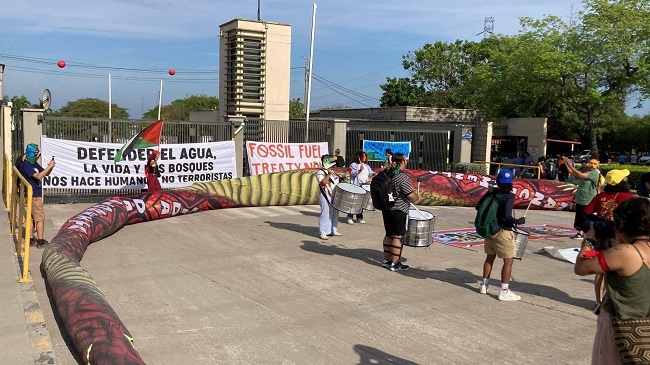

Intermittent blockades disrupt Drummond coal port in Santa Marta

A coalition of activists, land defenders, maritime communities, and allied organisations on Monday 27, 2026, disrupted operations at the Drummond coal port in Santa Marta – the largest coal export terminal in Colombia. The direct action demanded an energy embargo on fossil fuel flows that materially sustain genocide, war crimes, and colonial occupation, and called for an international transition framework rooted in justice and accountability.

The action was carried out by Global Sumud Flotilla, Climate Justice Flotilla, Debt For Climate, 350, ANGRY, United For Climate Justice, GARN, Resiste Glencore, and regional frontline communities and workers. It took place alongside the First International Conference on Transitioning Away from Fossil Fuels, which convenes in Santa Marta this week, where delegates from more than 50 countries are preparing for the high-level segment from April 28 to 29.

Santa Marta
Action by a coalition of activists, land defenders, maritime communities, and allied organisations

A Global Reality: Fossil Fuels Sustain War and Apartheid

The Santa Marta Conference convenes in a world where fossil fuels are not only an emissions problem: they are the material infrastructure of war. From Venezuela to Cuba, from Palestine to Iran, the US-Israeli alliance and its partners continue to commit war crimes, crimes against humanity, genocide, and ecocide in pursuit of fossil fuel control – actively blocking energy supplies to those who refuse to comply with its designs.

Any transition framework that cannot name this reality will fail the people who need it most.

Currently, climate governance regulates emissions, not complicity. It does not control the production, trade, insurance, refining, and supply chains that enable fossil fuels to flow into war and occupation. Trade and investment regimes shield fossil capital, and no existing climate mechanism enforces states’ obligations under international law to prevent their exports from enabling mass atrocities.

Colombia Has Already Shown What Is Possible

Colombia’s move to halt coal exports to Israel has established an indispensable precedent: fossil fuel trade is not neutral, and states can act to prevent their energy exports from materially sustaining mass violence.

But a precedent without enforcement is a gesture. As the case in Türkiye shows – where a declared embargo has not halted crude oil flows through its territory – the gap between political will and enforcement is where the fossil fuel industry operates freely. Building the architecture that closes that gap, including supply-chain transparency, anti-circumvention measures, binding conditionality, is the work this conference must begin.

We recognise Colombia’s courage and its leadership. We call on Global North countries to match it: assume your historical responsibilities, accelerate your own phase-out commitments, and pay for the transition you have deferred for decades.

Message

There is no credible global climate action without without confronting the fossil fuel supply chains that enable genocide and ecocide. There is no climate transition without global justice.

From every river to every sea, the profit chains fueling mass violence must be disrupted, exposed, and phased out. The Santa Marta Conference offers a decisive opening to shift from rhetoric to just enforcement.

Demands

  1. Make energy embargo a central political question of this conference. States must cease fossil fuel transfers that materially sustain genocide, war crimes, illegal occupation, or other grave violations of international humanitarian law. They must build the enforcement architecture that makes embargoes real: a global supply-chain transparency instrument with public shipment tracking, end-destination disclosure, and anti-circumvention measures covering ship-to-ship transfers, AIS manipulation, intermediary refining, and opaque trader structures.

2. Protect workers, communities, and Indigenous peoples as frontline actors in just transition enforcement. Workers who refuse to load, refine, transport, or insure fossil fuel cargoes linked to atrocity crimes must be shielded from dismissal, prosecution, and retaliation. Whistleblower protections, union rights, and community standing must be written into any enforcement framework from the outset.

3. End the criminalisation of land, sea, and climate defenders. States must immediately cease the prosecution, surveillance, and persecution of activists, union leaders, and community organisers who resist fossil fuel extraction and trade. The defenders who make just transition possible cannot be treated as its enemies. Impunity for those who threaten, attack, or kill land defenders must end.

4. Recognise energy sovereignty as foundational to a just transition. Colonised and occupied peoples must have the right to control their own energy resources and systems. A fossil fuel treaty that does not center energy sovereignty will reproduce the hierarchies that built the fossil economy in the first place.

5. Give communities legal standing to refuse extraction and trigger accountability. Free, prior and informed consent must become enforceable. Communities must be able to halt extraction, withdraw consent, and activate binding obligations on states and corporations – with legal mechanisms that do not require decades of litigation to become real.

6. Open a pathway toward a binding Fossil Fuel Treaty. The treaty must address production, trade, supply chains, and fossil fuel complicity in atrocity crimes. It must include energy sovereignty, supply-chain transparency, worker protection, and international-law conditionality in climate and reconstruction finance. It must establish reparative finance obligations on states and corporations whose fossil fuel production and trade have materially sustained conflict, international crimes, and ecological destruction.

California, Massachusetts join IUCN

The U.S. states of California and Massachusetts have become Members of the International Union for Conservation of Nature (IUCN).

They join a growing group of subnational governments, building on momentum from the last IUCN World Conservation Congress where IUCN Members voted to welcome and expand the role of regional and local governments throughout the Union.

“We are delighted that California and Massachusetts are now officially recognised as IUCN Members and are the first U.S. states to join IUCN. States, cities and other subnational governments play a critical role in protecting and restoring the world’s biodiversity, and contributing to a more stable, healthier, safer future for us all.

California
Yosemite National Park in California

“As IUCN Members, these two States join a growing group of subnational governments who are driving change processes locally, exchanging knowledge, and contributing to the achievement of conservation targets of global significance,” said IUCN Director General, Dr Grethel Aguilar.

With 34 other subnational government Members, IUCN recognises the key contributions these bodies make to conserving nature through protection, restoration, management and enhancement of territories under their jurisdiction.  

These States join at an opportune moment, as IUCN actively works with subnational government Members to maximise their role in the Union’s work. At the IUCN World Conservation Congress 2025, Members voted to increase the participation of subnational governments throughout the Union, calling for a strategy to embed their perspectives in all activities. Momentum has been building since the 2021 IUCN Congress created a membership category for subnational governments.

The USA is unique in its extraordinary diversity of life, supporting a broader array of ecosystems than any other nation on Earth. California is home to one of the largest ecological networks in the world; its Marine Protected Area Network is part of the IUCN Green List of Protected and Conserved Areas, an example of large-scale conservation spanning over 1,100 miles of coastline. The California condor is an iconic success story, where rigorous conservation efforts saved the species from extinction and continue to support the wild population today.  

Massachusetts is implementing a 25-year biodiversity initiative that aims to conserve 30% of state land and water by 2030, and 40% by 2050, combating development and climate change threats and ensuring ecosystem resilience for forests, wetlands, and marine habitats.

The two States had announced their intention to join the Union during the IUCN World Conservation Congress in Abu Dhabi in 2025.

New IUCN Council begins four-year term with leadership appointments, 48 new members

The recent meeting of the new IUCN Council reflected on the Union’s collective achievements in 2025 and looked towards building on the outcomes of the recent World Conservation Congress in the coming year. The Council welcomed 48 new IUCN Members, bringing the total number of IUCN Members to over 1,600, and appointed key positions in the Council and Commissions for the next four years.

“The World Conservation Congress in Abu Dhabi set an ambitious and necessary course for our Union. This Council now begins the work of implementation – advancing the Abu Dhabi Call to Action, our 20-year Strategic Vision, and the Programme for 2026–2029. IUCN’s strength lies in its ability to bring together science, policy and practice through its Members, Commissions and Secretariat. Our responsibility is to ensure that this collective effort delivers tangible, lasting results for nature and for people,” said Razan Khalifa Al Mubarak, IUCN President.

IUCN Council
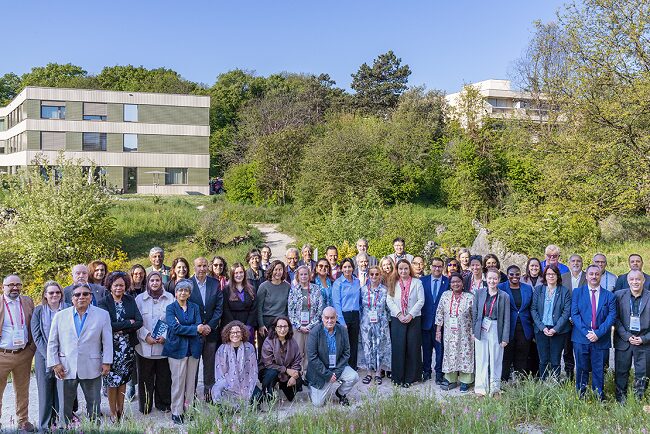
The IUCN Council 2025-2029 met in Gland, Switzerland, in April 2026. Photo credit: Martin Serrano / IUCN

“As the world faces uncertain times, I am convinced that our Union remains strong and ready to face the challenges ahead. Following last year’s World Conservation Congress, IUCN has a renewed mandate and a new Council for the period 2025-2029. Having just convened, the Council decided to welcome 48 new Members to IUCN, which will strengthen our Union to drive enduring change,” said Dr Grethel Aguilar, IUCN Director General.

“Our ambitious new Programme and 20-year Strategic Vision set the ground for transformational conservation action, one that engages all of society across a range of economic sectors. With positive leadership and focus, we will continue to inspire and drive action at scale to create a just world that values and conserves nature,” added Aguilar

Several high-level appointments were made during the meeting, including Ms. Maud Lelièvre, Ms. Imèn Meliane, Mr. Ramón Pérez-Gil Salcido and Mr. Yinfeng Guo as Vice-Presidents of the IUCN Council. The members of the Council’s standing committees have been confirmed, with Ms. Erica McCreedy as Chair of the Governance and Constituency Committee, Ms. Ann-Katrine Garn as Chair of the Programme and Policy Committee, and Mr. Fernando Lloveras San Miguel as Chair of the Finance and Audit Committee. Sandrine Friedli Cela is the Legal Advisor, while 39 new members were appointed to IUCN Commission Steering Committees.

The Council approved IUCN’s Work Plan and the Director General’s Strategic Objectives for 2026, which aim to deliver the Union’s conservation mission according to the IUCN Programme 2026-2029 and IUCN World Conservation Congress Resolutions and Recommendations. Mobilising the Union’s financial resources, improving Secretariat operations, and supporting Members, Commissions and National and Regional Committees is paramount to achieving IUCN’s goals.

IUCN is dedicated to strengthening its role as the “voice for nature” and ensuring that the Secretariat invests in the skills and leadership needed to support the Union. During the meeting, the Council also approved IUCN’s 2026 budget to support this work. Alongside the 48 new IUCN Members, the Council further strengthened the Union’s constituents by officially recognising the IUCN National Committee of Armenia.

The IUCN Annual Report 2025 was approved as the Council acknowledged the significance of 2025 for the Union, with the World Conservation Congress in Abu Dhabi showing IUCN’s unique power to bring together the global conservation community. The Council noted this was the largest documented Congress to date, with 10,320 registered participants from 189 countries, and 1,040 IUCN Members attending the Assembly, IUCN’s highest decision-making body.  

The Council began its work to support the implementation of the 135 Resolutions and nine Recommendations approved by IUCN Members during the Congress, reviewing the 22 Resolutions that call for specific actions by the Council. Developing a policy on geoengineering and convening a Task Force to develop a strategy on crimes that affect the environment featured among the topics of discussion, in addition to increasing the participation of subnational governments and accelerating equitable youth engagement across the Union, and putting Members at the heart of IUCN’s work.

The Council concluded on an optimistic note, looking ahead to supporting the Union’s work providing essential biodiversity knowledge, engaging in international policy discussions and implementing conservation projects on the ground, to deliver a successful term in the lead up to 2030.

LAWMA cites inter-agency coordination, planning for sanitation success

The Lagos Waste Management Authority (LAWMA) says strong inter-agency coordination, early planning, and widespread public participation were key to the success of the recent statewide environmental sanitation.

Managing Director of LAWMA, Muyiwa Gbadegesin, disclosed this in an interview on Monday, April 27, 2026, in Lagos.

Gbadegesin said seamless collaboration among its teams, Private Sector Participation (PSP) operators, local governments, and enforcement agencies ensured effective coverage across the state.

Environmental sanitation exercise
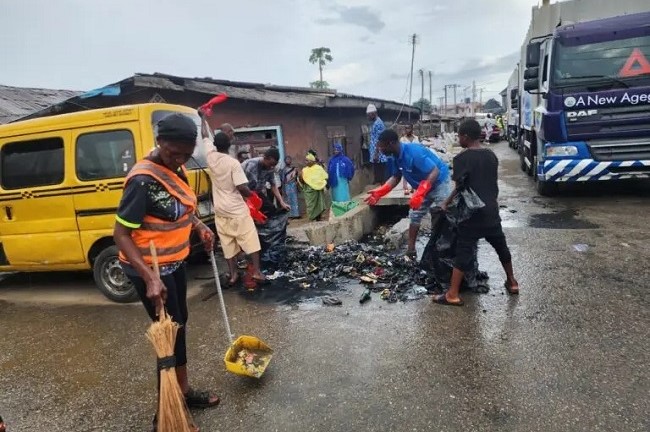
Environmental sanitation exercise in Agege, Lagos

He noted that advance operational planning, including the strategic deployment of trucks, equipment, and personnel, enabled a smooth and efficient exercise.

Gbadegesin added that disposal infrastructure, including landfill sites and Transfer Loading Stations (TLS), were optimised ahead of the exercise to guarantee seamless waste reception and turnaround during evacuation.

According to him, intensive sensitisation campaigns boosted public compliance, while the active involvement of Local Government Areas (LGAs), Local Council Development Areas, and community leaders ensured grassroots participation.

He said targeted interventions at blackspots, markets, highways, and inner communities contributed to visible environmental improvements, supported by real-time monitoring and field coordination.

Responding to claims of non-evacuation of waste in some areas, LAWMA boss described such reports as misleading and not reflective of the actual situation on ground.

He explained that waste evacuation is a structured process carried out in phases, given the large volume generated during the exercise.

“Evacuation is not instantaneous but follows a coordinated operational schedule,” he said.

He added that PSP operators commenced evacuation immediately after the exercise across all jurisdictions.

He said the prepared disposal chain, supported by optimised landfill sites and TLS, was ensuring systematic and regulated waste processing.

The authority emphasised that it prioritises safe and proper disposal at approved facilities over rushed or indiscriminate clearance.

Gbadegesin said field reports across LGAs confirmed that evacuation was ongoing, while continuous monitoring and intervention were being carried out to support PSP operations where necessary.

He reaffirmed LAWMA’s commitment to sustaining the gains of the sanitation exercise through continuous evacuation, enforcement, and public engagement.

The managing director urged residents to support ongoing efforts by adhering to proper waste disposal practices.

By Fabian Ekeruche

G7 declaration recognises land degradation, drought as global security risks

 Ministers at the Group of Seven (G7) Environment Ministerial meeting, held in Paris from April 23 to 24, 2026, formally recognised desertification, land degradation and drought as systemic global challenges and security risk multipliers, committing to strengthen action on land restoration, drought resilience and sustainable land management.

These interlinked crises are already affecting ecosystems, livelihoods and food and water security, with growing implications for economic stability and peace, particularly in fragile and conflict-affected regions.

In their joint declaration, ministers stressed the strategic importance of addressing the land degradation–security nexus, highlighting how environmental pressures are intensifying competition over resources, contributing to displacement and heightening risks of instability. 

G7 France
Ministers at the Group of Seven (G7) Environment Ministerial meeting in France

In the past six decades, over 40 per cent of intrastate conflicts have been linked to disputes over natural resources, particularly land and water, underscoring the growing security implications of land degradation and drought. 

Land degradation already affects a significant share of the world’s land – up to 40 per cent – and costs an estimated $900 billion annually, with cascading impacts across food systems, water availability, economies and livelihoods.

Welcoming the declaration, the Executive Secretary of the United Nations Convention to Combat Desertification (UNCCD), Yasmine Fouad, said this political recognition must now translate into action, highlighting the gap between commitments and implementation.

“Land degradation and drought are no longer marginal issues. They are already shaping the daily lives of millions of people, affecting what they can grow, what they can eat and whether they can remain on their land,” Fouad said. “Restoring land is therefore an investment in peace, resilience and long-term stability. What is needed now is to match political attention with the financing and partnerships required to deliver results.” 

“We are not facing a knowledge gap. We are facing an implementation gap,” she added. “Countries have already identified their priorities and targets. The challenge now is real progress on the ground.”

This urgency is underscored by the scale of the challenge. An estimated 3.2 billion people already live in areas affected by land degradation, placing increasing pressure on food systems, livelihoods and social stability. Ministers highlighted that investment in land restoration and drought resilience remains insufficient and fragmented, calling for stronger alignment of public and private finance and greater coordination across international financial institutions.

In support of these commitments, the French Presidency announced initiatives such as the Nature & People Finance Alliance, aimed at scaling up public and private investment in nature and ecosystems.

These efforts are anchored in the declaration, which reaffirms the central role of the UNCCD in addressing desertification, land degradation and drought globally, and identifies the 17th session of the Conference of the Parties (COP17) to the UNCCD, to be held in Mongolia in August 2026, as a key opportunity to deliver concrete outcomes.

Looking ahead, Executive Secretary Fouad stressed that COP17 must now deliver tangible progress on land restoration and drought resilience.

“COP17 must be the moment where commitments on land restoration and drought resilience translate into visible progress, particularly in the most vulnerable regions,” she said.  

“It is an opportunity to bring land to the center of global economic and security discussions and ensure it is treated as a strategic priority.” 

Restoration of Kenya, Ethiopia wetlands to advance East Africa flyways conservation efforts

BirdLife has secured agrant from the Nando and Elsa Peretti Foundation (NaEPF), to support conservation efforts in Eastern Africa over the next three years. The funds will help to restore two sites important for migratory birds, namely, Lake Elementaita in Kenya and Lake Ziway in Ethiopia, all located in the eastern part of the African-Eurasian Flyway (EAEF). In addition, the funds will support capacity building of BirdLife Partners and other project stakeholders in the two countries.

Stretching from the Arctic tundra to the southern tip of African continent, the African Eurasian Flyway is used by more than two billion migratory birds of more than 500 avian species.  Further, the flyway includes numerous sites, which are vital for resting or stop over, feeding and breeding grounds for birds, and local communities’ livelihoods.

Flamingos
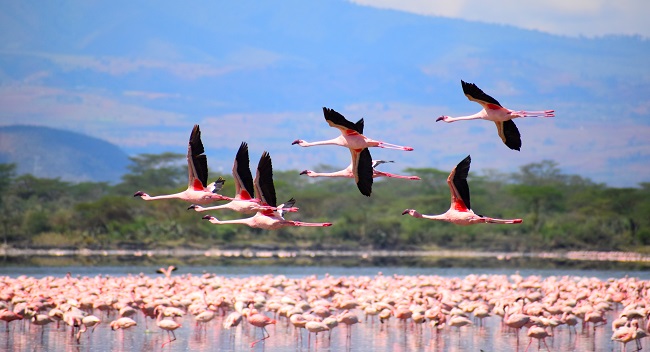
Flamingos flying over Lake Elementaita in Kenya. Photo credit: Aloise Garvey

Located in the Ethiopian Central Rift Valley region, and covering a surface area of over 440 square kilometres, Lake Ziway is home to more than 20,000 water birds including the emblematic Great White Pelican and the Lesser Flamingo. The lake forms part of the backbone of the local economy, supporting the livelihoods of about two million people. Over the years, pollution, agriculture, urban developments, and invasive plant species have degraded this wetland, threatening its ability to provide critical ecosystem services.

Lake Elementaita, in Kenya’s Great Rift Valley, covers 18 square kilometres, and a Key Biodiversity Area (KBA) as well as a UNESCO World Heritage Site. Further, the lake is a Ramsar Site or a wetland of international conservation importance, hosting major breeding colonies of the Great White Pelican and Lesser Flamingos in addition to being an important wintering ground for over 100 species of migratory birds. However, pollution, agriculture, infrastructure developments particularly powerlines, and climate change have negatively impacted the lake.

Through the project, two BirdLife Partners, Nature Kenya and the Ethiopian Wildlife and Natural History Society (EWNHS), will undertake various interventions at the site level, including raising awareness on the value of conserving flyways. Through the grant, BirdLife and its partners will reduce threats and support the sustainable management of these sites, build capacity of relevant conservation organizations and local communities for improved conditions of the sites for the benefit of nature and people.

Mengistu Wondafrash, Executive Director of the Ethiopian Wildlife and Natural History Society, said: “Not only is Lake Ziway the bloodline of the ecosystem of the Central Rift Valley of Ethiopia, supporting multitude uses, including irrigation, fishing, water supply and recreation, it is also one of the determining factors for the continuity of the lakes in the Ziway-Shalla Lake Basin system of the Central Rift Valley of Ethiopia, due to its great geochemical and hydrological significance to its immediate watershed and to all the nearby lakes.”

Paul Gacheru, Species and Sites Conservation Manager at Nature Kenya, said: “Lake Elementaita, an important migratory bird stop-over along the Rift Valley flyway in Kenya, face many threats, from power lines to road construction. This project is most welcome, as it will help us close a critical gap in our data collection for advocacy purposes. Having people on the ground gathering biodiversity data is invaluable.

“It is the foundation of everything we do. We rely on this evidence to guide our conservation actions and make the case for protecting places like Elementaita. This support from from Nando and Elsa Peretti Foundation gives us the opportunity to strengthen our fieldwork, and ultimately to amplify the voices of those who care most about this remarkable lake.”

Alex Ngari, Migratory Birds and Flyways Programme Manager, Africa at BirdLife International, said: “The pace of degradation of sites important for migratory birds in Eastern Africa is indeed worrying. Thanks to the funding from Nando and Elsa Peretti Foundation, BirdLife and the national Partners will work with stakeholders in Ethiopia and Kenya, applying our Flyways conservation model, to ensure that there is a secure future of the two sites for the benefit of migratory birds and local communities.”

UK-Nigeria innovation pilots aim to cut generator costs for Nigerian businesses

Two UK-Nigeria projects are advancing new clean energy innovations designed to power homes, healthcare, schools, businesses and transport, while supporting wider access to affordable, reliable and sustainable energy across Nigeria.  

Supported through the Zero Emissions (ZE‑Gen)’s Accelerator programme, the projects combine UK and Nigerian expertise to develop and demonstrate distributed renewable energy systems in real‑world conditions, with strong potential to scale beyond pilot phases and reach international markets.

Jonny Baxter
Jonny Baxter, British Deputy High Commissioner in Lagos

They focus on practical, locally relevant innovations, including mobile solar generation, modular battery systems, energy storage, shared power infrastructure and e‑mobility solutions. These technologies are designed to support households, productive‑use businesses and essential services, while reducing dependence on fossil fuel generators.  

The two projects have been awarded £2.4 million through the UK Government’s Transforming Energy Access (TEA) research and innovation platform, matched by a further £2.4 million from private investors. In addition to funding, the projects will receive tailored commercialisation and investment‑readiness support from Innovate UK and the Carbon Trust.  

The projects address the widespread reliance on fossil fuel generators across emerging economies. It is estimated that 25 million highly polluting generators are currently in use, contributing to high carbon emissions, significant health risks and high operating costs that divert resources away from job creation, business growth, healthcare and education. 

Funded by Innovate UK, the two projects are the final successful Phase 3 cohort of the ZE-Gen Accelerator programme, which started with 21 Phase 1 projects. The programme is supporting the development of new international markets, strengthening local supply chains and creating economic opportunities for companies in both the UK and Nigeria.  

Mr. Jonny Baxter, British Deputy High Commissioner in Lagos, said: “These UK-Nigeria partnerships show how collaboration and innovation can deliver real solutions to challenges. By combining UK expertise with Nigerian ingenuity, these projects are helping to bring clean, reliable energy to communities and businesses, while opening new international markets for our companies. 

“Through programmes like ZE‑Gen, we are supporting practical, scalable technologies that reduce emissions, strengthen energy security and create lasting economic opportunities for both our countries.” 

Dr James Coombs OBrien, ZE-Gen lead at Innovate UK, said: “Commercialising innovation to make a positive impact on people’s lives is at the centre of everything that ZE-Gen does. We’re delighted to support UK and Nigerian innovators in developing these cutting-edge technologies and to work collaboratively to solve global challenges to benefit people and both the Nigerian and UK economies.” 

Lily Beadle, ZE-Gen lead at the Carbon Trust, said: “Bringing investible innovation projects to life in real-world settings, showing they have the commercial potential to scale and have impact in a range of settings is at the heart of ZE-Gen. These latest projects are part of creating a ZE-Gen eco-system of change to ensure positive impact on supply chains, communities and local markets.”  

Despite being home to two thirds of the world’s population, emerging economies only account for 15% of global clean energy investment – with homes and businesses facing frequent blackouts that can last for weeks at a time, negatively impacting daily lives and business income. 

To date, ZE-Gen has catalysed £50.5 million in support, including from the IKEA Foundation and the UK Government’s Ayrton Fund, and has supported more than 40 localised renewable energy projects across Nigeria, the Philippines, Cote d’Ivoire, Fiji, South Africa, Malawi and Uganda.  

The new ZE-Gen Accelerator projects are summarised below: 

  1. Mobile Solar Generators with MeshGrid Capability (MobACEγ) 

Lead: Sleekabyte Technologies (Newport, Wales, UK / Nigeria) 
Partner: Citibim (Nigeria)  

Led by Sleekabyte Technologies, working with Nigerian partners Citibim, this project is demonstrating mobile solar power systems in Nigeria designed for markets, small businesses, schools and clinics that operate without reliable grid electricity. The system combines solar generation with rentable, swappable battery units, providing flexible clean power that can move with economic activity in urban and peri‑urban locations. 

Phase 3 will pilot clustered deployments across Nigerian communities, allowing multiple units to connect and share power safely. By validating both the technology and the underlying business model, the project aims to offer a practical, affordable alternative to petrol and diesel generators for informal and semi‑formal enterprises. 

Dr Oladimeji Olawale, CEO at Sleekabyte Technologies UK Limited, said: “What makes ZE-Gen Phase 3 especially exciting is that it brings together four critical enablers of inclusive growth in Africa and other emerging economies: energy access, business growth, digital inclusion, and investment access. We see energy access as the essential precursor to a more intelligent, data-driven clean energy ecosystem that helps businesses grow through viable, easy-to-finance adoption models and technology-enabled investment tracking and optimisation.

“ZE-Gen’s support is making it possible for us to move this vision into advanced deployment by integrating 5G and 5G LAN, advanced metering, GPS, and SCADA systems to enable peer-to-peer, clustered energy deployment and energy sharing. This creates strong commercial potential in Nigeria through more scalable clean energy access for businesses, and in the UK through innovation leadership, digital energy expertise, and exportable solutions for emerging markets.” 

Dr Abdul-Quayyum Gbadamosi, CEO at Citibim Nigeria Limited, said: “ZE-Gen Phase 3 is especially exciting because it responds to a critical reality for many businesses in Nigeria: energy costs can consume over 60% of profitability, trapping enterprises in stagnation, informality, and energy poverty. What makes this innovation distinctive is that it does not focus on technology alone; it is designed around the operational constraints and financial realities of those businesses, combining clean energy innovation with embedded de-risked financing.

“ZE-Gen’s support is making it possible to advance this first-of-its-kind solution towards stronger technical validation, commercial readiness, and scalable deployment. Alongside grant funding, ZE-Gen is providing the projects with tailored commercialisation support to accelerate their route to market including coaching, one-to-one support and events along with strategic advice to enable investment readiness, market engagement, and product development. 

  1. Solar Battery Hub: Scaling LastMile Energy Access 

Lead: Centre for Energy Equality (CEE, Warrington, UK) 
Partners: PAM Africa (Nigeria), Moonlight Energy (London, UK), Tree Associates (Norfolk, UK), Standard Microfinance Bank (Nigeria) 

Led by the Centre for Energy Equality (CEE), in partnership with PAM Africa, Moonlight Energy, Tree Associates and Standard Microfinance Bank, this project will deploy Africa’s largest grid‑integrated battery‑swap hub in Kano, northern Nigeria. The hub combines large‑scale solar generation with shared battery storage and e‑mobility, delivering clean, reliable power for local businesses and transport services. 

Building on earlier ZE‑Gen‑supported R&D pilots, Phase 3 will demonstrate how this Kano‑based hub can operate at commercial scale – reducing reliance on fossil fuel generators, supporting productive‑use businesses and strengthening local energy systems. The project will also test new ownership and financing models, creating a blueprint that can be replicated across Nigeria and other emerging markets.  

Gemma Sutherland, Director of Global Impact, Centre for Energy Equality, said: “We’re thrilled to be taking the Solar Battery Hub into the final phase of the ZE-Gen Accelerator. Over the course of the programme, we’ve taken a nascent idea, piloted it, and are now demonstrating it at scale.

“With ZE-Gen’s support, we’re launching the first grid-integrated battery swap hub in sub-Saharan Africa, giving businesses and transport providers access to clean, reliable power without the need for diesel generators.

“This venture is about extending reliable, affordable energy to the last mile, reaching underserved communities that are currently locked out of consistent power. That sits at the heart of our mission at the Centre for Energy Equality.” 

IEA: How govts can best support consumers during this energy crisis

0

The conflict in the Middle East has triggered a major shock to global energy markets, with the effective closure of the Strait of Hormuz triggering the largest supply disruption in the history of oil markets and significantly impacting supplies of natural gas and a range of energy-related commodities.

As concerns over supply security have grown, prices have risen across several parts of the energy system, increasing pressure on household budgets, public finances and economic activity more broadly. In response, many governments have announced emergency measures to protect consumers from higher energy costs.

Fatih Birol
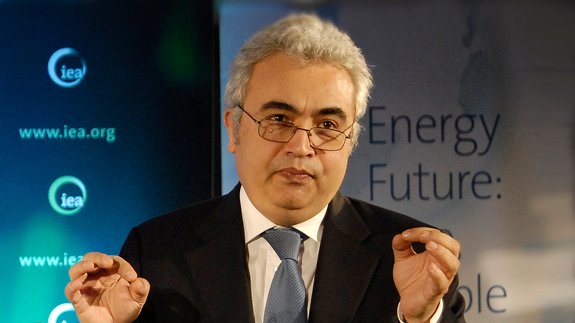
Fatih Birol, Executive Director of the International Energy Agency (IEA)

The IEA has supported these efforts by launching its largest-ever release of emergency oil stocks, publishing a menu of demand-side measures that governments, businesses and households can take to shelter consumers from price pressures, and tracking the actions being taken through its new Energy Crisis Policy Response Tracker.

So far, governments have supported consumers in two ways: through direct price relief, such as fuel price caps or tax cuts, and through demand-side measures aimed at reducing energy use. Designing these measures well is critical, and international experience offers useful lessons.

While easy to deploy, untargeted energy bill support primarily benefits higher-income households and puts pressure on public finances

When prices rise sharply, governments often first turn to broad-based price support measures that can provide immediate relief to consumers. This is already happening, with several countries in Asia and Europe temporarily capping fuel prices or reducing energy taxes.

However, while untargeted support measures can be implemented relatively quickly, they present two major challenges. First, universally lowering the price of fuel when supply is tight sends the wrong market signal, weakening incentives to reduce energy use and improve efficiency in the context of the current supply-demand gap. Second, much of the financial support does not reach those who need it most: low-income households struggling to pay their energy bills.

Because higher-income households tend to spend more on energy in absolute terms, broad-based price reductions often deliver greater financial gains to higher-income groups. For example, a recent study in the Netherlands estimates that around 70% of the total value of a broadly applied reduction in fuel excise duty ends up benefiting middle-high and higher-income groups.

This is particularly important because lower-income households are also the most exposed to energy price shocks. At the height of the 2022 energy crisis, low-income households in advanced economies spent around one-quarter of their income on energy – up 4 percentage points from 2021. By contrast, median-income households spent around 10% of their income on energy, with an increase of less than 2 percentage points.

Untargeted support also comes at a high fiscal cost. Governments spent around USD 940 billion in direct grants, vouchers and tax reductions in response to the 2022 energy crisis, yet only 25% of this support was targeted. With public finances still under strain following the Covid-19 pandemic and the 2022 energy crisis, many governments now have less fiscal space to sustain broad-based measures. This constraint has already been acknowledged in several European countries. In response to the current crisis, the OECD has recently warned against relying on broad-based support measures over the longer term.

Targeted support measures are a tried-and-tested policy solution

A more effective approach is to introduce support measures that directly target those most vulnerable to price shocks. This ensures that public money is used more efficiently and reaches the households most affected by the crisis. A key issue is that governments may find it difficult to quickly and efficiently identify those most in need of support.

Fortunately, governments do not always need to start from scratch, and there are ways to improve targeting quickly. Many countries already have policy instruments in place to support low-income households and other vulnerable groups, such as social assistance programmes, unemployment benefits, pension schemes and income-based grants. A quick way to deliver direct support is to ramp up programmes that already target these groups, or to use existing databases to identify households likely to be under financial strain.

Governments can also work with municipalities or community organisations that hold relevant information. Targeting can then be refined further by combining this with other household characteristics, such as home energy efficiency or energy consumption data. For countries that might not yet have public administration infrastructure in place to effectively target those in need, strengthening these programmes is an important first step.

Countries have successfully done this before. In 2022 and 2023, the Netherlands introduced an energy allowance for low-income households, providing direct cash transfer of around EUR 1 300 per year. Municipalities were tasked with identifying and paying eligible households, pulling from existing data and infrastructure to ensure support reached those most in need.

Since 2018, France has provided direct cash vouchers to low-income households to help cover energy bills, using its national tax registry to identify beneficiaries. In Indonesia in 2022, the government shifted from initial broad-based fuel subsidies to targeted transfers to lower-income groups as pressure on state budgets increased.

A key prerequisite is having the systems in place to target and deliver support to vulnerable households effectively. In Nigeria, for example, financial assistance was provided to 12 million low-income households in 2023 through direct digital transfers to beneficiaries’ bank accounts and mobile wallets. Similarly in Brazil, a national registry covering more than 40% of the population has been used to automatically enrol low-income households in several social programmes, including a social tariff scheme which now provides fully subsidised electricity for up to 80 kWh.

In response to the current crisis, several countries have announced targeted measures aimed at supporting those most in need while limiting fiscal. The United Kingdom, for example, has allocated GBP 53 million to support vulnerable heating oil customers, among the hardest hit by rising oil prices. Local councils can determine eligibility and how the support is distributed. In a similar fashion, Pakistan has introduced a relief package targeted at transport operators, such as motorcycle and rickshaw owners who rely on fuel for their daily income, using its existing Benazir Income Support Programme to identify potential recipients and disburse payments directly through digital wallets. Despite these positive examples, however, so far just 25% of government price support measures announced globally in response to the current crisis have been targeted.

There is no exact way of identifying precisely who needs support and who does not. Although some support may still go to households that need it less, leakage is significantly lower than under untargeted schemes. And while some eligible households may still be missed, this can be reduced by allowing households to apply and be reassessed.

On the demand side, well-designed campaigns can help consumers reduce their exposure to high energy prices

In response to the current crisis in the Middle East, many governments have also launched campaigns encouraging consumers to save fuel. For example, Australia announced its “Every Little Bit Helps” campaign, while Singapore’s campaign calls on households and businesses to “Save Energy Together“. But not all campaigns are created equal – effective campaigns need to be carefully designed to ensure they reach the right audiences with messages they can act on.

Evidence shows that tailoring to specific groups, rather than using a one‑size‑fits‑all approach, tends to deliver stronger and more durable results. During the 2022 energy crisis, information campaigns evolved from broad energy efficiency advice to more focused, action-oriented guidance linked to concrete behavioural changes and available supports. Drawing on international experience, several practical lessons emerge for policymakers seeking to protect vulnerable consumers and maximise impact.

  • Build on existing systems and programmes: Governments that responded most quickly and effectively during the 2022 crisis built their information campaigns on established programmes, partnerships and delivery frameworks. These existing structures provide trusted delivery channels that can be adapted rapidly in emergency situations, making them especially valuable during an energy crisis.
  • Work with trusted intermediaries. Community organisations, local authorities and energy retailers can significantly expand the reach and credibility of national campaigns. They can translate national messaging into locally relevant actions and help connect households to financial and technical support. In the Netherlands, for example, a programme supporting municipalities to deploy household energy coaches and fixers reduced both energy costs and medical expenses, with the greatest impact observed among households experiencing energy poverty.
  • Understand and segment the audience. Effective targeting requires a clear understanding of households’ needs and circumstances. Audience segmentation helps shape the narrative, identify the appropriate communication channels and tailor messages accordingly. During the 2022 crisis, Ireland adapted its campaign from “Reduce your use” to “Stay warm and well” in response to consumer feedback, with a stronger emphasis on vulnerable households. The campaign was associated with a 12% reduction in residential electricity use.
  • Define clear messaging that connects well with the audience. Campaign messages should be simple, relevant and closely aligned with the desired behaviour. Some of the most successful campaigns also encourage people to participate and share their experience. In 2022, for example, India introduced electric buses in Delhi, made them free for three days and launched a campaign encouraging people to take selfies on board and share them online. In the first few days, over 100 000 people used the new buses.  
  • Highlight both existing and new support measures. Information campaigns are most effective when they promote both immediate consumer support and longer-term measures such as grants, subsidies and retrofit programmes. Combining behavioural guidance with clear information on available support can help households take action and invest in lasting improvements. For example, Denmark paired its energy awareness campaign with information on grants and longer term support, helping to strengthen uptake.

To build long-term resilience, governments should focus on energy bills, not just prices

Targeted, short-term support can help shield consumers from acute price shocks. But to make consumers more resilient to future price swings and bring down energy bills permanently, governments need to invest in targeted energy efficiency policies.

First, governments can promote affordable access to more efficient vehicles and ensure adequate public transport. Increasing the uptake of second-hand EVs, hybrids and other efficient vehicles – including not only cars but also two-wheelers, buses and trucks – alongside charging infrastructure can help reduce households’ exposure to oil price volatility. Some policies already target lower-income households, such as Germany’s income-based EV scheme, Slovenia’s second-hand EV grant and India’s electric two- and three-wheeler subsidy.

Second, where possible, governments can accelerate the deployment of modern cooking solutions and expand electricity access to improve efficiency, affordability and fuel diversity. In Indonesia, for example, the government is advancing this shift by supporting the adoption of modern cooking equipment and the diversification of their cooking fuel mix – including greater use of electricity – through pilot projects and appliance distribution to households.

Third, governments can improve the efficiency of homes and accelerate the uptake of heat pumps, which are the most energy efficient form of home heating. In Canada, the Oil to Heat Pump Affordability Program provides upfront grants to low- and median-income households to help them make this switch. Governments can also strengthen or introduce minimum energy performance standards for household appliances such as air conditioners or refrigerators. These are among the longest-standing energy efficiency policy instruments and often the most cost-effective ways to improve product efficiency and lower household energy costs.

The IEA has long described energy efficiency as the world’s “first fuel”. The current crisis underlines that it is also often the most effective way to strengthen long-term consumer resilience, especially for vulnerable households.

By Lucas Boehlé (Energy Analyst), Emma Mooney (Energy Analyst) and Jérôme Bilodeau (Senior Programme Manager – Energy Efficiency)