Home Blog Page 1939

Ministers, UN officials to discuss Paris accord at Africa Climate Week

0

Action on climate change will receive a high-level boost when ministers from eight countries in Africa and senior United Nations and other officials converge on Nairobi, Kenya, for the Africa Climate Week, scheduled to hold from April 9 to 13, 2018.

Nairobi Kenya
Nairobi, Kenya will host the Africa Climate Week

Countries made an historic agreement in Paris in 2015. The work now is on implementation, to limit warming this century as close to 1.5°C as possible, foster climate resilience, and align global finance flows with a pathway towards low-emission, sustainable development, says the UN Framework Convention on Climate Change (UNFCC), adding that the current level of ambition is insufficient.

“Africa sees the dangers of climate change as well as the opportunities that can come from cooperation and investment in ambitious climate action. That’s what Africa Climate Week is all about and why it has attracted high-level interest and participation,” says Patricia Espinosa, Executive Secretary of the UNFCCC.

Public and private sector organisations and companies are said to have responded to the call to help shape and drive climate action at the first Africa Climate Week.

“Parties to the agreement know that success of the Paris Agreement will require broad-based, ambitious effort from all sectors of society, both public and private,” said Ms. Espinosa. “We need a massive and swift ramping up of ambition to get on track.”

An important feature of this Africa Climate Week is its harvesting of views for consideration in the official climate negotiations, through the Talanoa Dialogue process, launched in December at the UN Climate Change Conference (COP23) in Bonn, Germany.

For more than a decade, the Nairobi Framework Partnership has been bringing together stakeholders – in Asia, Latin America and the Caribbean, and Africa – around the common goal of addressing climate change, with focus on market-based mechanisms and finance. In 2017 it began broadening regional carbon forums to create Climate Weeks to strengthen and support implementation of Nationally Determined Contributions (NDCs) under the Paris Agreement.

Africa Climate Week will comprise workshops, panel discussions, exhibits, meetings, and high-level segments to capture regional concerns and feed them back into the formal negotiations under the United Nations Framework Convention on Climate Change, through the Talanoa Dialogue.

The events of Africa Climate Week will focus on NDC support and implementation, the United Nations Sustainable Development Goals, Global Climate Action, and include:

  • The Africa Carbon Forum
  • High-level sessions with the Champions of the Marrakech Partnership for Global Climate Action
  • High-level ministerial session
  • Talanoa Dialogue
  • LEDS – Low Emissions Development Strategy – Workshop
  • Climate Technology Centre and Network Workshop
  • UNEP DTU Partnership and Gold Standard Workshop
  • Technical Expert Meeting under UNFCCC
  • World Climate simulation.

Africa Climate Week will have as its cornerstone the long-running Africa Carbon Forum, with its programme of plenary sessions, side events and exhibition focused on market-based approaches, economic instruments and climate-aligned finance to drive investment in climate action.


NiMet’s Seasonal Rainfall Predictions as guides against disaster

0

The Nigerian Meteorological Agency (NiMet) has, over the years, shown commitment to producing timely Seasonal Rainfall Predictions (SRP) and other climate information to the public for the purpose of guiding people against climate change’s negative effects.

Sani Marshi
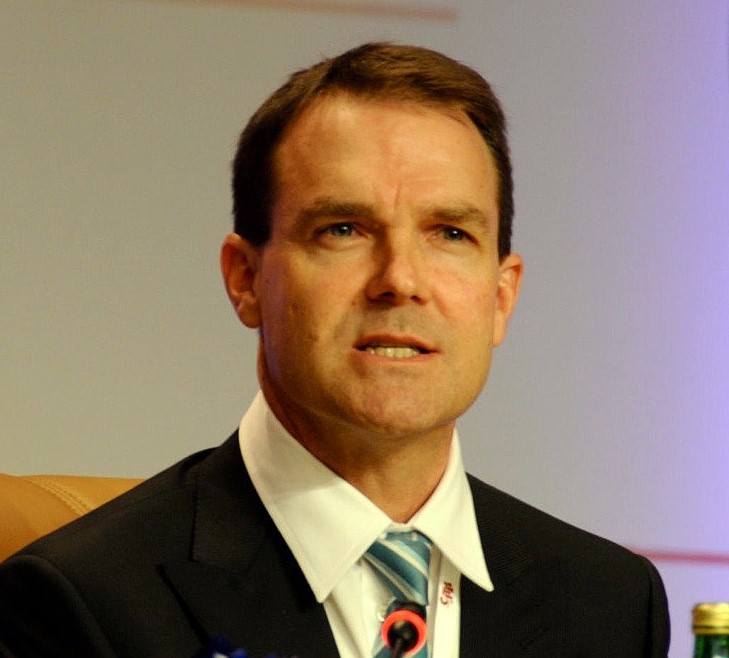
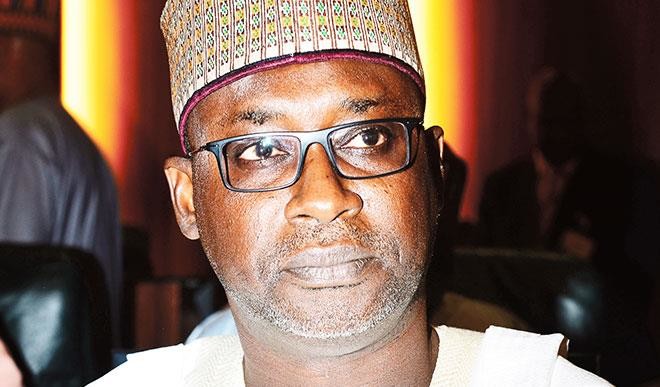
Director-General/Chief Executive Officer of NiMet, Prof. Sani Mashi

It has also confirmed that the SRP is based on strong observation and scientific study of the weather which application can be used in mitigating such impacts.

Stressing the importance of SRP recently in Abuja, NiMet Director-General, Sani Mashi, said that the country had been feeling the effects of climate change.

According to him, more frequent extreme weather events, increase in temperature, changes in annual and seasonal precipitation patterns, are prevailing across the country.

Mashi said that climatic variations caused rainfall variability which in turn affected availability of water resources with telling effects on agriculture.

“The quality, quantity, stability of food production and the natural environment, in which agriculture took place, are also affected in extreme cases.

“Also, the degradation of agricultural ecosystems could mean destruction of farm land due to flood or desertification.

“This can result in a total loss of the productive capacity of the land and consequently lead to increase in number of people at risk of malnutrition, poverty and famine.

“Other activities such water resources management, health sector, hydro-electric power generation and dam management, which depends on rainfall variability, are also affected.

“Similarly, conflicts over resources also exacerbate these impacts and contribute to the ongoing migration within countries in Africa.

“In this case, children and the elderly face physical danger even death due to diseases, floods, droughts and heat stress.

“Therefore, information is needed to understand climate change’s impact on agriculture and other aspects of the economy in Nigeria,’’ he said.

Mashi observed that NiMet’s annual climate review bulletin was produced to provide such information, helping policymakers to understand the uncertainties surrounding climate change effects.

“The bulletin will also give national and regional level guidance with implications for a range of policy decisions, such as investments in the development of new plant and animal varieties that are resistant to drought, water management strategies and many more policy areas,’’ he observed.

He added that part of NiMet had been monitoring and collecting different types of weather information such as temperature, precipitation and other weather parameter throughout the country over a long period of time.

“Analysis of these data has shown that there has been a persistent increase in the maximum temperature in the past decade over Nigeria.

“Similarly, the minimum temperature is also on the increase for the past nine consecutive years from 2009 to 2017,’’ he observed.

In the same vein, he said that NiMet has predicted normal to earlier-than-normal rainfall across the country in 2018 with possibility of flashes of floods in many parts of the country.

“The implication of this prediction according to NiMet is that there will be normal agricultural activities during the year leading to good yields and pumper harvest.

“That will be if NiMet warnings and recommendations in the SRP are taken seriously by the stakeholders in the agricultural sector,’’ he said.

The agency recommended that climate-smart agriculture should be encouraged, especially in the Sudano-Sahelian zone of the country through the use of economic trees like gum Arabic, date palm, shear and jetropha, among others, for fencing.

On livestock farming, NiMet warned that warmer-than-normal temperatures, predicted to occur in March and April, were expected to affect livestock production, particularly in the north-western region of the country.

It said that livestock mortality rate was expected to increase during these months due to temperature   fluctuations, advising livestock farmers to acquire necessary vaccines for their animals.

NiMet also predicted that fish production was likely to be adversely affected as a result of the warmer-than-normal conditions, especially in the northern part of the country.

It urged fish farmers and aquaculture operators to take note of those areas which were predicted to have high run-offs to avoid associated impacts.

It observed that the annual rainfall across the country would positively impact on agriculture, power generation, recreation and manufacturing activities.

The agency warned Nigerians and health officials to take adequate precautions with a view to mitigating the prevailing warmer-than-normal temperatures across the country, noting that the prevailing condition would persist until April.

It said that while the cold season dominated in January and February, heat season was predicted to dominate March and April, explaining that greater parts of the country were expected to record near average temperatures in these months, while some places would experience hotter-than-the average seasonal temperature.

The health implication of this warmer-than-normal condition during the forecast period according to NiMet is that cerebrospinal meningitis and other heat related diseases, as well as human discomfort, are likely.

It explained that diseases such as heat rashes, dehydration, measles, chicken pox, avian influenza and general human discomfort, were expected to be rampant during the period, urging health workers to make adequate preparation to contain any outbreak.

The agency added that the period also coincided with peak of the dry season when there could be shortage of drinking water leading to high chances of consuming contaminated water that might result in typhoid fever.

It, therefore, and advised state and local governments to sensitise their communities on the need to drink from clean and hygienic sources during the period.

“Health workers are advised to improve surveillance to detect cases of disease outbreak early while the populace should improve their drainage system to avoid breeding of mosquitoes and ensure that they sleep under long lasting insecticide nets,’’ NiMet advised.

By Sumaila Ogbaje, News Agency Nigeria (NAN)

Rapid emissions reductions will keep CO2 removal, costs in check – Study

0

Rapid greenhouse-gas emissions reductions are needed if governments want to keep in check both the costs of the transition towards climate stabilisation and the amount of removing already emitted CO2 from the atmosphere.

Jessica Strefler
Jessica Strefler of the Potsdam Institute for Climate Impact Research (PIK), lead-author of the analysis

To this end, emissions in 2030 would need to be at least 20 percent below what countries have pledged under the Paris climate agreement, a new study finds – an insight that is directly relevant for the global stock-take scheduled for the UN climate summit in Poland later this year.

Removing CO2 from the atmosphere through technical methods including carbon capture and underground storage (CCS) or increased use of plants to suck up CO2 comes with a number of risks and uncertainties, and hence the interest of limiting them.

“Emissions reduction efforts in the next decade pledged by governments under the Paris climate agreement are by far not sufficient to attain the explicit aim of the agreement – they will not keep warming below the 2-degrees-limit,” says Jessica Strefler from the Potsdam Institute for Climate Impact Research (PIK), lead-author of the analysis published in Environmental Research Letters.

“To stabilise the climate before warming crosses the Paris threshold, we either have to undertake the huge effort of halving emissions until 2030 and achieving emission neutrality by 2050 – or the emissions reductions would have to be complemented by CO2 removal technologies. In our study, we for the first time try to identify the minimum CO2 removal requirements – and how these requirements can be reduced with increased short-term climate action,” she adds.


At least five billion tons of CO2 removal per year throughout the second half of the century

It turns out that, according to the computer simulations done by the scientists, challenges for likely keeping warming below the threshold agreed in Paris would increase sharply if CO2 removal from the atmosphere is restricted to less than five billion tons of CO2 per year throughout the second half of the century. This is substantial. It would mean for instance building up an industry for carbon capture and storage that moves masses comparable to today’s global petroleum industry. Still, five billion tons of CO2 removal is modest compared to the tens of billion tons that some scenarios used in climate policy debates assume. Current CO2 emissions worldwide are more than 35 billion tons per year.

“Less than five billion tons of CO2 removal could drastically drive up the challenges of climate stabilisation,” says co-author Nico Bauer from PIK. “If for instance this amount of carbon dioxide removal (CDR) was halved, then the annual CO2 reduction rates between 2030 and 2050 would have to be doubled to still achieve 2 degrees Celsius. In addition, short-term emissions reductions would also have to be increased as the emissions reductions pledged so far by the signatories of the Paris Agreement are not sufficient to keep warming below 2 degrees if they’re not combined with CO2 removal from the atmosphere.”


“It is all about short-term entry points, like rapidly phasing out coal”

More CO2 removal could in principle reduce costs since, on paper, implementing the relevant technologies to compensate residual emissions in industry and transport is cheaper than pushing emissions reduction from 90 percent to 100 percent. However, CO2 removal technologies are afflicted with three types of uncertainties and risks.

First, the technical feasibility and also the costs are not well known so far. Second, they might have negative effects for sustainability; a massive scale-up of bio-energy production for instance could trigger land-use conflicts and come at the expense of food production and ecosystem protection. Third, the political feasibility is by no means given. In Germany, fears expressed by parts of the population made the government stop even small-scale carbon capture and storage implementation.

“This gives important information to governments – first, rapid short-term emissions reductions are the most robust way of preventing climate damages, and second, large-scale deployment of CDR technologies can only be avoided when reliable CO2 prices are introduced as soon as possible,” says Ottmar Edenhofer, co-author of the study and PIK’s chief economist.

“Ramping up climate policy ambition for 2030 to reduce emissions by 20 percent is economically feasible. It is all about short-term entry points: rapidly phasing out coal in developed countries such as Germany and introducing minimum prices for CO2 in pioneer coalitions in Europe and China makes sense almost irrespective of the climate target you aim for. In contrast, our research shows that delaying action makes costs and risks skyrocket. People as well as businesses want stability, and this is what policy-makers can provide – if they act rapidly,” he adds.

German uses explosives to ward off cat-killing birds

0

A cat lover is under investigation in Germany after using home-made explosive devices against birds of prey to avenge the deaths of two of his pets.

Bird
A bird of prey

The 39-year-old filled plastic bottles with drain cleaner, to which he attached wires, police said on Thursday, March 29, 2018.

The heat produced resulted in detonations, although these were not considered dangerous, according to the police.

The man, from the municipality of Sankt Oswald-Riedlhuette in south-eastern Germany, claimed he wanted to scare away birds of prey that had killed two of his cats.

Police have initially ruled out any extremist links to the case, and are also not treating the incident as a criminal act.

Lagos residents fault Visionscape’s performance claim

0

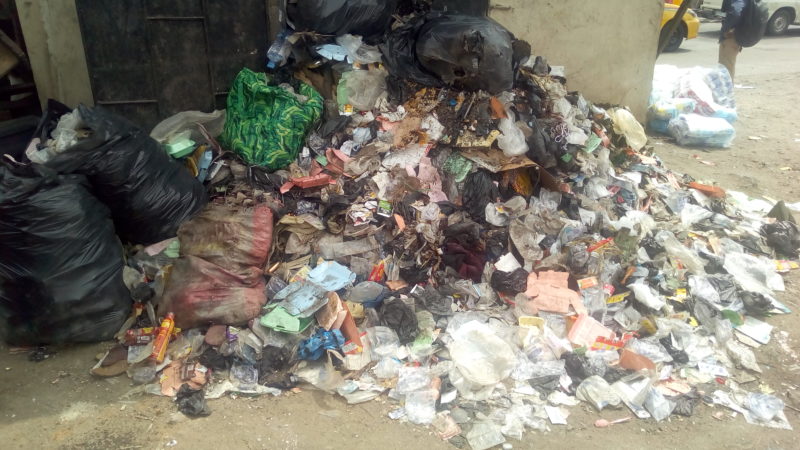
Following the claim of Visionscape Sanitation Solutions (VSS) that it had made some progress in a very short time of working in Lagos State, residents say the city “is becoming dirtier” than the company met it.

Lagos waste
Despite being outlawed by government, some Lagos residents still find solace in the operations of cart pushers

VSS Head of Corporate Communications, Motunrayo Elias, recently claimed that, “though the organisation commenced full operations in January this year, some progress had been made.”

She added that Visionscape was embarking on advocacy programme at the grassroots level.

But EnviroNews checks revealed that the company was rather concentrating on “outer Lagos”, the visible part of the city. Areas like Ikeja and Ikorodu Road seem to be enjoying the services of the new company, while “outskirt” towns like Bariga and Ikorodu suffer. Similarly, highways appear to be the areas of focus while inner streets seem neglected.

Having sighted some galvanised bins in Shomolu area, EnviroNews went further into Bariga only to discover that the place had not been covered.

Chairman of Ifelodun Community Development Association (CDA) in Bariga, Hakeem Musa, told our reporter that his people were yet to see the waste managers in the community.

The retired civil servant lamented that the community still patronised the cart-pushers, who residents see as the last resort to refuse disposal.

Lagos waste
Packed waste bags have stayed for days and weeks without disposal and now litter the neighbourhood

Visionscape also claimed that over 15,000 bins had been distributed across the state, and that it was targeting 20,000 by the end of August.

A Lagos resident, who spoke on condition of anonymity, asked whether 20,000 bins was for one of the local governments in a state that boasts a population of about 20 million.

Even the waste house at the popular Ojota garage is not being taken of, as EnviroNews met it running over.

Most of the bins dropped by Cleaner Lagos Initiative (CLI), according to a trader in Shomolu, are not serviced. He said the waste managers come to carry the waste every two weeks.

Visionscape also claimed that four million plastic bags had been distributed to residents of Lagos, and that 10 million plastic bags will be distributed before the end of the year.

However, most residents said they never saw the bags. And in some areas where the bags were distributed, the packed waste stayed for days and weeks with the residents without being disposed.

Even the 100 Private Sector Participation (PSP) operators Visionscape claimed to be working with were nowhere to be found in many parts of Lagos.

To the credit of CLI is the kits used by the employees, which the residents commended.

Visionscape Head of Planning, Kiran Reddy, also said that approximately illegal 5,000 dumpsites also known as blackspots were found during a baseline study of the state.

By Chika Onwuji

China meets 2020 carbon target three years ahead of schedule

0

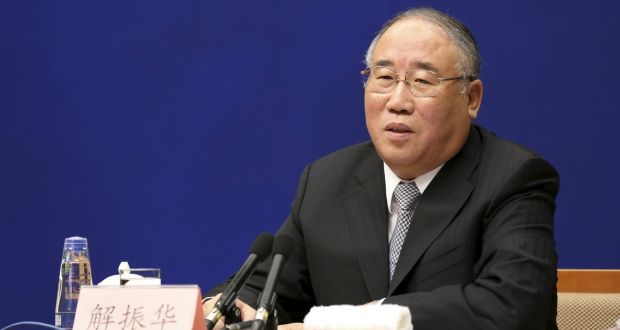
China reached its 2020 carbon emission target three years ahead of schedule with the help of the country’s carbon trading system according to Xie Zhenhua, China’s representative to UNFCCC (United Nations Framework Convention on Climate Change) negotiations.

Xie Zhenhua
Xie Zhenhua, China’s representative to UNFCCC negotiations

The development provides an important boost to the Paris Agreement on Climate Action, which has the central goal to limit the global average temperature increase to well below 2 degrees Celsius and as close to 1.5 degrees Celsius as possible.

Reacting to the news on Twitter, the Executive Secretary of UN Climate Change, Patricia Espinosa, said: “Excellent news coming out of China – very encouraging as the international community seeks to accelerate the transition to low carbon and to raise ambition to achieve the #ParisAgreement #climate goals.”

Xie Zhenhua, who was formerly vice-chairman of the NDRC and is now a special envoy with the Ministry of Foreign Affairs, said: “(This achievement) is not only a great encouragement to me… but also the recognition of our country’s long-term efforts and achievement of coordinating of both domestic and international dimensions, transiting from tackling the challenge of climate change to promoting the historic opportunity to achieve sustainable development and pushing the transition towards green low-carbon development,” said Xie in Hong Kong after receiving the Lui Che Wo prize for his efforts to tackle climate change.

The country’s carbon emissions trading system was introduced in 2011 and includes power generation, iron and steel production and cement manufacturing sectors in seven provinces and municipalities including Shanghai, Xie said.

At the end of 2017, China had cut carbon dioxide emissions per unit of GDP by 46 percent from the 2005 level, fulfilling its commitment to reduce carbon emissions by 40 to 45 percent from the 2005 level by 2020.

It is important to note that China’s progress on climate action has not come at the price of economic growth. From 2005 to 2015, China’s economy grew by 1.48 times, and at the same time, the carbon intensity – the amount of carbon emissions per unit of GDP- dropped by 38.6 percent. In 2016, the rate continued to fall by 6.6 percent year on year.

Transactions totalling 200 million tons of carbon emissions quotas had been completed via the platform by the end of 2017.

Raising ambitions for a low-carbon future even further, the Chinese National Development and Reform Commission (NDRC) launched a nationwide carbon emissions trading system in the power generation industry in December 2017.

Under this programme, businesses are assigned emissions quotas, and those producing more than their share of carbon can buy unused quotas on the market from those that emit less.

Xie said the new system is a step toward establishing a national carbon market across all industries, and that the national market, though only at an embryonic stage, already covers about 1,700 power firms with total carbon dioxide emissions in excess of three billion tons, making it the world’s biggest. He noted China would continue to work to expand coverage to other industries.

We invested over N6b, created 25,000 jobs in 20 years – Lagos waste managers

0

The Association of Waste Managers of Nigeria (AWAM), known as Private Sector Participation (PSP) operators, says it has invested over N6 billion in waste management industry in Lagos State in the last 20 years.

waste managers
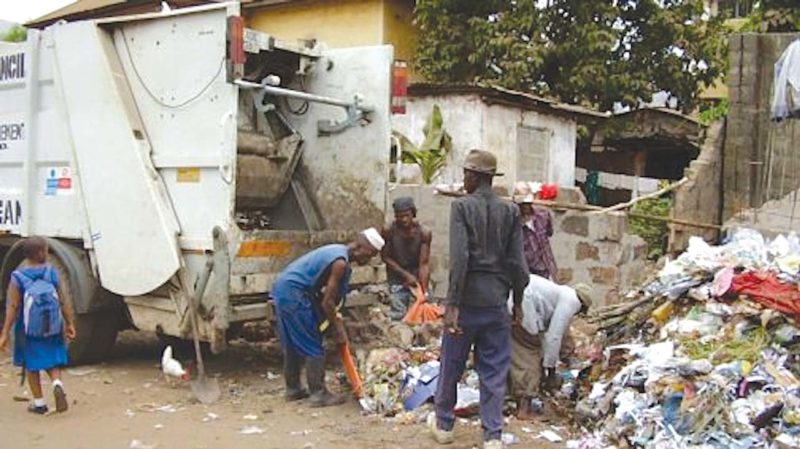
Lagos waste PSP operators at work

AWAM Chairman, Oladipo Egbeyemi, told the News Agency of Nigeria (NAN) on Monday, March 26, 2018 in Lagos that members of the association had provided over 25,000 direct and indirect jobs within the period.

Egbeyemi, however, said the association’s investment was going through a period of uncertainty since the engagement of foreign waste managers over the past two years.

According to the association, the foreign company currently engaged in waste management in Lagos does not have the capacity, hence the mountain of wastes across the state.
”The current situation is that the Domestic Waste Collection has been conceded to a foreign company, known as Visionscape, which does not have the capacity to carry out the assigned task.

”The government’s consultant, running the Cleaner Lagos Initiative (CLI), has confirmed that the PSP, as currently constituted, have 931 functional trucks following the recertification exercise.

”We now have classic case of the foreign company without capacity, trying to engage local investors (PSPs) with close to 1,000 trucks and over 20 years of experience on the job and offering unprofitable and unsustainable terms,” he said.

Egbeyemi said that the government had decided to restrict the PSP operators to manage only the commercial waste collection, which is 20 per cent less than its current activities.

According to him, the current market value of the commercial waste collection is N301 million, while the number of enlisted PSP operators are 365, with a total number of 931 trucks.

He said that the commercial premises, if shared based on capacity, would result in revenue that is grossly inadequate for any operator, thereby affecting the viability of the business.

”Further analysis of the commercial revenue that is being offered to us shows that only 31 operators earned 52 per cent of the commercial revenue that was payable by LAWMA.

”This 31 operators, representing only eight per cent of operators, are nervous at the risk of seeing their revenue reduced significantly, as a result of the redistribution.

”On the other hand, 92 per cent of operators solely operates in the domestic waste collection and earn significant revenue from it.

”They will be facing a 100 per cent loss of revenue, if and when Visionscape takes over the domestic waste collection.

”While the sharing of the commercial waste collection provides some revenue, it is still grossly inadequate to make them viable,” he said.

The AWAM chairman said that the policy to restrict the waste operators to only commercial waste collection would impede on all existing operators and their investment.

He said the association had appealed to the Lagos State House of Assembly to intervene and save Lagos people from imminent health hazard that might be caused by the current filthy environment.

Egbeyemi said AWAM remained genuinely committed to serving the Gov. Akinwunmi Ambode-led administration and Lagos people in actualising a cleaner Lagos.

By Florence Onuegbu

Maize stakeholders laud Bayer effort to address weed, armyworm

0

Stakeholders in the maize sector have lauded Bayer Nigeria, a global company, on agricultural agro chemicals for its effort towards addressing the issue of weed and armyworm in the country.

corn field
A corn field

They spoke in separate interviews with the News Agency of Nigeria (NAN) at the Maize Conference organised by Bayer Nigeria, in partnership with the Federal Ministry of Agriculture in Abuja on Wednesday, March 28, 2018.

Dr Musa Mahadi, Head of Agronomy Department, Ahmadu Bello University, Zaria, who said that the conference was timely, stated that it was an opportunity to address some of the challenges limiting massive maize production.

“We are here to be part of the maiden conference by Bayer Nigeria that has produced several chemicals even pharmaceutical.

“They are now into production of agro allied chemicals, especially to control weed, of course, in Nigeria and globally.

“One of the major challenges facing farmers is weed. Weed has caused drastic yield reduction because they compete with our crops for growth resources.

“It becomes very necessary for us to control weed and Bayer has come up with several herbicides, which were found to be promising in terms of controlling this weed.

“They are organising this stakeholders meeting for various persons, companies, academia to share ideas and for us to look at ways to proffer solution to improve weed control using this herbicide.

“Few of the farmers have actually testified from their experience of using this product and they have applauded the company for producing this promising herbicide because of its efficiency in weed control.

“We are encouraging farmers to use this product to boost production and income. And not to spend so much on manual hoeing,” he stated.

Alhaji Bello Futua, President, Maize Association of Nigeria (MAAN), said that the product would benefit their farmers more, stating the association’s commitment to work with the company to achieve desired goal.

He added that the association’s technical committee was present at the conference to ensure that the knowledge and information gathered would be passed to farmers at the state, local and ward levels.

Funtua assured Nigerians of bumper harvest in maize production by its members through collaboration, and as such thanked the company to have their members fully involved and participated in the process.

Pastor Tunji Adenola, Chairman, Board of Trustees, MAAN, hoped that the herbicides would be superior to those available in the market and cheaper for their farmers to procure.

By Philomina Attah

CITES to improve regulation of trade in captive-raised animals, artificially propagated plants

0

The Secretariat of the Convention on International Trade in Endangered Species of Wild Fauna and Flora (CITES) says it is making strides in improving the regulation of trade in captive-raised animals and artificially propagated plants with the publications of two guides for inspecting facilities producing such animals and plants, as well as guidance on the use of source codes.

John Scanlon
CITES Secretary-General, John Scanlon

The two guides, namely the Guidelines for inspection of captive-breeding and ranching facilities and the Guide to the application of CITES source codes can be found on the CITES website and have been translated into several Asian languages (Chinese, Indonesian, Khmer, Lao, Malay, Thai and Vietnamese) to assist CITES officials in their work.

The Secretariat will use these two guides in a training workshop it is organising in May 2018 in Indonesia, the first of a series around the world aimed at improving the implementation of the Convention for captive-raised animals and artificially propagated plants.

Mr. John E. Scanlon, CITES Secretary-General, highlighted that “today, international trade in ‘wild’ animals and plants is mainly in specimens from captive-raised or artificially propagated sources. This trade includes reptiles for skins, birds and ornamental fish for pets, and orchids as ornaments. The significant increase in this type of trade has given rise to some concerns related to the control of the production and trade and the Secretariat is working with Parties to improve the implementation of the Convention for these specimens.”

As the proportion of trade in captive-raised animals and artificially propagated plants increased, a number of Resolutions and Decisions were adopted by the Parties to regulate and define the terms and conditions for such production and trade. But, to date, no single consistent and coherent framework exists and there have been instances of false or incorrect declarations of the source of the animals or plants.

The series of workshops aims, inter alia, to ensure that the source codes, i.e. the letters used on CITES permits and certificates to indicate the source of the internationally traded specimen, are applied correctly and that misuse – both intentionally and inadvertently – is detected and corrected. Misuse of source codes can have negative implications for the conservation of the species concerned and undermine the purpose and effective implementation of the Convention.

Participants to the workshops will also discuss whether raising animals in captivity and artificial propagation of plants can benefit the conservation of the species in trade and the ecosystems more broadly, as well as the purpose of the system of source codes. These reflections will feed into a broader analysis and recommendations to be produced by the Secretariat for the next meeting of the Conference of the Parties in 2019.

River Basin boards asked to reposition to ensure food security

0

The Federal Ministry of Water Resources has urged the governing board of the 12 River Basins and its parastatal agencies to focus on repositioning to enhance food security and job creation.

Suleiman Adamu
Suleiman Adamu, Minister of Water Resources

The minister, Mr Suleiman Adamu, made this call at the opening of a two-day retreat for the Governing Boards of the 12 River Basin Development Authorities and the Parastatals of the Ministry in Abuja on Wednesday, March 28, 2018.

The ministry’s parastatals also include the Nigerian Hydrological Services Agencies and the National Water Resources Institute.

Adamu said that the functionality of the River Basins had a huge role to the agricultural revolution, while encouraging them to find alternative sources of funding through private sector involvement.

He said it was expected that the retreat would provide the board chairmen with the guidelines, rules and procedures in the exercise of their mandates and responsibilities.

He said eminent resource persons have been carefully selected to speak on the thematic areas of; best practice in River Basin Planning, Engineering and Management, Public Procurement Act 2007 and Board’s Duties and Responsibilities in Staff Matters.

Adamu said the retreat would provide deeper insights that will enable them contribute to the advancement of the reform agenda of the present administration, particularly in the areas of water resources management and national food security.

He underscored the role of the Governing Boards of the 12 River Basins as a critical element for the success of the Agricultural Revolution of the country.

“You are expected to bring to fore the vision of the present administration by developing sound policies and programmes that will put your Parastatals and Agencies on sound footings for effective and efficient delivery of the Ministry’s vision and mandates,” he said.

The minister noted that the Ministry had held several meetings with the Managing Directors of the 12 River Basin Development Authorities (RBDAs) to review their 2017 – 2020 operations, especially in the execution of their strategic plans and irrigation for food production.

He said that the 12 RBDAs and the two agencies control over 50 per cent of the ministry’s budget, saying the contributions and achievement of these Parastatals and Agencies are crucial to the overall success of the ministry.

He expressed optimism that when the National Water Resources Bill, which is at the final stage of consideration in the National Assembly is passed into law, the challenges of the RBDAs would be resolved.

Dr Musa Ibrahim, Permanent Secretary in the Ministry, while congratulating the newly constituted boards, urged them to work in line with the ministry’s mandate towards the overall development of the water resources sector.

He cautioned them to do away with unnecessary interference with the businesses of the Management team of the river basins and other agencies.

According to him, a retreat will be organised soon to introduce them to what is required of them.

`It is against this backdrop that I urge you to be guided by the rules and administrative procedures of the public service while discharging your duties.

“Let me further emphasise that the role of the governing board is to drive the general policies guiding of the parastatals and agencies as outlined by the ministry,” he said.

Sen. Ubale Shittu, Chairman, Senate Committee on Water Resources, expressed worry over the non-performance of all river basins since their creation.

He urged the new board members to re-strategise to see what could be done to reposition the river basins for optimum performance.

He restated the commitment of the National Assembly to ensure the speedy passage of the National Water Resources Bill before it.

The Chairman, House Committee on Water Resources, Alhaji Aliyu Pategi, urged the newly inaugurated board chairmen to ensure transparency and accountability in all their doings.

He said they were now saddled with the responsibility of making sure that Nigerians have access to water, saying they were the closest Government’s parastatal to the constituencies.

By Tosin Kolade