Home Blog Page 1898

From Paris to Katowice: Urgent action clamoured for climate ambition

0

If Paris was historic in carving a global climate deal, Katowice will define the political urgency for climate action.
Bonn
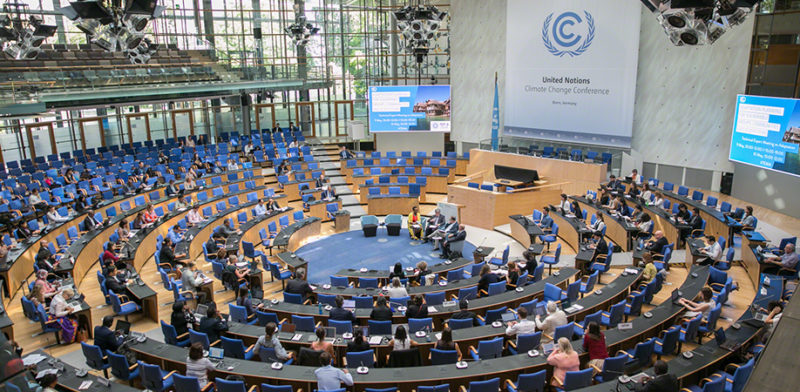
A session during the Bonn conference

Negotiations at the just ended United Nations Climate Change Conference in Bonn, Germany, focused on the Paris Agreement Work Programme, under which countries are designing the guidelines that will move the climate pact from concepts to actions.

The Least Developed Countries (LDC) Group, at the concluding session, expressed concern at the lack of urgency in moving the negotiations forward.

“It is time to look at the bigger picture, see the severe impacts that climate change is having across the world, and rise to the challenge,” said Group Chair, Gebru Jember Endalew.

He expects steady progress be made throughout 2018 on all issues so that poor and vulnerable countries can engage effectively.

“A last-minute rush at COP24 risks leaving developing countries behind,” he said.


The Paris Rulebook

The Rulebook spells guidelines on how to put the Paris Agreement into practice.

There is a call for a fair, robust and transparent Rulebook that inspires confidence among countries to step up and commit to enhanced national climate targets by 2020.

They are essential for determining whether total world emissions are declining fast enough to achieve the goals of the Paris Agreement. These include boosting adaptation and limiting the global temperature increase to well below 2°C, while pursuing efforts to limit the increase to 1.5°C.

“I am satisfied that some progress was made here in Bonn. But many voices are underlining the urgency of advancing more rapidly on finalizing the operational guidelines. The package being negotiated is highly technical and complex. We need to put it in place so that the world can monitor progress on climate action,” said Patricia Espinosa, Executive Secretary of UN Climate Change.


Progress on Agriculture

Recognising the urgency of addressing interests in the agriculture sector, the Bonn conference made a significant advance on the “Koronivia Joint Work on Agriculture” by adopting a road-map for the next two-and-a-half years.

Farmers are particularly vulnerable to climate change impacts such as prolonged droughts and shifting rainfall patterns, and agriculture is an important source of emissions.

This road-map responds to the world’s farming community of more than 1 billion people and to the 800 million people who live in food-insecure circumstances, mainly in developing countries. It addresses a range of issues including the socio-economic and food-security dimensions of climate change, assessments of adaptation in agriculture, co-benefits and resilience, and livestock management.


But not with Finance

Without advances in the talks over the commitment of future financial support from rich countries to developing nations, who are already facing devastating climate impacts, it became difficult for other areas of the negotiations to progress.

LDC Group Chair, Gebru Jember Endalew, stated: “Finance is key to meeting the goals of the Paris Agreement. In the face of climate change, poor and vulnerable countries are forced to address loss and damage and adapt to a changing climate, all while striving to lift their people out of poverty without repeating the mistakes of an economy built on fossil fuels. This is not possible without predictable and sustainable support.”

Civil society also expressed some dissatisfaction with the finance dialogue.

“The radio silence on money has sown fears among poor countries that their wealthier counterparts are not serious about honouring their promises. This funding is not just a bargaining chip, it is essential for delivering the national plans that make up the Paris Agreement,” said Mohamed Adow, International Climate Lead, Christian Aid.

“For the Paris Agreement to be a success, we need the Katowice COP to be a success. And for the Katowice COP to be a success we need assurances that sources of funding will be coming.”


The Talanoa Dialogue

The Fijian Presidency of COP23 launched the Talanoa Dialogue to spur an outcome for enhanced ambition at the end of this year at COP24.

The first global conversation about efforts to combat climate change was witnessed on Sunday, May 6, at the 2018 Bonn Climate Talks.

The dialogue wrote history when countries and non-Party stakeholders including cities, businesses, investors and regions engaged in interactive story-telling for the first time.

The dialogue witnessed some 250 participants sharing more than 700 stories of climate struggle and inspiration, providing fresh ideas and renewed determination to raise ambition.

Seven groups, known as “Talanoas”, took part in the informal Talanoa tradition of sharing stories to find solutions for the common good. Participants discussed three central questions: Where are we? Where do we want to go? How do we get there?

The Dialogue has the goal of taking stock of collective efforts towards progress on the Paris Agreement’s long-term mitigation goal. It will also inform the preparation of parties’ Nationally Determined Contributions (NDCs), the second round of which are expected in 2020.

“Now is the time for action. Now is the time to commit to making the decisions the world must make. We must complete the implementation guidelines of the Paris Agreement on time. And we must ensure that the Talanoa Dialogue leads to more ambition in our climate action plans,” said Frank Bainimarama, Prime Minister of Fiji and President of COP23.

Talanoa inspires discussion between countries not as negotiating blocs but as one of people to people. But it is important that this is translated into a clear political process.

The Polish Presidency must take up the baton from the Fiji Presidency and work with all countries towards a political outcome for stronger national targets by 2020.


Political Action in Katowice

All input received to date and up to 29 October 2018 will feed into the Talanoa Dialogue’s second but more political phase at COP24.

To be meaningful, the Talanoa Dialogue “must deliver concrete outcomes that drive an increase in ambition and support to put us on track to achieving the 1.5 degree temperature goal set in Paris, guided by equity and science,” said Mr. Endalew.

Talks resume in Bangkok from September 3-8 where negotiators will pick up “informal notes” forwarded by this session. They will attempt to turn these notes and various inputs from countries into the basis for a negotiating text ahead of COP24 in Katowice, Poland.

“The science is clear: we need to get into higher gear to reach Paris goals and we need to have the courage to go beyond traditional politics. Meeting in the middle is no option this time,” said Marcel Beukeboom, Climate Envoy of the Kingdom of the Netherlands.

A stronger political leadership remains critical to achieve the major milestones envisaged for COP24 in Katowice, Poland.

The UN Climate Change talks are an integral part of a broader, worldwide debate on climate change.

The United Nations Framework Convention on Climate Change (UNFCCC) has near universal membership and is the parent treaty of the 2015 Paris Climate Change Agreement.

The main aim of the Paris Agreement is to keep a global average temperature rise this century well below 2 degrees Celsius and to drive efforts to limit the temperature increase even further to 1.5 degrees Celsius above pre-industrial levels.

The UNFCCC is also the parent treaty of the 1997 Kyoto Protocol.

The ultimate objective of all agreements under the UNFCCC is to stabilize greenhouse gas concentrations in the atmosphere at a level that will prevent dangerous human interference with the climate system, in a time frame which allows ecosystems to adapt naturally and enables sustainable development.

“The time for stories has long since passed,” said Meena Raman of Third World Network. “We live in a world with over 1℃ warming and the devastation is already severe. We cannot allow for that warming to go beyond 1.5℃ and we need a political process to prevent that.”

Courtesy: PAMACC News Agency

East African countries to promote effective e-waste management

0

An Eastern Africa regional workshop on e-waste management kicked off on Monday, May 14, 2018 in Kigali, the Rwandan capital, to discuss effective electronic waste management.

E-waste
E-waste

The three-day event is organised by the East African Communications Organisation (EACO), the Rwanda Utilities Regulatory Authority (RURA) and an environmental organisation, Enviroserve Rwanda.

Participants include policymakers, environmental experts, telecommunication companies and other interested parties from Kenya, Uganda, Tanzania and Burundi.

“The private sector needs to be involved in the e-waste management as far as the environmental protection is concerned,’’ said Faustin Munyazikwiye, the Deputy Director General of Rwanda Environment Management Authority (REMA), at the opening of the workshop.

The participants would seek to promote a multi-stakeholder collaboration on e-waste and provide sustainable ways to manage such waste in the region, according to Ally Yahaya Simba, Executive Secretary of EACO.

A statement issued to the media by RURA said the workshop would evaluate the status of the regional strategy on e-waste management.

E-waste is already a serious problem in many countries around the world, RURA said in the statement.

“Not only does e-waste cause significant damage to our natural environment, but it also severely threatens the health and well-being of people,’’ RURA stated.

Experts say there is need to advance electronic and electrical waste management and support strategies to protect more than 150 million citizens of East African Community member countries from the dangers of e-waste.

Regional collaboration centres, partners help deliver Paris goals

0

National planning, finance and markets are receiving on-the-ground support from UN Climate Change Regional Collaboration Centres (RCCs) and their diverse partners working towards implementation of the Paris Climate Change Agreement.

espinosa
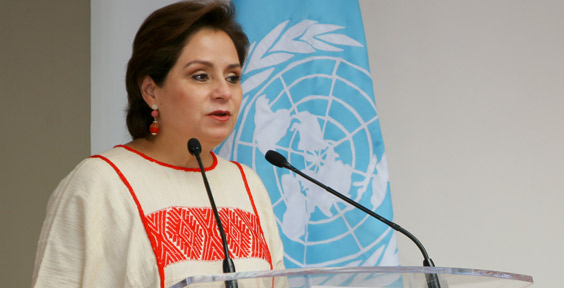
Patricia Espinosa, Executive Secretary of the UNFCCC

On the margins of the climate talks that concluded in Bonn, Germany on Thursday, May 10, 2018, delegates and observers learned about several regional initiatives, including the NDC Partnership’s cooperation with RCC Panama and its engagement with 71 countries and some 19 organisations and institutions to further the goals of the Paris Agreement.

In 2015 in Paris, countries committed to limiting global temperature rise to 2 degrees Celsius and to work towards the safer target of 1.5 degrees Celsius. Countries submit and are expected to periodically enhance documents describing their national climate action plans (Nationally Determined Contributions, or “NDCs”) to achieving the goals of the agreement.

The purpose of the NDC Partnership is to “mobilise support and achieve ambitious climate goals while achieving sustainable development,” by facilitating information development and sharing, technical support and capacity-building, and sourcing of financial support, said Cayetano Casado, NDC Partnership specialist for Latin America and the Caribbean based at RCC Panama.

UN Climate Change established five RCCs with prominent partners to promote the Clean Development Mechanism (CDM) on the ground in Lomé, Togo, for West Africa; Kampala, Uganda, for East Africa; Bangkok, Thailand, for Asia and the Pacific; Panama City, Panama, for Latin America; and St. George’s, Grenada, serving the Caribbean. With the CDM, at their core, the RCCs now support a broad range to global climate action for implementing the Paris Agreement.

Under the CDM, projects in developing countries earn a saleable credit for each tonne of greenhouse gas they reduce or avoid. The incentive has led to the registration of more than 8,100 projects and programmes in 111 countries and the issuance of more than 1.9 billion CERs. Each CER is equivalent to one tonne of carbon dioxide reduced or avoided.

Tackling climate change will take a great deal of resources, so green finance is a key focus of work in the RCCs, said Massamba Thioye, a manager at UN Climate Change who works to “facilitate developing countries’ access to green finance.”

“The Paris Agreement is a development agreement; it’s not just about emission reductions,” said Mr. Thioye. “Projects are there, and we know finance is available.”

Through the RCCs, Mr. Thioye works to encourage financiers to align their lending with the goals of the Paris Agreement, and he helps build capacity in developing countries to access finance through projects that can show more attractive “risk and return.”

The “green finance framework initiative” has begun in Africa, with a framework in place in Zimbabwe, and is on its way to Latin-America and Caribbean and Asia, via planned Green Investment Catalyst Roundtables.

Others are looking at carbon pricing and market approaches to incentivize emissions reductions and investment, among them K. Suresh, Director of the Climate Change Programme Department in Singapore’s National Environment Agency.

As Chair of the Working Group on Climate Change of the Association of Southeast Asian Nations (ASEAN), Mr. Suresh leads ASEAN’s collaboration with RCC Bangkok on the Collaborative Instruments for Ambitious Climate Action project, designed to explore and support market instruments capable of driving action at the national level while laying the foundation for broader cooperation in the form of a possible regional carbon market.

Measurement, reporting and verification (MRV) is the first step in a country’s move to carbon pricing and use of market approaches, said, Mr. Suresh.

Those at the event in Bonn also learned details of the West African Alliance on Carbon Markets and Climate Finance from Sandra Greiner, Lead Consultant at the advisory company and think tank Climate Focus. The Alliance fosters participation of West African delegates in the UN Climate Change process, promotes access to market mechanisms and climate finance, and will pilot the transition of CDM-related capacities and activities in the context of the Paris Agreement.

“RCC Lomé has from the beginning been an invaluable partner, contributing expertise,” said Ms. Greiner.

Badacar Sarr, General Manager of ENERTEC-SARL, based in Dakar, Sengal, provided a briefing on the West African South-South Network on MRV and Transparency.

“Our vision is to have operational MRV systems by 2020 in the ECOWAS [Economic Community of West African States] countries engaged in this initiative,” said Mr. Sarr. To date, 14 countries have joined the initiative and have or will benefit from knowledge sharing, best-practices workshops on MRV and transparency, and capacity-building.

The RCCs support national climate action through capacity-building, technical assistance and strategic networking – sourcing know-how and resources to drive clean development.

DRC gives WHO approval to use untried Ebola vaccine

0

The World Health Organisation (WHO) has received a green light from the Democratic Republic of Congo (DRC) to import and use an experimental Ebola vaccine in the country, WHO Director-General Tedros Ghebreyesus, told newsmen on Monday, May 14, 2018.

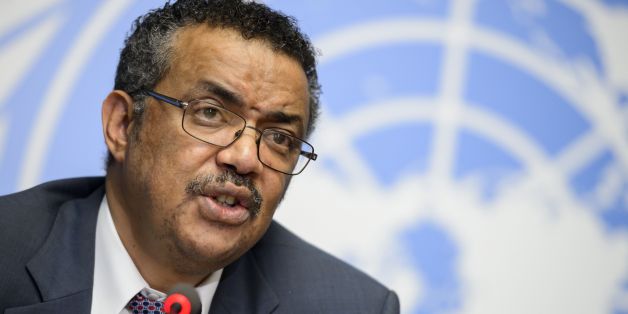
Dr Tedros Adhanom Ghebreyesus
Dr Tedros Adhanom Ghebreyesus, Director-General of the World Health Organisation (WHO). Photo credit: AFP / FABRICE COFFRINI / Getty Images

“We have agreement, registration, plus import permit, everything formally agreed already,” Tedros said. “All is ready now to really use it,” he said, adding that the Congolese government deserved praise for its response to the outbreak.

Earlier, the WHO confirmed 19 deaths in DRC following an outbreak of Ebola between April 4 and May 13.

The WHO also confirmed 39 suspected cases.

It said 393 people who identified as contacts of Ebola patients were being followed up.

Information about the outbreak in Bikoro, Iboko and Wangata health zones in Equateur province was still limited, the WHO said in a statement.

At present the outbreak did not meet the criteria for declaring a “public health event of international
concern”, which would trigger the formation of an emergency WHO committee.

The WHO said it has obtained 4,000 doses of Ebola vaccine and is preparing for deployment in the DRC, its Africa
director said on Sunday.

“We’re working on the deployment of these materials, especially readying the cold chain,” WHO Africa Director Matshidiso Moeti told Reuters by telephone.

“The start date of the vaccinations will depend on this deployment.”

Buhari launches N9b irrigation scheme rehabilitation project in Jigawa

0

President Muhammadu Buhari on Monday, May 14, 2018 launched the N9 billion Hadejia Valley Irrigation Scheme (HVIS) rehabilitation project in Auyo Local Government Area of Jigawa State.

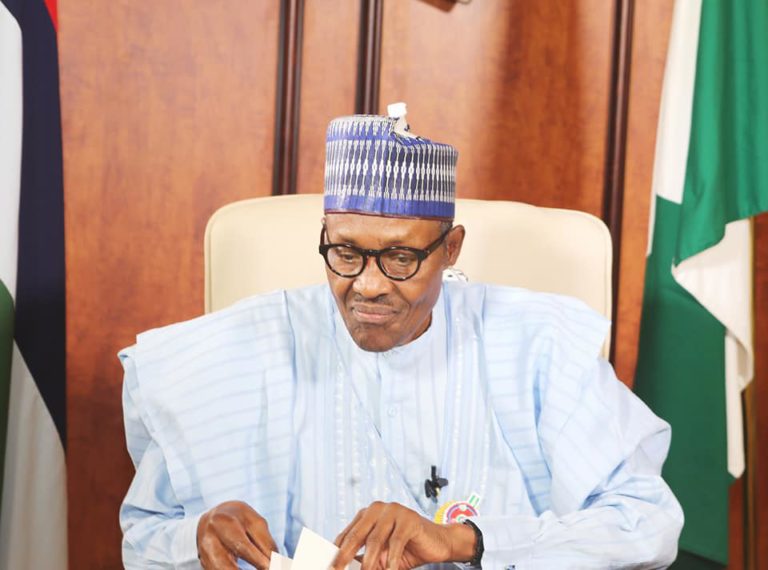
Muhammadu Buhari
President Muhammadu Buhari

The News Agency of Nigeria (NAN) reports that the project will be executed under the Transforming Irrigation Management in Nigeria (TRIMING) programme, which is supported by the World Bank.

Even though the president did not speak at the event, NAN learnt that TRIMING is the special intervention programme of the Federal Government, aimed at promoting sustainable development of irrigated agriculture in the country.

The contract for the HVIS project was awarded to CGC-YSEJ Joint Ventures in 2018 to execute the rehabilitation of existing gravity irrigation area, involving about 5,346 hectares, and expansion of about 778 hectares as well as the rehabilitation of the barrage.

The cost of the project is N9,391,038,925 and it has a three-year completion period.

NAN reports that the key components of the project include the rehabilitation of Hadejia Barrage and Headworks, with 26.2km embankment and water storage capacity of 11.4 million cubic metres.

It also involves the rehabilitation of the 30km Feeder Canal and North Main Canal, the expansion of the 32.8km South Main Canal and the rehabilitation of the Main Drain and Drainage Buffer.

The project, which was initiated around 1981 and 1982, was later abandoned due to poor funding.

By Muhammad Nasir Bashir

CSOs decry lack of basic facilities in Benue IDPs camps

0

The Benue Civil Society Organisations (CSO) Coalition on Monday, May 14, 2018 decried the absence of basic amenities in the eight Internally Displaced Persons (IDPs) camps across the state.

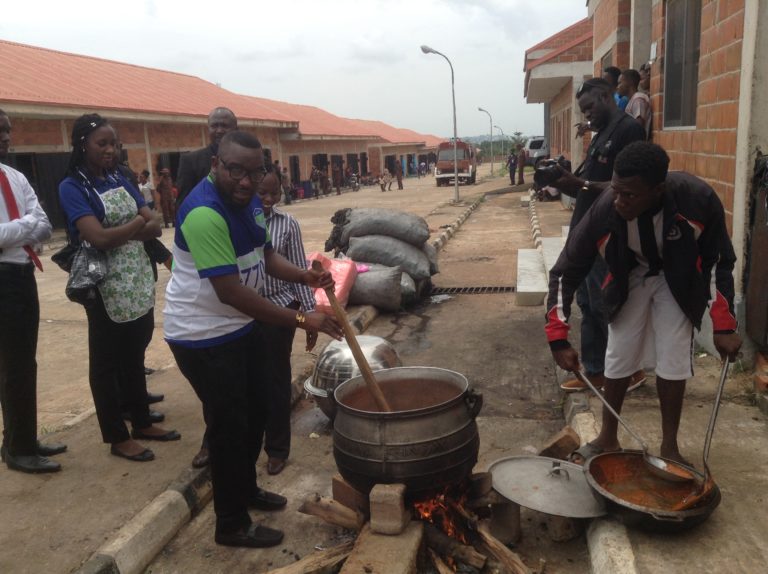
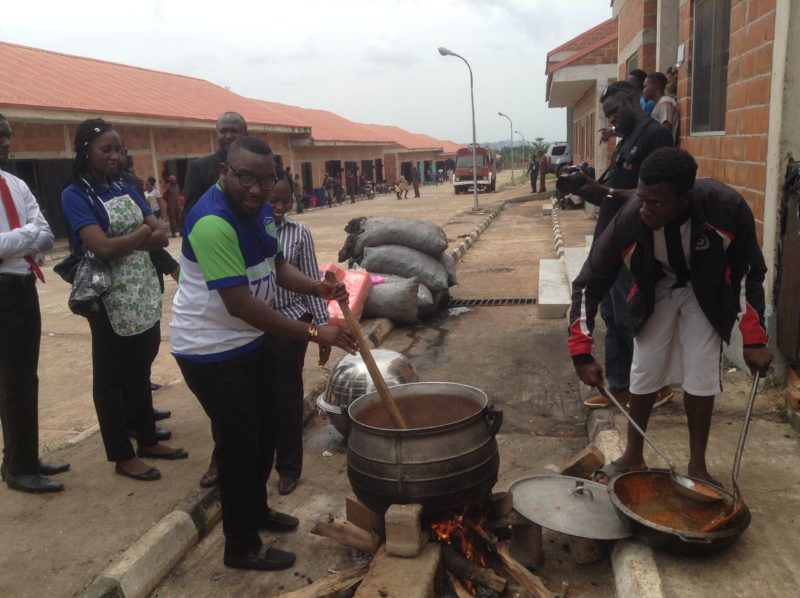
Fidelity Bank IDPs
Head, CRS and Sustainability, Fidelity Bank Plc., Mr Chris Nnakwe, lending a hand to cook a meal for IDPs in a camp in Benue State

The coalition conveyed its dissatisfaction in a statement which was given to News Agency of Nigeria (NAN) in Makurdi, the state capital.

NAN reports that Benue CSO is a network of 54 non-governmental organisations (NGOs), faith-based organisations (FBOs) and community-based organisations (CBOs), which has the “pursuit of peace in Benue State’’ as its common goal.

The coalition said in the statement that there was increasing humanitarian crisis in the eight IDPs camps which accommodated more than 500,000 persons.

It specifically noted that the camps lacked basic amenities and called for the intervention of the Federal Government and international agencies to rectify the situation.

“The coalition observes with dismay, the rising humanitarian crisis in the eight IDP camps, which are scattered across the state with an average population of 500,000 persons.

“The absence of basic health facilities, shelter, hygiene, food and education for children has become a grave concern,’’ it said.

The coalition said that communities in Benue, Taraba and Nasarawa states faced serious threat of annihilation by Fulani herdsmen whose activities included killing, maiming, looting, raping and the occupation of the people’s ancestral homes.

It stressed that the government’s inconsistent position on the killings in Benue had been frustrating efforts to get humanitarian assistance from local and international organisations.

The coalition noted that in spite of the presence of the military and other security agencies in Benue, the killings and occupation of communities had continued unabated with casualties mounting up daily.

“The recent murder of two priests and 17 worshipers in Mbalom, Gwer-East, as well as the gruesome killing of 26 persons in Omusu Okpokwu are fresh violent incidents.

“We, hereby, condemn in totality this spate of unavoidable killings. The incidents are abominable, barbaric and unbecoming of a modern society,’’ it said.

The coalition expressed support for the anti-open grazing law in Benue and urged all cattle breeders to ranch their cattle.

By Emmanuel Antswen

UN urges Africa to establish gender inclusive policies to achieve SDGs

0

The UN specialised agency on trade on Monday, May 14, 2018 urged African governments to establish gender inclusive policies in order to promote the achievement of Sustainable Development (SDGs).

Adejoke Orelope-Adefulire
SSAP-SDGs, Princess Adejoke Orelope-Adefulire

Nicholas Schlaepfer, Senior Adviser on Empowering Women to Trade at the International Trade Centre (ITC), told a news conference in Nairobi, Kenya that countries typically implement policies that are gender blind but their impact is not gender neutral.

“We are therefore encouraging African governments to put in place gender inclusive policies that will help to empower women and hence countries to achieve women related SDGs,” Schlaepfer said when ITC launched the Kenya chapter of SheTrades in the Commonwealth in a drive to connect more Kenyan women entrepreneurs to markets.

The SheTrades project aims to drive increased trade, productivity and competitiveness for women entrepreneurs and women-owned companies to ensure that they play an active role in international trade.

ITC also recently encouraged many governments to sign World Trade Organisation Buenos Aires Declaration on Women and Trade which seeks to increase the participation of women in trade.

Schlaepfer said that there is need to understand the impact of policies before they are implemented because if a trade policy favours one sector over another and the sector disfavoured is where more women are present then it will have a worse impact on women than on men.

He also praised Kenya’s policy of allocating at least 30 percent of government procurement to women entrepreneurs and other disadvantaged groups.

“We need to encourage more countries to emulate Kenya’s policy so as to empower women,” he said.

ITC said that in order for affirmative action policies on public procurement to be successful they have to be advertised and structured in a way that will make it easy for women to benefit from them.

Deeper relations between academia, industry advocated to foster Ghana’s industrial transformation

0

Whether or not investment in research will result in competitiveness, growth, job creation and quality of life is increasingly being determined by the relationship between science and industry. Indeed, meeting the complex needs of modern human populations requires industry and businesses to rely more on scientific researchers to develop new solutions.

Ghana
Deputy Minister of Trade and Industry, Robert Ahomka-Lindsay (second from left), with Provost of CBAS, Prof. Daniel Asiedu (to his right); and to his left are: Prof. Yaa Ntiamoa-Baidu, Chair of the CBAS Research Board; and Prof. George Oduro Nkansah, Director of the Institute of Applied Science and Technology; with some participants at the opening session of the 2018 Annual Science and Development Platform

In nations where science and industry collaborate effectively, the results are innovative developments that have benefited the society at large. And the academic community has been playing a key role in forging such mutually beneficial relations between scientists and businesses.

In most developing nations, academia is yet to seize the opportunity of playing the required catalytic role in facilitating a practical science industry partnership, which can maximise the full potential of such a relationship for sustainable national development.

Therefore, Ghana’s academia has been urged to deepen its relations with industry to make the country’s industrial sector more competitive in the global environment. The Deputy Minister of Trade and Industry, Robert Ahomka-Lindsay, made the call from the perspective, saying that a mutual relation between academia and industry would enable science play its lead role in the country’s quest for industrial transformation.

He was launching the 2018 Annual Science and Development Platform organised by the College for Basic Applied Sciences (CBAS), of the University of Ghana, Legon. The three-day event, which took place from April 25 to 27, 2018 at the Centre for African Wetlands, Legon, had “Science for Development: Ghana asks, Legon answers” as its theme. It also provided a forum for the College to interact with and initiate collaborative ventures with industry and also serve as an occasion for Industry to dialogue with members of the CBAS Faculty for solutions.

Mr. Ahomka-Lindsay spoke about Ghana’s agenda for industrial development and expectations from the scientific community. He indicated that this year’s Annual Platform fitted into government’s Industrial Transformational Agenda, with initiatives designed for high-level scientific and industrial deliberations on how to successfully implement the identified initiatives.

The initiatives include building the competitiveness of existing local industries by facilitating their access to medium and long term financing dubbed “Stimulus Package;” implementing the “One District One Factory,” initiative aimed at bringing industrialisation to the doorsteps of the people; introducing Strategic Anchor Industries to serve as new growth poles for the Ghanaian economy; and establishing regional industrial parks and special economic zones.

The Trade and Industry Deputy Minister said progress has been made in implementing some of the initiatives like the Stimulus Package and One District One Factory. He however admitted that “progress has mainly been in the inception phases” and opinioned that it will require the support of academia and industry to accelerate the process of industrial transformation for the country. “Your Platform could serve as one of the avenues … to support the Industrial Transformational Agenda,” he stated.

Mr. Ahomka-Lindsay added that as part of the Agenda’s implementation process, “invitation will be extended to relevant research and tertiary institutions that have specific roles to play… to provide tailor-made solutions to specific research requirements.”

But even before this agenda, Ghana’s universities had been positioning themselves to develop world class scientists who would meet national and global development needs. And this stance is reflected in their Strategic Plans.

For instance, in its 2014-2024 Strategic Plan, the University of Ghana’s first strategic priority is “to create a vibrant intellectual climate that stimulates relevant cutting edge research and community engagement.” And in the words of the Provost of the CBAS, Prof. Daniel Asiedu, “the University intends to make research central in its transformation process and ultimately strengthen its impact and visibility internationally.”

He explained that, to realise this agenda, the CBAS had to create an enabling environment to encourage the publication of research papers in journals of international importance, increase the number of multidisciplinary teams and also increase research fundraising by the collage. Prof. Asiedu said: “It is to meet some of these needs that the CBAS Science and Development Platform was established.”

He added that, through the Platform, “the College is fulfilling one of its fundamental objectives of being relevant to the socio-economic needs of the nation and also becoming a Centre for cutting edge research globally.” Additionally, the College will also be fulfilling its role as an academic institution helping Ghana fulfil her development agenda.

The Director of the Institute of Applied Science and Technology (IASTs), Prof. George Oduro Nkansah delivered a presentation on IASTs Industry-Academia Interactions: The tool for addressing Ghana’s industrial challenges.  He noted that while the university has expanded its engagement with industry, government and local communities, “there is a noticeable gap in moving the ideas and concepts generated through these interactions to the next level of testing and development.”

In order to address this gap, Prof. Nkansah said: “IAST has developed mechanisms of engagement that supports the translation of theoretical concepts into practical solutions for industry.” To this end, one of the institute’s strategies, aimed specifically at reducing the burden of graduate unemployment, is to build the capacity of students with the relevant skills for nation building.

Later in an interview, the Chairperson of the CBAS Research Board, Prof. Yaa Ntiamoa-Baidu, said: “The essence of the Platform is to encourage all researchers in Ghana to open up to industry, so that their findings can be used for national development.”

Touching on the membership of the Platform, she said “all of industry and other scientific organisations are free to join.”

The opening and initial plenary session, was followed by a series of nine thematic sessions on food and nutrition; computing and digital systems applications; mathematics and statistical application; agricultural sciences; and earth science.  The others were physical and biomedical science; environmental science; biological science and material research and industrial applications.

Under each of these thematic areas, presentations were made on various topics that highlighted the essential building blocks, required to foster the desired industrial transformation for accelerated national development in line with the Sustainable Development Goals (SDGs).

This year’s Annual Science and Development Platform underscored the fact that the academic community has become more aware of the potential of their science for industrial transformation.

It further brought to the fore the need for business people and scientists to work together to appreciate each other’s priorities, and to attain the benefits of closer collaboration such as improving innovation in research to respond appropriately to national needs.

By Ama Kudom-Agyemang

Oslo forest summit to take stock of 10-year-old REDD+ programme

0

In advance of the Global Climate Action Summit holding from September 12 to 14, 2018 in San Francisco, USA, and the 24th Session of the Conference of the Parties (COP24) to the United Nations Framework Convention on Climate Change (UNFCCC) scheduled to hold from December 3-14, 2018 in Katowice, Poland, the Oslo Tropical Forest Forum (from June 27 to 28) will shine the global climate spotlight on the role forests play in achieving Paris Agreement Goals to keep global temperatures below 1.5 degrees Celsius.

Project
The conference hopes to advance strategies for mobilising forests to help in achieving the ambitions of the Paris Agreement and the Sustainable Development Goals. Photo credit: UNDP Cambodia/Chansok Lay/Oddar Meanchey

Hosted by the Norwegian Ministry of Climate and Environment and the Norwegian Agency for Development Cooperation, the goal of the gathering is to celebrate results and identify remaining challenges 10 years after reducing emissions from deforestation and forest degradation (REDD+) was included in the climate change negotiations. It also hopes to advance strategies for mobilising forests to help in achieving the ambitions of the Paris Agreement and the Sustainable Development Goals.

A strong global alliance for tropical forests is said to have emerged in these last 10 years, and many of its representatives will attend the Oslo Tropical Forest Forum, where 10 new reports capture the latest technologies, policies and business practices in play to save the world’s forests will be released by leading forest experts.

.

Essentially, the summit was informed by:

  • Negotiations toward reducing emissions from deforestation and forest degradation (REDD+) were launched at the UN global climate talks in Bali, Indonesia in 2007. The Paris Agreement made REDD+ central to commitments aimed at preventing global temperatures from rising by 1.5 degrees Celsius.
  • Emissions from gross tropical deforestation account for an estimated 11 percentof annual carbon dioxide emissions; forests that remain intact currently absorb up to 30 percent of all carbon dioxide emissions.
  • Stopping deforestation, restoring forests and improving forestry practices could remove 7 billion metric tons of carbon annually – equal to eliminating 1.5 billion cars, more than all the cars in the world today.
  • Stopping deforestation and introducing better forest governance and tenure rights would also protect improved livelihoods optionsfor hundreds of millions of Indigenous Peoples, local communities and other groups that are dependent on tropical forests for their survival.

The conference is focused on five themes, which are listed to include:

  • the role of forests in meeting Paris Agreement goals;
  • progress toward meeting no-deforestation commodity supply chain commitments;
  • reducing illegal logging, corruption and other forest-related crimes;
  • recognising Indigenous Peoples’ rights and reducing violence against environmental defenders; and
  • financial disclosure and radical transparency for forest-risk commodities.

“Protecting, restoring and managing trees could get the world one-third closer to preventing the worst impacts of climate change. Yet, the world’s forests – especially tropical forests in Latin America, Southeast Asia and Central Africa – are increasingly under threat from the ever-expanding production of soy, cattle, palm oil and wood products,” said officials of Norway’s International Climate and Forest Initiative (NICFI) in a statement.

“Recent research is revealing that climate change itself is emerging as an increased threat to forests – and that forests provide climate benefits beyond carbon that we’re only just starting to understand. In addition, forests contribute to a wide range of Sustainable Development Goals, including access to clean water and clean energy.”

Preeclampsia: Silent killer increasing maternal, foetal deaths in Nigeria

0

Tolani Funsho, 28, recalls how she survived preeclampsia after an emergency C-Section was conducted on her eight months into her pregnancy.

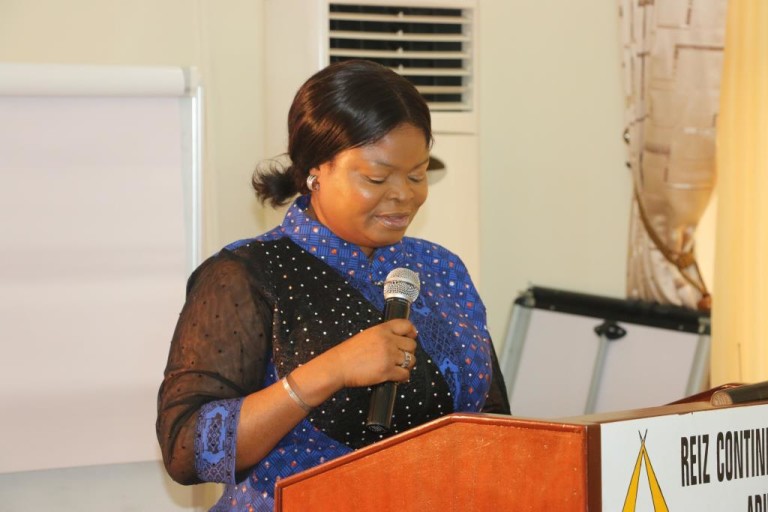
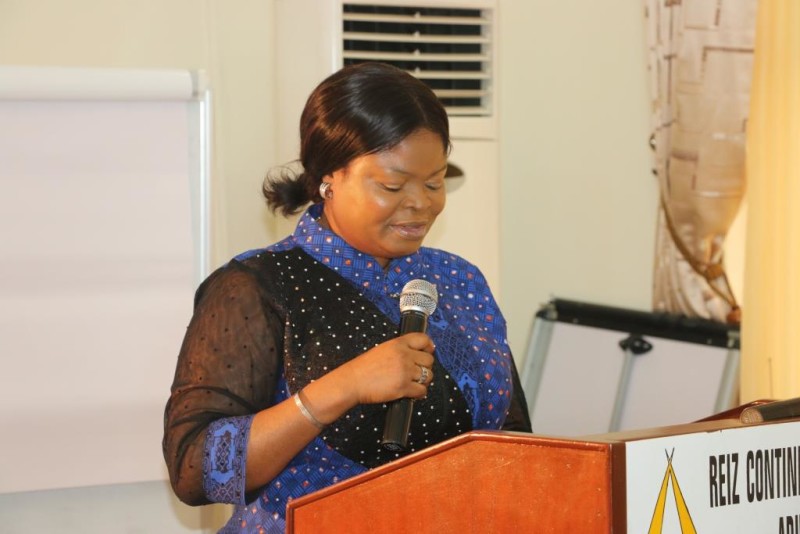
Preeclampsia
Preeclampsia is a pregnancy-related hypertensive disorder occurring usually after 20 weeks of gestation

“My ordeal started when I started noticing that my legs and other parts of my body were swollen every day I woke up,” said the mother of one, which prompted her to complain to her doctor.

The doctor advised that she was suffering from Edema, without explaining much, only advising her to always place her legs on a pillow when sleeping.

But, according to Funsho, she did not see much improvement in the condition.

“Í started to notice a change in my body at seven months pregnant. Getting to the eighth month of pregnancy, I started seeing mucus without blood stains. I was not convinced about what the doctor had told me, so I started to read up about what causes a woman to swell all over her body during pregnancy,” she narrated.

That is when she bumped into the name preeclampsia and began to read up all the symptoms. She got to learn that only a c- section could save her life and that of her baby before it leads to esclampsia.

Funsho prepared herself to have surgery instead of normal delivery, and lived to tell the story. Her baby will soon be five years old.

Preeclampsia is a pregnancy-related hypertensive disorder occurring usually after 20 weeks of gestation. These symptoms are easily identified for women who monitor their weight. Other common symptoms include pain, constant headache and blurred vision.

Aminat Jaji was not lucky to tell her story. She died at delivery, but while her baby survived, it also died three days later. Her relative, Kuburat Olaiwola shared the sad story.

“It was not a good one for us as her family, because we did not know what preeclampsia is or what could have made her all blotted,” she said.

“All we noticed was that she was swollen all over her body, her face and legs especially She did not complain of any pain, whenever she walked around ,she felt a bit better.” Kuburat explained.

“Though it’s quite unfortunate that we lost her even after we agreed to the emergency C-section,” she continued. “Eight months into her pregnancy we started to run all sorts of tests. At the end of the day, we were told she had too much protein in her urine.”

People with proteinuria have urine containing an abnormal amount of protein. The condition is often a sign of kidney disease. It can be detected through a urine test conducted during a routine physical examination.  Blood tests are then carried out to see how well the kidneys are functioning.

Proteinuria can also be a result of overproduction of proteins by the body, one of its first signs may be proteinuria that’s discovered by a urine test done during a routine physical exam. Blood tests are then done to see how well the kidneys are working.

“We did all we could do but at the end of the day we lost her and the baby due to carelessness on the part of health care givers,” explained Kuburat.

“Her test results were not properly explained to her,” said Kuburat, noting that had this been the case, they would have taken action to manage the condition at the earliest opportunity, to prevent her death and that of the baby.

For Koya Ogunwale, the memory he shared with the love of his life is all he has left. Mariam Ogunwale died because of late detection of preeclampsia.

Maternal health and newborn health are closely linked as more than three million newborn babies die every year, and an additional 2.6 million babies are stillborn, according to statistics from the Pre-Eclampsia Foundation.

But one major point of concern is the lack of knowledge about the condition.

To establish how much knowledge the general public has on this condition, I visited a number of hospitals in Lagos state to speak with sources.

My first stop was at a private hospital, Longing Medicals, where I attended the ante natal classes three times in a row. I had a long chat with the senior nurses who take the classes, one of who told me she only knows about edema as they always check protein in the urine as a matter of routine.

It is instructive to note that many health centres in Lagos only talk about how the expectant women can take care for her during pregnancy. Major topics discussed are nutrition, care for the baby once it arrives and regular exercises to promote smooth delivery.

Toyin Ayeni is one of the women I spoke with at the Lagos State Teaching Hospital, Idi Araba.

“This is my first time to hear about preeclampsia. I only know edema, the condition in which ones legs are swollen,” she said.

The case is not different for women in Ifako-Ijaiye General hospital, where Ajike Akinwande said it is high time women knew other imminent threats during pregnancy.

“Sincerely preeclampsia sounds new to me, I always hear of maternal mortality but I didn’t know this contributes largely to it,” she explained.

Preeclampsia is one of the major causes of deaths of the mother and child at birth, but also accounts for pre-term births in developing countries like Nigeria.

It is a multisystem disorder, meaning it occasions organ failure.

The World Health Organisation (WHO) estimates that the incidences of preeclampsia are seven times higher in developing countries than in developed countries. According to the organization, developing countries record 2.8% of live births compared to 0.4% accounted for in developed countries. The 2.8% represents only four hundred live births out of about one thousand.

A gynecologist, Dr. Demiji Ojo, explained that any woman with preeclampsia should be constantly monitored and managed till the pregnancy is about 37 weeks, recommending emergency Caesarian Section delivery for affected women, to save both lives.

He says deaths in pre-eclampsia occur mainly due to late detection or in cases where the woman is not willing to undergo an emergency C-Section.

“It is quite unfortunate that Nigeria health care system is poor, and most women are not knowledgeable especially in the North where they cannot get easy access to good health services,” said Dr. Ojo.

One of the causes of Preeclampsia, says Dr.  Ojo, results from a poorly functioning placenta. “This is an uncommon but serious complication of pregnancy. It occurs when the placenta does not develop properly, or is damaged,” he explains.

Researchers have linked this to poor nutrition or high body fat.

In all 10% to 15% of maternal deaths globally are directly associated with pre-clampsia and if, left untreated, it progresses to eclampsia which is an advanced case of preeclampsia.

Preeclampsia is not specific to women who have had high blood pressure in the past. In the mother, pre-eclampsia may cause premature cardiovascular disease, such as chronic hypertension, ischemic heart disease, and stroke, later in life, while children born after pre-eclamptic pregnancies and who are relatively small at birth, have an increased risk of stroke, coronary heart disease, and metabolic syndrome in adult life.

To some women, the condition manifests in a mild way, especially for those who are able to detect it early. In severe cases, preeclampsia may cause an expectant woman to develop seizures or even slip into a coma.

Prevention of any disease requires the availability of methods for prediction of those at high risk for the disorder, Although numerous clinical and biochemical tests have been proposed for prediction or early detection of preeclampsia, most remain unrealistic for general use in most developing countries as most women in northern Nigeria do not have access to good health services.

Some of the biochemical tests used to detect pre-eclampsiain Nigeria are routine urine test and liver function tests. This helps to detect the amount of protein the urine and if the liver is malfunctioning.

Why is this so? Medical expert, Dr. Korede Akanni, says preeclampsia affects the central nervous system of such women as the most affected do not pay much attention to their health and changes in their body.

Approximately 800 women die from pregnancy or childbirth-related complications globally, according to the Preeclampsia Foundation. Ninety-nine percent occur in developing countries. Though according to the National Institute of Child Health and Human Development, the exact number of women who develop preeclampsia is not known, some estimates suggest that preeclampsia affects 2% to 8% of all pregnancies globally.

Medical practitioner and Reproductive Health expert, Dr. Abimbola Adekanbi, said more needs to be done to prevent the medical conditions of women from early stage of pregnancy, while calling on women to also know monitor blood pressure, salt and protein level.

“As an expert, I usually advice women with such condition or those who have tendency of having such to always go for urine test to monitor their protein level and also check their intake of salty food,” she added.

Health experts are calling on the Nigerian government to look inward and allocate more funds to the health sector budget as this will go a long way in reducing maternal and child mortality, especially through early detection of conditions such as preeclampsia in Nigeria.

By Ruth Akinwunmi-King