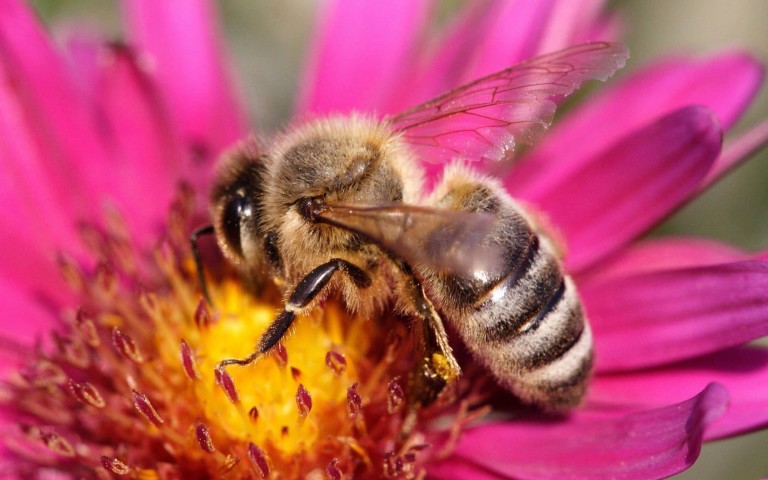
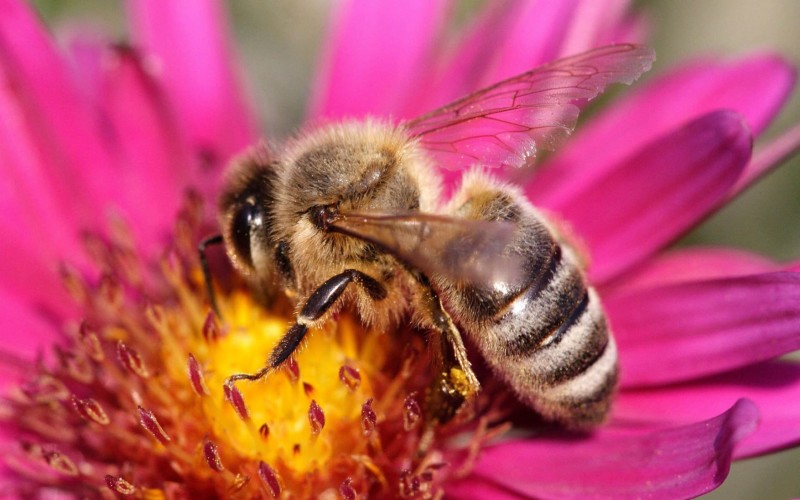
For centuries bees, busy as they are known to be, have benefited people, plants and the planet. By carrying pollen from one flower to another, bees, butterflies, birds, bats and other pollinators facilitate and improve food production, thus contributing to food security and nutrition. Pollination also has a positive impact on the environment in general, helping to maintain biodiversity and the vibrant ecosystems upon which agriculture depends.
Bee pollination
The first ever World Bee Day was observed on Sunday, May 20, 2018 in an apparent bid by the United Nations to draw attention to the essential role bees and other pollinators play in keeping people and the planet healthy. The Day, adds the UN, provides an opportunity for governments, organisations, civil society and concerned citizens everywhere to promote actions that will protect and enhance pollinators and their habitats, improve their abundance and diversity, and support the sustainable development of beekeeping.
The date for the observance was chosen as it was the day Anton Janša, a pioneer of modern apiculture, was born. Janša came from a family of beekeepers in Slovenia, where beekeeping is an important agricultural activity with a long-standing tradition.
The proposal set forth by the Republic of Slovenia, with the support of Apimondia, the International Federation of Beekeepers’ Associations and the Food and Agriculture Organisation of the UN (FAO), to celebrate World Bee Day on May 20 of each year met with approval by the United Nations General Assembly in 2017.
The World Bee Day intends to shine a light on the habitat of pollinators to improve the conditions for their survival so that bees and other pollinators may thrive.
FAO Director-General, José Graziano da Silva, said: “The World Bee Day presents an opportunity to recognise the role of beekeeping, bees and other pollinators in increasing food security, improving nutrition and fighting hunger as well as in providing key ecosystem services for agriculture.”
Slovenia’s Minister of Agriculture, Forestry and Food, who is also Head, World Bee Day project, Dejan Zidan, noted: “This is the beginning of a difficult process of the protection of bees and other pollinators. We must do more than just talk – we should undertake concrete activities to increase care for bees and promote the development of beekeeping everywhere.
On Friday, May 18 in Ljubljana, over 150 beekeepers from around the world gathered in Slovenian capital city for a conference to discuss the role of bees and challenges in beekeeping ahead of the first World Bee Day, declared by the UN for observance on May 20.
Philip McCabe, president of the International Federation of Beekeepers’ Associations or Apimondia, highlighted the role of bees as pollinators, saying there were many challenges ahead.
Speaking at the conference, Zidan said that, by having World Bee Day declared, Slovenia symbolically proved that honey bees and other pollinators were endangered and should be helped.
“We secured an important victory, and now we’re going forward,” he said, stressing activity had been launched to have bees declared an endangered species at the EU level.
Slovenian Beekeepers’ Association president, Bostjan Noc, who had given the idea for World Bee Day and is happy it was declared, said celebrations alone would not save honey bees, but concrete measures to protect them will.
Zirovnica Mayor, Leopold Pogacar, added he was proud that World Bee Day was being celebrated in the hometown of the pioneer of modern beekeeping, Anton Jansa (1734-1773).
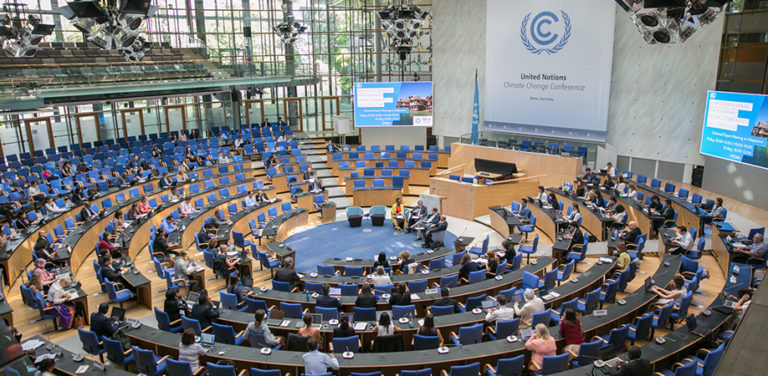
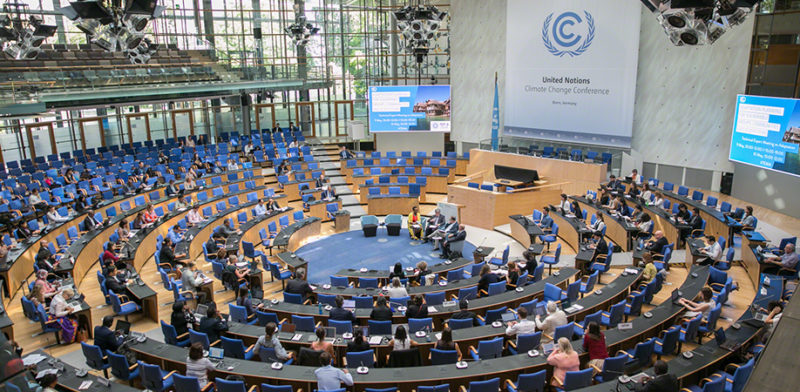
In conjunction with the Bonn Climate Change Conference 2018 that ended on Thursday, May 10, 2018, experts from around the world gathered in the German city to champion the benefits of circular economies.
A session during the Bonn conference
Having come a long way from its theoretical inception in the 1960s, circular economies are now being implemented with ever greater success by front-running government ministries, businesses, NGOs and international organisations.
Experts convened to share their innovative approaches, lessons learned and tangible benefits for the climate and sustainable development. Aligned with the year-long Talanoa Dialogue around ambition before and after 2020, the expert gathering helped to boost climate action before 2020 in concrete terms.
“This meeting plays a crucial role to boost climate action before 2020 by informing and inspiring countries about the currently available solutions and best practices on waste-to-energy and supply chain re-design,” said Mr. Emmanuel Dlamini, chair of the subsidiary body for implementation in his opening remarks.
He asked the experts and participants to ponder ways forward and necessary actions to be taken by countries, cities, businesses, and organisations to replicate and upscale identified innovative approaches.
A “circular economy” is an alternative to a traditional linear economy (make, use and dispose). It aims to use resources as long as possible, extract the maximum value from them and recover and regenerate materials at the end.
Supply chain redesign solutions are integral parts to achieving circular economies and the associated triple benefits: economic, environmental and employment.
Waste-to-energy: Best practices from the government and technological innovators
A number of experts presented innovative technologies for waste-to-energy solutions and associated challenges.
Mr. Le Viet Vinh from Viet Hien Coffee Processing Machinery, Vietnam explained the pyrolysis-flox technology, which is very useful and efficient for turning agricultural waste (such as rice husks, coffee husks, maize spindles, and cashew shells) into clean heat energy and biochar, a natural soil enhancer.
Ms. María José Gonzalez from Biovalor Project, Uruguay gave an example from two pilot projects of how slaughterhouse’s waste from 500 cows is powering a biogas plant to meet the energy demand of the nearby community. However, technological innovation also comes with some barriers. “One of the barriers is that this kind of project has high investment risks for the size of our producers. Also, there is still a lack of knowledge about technologies,” she said.
Ms. Jenitha Badul, a representative from Department of Environmental Affairs, South Africa explained that “…the initial investments for waste-to-energy solutions are quite high, but the return is fast. A balanced package of supportive legal framework, political leadership and an incubation fund for start-ups through public and private investment could spur such solutions.”
Re-designing supply chain to achieve circularity
Ms. Ines dos Santos Costa from Ministry of Environment Portugal told the gathering of the ministry’s important public outreach initiative on circular economies. “We are focusing on raising awareness to inspire the public and companies about the circularity. Our means are a website, roadshows and workshops to showcase the best examples of companies, products, and projects in implementing a circular economy. We also have a funding program to provide start-up investment and support,” stated Costa.
It is also interesting to see what the private sector is doing for circular economies and how it is working with the governments for circular economy to be adopted in the supply chain. As cited by Mr. Stefan Henningsson from WWF Sweden, Agriprotein in South Africa is reusing organic waste protein to replace fish and soy meal in animal feedstock.
In doing so, they reduced emissions by 23 million tons of CO2 per year by 2014. This initiative prevents burden on marine life, land use, transport and landfill, and CO2 are saved in feedstock sourcing. Another initiative comes from Bamboo Winding Pipelines in China where bamboo is used to replace nonrenewable material, such as steel, concrete, and plastic. Thus, 63 million tons of CO2 avoided.
Ms. Preeti Srivasta, Director Corporate Climate Action of Ecofys, said, “Industries are creating circular economy initiatives right now. But the private sector by itself will not be able to make a systemic change for the circular economy. Therefore, it is important to start engage with the suppliers and redesigning the supply chain.”
Enhanced innovation and collaboration needed to upscale and replicate identified solutions
Sira Saccani from Climate-KIC suggested ways to harness the potential of digital innovation in fostering circular economy activities. She gave an example of Pendula Resource Management from Germany, in which they enable companies and recyclers to easily organise, track, and then review recycling operations online using real-time data and analytics.
Mr. Alois P. Mhlanga from United Nations Industrial Development Organisation (UNIDO) said: “There is a huge potential for innovation and business models to be scaled up. It is critical to create easy access to financing for entrepreneurs and innovation start-ups, coupled with capacity building support.”
Minister Inia Seruiratu, the high-level champion, said, “The multi-stakeholders’ cooperation is needed to unlock high mitigation potential opportunities, including sustainable development benefits. The enhanced partnership and engagement amongst policy makers, industries, cities, regional and local organisations, civil societies can create an inclusive business model for waste-to-energy and supply chain redesign.”
He also added that the Technical Expert Meetings are very important vehicles to take a deep dive into the specific policies and opportunities with high mitigation potential that are both actionable in the short-term and align with the long-term goals of Paris Agreement.
This event was held as part the technical examination process on mitigation (TEP-M), mandated by governments at the United Nations Climate Change Conference in 2013. In the mandate, governments set the aim of exploring high-potential mitigation policies, practices and technologies with significant sustainable development co-benefits that could increase the mitigation ambition of pre-2020 climate action. This process was further specified at COP 20.
A Strategic Anti-Poaching Operations Centre located in the Chewore Safari Area in Zimbabwe has been handed over by Japanese Ambassador, Toshiyuki Iwado, to the Zimbabwe Parks and Wildlife Management Authority.
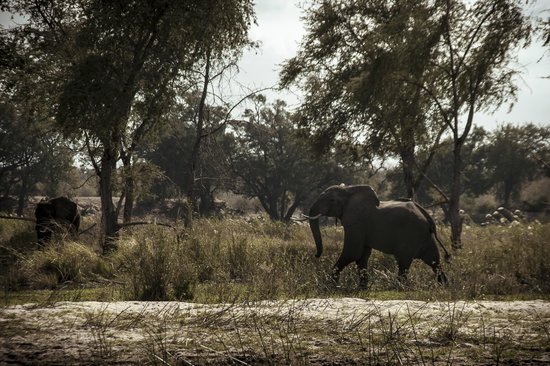
Elephants at the Chewore Safari Area in Zimbabwe
The centre serves as a post for field rangers conducting operations, and has significantly strengthened the Wildlife Management Authority’s capacity to address current and emerging threats impacting this important site of the CITES “MIKE” programme to monitor levels of illegal killing of elephants.
The Chewore Safari Area, a World Heritage Site, is one of the last truly wild ecosystems left in the world. The area provides shelter for immense congregations of Africa’s large mammal populations, which concentrate on its flood plains. However, the site faces a real threat from poaching and, in recent years, elephants have come under increasing pressure.
In 2016, seven elephants were reportedly poached between January and July in this area alone. In this context, the capability of the Zimbabwe authorities in keeping surveillance over, and preventing elephant poaching in the area has been enhanced through the establishment of the Centre, allowing for better and more secure planning and management of patrol activities by the rangers.
“The illegal wildlife trade is an urgent global issue. Japan is deeply committed to the cause of protecting elephants from atrocious acts by international criminal organizations and others. Thus, Japan attaches great importance to supporting range states, such as Zimbabwe, in the fight against elephant poaching, including through the assistance via the CITES MIKE Programme,” said Mr. Iwado, Ambassador of Japan to Zimbabwe. “Japan continues to make utmost efforts in implementing the trade control of ivory under CITES, and to work together with our international partners to tackle the problem of elephant poaching.”
In light of shared concerns in the international community about the poaching of elephants in Africa and the illegal trade in their ivory, the Government of Japan made a voluntary contribution of $60,000 for a project to establish the Anti-Poaching Operations Centre in the Chewore Safari Area of the Lower Zambezi Valley. The Centre has been operational since October 2017.
“Today we are witnessing an initiative that demonstrates the importance of collaborative work and all interested parties are bringing to conservation. This facility we are celebrating today plays an important role in easing patrol operations in the sub-region,” said Arthur Musakwa, Director, Conservation of the Zimbabwe Parks and Wildlife Management Authority.
“This project greatly complements the work undertaken by the CITES MIKE programme in the Chewore Safari Area in collaboration with the Zimbabwe Parks and Wildlife Management Authority and the Tashinga Initiative that implements the CITES MIKE programme in the area. We are therefore most grateful to the generous support of the Japanese Government,” said Thea Carroll, Coordinator of the MIKE Programme. “The CITES-MIKE Programme is supporting the Chewore Safari Area to strengthen its law enforcement capacity and systems aimed at reducing the illegal killing of elephants and other wildlife species.”
“The funding provided by the Government of Japan for the development of essential infrastructure needed to support management operations is invaluable. The investment and attention given to the area which is relatively remote and rarely visited has had a significant impact on the overall morale of the staff based in Chewore Safari Area by enhancing their capacity to effectively protect the area,” added Carroll.
Mr. Arthur Musakwa, Director of Conservation; Mr Kwanele Munongo, Regional Manager of the Zimbabwe Parks and Wildlife Management Authority; Ms. Lynne Taylor, Founder and Executive Director of the Tashinga Initiative; Mr. Dave Henson, CITES MIKE Programme Officer; and wildlife rangers in the area were present at the handover ceremony that held on Wednesday, May 16, 2018.
The Ebola outbreak in Congo poses a greater danger to the Central African country and the region than previously assumed, according to the World Health Organisation (WHO).
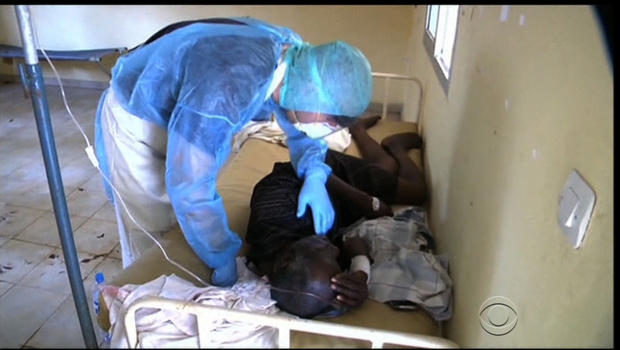
An Ebola virus patient being attended to
The recent confirmation of a case in Mbandaka, a large city that straddles national and international transport routes, had increased the risk of the virus spreading further, the UN health agency said on Friday, May 18, 2018 in Geneva, Switzerland.
“WHO has, therefore, revised the assessment of public health risk to very high at the national level and high at the regional level,’’ it said in a statement.
The global significance of the outbreak that has killed 14 people so far is being discussed at a WHO emergency meeting and was expected to be announced at a later time.
The WHO had previously said that the chance of a global outbreak is low.
In Congo, the Health Ministry announced that the number of confirmed Ebola cases in the country had risen from three to 14.
“In total since the start of the epidemic, there have been 45 cases of haemorrhagic fever, including 10 suspected cases, 21 probable cases and 14 confirmed cases,’’ the ministry said late Thursday.
While one person was confirmed dead from the virus, 25 people are suspected to have died from it, the ministry said.
One of the most contagious viral diseases known, Ebola’s symptoms are extraordinarily painful and include severe vomiting, diarrhoea, fever, impaired kidney and liver function as well as internal and external bleeding.
The UN and aid organisations are racing to prevent the recurrence of an outbreak like in 2014, when 11,000 people died in the West African epidemic that was centred in Guinea, Liberia and Sierra Leone.
The executive of the EU on Friday announced the release of €1.6 million ($1.9 million) to help tackle the outbreak, with most of the money going to the WHO to provide logistics support.
The 2018 Annual Meetings of the African Development Bank (AfDB) Group commences on Monday, May 21, 2018, in Busan, Korea, addressing “Accelerating Africa’s Industrialisation.” It ends on Friday, May 25.
Busan in Korea is hosting the 2018 Annual Meetings of the African Development Bank (AfDB) Group and the 2018 Korea-Africa Economic Cooperation (KOAFEC) Conference
Industrialise Africa is one of the AfDB’s High 5 priorities to speed up the continent’s development. The bank’s President, Akinwumi Adesina, states, “The secret of the wealth of nations is clear: developed nations add value to everything they produce, while poor nations export raw materials. Africa must quit being at the bottom of the global value chains and move rapidly to industrialise, with value addition to everything that it produces.”
Busan is said to provide evidence for discussions about why some countries, especially in Africa, stagnate while others make tremendous progress via industrialisation. In the 1960s, Korea’s economic prospects were considered more challenging than those of most African countries. Today, however, the country is regarded as being at the top of the development ladder.
Korea’s industrial transformation is famous for high-tech consumer electronics, cars, ships and oil and gas platforms. Korea is currently building the world’s largest semi-submersible platform.
Africa’s lack of industries is said to be largely responsible for its low standing in global development. African industry generates an average of $700 of GDP per capita, barely one-fifth of East Asia’s $3,400, which probably explains why it continues to depend for most needs on industrialised economies despite its own strong economic growth for almost two decades, according to the AfDB.
It notes that low-tech unprocessed natural resources comprise the bulk of African exports, representing more than 80% of exports from Algeria, Angola or Nigeria, for example.
At the AfDB meetings, thousands of delegates, Heads of State, public and private sector CEOs, development partners, academics, civil society and media are expected to gather to reflect on Africa’s industrialisation and related issues including climate change, infrastructure, private sector and governance.
A series of knowledge events are organised to generate new ideas for developing and financing Africa’s industrialisation. The meetings will include a High-Level Presidential Dialogue: Visions, Experiments and Lessons Learned at whose panel political leaders from Africa and Korea will present their visions and strategies for industrialisation and ideas for overcoming the challenges of implementation.
On Wednesday, May 23, the AfDB will launch its flagship economic publication, the “African Economic Outlook (AEO) 2018”. The following day, it will provide an overview of its operations, financial profile and capital market activities for 2017 during the Financial Presentation.
The Federal Government remains strongly committed towards supporting initiatives that promote mass use of clean and renewable power solutions especially among Micro, Small and Medium Scale Enterprises (MSMEs) for sustainable economic growth.
Minister of State for Industry, Trade and Investment Hajia Aisha Abubakar, stressed the point in Lagos at the inauguration of an off-grid national solar power solutions for empowering MSMEs in the country.
A new United Nations (UN) report shows that whilst short-term prospects for the world economy are improving, with the world gross product expected to expand by 3.2 per cent in both 2018 and 2019, a lot more needs to be done to avert a major economic downturn linked to unchecked climate change.
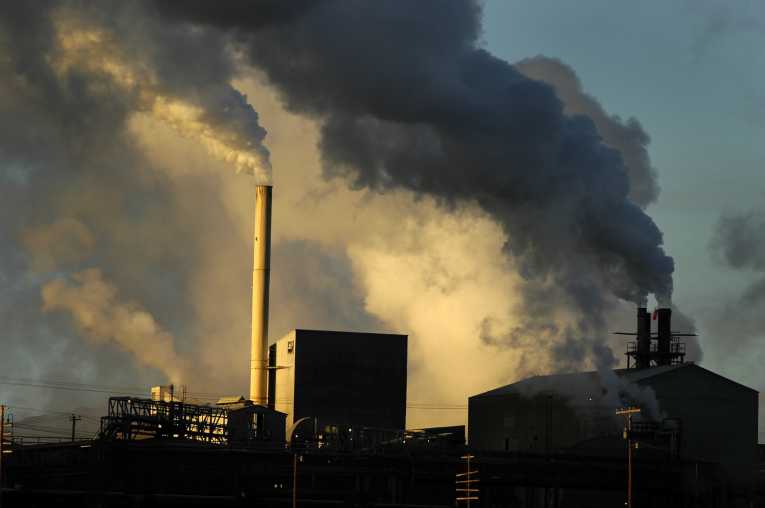
Greenhouse gas increases are leading to a faster rate of global warming. Photo credit: earthtimes.org
The study, prepared by the UN’s Department of Economic and Social Affairs, points towards a 1.4 percent increase of energy-related carbon dioxide emissions in 2017 due to a combination of accelerated economic growth, relatively cheap fossil fuels and weak energy efficiency efforts.
“While recent evidence points to progress in decoupling emissions growth from GDP growth in some developed economies, it is still manifestly insufficient. The rate of global energy efficiency gains has been slowing since 2015, reaching 1.7 percent in 2017 – half the rate required to remain on track with the Paris Agreement,” say the authors of the report titled: “World Economic Situation and Prospects as of mid-2018.”
Improving energy efficiency and a radical shift to low carbon for the world’s markets is integral to meeting the objectives set forth by the Paris Agreement, which aims to respond to climate change by keeping a global temperature rise well below 2 degrees Celsius above pre-industrial levels and as close as possible to 1.5 degrees C.
The authors of the report say that several steps can be taken to notably align the rate of energy efficiency gains with the goals of the Paris Agreement. These include the reform of fossil fuel subsidies and taxes, deploying renewable energy technology, and decreasing the cost of renewable energy generation.
Warnings of Climate Impacts Setting In
Man-made greenhouse gas emissions account for 2016 and 2017, being the two hottest years on record.
Evidence from the report states that a rising global average temperature could translate into a slower growth of per capita output in countries, with a high average temperature, most of which are low-income countries.
The sectors of agricultural production, labour productivity, weather dependent industry, capital accumulation and human health are most at risk for disruption from an unpredictable climate.
Warmer climates create shifting rainfall patterns, rising sea levels, and an increased frequency of extreme weather events. Respectively, these events can move the locations of farmlands, endanger Small Island Developing States, and threaten large population centres.
Policy Reform Crucial to Meeting Paris Agreement Goals
The report says that a reform of fossil fuel policy could increase the rate of energy efficiency gains.
Additionally, the use of new technologies such as wind, solar, electric vehicles and battery storage is critical.
In 2017, renewables accounted for 61 percent of all newly installed net power capacity in 2017 with solar alone encompassing 38 percent.
Falling costs for solar and wind power supported the economic viability for several renewable energy projects.
But even with the newly-installed capacity, renewable energy today only accounts for 19 percent of power capacity and 12.1 percent of power generation around the globe.
At the current rate of change, the pace of power transition would take approximately 55 years for the share of renewables to reach 50 percent of earth’s total energy capacity – too late to ensure the Paris Agreement’s goals can be met.
Executive Director, Water Supply and Sanitation Collaborative Council (WSSCC), Mr Rolf Luyendijk, has commended the Federal Government for the cessation of open defecation in five local government areas in the country.
Executive Director of WSSCC, Mr Rolf Luyendijk
He conveyed the commendation on Wednesday, May 16, 2018 at a meeting with members of the Programme Coordinating Mechanism (PCM) of the Rural Sanitation and Hygiene Programme in Nigeria (RUSHPIN), in Abuja, the federal capital city.
The five local government areas are Obanliku, Bekwarra, Yakur Local Government Areas (LGAs) in Cross River State as well as Dass and Warji LGAs in Bauchi State.
Luyendijk, however, underscored the need to get more communities to imbibe the culture of building and using toilets, adding that efforts to end open defecation were a worthwhile venture.
He reiterated that the cessation of open defecation in the five local government areas was praiseworthy and commended the Benue Government, in particular, for releasing N50 million counterpart funds to scale up sanitation interventions in the state.
“To have five open defecation-free LGAs is commendable, it is a good progress but let us be ambitious as we look forward to one open defecation-free state.
“The payment of N50 million from the Benue Government is also commendable, it shows its commitment to the RUSHPIN programme,’’ he said.
Luyendijk expressed hope that with the creation of Water, Sanitation and Hygiene (WASH) units in all local government areas, more communities would be out of the poverty cycle that was fuelled by poor hygiene practices.
The executive director said that the role of advocacy in sensitising decision makers to the benefits of budgeting for sanitation and hygiene could not be over-emphasised, calling for sustained commitment in that regard.
He said that WSSCC was partnering with the “Sustainable Water for All’’ team towards achieving target of leaving no one behind, in line with the objectives of the Sustainable Development Goals (SDGs), while increasing partnership for scaling up access to WASH facilities.
The PCM Chairman, Mr Emmanuel Awe, said that his team was carrying out advocacy visits to the beneficiary states of Benue and Cross River because of the need to ensure the timely release of counterpart funds.
He said that state governments ought to show more commitment to hygiene promotion by taking ownership of WASH programmes, adding that this would be for the benefit of their citizens.
Dr Ella Ejembi, General Manager, Benue Rural Water Supply and Sanitation Agency (BERWASSA), called for continuous support for Internally Displaced Persons (IDPs) in the state.
He said that the conflicts and clashes in some parts of the state thwarted efforts to have one open defecation-free local government area.
Ejembi said that 1,350 communities, out of the 1,509 communities in Agatu, Gwer East and Logo LGAs had been declared open defecation free by the WASH units of the local government councils.
Three local government areas each in Benue and Cross River states are currently benefiting from the RUSHPIN programme.
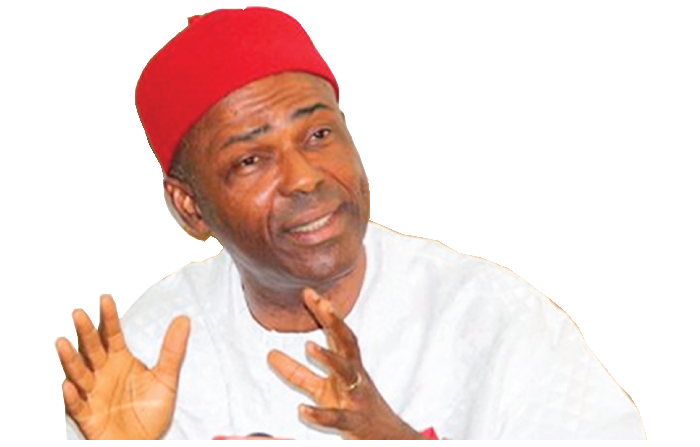
The National Biotechnology Development Agency (NABDA) says it has created an online portal on animal genetic resources to improve scientific findings in the country.
Dr. Ogbonnaya Onu, Minister of Science and Technology
The Project Lead, Animal Genetic Resources, NABDA, Dr Mustapha Popoola, disclosed this to the News Agency of Nigeria (NAN) on Friday, May 18, 2018 in Abuja.
Popoola is also Secretary, National Advisory Committee, Animal Genetic Resources in Nigeria.
According to him, a lot of scientists in the country are doing different things in different parts of the country which is not documented anywhere.
He said the decision to create the portal came at a stakeholders’ meeting where scientists insisted it was necessary to have an online portal whereby research results and findings could be submitted from anywhere in the country.
According to him, the portal would be managed by NABDA under the animal genetic resource project, and the web address will soon be made public.
He said: “It is an encrypted portal with some level of security; there are things you can access as a contributor with particular write-ups or research works.
“However if you don’t have that, it will become difficult because we need to protect people’s intellectual property rights.
“We are going to be aggregating published work, ongoing researches, and funded projects nationwide that have to do with livestock.
“So it now left to anybody who wants to do anything in the country both internationally or locally to go through it and see clearly what you want to do.
“It gives the researcher the information about the status of animal genetic resources in the country, part of the icons in the portal has provision for a short profile of all the experts in the field nationwide.’’
Popoola added that professors from every university, depending on their specialisations, can be contacted through the portal.
He described the portal as a national asset that would have linkages to official portal of key ministries like the ministries of science and technology, and agriculture, as well as other relevant ministries and agencies.
Popoola said the portal was the first of its kind in the whole of Africa and it would be expanded to cover ECOWAS countries if it records huge success.
He said the portal would also facilitate both local and foreign direct investments because people would have good information on investment “that are verifiable and precise’’.
“It will give the world a clear picture of what Nigeria is doing in the area of genetic resources research and other research works which otherwise would not be known by the world,’’ he said.
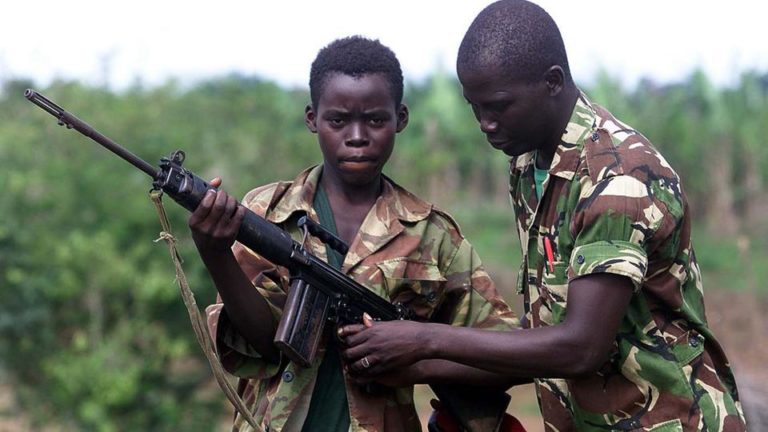
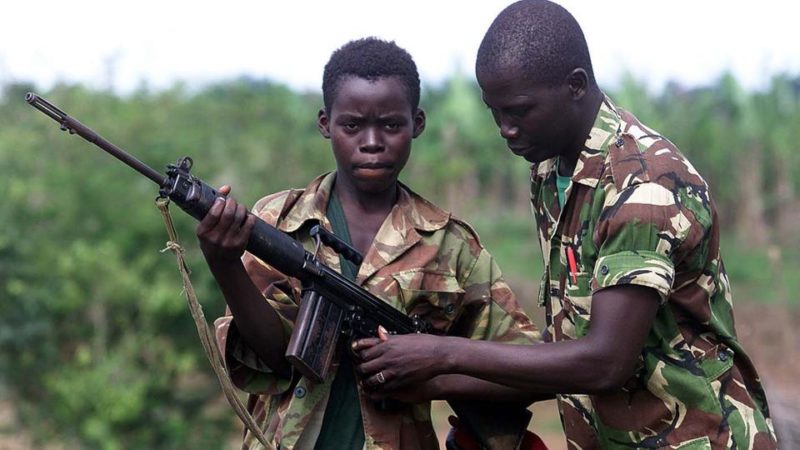
About 210 child soldiers were released by rebel groups in South Sudan’s Pibor area, the United Nations Children’s Fund (UNICEF) confirmed on Friday, May 18, 2018.
A fourteen year old child soldier for the Sierra Leone Army, Abu Kamara, left
Mahimbo Mdoe, UNICEF’s Representative in South Sudan, said in a statement issued in Juba, the nation’s capital, that they were released on Thursday.
“Every time a child is released and able to return to their family, it’s a source of great hope – hope for their future and for the future of the country,” Mdoe said.
“We also hope there will be many more of these events until there are no longer any children in the ranks of armed groups,” Mdoe added.
It said 806 child soldiers have now been released across South Sudan since the start of 2018, adding that more children are expected to be freed in the coming months.
UNICEF said the freed children would be reunited with their families and provided with three months’ worth of food assistance and provided with vocational training aimed at improving household income and food security to support their initial reintegration.
According to the children’s agency, an estimated 19,000 children continue to serve in the ranks of armed forces and groups in South Sudan.
The UN agency called on all parties to the conflict to end the recruitment of children and to release all children in their ranks.