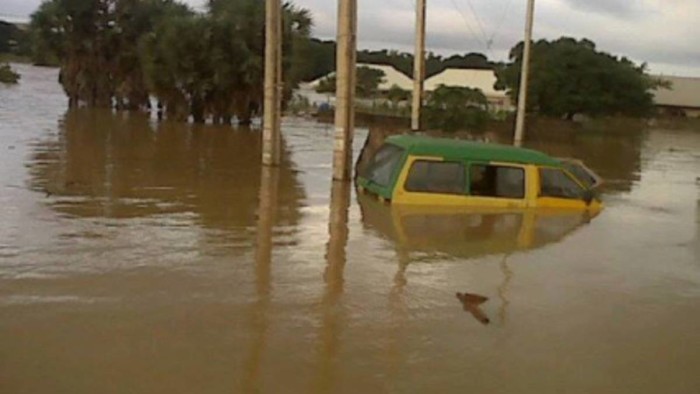
The Kaduna State Emergency Management Agency (SEMA) says it has started sensitising residents to early-warning flood signals in the flood-prone areas of the Kaduna metropolis.
A flooded neighbourhood in Kaduna. Photo credit: saharareporters.com
Mr Ben Kure, the Executive Secretary of SEMA, said this on Wednesday, June 13, 2018 in an interview with News Agency of Nigeria (NAN) in Kaduna.
He said that the agency had embarked on the public sensitisation campaign in flood prone-areas around Kigo Road, Nassarawa, Gonin Gora and Unguwar Romi in Kaduna.
Kure stressed that the campaign was undertaken because of the need to remind the residents of the need to relocate from flood-prone areas to safer places, in view of the predictions of Nigerian Meteorological Agency (NIMET).
According to him, the state government has made adequate arrangements to cater for potential Internally Displaced Persons (IDPs) in the flood-prone areas.
He, however, urged the residents to get ready for their relocation at the slightest indication of major flooding of nearby rivers and streams.
He also said that in the event of flooding, public primary schools would be used as temporary IDPs camps.
Kure advised the residents of the state to heed the advice of the state government to relocate from flood-prone areas to safer places.
He also urged the residents to clear the drainage channels in their neighbourhoods, while refraining from dumping garbage in the drainage channels so as to prevent their blockage.
The head of the World Health Organisation (WHO) has cautioned against declaring victory too early in Congo’s Ebola epidemic, in spite of encouraging signs that it may be brought under control.
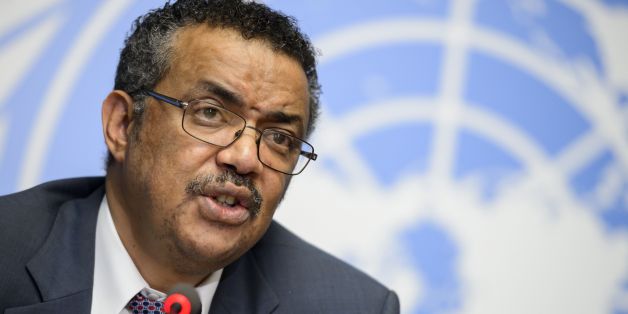
Dr Tedros Adhanom Ghebreyesus, Director-General of the World Health Organisation (WHO). Photo credit: AFP / FABRICE COFFRINI / Getty Images
“The outbreak is stabilising, but still the outbreak is not over,” WHO chief Tedros Ghebreyesus told newsmen on a visit to Democratic Republic of Congo’s capital Kinshasa.
“We are still at war, and we need to continue to strengthen our surveillance and … be very vigilant.”
WHO officials on Friday, June 8, 2018 expressed cautious optimism that the epidemic of the deadly virus was stabilising, partly owing to the swift deployment of vaccines.
But a day earlier, Congo’s health ministry reported its first confirmed case of Ebola in over a week, in the rural community of Iboko.
Ghebreyesus said 2,200 people had been vaccinated, and that case management and tracing contacts of victims had gone well.
But he said: “It’s not over until it is over. Even if one case crosses into Congo (Republic) and gets to an urban area that could trigger another epidemic.”
The hemorrhagic fever has killed 27 people since the outbreak began in April, and there have been 62 cases, 38 of which were confirmed in a laboratory.
A further 14 are probable Ebola cases, and 10 more people are suspected of having Ebola.
In contrast to past Ebola outbreaks health workers have moved quickly to halt Congo’s latest epidemic.
Ebola killed at least 11,300 people from 2013 to 2016 in West Africa and during that outbreak WHO was criticised for not taking it seriously enough in its early stages.
NAN reports that on May 14, WHO gave the go-ahead by officials in the Democratic Republic of Congo to import and use an experimental Ebola vaccine in the country.
The vaccine, developed by Merck in 2016, has proven safe and effective in human trials, but it is still experimental as it does not yet have a license.
It must be kept at -60 to -80 degrees Celsius (-76°F to -112°F), creating huge logistical challenges.
The shot, which was tested in Guinea in 2015 at the end of a vast Ebola outbreak in West Africa, is designed for use in a so-called “ring vaccination” approach.
This would mean that when a new Ebola case is diagnosed, all people who might have been in recent contact with them are traced and vaccinated to try and prevent the disease’s spread.
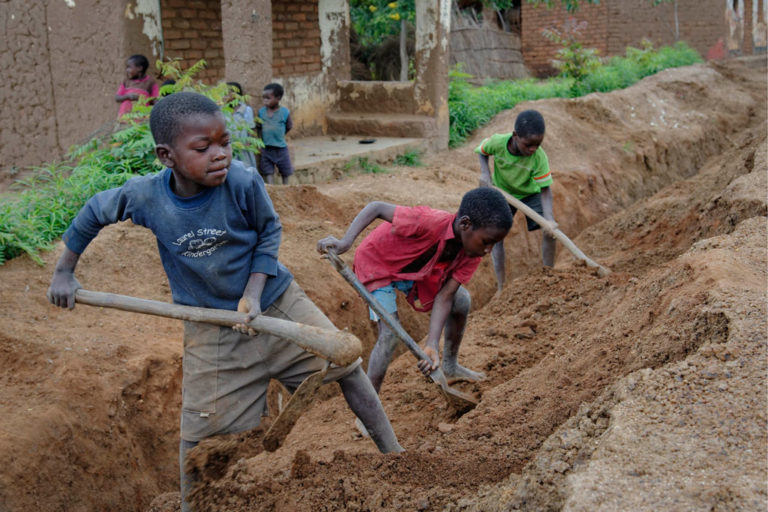
No child under the age of 18 should be toiling in mines, fields, factories and homes, carrying heavy loads or working long hours, the head of the UN labour agency said on Tuesday, June 12, 2018 marking the World Day Against Child Labour.
Child labour
“Many suffer lifelong physical and psychological consequences. Their very lives can be at risk,” said International Labour Organisation (ILO) Director-General, Guy Ryder, in his message for the Day, calling for urgent global action to end common dangers associated with child labour.
About 73 million children are involved in doing hazardous work – almost half of the 152 million children aged 5 to 17 across the world, who are still forced into child labour.
“These children are toiling in mines and fields, factories and homes, exposed to pesticides and other toxic substances, carrying heavy loads or working long hours,” he said.
The World Day, which was first marked under the auspices of the ILO in 2002, draws attention to the global extent of child labour and the efforts needed to eliminate it.
The Sustainable Development Goals (SDGs), adopted by world leaders in 2015, include a renewed global commitment to ending child labour.
Although the overall number of children in hazardous work has decreased in recent years, progress has been limited to older children.
Between 2012 and 2016, according to ILO, the number of children aged 5 to 11, doing dangerous work in contravention international treaties, increased.
After years of steady decline, child labour on farms and in the fields has started to rise again, driven in part by an increase in conflicts and climate-induced disasters.
This worrisome trend, not only threatens the wellbeing of millions of children, but also undermines efforts to end global hunger and poverty, FAO warned.
“Children who work long hours are likely to continue to swell the ranks of the hungry and poor,” said FAO Deputy Director-General, Daniel Gustafson. “As their families depend on their work, this deprives the children of the opportunity to go to school, which in turn prevents them from getting decent jobs and income in the future”.
ILO’s conventions on child labour, namely the Minimum Age Convention of 1973 and the Worst Forms of Child Labour Convention of 1999, require governments to establish a national list of hazardous work, prohibited for children.
These treaties have been ratified by 171 and 181 ILO member States respectively, reflecting a near global commitment to end child labour in all its forms.
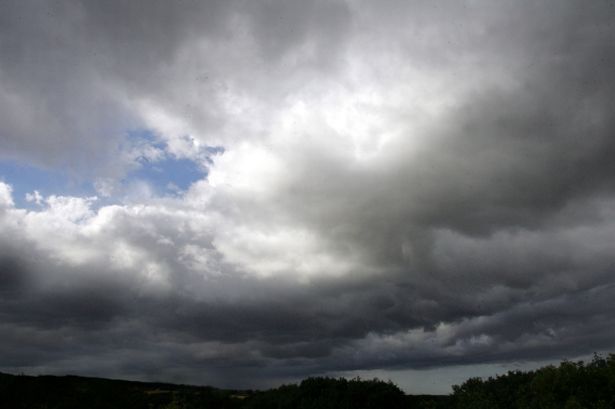
The Nigerian Meteorological Agency (NiMet) has predicted cloudy weather conditions over the Central States of the country on Wednesday, June 13, 2018 with prospect of isolated thunderstorms over Minna and Abuja axis during the morning hours.
cloudy weather
NiMet’s Weather Outlook by its Central Forecast Office in Abuja on Tuesday also predicted day and night temperatures in the range of 27 to 33 and 20 to 24 degrees Celsius respectively.
It added that isolated thunderstorms were also expected to prevail over Jos, Mambilla Plateau, Kaduna and part of Niger state in the afternoon and evening hours.
The agency predicted that the southern States would experience cloudy morning with day and night temperatures in the range of 30 to 31 and 24 degrees Celsius respectively.
It also predicted isolated rain showers over Osogbo, Akure, Ado, Lagos, Abeokuta, Shaki, Iseyin, Ilorin, Obudu, Enugu, Abakaliki, Owerri and Abia later in the day.
According to NiMet, Northern States will experience partly cloudy to cloudy skies in the morning with day and night temperatures in the ranges of 36 to 40 and 23 to 25 degrees Celsius respectively.
“Later in the day, prospects of isolated thunderstorms are likely over places such as Yola, Gombe, Bauchi axis and Yelwa.
“Cloudy skies with prospects of isolated thunderstorms and rains showers over some parts of the country with varying intensities are anticipated in the next 24 hours,” NiMet predicts.
The Federal Government is to establish 300 hectares (ha) of woodlot in seven out of the 11 Local Government Areas of Gombe State.
National Project Coordinator, Nigeria Erosion and Watershed Management Project (NEWMAP), Alhaji Salisu Dahiru
Mr Richard James, Communication Officer, Nigeria Erosion Watershed Management Project (NEWMAP), a World Bank assisted project of the Federal Ministry of Environment, disclosed this on Tuesday, June 12, 2018 in Kaltungo town of Kaltungo Local Government Area of the state during a visit to one of the woodlot plantation sites.
He said 300 hectares of woodlot was earmarked for Gombe, adding that, already, 60 hectares had been approved as pilot project in three Local Government Areas, namely Kaltungo, Yamaltu-Deba and Kwami.
According to him, 20 hectares of woodlot would be established in each of the three areas, saying that the project was under a component of NEWMAP known as Degraded Land Rehabilitation.
He said the woodlot would prevent desert encroachment and also serve as wind breaker.
The communication officer said arrangement had been concluded for the commencement of the project, just as consultants had inspected the sites for the plantation.
James said African indigenous trees which were endangered species, as well as economic trees of enormous importance to the public, would be planted.
In his remarks, the ward head of Poshereng in Kaltungo Local Government Area, one of the woodlot locations, commended the Federal Government under President Muhammadu Buhari for the initiative.
He assured NEWMAP that the community would nurture the trees to maturity.
Kenya’s health authorities on Tuesday, June 12, 2018 confirmed the death of 75 people from cholera in the past five months this year.
Uhuru Kenyatta, the President of Kenya
Jackson Kioko, Director of Medical Services, Ministry of Health, said that 4,954 people had been infected with the disease that was first reported in the country in January.
“Nineteen counties have been affected, nine of these counties have managed to successfully contain the outbreak while 10 counties currently continue to report new cases of cholera on a daily basis,” Kioko said in a statement issued in Nairobi.
He said that in response to the outbreak, the ministry had provided laboratory support by distributing testing kits and testing of referred samples at The National Public Health Laboratories.
Also conducting risk communication through issuance of alerts and enhancing surveillance through active case search in health facilities and within communities.
Kioko said that the government would continue to provide technical and logistical support to the affected regions.
Six states in Nigeria are benefiting from the European Union Water Supply and Sanitation Sector Reform Project (WSSSRP) to improve access to water and sanitation in the country.
The states are Anambra, Cross River, Jigawa, Kano, Osun and Yobe.
Water, Sanitation and Hygiene (WASH) Specialist, United Nations Children’s Fund (UNICEF), Mr Jonathan Ekhator, made this known in Awka, the Anambra State capital, on Tuesday, June 12, 2018 at a media dialogue on WASH organised by UNICEF in collaboration with the Federal Ministry of Information and Culture.
He said the programme, which commenced in 2012, was targeted at providing water for no fewer than 1.5 million underserved persons in the rural areas.
According to him, lack of water and sanitation has been known to be a leading cause of preventable diseases such as cholera and diarrhoea, especially among under-five children.
Ekhator said since inception of the programme through the local government area-wide approach, no fewer than 2,527 WASH Committee members had been formed to train and maintain water facilities in the area.
He noted that this would help to promote sustainability and also inclusiveness to ensure that no one was left behind.
The WASH specialist said there was the need for all stakeholders to partner to ensure increased access to improved sanitation and hygiene promotion, an overall goal of moving up the sanitation ladder.
He said the group was carrying out advocacy to all tiers of government to see how they would budget for WASH, create a WASH Departments, programme tracking and closing needed gaps.
Also speaking, Mr Victor Ezekwo, Programme Manager, Anambra State Rural Water Supply and Sanitation Agency, said the state was working to see that access to water became a reality.
He noted that all the 21 local government areas had WASH units in place to help in propagating the scaling up access to water and sanitation.
Ezekwo expressed regret over the difficulty of people in getting pipe-borne water in the state, and attributed this to the state’s topography.
Earlier, Mr Sola Ogundipe, a consultant, urged participants to fashion out ways of writing stories that would have profound impact on the nation’s overall development.
According to him, journalists are story tellers, and they must understand that writing as a skill must be deplored to enhance positive change.
Ogundipe added that journalists must emphasise on writing human interest stories at all times, saying this was the surest way they would make serious impact on the society.
He commended UNICEF and the EU for being at the fore-front of ensuring that every Nigerian had access to potable water and sanitation.
As part of the Global Climate Action Summit, the World Wide Fund for Nature (WWF), together with a broad coalition of partners, on Monday, June 11, 2018 issued the 30X30 Forests, Food and Land Challenge: calling on businesses, states, city and local governments, and global citizens to take action for better forest and habitat conservation, food production and consumption, and land use, working together across all sectors of the economy to deliver up to 30% of the climate solutions needed by 2030.
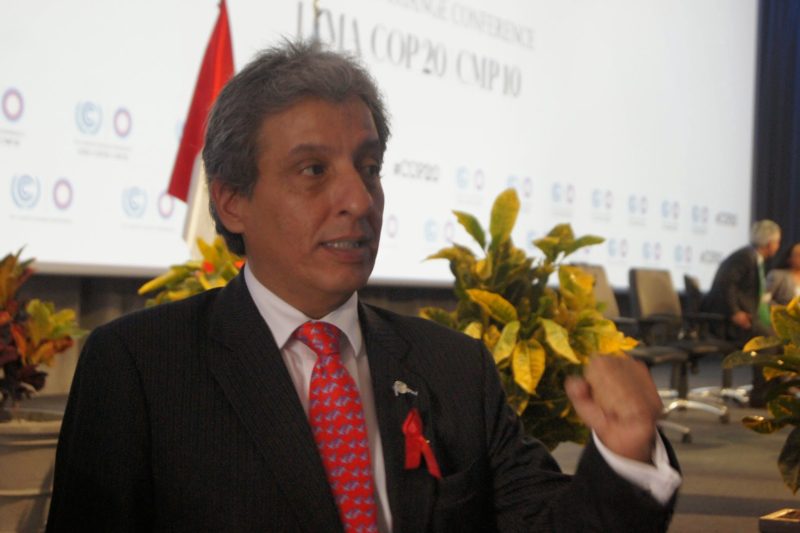
Head of WWF’s global climate and energy practice, Manuel Pulgar-Vidal
Hosted in San Francisco, California from September 12 to 14, the Summit will bring together thousands of people from around the world to drive ambition to the next level. According to the organisers, it will be a moment to recognise the extraordinary achievements of states, regions, cities, companies, investors, and citizens taking climate action and to catalyse bold new commitments and action.
Collectively, the global food system, unsustainable forest management, infrastructure development, and other activities related to land use are a major driver of global climate change, accounting for more greenhouse gas emissions than the total emissions from all cars, trucks, trains, planes and ships in the world. Forests, grasslands, and other habitats pull carbon out of the atmosphere, but when they are cleared, they release carbon and their capacity to reabsorb it is diminished. In the soil and in healthy ecosystems, carbon is a building block of life; in the atmosphere, it heats the planet.
“To curb climate change, we must address the second-greatest source of emissions: our use of land,” said Manuel Pulgar Vidal, leader of WWF’s global climate and energy practice. “By taking concrete action, businesses and local leaders also can encourage national governments to more aggressively reduce carbon emissions using every resource available, including trees, grasses and soil.”
California State Governor, Edmund G. Brown Jr., a Summit co-chair, recently underlined the actions California is taking to deal with forest losses. Forests serve as the state’s largest land-based carbon sink, drawing carbon from the atmosphere, but even a single wildfire can quickly undermine those benefits.
“Devastating forest fires are a profound challenge to California,” Governor Brown said recently when issuing a sweeping Executive Order to increase the ability of forests to capture carbon. “I intend to mobilise the resources of the state to protect our forests and ensure they absorb carbon to the maximum degree.”
“Climate change is already disrupting and destabilising our global food and agricultural systems,” said Paul Polman, CEO of Unilever. “By eliminating habitat loss and degradation from our supply chains, we can prevent the emission of billions of tons of greenhouse gases. Businesses like ours have a responsibility and an opportunity to help the nations of the world meet and exceed the goals of the Paris Agreement.”
Businesses, state and local agencies, multilateral organisations, scientists, and other stakeholders can meet this challenge by taking concrete action to:
Halve food loss and waste and consume conscientiously.
Sequester one gigaton of carbon per year in forests and other natural and working lands.
Enable better production of food and fibre by unlocking finance, providing tools to increase transparency, fostering public-private collaboration and protecting local rights.
Because Indigenous Peoples and local communities are among the most effective guardians of natural habitats and most directly harmed by the loss and degradation of forests and waterways, engaging and protecting these constituencies and their tenure rights will be critical to meeting the 30X30 Challenge.
“Given the large but unrecognised contributions indigenous peoples are making by protecting huge areas of the world’s forests, we are central to the climate solution,” said Cándido Mezua, an Embera leader from Panama and secretary for international relations for the Mesoamerican Alliance of Peoples and Forests (AMPB). “Governments and the private sector should embrace our approach to sustainable development, partner with us in the planning, and allow us to share in the prosperity that results.”
The Technical Adviser, All Farmers Association of Nigeria (AFAN), Dr. Tunde Arosanyin, has called for proper implementation of the rural development policies in Nigeria to set agenda for the future.
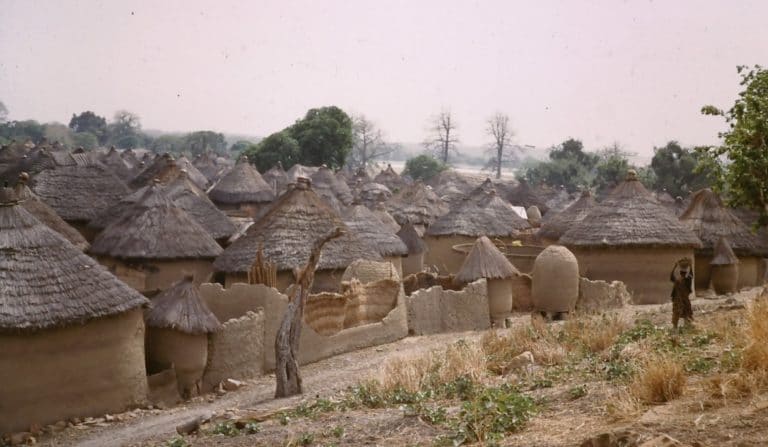
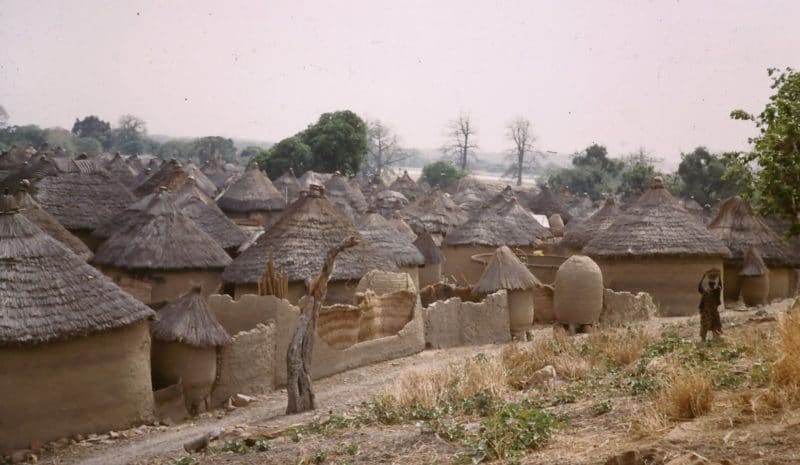
A rural settlement in Nigeria
Arosonyin, an agriculturist, said in an interview with News Agency of Nigeria (NAN) on Monday, June 11, 2018 in Abuja that except rural development is given the attention it deserves, the goals of achieving accelerated national development at the grassroots level would remain a mirage.
Developing rural areas, according to him, has become imperative to reposition the agricultural sector to meet the emerging challenges of the 21st century.
The agriculturist said that if the government can pool resources to engender the required synergy, then there would be significant difference.
“The infrastructures are in a bad state and that’s why most of the produce always end up at the farm gate, making it difficult for farmers to get dividend for their produce,’’ he said.
Arosonyin, who is also the National Coordinator of Zero Hunger Commodities, said rural development has become imperative because more than 79 percent of farmers feeding the nation live in the rural areas and they have no access to basic infrastructure.
He said it is unfortunate that rural development aimed at actualising the dream of improving the people’s socio-economic welfare has remained at the policy level.
Arosonyin lamented that most of rural areas in the country, have been unable to pass the basic indices of modern development in terms of rural development, especially regarding industrial and health facilities, standard and qualitative system of education and other social services.
“Provision of basic infrastructure such as potable water, electricity supply and access roads will surely reduce urban migration and create rapid development in rural areas.
“The need to boost agriculture in rural areas is very essential considering the ever rising population of the country,’’ he said.
He, however, said that even though the Federal Government through the Ministry of Agriculture and Rural Development has come up with a model of the input index for farmers, a lot still need to be done to improve the lives of farmers and productivity.
Arosonyin advised government to review the principles of the National Policy on Integrated Rural Development for proper implementation to lay a solid foundation for national development.
He said a World Bank report indicated that Nigeria’s rural sector with abundance of human and natural resources accommodates 49.7 percent of the nation’s population.
Arosonyin, however, said that yet, the rural communities are lacking in infrastructural facilities such as roads, potable water supply and sanitation, energy, communication, health, education facilities among others.
“It is estimated that 85 percent of the extremely poor in Nigeria currently live in rural areas.
“Nevertheless, the rural sector is predominantly agriculture-based which include livestock, forestry and fisheries and employed 75 percent of the labour force and contributes about 40 per cent of the GDP,’’ he said.
Arosonyin also called on the government to improve the cooperative ties of the farmers to enable them to be independent.
The agriculturist said: “A lot of studies have shown that the prospect of farmers in agricultural cooperatives group are enormous and opens purchasing power for them.
“Agricultural cooperatives are considered as one of the important economic and social organisation in rural communities.’’
Arosoyin emphasised that agricultural cooperatives globally, play major role in the rural development.
He noted that the agricultural sector in Nigeria is faced with lots of challenges and that farmers no longer got remunerative prices for their efforts.
Non-degradable plastic products and disposable food containers, as well as fossil-fueled vehicles will be prohibited on Weizhou Island off south China’s Guangxi Zhuang Autonomous Region, local media reported on Tuesday, June 12, 2018.
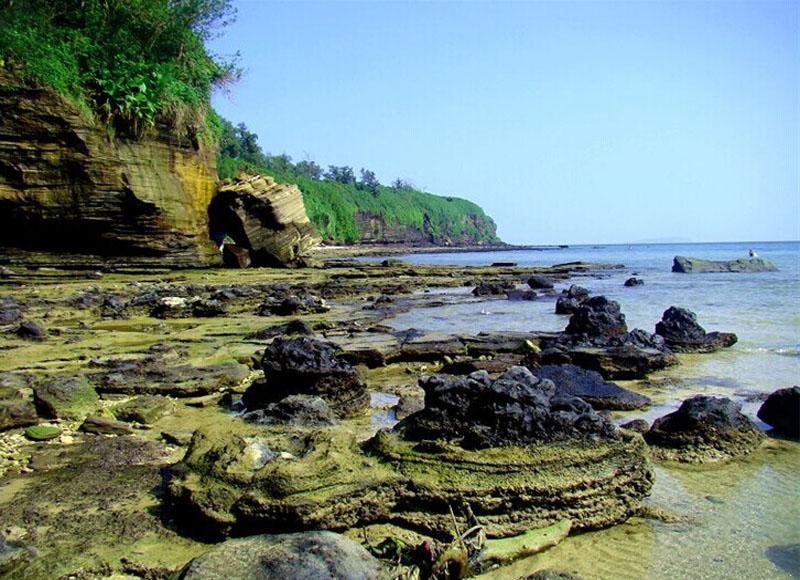
Weizhou Island
According to an ecological and environmental protection regulation passed by the regional legislature, the sale and use of plastic bags and plastic sheets used for agricultural purposes will be banned.
“Except for vehicles already registered by individuals and departments, as well as vehicles that serve the public, like firetrucks, no other new fossil-fueled vehicles will be allowed on the island,’’ it noted.
The ban, which aims to promote new energy vehicles and protect the island’s ecosystem, will take effect on July 1.
Weizhou Island in the Beibu Gulf is the largest and youngest volcanic island in China.
A national geological park was established on the island in 2004.