

From boreal forests near the Arctic Circle to dense tropical jungles south of the Equator, Earth’s last primary forests – ancient ecosystems that remain undisturbed by industrial activity – are vanishing. These forests, rich in biodiversity and unmatched in their carbon storage capacity, have a high degree of ecological integrity and are nature’s defence in the fight against climate change and species extinction. Yet they continue to fall, often quietly, cleared for short-term economic gain or degraded due to weak policy protections and underfunded conservation efforts
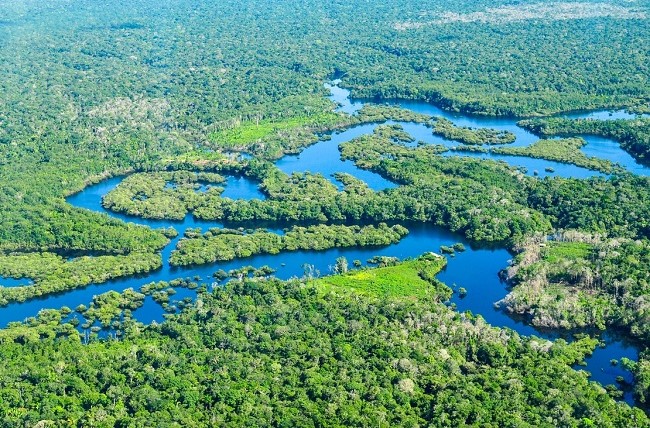
Primary forests are the heart of the global climate and biodiversity agenda, underpinning key international agreements such as the Paris Agreement and the Kunming-Montreal Global Biodiversity Framework. These forests store dense carbon stocks while continuing to act as powerful carbon sinks. They also regulate water systems, reduce the risk of zoonotic disease, support livelihoods with essential resources, and provide irreplaceable habitat for countless species – many of them critically endangered and found nowhere else.
Over 80 percent of terrestrial biodiversity lives in forests, and primary forests host the highest concentrations of species: especially those that are endemic, endangered or both. Primary forests fulfil a host of ecological functions, and the loss of these ecosystems is permanent – no restoration plan can replicate the complexity and resilience of intact forest landscapes within a reasonable timeframe, if ever.
Since 2001, the world has lost at least 83 million hectares of tropical primary forest and 50 million hectares of intact boreal forest. In 2024 alone, tropical primary forest loss exceeded 6.7 million hectares, releasing more than 3.1 gigatonnes of CO into the atmosphere – slightly more than India’s fossil fuel emissions that year. This marks a doubling of loss from 2023 and the highest annual rate in two decades – an alarming reversal of hard-won progress.
Despite rising awareness, much of the global response remains misaligned and siloed. Although restoration efforts are extremely important to repairing functionality and restoring habitat in degraded areas and ought to be continually funded, these efforts should not be at the expense of preventing further deforestation and degradation of the primary forests that remain.
We cannot plant our way out of deforestation: prevention is more effective, more cost-efficient and ecologically far superior
A fundamental shift is needed in both policy and finance frameworks concerned with forest ecosystem integrity which sustains primary forests. The Convention on Biological Diversity (CBD), through the Kunming-Montreal Global Biodiversity Framework (GBF), aims to protect 30% of the planet by 2030, and countries are striving to make progress towards this target. Fortunately, the CBD took critical steps both in Montreal and in Cali to integrate a clear and strong ecosystem integrity mandate into the GBF in Goal A, and Targets 1, 2, 8 and 12. Of course, the comprehensive focus on ecosystem integrity in the GBF by definition includes primary forests, but it is important to recognise this explicitly in the CBD at COP17.
The financial commitments made through CBD by countries earlier this year represent a critical milestone, but unless primary forests are explicitly prioritised in national strategies, we are sadly liable to continue seeing significant deforestation and degradation, as was the case in 2024. Similarly, the financial commitments made at UNFCCC COP29 represent an important step towards accelerating action to combat climate change – but primary forest conservation remains an overlooked solution within climate dialogues.
Where primary forests remain, governments must integrate primary forest protection into their international commitments and back those promises with legally binding safeguards, robust monitoring, enforceable protections, policy coherence and elimination of harmful incentives. In parallel, global finance must evolve. Current funding models fall short in prioritising conservation efforts with the highest ecological returns – leaving primary forests underfunded and exposing biodiversity, climate and communities to avoidable harm.
Beyond just a new policy, safeguarding primary forests demands an evolution of mindset: environmental protection isn’t a barrier to economic growth – it’s a value-add, a long-term investment in resilience, stability and prosperity of the planet.
These ecosystems are not liabilities to be cleared or degraded for development – they are assets, already delivering high-value ecological services that underpin healthy societies and healthy economies.
Innovative financial mechanisms can help close this gap. Redirecting climate finance toward avoided deforestation strategies, including payments to communities for ecosystem services and sovereign debt swaps for countries which steadfastly protect their primary forests, can unlock substantial resources to maintain and restore the ecosystem integrity of forests. Nations and communities demonstrating effective forest stewardship should be directly rewarded.
Moreover, Indigenous Peoples and local communities who have stewarded these landscapes for generations offer robust networks and approaches for maintaining these landscapes, a fact which has been reinforced by decisions made at CBD COP16 last year. Their governance systems have proven effective at protecting primary forests for millennia, and they are to this day both dependents and stewards of these ecosystems. Securing Indigenous land rights and channelling direct financial support to Indigenous forest stewards is not only equitable – it is a proven conservation strategy.
Some global conservation initiatives are already pushing for these changes and are backed by funding from multilateral organisations. For example, the Global Environment Facility (GEF), which provides the largest funding for forest protection globally, supports the conservation of tropical primary forests as a priority globally – notably through the Amazon, Congo and Other Critical Forest Biomes Integrated Programme, endowed with $306 million grants leveraging in addition around $1.5 billion, as well as through other global projects executed by IUCN, Wild Heritage, Griffith University and other pioneering partners. These initiatives demonstrate that investing in primary forest integrity can simultaneously advance benefits for climate, biodiversity, people and economies, creating a win-win situation for everyone.
Protecting primary forests is not just an environmental imperative – it is a strategic policy decision with climate, economic and social benefits. Yet without immediate intervention, these ecosystems will continue to disappear, weakening global efforts to combat climate change and stem accelerating biodiversity loss. Policymakers must act to close policy gaps, realign and unlock financial flows, and position primary forests as foundational to global sustainability
The time for action is now. The destruction of these ecosystems is irreversible
We are already off-track to meet the goal of halting global deforestation and forest degradation by 2030, a commitment made by several global platforms over the last decade, including the UNʼs Strategic Plan for Forests 2017–2030. As critical global policy forums like COP30 bring decision-makers together, world leaders have a timely opportunity to act.
These forums must move beyond broad commitments and blanket statements and instead position primary forest conservation at the heart of climate and biodiversity agendas. We urge donors, financial institutions and policymakers to prioritise long-term solutions. The time for incremental action has passed. Preserving the world’s last great forests is not only possible – it is non-negotiable.
By Dr. Chetan Kumar (Global Head of the IUCN Forest and Grasslands Team), Cyril Kormos (Founder and Executive Director of Wild Heritage), Pascal Martinez (Senior Climate Change Specialist at the Global Environment Facility – GEF)