Home Blog Page 93

South Africa’s rhino-keeper turns to govt for legal rhino horn trade

0

South Africa’s new largest rhino keeper, Wicus Diedericks, has taken his fight for legal rhino horn trade onto a national platform, using the courts to argue that rhino conservation will collapse without it.

With 430 rhinos under his care, he now stands as the world’s biggest private rhino owner following the exit of former leader John Hume, who recently sold his 2,000 rhinos to African Parks to escape the “millions of dollars” in annual protection costs that pushed him to the edge of bankruptcy.

In an interview this month, Rockwood Conservation Founder Diedericks confirmed that looking after rhinos without selling their horns to generate income to protect them from poachers is unsustainable. Like Hume, he is currently looking after rhinos that “don’t pay their way”.
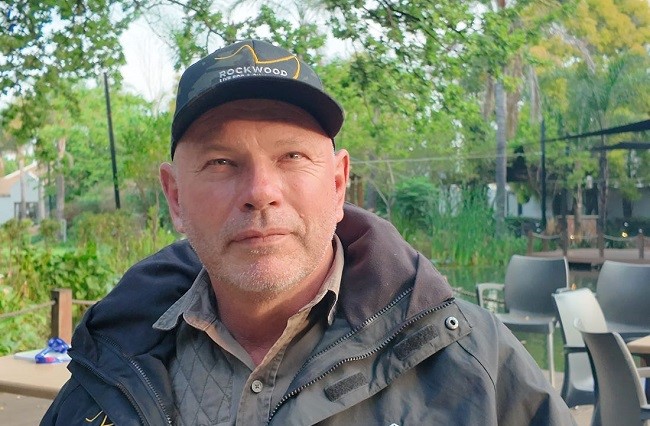
Wicus Diedericks
South Africa’s new largest rhino keeper, Wicus Diedericks

To protect himself from financial ruin, he applied for permission to trade the horns from rhinos in his conservation breeding operation and won.

In a landmark November 1, 2025, judgment, the Kimberley High Court ruled that: “In circumstance where the Management Authority is satisfied that the rhino horn comes from a white rhinoceros that was bred for conservation purposes, the Management Authority shall, upon application, issue a permit/certificate to that effect.”

It was the first successful ruling of its kind in South Africa, and it opened a long-blocked door for hundreds of private rhino owners.

“I’m about to trade in my rhino horn, but there are questions,” said the world’s new largest rhino keeper.

The biggest breakthrough for him was the court’s confirmation that the UN Convention on International Trade in Endangered Species of Wild Fauna and Flora (CITES) Article 7(5) is part of South Africa’s domestic law and that “therefore my conservation breeding facility will qualify for export permits if we want to export rhino horn.”

But the victory was short-lived. The Northern Cape Province’s Member of the Executive Council for Environment, the same authority that previously refused to grant Diedericks rhino horn trade permits, filed an appeal, halting his ability to sell his legally harvested and stockpiled horns.

Rhino horn is a renewable resource and can be traded sustainably because it regrows naturally, after being painlessly trimmed or harvested.

“It literally took me years, like five years, to get to this point (High Court ruling permitting him to trade),” he said. “A lot of hours and money went into this.”

Diedericks said many people do not realise that “most of the rhinos in South Africa are now in the hands of private owners or private reserves.”

This shift in ownership, he warned, means that rhino conservation must be sustainable, or else private owners will be forced to give up their rhinos if they cannot fund their protection.

Without the rhino horn trade income, the consequences will be devastating.

Without government permission to trade legally in rhino horn, South Africa’s rhino populations may decline drastically as custodians abandon the practice and opt for less risky conservation and socio-economic enterprises.

Diedericks confirmed that “there is a growing number of people quitting rhino-keeping” because of escalating risks and costs.

To make matters worse, the government is reportedly struggling to protect rhinos from poachers in its protected areas, such as the iconic Kruger National Park.

“Kruger lost more than 80% of the rhinos in the last 10 years,” he said.

In sharp contrast, privately owned rhino ranches have been quietly successful and now own about two-thirds of the country’s rhino population.

South Africa has the world’s largest rhino population. This means the majority of the world’s rhinos are owned by South Africa’s private rhino custodians. This is a little-known conservation success.

“On private reserves, the numbers have been steadily increasing because there’s better security,” said Diedericks.

But this success brings a “question about funding” because “70% of all the rhinos in South Africa are now on private reserves.”

Private rhino owners don’t receive any financial assistance from government, for rhino conservation.

“Private rhino owners don’t get any state subsidies; we don’t get any support from donors or NGOs or anything,” he said.

“That’s why I lodged the permit application, because we know that a rhino horn is worth something. If we could sell rhino horns, at least we could pay for rhino conservation.”

Meanwhile, Diedericks has rejected the idea that rhino owners are trying to get rich.

“I will barely break even, even if I sell rhino horn regularly.”

Right now, he keeps his 430 white rhinos afloat by subsidising them from other income.

“I have been subsidising it [his rhino conservation initiative], but I cannot sustain it in the long run. And rhinos deserve more,” said Diedericks.

He currently pays more than US$1.5 million annually, including anti-poaching and other costs.

His journey began on a farm, with a love of wildlife and a decision to “rewild” land originally used for cattle farming. He bought his first rhino in 2013.

Two poaching incidents on his rhino ranch hardened his resolve.

“That sparked me to say I’m definitely not going to lose this fight against rhino poaching,” he said.

His family supports him, but even that has limits.

“If it’s not sustainable, you cannot continue with it,” said Diedericks. “You know, that’s why John Hume eventually decided to sell his operation, because it wasn’t sustainable.”

What might Diedericks do if he is ultimately blocked from his newfound hope created by the Kimberley High Court judgment?

His answer is blunt.

“I wouldn’t have any option but to sell the operation, to sell the rhinos, to get rid of them. That’s the reality of most private reserves that own rhinos.”

On CITES’ relevance to wildlife and rhino conservation, he is equally direct.

“Unfortunately, I think it has been captured by a lot of NGOs and the animal rights crowd. At this stage, it is not good for conservation. The rhino can pay for its protection and survival. Therefore, we should not deny them that opportunity.”

The warning could not be clearer:

If private rhino owners cannot trade rhino horn legally to finance protection, they will abandon rhino-keeping.

If they do, South Africa will lose most of its rhinos. And when South Africa’s rhinos fall, the world’s rhino population will fall with them.

It remains to be seen when CITES and rhino-owning countries will start making decisions that promote rhino conservation.

By Emmanuel Koro, AfricaBrief
East Africa adopts 10-year plan to combat livestock disease

0

Regional stakeholders adopted a strategic framework to combat foot-and-mouth disease, one of the most persistent threats to livestock production, food security, and trade across Eastern Africa.

Representatives from the African Union’s Interafrican Bureau for Animal Resources, the Intergovernmental Authority on Development, the East African Community, the Food and Agriculture Organisation, the World Organisation for Animal Health, the United Nations Environment Programme, GALVmed, national chief veterinary officers, FMD focal points, wildlife authorities and technical experts gathered in Nairobi for a two-day consultation and validation workshop.

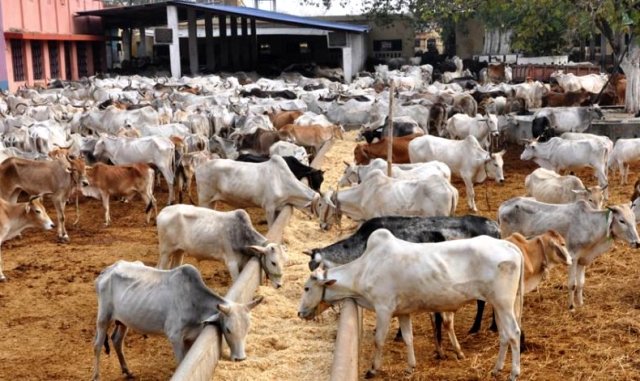
Cattle ranching
Cattle ranching

The Strategic Framework for the Control of Foot-and-Mouth Disease in Eastern Africa 2026-2035 aims to harmonise regional control measures for a disease that continues to cause widespread outbreaks, significant economic losses and constrained market access.

Dr. Huyam Salih, director of AU-IBAR, said livestock underpin food and nutrition security for hundreds of millions of people, yet transboundary animal diseases such as FMD drain billions of dollars from Sub-Saharan Africa each year.

“No single country can manage FMD independently,” Salih said, calling for deeper regional coordination, harmonisation and joint action to address surveillance gaps, strengthen early detection and ensure rapid response.

The framework responds to commitments under Agenda 2063, the Comprehensive Africa Agriculture Development Programme 2026–2035, the Livestock Development Strategy for Africa and the Animal Health Strategy for Africa.

The strategy was developed through extensive consultation, including inputs from the Eastern Africa FMD Roadmap Meeting held in Dar es Salaam in 2024. Delegates identified weaknesses including inadequate vaccination coverage, limited laboratory capabilities for serotyping and vaccine matching, fragmented movement control, and insufficient political commitment and financing for sustained FMD control.

The extensive mobility of pastoral herds, porous borders and limited surveillance and laboratory capacity complicate containment efforts across the region.

The framework rests on three pillars: knowledge and evidence, capacity building, and coordination and cooperation.

The knowledge pillar establishes regional information-sharing platforms, conducts research and improves tools for risk assessment, economic analysis and epidemiological understanding.

The capacity building pillar provides regionally tailored training and sources essential equipment for surveillance, vaccination, diagnostics, programme management and public-private partnership models.

The coordination pillar harmonises regional protocols, strengthens early warning systems, enhances rapid response and facilitates affordable vaccine access through bulk procurement and strengthened laboratory networks.

The pillars aim to support countries in progressing along the Progressive Control Pathway for FMD and achieving more secure, efficient livestock systems with improved trade performance.

Participants engaged in structured group work to analyse the draft document, identify gaps and propose improvements. Country groups recommended strengthening regional strain monitoring, developing cross-border agreements for sample shipment, institutionalising biosecurity practices in markets and abattoirs, and reinforcing communication strategies to maintain political will.

Salih said AU-IBAR will support member states and regional economic communities in translating the framework into concrete action. She noted that the rollout of ARIS3 would enhance disease reporting and situational awareness.

The region now moves toward developing an implementation plan, mobilising resources and establishing governance mechanisms to guide the strategy between 2026 and 2035.

FMD is routinely ranked among the top three priority diseases by governments and livestock keepers in Eastern Africa.

The disease affects cloven-hoofed animals including cattle, sheep, goats and pigs.

The 12 Eastern Africa FMD Roadmap countries include Burundi, Djibouti, Eritrea, Ethiopia, Kenya, Rwanda, Somalia, South Sudan, Sudan, Tanzania, Uganda and Democratic Republic of Congo.

By Winston Mwale, AfricaBrief

COP30 embeds information integrity in climate governance for first time

0

In a watershed moment, countries at COP30 in Belém included “information integrity” in the final Mutirão Decision, recognising that information integrity is essential for effective climate action. This marks the first time that information integrity has been formally embedded in international climate governance.

The achievement follows the 2024 launch of the Global Initiative for Information Integrity on Climate Change, initiated by Brazil, the UN and UNESCO, a coalition of 14 countries, along with other international organisations, civil society and academia working to strengthen research, strategic communications and policy responses to climate disinformation.

António Guterres
UN Secretary-General, António Guterres

The Mutirão Decision signals a major step forward in addressing escalating risks in information spaces – from disinformation to the harassment of scientists – and in ensuring that evidence-based information is available to all. This formal recognition establishes a foundation for coordinated international action on information integrity.

17 Countries Launch Belém Declaration

At COP30, the Global Initiative also launched the Belém Declaration on Information Integrity on Climate Change with 17 founding signatory nations. Since Belém, three additional countries have signed the Declaration, bringing total signatories to 20. The Declaration calls for urgent measures to address climate disinformation, denialism and attacks on science, and commits signatories to concrete actions.

The Global Initiative will now work with governments and coalition partners worldwide to implement the Declaration’s commitments. Priority actions include:

  • Establishing human rights-based information integrity policy frameworks
  • Supporting a diverse and resilient media ecosystem
  • Ensuring public access to reliable, accessible climate information
  • Funding research on climate information integrity, particularly in developing countries where resources fall short of needs

The Declaration was included as an outcome under the COP30 Global Climate Action Agenda and remains open for endorsement.

EU Sets New NDC Standard

In the lead-up to Belém, the European Union became the first party to include information integrity actions in its Nationally Determined Contribution under the Paris Agreement, setting a precedent for other countries to follow.

By enshrining information integrity in the COP30 outcomes, the international community has established a new benchmark for addressing one of the most pressing challenges facing climate action today.

Kano lauds UN-Habitat on humanitarian contributions

0

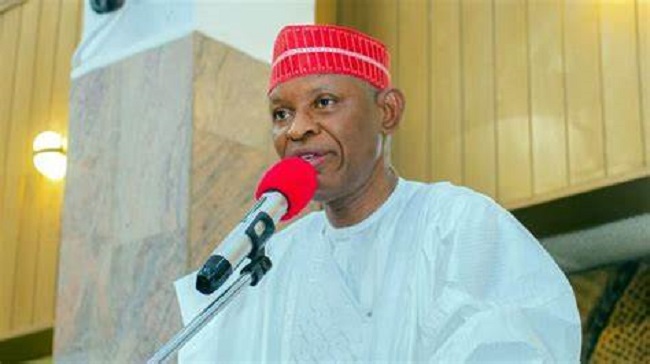
The Kano State Government has lauded the United Nations Human Settlements Programme (UN‑Habitat) for its role in advancing humanitarian affairs in the state.

This is contained in a statement by Director of Public Enlightenment, Ministry of Humanitarian Affairs, Balarabe kiru, in Kano, the state capital, on Tuesday, November 25, 2025.

He said the  Commissioner for Humanitarian Affairs and Poverty Alleviation, Adamu Aliyu Kibiya, made the commendation on Tuesday in Kano at the opening of a three‑day Participatory Planning Workshop on Durable Solutions for Displaced Populations.

Abba Yusuf
Gov. Abba Yusuf of Kano State

The workshop was organised under the European Union‑funded SIDPIN Project.

Kibiya said the state government has been collaborating with UN‑Habitat to build inclusive, safe, resilient and sustainable cities and communities.

He said  that UN‑Habitat has provided strong technical support in the planning and management of shelters and settlements, thereby ensuring a safe, organised and resilient environment.

“UN‑Habitat assists governments and partners in delivering sustainable empowerment through life‑skill acquisition, housing solutions, restoration of essential urban infrastructure and improved access to basic services for affected populations,” Kibiya said.

“Their role remains central in advancing durable solutions and improving the living conditions of displaced and vulnerable communities.”

The workshop, he added, offers a unique platform for stakeholders to examine the realities faced by displaced persons, identify gaps and develop responsive solutions.

He reaffirmed the government’s commitment to strengthening its partnership with all relevant actors to promote the social and economic well‑being of Kano’s residents.

Hajiya Amina Yusuf, the Permanent Secretary of the Ministry of Humanitarian Affairs, said Kano is experiencing rapid population growth, internal migration and climatic impacts linked to its status as an economic hub and a host community for displaced persons.

She explained that humanitarian needs are shaped by these factors as well as poverty, climate change and spill‑over insecurity from the North‑West and North East regions.

“Kano State hosts a significant number of internally displaced persons arriving from states affected by banditry, communal clashes and environmental shocks such as Katsina, Zamfara, Kaduna, Yobe and Borno,” Yusuf said.

The representative of the Kano Emirate Council, District Head of Rimin Gado, Dan Malikin Kano Alhaji Auwalu Mudi Yakasai, called for stronger collaboration between political leaders and traditional institutions to achieve transformative progress in the communities.

The three‑day workshop aims to ensure that planning processes reflect the interests and priorities of all major groups.

It is also aimed at promoting transformative change through knowledge sharing, policy advice, technical assistance and collaborative action.

By Aminu Garko

Lagos residents lament poor public water supply, seek alternatives

Residents of Ikorodu and Alapere areas of Lagos State are grappling with inconsistent water supply and poor water quality, forcing many to rely on costly private sources for their daily needs.

Findings show that electricity reliability has a direct impact on water access in these communities, while concerns over quality continue to drive dependence on sachet and bottled water.

The challenges still persist in spite of the huge investment made by the Lagos State Government to ensure potable water supply in the state.

Tokunbo Wahab
Lagos State Commissioner for the Environment and Water Resources, Tokunbo Wahab

The residents, however, urged the Lagos State Government to come to their aid by providing public water supply in the areas.

Mr. John Taiwo, a cinematographer living in Ikorodu, who described water as the “myth of life,” noted that its availability in his home depends entirely on electricity.

“The only threat to my water supply is when the electricity distributing company doesn’t bring light and my tank finishes,” Taiwo said.

Taiwo said he relies on electric pumping for all household water use.

He added that he treats his water before drinking it, despite using the same source for bathing.

Iya Ibeji, a market woman in Ikorodu who uses water for grinding pepper and washing, said she pays a fee to access water in the market.

She, however, noted that scarcity is common during power outages or when the community borehole dries up.

Iya Ibeji added that she does not treat the water she uses but instead buys sachet water for drinking.

A teacher, Mr. Idris Ayeni, also in Ikorodu, stated that the borehole he installed in his home solved his water challenges.

He said he previously relied on a well that dried up during the dry season.

“Making a borehole has been the best decision I made for my water supply. The water is good for drinking and has saved me a lot of cost.

“I no longer buy satchet water because my borehole water is suitable for drinking,” he said.

In Alapere, residents reported more serious quality concerns.

Mrs. Olaoti Omowunmi, a banker, described the water in her compound as “very bad,” saying she only uses it for toilet purposes.

“I buy 10 gallons of 25-litre water from a community borehole for ₦2,500, and it lasts for three to four days,” she said.

Omowunmi said she treats the water she uses for bathing but, like many others, relies on sachet water for drinking.

Another resident, Mr. Femi Ogungbe, a businessman, in Alapere said he buys water because the supply in his compound is of poor quality.

Ogungbe said the water is often mixed with soil, making purchased water a safer option for household use.

Some residents, however, reported better conditions.

Mrs. Janet Adeola said the borehole water in her compound is reliable and tastes clean, and that she uses it for all household needs, although she has never tested its quality.

In the Alapere market, a trader said she buys two 25-litre kegs of water daily from sellers at ₦250 per keg for her business activities.

Overall findings show that water scarcity remains a significant challenge in both Ikorodu and Alapere, worsened by power outages and dry-season depletion of wells.

While some households depend on boreholes, many others rely on purchased water, with sachet water remaining the preferred option for drinking across both communities.

By Adebayo Elizabeth and Fabian Ekeruche

UK funded Accelerator Programme growing green industries in Nigeria

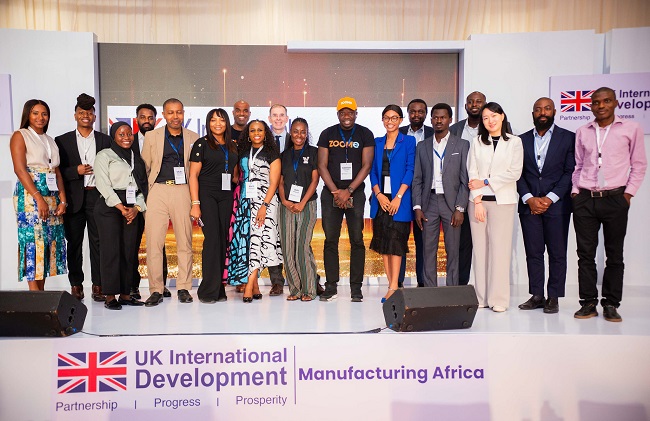
The British High Commission in Nigeria and Manufacturing Africa hosted an Investor Night where six innovative Nigerian startups from the UK funded Green Business Building (GBB) Accelerator Programme pitched their sustainable manufacturing solutions to potential investors following 16 weeks of intensive business development training and mentorship.

The featured green businesses cover a broad range of industries extending from renewable energy, recycling, organic agriculture and electric mobility.

UK Government
Startup founders, Manufacturing Africa Team and British High Commission Representatives come together at UK funded Green Business Building Accelerator Investor Night in Lagos to promote investment into Nigeria’s green manufacturing sector

The startups – GreenSpace Recycling, Sirius-X Energy, Auxano Solar, Taeillo, ZOOMe and Veggie Victory – presented their business models and opportunities to a room of venture capitalists, impact investors, and ecosystem stakeholders. The pitching session marked a key milestone in their journey, aimed at unlocking funding and strategic partnerships.

Designed in a pitch den format, the evening included presentations from the cohort companies, offering insights into their innovative climate friendly business models and the potential for scaling their ventures to create lasting economic and environmental impact. The businesses also received real-time feedback from funders including potential offers for funding.

Attendees at the event included Jonny Baxter, UK Deputy High Commissioner to Nigeria and other representatives from the High Commission in Nigeria, prominent investors and key stakeholders from the sustainable business ecosystem in Nigeria.

Designed to catalyse investment in Nigeria’s green industrial growth, the accelerator is part of the UK’s and Nigeria’s commitment to growing and scaling small, innovative businesses to deliver growth and create new direct and indirect jobs across green industries in Nigeria.

Simon Field, Deputy Head of Mission, British Deputy High Commission in Lagos said, “Manufacturing is Nigeria’s future – and these businesses show how it can also be greener, more inclusive, and globally competitive. I have nothing but confidence in the programme we’re funding. Every pitch tonight was professional, inspiring, and full of ambition.”

Kemi Onabanjo, Manufacturing Africa Nigeria Country Lead said: Tonight was all about celebrating progress and creating profitable connections. We are celebrating the progress these incredible founders have made on their journey with the GBB programme, as well as the impact they are already having. It was also about creating connections that bridge the gap between innovation and investment – connecting promising ventures with the capital, networks, and partners needed to scale their impact.

The startup founders commended the programme as follows:

Jumoke Dada, CEO, Taeillo said, “GBB is hands-on – they take the heavy lifting off you and help you execute. We now have real clarity on our next steps and a plan we can run with.”

Adedayo Odunlami, CEO, ZOOMe said, “The level of diligence and attention to detail from the team was world-class. They’ve helped us evolve – as a business and as founders – and connected us to an incredible network.”

Renaissance partners EU on energy security, industrialisation

0

Renaissance Africa Energy Company Limited and the Delegation of the European Union (EU) to Nigeria and ECOWAS have committed to collaborating to strengthen dialogue on energy security, sustainability, and strategic partnership for the region.

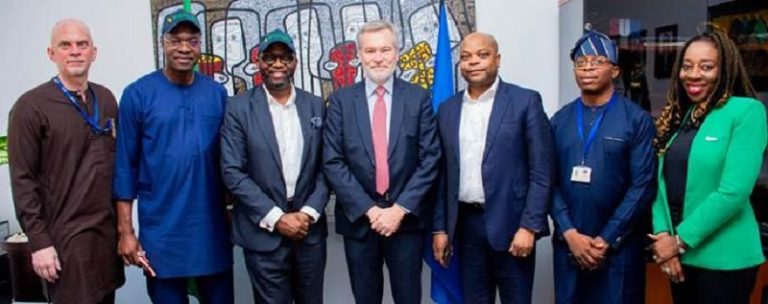
Speaking on Tuesday, November 25, 2025, at a meeting in Abuja, Managing Director and Chief Executive Officer of Renaissance, Mr. Tony Attah, told the Ambassador and Head of Delegation, Mr. Gautier Mignot, that Renaissance was poised to drive the energy security and industrialisation journey from Nigeria to the rest of Africa.

Renaissance
L-R, First Secretary, Head of Trade and Economic Section of the Delegation of the European Union to Nigeria and ECOWAS, Mr. Rikard Nordeman; General Manager, Relations and Sustainable Development, Renaissance Africa Energy Company Limited, Mr. Igo Weli; Renaissance’s Managing Director & Chief Executive Officer, Mr. Tony Attah; Ambassador and Head of the Delegation of the European Union to Nigeria and ECOWAS, Mr. Gautier Mignot; Vice President, Human Resources and Corporate Services for Renaissance, Mr. Olukayode Ogunleye; Programme Manager-Energy and Circular Economy, Green and Digital Economy Section of the Delegation of the European Union, Mr. Godfrey Osamuyi Ogbemudia; Corporate Relations Adviser for Renaissance, Mrs. Onyekachi Igwe… during the engagement between the Delegation of the European Union to Nigeria and ECOWAS, and Renaissance Africa Energy Company Limited in Abuja

He said, “There is the paradox of Africa holding over 6% of global resource endowment yet facing persistent energy poverty. Renaissance’s vision is to begin a movement to correct this. We intend to become Africa’s leading energy company, advancing energy security and industrialisation of Nigeria in a sustainable manner.”

According to Attah, cleaner and more sustainable energy solutions were not negotiable if Nigeria and indeed Africa must become investment-competitive and rise above its current levels of development. “Renaissance will not shy away from taking the bull by the horns in leading this movement. We will remain consistent in, and committed to our pledge to deliver energy responsibly while improving the environmental performance of oil and gas operations.

Attah noted that to drive its vision, Renaissance had put in place very strong corporate governance structure while building on its legacy of credibility to drive visible performance.

He commended the Federal Government of Nigeria for policy reforms including recent executive orders, implementing the Petroleum Industry Act (PIA), the introduction of industry target-setting, and improved security strategies, which have collectively contributed to industry stability and production growth.

Head of the Delegation of the European Union to Nigeria and ECOWAS, Mr. Gautier Mignot, shared insights into the EU’s ongoing initiatives, including the Nigeria Jubilee Fellows Programme, and expressed openness to future collaboration with Renaissance.

The discussion also covered emissions management, where Renaissance highlighted its continuous monitoring, measurement, and improvement initiatives, which, under the Nigeria Gas Commercialisation Programme, has enabled the company to significantly reduce gas flaring to maintain operations within the 40-level threshold.

Both organisations emphasised the need to strengthen dialogue on energy security, sustainability, and strategic partnership.

Dangote partners Honeywell International to boost refinery capacity to 1.4 million barrels per day

0

Dangote Group says it has entered a strategic partnership with Honeywell International Inc to support the next phase of expansion of the Dangote Petroleum Refinery. The collaboration, adds the group, will provide advanced technology and services that will enable the refinery to increase its processing capacity to 1.4 million barrels per day by 2028, marking a major milestone in its long-term vision to build the world’s largest petroleum refining complex.

Through this agreement, Honeywell will supply specialised catalysts, equipment, and process technologies that will allow the refinery to process a broader slate of crude grades efficiently and to further enhance product quality and operational reliability.

Dangote Refinery
Dangote Refinery

Honeywell, a global Fortune 100 industrial and technology company, offers a wide portfolio of solutions across aviation, automotive, industrial automation, and advanced materials. Honeywell’s division UOP has been a technology partner to Dangote since 2017, providing proprietary refining systems, catalyst regeneration equipment, high performance column trays, and heat exchanger technologies that support our best-in-class operations.

Dangote Group is also advancing its petrochemical footprint. As part of the wider collaboration, the firm is scaling its polypropylene capacity to 2.4 million metric tons annually using Honeywell’s Oleflex technology. Polypropylene is a key industrial material widely used across packaging, manufacturing, and automotive applications.

In addition to refining expansion, Dangote Group is progressing with the next phase of its fertiliser growth plan in Nigeria.

“We will increase our urea production capacity from 3 million metric tons to 9 million metric tons annually. The existing plant consists of two trains of 1.5 million metric tons each. The expansion will add four additional trains to meet growing demand for high-quality fertiliser across Africa and global markets,” disclosed the group in a statement.

Dangote Group stresses that it remains fully committed to delivering world-class industrial capacity, strengthening Nigeria’s energy security, and driving sustainable economic growth through long-term investment, innovation, and strategic global partnerships.

Mallam Dikko Umaru Radda: Thank you, the green Governor

A tribute to Governor Mallam Dikko Umaru Radda of Katsina State on his Conferment as Champion of Green Governance by the Forestry Association of Nigeria

When Mallam Dikko Umaru Radda assumed office as Governor of Katsina State, few could have predicted the scale of transformation that was about to unfold. In a country where environmental decline, insecurity, poverty and institutional decay often conspire to frustrate development ambitions, Governor Radda has shown that visionary leadership; anchored on planning, discipline and courage can still change the direction of an entire state.

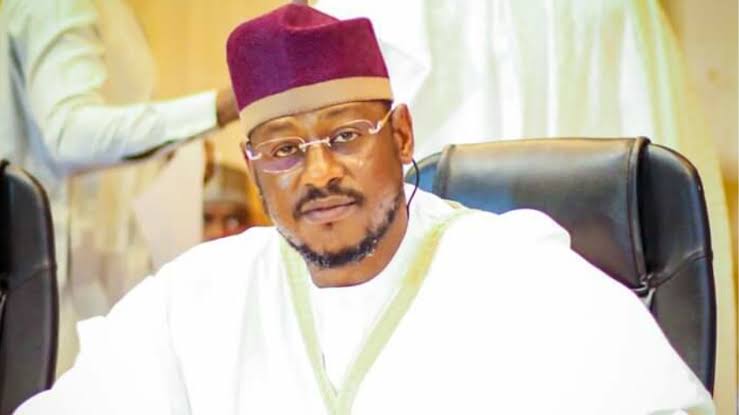
Dikko Radda
Governor Dikko Radda of Katsina State

It is for this reason that the Forestry Association of Nigeria has honoured him with the national award of Champion of Green Governance. Yet the award, impressive as it is, only scratches the surface of a story far larger, and far more consequential, than any plaque or citation can capture.

Governor Radda has not only become a leading voice in environmental restoration; he has also distinguished himself as arguably the most strategic and results-oriented governor in Nigeria today. His governance style is not episodic but integrated; carefully stitched together like a master plan whose components strengthen one another.

At the heart of Radda’s approach is the belief that sustainable development cannot thrive in the absence of strong institutions. He began by building a climate governance structure that is unparalleled in the country. The creation of the Katsina State Climate Change Council and its Secretariat placed environmental policy at the highest level of executive decision-making.

Reporting directly to the Governor, the Secretariat was designed to bypass the bureaucratic inertia that so often stalls development. Its mandate is clear: harmonise state initiatives, oversee donor-funded programmes, accelerate climate investments and ensure that every ministry, department and local government authority operates with climate consciousness.

This structural foundation was soon fortified by one of the most impressive administrative reforms ever recorded at the subnational level in Nigeria: the deployment of trained climate-designated officers across all 41 MDAs and across all 34 LGAs. Never before has climate governance been mainstreamed so thoroughly at the grassroots in any Nigerian state.

By doing this, Radda ensured that climate action is not confined to pledges, speeches or external funding proposals, but becomes a day-to-day government responsibility; embedded in agriculture, health, education, works, water supply, urban planning and finance.

Recognising the urgent challenge of rising urban temperatures and deteriorating city environments, the Governor created a dedicated Department of Urban Greenery – another first in Nigeria. The department is aggressively implementing tree-planting corridors, solar-powered streetlight retrofits and rainwater harvesting systems, making Katsina one of the first states ready to tap into the global carbon-credit market. Already, the carbon footprint of major urban clusters is diminishing, and the environmental landscape is being reshaped into one that supports healthier, cooler, more livable cities.

But Governor Radda’s vision goes far beyond institution-building. It extends deeply into the physical, ecological and economic transformation of the state. His “Green Wall Katsina” initiative; a five-year plan to plant ten million trees across the state is emblematic of the scale at which he operates.

With over ₦3 billion committed so far and more than 2.2 million seedlings already planted across frontline LGAs like Jibia, Kankia, Danmusa, Batsari and Zango, the project is not merely about planting trees; it is about reclaiming farmland, restoring degraded soils and creating green jobs for young people. Over three thousand temporary jobs have been created, while more than fifty thousand hectares of farmland are projected to be shielded from desert encroachment.

Radda’s agricultural interventions extend into the fields where Katsina’s farmers work daily. Through a ₦1.5 billion partnership with the World Bank’s ACReSAL programme, agroforestry systems now integrate nitrogen-fixing trees into farmlands, improving soil health, reducing fertiliser dependence and stabilising yields. A massive fertiliser programme, backed by a ₦7 billion investment, has made inputs more accessible to over one hundred thousand smallholder farmers.

With the rehabilitation of major irrigation assets like the Sabke and Gwaigwaye dams; supported by an additional ₦2.5 billion, thousands of hectares are being opened for dry-season farming. In a region traditionally bound by rain-fed agriculture, Katsina is steadily moving toward all-year farming.

Environmental emergencies that once tormented communities such as erosion, gully collapse and land degradation are now being contained through check dams and land reclamation works financed by the state. Areas like Malumfashi, Kankara and Funtua, long threatened by erosion, are witnessing the return of arable land and the protection of homes once on the brink of collapse.

If the environment is the foundation of human survival, then access to water, education and healthcare are the pillars of human prosperity. Governor Radda has invested heavily in all three. The “Water for All” initiative is expanding solar-powered boreholes and mini-waterworks across rural and peri-urban communities, supported by ₦4 billion from the state budget and a $5 million ACReSAL grant. Today, more than 300,000 residents in Katsina, Daura, Funtua and adjacent villages have access to clean water. This has profoundly reduced the drudgery of water-fetching—an activity historically borne by women and girls.

In the education sector, the Governor is spearheading the renovation of primary and secondary schools, the establishment of digital learning labs and the retraining of teachers. Over ₦5.8 billion has already been spent on infrastructure, complemented by ₦1.2 billion invested in education technology. The results are palpable: children learning under safer, better-equipped environments; teachers embracing ICT; and a growing generation being prepared not just for job markets of today but for those of the future.

Healthcare reform is unfolding with equal dynamism. With over ₦6.1 billion committed to primary healthcare in 2024 alone – and even more earmarked for 2025 – the state is modernising Primary Healthcare Centres in all 34 LGAs and deploying mobile clinics to reach remote communities. The impacts are far-reaching: better maternal health outcomes, lower infant mortality, and broader access to essential medical services for over 1.5 million rural dwellers.

Economic empowerment remains one of Radda’s strongest governance pillars. Under his watch, initiatives like the Katsina Youth Entrepreneurship Programme (K-YEEP) and the Katsina Women Empowerment Fund (K-WEF) have injected more than ₦2 billion into the hands of young entrepreneurs, artisans and women-led businesses. More than ten thousand jobs (direct and indirect) have emerged across agribusiness, tailoring, ICT and renewable energy value chains.

In the livestock sector, a ₦2 billion commitment to grazing reserves and ranching, notably the Wawi Grazing Reserve, is reducing farmer-herder conflict and promoting more sustainable livestock practices. Meanwhile, Katsina is also emerging as a pioneer in Nigeria’s green transport transition, with a pilot programme introducing electric tricycles and solar-powered charging stations in major urban centres.

The Governor’s boldest and most consequential intervention, however, may well be in the security sector. The Katsina Community Watch Corps (KCWC), created through a ₦6.5 billion investment, has become one of the most effective civilian-led security models in the country. With 2,500 trained and equipped personnel deployed across high-risk LGAs, bandit attacks have sharply declined. As a result, more than 50,000 displaced farmers have returned home; a development that has revived agricultural productivity and enabled the success of environmental programmes that would otherwise have been impossible.

To crown it all, the state has established the Katsina Green Economic Zone, designed to industrialise agro-processing and green manufacturing. With a projected ₦20 billion in PPP investments, the zone will generate thousands of jobs and create economic incentives for tree preservation, thus linking environmental conservation with industrial growth.

What becomes clear when all these efforts are woven together is that Governor Dikko Umaru Radda is not merely running a state; he is engineering a comprehensive development system. He built the institutions; he shaped the laws; he articulated the Katsina Green Agenda; and he invested more than ₦130 billion in one year in green sectors, human capital and security. The harmony between these interventions is unmistakable: security enables farming, farming strengthens food systems, environmental programmes protect farmlands, while empowerment and industrialisation reduce economic pressures on the land.

This is not governance by chance. It is governance by design.

It is systemic, deliberate, and visionary.

And it is why Katsina State today stands as a national leader in climate adaptation, environmental restoration, green economic transition and human development.

In an era where Nigeria urgently needs models that work, Governor Radda has become the example of what purposeful leadership looks like. He is, without exaggeration, one of the best governors in Nigeria today; and his legacy is only just beginning.

On behalf of the good and appreciative people of Katsina State therefore, we say Thank you, the Green Governor.

By Professor Mohammed Al-Amin, Special Adviser on Climate Change to the Katsina State Governor

G20 Declaration underscores efforts to expand access to clean cooking solutions

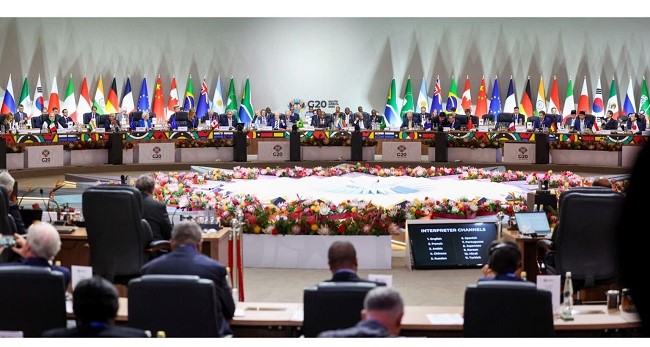
G20 Leaders have welcomed the Voluntary Infrastructure Investment Action Plan to Accelerate the Deployment of Clean Cooking Solutions.

This disclosure was made in the 2025 G20 Summit Declaration, where the leaders noted the voluntary commitment of members to create a conducive policy environment, and where necessary, reforms to support the development and deployment of accessible and affordable clean cooking technologies, infrastructure and fuels including but not limited to LPG.

This, they stated, includes supporting investments in decentralised and inclusive energy solutions, grid expansion, and enabling policy frameworks.

G20 Summit
G20 Summit

“We acknowledge the multi-stakeholder action required to accelerate universal energy security, access, and affordability, drive sustainable development, and foster just transitions across the African continent.

“We welcome the Mission 300 platform, led by the World Bank Group and the African Development Bank, to advance efforts to connect 300 million people to electricity in Africa by 2030. We also note the other international initiatives on the use of different types of zero and low-emission technologies and fuels to promote energy access in Africa and beyond.”

In a reaction, James Rockall, Managing Director and CEO, World Liquid Gas Associationsaid: “The G20’s endorsement of the Voluntary Infrastructure Investment Action Plan, is a historic moment for efforts to expand access to clean cooking solutions across Africa and the Global South.

“Although this plan is voluntary, elevating this topic onto the global economic stage, underscores that rapid progress must be made, with nearly 2.5 billion people – including four in five Africans – currently relaying on hazardous biomass fuels for cooking.

“We urge G20 members to ensure their policy reforms and investment strategies recognise LPG’s unique capacity to drive universal energy access, affordability, and accelerate a just energy transition across the African continent.”