Electricity consumers in some parts of the Federal Capital Territory (FCT), have called on the Federal Government to review the privitasation of the power sector.
The consumers who spoke in Abuja on Sunday, February 22, 2026, said that privatisation of the sector was a good initiative, but added that it had not yielded the desired result.
They said a comprehensive audit and review of the sector would form part of efforts to address the challenges in the industry.
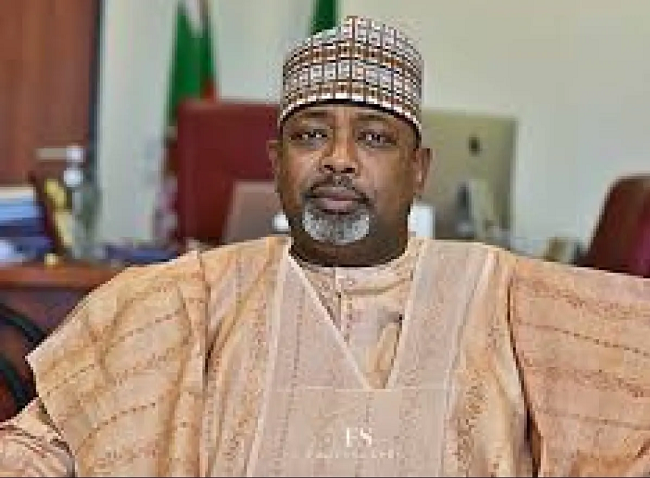
Minister of Power, Mr Adebayo Adelabu
Privatisation of the sector in November 2013 was an initiative of the Federal Government to transfer ownership and management of power assets to private entities. The move was to improve efficiency, attract investments, and enhance electricity supply.
Eleven electricity Distribution Companies (DisCos) and six Generation Companies (GenCos) were established after privatising the sector. However, the sector’s transmission arm was retained by the Federal Government.
Mr Tunde Omoregie, an Engineer residing in Kuje, said that since the privitasation of the sector in 2013, nothing seemed to be working.
He said power supply was constant when it was being handled by the Power Holding Company of Nigeria (PHCN).
Omoregie said after the sector was privatised, “it is now worse off, government should do something about the issue or scrap the process.’’
Mrs Irene Deji, also residing in Kuje said that the privatisation of the sector 13 years ago was to bring in private investments to ensure constant power supply.
Deji said that since the privatisation nothing had improved, adding that the power situation in the country had deteriorated.
”The government should revisit the privitasation of the sector.
”If it is not working, something should be done to reverse it as a lot of us are suffering. It is not easy to cope without constant electricity,” she said.
Mrs Angela Okorie, a Nurse, residing at Lugbe, said that the ultimate aim of allowing competition in the market at the time of privatisation hasd not been achieved.
Okorie said that in spite of the privatisation of the sector, the power situation had not improved.
”I am appealing to the Federal Government to review the privitasation of the power and find another way of ensuring stable electricity to Nigerians.
”We are really suffering because of the epileptic power supply being experienced in my area.
”It is not easy to stay without electricity for days, so my appeal to government and authorities concerned is to review the privitasation process and handle the sector itself,” she said.
Mr Amos Osuji, also residing in Zone 6, Lugbe, said that the sector was better off when it was being handled by the Federal Government.
According to him, privitasation of the sector has not improved electricity, instead people are just collecting money from consumers without providing them the services required.
”The Federal Government should look into the issue of privitasation and find a way of amending the clauses in order to provide steady electricity to Nigerians,” he said.
Mr Samuel Odey, residing in Gwagwalada, said that the present arrangement in the sector was not working.
”Government should find a better way to make the sector work rather than allowing Nigerians to be suffering due to poor power supply..
”I am appealing to the government to look into the privitasation of the sector and find a way to make sure it works better,” he said.
Efforts to implement the Paris Agreement’s new carbon market gathered pace last week, as the UN Body overseeing the work agreed on an accelerated plan to deliver high-quality carbon credits.
Now moving beyond rule‑setting, the Body is focusing on implementation, prioritizing key sectors and speeding up the technical work needed to activate the market.
The work plan agreed this week focused on stepping up the development of methodologies – the technical foundations that ensure emission reductions are real, measurable and verified – for use under the UN‑supervised Paris Agreement Crediting Mechanism (PACM).
Members of the UN Body on Paris Agreement
Work will be steered toward sectors with the strongest demand, the highest readiness, and the biggest potential impact.
“This year is about delivery,” said newly elected Supervisory Body Chair, Mkhuthazi Steleki. “It is a privilege to step into this role as implementation begins, and I am eager to help guide the Body’s work. We have set a clear course to focus on priority sectors and finalise robust methodologies so that the mechanism delivers high-quality emission reductions that countries and the private sector can rely on, with the predictability and confidence they need. We will move faster, without compromising integrity.”
The Body signed off on a new tool to measure emissions from electricity generation and consumption, along with a tool used to estimate the technical lifetime of equipment used by PACM activities.
“The tools adopted at this meeting show that the mechanism is becoming operational,” said new Vice-Chair, Jacqui Ruesga. “I’m excited to take on this role and help drive the next phase of work, as we focus on delivering practical, high-quality methodologies that can channel investment where it is needed most. We look forward to working with Parties and stakeholders to scale up ambition while upholding the highest standards of transparency and environmental integrity.”
Other outcomes
The Supervisory Body also advanced a range of technical and procedural issues, including:
Consideration of recommendations from its expert panels, including updates on accreditation and methodology work.
Adoption of revised procedures for transitioning Clean Development Mechanism activities, following the CMA’s extension of the transition deadline to 30 June 2026.
Progress on the development of a voluntary cancellation platform for the mechanism registry.
Accreditation decisions for several designated operational entities, strengthening the system’s capacity for validation and verification.
These steps support the continued operationalization of the Paris Agreement Crediting Mechanism.
New chairs elected
At the meeting, the Supervisory Body elected Mr. Mkhuthazi Steleki of South Africa as Chair and Ms. Jacqui Ruesga of New Zealand as Vice‑Chair for the year.
The Body also elected Ms. Adriana Gutierrez of Colombia and Mr. Simon Fellermeyer of Switzerland to serve as co-chairs of the Methodological Expert Panel. Ms. Mominata Elola Compaore of Burkina Faso and Mr. Dexter Lee of the United Kingdom were elected as co-chairs of the Accreditation Expert Panel.
Next steps
The Supervisory Body will next meet from May 18 to 21, 2026, to continue advancing work on methodologies, governance procedures and market readiness.
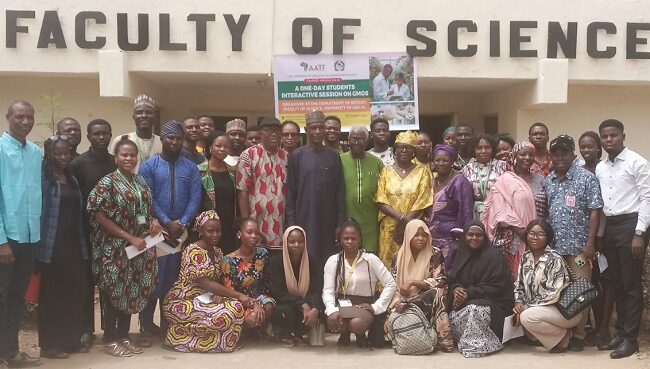
Students at the University of Abuja have expressed confidence in Genetically Modified Organisms (GMOs) following an intensive interactive session held at Abuja campus on Friday, February 20, 2026.
The forum, designed to bridge the gap between scientific innovation and public perception, provided a platform for students to engage directly with experts on the safety and benefits of biotechnology.
Two students expressed satisfaction with the transformative power of education and the shift from skepticism to advocacy among the scientific student community.
Participants at the interactive session on GMOs at the University of Abuja
Afuye Nathaniel, a Master of Science (Msc.) student of Botany, said the workshop served as a turning point, moving him from limited knowledge to enlightenment and a readiness to support the technology.
“A technical takeaway was the realisation that GMO crops have the same shelf life as conventional seeds, debunking a common myth that they spoil differently or behave unnaturally,” he said.
Nathaniel highlighted a disconnect between scientific reality and public perception.
He said the general public held a different, often incorrect, mindset compared to the facts presented in the workshop.
Duru Loveth, another MSc. student of Environmental Biology, expressed delight about being converted from a skeptic into an advocate through evidence-based learning.
She said the workshop shifted her stance from a passive observer to a potential active partner, expressing a direct interest in professional collaboration with GMO proponents.
According to her, she became enlightened because specific, critical questions were answered, proving that transparent dialogue is the most effective tool for changing mindsets.
Prof. Hakeem Fawehinmi, Vice- Chancellor of UniAbuja, remarked that educational institutions and students were critical messengers of a technology-driven agricultural revolution in Nigeria.
He described students as the primary ambassadors who must carry the message of GMO benefits back to their local communities.
Represented by Prof. Dankishiya Salihu, Dean, Faculty of Science, the V-C said achieving food security in Nigeria is impossible through traditional methods.
According to him, modern agricultural technology is the only viable solution.
He said that a key justification for GMOs is that environmental degradation caused by human activities had depleted the soil and climate to the point where traditional seeds could no longer produce sufficient yields.
Fawehinmi said that agricultural technology was framed not just as a temporary fix but as a permanent system required to sustain the nation’s food needs into the future.
Earlier, Dr Jean-Baptiste Tignegre, Regional Representative of African Agricultural Technology Foundation, (AATF), said in spite of the successful release and commercialisation of GM crops, misinformation and disinformation surrounding biotechnology-related crops exists.
“Inaccurate narratives, fear-based messaging, and misleading information risk undermining public confidence, scientific progress, and farmer access to beneficial technologies,’’ he said.
Tignegre outlined a strategic commitment to transparency and scientific literacy within the Nigerian academic sector.
He said the session would provide accurate, evidence-based information on the life cycle of GMOs, specifically focusing on how they are regulated, tested for safety, and officially approved within the Nigerian legal framework.
He added that the session was a mission to replace fear and misinformation with a rigorous, science-first approach to agricultural biotechnology.
Dr Liadi Tella, of the Faculty of Agriculture, presented a paper on Myth of Accepting GMOs.
He said that GMOs were the essential solution to Nigeria’s dual crisis of food scarcity and chemical contamination.
The Petroleum Products Retail Outlets Owners Association of Nigeria (PETROAN) has described the Federal Government’s Executive Order No. 9 as a reform-driven step to boost accountability and investors’ confidence in Nigeria’s energy sector.
Dr Billy Gillis-Harry, National President of PETROAN, made the commendation while reacting to the development on Saturday, February 21, 2026.
Gillis-Harry said the order, compelling the Nigerian National Petroleum Company Limited (NNPC Ltd.). to remit revenues directly to the Federation Account, aligned with global best practices and would reinforce NNPC’s transformation into a commercially disciplined company.
Dr Billy Gillis-Harry, PETROAN’s National President
President Bola Tinubu signed the Executive Order No. 9 of 2026 on February 13, aimed at strengthening fiscal discipline and promoting transparency in Nigeria’s oil and gas revenue management.
The Executive Order directs that all oil and gas revenues due to the Federation, including royalty oil, tax oil, profit oil, and profit gas, be paid directly into the Federation Account.
It also suspends certain revenue retention mechanisms under the Petroleum Industry Act (PIA) 2021, including the 30 per cent Frontier Exploration Fund, 30 per cent NNPC Ltd. management fee on profit oil and profit gas.
It also includes the redirection of gas flare penalties to the Federation Account.
Reacting, Gillis-Harry said transparent revenue management was critical to improving Nigeria’s economic credibility and attractiveness to both local and foreign investors.
He described the executive order as a courageous decision that strengthens accountability while deepening reforms within the oil and gas industry.
The PETROAN president also commended the Group Chief Executive Officer, NNPC Ltd., Mr. Bayo Ojulari, for his proactive efforts to revive the Port Harcourt Refinery, particularly during a recent inspection engagement with a Chinese technical firm.
He endorsed the proposal to adopt the governance structure of Nigeria Liquefied Natural Gas Limited (NLNG) for the Port Harcourt Refinery, noting that the NLNG Bonny model has proven effective in promoting operational efficiency, transparency, and private-sector discipline.
He emphasised that replicating a commercially driven governance model similar to NLNG would enhance the long-term productivity and global competitiveness of Nigeria’s refineries.
Such reforms, he said, would strengthen energy security, reduce dependence on fuel imports, and position the downstream sector for sustainable growth.
Gillis-Harry reaffirmed PETROAN’s readiness to collaborate with the Federal Government and relevant regulatory institutions to ensure that the order promotes energy security, safeguards jobs, and delivers long-term stability.
In a related development, the Revenue Mobilisation Allocation and Fiscal Commission (RMAFC) has commended President Bola Tinubu for ordering direct remittance of oil and gas revenues to the Federation Account, describing it as a major fiscal reform.
Dr Mohammed Shehu, Chairman of the RMAFC, made the remark in a statement on Saturday in Abuja.
Shehu described the Executive Order as bold, constitutionally grounded and capable of improving transparency and accountability in revenue management.
He said the directive would help eliminate leakages and strengthen the revenue base of federal, state and local governments.
He explained that the order aligned with constitutional provisions governing ownership and control of mineral resources for the collective benefit of Nigerians.
According to him, previous frameworks allowed multiple deductions that reduced remittances into the federation account.
Shehu listed such deductions to include management fees, frontier exploration allocations and other charges.
He said the deductions constrained fiscal capacity across all tiers of government, adding that the commission had consistently advocated reforms to address revenue leakages and improve remittance processes.
The chairman recalled a recent retreat where concerns about revenue retention outside the federation account were discussed.
He said the executive order had addressed many of the structural challenges identified by the commission.
Shehu described the reform as timely in view of increasing national demands, adding that such demands include security, infrastructure, education, healthcare and economic stabilisation.
‘’The directive will improve transparency and predictability in government revenue flows; it will also strengthen fiscal federalism and restore constitutional revenue rights.
“The reform enhances the commission’s capacity to monitor revenue accruals and disbursement, as well as supporting the commission’s constitutional oversight responsibilities,” he said.
Shehu reaffirmed the commission’s support for ongoing public financial management reforms, noting that the RMAFC would continue to collaborate with relevant institutions to ensure effective implementation.
He said that the commission remained committed to safeguarding the integrity of the federation account.
Similarly, Mr. Tunji Oyebanji, Chief Executive Officer of 11 Plc, has expressed support for the Federal Government’s directive mandating the direct remittance of oil and gas revenues from Nigerian National Petroleum Company Ltd. (NNPCL) into the Federation Account.
Oyebanji, in an interview on Saturday in Lagos, described the move as a step toward transparency, fiscal discipline and strengthened public finances.
Oyebanji acknowledged the fiscal pressures confronting government, noting that the reform reflected necessary effort to strengthen revenue inflows and ensure resources are available for national priorities.
“I understand that the Federal Government is working to strengthen revenue generation and block leakages in order to meet critical expenditure obligations,” he said.
He explained that the executive order rerefined erational mechanisms within Nigeria’s petroleum revenue framework by ensuring that funds due to the Federation were remitted transparently and promptly.
While endorsing the reform’s objectives, Oyebanji emphasised the importance of ensuring smooth implementation so that NNPCL continued to meet its commercial and operational responsibilities effectively.
“There is a need for careful execution to ensure operational efficiency is preserved.
“We must understand the cash-flow requirements of NNPCL so that its commercial operations continue seamlessly,” he said.
He noted that under Nigeria’s petroleum governance framework, NNPCL is expected to operate competitively, meet contractual obligations, finance capital investments and function with private-sector efficiency.
According to him, ensuring clarity in operational funding mechanisms will help the company sustain performance while aligning with the government’s transparency and accountability goals.
He added that efficient implementation procedures would prevent delays in infrastructure repairs, investments and financial commitments, thereby supporting the company’s transition into a fully commercial enterprise.
Oyebanji said the reform underscored government’s commitment to strengthening public finance management while safeguarding the operational resilience of the nation’s strategic energy institution.
He noted that with proper coordination and stakeholder engagement, the directive would enhance accountability, improve revenue flows to the three tiers of government and support national development priorities.
By Yunus Yusuf, Emmanuella Anokam and Vivian Emoni
The Lagos State Government on Saturday, February 21, 2026, refuted an online media report claiming that the state had resumed the monthly environmental sanitation exercise.
The Commissioner for the Environment and Water Resources, Mr. Tokunbo Wahab, said no categorical statement had been made regarding the date of commencement of the exercise.
Wahab explained that what he told newsmen after a project inspection tour last Sunday was that engagements with relevant stakeholders were still ongoing.
Lagos State Commissioner for the Environment and Water Resources, Tokunbo Wahab
He said the state government had planned to begin with a sensitisation programme last week but was constrained by logistics issues.
“The truth is, we were meant to start with a sensitisation programme last week, but we had a logistics issue. We need to find a day that is acceptable to all stakeholders,” he said.
Wahab expressed optimism that the exercise might return very soon, adding that the official date would be communicated by the Governor, Mr. Babajide Sanwo-Olu.
The commissioner urged law-abiding residents to continue their lawful activities without hindrance, assuring that adequate notice would be given before the reintroduction of the exercise.
The monthly environmental sanitation, previously held on the last Saturday of every month between 7.00 a.m. and 10.00 a.m., was suspended in November 2016 following a legal pronouncement restricting movement during the exercise.
However, renewed waste management challenges, including clogged drainage channels and indiscriminate refuse disposal, have sparked calls from residents for its reinstatement.
The Nigerian National Petroleum Company Limited (NNPC Ltd.) and the Dangote Group have forged a renewed strategic alliance designed to accelerate energy security, deepen domestic refining capacity and drive long-term economic prosperity.
In a significant move aimed at reshaping Nigeria’s energy landscape, the two companies renewed the alliance on Saturday, February 21, 2026.
This epochal deal was reached when Mr. Bashir Ojulari, Group Chief Executive Officer, NNPC Ltd., led the NNPC’s delegation to the Dangote Refinery and Petrochemical Complex in Ibeju-Lekki, Lagos State.
Mr Bashir Ojulari, Group Chief Executive Officer, NNPC Ltd,. and the Chairman of Dangote Group, Alhaji Aliko Dangote during Ojulari’s led delegation visi to the Dangote Refinery and Petrochemical Complex in Ibeju-Lekki, Lagos State
The visit was for high-level discussions that culminated in a renewed commitment to strategic collaboration between the two companies.
The visit, which included a facility tour, focused on strengthening operational and commercial relationship between NNPC Limited and the Dangote Refinery, with both organisations reaffirming their shared vision for Nigeria’s energy future.
Ojulari, in a statement, commended the President of the Dangote Group, Alhaji Aliko Dangote, for his vision and perseverance in delivering the 650,000 barrels per day refinery, a project that positions Nigeria as a major downstream hub in Africa.
Speaking on the breadth of the partnership, Ojulari described the strategic alliance as one that will “unlock synergies across assets, infrastructure, capital and markets”.
“It will also provide visibility of all NNPC-Dangote business relations,” he added.
He further revealed the expansive potential of the collaboration, noting that there is huge opportunity for both companies to expand upstream, and move into trading, shipping, gas supplies, among other fronts.
Ojulari expressed profound appreciation to President Bola Tinubu for his visionary leadership in the oil and gas sector.
He said the president’s policy clarity, investor-friendly reforms and commitment to sectoral transformation had signalled seriousness to both domestic and international investors, creating an enabling environment for partnerships of this scale to flourish.
According to the Chairman of Dangote Group, Alhaji Aliko Dangote, Nigerians will be the beneficiaries of the synergy between Dangote Group and NNPC Ltd, because the collaboration will achieve economies of scale and unlock value across markets.
The visit concluded with both parties reaffirming their commitment to deepening cooperation in pursuit of shared objectives, ensuring energy security, driving industrial growth and delivering value to Nigerians.
NNPC Ltd. currently holds a 7.25 per cent stake in the Dangote Refinery.
The shareholding is considered to be a strategic investment that aligns with NNPC Ltd’s downstream growth objectives and commitment to domestic refining capacity.
Wild Africa has called on the Nigerian government to protect pangolins, the world’s most trafficked mammals, from extinction and expedite efforts to update national legislation safeguarding them.
Despite being protected by national and international laws, such as the 2016 ban on international commercial trade, pangolins face extinction due to high demand for their scales, which are used mainly in Asia for traditional medicine, and for their meat, considered a delicacy. Nigeria has become a key global exporter and a significant source of pangolin scales for Asian markets. It was associated with 55 per cent of pangolin scale seizures worldwide from 2016 to 2019.
The Pangolin. Pangolins are believed to be the world’s most trafficked mammals
“Nigeria is a custodian of precious biodiversity, but our pangolins are being trafficked into extinction. This World Pangolin Day, let’s make history for the right reasons,” said Dr Mark Ofua, Wild Africa’s West Africa spokesperson.
“The speedy passage of the Endangered Species Conservation and Protection Bill is the game-changer that will cement Nigeria’s commitment to conservation and secure a future for these unique creatures that our country is blessed with.”
In addition, it is reported that more than half a million pangolins, an estimated 530,978 individuals, were involved in 2,222 illegal pangolin trade seizures between 2016 and 2024. Pangolin scales accounted for 99 per cent of all confiscated parts.
The report was prepared by experts from the IUCN Species Survival Commission Pangolin Specialist Group for the CITES Secretariat, using information submitted by 32 CITES Parties, including 15 pangolin-range States. It shows that demand for pangolin scales and meat continues to drive exploitation across Africa despite international trade bans, and highlights the need for stronger protection, improved population monitoring, and effective engagement with local communities.
On its part, Nigeria has taken significant steps to combat the illegal trade of pangolin scales through legislative measures and enforcement. In early 2024, Nigeria introduced the Endangered Species Conservation and Protection Bill, which proposes stronger penalties for trafficking in illegal wildlife products such as pangolin scales.
The bill is currently awaiting final presidential signoff. West African governments and the IUCN Species Survival Commission also announced the first-ever West Africa Regional Pangolin Conservation Action Plan 2026–2056 to coordinate protection, monitoring, and community engagement across several range states.
Furthermore, seizures of pangolin scales and other illegal wildlife products, as well as prosecutions of such cases, are also on the rise. In December 2024, the Nigeria Customs Service (NCS) arrested a suspected pangolin scale broker and confiscated 2.179 tonnes of pangolin scales, representing approximately 1,100 pangolins. Since July 2021, the NCS and its partners have conducted 16 operations, resulting in 35 arrests and 12 convictions, and have seized 21,582 tonnes of pangolin scales.
Peter Knights OBE, CEO ofWild Africa, says, “With few natural predators and slow reproduction rates, pangolins cannot sustain human exploitation. Recent changes to reduce use of scales in China should help, but we need more public awareness and better enforcement in Africa if they are to survive.”
Pangolins remain understudied and underprotected, and their time is running out. World Pangolin Day highlights the urgent need for governments, conservation organisations, and communities to scale up efforts to protect pangolins and prevent the loss of one of the world’s most extraordinary animals.
The Managing Director and Chief Executive Officer of Dangote Petroleum Refinery & Petrochemicals, David Bird, has said the refinery is delivering measurable public health and environmental benefits through the production of Euro 5 standard fuels, positioning Nigeria among countries with the highest fuel quality specifications globally.
Speaking during an interaction with selected journalists, Bird explained that modern fuel standards are rooted in public health requirements, particularly the need to reduce harmful emissions linked to high sulphur and metal content. According to him, the refinery is producing Euro 5 specification petrol with a sulphur content of 50 parts per million, a benchmark designed to protect public health and the environment.
Dangote Refinery
“Fuel specifications have evolved over time in response to public health requirements,” Bird said. “Euro 5 is not about imposing costs on industry. It is about safeguarding health and ensuring cleaner air. The reduction of sulphur in fuels has significantly reduced problems such as acid rain and harmful emissions.”
He noted that while some countries in West Africa still operate under legacy fuel specifications with far higher sulphur levels, Nigeria now benefits from cleaner fuels produced locally. He added that metals such as lead, previously used to enhance fuel performance, have long been eliminated in advanced markets due to health concerns.
“Nigerians are now enjoying low sulphur, metal free petrol comparable to what is available in Europe,” he stated. “This is something many Europeans take for granted. It should not be considered a luxury. If industry can deliver the highest standards, then consumers have the right to benefit from them. Our ambition is to extend the reach of high-quality fuels across the continent.”
He added that the refinery’s ability to consistently produce cleaner, higher quality fuels underscores its role in transforming Nigeria’s energy landscape while aligning domestic fuel quality with global best practice.
Bird emphasised that the development represents not only an industrial milestone but also a significant advancement in environmental protection and public health standards in Nigeria.
In furtherance of President Bola Ahmed Tinubu’s Renewed Hope Agenda and the Federal Government’s commitment to institutionalising a paperless public service, the National Identity Management Commission (NIMC) has deployed WorkflowPro as its official platform for the digital submission and management of correspondence.
The adoption of WorkflowPro marks NIMC’s formal transition to a paperless operating environment and reflects the Commission’s resolve to strengthen governance, improve administrative efficiency, and standardise records management in line with approved public sector reforms. The platform provides a secure, structured, and traceable system for managing both internal and external communications, thereby enhancing accountability and operational transparency.
Abisoye Coker-Odusote, Director General/CEO, National Identity Management Commission (NIMC)
Under the new framework, all external correspondence to NIMC will be processed electronically through WorkflowPro. The system enables end-to-end tracking of submissions, accelerates internal routing and response timelines, and ensures secure electronic archiving of official records. This approach eliminates the risks associated with manual handling of documents while reinforcing compliance with established information management standards.
The implementation of WorkflowPro is consistent with the Federal Government’s Enterprise Content ECM) policy, which mandates the digitisation of official records and the elimination of physical file movements across all Ministries, Departments, and Agencies (MDAs).
Accordingly, all external correspondence addressed to the National Identity Management Commission must be submitted via the NIMC WorkflowPro platform, accessible through the official portal link.
To support effective implementation, NIMC has approved a 30-day transition period from the date of this announcement, during which stakeholders are expected to acquaint themselves with the new process. Upon the expiration of this period, the Commission will discontinue the acceptance of manually submitted letters and paper-based correspondence.
WorkflowPro was developed by NIMC’s in-house technical team under the directive of the Director-General/Chief Executive Officer, Dr. Abisoye Coker-Odusote. The platform forms part of a broader institutional reform agenda aimed at strengthening the security of official communications, reducing administrative delays, and entrenching digital governance within the public service.
The NIMC enjoins all stakeholders to take note of this policy directive and ensure full compliance.
The Board of Directors of the African Development Bank (AfDB) Group has approved a $200 million loan to scale up priority agricultural investments in Nigeria.
The AfDB said this in a statement on its website.
It said the financing would support the second phase of the Federal Government’s National Agricultural Growth Scheme–Agro-Pocket (NAGS-AP).
Sen. Abubakar Kyari, Minister of Agriculture and Food Security
According to the statement, this aims at boosting productivity, strengthening value chains and accelerating climate-smart, data-driven farming.
“The approval follows earlier financing under the Bank Group’s African Emergency Food Production Facility and will contribute to implementing five programmes under the National Agricultural Technology and Innovation Policy (NATIP).
“The programmes focus on improving access to quality agricultural inputs, strengthening value chains for priority crops, revitalising extension services, promoting digital and climate-smart agriculture, and enhancing agricultural data management.
“The funding is expected to raise staple crop production through climate-resistant, high-yield seed varieties and fertiliser blends tailored to local conditions.
“While expanding crop insurance coverage to protect farmers from climate-related losses,” the statement said.
The AfDB said the fund also targeted a fivefold increase in wheat production and a 20 per cent rise in rice output.
According to the statement, this will strengthen national food self-sufficiency, while encouraging youth participation in commercial farming.
The statement quoted Abdul Kamara, Director General of the Bank’s Nigeria Country Department, as saying that the second phase built on the strong results of Phase One.
“Building on the strong results achieved under Phase 1, this second phase draws directly from those lessons and successes to scale up impact even further.
“By expanding access to quality inputs, digital tools, and climate-smart technologies, we are supporting farmers to improve productivity and resilience.
“This programme will continue to play a critical role in reducing food imports, boosting local production, and advancing inclusive growth across the country,” Kamara said.
Phase One featured an ICT-based system that delivered quality seeds, pesticides and fertiliser to farmers through more than 600 agro-dealers nationwide.
It also supported the cultivation of 118,000 hectares of wheat in the 2023/2024 dry season, tripling national wheat output to an estimated 0.5 million metric tonnes in 2024, with 650,000 smallholder farmers benefiting so far.
Agriculture employs about 38 per cent of Nigeria’s workforce and contributes 25.2 per cent to Gross Domestic Product, but the sector faced low productivity due to limited access to quality inputs, inadequate irrigation and climate challenges.
The four-year project, scheduled to begin in March, aligned with the Bank Group’s strategic vision to empower young people and women through technology and financial support.