Home Blog Page 7

Expert warns declining bats population may affect food security in Nigeria

A bat biologist, Dr. Benneth Obitte, has warned that the declining bats population in Nigeria may affect food security.

Dr. Obitte warned that Nigeria may be losing one of its most underappreciated environmental allies, largely out of superstition and neglect.

He said this while addressing journalists during a webinar organised by Wild Africa on Monday, April 13, 2026, ahead of the International Bat Appreciation Day, which is observed on April 17.

Dr. Benneth Obitte
Dr. Benneth Obitte

The Perception about Bats

For some Nigerians, bats are not just animals, they are symbols of fears driven by unverified beliefs passed across generations. In some communities, their sudden appearance is still tied to stories of witches, dark forces and disease, a belief passed down so often that it now feels like fact.

But while the myths linger, something far more real is unfolding.

Across Nigeria, bat populations are quietly shrinking. New research points to intense, widespread hunting as a major driver, pushing these animals toward a dangerous tipping point.

What makes this decline alarming isn’t just the loss of the bats themselves, but the ripple effect it could have on ecosystems, agriculture, and food security.

Bats and Crop Production

Behind their shadowy reputation lies a powerful ecological force.

Bats are natural pest controllers, consuming vast quantities of insects that would otherwise devastate crops. They are also vital pollinators and seed dispersers. In parts of Nigeria, species of bats play a crucial role in the propagation of economically important plants like shea and dawadawa also known as locust beans.

“They save farmers the cost of pesticides and insecticides,” Obitte says. “Without bats, some of these plants and the livelihoods tied to them could decline.”

According to Obitte, Nigeria is home to over 100 species of bats, including fruit bats (often called flying foxes), nectar-feeding bats, and insectivorous species that dwell in caves and tree hollows. Globally, there are more than 1,400 species, making bats one of the most diverse groups of mammals on Earth.

The suspicion surrounding bats is not uniquely Nigerian. It appears to be a global perception problem, shaped by centuries of folklore and reinforced by their nocturnal nature.

“Animals that operate at night, bats, owls, even cats have historically been grouped as evil in many African cultures, because they are nocturnal,” Obitte explained.

But that narrative is slowly shifting. As education and ecological awareness spread, more people are beginning to understand that bats are not omens, they are essential.

Hunting and Habitat Loss

Despite their ecological importance, bats face mounting threats.

Habitat loss from deforestation and urban expansion is one factor, though difficult to quantify. However, more visible and more immediate is hunting.

Across parts of southern Nigeria, bats are widely consumed as bushmeat and used in traditional medicine. In some communities in Edo State, Obitte estimates that up to 50 percent of residents consume bats. In Cross River and beyond, their “distinct taste” keeps them in demand.

This level of exploitation is not without consequence.

“Hunting is redistributing bat species across the landscape,” he said. “Some populations are being pushed out entirely.”

Nigeria has already lost more than half of its forest cover, compounding the crisis. With fewer places to roost and reproduce, and increasing pressure from hunters, bat populations are being squeezed from both sides.

COVID-19 and the Burden of Blame

The COVID-19 pandemic further complicated public perception. While some people suggested a link between bats and the virus, Obitte is clear: there is no direct evidence that humans contract COVID-19 from bats.

“The virus likely passed from bats to another species before reaching humans,” he explained. “But there is no data confirming direct transmission from bats to people.”

Still, the association has deepened fear, making conservation efforts even more challenging.

Conservation enforcement

In Nigeria, wildlife conservation remains largely underfunded and under-prioritized.

Obitte recounted witnessing bats openly sold at a police checkpoint, an image that underscored weak enforcement. While new wildlife laws have introduced stricter penalties for hunting endangered species, implementation remains inconsistent.

“For every seizure made, there are dozens that pass through,” he says.

Much of the real work is being carried out by non-governmental organisations. These groups train customs officers to identify trafficked species, support national park rangers, while the organisation he co-founded, Small mammal conservation organization (SMACON) conduct field monitoring in places like Abuja, Jos, Benin, and Benue.

But without strong institutional backing, their impact is limited.

“Nigeria treats wildlife as an afterthought,” Obitte says. “Conservation is not yet seen as a national priority.”

Bat Day and the Call to Action

International Bat Appreciation Day, marked every April 17, was created to change exactly this kind of narrative.

It is a day dedicated to educating the public about the ecological importance of bats, correcting harmful myths, and encouraging conservation efforts worldwide. For countries like Nigeria, where misunderstanding runs deep and threats are immediate, the day carries added urgency.

Obitte believes the path forward is clear, even if it is not easy.

He said Nigeria must begin by acknowledging what has already been lost, over 50 percent of its forest cover, and take decisive steps to protect what remains. That includes properly funding conservation agencies, equipping forest guards, and enforcing a strict ban on hunting in protected areas.

“Protected areas must actually be protected,” he insisted.

He explained that countries like Kenya, Rwanda, and Uganda have built thriving tourism industries around wildlife, stressing that Nigeria, with its rich biodiversity, has similar potential, but only if it begins to value what it still has.

As dusk falls across Nigeria’s forests and cities, bats still take to the skies, quiet, and sometimes unseen.

Their survival may depend on something as simple, and as difficult, as changing perception.

Saving bats is not just about protecting a misunderstood animal, it is about sustaining the society.

By Omowumi Abraham
NCDMB, Seplat firm up plans for take-off of Centre of Excellence at DELSU

0

Key Management staff of the Nigerian Content Development and Monitoring Board (NCDMB) and Seplat Energy Plc met with principal officers of the Delta State University (DELSU), at Abraka, Delta State, on Monday, April 13, 2026, to deliberate on critical processes toward the take-off of a Centre of Excellence in Gas Development, approved for the institution by the Board in 2024.

The project, which is the latest among similar ones at Niger Delta University, Amassoma; Federal University of Technology, Minna; Federal University of Technology, Akure; Federal University of Technology, Owerri; Modibbo Adama University of Technology, Yola; and Usman Danfodio University, Sokoto, is the outcome of an NCDMB-commissioned research undertaken by PricewaterhouseCoopers (PwC) to provide a 10-year road map for research and development (R&D) for the Nigerian oil and gas industry.

Delta State University
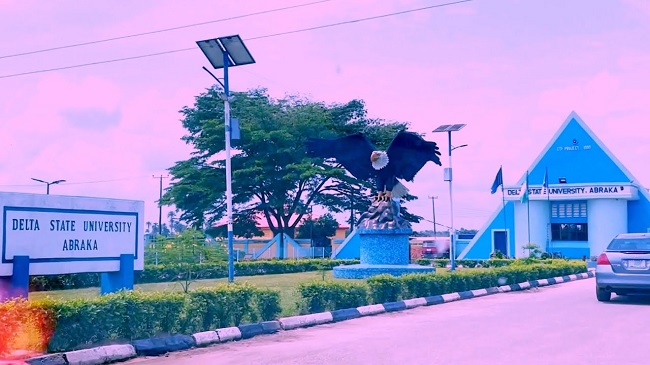
Delta State University, Abraka

Speaking at the event, the Director, Corporate Services, of the NCDMB, Dr. Abdulmalik Halilu, who represented the Board’s Executive Secretary, Felix Omatsola Ogbe, recalled that personnel of the Board and Seplat have held a series of engagements since 2024 to ensure they achieved a scope that clearly outlined the essence of what a centre of excellence is supposed to deliver in terms of infrastructure, equipment, capacity development, research policy and most importantly, sustainability of the project.

He disclosed that the Managements of NCDMB and Seplat Energy have endorsed the scope and were ready for the take-off of the project, with a team of technical experts already assembled to manage the entire process. He reiterated that the Standing Committee of the Board that has been managing the project since conception has been further reinforced with the inclusion of new personnel of general manager cadre to ensure that expectations of the project are met.

“We wish to reassure you,” Dr. Halilu declared, adding that “the Executive Secretary is fully committed to the project, not just at the project development phase but even during execution,” and has accordingly deployed the full complement of staff covering quality assurance, research and development, and related operational units to achieve the best results.

In his own remarks, the Nigerian Content Manager of Seplat Energy, Mr. Simeon Ogari, said his company, which operates the 300 million standard cubic feet per day (MMscfd) ANOH Gas Processing Plant, a 50/50 Joint Venture with the Nigerian Gas Infrastructure Company (NGIC), chose Delta State University, Abraka, for the Centre of Excellence project because of its proximity to his company’s major operational base.

While underlining the commitment of the company’s Management to timely completion and sustenance, he pointed out that the Research Centre in Gas Development would be beneficial not only to the institution but to the oil and gas industry and the country at large as a centre for advanced research and technology incubation.

He, however, emphasised the importance of collaboration, pointing out: “There is nothing as good as looking at the Triple Helix Model,” as every research centre in the world has government, institution, and the private sector working together in critically important roles. He said he expected same for the upcoming Centre.

Giving the background to the project, the Chief Executive Officer of GOSHEN, the management firm in charge of the project, Mr. Leonard Okafor, noted that the research work undertaken by PricewaterhouseCooper showed that Nigeria is “operating an enclave economy,” without adequate intersectoral linkages, and that “there was need for entrenched local content in the oil and gas industry.”

The Research Centre, he explained, was one of a number of initiatives designed to address the deficits.

The PwC research, he stated, also identified five areas where R&D would enhance local participation in the oil and gas industry, namely, Collaboration, Infrastructure, Capability, Commercial/Legal Framework, and Funding. He emphasised that “finding the right collaboration is critical,” noting that academics with sound research backgrounds and who are well-published are particularly required for a project of this nature.

Explaining further what he titled as “Standard Requirements from Host Institutions,” the management consultant listed availability of research staff for secondment to [the Research] Centre, availability of non-research/administrative staff for secondment to the Centre, essential policy documents (Existing MoU for any existing research centre/collaboration between DELSU and other parties], Research Policy, and Finance and Procurement Policy).

In his response, the Vice Chancellor of the institution, Professor Samuel Oghenovo Asagba, thanked NCDMB and Seplat for the world-class research facility they have decided to build at DELSU, assuring them that he would do his best to meet all requirements for successful take-off.

In regard to collaboration, he said the university, which was rated by Times Higher Education in 2026 as “The best state-owned university in Nigeria,” has very competent academics, renowned for their research output, to fulfil the requirement of collaboration. “In science and engineering, DELSU has high-flyers,” he declared.

Also speaking, the General Manager, Quality Assurance, of the NCDMB, Mr. Chris Osuji, said his department was involved in the project to ensure top-notch finishing. According to him, “from inception to completion, NCDMB Quality Assurance is to be actively engaged,” he stated.

In a vote of thanks, the Director, Monitoring and Evaluation, of the NCDMB, Mr. Silas Ajimijaye, expressed appreciation to Seplat for providing the required funding, while urging the University Management to use the project to etch its name in gold.

In a similar vein, the Deputy Vice Chancellor, Research, Professor Douglason Omotor, thanked NCDMB and Seplat for the initiative, while assuring that the project executors would find technically competent academics and seasoned administrators to provide effective collaboration.          

IPCC authors begin work on CDRT-CCUS 2027 methodology report 

The Intergovernmental Panel on Climate Change (IPCC) is gathering over 150 experts in Rome, Italy, this week to begin work on the 2027 Methodology Report on Carbon Dioxide Removal Technologies, Carbon Capture, Utilisation, and Storage (CDRT-CCUS).

The first meeting of authors of the Methodology Report is taking place from April 14 to 16, 2026, at the headquarters of the Food and Agriculture Organisation (FAO) in Rome.

The 2027 Methodology Report on Carbon Dioxide Removal Technologies and Carbon Capture, Utilisation, and Storage will equip governments with a robust, up‑to‑date scientific foundation for estimating CO₂ emissions and removals from these technologies.

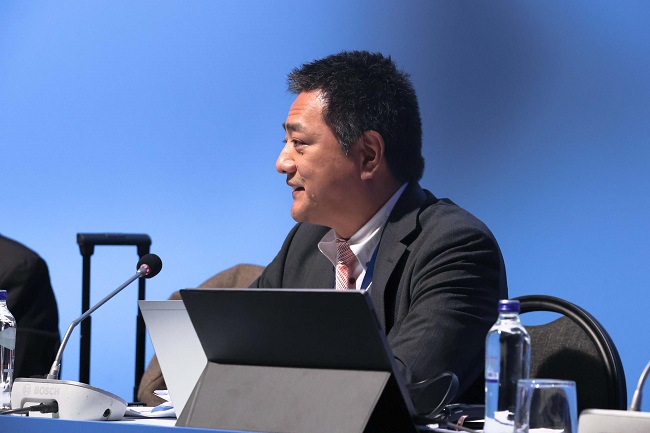
Takeshi Enoki
IPCC Co-Chair of the Task Force on Greenhouse Gas Inventories (TFI), Takeshi Enoki

“This Methodology Report will serve as a fundamental reference for transparent and consistent reporting on climate action, strengthening the scientific basis for mitigation policies,” said Takeshi Enoki, the Co-Chair of the IPCC Task Force on National Greenhouse Gas Inventories (TFI).

The CDRT-CCUS Methodology Report will provide comprehensive guidance on a wide range of carbon dioxide removal and storage approaches, from CO₂ capture, utilisation, and long‑term storage to emerging land‑based and coastal solutions. It will offer updated scientific methods for assessing technologies such as direct air capture, soil and biomass-based removals, coastal ecosystem approaches, and the production of durable CO₂‑derived materials.

“Together, these updates will strengthen countries’ ability to consistently estimate and report emissions and removals across the full spectrum of methods covered by the IPCC guidelines,” said Mazhar Hayat, the other TFI Co-Chair.

The IPCC Task Force on National Greenhouse Gas Inventories is responsible for developing and improving internationally agreed methodologies and tools for estimating and reporting greenhouse gas emissions and removals by signatories of the United Nations Framework Convention on Climate Change (UNFCCC) and its Paris Agreement.  

As other IPCC reports, this Methodology Report will be prepared through a structured and transparent IPCC process, with four Lead Author meetings where the report’s content will be developed and refined in line with approved guidance. 

It will undergo two formal review stages, first by experts and then by governments and experts jointly, before the final approval by IPCC member governments at the end of 2027.

Experts unite to boost Ghana’s school food systems

What if the food needed to improve children’s diets is already available – but not being used in school meals?

This question framed a recent webinar on school meals and food systems in Ghana, bringing together researchers, policymakers, and practitioners across nutrition, agriculture, and education. The event also marked the launch of the Ghana Community of Policy & Practice (CoPP), a new platform aimed at turning research and experience into more coordinated action on school feeding.

Opening the session, Professor Francis Bruno Zotor of the University of Health and Allied Sciences (UHAS) highlighted the broader significance of school meals: “School meals are about much more than feeding children – they are linked to nutrition, education, local agriculture, livelihoods, and the strength of our food systems.”

Ghana
School children in Ghana. Photo Credit: Christopher Mensah

In Ghana, the national school feeding programme (GSFP) reaches around 4.5 million pupils, helping improve attendance and reduce short-term hunger. Yet challenges remain around the nutritional quality of meals, with high levels of malnutrition still affecting school-age children.

This creates a clear opportunity: to better connect school feeding with local food systems, ensuring nutritious, locally available foods are more consistently included in meals.

Putting local foods into practice

Across the webinar, speakers shared practical examples of how this is already happening.

Seth Offei from the GSFP Secretariat described efforts to introduce soy into school meals as an affordable, locally available source of protein. Caterers are being trained to prepare soy-based meals, while links are being strengthened between schools and local farmers producing soy.

Similarly, research led by Jolene Mateko Nyako of the CSIR–Food Research Institute explored how aquatic foods could play a greater role in school diets. Although fish is widely produced in Ghana, it is not consistently included in school meals.

The research tested practical solutions, including fish-based products such as powders for soups and stews, and fish-based sausages, and worked directly with caterers and suppliers to improve how these foods are sourced and used. “When these foods are included, we see impact,” Nyako explained. “But it depends on how stakeholders are engaged and how systems work in practice.”

These examples highlight a common challenge: it is not just about what foods are available, but how easily they can be integrated into everyday school meals.

Making supply work on the ground

Ensuring these approaches succeed depends on how food is produced, supplied, and financed locally. Soy, for example, is currently grown in limited areas, and expanding production requires support for farmers and stronger links to school demand. Efforts are underway to encourage cultivation in suitable regions and connect farmers more directly with school feeding markets.

For aquatic foods, supply challenges are shaped by how the school feeding system operates. Caterers are often paid several months after delivering meals, creating cash flow constraints. In response, suppliers and processors are exploring more flexible payment arrangements that better match these timelines.

The role of behaviour and community

Supply is only part of the picture – what people choose to cook and eat also matters.

Joy Murasi of the Fortified Whole Grain Alliance highlighted how nutritious foods such as whole grains are often overlooked due to perceptions around taste and preparation. “It’s not about dishing out information – it’s about making these foods easy to understand, prepare, and enjoy.” Efforts are therefore focusing on practical engagement, including cooking demonstrations and working closely with schools and communities to build familiarity and trust.

Mawuli Kushitor of UHAS also emphasised the importance of community involvement, noting strong local willingness to support school feeding through contributions such as land, labour, or produce. However, this potential is not always fully realised when communities are excluded from planning and decision-making. Strengthening these connections can help ensure that local food is better integrated into school meals.

In some areas, community-led school farms are already demonstrating what this can look like. These initiatives are producing nutrient-rich crops such as orange-fleshed sweet potatoes, while also providing training in agriculture and food preparation.

A platform for coordinated action

The launch of the Ghana CoPP aims to bring these different areas of work together. By connecting stakeholders from government, research, development organisations, and communities, the platform provides a space to share learning and identify practical solutions.

As Professor Phyllis Addo of UHAS noted: “We all have a role to play in making sure school feeding works, and is done right.”

Participants were encouraged to stay engaged and share lessons from their work, helping to ensure that evidence continues to inform both policy and implementation.

Looking ahead

The discussions point to a broader shift: school meals are increasingly being seen not just as a social programme, but as a strategic entry point for strengthening food systems.

With locally available foods, active community engagement, and growing evidence of what works, there is a strong foundation to build on. The challenge now is to connect these elements more effectively – aligning production, supply, and behaviour to deliver more nutritious meals at scale.

Ilorin varsity, NCF partner on environmental sustainability

The University of Ilorin (UNILORIN) and the Nigerian Conservation Foundation (NCF) have signed a Memorandum of Understanding (MoU) to collaborate on environmental conservation and sustainability initiatives. 

The MoU signing ceremony took place on Monday, April 13, 2026, at the university campus in Ilorin, Kwara State. The partnership aims to establish a five-hectare Conservation Park within the university campus, develop programmes promoting youth engagement in environmental conservation, register UNILORIN students as NCF members, and undertake joint research and project development initiatives, including carbon assessment of university forests.

NCF
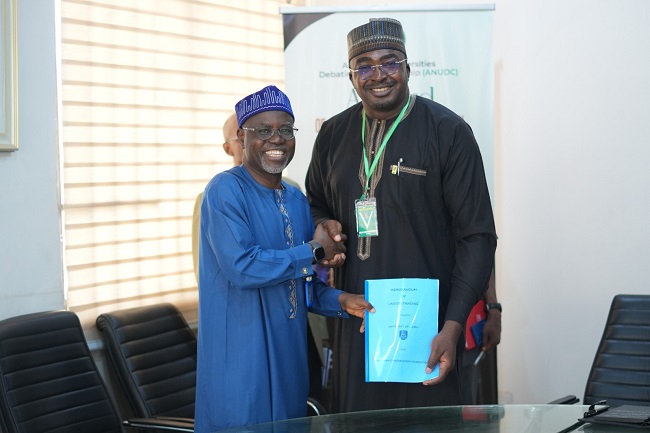
Professor Wahab Olasupo Egbewole (SAN), Vice-Chancellor, University of Ilorin (left), and the Director- General, Nigerian Conservation Foundation (NCF), Dr. Joseph Onoja, during the signing of MoU on Environmental Sustainability at UNILORIN on April 13, 2026

“The partnership reflects our commitment to promoting environmental sustainability and conservation in our university. We commend NCF, a critical stakeholder, for this unique partnership that enhances our efforts on environmental conservation and sustainable development. We look forward to working with NCF to create a positive impact on our campus and beyond,” said Professor Wahab Olasupo Egbewole (SAN), Vice-Chancellor of the University of Ilorin.

Dr. Joseph Onoja, Director General of NCF, said: “The deliberate steps and efforts of the University of Ilorin are commendable. Having conservation efforts on the ground will go a long way in amplifying our advocacy for nature conservation. Partnerships like this will boost our demonstration efforts, provide a training ground, and serve as a practical learning centre for university students on forest resources management.”

Over the years, NCF has worked with schools, including tertiary institutions, to establish and develop curriculum and activities that promote nature conservation while raising environmentally conscious students.

The establishment of conservation parks in tertiary institutions is a new approach aimed at providing a practical solution to environmental conservation and sustainable development in Nigeria.

Eco-comedy: Laugh, resist, survive

At a time of deepening ecological crisis, widening social injustice, and rising activist burnout, environmental justice advocates are advancing an unexpected yet powerful response to the demand for resilience, urgency, and moral courage – humour.

Activists are always at alert – responding swiftly to important existing and emerging socio-ecological and other issues. Often times they are faced with traumatic experiences on the field and met by stark opposition or even failure. This leads to burnout which can become persistent and reduce productivity/impact, as well as lower quality of life.

Eco-comedy
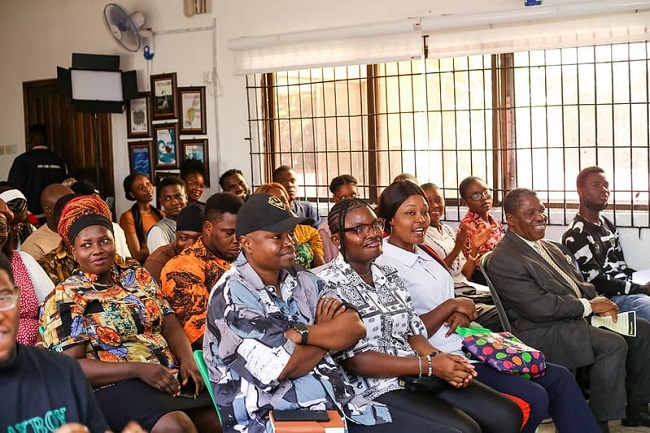
participants at the Eco-comedy session in Benin City

This challenge requires personal and collective reflection on the causes of burnout and what tools can be effective in addressing it. To this end, on April 7, 2026, Health of Mother Earth Foundation and Environmental Rights Action organised an eco-comedy live show which explored the relevance of humour and storytelling in curbing burnout and promoting wellbeing in the course of activism.

This event, which held in Benin City, Edo State, had in participation young, middle aged and experienced activists, comedians, students and media representatives. The event featured short speeches, storytelling (activists’ chronicles), live comedy performances, and group discussions, all of which were infused with humour while delivering practical ideas on how to avoid burnout. The event also featured a presentation of prizes to two winners of the eco-comedy short film competition which preceded the live show.

The Eco-Comedy gathering opened with a deeply reflective and thought-provoking message that blended humour with urgency. Nnimmo Bassey, HOMEF’s Executive Director, spoke of a time defined by overlapping ecological and social crises, and because of that, we must remain rooted in purpose, conscious of our collective power, and alert to the urgency of the moment.

According to Dr. Bassey, humour/laughter should inspire us to think about who we truly are and the socio-ecological issues that we need to address, stressing that comedy and humour are not neutral but viable tools for action.

Dr. Bassey’s remarks acknowledged the serious and often numerous challenges that activists face year after year sometimes with little success owing to deep-rooted systemic disorders. “But”, he noted, “giving up is very dangerous”. He stressed that activists must remain consistent and persistent even if the change does not happen in their lifetime. “To surrender is to allow injustice to prevail unchecked”.

Furthermore, Dr. Bassey noted that humour is a great tool for educational purposes and can be used can be used to break barriers – whether personal, structural, or systemic. The notion of power was also central. Dr Bassey left the impression that communities and individuals often underestimate their own power, especially in the face of institutional failure or injustice. Yet real change begins when people recognise that power lies in their voices, their unity, and their refusal to remain silent. Even small acts of speaking out, using caricatures to campaign and sharing stories contribute to a larger movement for justice.

The Deputy Executive Director of Environmental Rights Action, Barr. Mariann Bassey-Olsson, building on the importance of integrating humour in activism, noted that if activists lose their joy, they will lose the movement. Humour allows us to stay human without which we would lose empathy and the motivation to instigate change. While the realities that we face are grievous, our response must not be stripped of humanity.

Mrs. Olsson established that humour does not attempt to make light of the socio-ecological struggles but helps to break tension and strengthen commitment.

“We are not laughing because things are easy; we are laughing because we refuse to be broken. Humour reaches where policy papers cannot. Activism must sustain people, not consume them”, she explained.

Moreover, Mrs. Olsson added that “when we laugh together, we heal, we reconnect. We remember why we started. This isn’t a distraction. It is resistance!” Humour allows civil society activists to release tension, reconnect with one another, and sustain the energy needed for long-term struggle.

The session on activist’s chronicles had activists from different countries and regions sharing personal experiences they have had in the past which were not funny at the time but now when they look back they can laugh about them. Some of the stories were rather touching including personal sacrifices and betrayal, communications hassles/language barriers, security issues, mistakes due to inexperience, and more.

Across all accounts, a common thread emerged: these challenges did not deter the activists but instead became catalysts for learning, growth, and deepened resilience. The session underscored the significant personal costs inherent in activism and reinforced the imperative for activists to foster mutual support, cultivate solidarity, and engage in practices that promote collective and individual wellbeing.

The session also highlighted practical ways to avoid burnout and deal with trauma including prioritising areas of engagement and maintaining focus, proper planning/time management, collaborations, delegation, infusion of art/humour in programme design, avoiding competition, prioritising rest, celebrating wins (no matter how little) and addressing systemic socio-economic factors that contribute to burnout. On trauma, it was noted that rest and carefully chosen leisure activities can promote recovery.

Eco-Comedy emerges from a growing recognition that activists across the world, rather than retreat, claim humour as a political and cultural strategy, one that enables movements to communicate complex issues in accessible and relatable ways, connect with broader and more diverse audiences, and sustain emotional strength and collective resilience.

Rooted in Nigeria’s rich tradition of satire and social commentary, Eco-Comedy bridges activism and performance, using storytelling, comedy, and lived experience to expose injustice while creating space for healing, reflection, and renewal.

Overall, the event demonstrated the integration of art and advocacy, highlighted the need for movements to adopt humour as an artistic language for ecological justice, and a means to strengthen public engagement, as well as the need to build communities of eco-comedians: activists who can communicate systemic critique and propagate action with wit, clarity, and cultural relevance.

Africa sounds alarm on climate injustice, demands scaled‑up Loss and Damage finance

0

African climate leaders, government representatives, frontline communities and development partners have issued a call for renewed global commitment to climate justice, warning that the continent is being pushed to the brink by escalating climate‑induced losses and damages.

The declaration emerged from the 5th African Regional Conference on Loss and Damage, held from March 25 to 27, 2026, in Lilongwe, Malawi, where participants condemned the weakening political will of major emitters and the chronic underfunding of climate response mechanisms.

The communiqué paints a stark picture: despite contributing the least to global emissions, Africa continues to shoulder the heaviest burden of climate impacts.

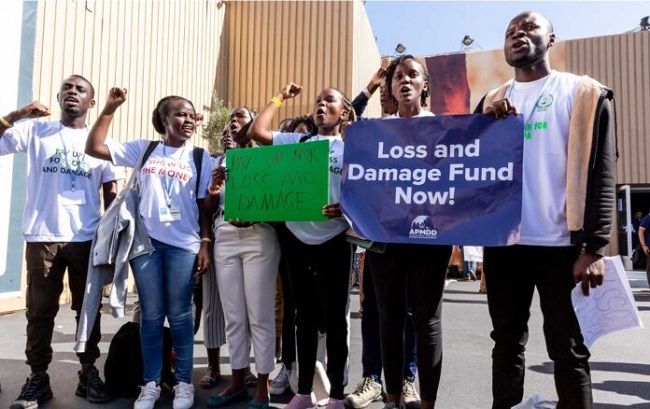
Loss and Damage Fund
A demand for Loss and Damage finance

Delegates expressed deep concern that less than $1 billion has been mobilised globally for loss and damage over the past four years – an amount dwarfed by the $400–800 billion required annually. Even more troubling, only 10% of climate finance reaches frontline communities, while children and youth receive a mere 2.4%, leaving the most vulnerable with the least support.

Participants criticised the persistent reliance on debt‑creating finance, arguing that loans for climate response only deepen the fiscal crises of African nations already struggling with poverty, debt distress and limited fiscal space.

They emphasised that loss and damage is not a humanitarian gesture but a matter of reparatory justice, rooted in historical responsibility and supported by international legal principles. The communiqué referenced the 2025 International Court of Justice Advisory Opinion, which affirmed binding state obligations under customary international law, and drew inspiration from the recent UN resolution recognising the transatlantic slave trade as a grave crime against humanity.

While acknowledging progress such as the operationalisation of the Santiago Network on Loss and Damage (SNLD) and the Barbados Implementation Modality, delegates stressed that these mechanisms remain too distant from affected communities. They called for simplified, decentralised and community‑led access pathways within the Fund for Responding to Loss and Damage (FRLD), ensuring that resources reach the “last mile” where impacts are most severe.

The conference also highlighted Africa’s strategic opportunity as host of COP32, urging the continent to use this moment to redefine global norms and push for loss and damage finance to be recognised explicitly as part of a broader reparatory justice framework. Delegates pressed the African Union to establish a continental coordination mechanism and a Pan‑African Loss and Damage Data Initiative to strengthen evidence generation and policy influence.

In a strong call to action, participants demanded that developed countries honour their obligations under the Paris Agreement, scale up grant‑based finance, and accelerate global financial reforms to ensure timely, accessible and fit‑for‑purpose responses. They committed to launching a multi‑stakeholder advocacy platform, establishing grassroots networks across Africa, and documenting loss and damage cases – including non‑economic losses – to support litigation, accountability and global advocacy.

The Lilongwe communiqué signals Africa’s determination to reclaim agency in global climate negotiations and to centre justice, equity and historical responsibility in the global response to the climate crisis. It is a reminder that the continent is no longer pleading for support – it is asserting its rights.

Nigeria becomes net petrol exporter as Dangote drives historic shift

0

Nigeria recorded a historic shift in its downstream petroleum trade in March 2026, emerging as a net exporter of gasoline for the first time, driven largely by rising output from the Dangote Petroleum Refinery & Petrochemicals.

Data from market intelligence firm Kpler showed that gasoline imports into the country dropped sharply to 41,000 barrels per day (b/d) during the month, the lowest level on record. At the same time, crude supply to the Dangote facility rose to about 565,000 b/d, the second-highest intake since the 650,000 b/d refinery commenced operations in late 2023, indicating strong processing rates and increased product yield.

Dangote Refinery and Petrochemicals

Total gasoline exports from the refinery rose to 44,000 b/d in March, compared to no exports recorded in January and February. This shift enabled Nigeria to post a net export position of approximately 3,000 b/d for the month.

In expanding its market reach, the Dangote Refinery exported gasoline to East Africa for the first time, shipping a 317,000-barrel cargo to Mozambique. The move reflects growing demand in the region as buyers seek alternatives to Middle East Gulf supplies amid ongoing disruptions. Another April shipment from the refinery is also bound for Beira, Mozambique.

Nigeria’s emergence as a gasoline exporter is expected to reshape regional trade flows and intensify competition in global markets. Analysts note that the development adds pressure to Europe’s already oversupplied gasoline market, as Nigeria transitions from a key import destination to a potential competing supplier.

The March milestone signals a significant step in Nigeria’s drive towards self-sufficiency in refined petroleum products and its ambition to become a net exporter in the global energy market.

President/Chief Executive, Dangote Industries Limited, Aliko Dangote, recently described President Bola Ahmed Tinubu’s ongoing economic and energy sector reforms as critical to restoring market confidence and enabling large-scale investments in domestic refining.

Digital innovation key to Nigeria’s 87,671 tonnes daily waste – Experts

Experts in environmental management and sustainability have called for the adoption of digitally-driven waste management systems and increased citizen responsibility to tackle Nigeria’s growing waste crisis.

They made the call during the SHEnovation Hackathon 2026 Expert webinar organised by the Lagos Chapter of the Association of Professional Women Engineers of Nigeria (APWEN).

The event which brought together policymakers, engineers and sustainability advocates had the theme: “Environmental Science and Sustainability in Waste Management.”

Muyiwa Gbadegesin
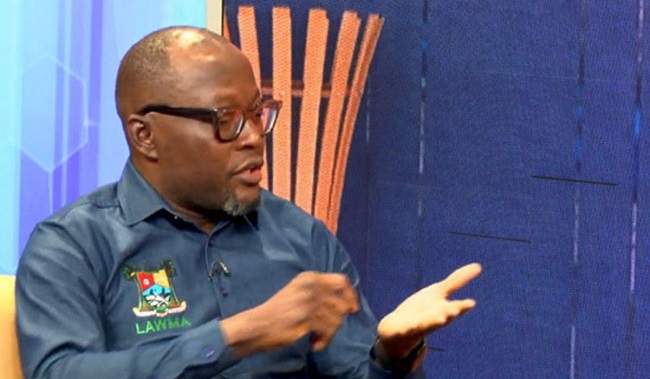
Managing Director/Chief Executive Officer of the Lagos Waste Management Authority (LAWMA), Dr. Muyiwa Gbadegesin

Delivering a keynote, Dr Muyiwa Gbadegesin, the Managing Director/Chief Executive Officer, Lagos Waste Management Authority (LAWMA), said Nigeria generates about 87,671 tonnes of waste daily, accounting for roughly 2.5 per cent of global waste output.

Gbadegesin was represented by Dr Essien Nsuabia, the Deputy Director, Waste Management, Research & Policy Development, LAWMA.

He said while advanced countries such as Sweden had reduced landfill waste to near zero through conversion technologies, many African cities still struggle to collect only 20 to 30 per cent of their waste.

“About 70 to 80 per cent of waste generated in sub-Saharan African cities remains uncollected, posing serious environmental and public health risks,” he said.

Gbadegesin disclosed that Lagos generates over 13,000 metric tonnes of waste daily, stressing that traditional waste collection methods are no longer sufficient.

He said LAWMA had begun deploying digitally-enabled waste management systems, including smart bins embedded with Radio Frequency Identification and geotagging technology.

According to him, the system allows real-time monitoring of waste levels, optimises collection routes and ensures accountability in operations.

“With these digital tools, waste collection can be tracked, costs can be monitored, and payments can be tied strictly to work done, eliminating inefficiencies and revenue leakages,” he said.

He added that the initiative was still at a pilot stage but had the potential to significantly improve waste collection efficiency across the state.

Gbadegesin called for collaboration with engineers and innovators to scale the system, emphasising the need for locally-developed technologies, data systems and infrastructure.

Also speaking, Jumoke Olowookere, EcoPreneur and Creative Director, African Creative Sustainable Synergy Hub, urged individuals to take responsibility for waste management through behavioural change.

Olowookere said the average individual generates about 0.5 kilogrammes of waste daily and stressed that sustainable practices must begin at the household level.

“We cannot rely on government alone. Waste is man-made, and everyone generating it must take responsibility for managing it,” she said.

Olowookere highlighted practical solutions including waste segregation, composting and adherence to the “5Rs” principle – reduce, reuse, recycle, refuse and repair, alongside upcycling.

She also advocated home gardening using composted organic waste, warning that excessive chemical use in food production poses health risks.

“Up to 99 per cent of food from conventional markets may contain chemicals. Growing even a portion of your food helps detoxify your system and promotes healthier living,” she said.

Olowookere encouraged participants to view waste as a resource, noting that many discarded materials could be converted into valuable products and income streams.

Earlier, the Chairman, APWEN Lagos Chapter, Mrs. Bosede Oyekunle, said the webinar aimed to foster innovation, mentorship and collaboration between professionals and young engineers in developing practical, technology-driven solutions for environmental challenges.

Oyekunle emphasised the role of digital innovation, engineering expertise and grassroots participation in achieving sustainable waste management and national development.

She called for innovation and collaboration to tackle sustainable waste management, describing the session as a platform to drive practical, technology-driven solutions.

Oyekunle reaffirmed Lagos APWEN’s commitment to empowering women engineers and young innovators to develop ideas that address real-world environmental challenges and support national development.

She also urged participants to actively engage with experts and leverage insights shared to inspire sustainable solutions and future-focused innovation.

Dr Olayinka Adewumi, the Chairman Planning Committee SHENovation Hackathon, said the webinar aims to raise awareness on sustainability and waste management.

Adewumi encouraged engineers to critically assess environmental challenges, existing solutions, and areas for improvement.

She said it also seeks to bridge the gap between theory and practice by fostering job-ready graduates through collaboration and innovation.

Adewumi added that the platform connects students and young innovators with professionals, mentors, and experts, enabling knowledge sharing without physical barriers.

She said the initiative focuses not just on identifying problems but on developing practical solutions, with the Lagos Chapter facilitating meaningful engagement between experienced experts and emerging innovators.

By Fabian Ekeruche

Second Africa Urban Forum: When continent spoke with one voice

Africa faces a housing deficit of over 51 million units – projected to reach 130 million by 2030. Behind this figure lies a deeper reality: more than one billion people live in informal settlements globally, many in rapidly growing African cities.

These are not just statistics; they reflect one of the defining urban challenges of our time – and a call to action that shaped discussions at the Second Africa Urban Forum (AUF), held from April 8 to 10, 2026, in Nairobi, Kenya.

Over three days, nearly 8,000 delegates came together with a shared purpose: to move from dialogue to implementation. What emerged was a unified continental voice – positioning Africa not as a recipient of solutions, but as a driver of global urban transformation through South-South cooperation.

Anacláudia Rossbach
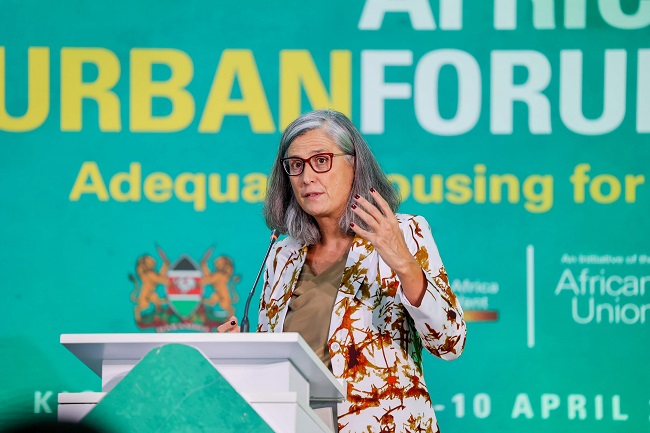
Anacláudia Rossbach, Executive Director of UN-Habitat. Photo credit: UN-Habitat/Peter Ndolo

For Anacláudia Rossbach, Executive Director of UN-Habitat, the Forum marked a turning point. “When Africa chooses to speak with one voice, the world has no choice but to listen,” she said at the closing ceremony.

Ms. Rossbach stressed that with only a few years left to deliver the 2030 Agenda for Sustainable Development, urgent action is needed to move from commitments to implementation. Housing and informal settlements are central to Sustainable Development Goal 11 and all other SDGs – and must be understood not only as shelter, but as essential infrastructure underpinning access to education, health, water and sanitation, and inclusive development.

At the heart of the Forum’s outcomes is the recognition that housing is not merely shelter – it is an economic infrastructure. This underpins the Africa Affordable Housing Compact, a multi-stakeholder platform designed to accelerate affordable housing delivery at scale. By bringing together governments, private sector developers, financial institutions, international organizations and innovative stakeholders, the Housing Compact aims to mobilize innovative financing, reduce investment risks, and support bankable housing solutions tailored to diverse national and local contexts.

Complementing this is the Nairobi Declaration 2026, a continental commitment by African Union Member States to take time-bound, action-oriented steps toward sustainable urbanisation. It prioritises land reforms, integrated housing policies and strengthened urban planning systems, while embedding housing into national development and fiscal frameworks. It also calls for prioritizing informal settlements and advancing climate-resilient urban development.

As noted by Moses Vilakati, AU Commissioner for Agriculture, Rural Development, Blue Economy and Sustainable Environment, Africa is generating home-grown solutions with global relevance. From housing finance innovation to land and planning reforms, these approaches can support other regions facing similar urbanisation pressures and strengthen South-South cooperation.

The Africa Urban Forum outcomes will directly inform discussions at the World Urban Forum (WUF13) in Baku, Azerbaijan, in May 2026. The Nairobi Declaration will guide Africa’s unified position, while the Housing Compact will support implementation through partnerships and investment. Importantly, the Nairobi Declaration will contribute to the formulation of the Baku Call to Action, ensuring Africa’s priorities are reflected in global commitments on housing systems and land reform.

At WUF13, African delegations will help shape global discussions, including pathways to strengthen housing finance and implement the New Urban Agenda and SDG 11 review processes.

From Nairobi to Baku, the message is clear: Africa is not waiting for solutions – it is building them, shaping global frameworks, and redefining the future of sustainable urban development.