33.4 C
Lagos
Friday, February 27, 2026
Home Blog Page 7

Africa’s LNG expansion to dominate Paris Energy Forum

0

With governments and operators from across Africa’s gas frontier confirmed to participate, the Invest in African Energy Forum in Paris from April 22 to 23, 2026, arrives as the continent’s LNG sector enters a new growth phase marked by expansion projects, floating liquefaction scale-ups and commercialisation of large undeveloped discoveries.

The forum is expected to spotlight where capital, partnerships and infrastructure investment will flow as Africa advances its next wave of liquefied natural gas (LNG) opportunities.

Paris, France
Paris, France

Grand Tortue Ahmeyim Expansion – Mauritania & Senegal

Following first LNG production, attention has shifted to Phase 2 of the cross-border Grand Tortue Ahmeyim (GTA) development between Mauritania and Senegal.

Partners are advancing a low-cost scale-up that could nearly double liquefaction capacity before the end of the decade, leveraging existing floating LNG infrastructure and offshore reserves. With export routes already established, Phase 2 is widely viewed as one of Africa’s clearest near-term LNG growth opportunities, offering comparatively lower development risk and significant production upside.

Yakaar-Teranga – Senegal’s Pre-FID Gas Anchor

Senegal’s Yakaar-Teranga discovery remains among the world’s largest undeveloped gas resources. Commercialisation terms and domestic-versus-export allocations are still under negotiation, placing the project among Africa’s most consequential pre-final investment decision (FID) opportunities.

The resource has the potential to anchor future LNG trains, long-term gas-to-power supply and industrial feedstock development, making it a focal point for upstream financiers and infrastructure developers seeking scalable, long-life reserves.

Nigeria’s Domestic LNG & Gas-to-Power Strategy

Nigeria is accelerating gas monetization through supply growth, LNG expansion and downstream utilisation.

A 2026 gas master plan targets an additional 1.8 billion cubic feet per day (bcf/d) of supply, contributing to ambitions of 10 bcf/d by 2027 and 12 bcf/d by 2030, alongside more than $60 billion in sector investment.

Parallel deployment of mini-LNG and small-scale liquefaction projects is expanding gas access for off-grid industries, transport and distributed power.

For capital markets, Nigeria’s strategy signals a pivot from export-only LNG toward integrated domestic gas ecosystems with diversified revenue streams.

Libya’s Gas Redevelopment Drive

Libya aims to increase gas production to nearly 1 billion cubic feet per day in the second half of 2026 through offshore redevelopment and rehabilitation of legacy infrastructure.

The strategy seeks to stabilise domestic electricity supply while rebuilding export capacity.

If financing conditions and political alignment improve, Libya could re-emerge as a major Mediterranean gas supplier later this decade, presenting one of North Africa’s most undercapitalised gas investment opportunities.

Congo LNG – Fast-Track Floating Liquefaction

The Congo LNG project has rapidly positioned the Republic of the Congo as a new LNG exporter. Phase 2 began operations in December 2025, adding 2.4 million tons per year of capacity and raising total output to roughly 3 million tons annually.

Built around floating LNG units and modular upstream tie-ins, the project demonstrates a replicable, lower-cost commercialisation model that reduces timelines compared with traditional onshore terminals.

The modular structure and expansion-ready design present opportunities across upstream supply, LNG shipping, processing services and regional infrastructure partnerships.

As Africa’s LNG landscape evolves from frontier exploration to scalable production and integrated domestic gas ecosystems, the Paris forum is expected to play a central role in shaping investment decisions across the continent’s next generation of gas developments.

By Winston Mwale, AfricaBrief

AfDB releases $16m, approves Phase III of TAAT programme

0

The African Development Bank (AfDB) has approved the commencement of Phase III of the Technologies for African Agricultural Transformation (TAAT) programme. The Bank Group’s Board of Directors on January 14, 2026, approved the release of an additional US$16 million to implement the third phase of the programme.

This approval, which comes as an added boost to the programme, underscores the Bank’s core commitment to addressing the critical challenges hindering African agriculture, notably low productivity stemming from limited access to modern technologies, inadequate infrastructure, and insufficient investment in climate-resilient practices.

Abdul Kamara
AfDB Director for Nigeria, Dr. Abdul Kamara

The Bank further contends that the urgency driving this approval is amplified by the ongoing Russia-Ukraine conflict, which has disrupted global supply chains and driven up the prices of essential inputs, such as seeds and fertilizers.

At the February 18, 2026, signing of the protocol of agreement between the Bank and the International Institute of Tropical Agriculture (IITA) – the executing agency for TAAT,  the Bank lauded the giant strides recorded under the first and second phases of TAAT which have galvanised engagements that influenced a total of US$3.18 billion in agricultural investments – US$857.5 million through the African Emergency Food Production Facility (AEFPF) large-scale operations and US$2.31 billion through non-AEFPF projects.

Speaking at the ceremony, the Bank’s Director for Nigeria, Dr. Abdul Kamara, said: “TAAT III reflects the Bank’s commitment to ensuring that proven, climate‑resilient technologies reach farmers faster and at scale. This new phase strengthens the systems that deliver innovation, helping countries boost productivity, enhance resilience, and align agricultural transformation efforts with the Bank’s Four Cardinal Points.”

Dr Martin Fregene, the Officer in Charge of the Bank’s Vice Presidency for Agriculture, Human and Social Development, affirmed that TAAT I and TAAT II have laid the foundational groundwork to address the challenges facing African agriculture by vetting technologies, accelerating the adoption and scaling of proven agricultural technologies, promoting climate-resilient agricultural practices, building capacities within the farming’ and seed ecosystem, and developing e-platforms to facilitate access to technologies, primarily for smallholder farmers.

“Through technical assistance and collaboration with Regional Member Countries (RMCs) of the Bank and development partners, TAAT has supported the integration of 238 technology use cases into 46 countries and regional investment projects spanning 31 countries,” Dr Fregene said.

“The Bank is well positioned to harness the power of science, knowledge, and innovation needed to catalyse Africa’s agricultural transformation through this investment. The Bank already has extensive experience in agricultural development assistance in Africa, and this additional funding will help us to consolidate the achievements of TAATs I and II,” Dr Abdul Kamara, the Bank’s Director General for Nigeria, added.

The IITA Director General and CGIAR’s Regional Director for Continental Africa, Dr Simeon Ehui, in his remarks at the signing ceremony, commended the Bank’s commitment to transforming African agriculture through its Feed Africa strategy as well as the trust placed in the CGIAR-driven consortium of agricultural research institutions led by IITA to implement the goal of transforming African agriculture and ensuring food and nutritional security.

Dr Ehui assured the Bank of TAAT’s unwavering commitment to deepening its pathway of providing technical assistance, strengthening seed systems, disseminating climate-smart and high-yielding crop varieties, promoting post-harvest and mechanisation innovations, providing knowledge and ensuring learning and uptake of innovations, and supporting policy and digital solutions to enhance agricultural productivity and resilience across Africa.

“These efforts,” according to Dr Ehui, “have led to productivity increases of up to 69% across targeted crops, reaching over 25 million farmers. Additionally, under the implementation of the AEFPF, TAAT has provided technical assistance to RMCs, including technical specifications for the supply and quality assurance of certified seeds. This assistance has enabled the distribution of 476,747.96 metric tons of improved, climate-resilient seeds to 14.437 million smallholder farmers.”

“This third phase of the programme will achieve sustainability through the institutionalization of the TAAT model within CGIAR and fostering regional cooperation among Regional Economic Communities (RECs) and private sector actors, supporting the Dakar 2 vision of achieving food sovereignty, increased productivity, and resilient food systems across Africa and contributing directly to the Sustainable Development Goals 1, 2, 13, & 15 (No Poverty; Zero Hunger; Climate Action; and Life on Land), and the African Union’s Agenda 2063 vision for a prosperous Africa based on inclusive growth and sustainable development,” Dr Ehui added.

The Bank affirms that TAAT III’s objective is to consolidate and scale TAAT I and II achievements, while strengthening their operational and financial sustainability. TAAT III will strengthen the regional technology delivery infrastructure by supporting National Agricultural Research Systems (NARS) and private seed companies to sustainably increase the production and availability of early-generation (EGS) and certified high-yielding, climate-resilient seeds, respectively.

The third phase of the programme will equally promote the digitalisation of TAAT-vetted technologies and the development of information and communication technology (ICT) platforms and other digital solutions to facilitate the deployment and accessibility of appropriate agricultural technologies, E-extension, and advisory services. To further scale TAAT technology deployment, TAAT III will support the development of the Regional Technology Market, enhancing technology deployment and accessibility across borders.

TAAT, in this third phase, will deploy its extensive partnership ecosystem to drive capacity-building initiatives for agricultural extensionists (Training of Trainers, ToT) and farmers, enhancing smallholder farmers’ awareness, access, and adoption of agricultural technologies and e-advisory services. To catalyse the financial sustainability of the TAAT technology delivery ecosystem, TAAT III will provide technical assistance to RMCs to attract private-sector investment and mainstream TAAT-vetted technologies into national and large-scale agricultural investment projects.

To enhance farmer resilience, TAAT III will build the capacities of meteorological institutions and frontline extension workers to collect, analyse, and disseminate climate data to improve weather forecasts and early warning systems, and expand the integration of weather forecasts into the planning of agricultural activities at the smallholder farmer level.

With the signing of the TAAT Phase III grant agreement, the African Development Bank envisions a continent accelerating agricultural transformation for food systems resilience through strengthened regional technology delivery infrastructure; increased productivity through scaling up climate-resilient and nutrition-sensitive technologies and reinforced, efficient production and distribution systems for improved seeds and fertilisers; enhanced farmers’ capacity and learning, and resilience to climate change; and advanced adoption of innovative digital solutions and enhanced market integration and regional trade competitiveness through strategic private sector participation.

LAWMA secures convictions for 19 environmental offenders

0

Seventeen persons arrested for open urination and defecation, along with two others apprehended for indiscriminate dumping of refuse, have been convicted by the Magistrate Court sitting at Bolade, Oshodi, after prosecution by the Lagos Waste Management Authority (LAWMA).

The Managing Director/ Chief Executive Officer of LAWMA, Dr. Muyiwa Gbadegesin, disclosed this on Thursday, February 19, 2026.

He said that the court sentenced the 17 offenders to pay a fine of N40,000 each or serve one month imprisonment.

LAWMA
Environmental offenders

He stated further that, for indiscriminate dumping of refuse, Obinna Nzugbe and Ifeanyi Ibe were also sentenced to five months imprisonment each after pleading guilty to the charges.

Meanwhile, Daniel Alfred, who was arraigned alongside them for indiscriminate dumping of refuse, pleaded not guilty, and his case was adjourned to April 3, 2026, for trial.

“The convictions underscored the Authority’s commitment to sustained enforcement of environmental laws across the state as open defecation, public urination, and indiscriminate dumping of refuse pose serious public health, environmental and sanitation risks,” he said.

He enjoined residents to comply with sanitation regulations and utilise approved waste disposal channels, adding that violators would continue to face prosecution in accordance with the law.

Green Energy, Lekoil seek to strike out suit, vacate ex parte orders

0

Green Energy International Limited and Lekoil Oil and Gas Investments Limited have filed applications before the Federal High Court seeking to strike out Suit No. FHC/L/CP/237/2026 and to set aside the ex parte interim orders granted in the matter.

The companies have filed a Notice of Preliminary Objection challenging the jurisdiction of the Court and seeking dismissal or stay of the action, together with a Motion on Notice to vacate and discharge the interim administration orders made on February 13, 2026.

Lekoil Nigeria Limited

The dispute arises from a contractual claim under a Turnkey Drilling Agreement dated September 1, 2024. The agreement contains a binding arbitration clause, and arbitration proceedings have already been commenced before the Lagos Chamber of Commerce International Arbitration Centre with pleadings filed prior to the initiation of the new suit at the Federal High Court on the same subject contract.

Green Energy and Lekoil maintain that the matter is properly before the arbitral tribunal, that the sums referenced in certain reports are disputed and subject to audit, and that the ex parte orders were obtained in defiance of the pendency of arbitration in respect of which where there was also a pending motion for injunctive orders.

Green Energy and Lekoil view the recent filing of Suit No. FHC/L/CP/237/2026 and suppression of the extent of prior engagements (including ongoing dispute resolution proceedings) in respect of obligations arising from the same turnkey contract as an abuse and improper use of judicial process.

The companies will pursue all appropriate legal remedies to protect the agreed dispute resolution framework and to safeguard their operations.

Operations at the Otakikpo Marginal Field (PML 11) remain fully operational and compliant with all regulatory and contractual obligations. There has been no disruption to production or export activities.

Green Energy and Lekoil claim they reserve all rights in respect of any inaccurate or defamatory publications concerning this matter, adding that further updates will be provided as appropriate.

Zero-waste economy: Foundation urges methane cut, plastic reduction

0

The Community Development Advocacy Foundation (CODAF) has called for an urgent reduction of methane and plastic production cuts, to advance a just transition to a zero-waste economy.

This is contained in a communique issued by Mr. Philip Jakpor, a civil society partner and member of the Waste Parliament on Thursday, February 19, 2026, in Lagos.

The communique stated that the Expanded Zero Waste Parliament 2026, was convened by CODAF in collaboration with Global Alliance for Incinerator Alternatives Africa.

Plastic waste reduction

It noted that the event which held on Tuesday in Lagos, brought together over 80 stakeholders.

Participants included government agencies, environmental regulators, farmers, academics, waste pickers, youth leaders, civil society groups and the media.

According to the communiqué, the forum, with the theme: “Cutting Methane, Curbing Plastics; A Just Transition to Zero Waste”, examined Nigeria’s waste management policies, methane mitigation strategies and plastics governance.

It noted that delegates observed that rapid urbanisation, population growth and poor waste management had worsened methane emissions from open dumping and landfills.

The communiqué said delegates noted that organic waste constituted significant share of municipal waste, generating methane through anaerobic decomposition.

It said the parliament warned against waste-to-energy incineration technologies, describing them as false climate solutions, incompatible with zero waste principles.

Participants stressed that methane reduction must not justify expansion of incineration infrastructure.

They also highlighted weak enforcement of plastic regulations and limited implementation of Extended Producer Responsibility.

The communiqué stated that the forum called for mandatory source segregation of waste, expansion of decentralised composting and integration of methane targets into climate plans.

It added that delegates also urged a formal recognition and protection of informal waste pickers, as essential service providers.

They then called on Lagos State and the Federal Government to adopt zero waste policies aligned with climate science and social justice principles.

By Fabian Ekeruche

Senate seeks special funding for Environment Ministry to tackle erosion, flooding

0

The Senate has called for provision of special funding for Federal Ministry of Environment to tackle erosion, flooding and other environmental challenges across the country.

Chairman of the Senate Committee on Environment, Sen. Olubiyi Fadeyi, made the call when the ministry officials appeared to defend the 2026 budget of the ministry on Thursday, February 19, 2026.

Fadeyi said fund appropriated annually to the ministry and its agencies was “very inadequate” to tackle the environmental issues.

The Nigerian Senate
The Nigerian Senate

He listed the issues that required urgent attention to include: environmental management, erosion control, environmental health, forest protection and other forms of environmental degradation.

Others are: pollution and drainage mitigation as well as coastal flood mitigation.

He stressed the need for ensuring release of appropriated funds for the discharge of the mandates of the ministry.

“We must focus on solutions that addresses oil pollution, control tools from the enforcement and clean-up technology and erosion control to protect our lands and the environment,” he said.

The senator said that efforts should be intensified on coastal flood mitigation, shoreline protection, forestation, land reclamation processes, agriculture and land repair.

He emphasised the importance of Nigeria meeting its environmental obligations and commitments to climate-related organisations.

“Doing so will unlock international climate finance and strengthen our global partnerships.

“This committee remains committed to ensuring transparency, accountability and impact-raising budgets so that together, we can deliver a cleaner, safer and more resilient Nigeria.

“This committee shall discharge its constitutional mandate for oversights and ensure that all forests are protected and released to respect climate-related guidelines,” he said.

The Minister of Environment, Mr. Balarabe Lawal, said that the ministry had the responsibility to care and ensure quality environment for good health and wellbeing of cities and promote sustainable use of natural resources.

Lawal said that the structure of the 2026 budget proposal was anchored on the needs of the people, agenda of the present administration and the national development plan.

According to him, it aligns with priority areas of President Bola Tinubu’s administration, including unlocking energy for sustainable development and boosting agriculture to achieve food security, among others.

He said that the ministry was working to address fundamental issues that affect the nation’s forests, saying that the ministry was still expecting release of funds for some of its capital projects.

Lawal said that the ministry had embarked on provision of solar-powered boreholes and solar street lights across the country.

He said that the ministry also embarked on flood aggression control, given the serious cases of flood, particularly in the northern part of the country.

According to him, the 2026 budget estimate is a roll-over of most projects in 2025.

By Kingsley Okoye

Ministerial Meeting underscores IEA’s central role in tackling global energy challenges

0

Ministers deliver expanded mandate on critical minerals and build institutional ties with key countries around the world including Brazil, Colombia, India and Viet Nam

Global energy leaders met in Paris from February 18 to 19, 2026, for the International Energy Agency’s Ministerial Meeting, affirming the IEA’s central role in international cooperation to address the major energy challenges and opportunities facing the world.

The two-day event was attended by top government officials from a record 54 countries, with some 40 of them at Ministerial level. Top executives from 55 companies, with a combined market capitalisation of $14 trillion, as well as leaders from a range of intergovernmental organisations, also participated.

IEA Ministerial Meeting
Delegates at the IEA Ministerial Meeting in Paris

At the Ministerial, IEA Member governments unanimously agreed to move ahead on building deeper institutional ties with BrazilColombia, India and Viet Nam – and to expanded cooperation on critical minerals through the IEA’s Critical Minerals Security Programme.

“These two days in Paris have reaffirmed how essential energy is to our daily lives – it is the invisible driving force behind everything we do. Under the umbrella of knowledge of the International Energy Agency, we have once again seen that international cooperation is key,” said Deputy Prime Minister Sophie Hermans of the Netherlands, who chaired the Ministerial. “Our priority is clear: secure, affordable and sustainable energy – and resilient systems that can endure in an uncertain world.”

“This Ministerial Meeting, our largest ever, affirmed the immense value of the IEA at a moment when global energy demand is rising and the challenges facing the energy system are intensifying. In this context, our wide range of objective data and analysis is more important than ever,” said IEA Executive Director, Fatih Birol.

“In a strong step forward for global energy governance, key countries such as Brazil, Colombia, India and Viet Nam are strengthening their ties with the IEA. This puts the IEA Family’s share of global energy use at more than 80%, up from less than 40% ten years ago. With major energy issues high on the international agenda, we stand ready to support governments with the insights they need to plan for the future, helping leaders deliver on their goals of ensuring greater energy security, affordability and sustainability,” Birol added.

The Chair’s Summary from the Ministerial acknowledged the IEA’s significant contributions to advancing the energy goals of its Members for more than five decades, noting its strong ability to adapt and expand as the energy sector has evolved. It also stressed the Agency’s ongoing importance as countries work to ensure energy security, affordability and sustainability, pointing to its leading data and analysis as a trusted source of information for decision makers worldwide.

In a video address at the opening of the Ministerial, President Emmanuel Macron of France, the host nation of the IEA, said: “Through its in-depth analyses, and the technical expertise of its team, the IEA, under the leadership of its Executive Director Fatih Birol, plays an essential role. It enlightens us to help us guarantee our energy security and steer the energy transition.”

In a special declaration, Ministers from IEA Member countries endorsed expanding cooperation under the IEA Critical Minerals Security Programme to address rising risks to global critical mineral supply chains. Highlighting the Programme as a key international platform for ensuring mineral security, they called for the IEA to continue to build out its data tools, while expanding collaborative exercises and guidance on topics such as stockpiling. Such measures, they said, would support broader efforts to diversify mineral supply chains and build resilience to supply shocks.

In addition, IEA Ministers approved new phases of institutional ties with several key countries around the world that are increasingly shaping energy trends. They unanimously invited Colombia to become the Agency’s 33rd Member. Responding to a request from the Brazilian government, IEA Members agreed to invite Brazil to begin the process of becoming a full Member.

They also all welcomed recent developments in discussions with India following the Indian government’s request to become a full IEA Member. And Viet Nam was announced as the newest member of the IEA Family, joining as an Association country.

Further strengthening the IEA’s leadership on key energy issues, Member countries approved the integration of the Clean Cooking Alliance into the Agency. This establishes the IEA as the principal multilateral forum for expanding clean cooking solutions, helping countries and industry speed up efforts to extend access to the more than 2 billion people who still lack it.

The announcement comes as the IEA prepares to host its second Summit on Clean Cooking in Africa in Nairobi, Kenya, from July 9 to 10, 2026. In a high-level dialogue at the Ministerial Meeting, leaders discussed progress since the first IEA Summit on Clean Cooking in Africa in 2024, as well as recent approaches and initiatives that have proven effective.

Two other high-level dialogues featured discussions on safeguarding energy security in the Age of Electricity and on investing in Ukraine’s future energy security, with the participation of Ukrainian First Deputy Prime Minister and Minister of Energy, Denys Shmyhal. The 3rd annual IEA Energy Innovation Forum took place in conjunction with the Ministerial Meeting on February 18.

It brought together participants from government, industry, start-ups, and the investment and research communities, allowing for in-depth exchanges on topics related to energy innovation policy and development of the innovation ecosystem. Topics covered include innovations to support resilient electricity grids, fusion energy, and sustainable fuels, as well as the links between innovation, technology supply chains and economic competitiveness.

UN Climate Change launches Capacity-Building for Negotiators initiative

0

UN Climate Change has launched a new Capacity-Building for Negotiators (CB4N) initiative to ensure all Party delegates, particularly those from developing countries and youth negotiators, can participate effectively and on equal footing in climate negotiations.

The initiative was officially launched during an online event on Wednesday, February 18, 2026, bringing together nearly 400 participants from around the world, including representatives from Parties, UN agencies, intergovernmental organisations and other partners and experts engaged in the UNFCCC process.

UNFCCC
Participants at the UNFCCC Capacity-Building for Negotiators (CB4N) initiative

In a video message delivered at the launch event, UN Climate Change Executive Secretary Simon Stiell emphasised the importance of investing in negotiation capacity to strengthen inclusive participation.

“Inclusive, effective climate negotiations depend on people, on their knowledge, preparation and confidence to engage meaningfully,” said Stiell. “Through the Capacity-Building for Negotiators initiative, we are investing in negotiation capacity to ensure all Parties, particularly youth delegates, can participate on an equal footing in the UNFCCC process.”

The CB4N initiative provides targeted training and knowledge-sharing opportunities that support delegates’ understanding of UNFCCC procedures, legal frameworks and negotiation techniques. By strengthening these skills, the initiative empowers delegates to engage more confidently and effectively in the intergovernmental process. It will be rolled out through UN Climate Change and its six Regional Collaboration Centres (RCCs), ensuring it responds to local contexts and needs.

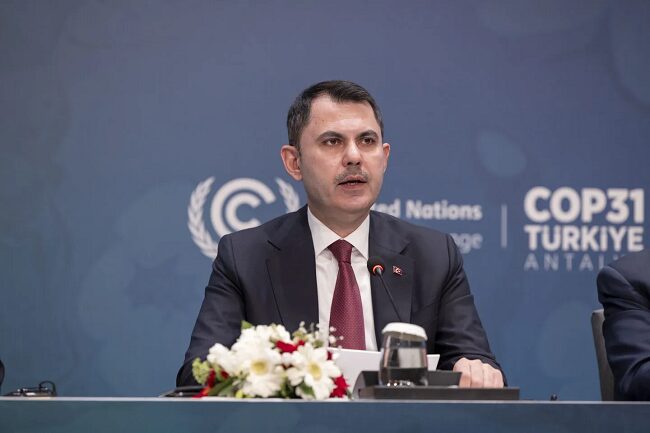
During the event, the COP30 Presidency, represented by Ambassador Liliam Chagas, and the incoming COP31 Presidency, represented by deputy minister Fatma Varank, agreed that capacity building for climate negotiators is critical to navigating increasingly complex climate negotiations and ensuring effective, inclusive implementation.

The initiative responds to a mandate from Parties at the sixty-second session of the Subsidiary Body for Implementation (SBI 62), which requested that the secretariat support Party delegates in building their capacity to engage in the negotiation process and make relevant training and materials available on the UN Climate Change website.

CB4N builds on insights from a pilot training delivered in September 2025, which tested key modules and approaches. Lessons learned from the pilot are informing refinement of the programme and the development of future training activities, including online resources.

The secretariat will continue to develop and institutionalise CB4N, working closely with Parties, partners and stakeholders to strengthen inclusive and effective participation in the UNFCCC negotiation process.

Experts hail Tinubu’s oil revenue order as bold fiscal reset, urge legislative backing

0

Stakeholders in oil and gas industry have commended President Bola Tinubu’s Executive Order on oil and gas remittances, describing it as a decisive fiscal reform.

In separate interviews in Lagos on Thursday, February 19, 2026, the stakeholders, however, cautioned that its lasting impact would depend on constitutional alignment and legislative clarity.

On Feb. 18, President Bola Tinubu signed an Executive Order directing the restructuring of oil and gas revenue remittances to the Federation Account.

President Bola Tinubu

Experts said that the decision signaled one of the most significant fiscal interventions since the enactment of the Petroleum Industry Act (PIA).

Prof. Wumi Iledare, Professor Emeritus of Petroleum Economics and Policy Research at the Louisiana State University Centre for Energy Studies, described the move as a legitimate and timely public finance reform.

“Strengthening remittance accountability and improving visibility of petroleum inflows are critical national priorities.

“In a period marked by budgetary strain and debt sustainability concerns, safeguarding public revenues and curbing inefficiencies are not optional, they are imperative,” he said.

Iledare said that the Executive Order seeks to reduce discretionary retention of oil revenues and improve statutory remittances to the three tiers of government.

The don said that direct remittance of royalty from oil, oil tax and profit oil into the Federation Account could significantly enhance transparency and reduce intermediation bottlenecks.

According to Iledare, the reform has the potential to reinforce fiscal discipline, but warned that some aspects intersect directly with statutory provisions of the PIA.

“Key fiscal instruments – including the Frontier Exploration Fund, the Midstream and Downstream Gas Infrastructure Fund, and Production Sharing Contract (PSC) frameworks are creations of the National Assembly,” the petroleum expert said.

He said that the substantive alterations may require legislative amendments to ensure constitutional coherence.

“While Section 5 of the Constitution empowers the President to implement and enforce laws, changes to statutory fiscal frameworks ideally require legislative action to guarantee institutional certainty,” Iledare said.

He stressed the technical necessity of distinguishing between contractual revenue allocations embedded in PSC agreements, retained earnings of NNPC Limited, and statutory earmarked funds established under the PIA.

“Clarity is essential to avoid conflicting contractual entitlements with discretionary fiscal practices,” he said.

Beyond fiscal adjustments, Iledare raised a broader governance question. Is the Executive Order a prelude to an amendment of the PIA?

“Recent board appointments to regulatory institutions under the Act were widely welcomed, yet observers note limited visible institutional movement since then.

“If reforms focus narrowly on revenue enhancement without strengthening governance effectiveness, structural weaknesses in the sector may persist.

“Sustainable reform requires both fiscal efficiency and institutional credibility. Presidential Executive Orders must reinforce and not dilute the Petroleum Industry Act,” he said.

Also, Dr Ayodele Oni, Partner and Chair of the Energy & Natural Resources Practice Group at Bloomfield Law, also described the Order as a major fiscal reform step aimed at improving transparency and optimising petroleum revenue flows to the Federation.

He noted that Sections 80 and 162 of the Nigeria’s Constitution support the principle that federation revenues be paid into the designated Federation Account.

However, he framed the central debate as procedural.

Oni questioned should such changes be implemented solely through executive action, or through amendments to the PIA by the National Assembly?

“There are two perspectives – One suggests certain PIA provisions may conflict with the constitution, meaning the Executive Order realigns processes accordingly.

“The other maintains that if provisions are unconstitutional, it is for the judiciary to nullify them and for the legislature to enact corrective measures.

Like Iledare, Oni underscored that statutory constructs such as the Frontier Exploration Fund and existing PSC frameworks, which he said were established by parliamentary law and therefore require legislative backing for substantive modification.

He highlighted the longstanding institutional tension arising from NNPC Limited’s dual role as commercial operator and concessionaire, a structural complexity within the post-PIA framework.

Oni also said that the reforms designed to strengthen NNPC’s commercial identity, must be anchored in clear legal principles and predictable governance mechanisms.

“In the short term, the Order may affect NNPC’s revenue streams and serve as incentive to greater operational efficiency, but long-term success depends on constitutional and legislative alignment,” he said.

According to Oni, Nigeria’s petroleum sector remains central to national economic stability, accounting for the bulk of foreign exchange earnings and a substantial share of public revenues.

By Yunus Yusuf

Large-scale oil spills reported at U.S. military bases in South Korea

0

Two large-scale oil spills were recently reported at United States (U.S.) military bases in South Korea, Yonhap news agency said on Thursday, February 19, 2026.

According to U.S. Forces Korea (USFK), about 11,000 gallons (around 41,600 liters) of fighter jet fuel leaked from a storage tank at a major U.S. Air Force base in Gunsan.

The leakage was approximately 180 kilometers south of the capital, Seoul.

U.S. Air Force base
U.S. Air Force base in Gunsan

The 8th Fighter Wing of the U.S. Air Force said it had taken steps to contain and remediate the pollutants.

It added that there was no immediate risk to the health and safety of residents in nearby communities.

An investigation into the cause of the incident is ongoing, Yonhap reported.

Separately, on Feb. 5, an unspecified volume of fuel was reported to have leaked at another U.S. Air Force base in Osan, about 60 kilometers south of Seoul.

Under the bilateral Status of Forces Agreement, the South Korean government retains ownership of land and facilities used by U.S. forces, while granting the U.S. military the right to use designated bases.

×