The Nigerian Content Development and Monitoring Board (NCDMB) has won the Presidential Enabling Business Environment Council (PEBEC) Transparency and Efficiency Champion Award for the fourth consecutive year. The Board topped the Ease of Doing Business rankings in 2022, 2023, 2024, and 2025.
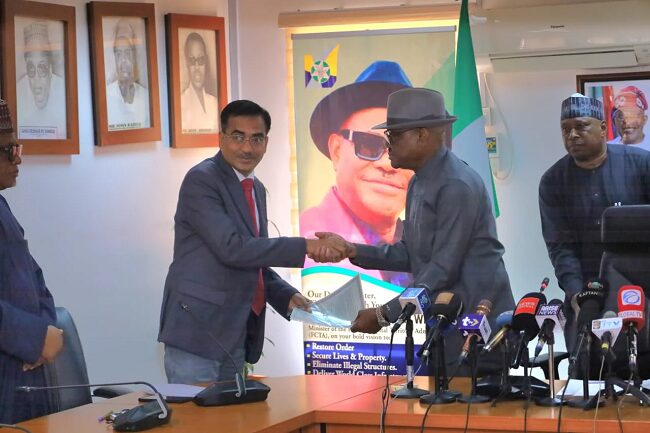
The award was presented on December 2, 2025, at the State House in Abuja. Executive Secretary, Felix Omatsola Ogbe, was represented by Acting Director, Monitoring and Evaluation, Mr. Omomehin Ajimijaye, who highlighted the Board’s alignment with policy reforms and commitment to management goals.
The recognition reportedly underscores the Board’s operational excellence, teamwork, and consistent engagement with partners and industry stakeholders. It reflects NCDMB’s focus on efficiency, transparency, and quality service delivery.
NCDMB’s Acting Director, Monitoring and Evaluation, Mr. Omomehin Ajimijaye, recieved that award on behalf of the Executive Secretary, Felix Omatsola Ogbe
The PEBEC Awards and Gala Night celebrated public service reforms. The event was chaired by Vice President, Senator Kashim Shettima, while PEBEC Director General, Princess Zarah Audu, commended the Board for automating processes to minimize human interference, urging other agencies to adopt similar approaches.
The Board also received the Reform Champion Award, presented to Cityfaith Baribor Zorasi for exceptional performance as NCDMB’s liaison to PEBEC.
NCDMB says it remains committed to strengthening service delivery and institutional performance, advancing local industry growth under the NOGICD Act of 2010, and raising standards in the years ahead.
“The Board thanks PEBEC for the recognition and appreciates its staff for their dedication and hard work. Congratulations to the entire NCDMB team,” stated the organisation.
The United Nations Human Settlements Programme (UN-Habitat) has expressed its profound sorrow and solidarity with the governments and people affected by the catastrophic flooding and landslides triggered by the convergence of tropical cyclones Senyar and Ditwah.
UN-Habitat calls on all partners and humanitarian actors to support life-saving activities to prevent more losses and support vulnerable affected communities, while appreciating ongoing efforts by people, communities, governments and international humanitarian organisations.
The cyclonic events that have affected several countries in South and Southeast Asia have severely impacted cities and human settlements, homes, infrastructure, and livelihoods in Indonesia, Sri Lanka, Thailand, and Malaysia.
Flooding in Southeast Asia
The staggering toll of the twin cyclones
The scale of this disaster is staggering and calls for a unified and robust response rooted in climate resilience and sustainable urban recovery. Preliminary reports indicate a heavy humanitarian toll, with nearly 1,000 lives lost across the region.
In Indonesia, Northern Sumatra was severely affected, with over 500 fatalities and many more people missing as of December 1, 2025. Large-scale deforestation worsened the impact, triggering landslides that swept debris into residential areas. More than 1.4 million residents have been affected.
Sri Lanka is experiencing its worst flooding in two decades, with over 1.3 million people affected and more than 360 confirmed dead and many more still missing as of 2 December 2025. The cyclone damaged critical infrastructure across the entire island, rendering many cities inaccessible due to damage to roads and rail networks. Power outages and damage to communication infrastructure are affecting multiple communities, including the most vulnerable.
In Thailand, floodwaters reached up to 2.5 meters in Hat Yai, a major economic hub, causing daily trade losses estimated at nearly $47 million. The southern floods have killed 170 people and injured more than 100 others, with numbers expected to rise.
In Malaysia, although the number of evacuees has decreased, 14,040 flood victims from 4,518 families remained displaced across 8 states as of December 1, 2025.
Beyond the immediate loss of life, the storms have forced hundreds of thousands of people from their homes into emergency shelters. Critical urban and rural infrastructure – including roads, bridges and communication networks – has been severely compromised, cutting off aid access to vulnerable and often informal settlements. These dynamics worsen the already critical global housing crisis affecting almost 3 billion people globally.
Resilient settlements and urban planning
These climate-induced disasters are a stark reminder of the extreme vulnerability of the region’s unplanned and rapidly growing cities and towns to the intensifying impacts of the climate crisis. Informal settlements and slums remain the most vulnerable. For UN-Habitat, the most urgent concern is the devastation to the housing sector, which usually makes up around 80 per cent of the infrastructure in cities and provides access to basic services and safety.
Thousands of housing units have been destroyed or severely damaged, underscoring the need to always integrate disaster risk reduction and climate adaptation strategies into all settlement planning, both urban and rural, and policy frameworks, building resilience.
Building back better
As the immediate life-saving efforts are made, focus should, gradually, intensify towards the principles of building back better. UN-Habitat believes in building the foundations for a sustainable and resilient development right from the emergency phase. We have seen in many urban disasters, that “temporary shelters” become de-facto permanent, adding future vulnerability to the already high-risk areas in fragile landscapes and cities. The poor and vulnerable communities suffer the most and cannot quickly recover after such disasters.
UN-Habitat, therefore, has activated its emergency protocols and is preparing to deploy technical expertise to Sri Lanka in support of national and local authorities in three priority areas essential for urban recovery and resilience building:
Resilient housing and basic services: Providing technical support for community-driven housing reconstruction and basic service recovery that incorporates climate-resilient designs and promotes the use of sustainable, locally available and appropriate materials.
Risk-informed spatial planning: Supporting the integration of climate risk mapping and disaster risk reduction measures into urban and regional planning, avoiding risk prone areas and guiding safe land-use and settlement development.
Strengthening tenure security: Assisting local authorities to use recovery efforts as an opportunity to formalise land tenure for vulnerable families, enabling secure investment in permanent and resilient housing.
The road to recovery and resilience building requires sustained commitment and significant resources. UN-Habitat urges the international community, development partners, and financial institutions to stand in solidarity with the affected countries and contribute to a resilient response and sustainable reconstruction efforts ensuring resilient housing solutions.
UN-Habitat reaffirms its commitment to supporting the governments and people of the affected countries as they rebuild their homes and create stronger, safer, and more resilient communities.
The United Nations Department of Economic and Social Affairs (UN DESA) has released the World Urbanisation Prospects 2025, presenting a clearer global picture of where people live and how settlements are changing. For the first time, the report uses the Degree of Urbanisation (DEGURBA) – a harmonised, geospatial method for classifying cities, towns and rural areas.
The new approach shows that the world is considerably more urban than national statistics indicate. According to DEGURBA, 81 per cent of the global population lives in cities and towns, compared to 58 per cent under conventional national definitions. The report also confirms that most population growth through 2050 will occur in cities, with towns absorbing much of the remainder.
Urban centre
“This edition of WUP is transformative,” said Anacláudia Rossbach, Executive Director of UN-Habitat. “It gives us unprecedented clarity on the realities of human settlements, from large metropolitan regions to fast-growing secondary towns.”
The integration of DEGURBA – developed by the European Commission and endorsed by the UN Statistical Commission with UN-Habitat’s support – also reveals that many settlements functioning as towns remain labelled “rural” in national statistics, particularly in sub-Saharan Africa and in Central and Southern Asia. The report highlights that built-up areas have expanded almost twice as fast as population since 1975, underscoring risks linked to unplanned growth and land conversion.
UN-Habitat has supported countries in adopting DEGURBA since 2018, helping national statistical offices use the method for SDG 11 monitoring, urban policy development and geospatial data systems. More than 100 countries have engaged in global and regional workshops, with direct technical assistance provided to 17 countries.
“These findings reinforce the need for well-planned, inclusive cities and towns, especially in Africa and Asia,” Rossbach said. “The world is more urban than we thought – which makes it even more urgent to tackle the global housing crisis now. How countries manage rapid urban growth will shape progress on the SDGs and climate resilience.”
The 2025 findings strengthen the case for integrated territorial planning, improved urban–rural linkages and better use of geospatial and statistical data – priorities central to UN-Habitat’s mandate and essential for implementing SDG 11 and the New Urban Agenda.
Akwa Ibom has been ranked the cleanest state in Nigeria for 2025, with a accumulative score of 79 per cent, according to the State of the Nigerian Environment (STONE) Report 2025.
Mr. Ene Owoh, National Coordinator, Clean-Up Nigeria, said this in an interview in Abuja on Wednesday, December 3, 2025.
“Akwa Ibom won the STONE 2025 Unbroken Green Crystal award trophy and medal of service award for the 8th consecutive time, from 2018 to 2025.
Uyo, Akwa Ibom State
Owoh, who is also the Secretary of the National Technical Study Group (NTSG), said that the results were arrived at during the State of the Nigerian Environment (STONE) Report 2025 Unbroken and the Cleanliness Performance Index Ratings of all states in Nigeria, held in Abuja.
“Ebonyi and Enugu states followed closely, ranking 2nd and 3rd place with 65 per cent and 56 per cent respectively.”
Owoh stated that the six geopolitical zones produced cleanliness champions namely: Akwa Ibom State (South-South) 79 per cent, and Enugu State (South-East) 65 per cent.
“Lagos State (South-West) 48 per cent, Bauchi State (North-East) 50 per cent, Plateau State (North-Central) 52 per cent, and Kaduna State (North-West) 35 per cent,” he said.
He revealed that the nine clean states are Akwa Ibom, Enugu, Ebonyi, Bauchi, Plateau, Cross River, Anambra, Lagos, and FCT.
Stakeholders gathered in Abuja for the public presentation of the State of the Nigerian Environment Report (STONE 2025 UNBROKEN) and Cleanliness Performance Index Ratings for all Nigerian states
“The 15-member NTSG, led by Prof. Solomon Balogun, conducted the yearly study from November 2024 to November 2025.
“The study combined physical verification of all states and towns in Nigeria with a score point of 20 per cent and satellite imagery system that collects spectral data scoring 80 per cent monthly.
“The study used five variables namely: street/road cleanliness, vegetation and drainage control, waste management services, public opinion poll (POP), and knowledge, attitude, and practice (KAP) of hygiene and sanitation measures by the people.
“The report stated that in 2025, there was an 8 per cent performance in the procurement of waste management equipment by governments at all levels.
Owoh said that, however, the health of sanitation workers dropped from 31 per cent in 2024 to 28 per cent in 2025.
“The incidence of sanitation-related diseases increased to 43 per cent in 2025, against 29 per cent recorded in 2024.
“The hygiene and sanitation practice of the people dropped to 32 per cent in 2025, against 36 per cent recorded in 2024.
“Open defecation has reduced from 24 per cent in 2024 to 19 per cent in 2025, but Nigeria remains the second country with the highest open defecation rating globally.
“Notably, in 2025, out of Nigeria’s estimated 240 million population, 187.2 million people are living in unclean environments, based on satellite imagery data.
According to him, The STONE report states that the life expectancy of ordinary Nigerians has dropped from 50 years in 2024 to 47 years in 2025.
He therefore called on governments at all levels to increase funding for waste management services and urged citizens to prioritise hygiene and sanitation practices.
Owoh advocated for increased construction of public toilets to reduce open defecation and supported the establishment of health and environment clubs in schools nationwide to promote environmental awareness.
He expressed Clean-Up Nigeria’s willingness to partner with government and private sectors to improve cleanliness ratings nationwide.
He commended Sen. Oluremi Tinubu, the Wife of the President, for her green initiative project and urged the Tinubu administration to adopt a green environmental agenda, focusing on city and nature living, energy research, green economy, and resources management.
Minister of Water Resources and Sanitation, Prof. Joseph Utsev, has said that over two million rural Nigerians now have access to clean and safe drinking water, following the completion of hundreds of government water-supply projects.
The minister made the announcement while delivering the keynote address at the Citizens and Stakeholders’ Engagement on the ministry’s achievements in Abuja on Wednesday, December 3, 2025.
He explained that 500 new installations, including solar-powered boreholes, storage tanks, reticulated pipelines, and water fetching points, have been constructed nationwide to improve rural livelihoods and sanitation.
Prof. Joseph Utsev, Minister of Water Resources and Sanitation
Utsev noted that sanitation had also been strengthened under the Clean Nigeria Campaign, with 5,238 public sanitation facilities constructed and 162 Local Government Areas certified Open Defecation Free (ODF).
He said the ministry’s efforts were supported by UNICEF, the World Bank, and other development partners through the Sustainable Rural Water Supply and Sanitation (SURWASH) and the Partnership for Expanded Water Supply and Sanitation (PEWASH) programmes.
“These programmes provide sustainable Water, Sanitation and Hygiene (WASH) services across the country, benefiting millions of Nigerians.”
The minister added that two National Water Quality Reference Laboratories in Asaba and Umuahia have been completed to enhance water-quality monitoring nationwide.
Utsev emphasised that community engagement remains central to the ministry’s work, noting that Water Users’ Associations have been established across regions to empower farmers and ensure sustainable management of irrigation and WASH infrastructure.
On dams and hydropower, the minister explained that the Kashimbilla Multipurpose Dam and its 40-megawatt hydropower plant are fully operational, while the Gurara and Dadin Kowa Dams now contribute renewable energy to the national grid.
He reported that other dams under construction include Mangu Dam (90%) in Plateau, Adada Dam (78%) in Enugu, Ogbesse Dam (65%) in Ekiti, and Farin Ruwa Dam in Nasarawa.
“Smaller dams, including Irawo Earth Dam in Oyo and Otukpo Multipurpose Dam in Benue, along with the rehabilitation of Tiga, Challawa Gorge, and Ruwan Kanya reservoirs, are improving capacity and operational efficiency,” he said.
On irrigation, Utsev said the Dadin Kowa Scheme now provides 2,000 hectares of farmland to farmers in Gombe State, boosting productivity and livelihoods.
He reported that the Middle Rima Valley Project in Sokoto and Middle Ogun Project in Ogun are operational, using solar-powered sprinklers to reduce energy costs for farmers.
The minister added that small-scale renewable-energy irrigation projects in Gari (Jigawa), Ipapo (Oyo), and Duku-Lade (Kwara) have been completed, while additional schemes in Kebbi State are ongoing.
He said river basin development authorities now play a major role in national food security, revitalising dry-season farming schemes that benefit over 1.6 million farmers.
Utsev highlighted the maiden National Sanitation Conference, which brought together stakeholders, religious, and traditional leaders to develop strategies for eradicating open defecation.
He reaffirmed that water security, irrigation, renewable energy, and sanitation remain central to Nigeria’s vision for inclusive growth, public health, food security, and national prosperity.
The minister said, “Our government is committed to achieving Sustainable Development Goal 6, targeting universal access to clean water and sanitation by 2030.”
Earlier, the Permanent Secretary of the Ministry, Dr Emanso Umobong, said the Citizens and Stakeholders’ Engagement aims to strengthen accountability, transparency, and stakeholder inclusion.
She noted that the water and sanitation sector is central to public health, economic development, food security, and national well-being.
Umobong said the forum provides a platform for dialogue on sector performance, challenges, and collaboration.
“Close interaction with stakeholders is essential to obtain meaningful feedback and improve service delivery.
“The Ministry values all contributions, and outcomes of today’s session will help refine policies and enhance programme implementation,” she said.
She highlighted that citizen and stakeholder engagement was first anchored in Presidential Executive Order 12 of 2022, later amended by Executive Order 13 to strengthen coordination and accountability in implementing government priorities.
Umobong said ministries are required to hold at least one stakeholder engagement meeting every quarter, chaired by the Minister and supported by Permanent Secretaries, Directors, development partners, and civil society actors.
Highlights of the meeting included questions and feedback from partners on repositioning the Ministry and its agencies to align with its mandate and strengthen the water and sanitation sector.
Following the publication of two critiques as “Matters Arising”, and in conversation with the journal Nature, the authors of the study “The economic commitment of climate change” at the Potsdam Institute for Climate Impact Research (PIK) have retracted the paper. In response to the critiques, the authors undertook revisions to constructively address the issues raised.
Nature determined the changes exceeded those of a correction, so the authors will resubmit a new version of the paper for peer review. A revised analysis, including data and methodology, was made open access in August 2025 for the wider scientific community to engage with, though the authors emphasise that this has not yet undergone peer review.
The Potsdam Institute for Climate Impact Research (PIK)
The revised analysis shows economic damages from climate change till mid-century are substantial and outweigh the costs of mitigation, they are mainly driven by temperature changes and affect regions with low incomes and low historical emissions most.
The authors and PIK take full responsibility for the original oversight which has led to the retraction. The authors would like to thank Thomas Bearpark, Dylan Hogan, Solomon Hsiang and Christof Schötz for bringing the issues to their attention. By resubmitting a new version of the paper, they hope to contribute to the further development of this important field.
PIK is one of the leading research institutions addressing relevant questions in the fields of global change, climate impacts and sustainable development.
Natural and social scientists work closely together to generate interdisciplinary insights that provide a sound basis for decision-making for society, businesses and politics. PIK is a member of the Leibniz Association.
Unusually heavy rains have triggered deadly flooding across Indonesia’s Sumatra Island, affecting 3.2 million people and causing more than 700 deaths, with over 500 still missing.
These floods are part of a wider regional crisis linked to Cyclone Senyar which struck Indonesia, Thailand, and Malaysia and Cyclone Ditwah, which hit Sri Lanka. Together, these extreme weather events have resulted in over 1,300 deaths across Southeast Asia as of December 3, 2025.
Thailand’s Hat Yai province recorded its highest rainfall in 300 years, while Cyclone Senyar formed in the typically calm Malacca Strait an event experts consider “rare” due to the lack of rotational force near the equator. Scientists warn that such anomalies are becoming more common as warmer ocean temperatures supercharge storms and intensify rainfall.
Residential houses damaged by flash floods in Meureudu, Pidie Jaya district Indonesia’s Aceh province. Photo credit: CHAIDEER MAHYUDDIN / AFP/Chaideer MAHYUDDIN / AFP
Sisilia Nurmala Dewi, 350.org Indonesia Team Lead, said: “With human-induced climate change intensifying storms and deforestation destroying our capacity to cope with climate impacts, this is a man-made disaster. The Indonesian government has mismanaged the environment by failing to protect our forests and allowing continued fossil fuel use.
“World leaders including President Prabowo of Indoneisa need to confront climate change by addressing its root cause: burning fossil fuels and clearing forests. While the President has made public statements about phasing out coal and shifting to renewable energy, this has not been reflected in actual policy.
“Rich countries and big polluters must pay their climate debt now, not in the future, because lives are being lost now. Fossil fuel, mining, and palm oil companies that have profited from destroying our environment must pay up for loss and damage. Communities must be provided what they’re owed to rebuild from disaster and be protected from future harm. The money for a better future exists – it’s just in the wrong hands.
Climate disaster victims are also becoming increasingly aware that polluters and their own governments are accountable for these clearly preventable tragedies. As the citizen lawsuit initiated by Bali’s flood victims shows, people are rising up and taking climate justice to court.”
The UN World Meteorological Organisation has raised alarms over rising extreme rainfall across Asian nations, including Indonesia, the Philippines, Sri Lanka, Thailand, and Vietnam. A recent attribution study by the Grantham Institute confirms that human-induced climate change has intensified both wind speeds and rainfall in recent typhoons, adding to the urgency for decisive climate action.
Rescue operations in Sumatra have been severely impeded by blocked roads, broken bridges, and thick mud conditions typical of rural and mountainous areas hit hardest by climate disasters. These compounded challenges illustrate how the most vulnerable communities are the least likely to receive timely assistance, deepening the injustices they already face despite having contributed least to the climate crisis.
Environmental degradation has further amplified the disaster. Driven by mining, logging, and palm oil industries, Sumatra has lost 4.4 million hectares of forest in the last two decades an area larger than Switzerland, leaving landscapes more prone to landslides and floods.
During a visit to flood-hit North Sumatra, President Prabowo Subianto acknowledged climate change as a challenge Indonesians “must confront.” However, his statements continue to frame climate change as a natural phenomenon rather than the man-made crisis it is, driven by fossil fuel combustion and deforestation. Indonesia’s own climate policies remain heavily reliant on fossil fuels and fail to protect forests, despite public claims of transitioning to renewable energy.
At COP30, nations pledged to triple adaptation finance but provided no concrete dollar commitment and delayed the goal to 2035. Observers believe that, for vulnerable communities already losing lives and livelihoods, this delay is unacceptable. They insist that rich countries and major polluters must pay what they owe now, not in the future.
Communities across Indonesia are demanding accountability. Survivors of September’s deadly floods in Bali, supported by 350.org organisers, are preparing a climate lawsuit against the Indonesian government for failing to prevent the disaster, citing the International Court of Justice advisory opinion affirming governments’ responsibilities to protect citizens from climate harm.
On Tuesday, October 14, 2025, at a high-level event in Abuja, the results of the 2025SubnationalClimate Governance Performance Rating and Ranking were unveiled. This landmark assessment – conceived by the Department of Climate Change, the Society for Planet and Prosperity (SPP), PACE of the UK FCDO and other partners – remains Nigeria’s first comprehensive attempt to rate climate action across all 36 states. Designed to spur healthy competition, inspire peer learning and motivate action, the ranking has become a powerful tool for strengthening climate governance nationwide.
One of the most striking outcomes of the 2025 edition was the dramatic and unprecedented rise of Kano State from 35th position in 2024 to 4th position in 2025. This remarkable leap did not go unnoticed. It drew commendations across the climate community, national media and international partners.
Dr. Dahir M. Hashim, Commissioner, Ministry of Environment and Climate Change, Kano State
But, as impressive as this milestone is, it is important to say clearly that this success was neither accidental nor cosmetic. It was the product of deliberate, strategic and courageous efforts to reform, strengthen and modernise climate governance in our state.
And at the heart of that transformation was the motivation and direction provided by the ranking exercise itself. The 2024 results made it unambiguously clear where Kano stood, the gaps we had to confront and the areas where improvement was urgent. We embraced the ranking not as a judgement but as an opportunity – a mirror that showed us where we needed to go and how quickly we needed to act.
Under the visionary leadership of His Excellency, Alhaji Abba Kabir Yusuf, we placed climate governance at the centre of our development priorities. The Governor’s clear directive was that Kano would no longer lag behind, and that environmental stewardship must translate into real improvement in the lives of our people.
In the past year, therefore, we strengthened institutions and deepened environmental governance by implementing the Kano State Climate Change Policy, expanding renewable energy deployment, greening our urban spaces through the Urban Renewal Project and accelerating afforestation and erosion control across the state. Guided by the ranking template, every step we took was structured, intentional and measured.
But what truly propelled our rise was not policy on paper – it was implementation, and implementation that produced results in real communities. Our strategy was inclusive and bottom-up, ensuring that every intervention addressed real needs and delivered tangible benefits.
In early 2024, we signalled our commitment by championing the Northwest Climate Resilience Declaration, a regional compact with a seven-point agenda for coordinated action across the Northwest. This was a turning point — a shift from climate rhetoric to climate delivery.
Through the Kano State Afforestation Project (KNAP), we operationalised that commitment. In 2025 alone, 5.5 million seedlings were distributed across all 44 LGAs. This strategic tree planting project is reducing dust storms, restoring degraded lands and strengthening carbon sinks. Environmental experts estimate that every million mature trees can sequester up to 24,000 tonnes of CO₂ annually. Kano’s 2025 effort therefore has the potential to lock away emissions equivalent to several thousand vehicles each year, while creating natural windbreaks and improving the microclimate in our Sahel-facing communities.
Under the ACReSAL project, we translated climate intent into improved water security. We delivered 10 solar-powered boreholes, complete with mini-dams, irrigation channels and safe-water zones. These facilities are already improving access to water for thousands of households and farmers, reducing the pressures of erratic rainfall and cutting time spent – particularly by women and children – in search of water. Better water access means higher crop yields, reduced waterborne diseases and improved household wellbeing.
To protect lives and critical infrastructure, we awarded an ₦8.5 billion contract for the large-scale gully-erosion control project along the Bulbula–Gayawa corridor – one of the most climate-vulnerable urban belts in Kano. This intervention is preventing property loss, reducing flooding and stabilising a corridor that supports major transport, commerce and residential communities. Each rainy season, this single project now protects assets worth billions of naira and secures the livelihoods of an estimated 200,000 residents.
We also prioritised improvements in urban climate infrastructure. The deployment of wireless solar-powered traffic lights backed by a ₦3.4 billion investment is not only reducing emissions and electricity costs but improving traffic safety and easing congestion. Likewise, the ₦1.46 billion upgrade to facilities at the Ministry of Power & Renewable Energy strengthened our institutional ability to sustain a transition to cleaner energy.
Our partnership with UNICEF and the UK Government enabled us to deliver 55 climate-resilient schools and primary healthcare centres, fitted with solar systems, better ventilation and flood-resistant designs. These facilities ensure learning continues during heatwaves and that essential healthcare remains available during extreme weather events. The impact on children, pregnant women and vulnerable groups cannot be overstated.
In waste management, we strengthened REMASAB through the procurement of 10 refuse trucks and two payloaders, and launched a new waste-handling initiative across public transport routes. Cleaner urban environments are already reducing disease vectors and improving air quality – a major concern in a densely populated state like ours.
We also embraced digital transformation by launching an online climate action and green investment platform. With real-time air and water quality data, hazard reporting and pathways for civic participation, this platform has improved transparency and positioned Kano as one of the few Nigerian states using digital tools to strengthen environmental governance.
All of these efforts were recognised in our performance across each thematic criterion of the subnational ranking. From institutional arrangements to policy status, budgeting, implementation, and online visibility, our scores rose sharply – reflecting real reforms rather than box-ticking.
Our jump from 45 points in 2024 to 280 points in 2025 was the result of work that touched every LGA, every sector and every community. And most importantly, the improvements we made are already delivering social, economic and environmental benefits: better water access, improved agricultural prospects, reduced environmental hazards, stronger infrastructure and healthier living conditions for our people.
While we celebrate this achievement, we understand that climate leadership is a journey, not a destination. Guided by the ranking framework and motivated by the wellbeing of our citizens, we will continue to strengthen climate governance, deepen implementation and expand the impact of our interventions.
Also, this recognition is a testament to the collective efforts of our dedicated teams, local governments, community leaders, civil society, and partners (especially the UK-FCDO Partnership for Agile Governance and Climate Engagement (PACE) who have worked with us to strengthen climate action in Kano.
It is not yet uhuru, but we celebrate this milestone – and we commit to doing even more for the people of Kano State.
By Dr. Dahir M. Hashim, Commissioner, Ministry of Environment and Climate Change, Kano State
The Forward Operating Base (FOB) Escravos of the Nigerian Navy says it has deactivated five illegal refining sites at Obodo Omadino Community in Warri South Local Government Area of Delta State.
FOB Escravos Commanding Officer, Navy Capt. Ikenna Okoloagu, disclosed this in a statement made available to newsmen on Tuesday, December 2, 2025, in Warri.
Okoloagu said that, cumulatively, about 13,050 litres of stolen crude oil concealed in 30 dugout pits and three polythene sacks were seized during the operations.
Illegal crude oil refining in the Niger Delta region
He said the illegal refining sites were deactivated between Nov. 5 and Nov. 19 following a series of coordinated operations guided by credible intelligence.
Okoloagu said the exercise was carried out under the ongoing Operation DELTA SANITY II.
The naval chief also said the operations were in line with the strategic directives of the Chief of Naval Staff (CNS), Vice Adm. Idi Abbas, which focused on maintaining sustained pressure on economic saboteurs.
“Specifically, on Nov. 5, 2025, operatives, acting on actionable intelligence, dismantled two illegal refining sites at Obodo Omadino Community with about 4,000 litres of stolen crude oil.
“Subsequently, on Nov. 14, an additional site was dismantled at the same community with about 3,850 litres of stolen crude oil recovered.
“Additionally, on Nov. 19, two illegal sites were deactivated at the same riverine community and about 5,200 litres of stolen crude oil seized,” he said.
The naval boss warned criminals to desist from sabotaging the nation’s economic assets or face the full wrath of the law.
Okoloagu expressed the Base’s unwavering commitment to stemming illegal activities in the maritime domain and safeguarding the nation’s critical assets from saboteurs.
The Nigerian Content Development & Monitoring Board (NCDMB) and the Bank of Industry (BoI) on Tuesday, December 2, 2025, signed a Memorandum of Understanding (MoU) to establish the $100 million Content Intervention Fund (NCIF) Equity Scheme.
The Executive Secretary of NCDMB, Mr. Felix Ogbe, signed on behalf of the Board, while the Managing Director of BoI, Dr Olasupo Olusi, signed for the bank.
Ogbe described the signing as a landmark development and milestone in local content financing.
Executive Secretary of NCDMB, Felix Ogbe
‘’We have concluded arrangements to establish the 100 million dollars Equity Investment Scheme in partnership with BOI.
“This finance scheme will provide equity financing to high-growth indigenous energy service companies, while diversifying our income base and strengthening local content development,” he said.
Ogbe said that the board had completed the framework for the issuance of the Nigerian Content Equipment Certificate.
According to him, the certificate will confirm companies’ compliance to the one per cent remittance obligations.
“The certificate will become effective 1st January 2026 and will be required to get key permits and approvals from the board,” he said.
Also speaking, Olusi, commended NCDMB leadership for its partnership.
He also commended its shared vision and unwavering commitment to strengthening indigenous participation across Nigeria’s oil and gas value chain.
“This collaboration marks a significant expansion of our long-standing relationship, through the fund.
“BOI will deploy equity and quasi-equity capital to support high-potential Nigeria companies, complementing traditional debt financing and strengthening access to the long-term risk.
“It will also support capital required for scale, competitiveness and value creation.
“The structure of this fund reflects BOI’s proven equity investment approach anchored on rigorous due diligence, disciplined investment review processes and robust post-investment monitoring.
“Our objective is to ensure that deployed capital generates credible commercial returns.
‘’We will also be advancing national priorities in local content development, manufacturing expansion, job creation and technology transfer.
“Together we reaffirm our shared commitment to building resilient indigenous enterprises that can compete globally and deliver lasting economic value for Nigerians,” Olusi said.