35.8 C
Lagos
Sunday, February 22, 2026
Home Blog Page 67

Nnimmo Bassey: Colonialism’s Nunc Dimittis in Africa

0

The African Union (AU) has “Justice for Africans and People of African Descent Through Reparations” as its theme of the year 2025. This theme arose from the Accra 2023 Reparations Conference. In line with the theme, the government of Algeria and the African Union co-hosted a conference on Crimes of Colonialism: Towards Redressing Historical Injustices through the Criminalisation of Colonialism in Algiers on November 30 and December 1, 2025.

Working towards fair reparations for harms and the exploitation suffered by Africans and peoples of African descent over the past four centuries has been a key concern for the AU and the Organisation for African Unity (OAU) before it. The first Pan African conference on reparations held in Abuja, Nigeria, in April 1993 resulted in the first collective position of African political leadership as captured in the Abuja Proclamation on Reparations.

Nnimmo Bassey
Nnimmo Bassey

That declaration stated that “the issue of reparations is an important question requiring the united action of Africa and its Diaspora…” being “fully persuaded that the damage sustained by the African peoples is not a ‘thing of the past’ but is painfully manifest in the damaged lives of contemporary Africans from Harlem to Harare, in the damaged economies of the Black World from Guinea to Guyana, from Somalia to Surinam.”

The Abuja Proclamation called “upon the international community to recognise that there is a unique and unprecedented moral debt owed to the African peoples which has yet to be paid – the debt of compensation to the Africans as the most humiliated and exploited people of the last four centuries of modern history.”

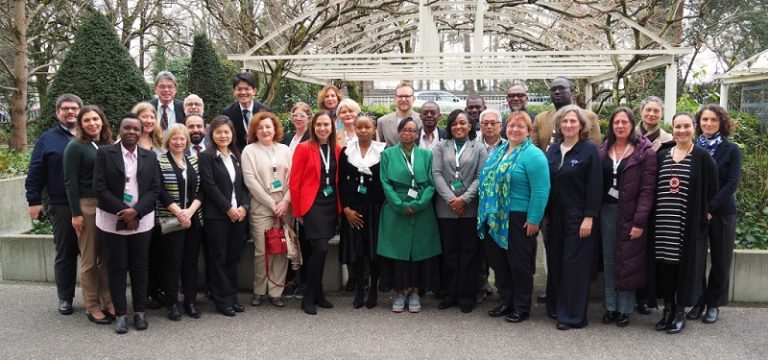
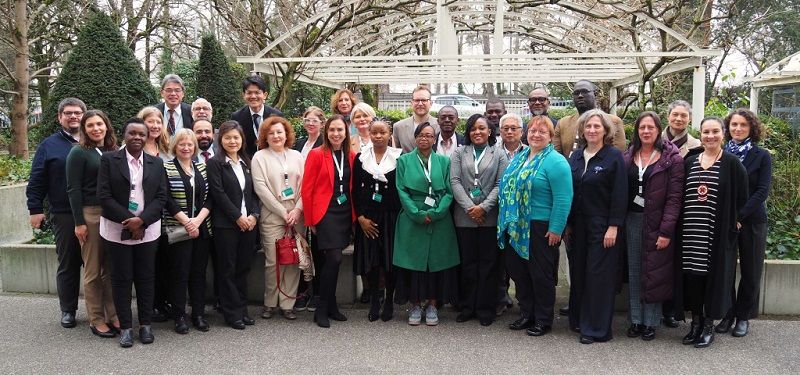
A number of conferences have since been held on reparations and on racism as well. The Algiers conference on the Crime of Colonialism can be said to have stood on the shoulders of those earlier endeavours. I participated on a panel that focused on the Environmental Impacts of Colonialism at this conference. Delegates included ambassadors, ministers of foreign affairs, and experts drawn from across Africa and the diaspora.

Algeria was praised for hosting the historic and strategic conference aimed at seeking a recognition of the crime of colonialism and seeking reparations as the basis for sustained peace and healing. The conference advanced Africa’s position on crimes of colonialism as systemic violence and exploitation that, alongside slavery, qualify as crimes against humanity.

A call was made for a declaration of an African Day for the remembrance of the victims of transatlantic enslavement and colonialism. It was also noted that colonialism has not ended and that there are still 20 colonies in the Caribbean besides those in Africa and elsewhere.

My notes from the event included the fact that colonialism was not a civilising process but one of wanton extraction, exploitation, humiliation and abuse of rights. It embodied the great crimes against humanity including those perpetrated in Congo, Cameroon, Namibia, Angola, Mozambique, Madagascar, and other places. References were frequently made to the nuclear tests that the French carried out in Algeria during the colonial days.

The contributions of Frantz Fanon, author of “The Wretched of the Earth”, an internationalist African anti-colonial activist and revolutionary were acknowledged. The impacts of colonialism on education, economy and other spheres of life were stressed and disruption of African or Africa’s? Culture was highlighted as the destruction of the glue that holds African peoples together.

The high-level ministerial panel on the topic From Recognition to Codification: Criminalising Colonialism in International Law showed that colonialism is a system and not an event and cannot be successfully fought without strategic plans. Such plans and actions must include ways of bringing back African systems of governance through education. Discussions around the human and generational impacts of colonialism underscored the health and genetic effects of nuclear tests as well as intentional spread of disease, displacements and other acts of violence.

Permit me to share some points I put across on the panel on Environmental Impacts of Colonialism. The first point was that colonialism and neocolonialism will not end except coloniality is erased. The persistence of colonialty of power and knowledge reinforces the continuation of colonialism in new forms. These produce extreme and destructive exploitation. And we must not forget, as Kwame Nkrumah stated in his book on Neocolonialism, that the worst form of imperialism is exploitation without responsibility. This mode of rapacious exploitation persists on the continent.

Another key point is that colonialism was birthed and nourished by extractivism. It was all about controlling the colonies or sacrifice zones to the benefit of the colonisers’ home territories which were considered sacred and untouchable.  Colonialism extracts nearly anything: labour, data, cultures, minerals, finance and is virtually insatiable. Colonialism’s emphasis on land dispossession, resource extraction, and cultural destruction frequently resulted in ecocidal practices as they were extensive, intentional, persistent and often irreversible.

The fact that the environmental crimes are continuous and persistent can be seen in the ongoing degradation of the Niger Delta where oil and gas has been destructively extracted from colonial times to the present. Other examples include extraction of gold in Obuasi in Ghana, coal in Whitbank in South Africa, oil in the Sudd, South Sudan, gas in Cabo Delgado, Mozambique, colonial extraction of so-called critical minerals in DR Congo and the notorious extraction of uranium in Niger Republic.

The environmental impacts of colonialism also appear through carbon colonialism which is also manifesting as a continent-scale land grab. The time has come for the halting of colonial extraction in all ramifications and a recognition of the ecological/climate debt being owed Africa, as part of the needed reparations. In other words, climate finance should be approached from the platform of ecological and climate debt.

To get off the rut, the AU should produce a model law on Rights of Nature to be adopted by all African nations. Secondly, the AU should promote the codification and utilisation of African environmentalism built on African philosophies, culture and cosmology. The AU should also recognize and promote grassroots initiatives for halting expansion of fossil fuels sacrifice zones and towards resource democracy using the Ogoni example in Nigeria and the Yasuni experience in Ecuador as examples.

Finally, the map of Africa requires urgent review with the abolition and erasure of divisive, thoughtless, colonial boundaries, as those were mere demarcations of zones of ownership, control and exploitation by the colonialists.

Coming away from the conference, I kept ruminating on a strong advice offered by Eric Phillips, Vice Chair, CARICOM Slavery Reparation Commission. He said, “We must not be prisoners of our past, but architects of our future.”

It was a call for action for all, but the tasks rest especially on African political leaders. Will they rise to the occasion and show leadership?

Bassey is Director, Health of Mother Earth Foundation (HOMEF)

WJC to premiere ‘Seizure’, documentary exposing wildlife trafficking networks, on December 9

0

The Wildlife Justice Commission (WJC) will premiere its acclaimed short documentary Seizure on its official YouTube channel on Tuesday, December 9, 2025, at 19:00 CET. Directed by award-winning filmmaker, Matt Durrant, the film offers a rare and gripping look into the hidden world of wildlife trafficking – one of the most profitable forms of transnational organised crime, and one that threatens species with extinction.  

Led by Wildlife Justice Chief of Investigations Steve Carmody, Seizure follows a global team of investigators, analysts, and undercover operatives as they work to dismantle the transnational criminal networks profiting from wildlife trafficking. Filmed across multiple continents, the documentary captures how Wildlife Justice’s intelligence-led model transforms information into enforcement, leading not only to seizures but arrests, prosecutions, and convictions.  

Olivia Swaak-Goldman
Olivia Swaak-Goldman, Executive Director of the Wildlife Justice Commission

Seizure tells the story of a real-time investigation into a criminal network selling the scales of pangolins, one of the world’s most trafficked mammals. What begins as a tip about an illegal shipment unravels into a multinational operation that exposes the supply chains, financial flows, and key actors behind this billion-dollar trade.  

Seizure is more than a film – it’s a window into how Wildlife Justice works to dismantle the criminal networks driving wildlife trafficking,” said Olivia Swaak-Goldman, Executive Director of the Wildlife Justice Commission. “This is what intelligence-led enforcement looks like in practice: building cases, following the money, and bringing traffickers to justice so that organised crime no longer drives species to extinction.”  

Following its highly successful festival run, Seizure has been recognised internationally, winning:

  • Best Environmental Film – Swedish International Film Festival
  • Best Short Documentary – Nature Without Borders International Film Festival
  • Best Wildlife Film – Documentaries Without Borders International Film Festival 

Now, for the first time, the Wildlife Justice Commission is making Seizure freely available worldwide via YouTube to maximise accessibility and awareness of the urgent need to tackle wildlife crime as serious organised crime.  

“The illegal wildlife trade is not just a conservation issue, it’s a criminal justice issue,” added Swaak-Goldman. “Through intelligence-driven investigations and partnerships with law enforcement, we’re transforming the enforcement landscape and proving that wildlife crime can be stopped.”  

IPCC registers experts to review draft of Methodology Report on Inventories for Short-lived Climate Forcers 

0

The Intergovernmental Panel on Climate Change (IPCC) opened this week registration for experts to serve as Expert Reviewers on the First-Order Draft (FOD) of the 2027 Methodology Report on Inventories for Short-lived Climate Forcers.

This Methodology Report, produced by the Task Force on National Greenhouse Gas Inventories (TFI), will provide guidance on measuring anthropogenic emissions from key short-lived climate-forcing substances, including nitrogen oxides, carbon monoxide, and others, which significantly contribute to global and regional air quality and climate change.

Following the Second Lead Author Meeting held in Istanbul in October 2025, the authors of the Methodology report have prepared a first draft, which will be open for experts worldwide to review and provide comments as of early January 2026.

Mazhar Hayat
IPCC Task Force on National Greenhouse Gas Inventories Co-Chair Mazhar Hayat

The review of the First Order Draft is the first of multiple review stages foreseen for every IPCC report. The review process is critical in preparing IPCC reports. It helps ensure scientific rigour, the widest range of perspectives, and relevance and guidance for those who compile emissions inventories.

Scheduled for release in 2027, the Methodology Report on Inventories for Short-lived Climate Forcers will be the first methodology report published by the IPCC in the seventh assessment cycle.

“We have more than 140 authors from 50 countries volunteering their time and expertise to develop the first draft of this long-awaited methodology report. We are now seeking experts worldwide to review and provide their comments, thus ensuring that this methodology report will reflect the latest scientific knowledge,” said Task Force on National Greenhouse Gas Inventories Co-Chair Takeshi Enoki.

Expert Review is the first opportunity for experts to engage with the draft report. All review comments submitted by experts or governments are addressed by the authors. The comments and the author responses, together with the drafts, are published after the report is finalised.

“Engagement of Expert Reviewers is vital. Their insights will help authors to consider diverse perspectives and methodological approaches,” said Task Force on National Greenhouse Gas Inventories Co-Chair, Mazhar Hayat.

Ottmar Edenhofer reappointed to the EU Climate Advisory Board

0

The European Scientific Advisory Board on Climate Change, established under the European Climate Law, will continue to be supported in its second term (2026-2030) by Ottmar Edenhofer. The Director of the Potsdam Institute for Climate Impact Research (PIK) has now been appointed by the Management Board of the European Environment Agency in Copenhagen for another four-year term on the Advisory Board, beginning on March 24, 2026.

The Advisory Board gives independent advice and produces reports on EU policies, and their coherence with the Climate Law and the EU’s commitments under the Paris Agreement. It consists of 15 high-level scientific experts covering a wide range of relevant fields. Edenhofer is serving as the Advisory Board’s current Chair during its first term (2022-2026).

Ottmar Edenhofer
Ottmar Edenhofer, Director of the Potsdam Institute for Climate Impact Research (PIK)

Highlights during this period have included scientific recommendations for an ambitious EU climate target for 2040, an analysis of the action needed to achieve climate neutrality, and a study on scaling up atmospheric carbon removals.

“I am very thankful for the great opportunity to continue supporting EU climate policy in this service role for the next four years,” says Edenhofer, who is also Professor for The Economics and Politics of Climate Change at the Technische Universität Berlin.

“The European Union has taken some important steps in recent years towards its declared goal of climate neutrality by 2050. It remains important to make climate policy cost-effective, socially balanced and consistent with the requirements of an internationally competitive economy. As a member of the Advisory Board, I will do my best to provide scientific advice to policymakers on this task,” adds Edenhofer.

The composition of the Advisory Board for the next four-year term has now been decided through an open, fair and transparent selection process lasting several months. The decision on who will chair the body in future is not expected until beginning of the second term.

The other members of the Advisory Board in the second term are:
•    Annela Anger-Kraavi – University of Cambridge
•    Constantinos Cartalis – National and Kapodistrian University of Athens 
•    Suraje Dessai – University of Leeds’ School of Earth, Environment, and Sustainability 
•    Laura Díaz Anadón – University of Cambridge
•    Vera Eory – Scotland’s Rural College 
•    Lena Kitzing – Technical University of Denmark 
•    Kati Kulovesi – University of Eastern Finland
•    Lars J. Nilsson – Lund University
•    Åsa Persson – KTH Royal Institute of Technology’s Climate Action Centre
•    Keywan Riahi – International Institute for Applied Systems Analysis 
•    Jean-François Soussana – French National Research Institute for Agriculture, Food and the Environment 
•    Giorgio Vacchiano – University of Milan
•    Detlef van Vuuren – PBL Netherlands Environmental Assessment Agency
•    Zinta Zommers – University of Toronto

Stakeholders push for stronger MRV to curb climate pollutants

0

The Stakeholder Democracy Network (SDN) is advocating the operationalisation of Monitoring, Reporting and Verification (MRV) for Short-Lived Climate Pollutants (SLCPs) to strengthen Nigeria’s climate action efforts.

Mrs. Florence Ibok-Abasi, Country Director of SDN, said this at a workshop organised by the National Council on Climate Change (NCCC), in collaboration with SDN, and with support from the Climate and Clean Air Coalition (CCAC) on Thursday, December 4, 2025, in Abuja.

The initiative aims to strengthen the country’s capacity to track and reduce Short-Lived Climate Pollutants (SLCPs) like methane and black carbon, particularly in key sectors such as oil and gas, agriculture, and waste.

Florence Ibok-Abasi
Florence Ibok-Abasi, Country Director of SDN

She said that SDN, in partnership with the NCCC, was working to integrate MRV for SLCPs into Nigeria’s national framework, ensuring accurate reporting and transparency.

This move aligns with Nigeria’s commitment to reducing methane emissions by 30 per cent by 2030 and achieve its Nationally Determined Contributions (NDCs) goals under the Paris Agreement.

“SDN has been working in the Niger Delta for over 20 years and, basically, our focus has been to support host communities to be able to engage with local governments, state governments and also oil companies.

“But beyond that, our mandate has actually been increased to providing technical assistance to the federal government, state governments and local governments as well.”

Ibok-Abasi explained that as an organisation, SDN treasured multi-stakeholder engagements, hence its name, Stakeholder Democracy Network.

 “Today, we are looking at how we can continue to strengthen our MRVs.

“It is extremely important because you cannot reduce what you cannot  measure, and that is why we are supporting strategies to reduce emissions of short-lived climate pollutants such as methane.”

She explained that CCAC was actually very pleased with the work SDN had done so far, saying, “We are already discussing the possibility of a second phase to ensure this intervention is duly completed.”

She said the workshop was a follow-up, building directly on the initial capacity-building session critical to strengthening institutional capacity to operationalise the MRV for SLCPs in line with overarching institutional frameworks.

She added that it supported the improved integration of SLCPs into Nigeria’s national MRV framework in accordance with the Enhanced Transparency Framework (ETF) under the Paris Agreement.

Also speaking, Mr. Okebugwu Chukwuemeka, Assistant Director, NCCC, commended SDN for the partnership.

Chukwuemeka said that progress had been made with regard to MRV and their efforts, “so we encourage that this effort should be sustained.

 “A lot of ideas are coming up and we are looking forward to seeing how we are able to harmonise these ideas to make sure that our MRV system, especially in the event of the short-lived climate pollutants, are properly integrated and estimated.”

In his remarks, Dr Bala Bappa, National Coordinator, CCAC, said the CCAC was a voluntary partnership of governments and other stakeholders committed to improving air quality and protecting the climate through targeted actions that reduced SLCPs.

Bappa said that Nigeria had been a long-standing and valued partner of the CCAC and over that over the years the Coalition had supported the country through a range of projects cutting across several sectors.

He noted that building on this partnership, “the CCAC is now supporting Nigeria to implement MRV for SLCPs in Key Sectors being implemented by SDN.”

He racalled that since inception of the Project, SDN had carried out a comprehensive stakeholder mapping and proceeded to carry out consultative meetings and stake holder engagements across various sectors towards a successful implementation of the MRV.

Bappa said a needs and gap analysis was carried out through consultations with the respective MDAs “and the outcome was presented to us and solutions highlighted at the last workshop.”

He added that the workshop would therefore,dwell further on the stakeholder engagements carried out and the progress made towards operationalilising the MRV in some sectors.

Dr Jude Samuelson, Head of Environment and Climate Change, SDN, commended the 16 MDAs for their cooperation and for adopting the recommendations generated through the project.

Samuelson said this had strengthened their efforts to improve MRV for SLCPs.

He reaffirmed SDN’s commitment to supporting the operationalisation of MRV systems and ensuring that MDAs across key sectors build the capacity needed to effectively implement SLCP MRV.

By Angela Atabo

IITA inaugurates irrigation system, research farm equipment for improved varieties

The International Institute of Tropical Agriculture (IITA) in Ibadan, Oyo State, has inaugurated irrigation systems and research farm equipment to develop and deliver improved varieties more quickly and on a larger scale.

The project, funded by the Crops to End Hunger initiative (CtEH), was launched at the institute’s headquarters in Ibadan on Thursday, December 4, 2025.

IITA Director-General (DG), Dr Simeon Ehui, said the project would strengthen the institute’s capacity to better serve Nigeria’s farmers and Africa in general.

IITA
The Director-General, International Institute of Tropical Agriculture (IITA), Dr Simeon Ehui; Chairman, IITA Board of Trustees, Dr Roel Merckx, inaugurating irrigation systems and research farm equipment on Thursday in Ibadan

The infrastructure, Ehui said, has improved IITA farm research, further enhancing its ability to conduct more efficient breeding trials, sustain year-round research, and respond better to climate variability.

“In practical terms, this means that we will be able to develop and deliver improved varieties to farmers faster and at a greater scale.

“For us at IITA, this is not just about new equipment. It’s about building a more resilient, productive, and sustainable system for Africa.

“These facilities will serve as platforms for innovation, training and partnership with the national resource systems and other stakeholders across the region,” he said.

The DG, while appreciating IITA staff for their hard work and dedication, commended the German Government and other partners for making the project a reality.

Other equipment inaugurated, aside from the irrigation system, include new tractors equipped with GPS systems, planters, manure spreaders and combine harvesters.

The Chairman, IITA Board of Trustees, Dr Roel Merckx, noting that mechanisation was a challenge in Africa, said the mechanised irrigation facilities would, however, ease the challenge of water access.

Merckx explained that the irrigation would also help researchers focus more on breeding additional crop varieties.

Mr. Alick Mulenga, IITA Head of Farm Management and Breeding Operations, said the mechanised equipment would enable them to be more efficient in executing their operations.

“Currently, everything we do in terms of planting, spraying the weeds, and harvesting is done manually.

“We are very inefficient because it takes time, while the window for us to plant and maintain the crop is very short.

“So, having this equipment is going to help us execute the operations quicker, more efficiently and reliably,” he said.

Mulenga said that the irrigation system would now allow them to plant more than one crop per season, different from when they had to rely on rainfall.

He said that the infrastructure would have a positive impact on breeders, the general public and smallholder farmers in Nigeria and across Africa.

Also, Mr. Richard Ofei, IITA Project Management Officer for Root, Tuber, and Banana, said the facilities would reduce human input, thus enhancing profits.

By Suleiman Shehu

Nigeria begins N185bn gas legacy debt repayment

0

The Federal Government of Nigeria has taken a decisive step to revitalise the gas industry and stabilise power generation after President Bola Tinubu authorised the settlement of N185 billion in long-standing debts owed to natural gas producers.

The move, endorsed on Wednesday, December 3, 2025, by the National Economic Council (NEC) headed by Vice-President Kashim Shettima, marked one of the most significant interventions in Nigeria’s energy sector in recent years.

The Minister of State, Petroleum Resources (Gas), Dr Ekperikpe Ekpo, in a statement on Thursday, December 4, said clearing the arrears would deliver wide-ranging benefits, beginning with restoring investor confidence in the sector.

Ekperikpe Ekpo
Minister of State for Petroleum Resources (Gas), Ekperikpe Ekpo

It will be recalled that the N185 billion legacy debts, a longstanding government obligation to gas producers for past supplies, had strained cash flow and hindered operations.

The debts had discouraged further exploration and production, and reduced gas supply for power generation, thereby worsening Nigeria’s power shortages and unreliable electricity supply.

The payment to be executed through a royalty-offset arrangement, is expected to restore confidence among domestic and international gas suppliers who have long expressed concern about persistent indebtedness in the sector.

Ekpo, however, described the approval as a “decisive step towards revitalising Nigeria’s gas sector and strengthening its power-generation capacity in a sustainable manner.”

He praised Tinubu’s leadership, stating that the intervention aligned with the Decade of Gas initiative, which aims to unlock more than 12 billion cubic feet per day (bcf/d) of gas supply by 2030.

“Settling the debts is crucial to rebuilding trust between the government and gas producers, many of whom have withheld or slowed new investments due to uncertainty over payments,” he said.

Ekpo explained that improved financial stability would help revive upstream activity by accelerating exploration and production, ultimately boosting Nigeria’s gas output.

He added that increased gas supply would also boost power generation and ease the long-standing electricity shortages that continue to hinder businesses across the country.

According to the gas minister, these gains are expected to stimulate broader economic growth, as reliable energy underpins industrialisation, job creation and competitiveness.

He added that better fiscal discipline and enhanced transparency across the sector would further attract fresh investment from both local and foreign players.

The Coordinating Director of the Decade of Gas Secretariat, Mr. Ed Ubong, said the approved plan to clear gas-to-power debts showed commitment from President Tinubu to address structural weaknesses across the value chain.

“This decision underlines the Federal Government’s determination to clear legacy liabilities and give gas producers the confidence that supplies to power generation will be honoured.

“It could unlock stalled projects, revive investor interest and rebuild momentum behind Nigeria’s transition to a gas-driven economy,” said Ubong.

By Emmanuella Anokam

Funding gap, weak infrastructure hinder Nigeria’s biotech potential – Don

Prof. Femi Ayoade of Redeemer’s University, Ede in Osun State, says funding gaps, weak infrastructure, policy limitations, skill shortages and evolving regulations are preventing Nigeria from fully benefiting from biotechnology advancements.

Ayoade, a professor of Food and Environmental Biotechnology, said this while delivering the university’s 20th Inaugural Lecture on Thursday, December 4, 3035 in Ede, Osun.

The lecture had “Biotechnology as Divine Providence: A New Paradigm for Sustainable Development and Poverty Alleviation” as its theme.

Redeemer's University
Redeemer’s University, Ede, Osun State

The don said biotechnology could be used as a tool for poverty alleviation and economic development in the country if effectively utilised.

Ayoade described biotechnology as a branch of science and a revolutionary force that is reshaping industries and improving the quality of life of millions of people across the globe.

He said biotechnology could also transform Nigeria’s agriculture, healthcare and environment if effectively utilised.

Ayoade said the government, academia and industry have to collaborate to maximise the potential of biotechnology and position Nigeria as a continental leader.

He added that biotechnology offers practical solutions to low yields and climate stress in the agricultural sector and could also help combat infectious and non‑communicable diseases through vaccines, diagnostics and therapies in the health sector.

“Biotechnology can generate industries, jobs and exports, strengthen food security and provide green technologies for sustainable growth,” he said.

Ayoade urged policymakers to foster a supportive environment that encourages biotechnology innovation, adding that the burgeoning youth population, strong agricultural base and growing research capabilities position Nigeria to benefit from biotechnological innovations.

By Olajide Idowu

Edo lays claim to disputed forest reserve, warns warring communities

The Edo State Government has laid claim to the disputed forest reserve between the Abere and Ajakuruma Ijaw communities in Ovia Southwest Local Government Area of the state.

Deputy Governor of the state, Mr. Dennis Idahosa, made the claim during a peace meeting with leaders of the two communities in Benin on Thursday, December 4, 2025.

In a statement by his Chief Press Secretary, Friday Aghedo, Idahosa, who is also the Chairman of the State Boundary Committee, classified the disputed territory as state-owned and not subject to communal ownership claims.

Dennis Idahosa
Deputy Governor of Edo State, Mr. Dennis Idahosa

The deputy governor, who declared the exclusive right of the government over the land, warned both communities to desist immediately from laying claim to the land.

According to him, documentary evidence and verified digital coordinates confirmed that the forest reserve is under the authority of the Edo State Government.

He cautioned the communities against attempting to appropriate the area or escalate tensions.

“You cannot fight over what does not belong to you.

“Documentary evidence showed that the landmass in question belonged to the state, a process verified through the use of digital coordinates.

“Whatever we have done here today is in line with the law.

“Go back to your communities and ensure that there is peace.

“Anybody that wants to foment trouble should be ready to face the wrath of the law,” he said.

Idahosa directed residents of both communities to maintain peace and abide strictly by the resolutions of the State Boundary Committee, stressing that it was criminal for any group to lay claim to a government-owned forest reserve.

The deputy governor, however, commended the Chairman of Ovia Southwest Local Government Council, Mr. Nosakhare Edobor, for preempting what he described as a looming communal crisis that could have resulted in casualties.

Earlier, the council chairman, who disclosed that the dispute had lingered for about seven months, urged all communities in the area to prioritise dialogue and lawful engagement over violence.

By Usman Aliyu

Nigeria risks talents exodus in oil and gas sector – PENGASSAN

0

The Petroleum and Natural Gas Senior Staff Association of Nigeria (PENGASSAN) says Nigeria risks massive brain drain in the oil and gas sector due to poor remuneration.

Mr. Festus Osifo, President of PENGASSAN, said this while briefing newsmen at the end of the National Executive Council (NEC) meeting of the union on Thursday, December 4, 2025, in Abuja.

He said the sector was facing challenges arising from Naira devaluation and inflation, noting that oil and gas skills remained globally competitive.

Festus Osifo
Mr. Festus Osifo, PENGASSAN’s President

“A drilling engineer in Nigeria does the same job as one in the U.S. or Abu Dhabi,” he said.

Osifo said the union must take steps to bridge the wage gap to prevent members from leaving the country for better opportunities abroad.

“If we don’t act, the brain drain seen in other sectors will be child’s play,” he said.

He said PENGASSAN had recorded significant gains through collective bargaining across oil and gas branches.

“We signed numerous agreements across government agencies, IOCs, service and marketing sectors,” he said.

He said the agreements brought relief to members facing rising costs of living, adding that the association’s duty is to protect members’ jobs and enhance their pay.

Osifo urged companies delaying salary reviews and those foot-dragging as a result of the prevailing economic realities to do the needful.

He said the industry employed some of the nation’s best talents, making competitive pay critical to retaining skilled workers.

“This industry recruits the best. Companies must provide the best conditions,” he said.

On insecurity, Osifo urged government to take decisive action against terrorism and kidnappings across the country.

“We are tired of condemnations. government must expose sponsors and protect citizens,” he said.

He urged government at all levels to prioritise tackling insecurity through better funding and equipment for security agencies.

Osifo said PENGASSAN supported calls for state police to improve local security response, adding that decentralising policing will protect citizens better than rhetoric.

He also said economic indicators meant little, if food prices remained high and farmers could not return to farms due to insecurity.

“Nigerians want to see food on the table, not macroeconomic figures,” he said.

He urged government to coordinate fiscal and monetary policies to ensure economic gains reach households.

“Translate macro results to food on the table,” he said.

By Joan Nwagwu

×