The Lagos State House of Assembly and the representative of affected waterfront communities have backed the state government’s proposed water city project of the demolished areas.
This formed part of a five-point agreement reached on Tuesday, February 10, 2026, during a stakeholders’ meeting held at the House of Assembly complex in Alausa, Ikeja.
The waterfront communities affected by the demolition are Makoko, Sogunro and Oko Agbon in Lagos State.
Participants at the stakeholders’ meeting held at the House of Assembly complex in Alausa, Ikeja
Speaking to newsmen, the Chairman, Adhoc Committee on Rules and Business, Mr. Noheem Adams, said the proposed project by the state government was intended to benefit the affected residents.
Adams, who is also the House Majority Leader, said the state government would constitute a 10-man committee to conduct a self-enumeration of affected buildings.
The majority leader said the committee was expected to complete the enumeration exercise and submit its report within two weeks to the Adhoc Committee on Rules and Business.
Adams called for transparency in the self-enumeration process, noting that data provided by the community would be cross-checked with government records.
He directed Makoko stakeholders to submit the list of the proposed 10-man committee to the House upon its constitution.
Speaking to journalists, the Baale of Sogunro Community, Chief Abraham Mesu, commended the intervention of the Lagos State House of Assembly on the matter.
Mesu described the proposed Water City project as a landmark initiative capable of improving living standards and ensuring that residents remain the primary beneficiaries.
He, however, expressed concern over the impact of the demolitions but affirmed the community’s willingness to collaborate with the state government.
Also speaking, the Baale of Makoko Waterfront, Chief Emmanuel Shemade, said community leaders had resolved not to rebuild demolished structures until further notice.
Shemade said he was satisfied with the agreement reached at the meeting on the regeneration of Makoko communities without displacing residents.
He further commended the commitment of the state government to provide an aerial photograph clearly showing demolition boundaries within one month.
Earlier, Dr Olajide Babatunde, Special Adviser to Gov. Babajide Sanwo-Olu on Geographic Information Service (GIS), said the state government had concluded plans for the Water City project as part of efforts to regenerate the area.
Babatunde said the governor was concerned about overcrowding and poor living conditions in the communities and assured that affected residents would be adequately compensated.
Dangote Petroleum Refinery has reduced the gantry price of Premium Motor Spirit (PMS) (or petrol) by N25 per litre, lowering its ex-depot/gantry rate from N799 to N774 per litre.
The refinery communicated the price adjustment to marketers on Tuesday, February 10, 2026, confirming that the new rate takes immediate effect nationwide.
Petrol sale
“This is to notify you of a change in our PMS gantry price from N799 per litre to N774 per litre,” noted the refinery.
The adjustment further strengthens the competitiveness of locally refined products, as the current landing price of imported PMS from Lome stands at about N793 per litre, compared to Dangote Refinery’s ex depot price of N774 per litre.
The Nigerian Meteorological Agency (NiMet) has predicted a longer-than-normal length of rainy season in Lagos, Benue, Enugu, Ebonyi, Ogun, Oyo, Nasarawa, Anambra, Kwara, Kebbi, Kaduna, Gombe and Taraba states in 2026.
Mr. Festus Keyamo, the Minister of Aviation and Aerospace Development, disclosed this during the Public Presentation of the 2026 Seasonal Climate Prediction (SCP) in Abuja on Tuesday, February 10.
Keyamo said NiMet revealed that early onset is expected in Bayelsa, Rivers, Akwa Ibom, Cross River, Benue, Kogi, Nasarawa, Oyo, and parts of Kebbi, Niger, Jigawa, Katsina, Kano, Adamawa, and Taraba states.
Mr. Festus Keyamo, the Minister of Aviation and Aerospace Development, with dignitaries at the Public Presentation of the 2026 Seasonal Climate Prediction (SCP) in Abuja
“While a late onset is expected over Borno State. Rainfall cessation is anticipated to be earlier than normal in parts of Ogun, Osun, Ondo, Imo, Rivers, Akwa Ibom, Kogi and Niger states.
“However, a delayed end of season is expected in Lagos, Ogun, Anambra, Enugu, Cross River, Benue, Nasarawa and Kaduna states.
“Whereas, parts of Borno, Yobe and Niger states are expected to have a shorter-than-normal length of rainy season. A normal annual rainfall amount is anticipated in most parts of Nigeria compared to long-term average,” the agency said.
It forecast above-normal rainfall in Borno, Sokoto, Kebbi, Kaduna, Enugu, Cross River, Abia, Ebonyi, Akwa Ibom states, and the Federal Capital Territory; while in parts of Katsina, Zamfara, Kwara, Oyo, and Ogun states, below-normal rainfall would be expected.
The agency anticipated severe dry spells exceeding 15 days in parts of Oyo and Ogun states during the season of March to May.
NiMet also predicted moderate dry spells over Ekiti, Kogi, Osun, Ondo, Ogun, Edo, Ebonyi, Abia, Cross River, and Delta states, parts of Kogi and Kwara states.
“Furthermore, during the June-July-August season, a severe dry spell that may last up to 21 days is predicted for parts of Bauchi, Borno, Gombe, Jigawa, Katsina, Kano, Kebbi, Kwara, Nasarawa, Niger, Oyo, Plateau, Sokoto, Yobe, and Zamfara states.
“The Little Dry Season (LDS), also known as ‘August Break,’ is predicted to begin by late July and will be severe and prolonged over Lagos, Ogun, Ekiti and parts of Oyo states.
“The number of days with little or no rainfall will range between 28 and 40 days. A moderate LDS effect is expected over Ondo, parts of Kwara and Edo States,’’ it noted.
According to the agency, both daytime and nighttime temperatures are predicted to be warmer than the long-term average over most parts of the country in January, February, March, and May.
“Some significant rains across the southern parts of the country this year should not be taken to mean that the rainy season has started in these places.
“Those engaged in rained agriculture and other rainfall-dependent activities in Nigeria are therefore advised to refer to the predicted onset dates in the publication or consult NiMet for proper guidance,” the agency added.
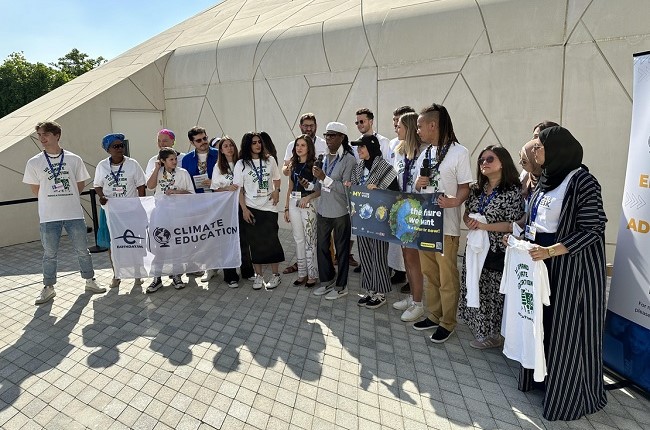
As countries submitted their third round of Nationally Determined Contributions (NDCs) under the UN Framework Convention on Climate Change (UNFCCC), the inclusion of climate education in national commitments demonstrates both measurable progress and continued opportunity.
More than 150 countries now reference climate education in their NDCs. This is up from just 40 a few years ago. This dramatic increase reflects a growing global recognition that education is not peripheral to climate action but foundational to achieving it.
Over the past several years, IUCN Member EARTHDAY.ORG has led a campaign to embed climate education in countries’ NDCs, the core climate pledges under the Paris Agreement that guide policy, investment and long-term planning.
NDCs are updated every five years and outline how countries will reduce emissions, adapt to climate impacts and secure finance. For many governments, what appears in an NDC directly influences domestic plans, budget and international funding eligibility.
By ensuring that climate education is included in these commitments, EARTHDAY.ORG sought to move education from the margins of climate discourse into the heart of national climate strategies so that young people, educators and communities are equipped to protect the climate and the associated biodiversity loss.
Education matters for climate and nature
Climate change and biodiversity loss are deeply interconnected crises. Rising temperatures, shifting precipitation patterns and extreme weather events are degrading ecosystems, accelerating species loss and undermining nature’s contributions to people. At the same time, the degradation of forests, wetlands, oceans and other ecosystems exacerbates climate change by weakening nature’s capacity to absorb carbon and buffer climate impacts. It is all related.
Addressing this dual crisis requires more than technological solutions or top-down policy interventions. It requires an informed public that understands the relationships between climate and ecosystems, and that is empowered to act as stewards of nature. Climate education, when designed effectively, goes far beyond emissions and energy.
It integrates biodiversity, conservation, land use, food systems, water cycles and Indigenous and local ecological knowledge. This helps learners understand how protecting nature is essential to climate resilience and sustainable development.
By embedding education into NDCs, governments acknowledge the need for long-term investments in knowledge, skills and civic engagement critical to address these interconnected issues.
From the margins to the mainstream: The NDC campaign
When EARTHDAY.ORG began its climate education campaign in 2017, the global policy landscape was significantly different. At that time, only a handful of countries mentioned education in their NDCs, and where it did appear, the references were often general or lacked actionable depth.
However, by the second round of NDCs in 2020, a major shift occurred: climate education was reflected in approximately 40 countries’ NDCs, marking the start of a new era of climate education commitments.
Over multiple years, EARTHDAY.ORG conducted bilateral meetings with government representatives, education ministries, climate negotiators and civil society partners. These conversations took place on the margins of major UN climate negotiations, including the annual Conferences of the Parties (COPs), as well as during the intersessional Subsidiary Body (SB) meetings in Bonn.
In these settings, EARTHDAY.ORG advocated for education as a strategic enabler of climate and nature goals. The campaign emphasised how education supports:
Climate adaptation and mitigation, by equipping communities with knowledge to manage natural resources under changing conditions.
Biodiversity protection, by fostering ecological literacy and stewardship from an early age.
A just transition, by preparing young people for green jobs across agriculture, conservation, renewable energy and ecosystem restoration.
The increase in the number of countries referencing climate education reflects both internal shifts in national priorities and the broader evolution of the UNFCCC process. The Paris Agreement itself provides a foundation through Article 12, which calls on Parties to enhance climate education, training, public awareness and participation under the Action for Climate Empowerment (ACE) framework.
As ACE gained visibility in recent COP cycles, governments became more attentive to integrating education into national planning instruments, including NDCs. EARTHDAY.ORG’s campaign helped translate this normative commitment into practical action.
As countries revised and submitted their third round of NDCs prior to COP 30, climate education began to appear more often and with greater depth. Today, 153 countries include climate education in their NDCs, a nearly fourfold increase from where the campaign began.
Education as a foundation for the green economy
One of the central messages of EARTHDAY.ORG’s advocacy is that education underpins the transition to a green economy. Protecting biodiversity and restoring ecosystems require a workforce trained in conservation science, sustainable agriculture, forestry, marine management, environmental monitoring and ecological restoration. These sectors depend on foundational education that integrates climate science with ecological principles and local environmental contexts.
By committing to climate education in NDCs, governments signal that investments in human capital are as critical as investments in infrastructure or technology. Students who learn about ecosystems, biodiversity and climate systems are better prepared to innovate, participate in democratic decision making and implement solutions that align climate mitigation with nature conservation.
Importantly, this approach also supports equity. Communities most affected by climate change and environmental degradation, which are often Indigenous Peoples, rural populations and those living in biodiversity-rich regions, stand to benefit from education that recognises local knowledge systems and empowers community-led stewardship of natural resources.
From commitments to implementation
Including climate education in an NDC is not the end of the journey; it is the beginning. EARTHDAY.ORG’s work increasingly focuses on helping countries move these commitments into action. This transformation happens through curriculum reform, teacher training, public awareness campaigns and partnerships across education and environmental ministries.
As IUCN advances its long-term Strategic Vision, there is a significant opportunity for Members to help operationalise education commitments already embedded in 150+ NDCs. Climate education references in national pledges create entry points for conservation organisations, research institutions, Indigenous networks and civil society actors to collaborate with ministries of education and environment.
We invite fellow Members of the Union to consider how their expertise in biodiversity conservation, ecosystem restoration and Nature-based Solutions can inform curriculum development, teacher training and community learning initiatives connected to NDC implementation. Education is a cross-cutting lever that strengthens not only climate ambition but also biodiversity outcomes and intergenerational stewardship.
By aligning climate education commitments with conservation expertise, we can ensure that future generations are equipped not only to understand the climate crisis but to actively protect and restore the natural world upon which all climate solutions ultimately depend.
Bryce Coon is the Director of Education at EARTHDAY.ORG, where he leverages over a decade of classroom teaching experience to drive global climate literacy. He and his colleagues successfully spearheaded the organisation’s NDC campaign, securing climate education commitments from over 150 countries. Bryce is currently focused on the strategic implementation and next steps of these international policy achievements
The Green Climate Fund (GCF) and Nepal Investment Mega Bank (NIMB) signed a grant agreement on Monday, February 9, 2026. The partnership with one of Nepal’s largest commercial banks will be the first step to unlocking increased domestic and international private capital for climate action in Nepal.
It is GCF’s first-ever Readiness and Preparatory Support grant for a private-sector Direct Access Entity. It is believed that readiness support will strengthen the bank’s institutional capacity to scale up financing for renewable energy, resilient infrastructure, and other climate-smart initiatives.
Achala Abeysinghe, GCF’s Director of the Department of Investment Services
The initiative will demonstrate how local financial actors can play a catalytic role in achieving country-driven climate goals, and is in line with GCF’s commitment to strengthen the role of local financial institutions in domestic climate finance markets.
Achala Abeysinghe, GCF’s Director of the Department of Investment Services, commented that catalysing various climate finance instruments would also support job creation and small, medium-sized enterprises in Nepal.
“This is a very important milestone, and it takes GCF a step further in our partnership with NIMB and indeed the country of Nepal,” Abeysinghe said.
Jyoti Prakesh Pandey, NIMB’s Chief Executive Officer, said: “Today marks the beginning of a new chapter in Nepal’s climate finance ecosystem. It will strengthen institutional readiness and enable the private sector to translate climate ambition into investible projects.”
Through this Readiness support, NIMB will build its institutional systems, governance, and technical capacity to mobilise private and concessional capital in support of Nepal’s national climate priorities. The programme will focus on:
Strengthening fiduciary, safeguards, and institutional systems
Developing investment-ready climate pipelines aligned with Nepal’s Nationally Determined Contributions and National Adaptation Plan
Establishing climate finance management and oversight frameworks
Designing the enabling environment for a future blended finance pathway.
To raise awareness about the Arabian leopard, the United Nations General Assembly has proclaimed February 10 as the International Day of the Arabian Leopard in resolution 77/295.
Classified as Critically Endangered on the IUCN Red List, the rapid disappearance of the Arabian leopard represents a major setback for biodiversity conservation in its native region, underscoring the urgency of addressing the nature crisis that threatens ecosystems worldwide.
By celebrating this Day, the UN ultimately seeks to restore the Arabian leopard as a flagship species for conservation and sustainability in its native region while emphasising the critical role of biodiversity in maintaining the health and resilience of our planet’s ecosystems.
Endangered Arabian Leopard in captivity. Photo credit: Hyserb/288310190/Adobe Stock
The UN resolution recognises the vital importance of the Arabian leopard to the Arabian ecosystem and welcomes cooperative regional initiatives to protect it and other threatened species. The resolution calls for enhanced conservation efforts by Arabian range states, relevant stakeholders like NGOs and communities, and UN agencies.
Observing this International Day will promote much-needed attention for the Arabian leopard and galvanise public engagement in conservation initiatives aimed at restoring leopard populations and other endangered species for the benefit of ecosystems.
The Arabian leopard (Panthera pardus nimr) is a critically endangered leopard subspecies that inhabits the Arabian Peninsula. It is one of the smallest leopard subspecies, with an average weight of 30-40 kg for males and 25-35 kg for females. Its fur is pale and buff-colored with rosettes that are small and closely spaced.
The Arabian leopard has a very limited distribution, being found only in a few isolated pockets of habitat in Saudi Arabia, Oman, Yemen, and the United Arab Emirates. Estimates suggest there may be fewer than 200 Arabian leopards left in the wild.
Threats to the species include urbanisation, farming, overgrazing by livestock, poaching, and the illegal wildlife trade. Conservation efforts focus on habitat protection, restoration of natural prey populations, and public education programs to reduce human-leopard conflict.
The Arabian leopard is legally protected across its range, but greater enforcement of laws and active management of surviving populations are needed to ensure the species’ survival.
Three pioneering community-based land restoration projects have become the first from Ethiopia to be selected by the Carbon Accelerator Programme for the Environment (CAPE) – a UK-backed initiative which aims to mobilise investment into initiatives that reduce emissions, restore ecosystems and benefit local communities.
The three – delivered with the support of the UK’s Foreign, Commonwealth and Development Office (FCDO) in Ethiopia – are AfriScout Regen, Chifra Landscape Restoration Project and The People’s Chaka. They will receive project development and transaction advisory services support to help them progress to investment ready stage.
Reshma Shah, Carbon Markets Lead at FSD Africa
CAPE was launched in November 2024 by FSD Africa, the UK-backed financial sector development agency, in partnership with the African Natural Capital Alliance (ANCA) and Finance Earth. A core focus is supporting equitable financing structures that ensure local communities receive long term benefit from the income generated from the sale of carbon credits linked to ecosystem restoration.
With 62% of Africa’s GDP reliant on natural capital, CAPE aims to build confidence among domestic and international investors in Africa’s nature-based carbon markets by prioritising high-integrity projects with strong community linkages, robust biodiversity outcomes and credible carbon methodologies.
The three projects were selected from over 40 applications:
AfriScout Regen
This is a project which works with pastoral communities to restore the vast rangelands where they graze their herds and to increase livestock productivity. The project, which covers an area of 1.3 million hectares of grassland and more than 44,000 households, blends time-honoured, adaptive grazing practices with modern technology through an app combining satellite data and AI to guide the pastoralists on where and when they move their herds.
By measuring and verifying the carbon sequestration impact of these practices, AfriScout aims to issue carbon credits to fund future activities. AfriScout is a social enterprise of the global impact organisation Global Communities.
Chifra Landscape Restoration Project
It is a community-based land restoration initiative in the Afar region developed by World Vision Australia, in partnership with World Vision Ethiopia. The project utilises Farmer Managed Natural Regeneration (FMNR), a low-cost and sustainable technique which involves growing trees and shrubs from existing stumps, roots, and seeds, alongside new planting.
The aim is to restore over 100,000 hectares of degraded rangelands, enhance biodiversity and improve pastoral livelihoods across Ethiopia, while generating a scalable and credible source of high-quality carbon credits.
The People’s Chaka
This is a community-led land restoration project in southern and south-western Ethiopia which aims to reverse deforestation across 7,000 hectares in a highly biodiverse ecosystem (with a potential to scale up to 50,000 hectares), prevent land erosion, and remove 2.3m tonnes of CO2e while also strengthening rural livelihoods through a revenue-sharing mechanism.
The project has been co-developed by Menschen für Menschen Foundation (MFM), an NGO with more than 40 years of experience working alongside rural Ethiopian communities, and goodcarbon, a Berlin-based nature-based solutions developer.
The projects were selected for their development readiness, impact potential and alignment with investor and carbon buyer expectations. Together they demonstrate how community-led carbon initiatives can generate climate and biodiversity outcomes while strengthening local economies and sustainable development at both national and community level.
“What excites me about these projects is how practical they are, and that is exactly what CAPE is here to prove. This is about deploying practical solution, working with people who depend on the ecosystem services to restore it and be compensated fairly for it. When rangelands recover and forests grow back, livelihoods strengthen. Carbon finance simply becomes the way that effort is recognised, sustained, and shown to be a viable investment,” said Reshma Shah, Carbon Markets Lead at FSD Africa.
“For carbon projects to succeed over the long term, they must meaningfully improve livelihoods and share value fairly with the communities at their core,” said James Mansfield, Managing Director at Finance Earth. “These Ethiopian projects demonstrate how strong benefit-sharing structures can support sustainable incomes and create carbon assets that endure.”
“CAPE Ethiopia is an exciting new initiative that supports the development of Ethiopia’s carbon sector. For the UK, this represents a modern development partnership in action: investing in high‑impact local enterprises that meet community needs while safeguarding vital natural resources,” said Dr. Nina Hissen, Lead for Climate and Nature at FCDO Ethiopia. “At the same time, CAPE Ethiopia connects these communities to global carbon markets, helping them diversify livelihoods and unlock new, sustainable revenue streams.”
The Mara Elephant Project (MEP) says it is a conservation partner for the Global Conservation Tech & Drone Forum (GCTDF 2026), taking place from March 2 to 6, 2026, in Nairobi and Konza Technopolis, Kenya.
GCTDF 2026, themed “Technology in Service of Nature: Protecting Wildlife, Supporting People, Restoring Ecosystems”, is a gathering that brings together rangers, community leaders, technologists, researchers, policymakers, and youth from across Africa and the world.
Wildlife tech: Park ranger operating a drone
The event is said to offer an opportunity to explore how drones, satellite sensors, GIS, and data-driven tools can be harnessed to safeguard biodiversity, restore ecosystems, and enhance community resilience.
As a key partner, MEP will also support the forum’s centrepiece initiative: the inaugural Youth Conservation Tech Award 2026. This non-cash recognition programme is designed to elevate young individuals (aged 25 and under on March 1, 2026) who are applying technology in practical, field-based conservation work.
The award focuses on operational, real-world solutions, such as drone monitoring, sensor networks, or data platforms that demonstrate clear conservation impact, ethical tech application, and leadership. Winners will be selected through a transparent, multi-stakeholder judging process and will be honored during a high-visibility plenary session at GCTDF 2026.
Awardees will receive a formal certificate of recognition, supported participation in the five-day forum, and inclusion in official communications providing significant visibility and professional validation. By highlighting credible, youth-led innovation, the award aims to inspire peer learning and strengthen career pathways in conservation technology. Nominations are now open and submissions are encouraged from across Africa and comparable conservation regions.
MEP works across the Greater Mara Ecosystem to protect elephants, promote coexistence, and conserve critical habitats. Technology plays an increasingly central role in this work, particularly through the operational use of drones for monitoring wildlife, and rapid response human-elephant conflict mitigation, alongside a strong investment in training and capacity building.
As part of its contribution to GCTDF 2026, the Mara Elephant Project will share its experience in:
Training and upskilling rangers in drone operations, aerial monitoring, and data-informed conservation decision-making.
Supporting knowledge exchange programmes that extend drone and conservation technology skills to partner organisations across the African continent.
Exploring the integration of emerging technologies to improve monitoring, land-use analysis, and ecosystem understanding.
Demonstrating the value of empowering women and youth in conservation, by increasing access to technical skills, leadership opportunities, and meaningful participation in technology-led conservation efforts.
Participation in GCTDF 2026 reflects the Mara Elephant Project’s commitment to ethical, field-tested, and community-centred conservation technology, and sharing lessons learned with peers working across diverse landscapes and challenges.
MEP CEO, Marc Goss, explains: “Joining GCTDF 2026 is important to us because conservation today depends on sharing knowledge, building skills, and working together across disciplines and borders.
“Emerging technologies drive innovation and are most effective when grounded in field experience and accessible to the people who are shaping the future of conservation in Africa.”
Renaissance Africa Energy Company Limited (Renaissance) was represented at the opening session of the 2026 International Energy Week in London, United Kingdom, on Tuesday, February 10, 2026.
An expanding energy leader committed to powering Nigeria and Africa’s energy security and industrialisation through sustainable energy solutions, Renaissance is the operator of Nigeria’s largest oil and gas joint venture assets (NNPC/Renaissance/TotalEnergies/AENR JV), Renaissance produces from diverse onshore, swamp, and shallow water locations in parts of the Niger Delta.
The JV’s participating interests are: NNPC (55%), Renaissance (30%), TotalEnergies (10%), and AENR (5%).
Managing Director and Chief Executive Officer, Renaissance Africa Energy Company Limited, Tony Attah, flanked by the Managing Director, Northern Endurance Partnership, Rich Denny (left), and the Director, Highland Sustainability Limited, John MacArthur, at the opening session of the 2026 International Energy Week in London… on Tuesday
The enforcement of the ban on sachet alcohol by the National Agency for Food and Drug Administration and Control (NAFDAC) has continued to garner more views with pro-health groups from Ghana and Uganda commending the agency for the bold move.
Some of the groups that hailed the move are the Uganda Alcohol Policy Alliance (UAPA) and the Vision for Sustainable Accelerated Development (VAST-Ghana).
Alcoholic drinks in sachets and small volume bottles
In a letter signed by its Chairperson, Juliet Namukasa, and addressed to the director general of NAFDAC, the UAPA commended the Nigerian agency for the decisive enforcement of the ban on sachet and small-volume alcoholic beverages, describing the move as a policy grounded in safeguarding public health and curbing harmful alcohol use, especially among children and youth.
Namukasa said that the renewed ban demonstrates a commitment to evidence-based regulation, prioritising people before profits.
The group insisted that sachet alcohol formats are inexpensive, easily concealed, and widely accessible; factors that fuel underage drinking and alcohol-related harm, adding that sustained enforcement signals a powerful public health precedence, aligning Nigeria with global alcohol control best practices.
On its part, the VAST Ghana called on the Ghanaian government to emulate the Nigerian example to safeguard public health, especially that of Children.
In a press statement dated February 6, 2026, VAST-Ghana commended NAFDAC for enforcing the nationwide ban on sachet alcohol and small bottles under 200ml, despite strong opposition from the alcohol industry. The organisation revealed that alcohol in sachets contribute to early alcohol use, addiction and long-term health complications, calling on Ghana’s FDA, which it said already has the legal authority under the Public Health Act (Act 851), to impose a similar ban through administrative action.
It will be recalled that the enforcement of the sachet alcohol ban began on 22 January 2026 after more than two years of back and forth between NAFDAC and the alcohol industry over the implementation. The Association of Food, Beverage and Tobacco Employers, and Distillers and Blenders Association of Nigeria had signed an agreement with the Ministry of Health and NAFDAC in December 2018 to phase out production of alcohol in sachet and PET bottles less than 200 ml by January 31, 2024.
At the expiration of the deadline a further extension was given to enable members to adequately prepare for the ban.
The Food, Beverage and Tobacco Senior Staff Association (FOBTOB), which claimed that the ban has disrupted operations of many of its members in different parts of the country, has criticised the policy. There has also been pushback from the Nigeria Employers’ Consultative Association (NECA) and the Manufacturers Association of Nigeria (MAN), both of which also hinged their arguments on job losses.
NAFDAC has however insisted that there is no going back on the policy, insisting that its decision was informed by health risks for children whose physiological systems are exposed to alcohol early and the damage it causes.
The agency has also countered industry narratives of job losses by insisting that its actions are directed at halting the production and sale of alcoholic beverages packaged in sachets and small-volume PET bottles, rather than shutting down the entire manufacturing companies.
A host of Nigerian organisations have equally urged NAFDAC to remain undeterred. They include the Renevlyn Development Initiative (RDI) which dismissed the beverage and alcohol industry arguments, pointing out that it is a known and well documented fact that the industry and their front groups deliberately stand in the way of any form of regulation.