Home Blog Page 50

Sierra Leone launches landmark soil health, digital mapping initiative

0

The Government of Sierra Leone has launched a new technical assistance programme to support digital soil mapping and site-specific fertiliser recommendations, marking a shift toward precision soil management in the country’s agricultural sector.

Formally launched during a three-day inception workshop held in Freetown, the initiative is funded through the World Bank-supported Food Systems Resilience Programme (FSRP) and will be implemented by the Regional Hub for Fertiliser and Soil Health for West Africa and the Sahel.

The programme supports the transition from generalised fertiliser application to data-driven, site-specific nutrient management through a national Digital Soil Information System. The work aligns with the government’s “Feed Salone” agenda, which prioritises increased domestic food production and reduced reliance on imports.

Sierra Leone
Delegates at the launch

Government Focus on Precision Agriculture

Opening the workshop, Dr. Henry Musa Kpaka, Minister of Agriculture and Food Security, said the programme addresses long-standing soil productivity challenges.

“Sierra Leone depends heavily on agriculture for food security and economic growth, but our soils have not delivered the results we need,” Kpaka said. “Strengthening the Soil Information System will provide the data required to make better fertiliser and soil management decisions.”

He added that the tools developed under the project will support farmers, researchers, and investors with accurate soil profiles and site-specific fertiliser recommendations, saying:

“When completed, this work will provide modern digital tools that support smarter, more sustainable farming and help increase productivity.”

Building National Technical Capacity

In addition to field activities, the programme includes a strong focus on national capacity building. Dr. Kepifri Lakoh, Programme Manager for the FSRP in Sierra Leone said the project prioritises long-term technical sustainability.

“We are building national capacity, not just installing equipment,” Lakoh said. “Training for PhD students, support for adaptive research, and certification of laboratory technicians are designed to ensure these systems are managed locally over the long term.”

From Planning to Implementation

The project is being implemented by a consortium that includes International Institute of Tropical Agriculture (IITA), International Fertiliser Development Center (IFDC), African Plant Nutrition Institute, University Mohammed VI Polytechnic (UM6P), OCP Africa, and International Soil Reference and Information Centre (ISRIC), working with national institutions Sierra Leone Agricultural Research Institute (SLARI) and Njala University.

Lionel Axel Kadja, Director of the Regional Hub for Fertiliser and Soil Health for West Africa and the Sahel, said the workshop validated the technical roadmap for implementation:

“The roadmap provides a clear path for digital soil mapping and site-specific recommendations for rice, maize, and cassava.”

Field teams will collect and analyse soil samples from farms across Sierra Leone to update national soil maps and generate farm-level data for rice, maize, and cassava. The new information will feed into the national Soil Information System, enabling more precise fertiliser recommendations, improving fertiliser efficiency, and supporting the government’s “Feed Salone” drive to boost domestic food production, while strengthening long-term technical capacity at SLARI and Njala University.

“Updating national soil maps and conducting nutrient omission trials will provide the data needed to support extension services and improve fertiliser recommendations,” said Dr. Abdul R. Conteh, Acting Director-General of SLARI.
SAIPEC 2026: Renaissance reinforces commitment to energy security, industrialisation

0

Renaissance Africa Energy has reaffirmed its strategic commitment to delivering energy security, driving industrialisation, and strengthening African capability across the oil and gas value chain.

Speaking at a Energy CEOs Live session of the ongoing Sub‑Saharan Africa International Petroleum Exhibition and Conference (SAIPEC) in Lagos, Managing Director and Chief Executive Officer of Renaissance, Tony Attah, noted that Renaissance was founded on a clear conviction that Africa must define and deliver its own energy narrative, leveraging local expertise, local capability, and Africa focused operational excellence.

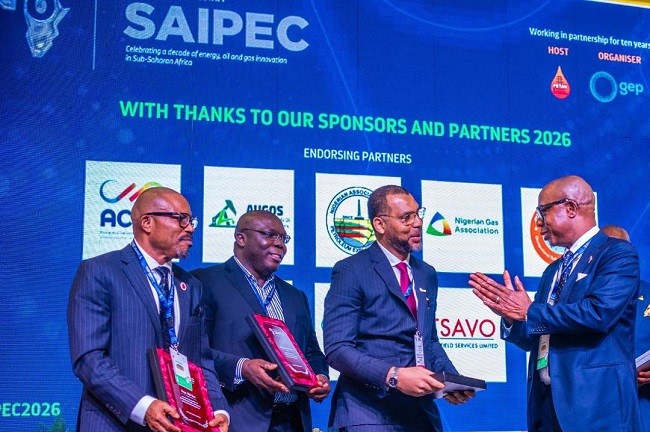
Renaissance
L-R: Chief Executive Officer, Global Process and Pipelines Limited, Obi Uzu; Chief Operating Officer, Energia Limited, Oladimeji Bashorun; Vice President for Development, Wells and Technology, Renaissance Africa Energy Company Limited, Abdulrahman Mijinyawa; and Chairman, Petroleum Technology Association of Nigeria, Wole Ogunsanya at the Energy CEOs Session of the 2026 Sub-Saharan Africa International Petroleum Exhibition and Conference in Lagos… on Tuesday

“We have a very audacious vision, to be Africa’s leading energy company, enabling energy security and industrialisation in a sustainable manner,” Attah said, adding that the company was “actively working on the path of growth which is fully aligned with Nigeria’s ambition to produce two million barrels of oil per day by 2027 and three million barrels by 2030.

Attah, who was represented by the company’s Vice President, Development, Wells and Technology, Abdulrahman Mijinyawa, highlighted that the acquisition of  all of Shell’s share in the Shell Petroleum Development Company (SPDC), now Renaissance, provided a unique platform to activate the company’s long-term ambition. “Renaissance was born out of a strong conviction that the time is ripe for Africa to define its own energy story,” he said.

On the assumption of the operatorship of the joint venture comprising Nigeria National Petroleum Company Limited (NNPC), Renaissance Africa Energy, TotalEnergies Limited; and Agip Energy and Natural Resources, the Renaissance CEO said the company’s cultural foundation anchored in its core values of collaboration, respect, integrity, safety, and performance has guided the organisation internally and shaped its engagement with stakeholders, communities, regulators, and partners.

Attah described the transition of operatorship to Renaissance as a multidimensional effort centred on a three‑phase philosophy of safely receiving the assets, stabilising them, and then growing them. The company grew the joint ventures oil and gas output by over 40 % in the first 100 days of operatorship of the assets. “The workforce continuity was a major competitive advantage that preserved institutional memory and enabled immediate operational stability from day one,” he said.

He also noted that Renaissance has elevated safety to a core value, embedding IOC‑grade discipline across processes and field execution to protect people, assets, and the environment.

NiMet forecast: Experts urge farmers to adopt irrigated farming

0

Some agriculture experts have urged local farmers to adopt irrigation farming due to the inconsistent rainfall patterns.

The experts made the recommendation in separate interviews on Wednesday, February 11, 2026, in Lagos.

The recommendation was made in line with the recent Nigerian Meteorological Agency’s (NiMet) forecast on the expected rains in some states and the need for farmers to delay the planting season.

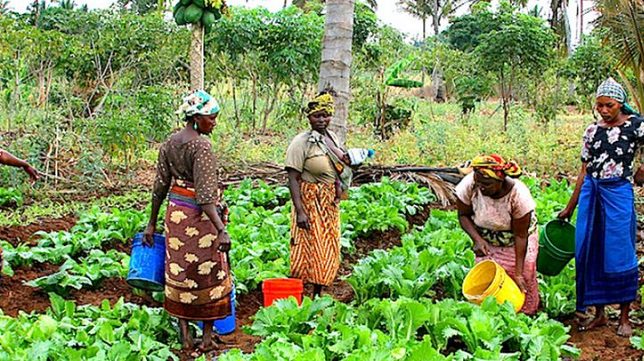
Women farmers
Women farmers

The Chairperson, Nigerian Women in Agriculture, Mrs. Chahul Ngizan, noted that the infrequent rains and changing weather patterns have made local farmers wary.

“We really do not know what to expect with the changing weather patterns. As we all observed, there was no harmattan from last year till January this year.

“And when there is no harmattan, it is difficult for farmers to have a good harvest. We don’t know if we will have enough rainfall this year.

“I would advise all farmers to adhere to the instructions of NiMet or get irrigation systems. It is just that some areas up north rarely have water.

“We just hope to have a great planting season and a good harvest because of the inconsistent weather patterns,” Ngizan said.

On his part, an agriculture analyst and co-founder Corporate Farmers, Mr. Akin Alabi, urged the farmers to invest in irrigation on their farms despite the costs.

“It is hard for us to determine climate condition these days, climate factor and climate change, so we have to play it in a well-balanced format.

“So, we urge farmers to have an irrigation in their farms. It might be expensive but it’s worth it. You can’t predict the weather; that’s the honest truth.

“NiMet will try to give you a forecast, but sometimes that forecast may change because regardless rainfall or not, it is still dependent on the mother nature.

“But as humans we have to just be prepared for whatever weather pattern we see.

“It’s advisable to have some form of irrigation on your farm, it doesn’t have to be expensive. There are other irrigation systems now that make use of solar energy,” Alabi said.

He noted that there are solar energy irrigation systems that use sun to ensure adequate water on the farm.

“Or the farmer can just have a well, just dig a well where you can actually get water. But it’s very important at this time and age that farmers have a standard and a standby irrigation system, whether rain come or not,” the expert said.

By Mercy Omoike

Eyesan urges global investors to seize opportunities in 2025 Licensing Round

0

The Nigerian Upstream Petroleum Regulatory Commission (NUPRC) has urged global investors to capitalise on opportunities in Nigeria’s 2025 licensing round, emphasising that recent reforms under the Petroleum Industry Act 2021 provide a predictable, transparent, and investor-friendly framework for upstream development.

Commission Chief Executive, Mrs. Oritsemeyiwa Eyesan, made this known on Tuesday, February 10, 2026, in her address at the opening of the 10th Anniversary of the Sub-Saharan Africa International Petroleum Exhibition and Conference (SAIPEC) 2026 in Lagos.

According to Eyesan, the licensing round is designed to unlock Nigeria’s upstream potential under a more predictable and investor-friendly regulatory framework established by the Petroleum Industry Act (PIA) 2021.

Oritsemeyiwa Eyesan
Commission Chief Executive, Nigerian Upstream Petroleum Regulatory Commission (NUPRC), Mrs. Oritsemeyiwa Eyesan

The NUPRC boss added that Nigeria is leveraging the momentum of renewed global interest in Africa’s hydrocarbons to attract credible investors into its upstream sector.

“To facilitate resource access, Nigeria has launched the 2025 licensing round, offering 50 oil and gas blocks across various terrains.

“This initiative reflects a targeted approach to responsible resource development. We invite capable investors to participate and help realise Nigeria’s promising upstream potential,” Eyesan stated.

She noted that Africa’s energy investment outlook has significantly improved over the past three years, with the continent now capturing a larger slice of global capital expenditure.

“Of the $520 billion projected in worldwide capital investment this year, Africa expects to attract between $48 billion and $50 billion. over 8% of the total. This is a significant increase from previous years when it was below 4%.”

The NUPRC boss attributed the resurgence to renewed investor interest in frontier and established basins, particularly in Nigeria, Namibia, Mozambique and other prolific African plays.

Beyond foreign investment, Eyesan stressed the importance of domestic and regional capital formation as a stabilising force for Africa’s energy future.

“As we work to draw in more external investment, encouraging capital formation within Africa remains essential. Domestic capital brings stronger commitment and stability, creating more opportunities for development,” the CCE said.

Eyesan noted that African independent operators are already playing a growing role in Nigeria’s upstream space, driving project execution and capital deployment.

A major milestone in strengthening indigenous financing, according to Eyesan, is the establishment of the Africa Energy Bank, which is headquartered in Nigeria.

“The creation of the Africa Energy Bank, proudly hosted in Nigeria, is a milestone,” she said, adding, “Unified support from stakeholders will be crucial to its success.”

The NUPRC boss also highlighted the growing impact of regional cooperation, particularly in gas development, power infrastructure and regulatory alignment.

“Beyond national efforts, regional cooperation is having a transformative effect,” she said, pointing to expanded gas and power infrastructure that is improving energy access, reliability and affordability across Africa.

She added that platforms such as the African Petroleum Regulators’ Forum (AFRIPERF) are strengthening Africa’s collective voice globally.

Book dispels five misconceptions about carbon pricing

0

Gradually increasing the price of fossil fuels is considered a key element of effective climate policy – and yet it remains the subject of bitter controversy.

In a new book, experts from the Potsdam Institute for Climate Impact Research (PIK) explain this concept and correct false perceptions. The publication is aimed at professionals and laypeople who want to gain a thorough understanding of the topic.

“We want to build bridges between the camps,” says PIK Director Ottmar Edenhofer, who co-authored the book with political scientist Cecilia Kilimann and economist Christopher Leisinger from his scientific staff.

Carbon pricing
Carbon pricing

“We address the objections of those who, like us, want strong climate policy, but equate carbon pricing with blind faith in the market and the abandonment of government regulation. The finding of climate economics is that this is a misunderstanding. For pricing to reduce CO₂ emissions efficiently and without collateral damage, comprehensive government capacities and accompanying measures are needed.”

The publication presents the latest research findings from renowned journals, including several highly acclaimed articles by PIK and the Mercator Research Institute on Global Commons and Climate Change (MCC), which has been part of PIK since the beginning of 2025. Presented in an easy-to-understand format, the book corrects five popular misconceptions about carbon pricing as a core instrument of climate policy:

Misconception 1

“No steering effect”. Fuel is becoming more and more expensive, yet people are not driving less – observations like this make many people doubt the efficacy of the carbon price. But the research team provides a different perspective: that this rather suggests a need for complementary measures such as bans, standards and subsidies – which are most effective in combination with carbon prices.

They explain simply but scientifically how pricing environmental damage pushes “dirty” products, such as coal-fired power plants, out of the market and promotes “clean” products. The analysis also looks at individual motivations: when well designed, market control is also well suited to ethically motivated climate protection.

Misconception 2

“Politically unfeasible”. The numbers prove the opposite. Worldwide, 28 percent of all CO₂ emissions are now directly priced – and in the EU, this figure will rise to 75 percent in 2028 when a second emissions trading system is launched for transport and buildings. The book shows that more and more countries, including large emerging economies, are relying on this instrument. Its success is based on its flexibility: it can be designed as a tax, as emissions trading, or as a hybrid system and thus adapted to political requirements.

Misconception 3

“Socially unjust”. Indeed, according to empirical findings cited by the research team, carbon pricing without social compensation can place a disproportionate burden on poorer households. However, this also applies to climate policy through standards or bans – and carbon pricing has the advantage of generating revenue that can be used to counteract this. Four variants of compensation are presented: a per capita flat rate, innovative climate money for buildings, a reduction in electricity costs and hardship compensation.

Misconception 4

“Obsolete model”. Why go to the trouble of establishing a pricing system when there will be nothing left to price in the climate-neutral world we are striving for? The book counters this objection with a special section on atmospheric carbon removals. These are necessary to achieve the net-zero target while there are still residual emissions that are difficult to avoid.

Later on, they can even offset exceeding the 1.5°C limit for global warming through net negative emissions. Carbon pricing can therefore help balance supply and demand for remaining emissions and removals for many decades to come, thereby creating a financing system and providing incentives for investment.

Misconception 5

“Only possible with a world government”. Does carbon pricing only make sense if everyone participates? Readers learn why a globally uniform price would not be a sensible goal – and how pricing, even if patchy and regionally fragmented, can help the climate. In this context, the international competitiveness of industry and its jobs are also discussed in detail.

The research team presents effective mechanisms that can prevent so-called carbon leakage resulting from the relocation of production. These mechanisms could even serve as a driver for increased international cooperation in the future.

“The EU’s climate tariff system, which will come into effect at the beginning of 2026, will make carbon pricing even more important internationally,” concludes PIK Director Edenhofer. “In times of increasing geopolitical tensions, this will also become relevant to security policy because it will ultimately reduce the oil and gas revenues of authoritarian states such as Russia. The career of carbon pricing has only just begun. This book explains why that is a good thing.”

Concern as US set to repeal conclusion that greenhouse gases warm the planet, threaten health

0

The White House has announced that the US Environmental and Protection Agency (EPA) will on Thursday, February 12, 2026, repeal the “endangerment finding,” a scientific conclusion that greenhouse gases are dangerous to public health and welfare.

The endangerment finding, enacted in 2009, was based on peer-reviewed scientific evidence and required the federal government to regulate emissions from burning oil, coal and gas. 

White House press secretary, Karoline Leavitt, called the EPA endangerment finding’s repeal “the largest deregulatory action in American history” and claims that it will “save the American people $1.3 trillion in crushing regulations.”

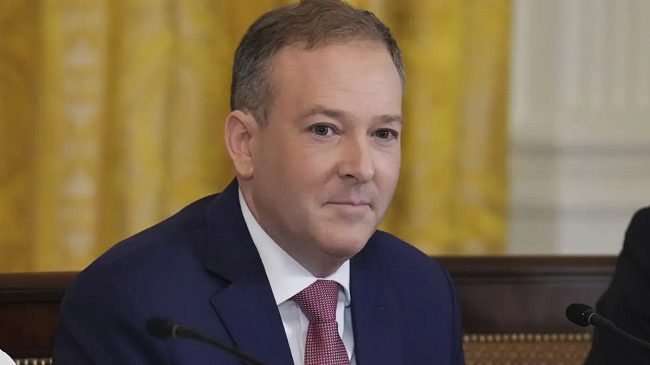
Lee Zeldin
Lee Zeldin, Administrator, U.S. Environmental Protection Agency (EPA)

“President Trump will be joined by Administrator Lee Zeldin to formalise the rescission of the 2009 Obama-era endangerment finding,” Leavitt said in a briefing on Tuesday, February 10. “This will be the largest deregulatory action in American history, and it will save the American people $1.3 trillion in crushing regulations.”

Known as the endangerment finding, the EPA’s 2009 decision says that greenhouse gases like carbon dioxide and methane are heating the Earth and that warming threatens public health and welfare. It therefore functions, under the Clean Air Act, as the lynchpin for rules that set emissions standards for cars and trucks and require fossil fuel companies to report their emissions, among others.

The move is expected to upend most U.S. policies aimed at reducing climate pollution – if the repeal can withstand court challenges from environmental groups, which had already been preparing to sue.

The text of the rule repealing the finding has not yet been released, so many details are still unknown.

Rescinding the endangerment finding would almost certainly face legal challenges from environmental groups, and it could be legally tenuous. The endangerment finding has been upheld in court. In 2007, a Supreme Court decision, Massachusetts v. EPA, cleared the way for the finding to be made. The high court declined to hear an appeal challenging the endangerment finding as recently as 2023.

The planned revocation met swift backlash on Capitol Hill from Democrats.

“Let’s be very clear what this announcement represents: it is a corrupt giveaway to Big Oil, plain and simple,” Senate Minority Leader Chuck Schumer, D-N.Y., said on Tuesday on the Senate floor. “The blast radius of this reckless decision will span from San Diego to Portland, Maine and from Seattle to Miami.”

The status quo has supporters in industry as well.

Elon Musk’s electric vehicle company Tesla urged the administration to uphold the endangerment finding in a September letter to the EPA.

“The Endangerment Finding – and the vehicle emissions standards which flow from it – have provided a stable regulatory platform for Tesla’s extensive investments in product development and production,” Tesla wrote. “Reversing the Endangerment Finding would also deprive consumers of choice and extensive economic benefits, have negative effects on human health, and further impact the integrated North American automotive sector.”

Also, 350.org said that the claimed savings ignore the far greater costs of unchecked climate pollution, pointing out that the long-term social costs of emissions from US companies are estimated to reach $87 trillion. 

Anne Jellema, 350.org Executive Director, said: “This isn’t about saving taxpayers’ money, it’s about saving an industry that has already been exposed as a permanent danger to American families.

“Climate denialism will bleed the people dry. While the Trump administration can manipulate scientific agencies, it can never suppress the truth that ordinary people in the US and around the world are paying the real price for Big Oil’s profits: lives are being lost, homes are being destroyed and costs are soaring.

“By giving Big Oil a license to pollute even more, the EPA is defying international law and piling more damage on communities in the US and around the world. But this extraordinary move will only strengthen global demands to make climate polluters pay.”

UNESCO, Onewater announce winners of Global Walk of Water Photography contest

From spiritual rituals to the struggle for survival, a global photography contest lays bare the intimate connection between water and human identity.

Organised by UNESCO’s World Water Assessment Programme and Onewater, the competition selected winners from a pool of nearly 1,000 stories spanning 114 countries. The Identities theme serves as a visual prelude to the UN World Water Day 2026 focus on Water and Gender.

The competition awarded over €10,000 in prizes, supported by the Asian Development Bank, WEX, Calumet, the Global Environment Facility’s IW:Learn Platform, and WasserStiftung.

Kristina Steiner
Two of the main protagonists in Kristina Steiner’s winning story: Stefaan rides his horse, Dina, to catch shrimp in the summer waters of the North Sea

German photographer, Kristina Steiner, won the first prize for documenting Belgium’s last horse shrimpers. The youth award goes to Gastón Zilberman, for his story on the Qotzuñi people and the disappearance of Bolivia’s second largest lake.

Regional winners include Giacomo d’Orlando whose story highlights the Agta peoples’ fight to save the last of the Philippine Crocodile and Abyan Madani from Indonesia who documented the indispensable Blue Troops of Jakarta. 

A Global Mosaic

The submissions offer a sharp look at the role of water in everyday life with images ranging from sea rescue operations and the devastating reality of Amazonian droughts to the quiet traditions of salt extraction in Viet Nam and the remarkable Haenyo (sea women) of Jeju Island. The full gallery of winning stories can be viewed online at: https://onewater.blue/contest/identities

Exhibition and Media

The best stories will embark on a global traveling exhibition throughout 2026, following previous showcases at the UNESCO Headquarters in Paris and the UN Headquarters in New York. Institutions interested in hosting the exhibition may apply until May 30, 2026.

Key Statistics:

  1. 8,311 Images submitted
  2. 968 Photo series
  3. 796 Photographers
  4. 114 Countries represented
  5. 37% Female participants / 63% Male participants.

NNPC reaffirms commitment to indigenous capacity and gas-led growth

0

The Group Managing Director of NNPC Ltd., Mr. Bayo Ojulari, has reaffirmed the company’s commitment to strengthening partnerships, building indigenous capacity, and promoting gas as a key driver of Africa’s industrialisation.

Ojulari gave the assurance on Tuesday, February 10, in Lagos at the 10th Sub-Saharan Africa International Petroleum Exhibition and Conference (SAIPEC 2026).

The conference, with the theme, “A Decade of Driving Africa’s Energy Future,” marks a decade of convening energy stakeholders across the continent.

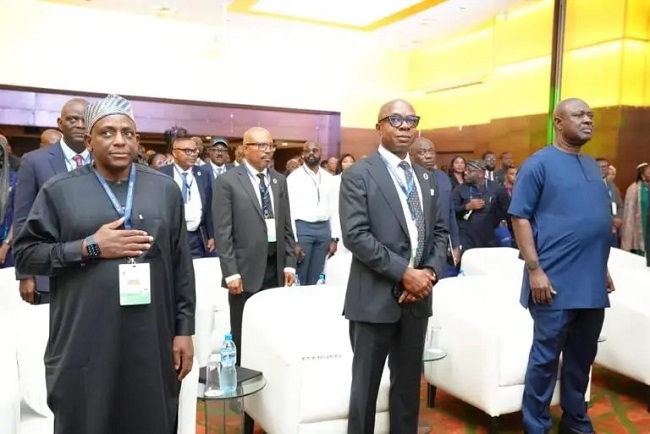
SAIPEC 2026
Delegates at the 10th Sub-Saharan Africa International Petroleum Exhibition and Conference (SAIPEC 2026) in Lagos

According to him, NNPC Ltd is focused on ensuring that Africa’s energy narrative is defined by creation, responsibility, and opportunity, with indigenous participation positioned at the heart of sustainable growth.

“NNPC Ltd remains committed to playing its part in strengthening partnerships, supporting indigenous capacity, and advancing gas as a catalyst for industrialisation,” Ojulari said.

He commended the organisers of SAIPEC for their vision and consistency, noting that the conference had evolved within a decade into one of Africa’s most respected energy platforms.

“In just 10 years, SAIPEC has grown beyond the confines of a conference,” he said.

“It has become a powerful statement of African capability and clear proof that our continent can convene, collaborate, and compete at the highest global standards.”

Ojulari said NNPC Ltd was proud to be a strategic partner of SAIPEC, describing the partnership as a reflection of a shared conviction that Africa’s energy future must be shaped by Africans.

“This partnership is anchored on strong institutions, credible policies, capable indigenous companies, and collaborations that deliver real value,” he said.

He expressed confidence that SAIPEC 2026 would be ambitious and impactful.

He noted that discussions on gas development, investment resilience, local content inclusion, and youth development directly addressed Africa’s energy realities, saying, “these are not abstract debates.”

“They reflect confidence in Nigeria’s capability, belief in Africa’s potential, and ambition without apology.

He added that Africa must move beyond being a follower in global energy conversations and assert itself as a credible leader.

“It should speak to an Africa that is no longer a content follower, but a real and reliable leader,” he said.

As the conference marks its 10th edition, Ojulari urged stakeholders to use the milestone to renew their collective commitment to Africa’s energy future.

“As we celebrate and look ahead, I encourage all stakeholders to recommit to the future we must build together,” he said.

Also speaking, Mr. Felix Ogbe, Executive Secretary of the Nigerian Content Development and Monitoring Board (NCDMB), called for deeper continental collaboration as the foundation for building a resilient and competitive African energy sector.

Ogbe made the call in his keynote address, delivered on his behalf by Dr Abdulmalik Halilu, Director of Corporate Services, NCDMB.

“At the continental level, our drive for Africa must be anchored on collaboration,” Ogbe said.

“We must collectively leverage the Brazzaville Accord to promote regulatory harmonisation, sectoral cooperation, and an Afro-centric approach to local content development.

He said aligning regulatory frameworks and reducing bureaucratic bottlenecks would enhance the competitiveness and economic viability of African energy projects, positioning the continent to attract global investment.

Ogbe described the establishment of the Africa Energy Bank, under the African Petroleum Producers’ Organisation in partnership with Afreximbank, as a strategic milestone.

“The bank is designed to mobilise capital for African energy projects, provide access to affordable financing, strengthen industry players, and build capacity across the continent,” he said.

He urged governments, regulators, investors, and industry leaders to support the bank’s successful take-off.

He stressed that access to finance remained critical to unlocking sustainable growth.

“The path forward for Africa’s energy sector requires collaboration and a shared vision,” Ogbe said.

In his welcome address, the Chairman of the Petroleum Technology Association of Nigeria (PETAN), Mr. Wole Ogunsanya, said that in spite of the evolving global energy transition, Africa’s most urgent challenge remained energy access, affordability, and reliability.

According to him, more than 600 million Africans still lack access to electricity, while industrial growth continues to be constrained by persistent energy deficits.

“For Africa, energy transition is not about abandoning hydrocarbons,” he said.

“It is about leveraging our resources responsibly to drive development, while gradually integrating cleaner and renewable solutions.”

He described the rise of indigenous capacity across Africa’s energy value chain as one of the most profound achievements of the past decade.

He cited Nigeria’s success with deliberate local content policies.

“In Nigeria, indigenous companies now lead in drilling and well services, engineering, fabrication and construction, as well as asset acquisition and field development,” Ogunsanya said.

He noted that PETAN members had evolved from service providers into strategic partners, delivering complex energy projects to international standards.

“A decade ago, we set out to drive Africa’s energy future,” he said.

“Today, we are not at the end of that journey, but at the beginning of a far more ambitious chapter.”

Ogunsanya said SAIPEC was conceived ten years ago as more than an industry event.

“It was envisioned as a movement to amplify African capabilities, encourage collaboration, and redefine Africa’s role in the global energy landscape,” he said.

According to him, the platform has driven strategic dialogue on policy and investment, elevated indigenous participation, connected African service companies to global opportunities, and translated conversations into real projects.

Looking ahead, Ogunsanya stressed that Africa’s energy future must be defined by Africans, for Africans, and driven by investment and execution.

“Africa needs capital, and capital needs confidence,” he said, noting that investor confidence was built on regulatory clarity, stability, transparent processes, competitive fiscal frameworks, and bankable projects.

He urged stakeholders to embrace digitalisation, automation, data-driven operations, and low-carbon solutions to enhance efficiency, safety, and sustainability.

“As we mark this 10th edition of SAIPEC, let us recommit to moving from dialogue to delivery,” Ogunsanya said.

He added that PETAN would continue to accelerate gas development and infrastructure expansion, deepen local content utilisation, create jobs, transfer skills, and position Africa as a competitive and reliable energy destination.

“SAIPEC must remain a platform where ideas become investments and conversations translate into projects,” he said.

By Yunus Yusuf

Makoko demolition: Lagos Assembly, residents support proposed water city project

0

The Lagos State House of Assembly and the representative of affected waterfront communities have backed the state government’s proposed water city project of the demolished areas.

This formed part of a five-point agreement reached on Tuesday, February 10, 2026, during a stakeholders’ meeting held at the House of Assembly complex in Alausa, Ikeja.

The waterfront communities affected by the demolition are Makoko, Sogunro and Oko Agbon in Lagos State.

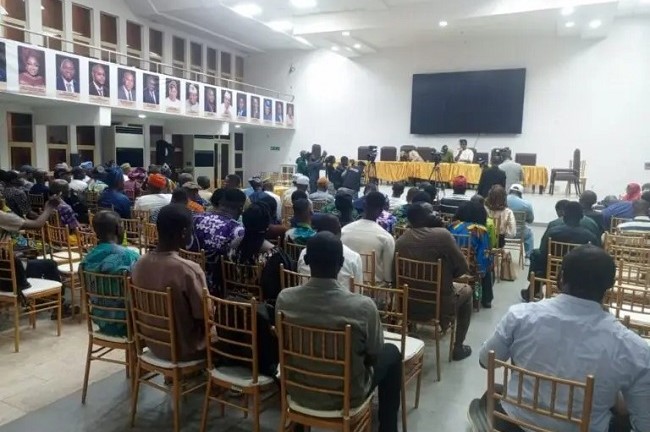
Makoko
Participants at the stakeholders’ meeting held at the House of Assembly complex in Alausa, Ikeja

Speaking to newsmen, the Chairman, Adhoc Committee on Rules and Business, Mr. Noheem Adams, said the proposed project by the state government was intended to benefit the affected residents.

Adams, who is also the House Majority Leader, said the state government would constitute a 10-man committee to conduct a self-enumeration of affected buildings.

The majority leader said the committee was expected to complete the enumeration exercise and submit its report within two weeks to the Adhoc Committee on Rules and Business.

Adams called for transparency in the self-enumeration process, noting that data provided by the community would be cross-checked with government records.

He directed Makoko stakeholders to submit the list of the proposed 10-man committee to the House upon its constitution.

Speaking to journalists, the Baale of Sogunro Community, Chief Abraham Mesu, commended the intervention of the Lagos State House of Assembly on the matter.

Mesu described the proposed Water City project as a landmark initiative capable of improving living standards and ensuring that residents remain the primary beneficiaries.

He, however, expressed concern over the impact of the demolitions but affirmed the community’s willingness to collaborate with the state government.

Also speaking, the Baale of Makoko Waterfront, Chief Emmanuel Shemade, said community leaders had resolved not to rebuild demolished structures until further notice.

Shemade said he was satisfied with the agreement reached at the meeting on the regeneration of Makoko communities without displacing residents.

He further commended the commitment of the state government to provide an aerial photograph clearly showing demolition boundaries within one month.

Earlier, Dr Olajide Babatunde, Special Adviser to Gov. Babajide Sanwo-Olu on Geographic Information Service (GIS), said the state government had concluded plans for the Water City project as part of efforts to regenerate the area.

Babatunde said the governor was concerned about overcrowding and poor living conditions in the communities and assured that affected residents would be adequately compensated.

By Adekunle Williams

Dangote cuts petrol price by N25 per litre

0

Dangote Petroleum Refinery has reduced the gantry price of Premium Motor Spirit (PMS) (or petrol) by N25 per litre, lowering its ex-depot/gantry rate from N799 to N774 per litre.

The refinery communicated the price adjustment to marketers on Tuesday, February 10, 2026, confirming that the new rate takes immediate effect nationwide.

Fuel subsidy removal
Petrol sale

“This is to notify you of a change in our PMS gantry price from N799 per litre to N774 per litre,” noted the refinery.

The adjustment further strengthens the competitiveness of locally refined products, as the current landing price of imported PMS from Lome stands at about N793 per litre, compared to Dangote Refinery’s ex depot price of N774 per litre.