Thursday, January 15, 2026, marks five years since Heirs Energies assumed operatorship of OML 17, taking responsibility for one of Nigeria’s most complex brownfield assets and committing to steward it with discipline, resilience, and long-term intent.
According to the organisation, the milestone is not defined by the passage of time, but by what has been delivered.
“Heirs Energies was built on a clear conviction: that African capital, leadership, and expertise can responsibly operate strategic energy assets, deliver performance, and contribute meaningfully to national development. Over the past five years, that conviction has been tested-and proven-through execution,” submitted the organisation.
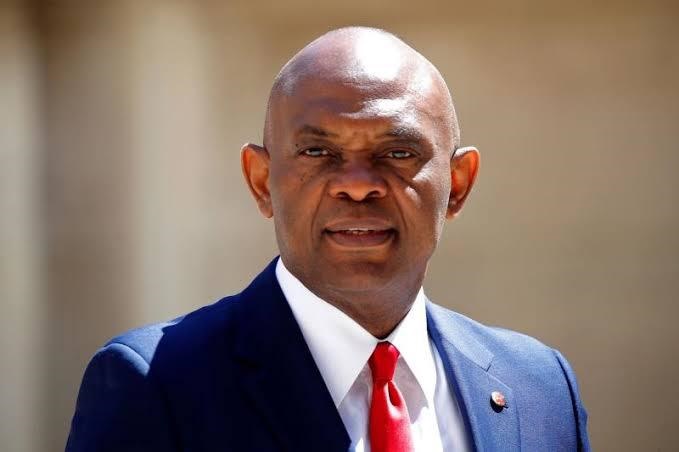
Chairman of Heirs Energies, Tony O. Elumelu
Below is a snapshot of some of the milestones that defined its first five years:
1. Acquisition & Operatorship – Acquired 45% of OML 17 on January 15, 2021, for $1 billion and assumed operatorship ahead of plan on July 1, 2021.
2. Safety Leadership – Operated safely since inception with zero fatalities and no Lost Time Injuries (LTI), underpinned by our proprietary safety culture, “Everyone is a Safety Officer.”
3. Oil Production Growth – Sustainably doubled oil production from less than 25 kbopd to over 50 kbopd, supporting Nigeria’s energy security.
4. Gas Growth & Power Impact – Doubled gas production from under 50 MMSCF/d to over 120 MMSCF/d, tripling gas supplied into the domestic market from 30MMSCF/d to over 100 MMSCF/d and enabling electricity generation to grow from less than100 MW to over 325 MW.
5. Brownfield Excellence – Achieved growth without drilling new wells or building new facilities, through rigorous restoration of legacy assets using our proprietary Brownfield Excellence methodology, including the reactivation of approximately 100 dormant wells and sustained operation of 65-year-old pumps at over 85% uptime.
6. Crude Theft Response – Catalysed a country-level response to crude oil theft, contributing to a dramatic recovery in terminal delivery from as low as 3% in December 2021 to over 95% since 2025.
7. Cost & Performance Leadership – Ranked among operators in Nigeria as delivering the highest oil production increase between 2020–2024, while remaining one of the top three lowest-cost operators.
8. Financial Discipline & Credibility – Established a strong track record with local, regional, and global lenders, fulfilling all lending obligations without fail, culminating in a US$750 million refinancing with Afreximbank.
9. Strategic Expansion – Acquired a 20% equity stake in Seplat Energy Limited at the end of 2025, becoming the company’s largest single shareholder.
10. People & Capability – Built a 100% Nigerian workforce with top-quartile capability and culture, combining experienced professionals with a new generation of talent delivering industry-leading outcomes.
These outcomes, according to Heirs Energies, were achieved through “disciplined execution, strong partnerships with government and regulators, the confidence and support of our financiers, deep engagement with host communities, and the unwavering commitment of our people”.
It added: “This journey reflects the long-term vision of our Chairman, Tony O. Elumelu, CFR, and stands as a practical demonstration of Africapitalism in action – where African enterprises deliver economic value, social impact, and national development in parallel.
‘We are grateful to our partners, regulators, host communities, lenders, and stakeholders who believed in the journey and stayed the course.
“As we mark Heirs Energies @ Five, we do so with pride and humility – but also with clarity of purpose. We are not looking back in celebration alone. We are focused on the future.”
As U.S. President Donald Trump met with the Venezuelan opposition leader and Nobel prize winner, María Corina Machado, on Thursday, January 15, 2026, in Washington DC, new analysis by 350.org and Zero Carbon Analytics finds that 68% of global oil production is impacted by U.S. aspirations to dominate the world’s oil and gas markets.
Machado’s visit comes as doubts persist over the U.S. administration’s appeal for companies to invest in Venezuela which holds 20% of the world’s crude oil reserves. Since its intervention in Venezuela the U.S. has made explicit threats of force against other resource-rich countries.
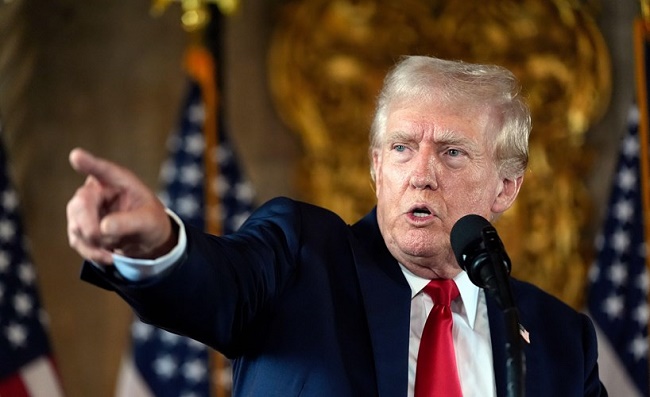
Donald Trump
The Trump administration’s latest National Security Strategy, which outlines U.S. intentions to expand its sphere of influence across politics, economics and the military, is being dubbed the “Donroe Doctrine,” a reference to the foreign policy approach that echoes the 1823 Monroe Doctrine by asserting U.S. pre-eminence across the Western Hemisphere. While the original Monroe Doctrine opposed European intervention in the region, it was historically used to justify extensive U.S. political and military interference throughout Latin America and the Caribbean.
Andreas Sieber, Head of Political Strategy, 350.org: “Dependence on oil has never made us more vulnerable and unsafe. More than two out of every three gallons of oil on the global market now come from countries where the Trump government either projects ruthless influence or threatens to do so. Fossil fuel dependence has become a security risk, exposing countries and consumers to sudden price spikes, supply disruptions, and conflict-driven instability. Every escalation, sanction, or threat of force ripples through global markets, hitting households with higher bills and governments with economic shocks they cannot control.
“High energy bills, economic shocks, and political instability aren’t accidents. They’re the predictable result of letting a few actors dominate a system everyone depends on. The real alternative is obvious: an energy system that no dictator or superpower can switch off – renewable, local, and controlled by people, not polluters. Just renewable energy systems do not require military protection, do not destabilise regions, and do not trigger geopolitical conflict.”
Data snapshot:
68% of global production oil is controlled by countries in the U.S. sphere of influence
81% of global oil reserves are controlled by countries in the U.S. sphere of influence
53% of global gas production comes from countries in the U.S. sphere of influence
52% of global proved gas reserves are controlled by countries in the U.S. sphere of influence
Under this strategy, the countries of North, Central, and South America are explicitly framed as falling within the United States’ sphere of influence. The stated aim is to reassert U.S. dominance across the hemisphere, reshaping political, economic, and security relationships in the process.
Fossil fuel influence
Taken together, 79% of global oil production is either within the U.S. sphere of influence or controlled by Russia, highlighting the structural volatility and insecurity baked into today’s oil markets. Over the past year, the U.S. administration has bombed or militarily intervened in Venezuela, Iran and Iraq, while issuing explicit threats of force against multiple other countries and territories, including Canada, Colombia, Greenland and Mexico.
Across the Americas, many of the countries that Trump has threatened may not be under direct U.S. control but are widely regarded as falling within Washington’s strategic sphere of influence – a reality that carries significant political and market risk.
Even oil producers not subject to direct U.S. threats are deeply embedded in U.S. military and financial systems, as illustrated by long-standing U.S.–Saudi security cooperation and the financial and defense integration of the United Arab Emirates. In practice, this reinforces U.S. leverage over global oil supply without the need for direct military action.
Bridget Woodman, Head of Politics and Finance, Zero Carbon Analytics, said: “This analysis exposes how control over fossil fuels is consolidating into increasingly rival blocs, which can only have negative implications for global security and costs of oil and gas supply. It is a clear alarm call for those countries that continue to prioritise volatile fossil fuels over stable, domestic renewable energy.”
According to the International Energy Agency, global renewable power capacity is expected to expand by nearly 4,600 gigawatts between 2025 and 2030, double the growth of the previous five years. Wind, solar, battery storage, and electrification are not only climate solutions; they are long-term security strategies. These trends underscore the urgent need to reduce dependence on fossil fuels and accelerate a just transition to renewable energy systems that are more resilient, democratic, and secure.
The Philippine Healthcare and Mercury Wastes Management (HCWM) Project concluded a three-day national workshop on Thursday, January 15, 2026, stepping up efforts for toxics-free, zero-waste hospitals.
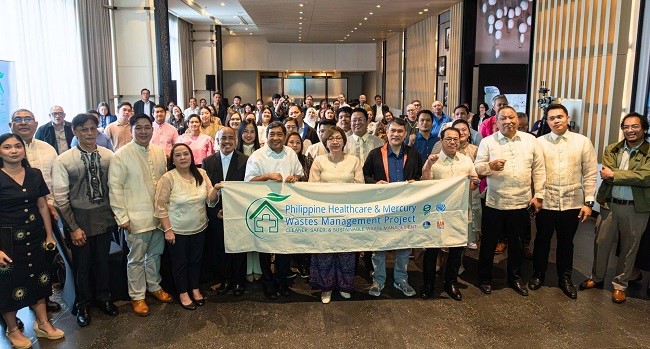
Held from January 13–15, the workshop brought together over 100 participants, including representatives from partner hospitals, national and local government agencies, and civil society organisations.
Launched in December 2023, the HCWM Project aims to improve healthcare waste management in the Philippines. It focuses on reducing the release and emissions of unintentionally produced persistent organic pollutants (uPOPs), such as dioxins and furans, during the treatment of healthcare wastes, and will also ensure the safe handling and disposal of mercury stockpiles in healthcare facilities.
Participants at the Philippine Healthcare and Mercury Wastes Management (HCWM) Project
The five-year project is being implemented by the United Nations Industrial Development Organisation (UNIDO) and the Department of Environment and Natural Resources – Environmental Management Bureau (DENR-EMB), funded by the Global Environment Facility (GEF), and executed in partnership with civil society organisation, BAN Toxics.
Toxics-Free Hospitals
At a press conference during the workshop, the project launched its Toxics-Free Hospitals Campaign. It introduces key project interventions such as improved waste segregation, reduction of single-use plastics, promotion of reusable face masks and other PPE, adoption of low- or zero-emission waste treatment technologies, and capacity-building on environmentally sound management of infectious and other healthcare wastes.
The launch coincided with the celebration of International Zero Waste Month and the 25th anniversary of Republic Act No. 9003, or the Ecological Solid Waste Management Act, enacted on January 26, 2001, which provides the national framework for integrated solid waste management based on resource conservation and recovery. OIC Assistant Secretary for Environment and EMB Director, Jacqueline A. Caancan, highlighted the importance of building systems that prevent waste generation and embed circularity across sectors.
“Promoting toxics‐free and proper waste initiatives in healthcare facilities and beyond supports sustainable practices, encourages responsible production and consumption, and requires collaboration across government, industry, and communities to protect public health and the environment,” Caancan said.
A highlight of the press conference was the signing of a memorandum of agreement between the DENR-EMB, represented by Caancan, and the Department of Health–Health Facility Development Bureau (DOH-HFDB), represented by its Director, Dr. Melissa Sena. The agreement formalises inter-agency collaboration in the implementation of the project.
As part of the Toxics-Free Hospitals campaign, the project unveiled “Nurse Susie,” a character promoting environmental sustainability in healthcare. She encourages saying no to single-use plastics, adopting reusables, and raising awareness of toxic chemicals in healthcare waste. Nurse Susie serves as a friendly guide for promoting the campaign’s 4Cs framework – Change old habits, Cut plastics, Commit to reuse, and Champion sustainability.
According to Jam Lorenzo, BAN Toxics Deputy Executive Director and the HCWM Project’s manager, cutting plastic use, including single-use plastics, is one of the key interventions to reduce potential sources of toxic chemical emissions from healthcare waste.
“Plastic wastes contain a wide range of chemicals, which, if mismanaged, can leach into air, water, and soil. When burned, they may generate unintentional persistent organic pollutants (uPOPs), such as dioxins and furans, due to their chlorine content,” Lorenzo added.
The World Health Organisation notes that dioxins and furans are highly toxic, persistent pollutants that bioaccumulate in organisms and biomagnify up the food chain, posing long-term risks to human health and the environment. These uPOPs can be formed during the burning or improper treatment of chlorine-containing wastes, including chlorinated plastics and residues from chlorine-based disinfectants used in healthcare settings.
Reuse vs Single-Use
A waste audit report presented during the workshop showed that plastics accounted for over 70 percent of the total waste composition in three partner hospitals of the project. Conducted last year in partnership with Healthcare Without Harm (HCWH) SoutheastAsia, the audit covered Cagayan Valley Medical Center, Eastern Visayas Medical Center, and Quirino Memorial Medical Center as part of efforts to develop a healthcare waste generation calculation tool.
Specifically, plastics made up 77% of total waste at CVMC, 78% at EVMC, and 84% at QMMC. Most of this comes from patient-care and daily-use disposables. Sanitary products, infectious materials like cotton and gauze, and medical textiles such as aprons, masks, and gloves make up over half of total plastic waste. Non-medical items, including foodware and bottles, also add significantly, highlighting how hospital clients, visitors, and the general public contribute to overall plastic waste in healthcare facilities.
“There is a pressing need to explore alternative materials and reusable systems that maintain infection control standards while reducing waste volume. The introduction of reusable PPE, washable medical textiles, and durable patient linens could significantly minimise the dependency on single-use plastics in hospitals,” the HCWH report recommends.
Driving Change
In addition to the waste audit, the workshop presented two technical assessments. The first, led by policy expert Atty. Josiah David Quising, reviewed existing policies and regulations on healthcare waste management, identifying gaps and recommending a sustainable, rights-based regulatory framework.
The second, conducted by waste management expert, Gerardo Mogol, examined current waste handling, treatment, and disposal practices. This assessment provides a foundation for recommending environmentally sound technologies and non-burn treatment methods for healthcare waste, a key intervention of the project.
The workshop also welcomed three new partner hospitals from Mindanao – Caraga Regional Hospital, Northern Mindanao Medical Center, and Southern Philippines Medical Center = bringing the project’s total to six partner hospitals across six regions in the country.
“Moving forward, we are confident that with the previous year’s project outputs, we are well on our way to strengthening the country’s healthcare waste management systems, as intended by the project. It will be a clear demonstration of how efforts toward inclusive and sustainable industrial development can help value chains maximize the health-environment nexus and decouple environmental degradation from economic growth toward sustainable prosperity.” said UNIDO Country Representative, Teddy Monroy.
Monroy underscored that the project strongly contributes to UNIDO’s Country Programme in the Philippines and advances the Sustainable Development Goals, particularly SDG 3 on good health and well-being, SDG 6 on clean water and sanitation, SDG 12 on responsible consumption and production, and SDG 9 on industry, innovation, and infrastructure.
“Through the continuing collaboration of government, the health sector, civil society, and communities, we will drive change toward cleaner, safer, and sustainable healthcare waste management systems.”
Gov Monday Okpebholo of Edo has inaugurated 100 Edo State Environmental Compliance Corps (EECC) to boost environmental protection in the state.
Inaugurating the Corps on Wednesday, January 14, 2026, in Benin, the state capital, Okpbeholo urged them to serve with courage, integrity, and a deep sense of purpose.
The governor who was represented by his Commissioner for Finance, Mr. Emmanuel Okoebor, reaffirmed his administration’s commitment to environmental protection, public health, and responsible governance.
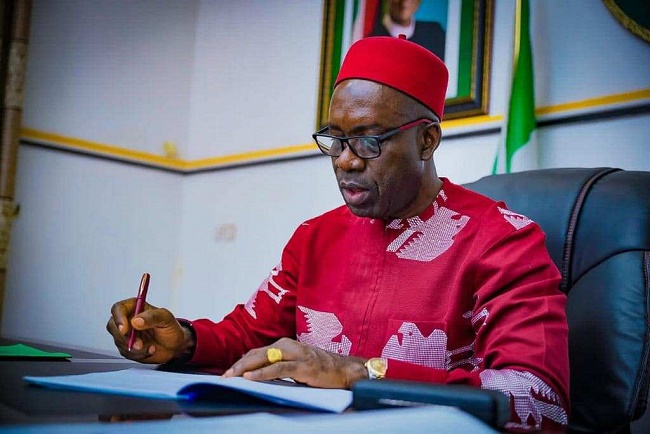
Gov. Monday Okpebholo of Edo State
The governor urged their actions to inspire compliance and to earn respect and commitment, in order to strengthen public trust.
The Governor called on the corps members to discharge their responsibilities with professionalism, discipline, and respect for the law while working closely with communities to promote environmental compliance and awareness.
“The inauguration of EECC today reaffirms this administration’s commitment to environmental protection, public health, and responsible governance.
“A clean environment is not only a social necessity but also an economic imperative that supports productivity, investments, and overall well-being.
“You are expected to carry out your duties with professionalism, discipline, and respect for the law while working closely with communities to promote environmental compliance and awareness,” he said.
On his part, the Commissioner for Environment and Sustainability, Mr. Nosa Adams, said that the 100 personnel were the first batch of EECC, who were selected through credible means.
He said that they have been engaged in intense four-day training, to enforce compliance with the Edo Environmental Waste Management and Pollution Law.
He noted that the law, which was recently signed by Gov Okpebholo, is holistic as it covers everything that has to do with the environment and ecosystem.
“It’s our conviction that if the law is fully implemented, we would have a healthier, cleaner, and greener environment,” he said.
The Commission Chief Executive, Nigerian Upstream Petroleum Regulatory Commission (NUPRC), Mrs. Oritsemeyiwa Eyesan, has unveiled her vision for the country’s upstream sector.
This transformative vision rests on three pillars: Production optimization and revenue expansion; regulatory predictability and speed; and safe, governed and sustainable operations.
She said this aligns with President Bola Ahmed Tinubu’s renewed hope agenda and his plan to hit a production target of 2mmbopd by 2027 and 3mmbopd by 2030.
The NUPRC boss unveiled her agenda on Wednesday, January 14, 2026, at a stakeholder meeting in Lagos.
The meeting was attended by members of the Oil Producers Trade Section (OPTS), the Independent Petroleum Producers Group (IPPG), emerging players and other major stakeholders in the oil and gas industry.
The NUPRC boss plans on increasing production and revenue expansion through the recovery of shut-in volumes with economic value, arresting decline, reducing losses, and accelerating time-to-first oil – without increasing burdens or transaction cost.
This, she said, had already begun by recently “turning on the light” in a long shut-in asset.
According to Mrs. Eyesan’s plan, regulatory predictability and speed can be achieved by running regulation like a service, enforcing rules transparently and making quick time-bound decisions.
The new NUPRC boss plans to strengthen governance, process safety, host community outcomes, and encourage decarbonisation through safe, governed and sustainable operations.
“Going forward, the Commission will be measured on the following key success metrics -Faster, predictable regulatory approvals, higher, more secure and sustainable production, credible licensing and disciplined acreage performance, world-class HSE (Health, Safety and Environment) and process safety outcomes, trusted measurement, transparency, governance and data integrity,” she said.
Mrs. Eyesan promised that under her leadership, the NUPRC will enhance regulatory efficiency and predictability by publishing Service Level Agreements (SLAs) for all major approvals.
The timeline to production will be reduced through proactive discussions regarding all necessary approvals, implementation of stage-gate processes, and mutual agreement on timelines with the commission, she stated.
“Stakeholders are encouraged to submit their projects for consideration. For matured opportunities, please submit your request latest end of Q1, 2026. This would provide a simplified and holistic framework that creates obligations for both operators and the Commission,” the CCE said.
The Commission will launch a digital workflow for permitting, reporting and data submissions, she stated, adding that the NUPRC will work with the industry to identify capacity gaps and develop tiered intervention in the most critical areas with immediate impact on regulatory efficiency “while we harmonise our own internal processes to eliminate conflicting regulatory actions and reduce friction.”
She revealed that the NUPRC’s internal transformation programme through a project Management office is in flight and “I will provide more details on this in the coming days.”
The NUPRC boss also convened a “CCE–Operators Leadership Forum for monthly engagement”.
The participants will include all operators (including NNPC), OPTS, IPPG, and emerging players.
The meeting, she said, will be focused on approval timelines, production restoration, infrastructure integrity, and gas monetisation and development.
This is expected to enable the NUPRC to identify systemic bottlenecks and provide greater predictability.
Mrs. Eyesan also stressed the need to improve hydrocarbon accounting and measurement by tracking every barrel produced and promptly addressing discrepancies or losses.
On host community, the NUPRC encouraged all operators to liaise with the commission “as we plan first engagement with host community leaders to reaffirm commitment to HCDT (Host Community Development Trust) implementation.
She also said one of her key goals is to ensure 100% to the Petroleum Industry Act within 12 months. This, she said, will be monitored with a dedicated team situated in her office.
“The commission going forward will issue quarterly progress reports. Let therefore bring all high impact shut in fields for approval.
“On the Commission’s part, a 90-day program to fast track approvals for near-ready FDPs, well interventions, rig mobilisation and other quick-win opportunities have commenced,” the CCE stated.
The Green Climate Fund’s Indigenous Peoples Advisory Group convened its seventh meeting (IPAG-7) from December 16 to 19, 2025. Held at the GCF headquarters in Songdo, Republic of Korea, the four-day meeting brought together IPAG members and the GCF Secretariat to review implementation of the Indigenous Peoples Policy and set strategic priorities for enhancing Indigenous Peoples’ access to climate finance.
IPAG-7 kicked off with welcome remarks by Eleni Kyrou, Head of the Office of Sustainability and Inclusion, followed by the election of Helen Biangalen Magata as its Chair. The meeting adopted an agenda focused on strengthening institutional practice and enhancing access to climate finance for Indigenous Peoples.
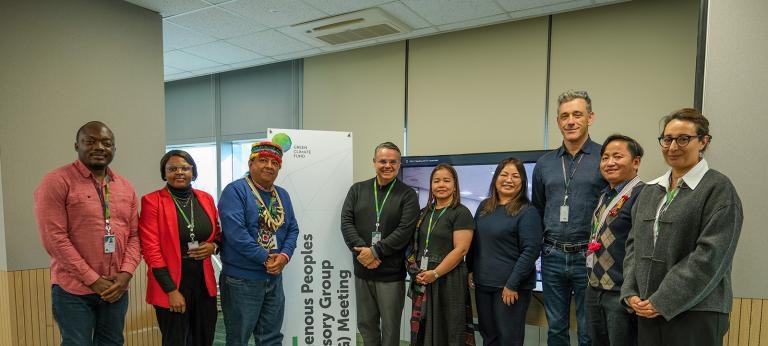
Participants at the GCF IPAF 7 meeting
The discussions focused on several key areas for 2026, which included establishing GCF’s approach on direct access to climate finance for Indigenous Peoples, organising the GCF Global Conference with Indigenous Peoples, and updating the Operational Guidelines of the Indigenous Peoples Policy to incorporate lessons learned to date.
The IPAG and the Secretariat agreed to co-organise and jointly promote the GCF Global Conference with Indigenous Peoples, which will take place in April 2026. The IPAG also welcomed the inclusion of its members in GCF Regional Dialogues and requested participation in GCF’s 2026 Global Planning Meeting.
The IPAG commended the positive impact of the Indigenous Peoples Policy and committed to issuing a brief highlighting these achievements. However, the group emphasised the need for continued institutional support to strengthen the inclusion of Indigenous Peoples in all GCF processes, including Locally Led Climate Action (LLCA) and REDD+, and to advance the development of dedicated modalities to enhance access for Indigenous Peoples’ organisations.
The IPAG welcomed GCF’s new LLCA framework and invited the Secretariat to develop specific guidance for engaging Indigenous Peoples’ organisations. At the same time, it emphasised that all activities of REDD+ and the Tropical Forest Forever Facility must comply with the Indigenous Peoples Policy and recognise non-carbon benefits.
The meeting closed with appreciation from the IPAG to the GCF leadership and Secretariat for their engagement and collaboration.
The outcomes of IPAG-7 chart a clear path for deepening the GCF’s partnership with Indigenous Peoples and integrating their vital knowledge and leadership into the core of climate finance delivery.
The eighth IPAG meeting is scheduled for May 2026 at the GCF headquarters.
As Nigeria’s population continues to grow, estimated by the United Nations Population Fund to reach over 237 million by 2025 – so does the volume of waste generated across the country. With over 32 million tonnes of solid waste produced annually according to the World Bank, the pressure on city authorities and private stakeholders to develop sustainable waste management systems has never been greater.
Among the most transformative responses to this challenge is the Extended Producer Responsibility (EPR) policy, introduced in 2014 through the National Environmental Standards and Regulations Enforcement Agency (NESREA). This policy gave birth to the Food and Beverage Recycling Alliance (FBRA) in 2018, Nigeria’s first Producer Responsibility Organisation (PRO) for the food and beverage sector.
Nestle says it is committed to making 100% of its packaging recyclable or re-usable by 2025 to protect the environment
Since its establishment, FBRA has evolved from a consortium of four founding members into a robust alliance of 42-member organisations by 2025, collectively driving the recovery, recycling, and circular management of post-consumer packaging waste. The Alliance has successfully collected over 100,000 metric tonnes of plastic waste from the environment, redefining waste not as a nuisance but as a resource within Nigeria’s circular economy.
“While FBRA may not be a household name on the streets, its impact is visible in cleaner communities and empowered waste collectors, particularly in Lagos State,” said Victoria Uwadoka, Corporate Communications, Public Affairs and Sustainability Lead at Nestlé Nigeria.
Beyond being one of Nigeria’s largest and most trusted food and beverage companies, Nestlé Nigeria has taken a bold leadership role in environmental sustainability and waste management. The company’s approach goes beyond people and profit, it embraces planet stewardship as a core business principle.
Nestlé Nigeria was one of FBRA’s founding members, and over the years has remained one of its most active supporters and advocates.
Victoria Uwadoka explains: “Though as producers we compete commercially, we unite as collaborators when it comes to fulfilling shared environmental responsibilities.”
This collaborative spirit has been the foundation of Nestlé’s pioneering achievements in packaging innovation and waste recovery. In December 2023, the company achieved 100% plastic neutrality, taking back every tonne of plastic it put into the market. This milestone underscores Nestlé’s commitment to ensuring that the volume of packaging material it introduces into the environment is matched by an equivalent amount recovered and recycled.
Furthermore, Nestlé became the first company in Nigeria to incorporate 50% recycled polyethylene terephthalate (rPET) into its Nestlé Pure Life water bottles, fully compliant with the Standards Organisation of Nigeria’s food-grade packaging standards. This initiative reflects not a one-time commitment but a sustained effort toward circularity, a feat many producers have yet to match consistently.
Through FBRA’s framework, Nestlé Nigeria and other producers have been able to galvanise the waste value chain, from collection to transformation, ensuring that plastics are retrieved, recycled, and reintegrated into production cycles. The Alliance’s model demonstrates that when producers, recyclers, collectors, and regulators collaborate, waste becomes wealth.
“The manufacturers do not produce plastics to litter the streets,” Uwadoka explains. “Consumers discard them, but through FBRA’s system, that waste is recovered, creating jobs and value in the process.”
She further emphasised the importance of circularity in Nestlé’s sustainability approach: “Every bottle that is taken out and doesn’t end up in the ocean is one bottle less of a problem. Closing the loop is key, circularity is the destination. It’s not just about collection but ensuring we use, collect, transform, and reuse.”
The FBRA-Nestlé partnership exemplifies how industry-led collaboration can drive real impact in environmental management. Through shared responsibility, continuous investment, and innovation, both organisations are not only addressing Nigeria’s waste challenges but also advancing global sustainability goals.
As Nestlé Nigeria continues to take the lead in closing the loop and FBRA strengthens the bridge between producers and recyclers, the message is clear: building a cleaner, more sustainable Nigeria is a collective effort – and progress is well underway.
Walking into a typical primary healthcare centre in Nigeria, one is often confronted by overworked health workers juggling long queues, limited diagnostic tools and incomplete patient records.
By contrast, in better-equipped facilities, digital platforms powered by Artificial Intelligence (AI) can already analyse symptoms, flag high-risk cases and support clinical decisions within seconds.
This stark disparity captures Nigeria’s evolving relationship with AI in healthcare; a space marked by high expectations, but also deep concerns about readiness, regulation and public trust.
Coordinating Minister of Health and Social Welfare, Dr Muhammad Ali Pate
Health experts say AI has moved beyond the realm of distant innovation to become a practical tool for healthcare delivery in Nigeria.
Its relevance is growing as the country faces an overstretched workforce, a rising disease burden and mounting pressure to achieve Universal Health Coverage (UHC).
In recent months, initiatives such as the launch of AI-enabled healthcare platforms and renewed policy conversations have brought the debate into sharper focus.
While proponents argue that AI could help Nigeria overcome long-standing structural weaknesses, critics warn that weak data systems, poor infrastructure and regulatory gaps may limit its impact, or even cause harm.
Speaking in Abuja at the inauguration of the Koyo Navigate App, an AI-enabled healthcare service platform, the Speaker of the House of Representatives, Mr. Tajudeen Abbas, described AI as a potential equaliser in a health system marked by inequality.
“AI-driven services are not just technological upgrades; they are pathways to better health outcomes, dignity and independence,” Abbas said.
He noted that, globally, AI had proved effective in accelerating diagnostics, supporting early intervention and enabling more personalised care.
Beyond political endorsements, health technology experts say AI is already transforming healthcare delivery worldwide, offering lessons Nigeria could adapt to its own context.
At the Afrihealth Conferences and Exhibitions in Abuja, Dr Kunle Kakanfo, founder of Artificial Intelligence for Social Impact Development (AI4SID), said Nigeria must harness AI to strengthen its fragile health system.
“We are seeing AI used in clinical decision support, with chatbots helping people identify basic symptoms and supporting healthcare workers to determine which conditions require urgent attention,” Kakanfo said.
According to him, AI is also facilitating task-shifting, predictive disease surveillance and more efficient resource planning.
“Given the inefficiencies within our healthcare system, AI can serve as a leapfrog innovation to fast-track efficiency,” he added.
For others, the appeal of AI lies primarily in its ability to stretch Nigeria’s limited human resources.
Mr. Abdulhamid Yahaya, Deputy Director for Global Health Informatics at eHealth Africa, said Nigeria’s low doctor-to-patient ratio made technology indispensable.
“Nigeria is severely overburdened. Community health workers operate with limited tools and resources, yet the patient load is among the highest,” he said.
“So how do you scale? Use AI technology. It helps you to take a simple, effective use case and replicate it thousands, millions of times”.
Similarly, Dr Francis Ohanyido, Director-General of the West African Institute of Public Health, outlined AI as a transformative technology that could redefine work and healthcare delivery if properly understood and managed.
“AI will not take people’s jobs; those who refuse to adapt will lose theirs, AI is here to stay and must be seen as a partner, not a threat,” Ohanyido warned.
He added that a growing AI ecosystem could become a major driver of economic recovery and talent retention if harnessed through innovation, partnerships and sound regulatory frameworks.
“The African AI industry could generate between 13 and 18 billion dollars by 2030.
“If implemented well, Nigeria could lead this growth, attract investment and curb healthcare workforce migration”.
Albeit this optimism, concerns remain substantial.
At the global level, the World Health Organisation (WHO) has warned that although the use of AI in healthcare is accelerating, legal and ethical safeguards are lagging behind.
In a report titled “Artificial Intelligence Is Reshaping Health Systems: State of Readiness across the WHO European Region”, the organisation noted that AI is already helping doctors detect diseases earlier, reduce administrative burdens and improve patient communication.
However, it cautioned that weak regulation could widen inequities rather than close them.
“While the technology is reshaping how care is delivered, data interpreted and resources allocated, without clear strategies, data privacy protections, legal guardrails and investment in AI literacy, we risk deepening inequities,” said Dr Hans Kluge, WHO Regional Director for Europe.
The WHO observed that although many countries recognise AI’s transformative potential, only a few have developed dedicated national strategies, with legal uncertainty and financial constraints remaining major barriers to adoption.
These concerns resonate locally.
Dr Kemisola Agbaoye, Director of Programmes at Nigeria Health Watch, said Nigeria still faces major gaps in data quality, infrastructure, skills and public trust.
“Data is foundational. You cannot build a realistic AI healthcare system without reliable data,” she said.
She also pointed to trust deficits at the community level.
“When communities are told that healthcare workers will rely on AI tools, a great deal of trust-building is required.”
Nevertheless, she acknowledged gradual progress.
“There is a lot happening. Are we ready for AI in healthcare? Not yet; but we are moving in that direction,” she said.
In response, the Federal Government says steps are being taken to address these challenges.
Dr Leke Ojewale, Senior Technical Adviser to the Coordinating Minister of Health and Social Welfare on Digital Health, said the Nigerian Digital Health Architecture (NDHA) is being developed to ensure AI tools operate within a unified and secure system.
“We are building the NDHA to ensure that all AI tools in health plug into a single, interoperable framework,” Ojewale said.
He explained that the architecture would be anchored on national registries and a Health Information Exchange to support secure data sharing and responsible AI deployment.
On the legislative front, the National Assembly has also pledged support for digital health innovation.
The Senate President, Sen. Godswill Akpabio, said lawmakers were committed to advancing legislation that supports telemedicine, electronic health records and the use of AI for diagnosis and surveillance.
“We will advance legislation that supports digital innovation, telemedicine, electronic records and AI-driven diagnosis and surveillance,” he said.
“We must build a digital backbone that connects every primary health centre to every tertiary hospital, ensuring continuity of care, transparency and accountability”.
He stressed that innovation was no longer optional.
“We cannot build a 21st-century nation with 19th-century tools. Innovation is not an accessory; it is our lifeline.”
Even so, experts agree on a critical caveat; AI must complement and not replace human judgement.
Aligning with this view, the Nigeria Medical Association (NMA), Kwara Chapter, said the use of AI in medicine should enhance human intelligence rather than substitute it.
The chapter’s chairman, Prof. Abdulrahman Afolabi, said no algorithm could replicate the compassion, moral reasoning and trust that define the physician-patient relationship.
“Physicians must be active participants in shaping this transformation, not passive observers.
“We must ensure that technology serves humanity, not the other way around,” he said.
Without technology, analysts warn, Nigeria may struggle to meet its UHC targets. With it, the country has an opportunity to improve diagnostics, surveillance and access to care at scale.
For now, the conversation continues, balancing optimism with caution.
Policymakers, health workers and citizens are weighing how best to harness artificial intelligence to strengthen healthcare delivery while protecting patients, data and public trust.
The Anambra State Government has expressed concern over the alleged noise pollution from church activities during school hours in Onitsha, the commercial nerve centre of the state.
Commissioner for Education, Prof. Ngozi Chuma-Udeh, made the remark, while speaking on a petition written to the ministry by a private school in the city.
The school alleged that the noise from the activities of a nearby church during school hours was disrupting its academic activities.
Gov. Charles Soludo of Anambra State
Chuma-Udeh described the development as worrisome.
The petition, signed by the proprietress of the school, Mrs. Ngozi Udeh, was written against Divine Dominion Prophetic Ministry, located directly opposite the school premises.
According to Udeh, the church, which was built in 2024, recently intensified its activities, generating excessive noise, particularly on Tuesdays, when services reportedly run from 10:00 a.m. to 4:00 p.m.
She further alleged that the noise was consistently distracting students and teachers, thereby disrupting teaching and learning during school hours, in spite of several appeals to the church leadership.
Addressing both parties in her office in Awka, on Tuesday, January 13, 2026, the commissioner said the Gov. Chukwuma Soludo-led administration would not condone any act that infringes on the constitutional right of students to learn in a peaceful and conducive environment.
She emphasised that noise pollution was an offence under the Nigerian law and was punishable once established.
She, therefore, advised religious institutions to ensure that noise generated from their premises was properly contained, especially when schools are located within hearing distance.
Chuma-Udeh also urged the church leadership to explore peaceful ways of coexisting with the school, in alignment with the true values of Christianity, and given that the school had existed in the area before the church was built.
She ordered the church to reschedule its weekday activities to commence from 4:00 p.m., after school hours.
She warned that failure to comply with the directive would compel the ministry to involve the Ministry of Environment, with the attendant legal consequences.
The commissioner said that while churches might hold activities from morning to evening on Saturdays and Sundays, external examinations, such as WAEC, NECO and JAMB, must take precedence, even on Saturdays.
Responding, the Assistant Pastor of the church, Mr. Emmanuel Ukpabi, promised that the church would work harmoniously with the school to ensure mutual respect and peaceful coexistence.
The Dangote Petroleum Refinery has launched an expansion programme to more than double capacity from 650,000 barrels per day to 1.4 million within three years.
The Managing Director and Chief Executive Officer, Mr. David Bird, disclosed this on Wednesday, January 14, 2026, during an interactive media session in Lagos.
Bird said the expansion would use a “roofless replication” model, duplicating existing infrastructure to accelerate delivery without altering core engineering designs.
Managing Director and Chief Executive Officer, Mr. David Bird, with other Dangote Petroleum Refinery officials at the media session
“Once engineers start tinkering with designs, projects return to prolonged engineering stages. Our approach avoids that.
“We will not re-engineer or redesign. This allows us to move directly into procurement and construction,” Bird said.
He expressed confidence the expansion would be completed within three years, citing extensive preparatory work already carried out at the Lekki site.
Bird said procurement of long-lead items would begin immediately, with completion targeted for the first quarter of 2026.
He added that site preparation and piling works were expected to begin before the end of January 2026.
“The remarkable thing about this site is the foresight of Aliko Dangote.
“The land has already been reclaimed, raised and prepared. Much of the pre-investment that delays projects has already been done,” he said.
Bird said steelwork for the expansion could begin emerging before the end of the year, reinforcing confidence in the project timeline.
He said the refinery would continue prioritising local capacity development by upskilling Nigerian workers and deepening domestic technical expertise.
On operations, Bird said the refinery imports 100 per cent of its crude feedstock by sea, enabling it to process diverse crude grades.
“This is not a traditional refinery tied to a single pipeline or crude stream.
“We can process Nigerian grades, alternative crudes, intermediate feedstocks and blending components. That flexibility guarantees security of supply,” Bird said.
He said advanced conversion units, described as the plant’s “moneymakers”, enable production of high-quality fuels meeting market specifications.
In spite of not operating at full capacity, Bird said the refinery consistently delivers products safely and reliably, even during planned maintenance.
“We have built enough resilience to take individual units offline and still meet market demand,” he said.
Bird said the refinery supplied over 50 million litres of Premium Motor Spirit daily throughout the festive season.
He disclosed current PMS production of between 50 and 52 million litres daily, with average truck-out volumes of about 50 million litres.
On the naira-for-crude policy, Bird said discussions were ongoing with NNPC Ltd. to increase crude supply under the arrangement.
He urged stronger implementation by government and regulators.
“Effective execution of the naira-for-crude policy is critical to boosting domestic refining, stabilising fuel prices and easing operational pressures,” Bird said.
Bird, an Australian and former Shell executive, assumes office in July 2025.
His appointment marks a strategic shift as the refinery scales operations and consolidates its role in Africa’s energy landscape.
Bird brings over 17 years’ global experience, with senior roles across Australia, Singapore and the United States.
He previously served as Vice President of Shell’s Prelude Floating LNG Project and supported commissioning of the Motiva Refinery in Texas.
In Singapore, he managed Shell’s largest Asian refinery, overseeing over 500,000 bpd and major expansion projects.
He also served as Senior Vice President at Santos Ltd and most recently as Chief Executive Officer of OQ8 in Muscat, Oman.
Industry analysts say Bird’s experience positions him strongly to lead Dangote Refinery, seen as central to Nigeria’s industrial revival and energy security goals.