26.8 C
Lagos
Saturday, March 7, 2026
Home Blog Page 46

Assessing COP30 outcomes in global climate fight

0

As climate impacts intensify across continents; manifesting in deadly heatwaves, prolonged droughts, flooding and food insecurity, the global community continues to search for pathways that balance ambition with implementation.

It was against this backdrop that the 30th Conference of the Parties (COP30) to the United Nations Framework Convention on Climate Change (UNFCCC) convened in Belém, Brazil, from Nov. 10 to Nov. 21, 2025.

The summit was designed to accelerate climate action and advance delivery on the Paris Agreement, the landmark international accord aimed at limiting global temperature rise to well below 2°C above pre-industrial levels, while pursuing efforts to cap warming at 1.5°C.

COP30
COP30

Under the agreement, countries submit Nationally Determined Contributions (NDCs) outlining how they plan to reduce greenhouse gas emissions and adapt to climate impacts.

With global emissions still off track; inspite recent slowdowns in growth, COP30 was widely viewed as a critical moment to bridge the widening gap between commitments and action.

At the close of the conference, parties agreed to significantly scale up climate finance for developing countries.

This included a commitment to triple support for mitigation and adaptation efforts, an outcome seen as pivotal for climate-vulnerable nations.

Speaking at the opening of COP30, the Executive Secretary of UN Climate Change, Mr. Simon Stiell, urged countries to deepen cooperation on emissions reduction and resilience-building, warning that delays would come at enormous economic and social costs.

According to him, accelerated emissions cuts and strengthened resilience are essential to restoring the 1.5°C target, even if global temperatures temporarily overshoot.

Stiell noted that a decade after the Paris Agreement was adopted, there were early signs of progress, with emissions growth beginning to slow as governments legislate and markets respond.

However, he stressed that current efforts remain insufficient.

“The science is clear: we can, and must, bring temperatures back down to 1.5°C. Lamenting is not a strategy, we need solutions,” he said.

Drawing inspiration from Belém’s location at the mouth of the Amazon River, Stiell likened effective climate action to a vast river system powered by many tributaries.

“To accelerate implementation, the COP process must be supported by many streams of international cooperation. Individual national commitments alone are not cutting emissions fast enough,” he added.

He warned that climate-related disasters are already shaving double-digit percentages off national GDPs in some regions, with droughts damaging harvests, driving food inflation and deepening poverty.

Economically, he argued, the case for transition is indisputable.

Renewable energy sources such as solar and wind have become the cheapest form of electricity in about 90 per cent of the world, while clean energy investments are projected to reach record highs by the end of 2025, outpacing fossil fuel investments by roughly two to one.

Against this background, Stiell said COP30 would focus on operationalising agreements to triple renewable energy capacity, double energy efficiency, and deliver at least 300 billion dollars in climate finance, with developed countries taking the lead.

Meanwhile, Nigeria reaffirmed its commitment to climate action, positioning itself as a key player in Africa’s green transition.

The Director-General of the National Council on Climate Change (NCCC), Mrs Tenioye Majekodunmi, said on the sidelines of COP30 that the country would intensify efforts to advance a green economy anchored on renewable energy, sustainable agriculture and improved waste management.

According to her, Nigeria’s climate commitment is backed by a national target to reduce emissions by 32 per cent by 2035.

“We have submitted our Third Nationally Determined Contribution; the first in West Africa approved the National Carbon Market Framework, and operationalised the Climate Change Fund,” she said.

Majekodunmi explained that the Federal Government would continue to support private-sector-led off-grid energy solutions, especially for hard-to-reach and underserved communities, in line with Nigeria’s Just Transition Guidelines and Action Plan.

“These measures will help decarbonise energy production while keeping Nigeria aligned with the Paris Agreement,” she added.

She further highlighted wind energy as an emerging pillar of Nigeria’s energy mix, urging stakeholders to translate potential into practical, large-scale deployment.

Prof. Magnus Onuoha, Executive Director of the West Africa Green Economic Development Institute (WAGEDI), said Nigeria’s growing policy architecture provides a strong foundation for scaling wind energy.

He recalled that the Electric Power Sector Reform Act of 2005 opened the door to private sector participation in power generation, while Nigeria’s ratification of the Paris Agreement in 2016 reinforced its commitment to low-carbon development.

According to him, domestic policies such as the Renewable Energy Master Plan (REMP) and the Climate Change Act of 2021 further accelerated renewable energy adoption.

He noted that the REMP targets renewable energy shares of 23 per cent by 2025 and 36 per cent by 2030, with wind energy identified as a strategic component.

Onuoha added that Nigeria’s Energy Transition Plan (2022) and the Nigerian Electricity Act (2023) marked important milestones, especially for off-grid electrification in northern and coastal regions.

“These frameworks provide a roadmap for attracting international support and financing, including partnerships with institutions such as the African Development Bank,” he said.

At the close of COP30, the Executive Director of the United Nations Environment Programme (UNEP), Mrs. Inger Andersen, said the newly launched Tropical Forest Forever Facility (TFFF), now valued at $6.7 billion, would support high-impact actions such as cutting methane emissions and protecting forests.

She noted that the conference recorded unprecedented participation by Indigenous Peoples and non-state actors, reinforcing global momentum beyond negotiation halls.

According to Andersen, COP30 demonstrated that the Paris Agreement is delivering results, including renewed calls to triple adaptation finance by 2035 and advance just transition mechanisms to ensure inclusive growth.

“Keeping 1.5°C within reach requires an unprecedented acceleration of implementation,” she said, adding that countries must treat their national climate plans as a baseline, not a ceiling.

As COP30 ends, attention is now shifting from pledges to performance.

The outcomes from Belém have set new benchmarks for finance, energy transition and forest protection.

However, whether these commitments translate into measurable action will determine the credibility of the global climate response.

By Gabriel Agbeja, News Agency of Nigeria (NAN)
Country reviews strengthen global climate transparency

0

The second half of 2025 marked a significant milestone for global climate transparency, as UN Climate Change completed 18 technical expert reviews of Biennial Transparency Reports (BTRs) under the Paris Agreement’s Enhanced Transparency Framework (ETF).

This brings the total to 50 reviews completed during the 2024–2025 biennium, engaging over 300 technical experts worldwide. This achievement reflects the accelerated operationalisation of the ETF and its role in enhancing transparency, trust and confidence under the Paris Agreement. Through these reviews, Parties received targeted feedback that supports continuous improvement in reporting.

Country Review
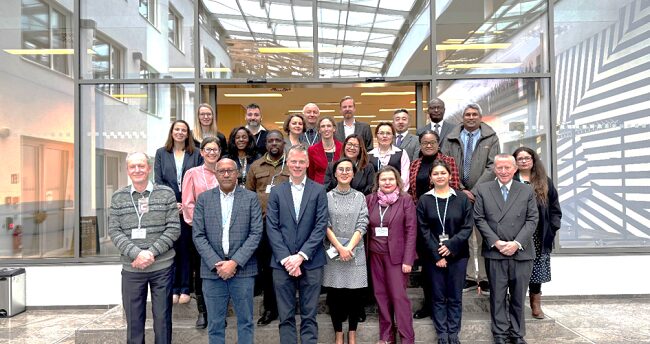
A Country Review in 2025

Beyond assessing greenhouse gas inventories and progress towards nationally determined contributions (NDCs), the BTR review process serves as a facilitative, trust-building mechanism. Reviews help identify areas for improvement and capacity-building needs, strengthen national transparency systems, and reinforce confidence in the robustness of climate data and information.

Reflecting on the milestone, Xuehong Wang, Director of Transparency at UN Climate Change, said: “The completion of 50 reviews demonstrates that the Enhanced Transparency Framework is moving into full implementation. These reviews provide Parties with practical, country-specific feedback that strengthens reporting systems, supports better policy decisions, and builds trust at the heart of the Paris Agreement.”

Among the completed reviews, seven included voluntary reviews of information on climate change impacts and adaptation, while 10 involved technical analyses of results from activities to reduce emissions from deforestation and forest degradation (REDD+), submitted on a voluntary basis in the context of results-based payments.

Support from Parties and partners during the 2024–2025 biennium played an important role in enabling the technical expert reviews, through the provision of supplementary financial resources. Their intention of continued support to technical expert reviews in the 2026-2027 biennium reflects ongoing commitment to strengthening transparency under the Paris Agreement.

Looking ahead, transparency efforts are set to scale up further. Over 30 BTR reviews are already scheduled for the first half of 2026, and lessons learned from the first 50 reviews will be used to refine review practices and enhance efficiency, while upholding the ETF’s principles of being facilitative, non-intrusive and respectful of national sovereignty.

To share experiences and lessons from the first cycle of technical expert reviews under the ETF, the UNFCCC secretariat will host a webinar on Wednesday, January 28, 2026, about the progress of ETF implementation under the Paris Agreement.

Additional insights are available in the Annual Report on Technical Expert Reviews, released at COP30, and in the latest BTR review newsletter.

As the ETF continues to mature, these 50 reviews represent concrete steps toward stronger transparency, improved climate action, and a more coherent global response to climate change.

See the detailed list of reviews conducted in 2024 and 2025 here.

NGX, DEG advance net-zero transition to unlock climate capital

0

Nigerian Exchange Group (NGX Group), in partnership with DEG, Germany’s development finance institution, and Africa Foresight Group (AFG), has intensified efforts to help Nigerian companies strengthen climate commitments.

The partnership would also unlock access to climate-linked capital estimated at between $2.5 billion and $3.1 billion.

The effort, anchored on the NGX Net-Zero Programme (N-Zero), is designed to improve corporate climate disclosures, support net-zero transition planning and position listed companies to meet global investor expectations.

NGX Group
Dr Umaru Kwairanga, Group Chairman of NGX Group, with delegates from Africa Foresight Group and DEG, Germany’s development finance institution, during a Roundtable meeting in Lagos on Thursday

The initiative took centre stage at the NGX–DEG CEO Roundtable held on Thursday, January 15, 2026, in Lagos, which convened corporate leaders, development finance institutions and capital market stakeholders.

Speaking at the event, the Group Chairman of NGX Group, Dr Umaru Kwairanga, said Africa’s capital markets must take a leading role in driving climate action and sustainable growth.

“Today, we are commemorating the launch of the NGX Net-Zero Programme.

This is an initiative designed to support listed companies in defining net-zero pathways and improving climate-related disclosures in order to align with global investor expectations,” Kwairanga said.

“At the NGX, we believe that the world needs to take urgent steps in the areas of climate action and sustainable growth, and today’s ceremony is a concrete step in that direction.

“Capital markets must be at the centre of climate leadership in Africa. The NGX Net-Zero Programme enables companies to move from climate ambition to measurable action.

“Over the next few months, we expect many of our listed companies to sign up to this initiative and follow the guidelines.

“Through this programme, we are confident that the Nigerian Exchange and capital market will meet the goals of becoming Africa’s premier hub for green and sustainable finance solutions,” he added.

Presenting the investment case for the programme, the Group Managing Director of NGX Group, Mr. Temi Popoola, said climate risk had become a critical consideration in valuation and capital allocation decisions globally.

“Global capital is increasingly becoming conditional, with climate risk directly impacting cost of capital and valuation.

“Companies that embed sustainability into strategy and governance are better positioned to attract long-term capital,” Popoola said.

Also speaking, a member of the Management Board of DEG, Ms. Monika Beck, said the partnership aligned with DEG’s strategy of mobilising private capital to accelerate climate action while delivering development impact.

“At DEG, our corporate strategy is centred on mobilising private capital to accelerate climate action while delivering measurable development impact and sustainable returns.

“Partnerships such as this enable us to scale solutions that are both impactful and commercially viable,” she said.

During an interactive session, the Chief Executive Officer of Chapel Hill Denham, Mr. Bolaji Balogun, said effective execution remained a major hurdle for companies seeking to translate climate commitments into investor value.

“Access to capital, technical expertise and credible frameworks are essential if climate reporting is to translate into real investor value,” Balogun said.

Similarly, the President and Group Chief Executive Officer of Transcorp Plc, Dr Owen Omogiafo, stressed the need for practical and inclusive approaches to Africa’s climate transition.

“Africa’s climate transition must be practical and inclusive, balancing sustainability objectives with economic growth and social impact,” Omogiafo said.

The event concluded with a Closing Gong Ceremony and follows a multi-million-naira co-funding partnership between NGX Group and DEG Impulse gGmbH under Germany’s development programme.

The partnership will provide listed companies with subsidised net-zero transition planning support and technical capacity building.

It will give access to globally recognised climate and sustainability frameworks, aimed at strengthening their competitiveness and long-term investability.

By Taiye Baiyerohi

How UNESCO’s biodiversity initiative safeguards forests, communities

0

With forests shrinking and ecosystems degrading, the global biodiversity crisis has shifted from a distant environmental concern to an urgent development challenge.

Nearly one million species now face extinction, underscoring the need for practical, community-driven solutions.

In response, the United Nations Convention on Biological Diversity (CBD) adopted the Kunming-Montreal Global Biodiversity Framework (GBF) in December 2022, setting ambitious targets to be achieved by 2030 and beyond.

Jean-Paul Abiaga
Dr Jean-Paul Abiaga, Head of UNESCO Abuja Office

Central to the framework is the commitment to conserve 30 per cent of the world’s land and marine ecosystems by 2030, popularly referred to as the “30 by 30” target.

Beyond conservation, the GBF also prioritises the sustainable use of biodiversity, increased financing for nature, integrated land and sea-use planning, and the mainstreaming of nature’s value into economic and development activities.

Importantly, the framework recognises the crucial role of indigenous peoples and local communities, emphasising that biodiversity protection must not undermine their rights, livelihoods or cultural heritage.

Against this backdrop, the UN Educational, Scientific and Cultural Organisation (UNESCO) has continued to deepen engagement with host communities through advocacy, awareness campaigns and validation workshops aimed at promoting environmental stewardship.

To further consolidate these efforts, UNESCO secured one million dollars in funding from the India–UN Development Partnership Fund to implement biodiversity business training across three sites in Nigeria.

The selected locations are Shere Hills, characterised by undulating hills and rocky formations on the Jos Plateau; Oban Biosphere Reserve, a tropical rainforest located in Akamkpa Local Government Area of Cross River; and Omo Biosphere Reserve, another tropical rainforest situated in Ogun.

According to UNESCO, biodiversity refers to the variety of life on Earth, encompassing all living organisms and their interactions within ecosystems.

It is fundamental to human well-being, ecosystem stability, food security, cultural identity and economic development.

Given the dependence of host communities on forest resources for survival, youths and women were deliberately selected from communities surrounding the reserves for training in nature-based and alternative livelihood businesses.

The objective was to reduce pressure on fragile ecosystems by curbing harmful human activities such as illegal logging, wildlife hunting and forest encroachment.

The conservation initiative was implemented in partnership with the Federal Ministry of Environment, the Forestry Research Institute of Nigeria (FRIN), the National Park Service (NPS) and Nigeria’s Man and the Biosphere (MAB) Committee.

It was tagged “Biodiversity Business in Oban Biosphere Reserve, Omo Biosphere Reserve and Shere Hills Reserve, Nigeria: A Means to Poverty Reduction, Biodiversity Conservation and Sustainable Development”.

The programme trained community members in tomato farming, poultry, fisheries and piggery.

The training aimed to enable participants to engage in sustainable agriculture and animal husbandry without exerting pressure on forest resources, while also supporting food security, income generation and the preservation of endangered plant and animal species.

The programme held from Oct. 6 to Oct. 11 for 10 Shere Hills communities; Oct. 27 to Nov. 1 for Nov. 12 Oban communities; and Nov. 10 to Nov. 15 for 10 Omo communities.

Speaking at the programme, Dr Jean-Paul Abiaga, Head of UNESCO Abuja Office and Representative to Nigeria, said the initiative addressed a core UNESCO priority of balancing conservation with sustainable development.

According to him, the training is especially timely as the global community intensifies efforts to protect 30 per cent of the planet’s land and sea by 2030.

“At UNESCO, our philosophy is simple but powerful; to reconcile nature protection with human development within our biosphere reserves.

“We count on continued partnership with state governments and local communities to ensure the success of this project,” Abiaga said.

He outlined the initiative as a bold step that should inspire collective action linking conservation with community well-being, adding that UNESCO hoped the programme would deliver lasting benefits for both people and nature.

Abiaga also noted that the programme aligns with several Sustainable Development Goals (SDGs), including SDG 1 (No Poverty), SDG 2 (Zero Hunger), SDG 6 (Clean Water), SDG 13 (Climate Action) and SDG 15 (Life on Land).

“UNESCO reaffirms its commitment to working hand in hand with relevant institutions to achieve the project’s objectives and deliver tangible results for Nigeria’s communities and ecosystems,” he said.

During the Omo reserve training, Abiaga paid a courtesy visit to the Secretary to the Ogun State Government, Mr Tokunbo Talabi, urging the state to sustain its commitment to preserving the biosphere reserve.

The Minister of Environment, Mr. Balarabe Lawal, said the training was a pathway for communities to profit from sustainable resource use while safeguarding ecological integrity.

Represented by Prof. Zacharia Yaduma, Director-General of FRIN, Lawal said environmental education, combined with business and livelihood skills, remained critical to achieving sustainability.

“By equipping participants with entrepreneurial skills, we are promoting nature-based businesses that enhance local resources, alleviate poverty and encourage sustainable production methods,” he said.

Also speaking, Dr Enang Moma, National Professional Officer, Natural Science Sector, UNESCO, said the programme aligns with Nigeria’s National Development Plan (2021–2025), especially its focus on poverty reduction, sustainable development and biodiversity conservation.

She added that the training would strengthen participants’ capacity to operate green businesses, generate sustainable income and reduce harmful activities within forest ecosystems.

Moma further highlighted the programme’s contribution to South-South cooperation, noting Nigeria’s participation in the 36th MAB-ICC conference, where discussions focused on soil health and its role in supporting biodiversity and nutrient cycling.

At the Shere Hills training, Dr Collina Kambai, Focal Person for the area, said 223 participants were trained in piggery, while 177 received training in greenhouse tomato cultivation, which has boosted the community’s visibility and income potential.

Although Shere Hills is yet to be officially designated a biosphere reserve by UNESCO, Kambai expressed optimism that approval would further expand benefits for host communities.

Similarly, Dr Tayo Oyetayo, Focal Point for Omo Biosphere Reserve, recalled that the reserve was approved by UNESCO in 1977 and has since benefited from grants and capacity-building initiatives.

Explaining the structure of biosphere reserves, Oyetayo said they comprise core, buffer and transition zones, with the core strictly protected, the buffer partially protected, and the transition zone allowing regulated human activities.

He lamented increasing encroachment into protected areas, which has endangered species such as iroko and mahogany trees, while elephants, once dominant in the forest are now under serious threat.

In Cross River, CP Joseph Ntui, Conservator of the Cross River National Park, Akamkpa, pledged the National Park Service’s commitment to global conservation standards.

He said Nigeria is a signatory to several international conventions aimed at protecting biodiversity, mitigating climate change and safeguarding ecosystems.

Meanwhile, Prof. Yaduma, Chairman of Nigeria’s MAB Committee, disclosed that three additional sites; Gashaka-Gumti National Park, Kainji National Park and Okomu National Park, have been proposed for UNESCO recognition.

According to him, securing approval would boost eco-tourism, attract funding, strengthen capacity building and create alternative livelihoods for host communities.

He expressed confidence that expanded conservation efforts would yield long-term environmental and economic benefits for Nigeria.

All in all, stakeholders insist that linking conservation with community livelihoods is crucial to protecting Nigeria’s forests.

They noted that training and providing alternative income sources would help ease pressure on ecosystems while supporting national development and global biodiversity targets.

By Ijeoma Olorunfemi, News Agency of Nigeria (NAN)
Group trains journalists on health, climate benefits of plant-focused diet

0

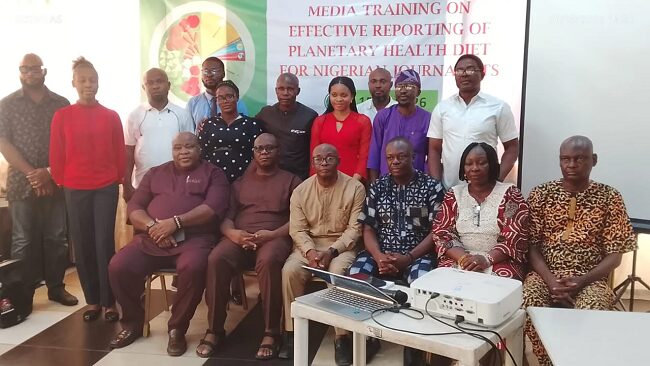
The Renevlyn Development Initiative (RDI), in collaboration with Foodjustice, on Thursday, January 15, 2026, offered training to Nigerian journalists in Lagos, on effective reporting of the Planetary Health Diet, to drive policy action.

Speaking at the training, the Executive Director of RDI, Mr. Philip Jakpor, noted that the media plays a strategic role in shaping public understanding and influencing policymakers on health, food systems and environmental sustainability.

Planetary Health Diet
Participants at the media training workshop on effective reporting of Planetary Health Diet

Jakpor described the Planetary Health Diet as a science-backed dietary pattern that promotes human health, while protecting the environment, with emphasis on plant-based foods and reduced intake of red meat and processed foods.

He said that, in spite of its vast arable land, Africa remained marginal in global adoption of the dietary model, even as the continent grapples with malnutrition and rising non-communicable diseases.

According to him, non-communicable diseases account for about 30 per cent of annual deaths in Nigeria, with over 617,000 deaths recorded in 2020, and many being premature

He said that lifestyle changes, urbanisation and poor diets had driven the rise of illnesses previously uncommon in Africa.

He urged the need for a science-based solution.

Jakpor said that the training featured experts from Nigeria, Ghana, Mexico and Italy, who shared experiences on integrating planetary health diet principles, into agriculture, education and school feeding systems.

Speaking on reporting considerations, Mr. Tope Oluwaleye, a veteran journalist, urged journalists to present the diet as flexible and adaptable to local cultures, rather than as a strict exclusion of animal products.

He said that reports should highlight both health benefits, including reduced risk of diabetes, and environmental gains such as lower emissions and biodiversity protection.

Oluwaleye also urged journalists to address criticisms transparently, including possible nutritional gaps, while promoting balanced and high-quality diets.

In a session on policy integration, Dr Chioma Okonkwo, another resource person, said that the diet could be mainstreamed into existing Lagos State public health and nutrition frameworks, without creating new policies.

She identified public food procurement and primary healthcare services as practical entry points for integrating healthier and more sustainable diet guidance.

Okonkwo said that journalists should track policy signals such as budget allocations, institutional responsibilities and monitoring indicators to distinguish intent from implementation.

The training aimed at equipping journalists to produce in-depth reports capable of driving accountability and accelerating adoption of healthier, sustainable diets.

By Fabian Ekeruche

PMS daily domestic supply hits 74.2m litres in December – NMDPRA

0

The Nigerian Midstream and Downstream Petroleum Regulatory Authority (NMDPRA) says the daily domestic supply of Premium Motor Spirit (PMS) rose to 74.2 million litres/day (ml/d) in December 2025.

This is relative to the 71.5 million litres/day supplied in November 2025.

The NMDPRA made this known in its Factsheet Report for December 2025 released on Thursday, January 15, 2026.

Fuel subsidy removal
Fueling a car

The report contains key statistics on the midstream and downstream petroleum operations in Nigeria.

It revealed that consumption of PMS, also known as fuel, increased to 63.7 million litres/day in December 2025, from the 52.9 million litres/day recorded in November 2025.

According to the report, Dangote Refinery showed strong capacity utilisation for the month of December, reaching a maximum of 71 per cent utilisation.

It said that the Dangote Refinery’s PMS domestic supply increased from 19.47ml/d in November 2025 to an average supply of 32.012ml/d in December 2025, with an initial plan of 50ml/d for December.

It said that Automotive Gas Oil (Diesel) domestic supply decreased to 17.9ml/d in December 2025 from the 20.4ml/d recorded in November 2025, while daily consumption increased to 16.4ml/d in December 2025, from the 15.4ml/d recorded in November 2025.

The report revealed that Liquefied Petroleum Gas (LPG) domestic supply also increased to 5.2mt/d in December 2025 from the 5.0mt/day recorded in November 2025.

The NMDPRA factsheet however disclosed that the four national oil refineries recorded zero production within the period under review.

It said that there was no production activities in the Port Harcourt Refinery as the refinery remained on shut down mode.

“However, evacuation of prior AGO produced while the refinery was operational before May 24, 2025 averaged 0.247 million litres/day.”

Meanwhile, it said that the Warri and Kaduna Refineries remained on shut down.

On performance of Modular Refineries, the report said that the Waltersmith (Train 2) 5,000bpsd completed pre commissioning in December, and hydrocarbon would be introduced by Jan. 2026.

According to the report, the refinery’s average capacity utilisation is at 63.24 per cent, while Average AGO supply is 0.051 million litres/day.

“Edo Refinery’s average capacity utilisation is 85.43 per cent, and average AGO supply is 0.052ml/d.

“ARADEL’s average capacity utilisation was 53.89%l per cent and average AGO supply was 0.289ml/d,” it said.

The report revealed that total AGO supply from the three modular refineries averaged 0.392ml/d, adding that other products from the modular refineries were Naphtha, HHK, fuel oil and MDO.

The report showed Daily Consumption Benchmarks for 2025 as – PMS, 50ml/d; Diesel 14ml/d; Aviation Fuel (ATK) 3ml/d and Cooking Gas, 3,900mt/d.

It showed Daily Consumption (truck out) of key Petroleum Products as – PMS, 63.7ml/d; Diesel, 16.4ml/d; Aviation Fuel (ATK), 2.7ml/d and Cooking Gas, 4,380 mt/day.

By Emmanuella Anokam

Association lauds as Nigeria launches Carbon Market Framework

1

Nigeria has officially launched its Carbon Market Framework, marking a major step in the country’s climate action agenda and positioning it as a key player in the global green economy. The announcement was made during the Abu Dhabi Sustainability Week, a leading international platform for climate innovation and investment.

The National Council on Climate Change (NCCC), led by Director General, Mrs. Omotenioye Majekodunmi, said that the framework establishes a clear regulatory and institutional structure for carbon trading in Nigeria. This structure enables both local and international investors to fund and develop climate-smart projects, earning carbon credits while promoting sustainable development.

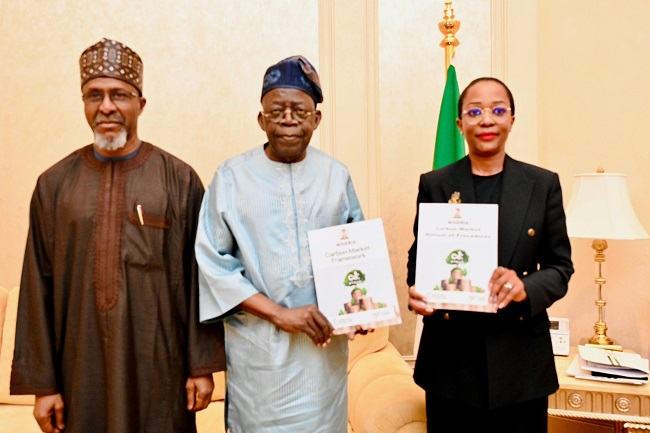
Carbon Market Framework
President Bola Tinubu (centre), with Minister of Environment, Balarabe Abbas Lawal (left) and National Council on Climate Change (NCCC) Director General, Mrs. Omotenioye Majekodunmi, at the launch of the Carbon Market Framework

Mrs. Majekodunmi hailed the development as a signal that Nigeria is now open for climate business, noting that the carbon market alone could attract over $3.8 billion in annual investment.

For the Minister of Environment, Balarabe Abbas Lawal, Nigeria’s active participation at Abu Dhabi Sustainability Week reflects the Federal Government’s commitment to deepening international partnerships, particularly with the UAE, while prioritising technology transfer, innovation, and local capacity building to strengthen clean energy, climate-smart agriculture, and resilient infrastructure nationwide.

With this framework, Nigeria is set to turn climate action into economic opportunity, creating jobs, attracting investment, and driving sustainable development across the country.

Meanwhile, the Carbon Market Association of Nigeria (CMAN) has lauded the official launch of Nigeria’s Carbon Market Framework, describing the development as a historic milestone that will position Nigeria as a credible, rules-based, and investable destination within the global carbon economy.

In a statement endorsed by Horsfall Tony, President, Carbon Market Association of Nigeria (CMAN), the organisation commended the National Council on Climate Change (NCCC), under the leadership of its Director General, Mrs. Tenioye Majekodunmi, and the Minister of Environment, Malam Balarabe Abbas Lawal, for advancing Nigeria’s climate leadership and international engagement.

To unlock the full potential of this landmark framework, it is important that government actively supports, showcases, and where possible, de-risks a pipeline of high-quality, viable and already advanced carbon projects that can serve as initial national flagship initiatives, stated CMAN.

The organisation added that early national flagship projects with robust MRV systems – that clearly align with national regulations, and strong community trust – will overall catalyse Nigeria’s participation in the international carbon markets, attract private capital at scale, and anchor confidence in Nigeria’s carbon market.

CMAN stated: “As implementation progresses, sustained sensitisation and coordination across ministries, departments, agencies, and sub-national governments will be critical. A supportive Carbon Market Office – the framework provides for – that issues timely project approvals, runs an operational registry, and carries out targeted capacity building for local developers and host communities will help ensure that Nigeria’s carbon market grows with integrity, inclusiveness, long-term credibility and catalyses global net zero attainment.

“With projected annual investment potential of about $3.8 billion and strong early investor interest, Nigeria’s carbon market offers significant opportunities for job creation, technology transfer, community development, and sustainable growth across sectors including clean energy, forestry, agriculture, clean cooking, and resilient infrastructure.

“As the industry association of all carbon market stakeholders in Nigeria, CMAN stands ready to work closely with the NCCC and all relevant institutions to support effective implementation, promote market integrity, strengthen investor confidence, and align carbon market growth with Nigeria’s national development, climate objectives and global net zero pathways. “Together, let’s continue to do more to reinforce Nigeria’s leadership in catalyzing climate action through carbon markets.”

Moroccan communities unite for High Atlas Foundation’s Annual Tree Planting Day in 2026

On Monday, January 19, 2026, the High Atlas Foundation (HAF) will celebrate its Thirteenth Annual Tree Planting Day, a collaborative initiative spanning eight regions throughout Morocco: Casablanca-Settat, Rabat-Sale-Kenitra, Beni Bellal-Khenifra, Marrakech-Safi, Oriental, Laayoune Sakia Hamra, Fes-Meknes, and Draa Tafilalet.

In the 2024/2025 tree-planting season, HAF planted 2,537,808 seeds of change in Morocco, symbols of resilience, opportunity, and the power of community. This year, HAF carries forward that same commitment with the 2026 planting season, inspiring hope and empowering communities nationwide to cultivate a greener, more sustainable future.

Morocco
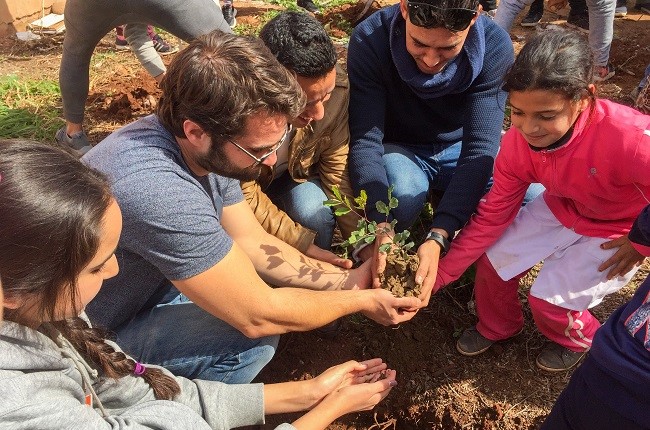
Tree planting in Morocco

The celebrations will gather diverse groups – farmers, educators, youth, families, and local organisations – who will cultivate seedlings at various locations secured through partnerships with government agencies, educational institutions, nonprofit groups, and farming collectives. This approach demonstrates HAF’s philosophy of building environmental stewardship through shared responsibility.

Having reached the milestone of one million planted seedlings in early 2014, HAF maintains its annual tradition of large-scale planting efforts. Participants will transplant multiple varieties sourced from HAF’s network of community-managed nurseries, featuring species such as olive, carob, almond, cherry, walnut, fig, pomegranate, and argan. These varieties are chosen by local agricultural families based on their adaptation to regional climates, promoting ecological diversity while strengthening natural habitats.

The daylong initiative will involve planting over 20,000 tree saplings at educational and community locations. Implementation will occur through collaboration with several supporting partners, including Yves Saint Laurent Beauty, Reforest, Planeterra, Cash Plus and more.

HAF is committed to promoting environmental sustainability through its tree planting programme, encouraging local participation in protecting Morocco’s natural resources. This initiative empowers communities by restoring the environment and individuals, schools, and local organisations to come together and create a positive impact. HAF invites individuals, schools, and organisations nationwide to join this effort, planting hope, one tree at a time.

GOCOP mourns legendary journalist, Yakubu Mohammed

0

The Guild of Corporate Online Publishers (GOCOP) has expressed its deepest condolences to the family, friends, and colleagues of Mr. Yakubu Mohammed, a renowned journalist and co-founder of Newswatch magazine, who passed away at the age of 75. 

The GOCOP described Mohammed’s passing as a significant loss to the media community and the nation at large.

“Mohammed’s contributions to Nigerian journalism are immeasurable. As a pioneer of investigative journalism in Nigeria, he made an indelible mark on the country’s media landscape. His commitment to truth, integrity, and excellence in journalism is an inspiration to many young journalists. Through his writing, he demonstrated a remarkable ability to craft compelling stories that captured the essence of Nigeria’s complex socio-political landscape.

Yakubu Mohammed
The late Yakubu Mohammed

“As a co-founder of Newswatch magazine, Mohammed played a pivotal role in shaping the narrative of Nigerian journalism. His writing was marked by depth, insight, and a commitment to fact-based reporting. He was a mentor, a role model, and a guiding light to many young journalists who sought to make a difference in the world through their craft,” GOCOP said in a statement by the president, Mr. Danlami Nmodu, mni and the general secretary, Mr. Sufuyan Ojeifo.

In the statement, they prayed that God grants the family and friends of the deceased the strength to bear the loss and that the soul of Mohammed rests in peace. 

They celebrated his life, his work, and his legacy, and prayed that his contributions to Nigerian journalism will continue to inspire and guide future generations of journalists.

“As the media fraternity mourns the passing of Yakubu Mohammed, we also celebrate his life and legacy. His impact on Nigerian journalism will be felt for generations to come. May his soul rest in peace,” the statement read.

Emerald Forest Reserve designated global Key Biodiversity Area following IITA assessments

0

The Emerald Forest Reserve (EFR), located in Ikoyi-Osun, Osun State, Nigeria, has been officially designated a global Key Biodiversity Area (KBA), following years of rigorous, IITA Forest Centre–led scientific research and biodiversity monitoring contribution.

The designation, endorsed in 2024 by the global KBA Partnership, coordinated by the KBA Secretariat with BirdLife International as a core partner, recognises EFR’s exceptional ecological value and its critical role in conserving globally significant species.

The Emerald Forest Reserve is located within the Abayomi Farm Estates, owned and managed by the Abayomi family for over two decades. The Abayomi family is said to have demonstrated unwavering commitment to biodiversity conservation safeguarding a 120 hectares indigenous forest using pragmatic, community-based conservation approaches.

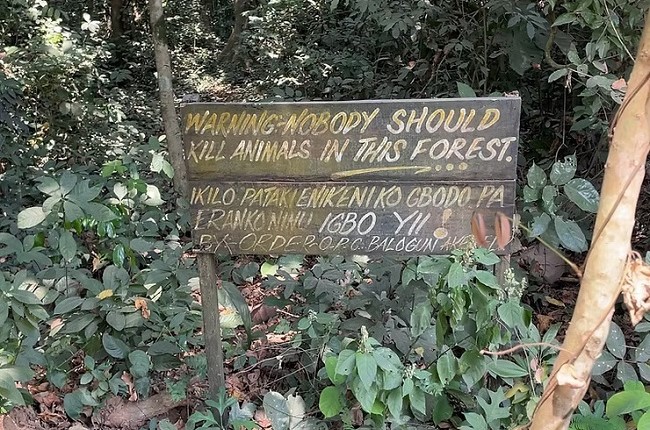
Emerald Forest Reserve

Working closely with local communities and conservation partners – including the IITA Forest Centre – the family helped halt logging, hunting, and poaching by transforming former loggers and hunters into custodians of the forest, supporting them with alternative livelihoods such as palm oil processing, beekeeping, agroforestry, furniture making, and tree seedling production.  

Central to the KBA designation is the Emerald Forest Reserve’s importance for the conservation of the endemic and endangered Ibadan Malimbe (Malimbus Ibadanensis). Through long-term ornithological monitoring, the IITA Forest Centre documented repeated sightings, acoustic calls, nesting attempts, and breeding behaviour of the species within the reserve. These records represent some of the most comprehensive and scientifically validated evidence of the species’ persistence in the wild.

Bird monitoring surveys conducted quarterly over several years by the IITA Forest Centre scientists, in collaboration with the A. P. Leventis Ornithological Research Institute, produced peer-reviewed publications that formed the backbone of the KBA nomination. These studies confirmed that the Emerald Forest Reserve supports a unique assemblage of Guinea–Congo forest bird species, including breeding populations of rare and restricted-range birds.

The designation, drawing on long-term biodiversity research, peer-reviewed scientific outputs, and standardised KBA assessment protocols, followed a scientifically rigorous nomination led by IITA-CGIAR, with Dr Adewale Awoyemi, IITA Forest Centre Manager, serving as the Proposer. This was done alongside Ademola Ajayi, IITA Forest Centre Field Supervisor; Dr Stella Egbe, Nigerian Conservation Foundation (NCF) Senior Conservation Manager; and Professor Shiiwua Manu, Professor of Ornithology, Department of Zoology, University of Jos; as co-proposers.

Speaking on the designation in Ibadan, Dr Awoyemi said, “This recognition reflects the strength of IITA Forest Centre’s research efforts in identifying, documenting, and validating sites of global biodiversity importance. The Emerald Forest Reserve exemplifies how robust research, when combined with local stewardship, can deliver outcomes of international conservation relevance.”

“The scientific outputs generated by the IITA Forest Centre and funded by A. G. Leventis Foundation were instrumental in demonstrating that the Emerald Forest Reserve meets global KBA criteria. Beyond species discovery, the research highlighted the forest’s broader biodiversity value and its role as a refuge for migratory and resident wildlife,” he added.

The BirdLife International Partner in Nigeria, the Nigerian Conservation Foundation (NCF), facilitated national-level coordination and stakeholder engagement during the review process. Congratulating all parties, NCF Director General, Dr Joseph Onoja, described the designation as a milestone for Nigeria’s biodiversity conservation efforts and noted its relevance to national and international biodiversity commitments.  

“It is indeed exciting to have EFR as the first newly assessed and nominated KBA in Nigeria. We at NCF are happy with the coordination we provided to make this a reality, and we hope more sites like this across Nigeria will follow suit,” Dr Onoja said.

According to Dr Modupe Ladipo, one of the Directors of the Emerald Forest Reserve, the discovery and documentation of the Ibadan Malimbe was a turning point for the forest’s global recognition. She noted that repeated surveys by IITA Forest Centre and its partners not only confirmed the species’ presence but also recorded nesting structures and the first-ever acoustic documentation of its call. These findings demonstrated that the Emerald Forest Reserve provides a viable and recovering habitat for a species once feared to be disappearing.

The Nigeria Convention on Biological Diversity commended the development, highlighting that, “The designation of Emerald Forest Reserve as a KBA is a laudable achievement as it holds a significant population of the threatened and endemic Ibadan Malimbe (Malimbus Ibadanensis). Nigeria as signatory to the Convention on Biological Diversity is delighted at the concerted efforts of all these stakeholders to map out additional sites as KBAs in the country.

“All these ensure that Nigeria achieve its goals and targets in the National Biodiversity Strategies and Action Plans (NBSAP) to support global efforts to protect biodiversity, halt species declines, prevent habitat loss and preserve the ecosystem services.”

The Emerald Forest Reserve is scheduled to formally celebrate its KBA designation on January 22, 2026, bringing together conservation stakeholders, community representatives, and partner institutions. The milestone underscores the importance of science-driven conservation and reaffirms IITA Forest Centre’s leadership in advancing biodiversity research and protection in Nigeria.

All scientific data, analyses, and publications underpinning the KBA nomination were generated through IITA-led research programs and remain the intellectual property of the International Institute of Tropical Agriculture. These outputs form part of IITA’s broader mandate to advance science-based conservation, landscape restoration, and biodiversity knowledge in Africa.

×