27 C
Lagos
Sunday, March 1, 2026
Home Blog Page 33

SSB tax: Should private profits supersede public health?

0

Nigeria’s shift toward a pro-health review of the tax payable by manufacturers of non-alcoholic, sweetened, and carbonated drinks, commonly known as Sugar-Sweetened Beverages (SSBs), has reached a critical moment.

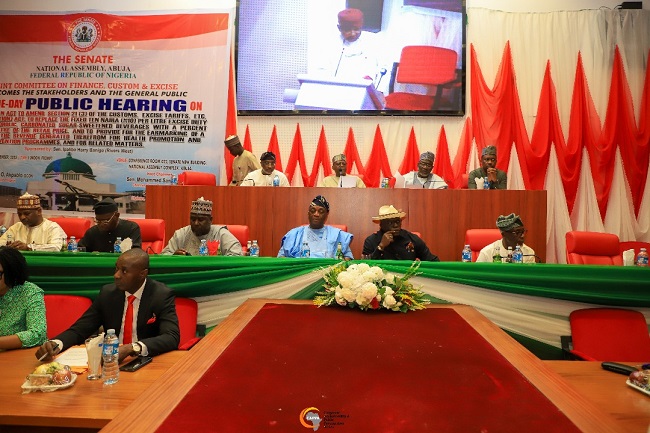
Last November, the Senate Joint Committee on Finance, Customs and Excise convened a public hearing in Abuja to consider a bill seeking to amend the existing excise duty framework for SSBs.

The bill before the National Assembly, formally titled “A Bill for an Act to Amend Section 21(3) of the Customs, Excise Tariffs, Etc. (Consolidation) Act to Replace the Fixed Ten Naira (N10) Per Litre Excise Duty on Non-Alcoholic, Carbonated Sugar-Sweetened Beverages with a Percentage Levy Based on Retail Price, and to Provide for the Earmarking of a Portion of the Revenue for Health Promotion and Disease Prevention Programmes”, marks a significant policy turning point.
SSB Tax
The Public Hearing

Sponsored by Senator Ipalibo Harry Banigo, the bill is grounded in growing medical and public-health evidence linking SSB consumption – soft drinks, energy drinks, and artificially sweetened juices – to a rising burden of non-communicable diseases (NCDs) across Nigeria.

Opening the hearing, Senate President Godswill Akpabio, represented by Senator Adeniyi Adegbonmire, captured the essence of the proposal.

“This amendment is not merely fiscal in nature; it is a public health investment strategy that aligns taxation policy with our national health priorities. It proposes a restructuring of existing excise duty on sugar-sweetened beverages (SSBs) not to impose more burden on citizens, but to redirect part of the existing revenue to finance health-related programmes and infrastructure that will improve the wellbeing of Nigerians,” he told the committee, quoting Banigo.

This framing deserves serious reflection.

Globally, SSBs are scientifically recognised as major dietary drivers of obesity, type 2 diabetes, cardiovascular diseases, childhood malnutrition, and premature death. In Nigeria, consumption of sugary drinks – particularly among children and young adults – has risen sharply. Non-communicable diseases now account for almost 30 percent of annual deaths, placing enormous strain on families and overwhelming an already fragile health system.

Nigeria has also emerged as one of the world’s fastest-growing markets for sugary drinks. Reports indicate that the average consumer drinks about six bottles weekly, spending roughly N2,500. The consequence is a growing population burdened by debilitating illnesses that were once perceived as “foreign” diseases.

The human and economic toll is staggering. Last month, the Diabetes Association of Nigeria revealed that approximately 30,000 Nigerians die annually from diabetes, while about 11.4 million live with the condition. Managing diabetes now costs between N100,000 and N120,000 monthly, well beyond the reach of most households. Heart disease, another diet-related NCD, presents an even bleaker picture. As of 2021, Nigeria had only 13 centres conducting heart surgery and about 80 heart surgeons for a population exceeding 200 million. With surgery costs rising from roughly N3 million to N5.5 million in recent years, life-saving care has become inaccessible for the majority.

To its credit, the Nigerian government acknowledged this crisis in 2021 by introducing an excise duty on SSBs through the Finance Act. By inserting Section 21(3) into the Customs, Excise Tariffs, etc. (Consolidation) Act, it imposed a N10 per litre levy on non-alcoholic, carbonated, and sweetened beverages, recognising that public-health taxation can be a life-saving tool.

However, the current tax level is far too weak to be effective.

A fixed N10 per litre duty represents a negligible fraction of the retail price of sugary drinks. In 2021, a 33cl bottle of soft drink sold for N100–N150, meaning manufacturers paid less than N3 per bottle in excise duty. Today, that same bottle costs between N350 and N500, yet the tax remains unchanged. The result is a levy that barely affects shelf prices, fails to discourage consumption, does not incentivise reformulation, and is easily absorbed by manufacturers.

This weakness is particularly troubling against the backdrop of Nigeria’s underfunded health sector. The country allocates less than five percent of its national budget to health – far below the 15 percent benchmark set under the 2001 Abuja Declaration. Patients exhaust family savings to manage diet-related illnesses, while health workers continue to emigrate due to poor conditions and inadequate funding. Like Coordinating Minister for Health and Social Welfare Prof Muhammad Ali Pate noted recently, the system is stretched to breaking point.

Even more concerning is that recent tax reforms again sidelined public health. While new development levies earmarked funds for education, technology, defence, and cybersecurity, none were allocated to health – despite declining donor support and growing disease burdens. Without sustainable domestic financing, the deterioration of Nigeria’s health system will only accelerate.

Against this backdrop, the National Assembly’s proposed amendment to the excise duty framework is not only timely but essential. A retail-price-based SSB tax would meaningfully reduce consumption and encourage manufacturers to lower sugar content, thereby reducing health risks.

Predictably, industry opposition has followed. Manufacturers warn of job losses, factory closures, and economic hardship – the same arguments historically deployed against tobacco, alcohol, and other public-health regulations. Yet international evidence consistently shows these claims to be exaggerated. Across the globe, more than 50 countries including South Africa, Mexico, the United Kingdom, Saudi Arabia, and the Philippines have implemented similar taxes with demonstrated success.

These countries have not recorded widespread job losses. Instead, companies adapt – diversifying products, reformulating drinks, and investing in healthier alternatives such as bottled water and low-sugar beverages.

What also makes the economic alarmism particularly hollow is that it is advanced by companies that continue to report strong revenues and sustained profitability in their Nigerian and African operations. Annual financial disclosures routinely show huge turnover, even amid broader economic pressures. The contradiction is as clear as daylight. An industry that remains profitable suddenly discovers economic fragility only when asked to bear modest responsibility for the public-health damage its products help drive.

More importantly, this narrow focus on corporate balance sheets by industry lobbyists obscures the real economic question. The cost of inaction is already being paid by households and the state. NCDs impose enormous losses through healthcare spending, reduced productivity, and premature death. A recent investigation estimate that Nigerians spend about N1.92 trillion annually treating such conditions. Prevention, through an effective SSB tax, is far cheaper and far smarter.

Another misleading claim is that the amendment represents a “sugar tax.” It does not. The proposed levy targets sugar-sweetened beverages, not sugar itself, and does not affect farmers, traditional foods, or local diets.

Ultimately, this debate is about political will. Governments exist to protect public welfare, not corporate profit margins. While businesses play a vital economic role, their interests cannot override Nigerians’ right to healthy lives.

Strengthening Nigeria’s SSB tax would align with global best practice and address the country’s urgent health challenges. Lawmakers now have an opportunity to show that evidence – not intimidation or misinformation – will guide public policy.

Accordingly, Nigeria should:

Adopt a strong retail-price-based excise structure, setting the levy at 50 percent of the retail price, with a minimum floor of 20 percent, in line with WHO guidance and the Bloomberg Task Force on Fiscal Policy for Health.

Earmark SSB tax revenues for public health, particularly for NCD prevention and management, to ensure sustainable health financing.

Establish a national monitoring and evaluation task force to oversee implementation, ensure compliance, and assess health and fiscal outcomes.

Nigeria cannot afford delay. As NCD rates climb and healthcare costs soar, maintaining an ineffective N10 per litre tax amounts to policy complacency. The real question is not whether the SSB tax should be strengthened, but whether public health will finally be placed above private profit.

The answer should be unequivocal.

By Robert Egbe, healthy food advocate at Corporate Accountability and Public Participation Africa (CAPPA)
WaterAid empowers volunteers in Ikorodu community to champion hygiene

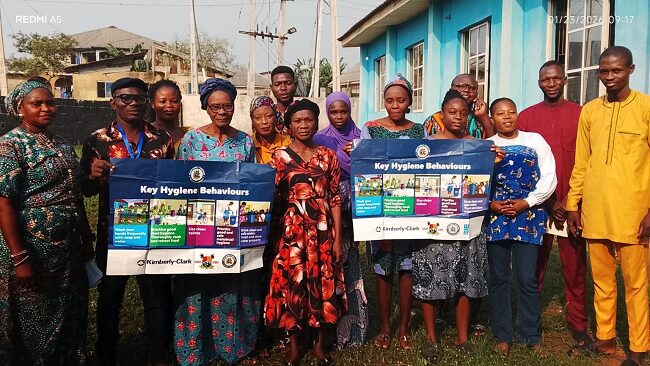
WaterAid Nigeria has trained 30 Volunteer Hygiene promoters for Maya Aladiye and Maya Olorijo communities in Ikorodu North Local Council Development Area (LCDA) of Lagos State.

The training is aimed at promoting hygiene behavioural change, as well as preventing disease outbreaks.

The three-day training, which ran from Wednesday, January 21 to Friday, January 23, 2026, also focused on hand-washing, safe water, environmental cleanliness and ending open defecation within the community.

WaterAid
Participants at the WaterAid training

Speaking at the event on Friday, Chairman of Maya Olurijo Phase Two, Mr. Victor Ologhobo, described the initiative as timely and impactful.

He said the training had improved residents’ understanding of hygiene, sanitation and disease prevention.

“Participants are now equipped to educate others and promote cleaner living environments across the community,” he said.

Also speaking, facilitator of the programme at Maya Olorijo, Mrs. Bibire Hassan, said the training aimed to introduce hygiene behavioural change, through community-based volunteers.

She disclosed that 15 volunteers were trained at Maya Olorijo, to cascade hygiene messages to households and community members.

“Continuous engagement and follow-up will ensure sustainability and long-term behavioural change,” she said.

In the same vein, facilitator of Maya Aladiye, Mr. Tosin Aremu, also said that 15 volunteers were trained on hygiene practices, including hand-washing, clean toilets, menstrual hygiene and safe drinking water.

Reacting to the training, a volunteer at Maya Aladiye, Mr. Boladele Ajasa, said the training exposed the dangers of open defecation and disease transmission.

’The knowledge gained will help improve hygiene practices and protect public health in the community,” he said.

The volunteers also held a sensitisation walk around the community, calling for hygiene behaviour change.

By Fabian Ekeruche

Ekuri Community alleges illegal logging in protected forest

0

Residents of New Ekuri Community in Akamkpa Local Government Area of Cross River State have raised concerns over alleged unauthorised logging activities in their community forest, warning that failure to address the issue promptly could heighten tension in the area.

Speaking at a press briefing in Calabar on Thursday, January 22, 2026, representatives of the community accused Ezemac International Limited of encroaching on the New Ekuri Community Forest and harvesting timber without the consent of the host community. The company is owned by Mr. Ezenwa Igwe.

Addressing journalists on behalf of the community and its traditional leadership, Dr. Martins Egot, Executive Director of Panacea for Developmental and Infrastructural Challenges for Africa Initiative (PADIC-Africa), said the forest is a community-owned asset protected by customary laws and recognised community forestry arrangements.

Ekuri Community
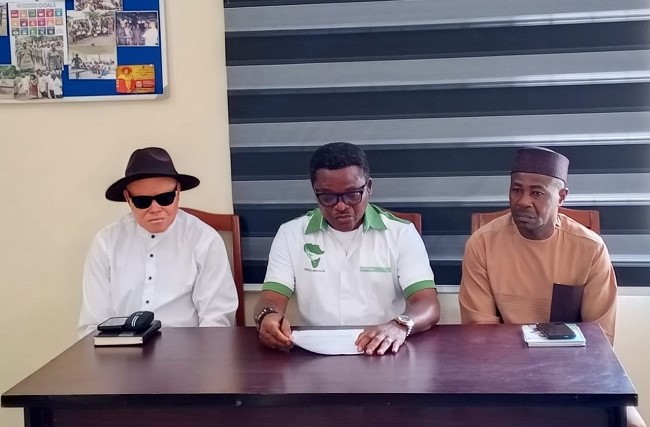
Ekuri Community and PADIC-Africa officials briefing the media in Calabar

He stressed that no commercial activity could legally take place in the forest without the free, prior and informed consent of the people.

Egot described New Ekuri as an internationally recognised example of community-led forest conservation, noting that the community has preserved over 33,600 hectares of rainforest for decades, opting for sustainable forest management rather than large-scale commercial logging.

According to him, the controversy began on January 12, 2026, when youths conducting routine road maintenance reportedly heard the sound of heavy machinery operating deep within the forest. He said the youths later discovered two bulldozers, an excavator and four trucks allegedly engaged in timber extraction.

“The youths acted peacefully. No worker was assaulted and no equipment was vandalised. They only requested that operations stop and that the ignition keys and batteries be handed over pending dialogue,” Egot said.

He added that the recovered items were subsequently deposited at the Apiapum Police Station for safekeeping.

The situation, however, reportedly escalated following a petition by Ezemac to the police, alleging that community leaders mobilised youths to attack workers and vandalise equipment. 

Egot said he was arrested and detained by the Zone 6 Police Command on January 13, despite maintaining that he was in Calabar and not present in the community at the time of the incident.

The community further expressed concern that while investigations were ongoing, the seized equipment was released to the company, which allegedly returned to the forest to resume operations.

According to Egot, the development angered youths in the community and required the intervention of elders to prevent a confrontation that could have degenerated into violence.

The community also alleged that the company’s activities caused significant ecological damage, including the destruction of young trees and forest corridors, adding that the environmental and economic losses were difficult to quantify.

Questions were also raised about the role of the Cross River State Forestry Commission, with the community demanding clarification on whether any permit was issued to the company, the scope of the approved operations and the royalties payable to the host community.

The people of New Ekuri said petitions had been submitted to relevant state and federal authorities and disclosed that they had received an invitation from the Cross River State House of Assembly to appear before it on January 27, 2026, over the matter.

Among their demands are the immediate withdrawal of Ezemac’s equipment from the forest, a transparent investigation into the legality of the logging activities, an independent environmental impact assessment and protection for community leaders and youths from alleged harassment.

Also speaking at the briefing, the Cross River State Director and Coordinator of the National Environmental Standards and Regulations Enforcement Agency (NESREA), Raymond Anunobi, assured the community of the agency’s commitment to enforcing environmental laws.

Anunobi said NESREA would carry out its statutory investigations and urged communities to promptly report environmental infractions, noting that collaboration with regulatory agencies would help prevent undue intimidation by law enforcement.

However, reacting to the allegations in a telephone interview, the Managing Director of Ezemac International Limited, Mr. Ezenwa Igwe, denied any wrongdoing. He insisted that the company operates legally with valid permits issued by the Cross River State Forestry Commission.

Igwe said the state government had lifted the ban on logging and maintained that Ezemac had complied with all regulatory requirements. 

He further claimed that the company has agreements with the New Ekuri community and that some community members are either employed by the company or supply timber to it.

Describing the allegations as unfounded, Igwe urged the public to verify his company’s documentation with the Forestry Commission.

By Stina Ezin, Calabar

Kanje Sarah: Why strategy without communication is silent failure

0

In a rapidly-evolving world, every business needs a sound strategy to survive because markets are no longer forgiving.

From intense competition to shifting customer expectations to disruptive technology and limited resources, a well-structured strategy is what can help a business make informed choices rather than react blindly to the turbulence.

However, history is replete with loads of carefully crafted strategies that failed. But why? The answer lies not in execution, but rather in perception.

Kanje Sarah
Kanje Sarah

Strategies can look perfect on paper, in boardroom slides, or in detailed reports and yet generate minimal impact. The success or failure of any strategy depends on how well it’s understood and internalized across the organization and among stakeholders.

Mirroring Corporate Strategy

When understanding is uneven, even the best strategies struggle to gain traction. This is where communications move from function to capability. It is not just about campaigns, announcements, or visibility. It is about making strategy clear, credible, and actionable.

A communications strategy is strongest when it mirrors corporate strategy. Both should strive to express in no uncertain terms what an organization wants to be known for, its priorities, and how it signals intent over time. Without such clarity, coherence breaks down and even internal teams struggle to explain what the organization stands for. No amount of activity can fix that. Visibility matters only when it is deliberate and connected to purpose. When positioning is unclear, narratives are defined by others, and influence quietly diminishes.

Evidently, strategic communications bridge action and perception. Organisations act and communication gives those actions meaning. It connects execution to purpose, evidence to credibility, and intent to understanding. In doing so, it ensures that strategy is not just visible, but understood, trusted, and acted upon.

Changing With Time

A communications strategy needs to respond to changes in both internal and external business environments which may be occasioned by changes in audiences, technology and public expectations.  In essence, a communications strategy should be a living framework, not a fixed script. A living communications strategy uses these insights to refine messages, channels, and timing, improving effectiveness over time. Its strength lies in its ability to adapt while staying true to core values and objectives in a fast-changing world.

The greatest risk organisations face today is not imperfect communication. It is the absence of strategy in communication. When positioning is unclear, influence is quietly lost. Organisations rarely struggle because they are inactive. They struggle when strategy has no voice.

Kanje Sarah is a strategic communications professional working in Communications and External Affairs at Shelter Afrique Development Bank. She has a background in Mass Communications and Strategic Management and contributes to thought leadership on Voices of Africa, amplifying African perspectives on strategy, development, and institutional transformation across the continent

Nigeria, humanitarian partners launch $516m appeal to save 2.5m people in north-east

0

The Government of Nigeria and humanitarian partners are urgently appealing for $516 million to respond to the most critical needs of 2.5 million people in Borno, Adamawa and Yobe (BAY) states in north-east Nigeria this year. Women and children make up eight out of every 10 people in immediate need.

The appeal, through Nigeria’s 2026 Humanitarian Needs and Response Plan (HNRP), comes amidst spiralling needs in the BAY states due to a 16-year conflict whose impact has been compounded by widespread displacement, limited access to basic services, climate shocks, economic hardship, and shrinking livelihood opportunities.

Bernard Mohammed Doro
Federal Minister of Humanitarian Affairs and Poverty Reduction, Dr. Bernard Doro

“Humanitarian needs are dramatically worsening at a time when we are facing the steepest decline in international funding for humanitarian operations,” said Mohamed Malick Fall, the UN Resident and Humanitarian Coordinator in Nigeria. “Every day that funding gaps persist is a day that, yet another malnourished child is pushed closer to preventable death.”

In 2026, around 3 million children under five in Nigeria are projected to suffer from life-threatening severe acute malnutrition – 1 million of these children are in the BAY States. Nearly 35 million Nigerians are also likely to face acute food insecurity during the 2026 lean season – 5.8 million of them in the BAY States.

The 2026 Nigeria HNRP also highlights a transition to nationally led and resourced humanitarian action, with the gradual phasing out of international support amid the global decline in humanitarian funding. A successful transition will depend on a strong partnership between the Government and humanitarian community.

In his remarks, the Federal Minister of Humanitarian Affairs and Poverty Reduction, Dr. Bernard Doro, reaffirmed the Government of Nigeria’s leadership and ownership of humanitarian coordination and response. He said that ‘the government would continue to provide policy direction, coordination, leadership, and systems alignment, ensuring that humanitarian efforts complement broader national reforms aimed at reducing poverty, strengthening human capital, and building resilient communities.”

In their messages, the Governors of the BAY states – Professor Babagana Zulum (Borno), Ahmadu Umaru Fintiri (Adamawa), and Mai Mala Buni (Yobe) reiterated their commitment to strengthened collaboration with humanitarian partners to deliver urgent assistance and advance durable solutions.

Funding to the 2025 HNRP ($282 million) was about half of what was received in 2024, resulting in a dramatic drop in humanitarian assistance. In 2026, additional resources, including more Government investment, are urgently required to help provide lifesaving food, nutrition, healthcare, water, sanitation, and protection services. Improved security is a prerequisite to reduce risks to civilians and create conditions for durable solutions in the BAY States.

The government called on partners to align support with national priorities and to sustain engagement during this critical transition phase.

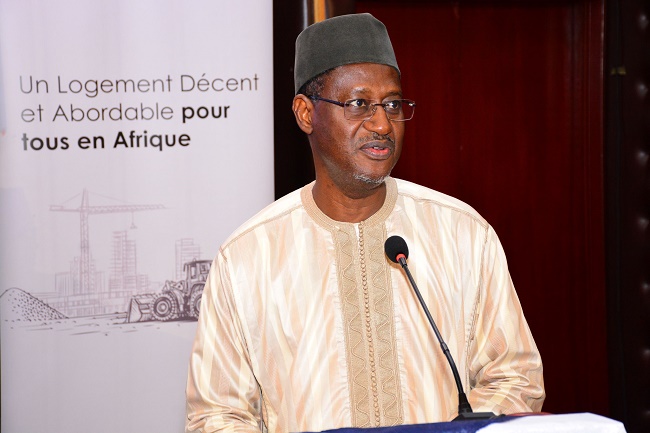
Govt develops unified housing delivery framework for coherence with institutions, states

The Federal Government said it has developed a unified Housing Delivery Framework to ensure “One Coherent National Housing Delivery System” in the country.

The Minister of Housing and Urban Development, Alhaji Ahmed Dangiwa, made the disclosure on Thursday, January 22, 2026, at the 14th National Council on Lands, Housing and Urban Development in Ilorin, Kwara State.

The council has its theme as “Achieving Housing Delivery and Sustainable Cities through Effective Land Management, Urban Renewal, Promotion of Local Building Materials, and Public–Private Partnerships in Nigeria”.

Arc Ahmed Dangiwa
Minister of Housing and Urban Development, Ahmed Musa Dangiwa

Dangiwa said the objective of this framework was to ensure that the ministry and all Federal Housing Institutions operate as “One Government”, with complementary and clearly defined roles.

He said this would be done while providing the state and local governments with a predictable and credible framework for collaboration on housing delivery.

”This is particularly important at a time when many states are experiencing improved fiscal capacity and requiring structured ways to work with the Federal Government to deliver housing at scale.

“Under this framework, state governments are to participate as active counterparts across four flagship federal programmes.

“They are: The Renewed Hope Housing Programme, State-Led Social Housing Programme, State Urban Renewal and Inner-City Regeneration Programme and State Housing Public Private Partnership and Investment Platform.

”This Unified Framework represents a deliberate shift from fragmented interventions to coordinated national delivery,” Dangiwa said.

He added that the Federal Government provides leadership, institutions, and finance while the states provide land and subsidies, execution, local leadership and counterpart or additional budgetary funding or interventions to complement federal efforts.

Dangiwa, however, urged all the states to treat land reform not as a routine administrative matter, but as a deliberate economic growth strategy, that would increase IGR, empower the citizens and grow GDP.

He said no country can solve its housing challenge without fixing its land system as secure land titles reduce risk, unlock capital, and empower citizens.

In his remarks, Gov. Abdulrahman Abdulrazaq said the theme of the council was interesting in the light of the contemporary challenges of population surge, affordable as well as decent housing, urbanisation, and sustainable and orderly living.

The Governor, represented by his Deputy, Kayode Alabi, said over the past six years, his administration had executed bold measures to promote a more transparent as well as efficient land administration and management in the state.

”The Kwara State Geographic Information Service, (KWAGIS) had been restructured and strengthened for a more seamless land administration.

”The State is also actively pursuing a grand urban renewal agenda that prioritises enforcement of physical development regulations for orderly growth and sustainable living,” he said.

The Chairman, House of Representatives Committee on Urban Development and Regional Planning, Abiante Awaji, pledged the house’s legislative support and oversight framework that promotes efficient land administration, sustainable urban renewal, and inclusive housing delivery across Nigeria.

Awaji said the house was ready to work closely with the ministry and all other relevant stakeholders to translate the outcomes of this council into actionable legislation, oversight, and measurable impact.

He said urban renewal consultations was not just about the physical revitalisation of the cities, but about restoring hope and enhancing the quality of life for the citizens.

”It provides an opportunity to reclaim neglected spaces and transform them into thriving communities that reflect our cultural heritage and aspirations,” Awaji said.

The council meeting which climaxed on Thursday started on Monday.

The meeting brought together key stakeholders, policymakers, professionals, and experts within the built environment.

By Bushrah Yusuf-Badmus

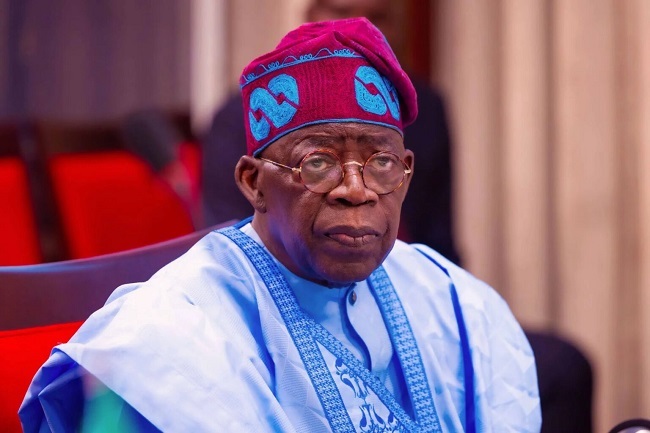
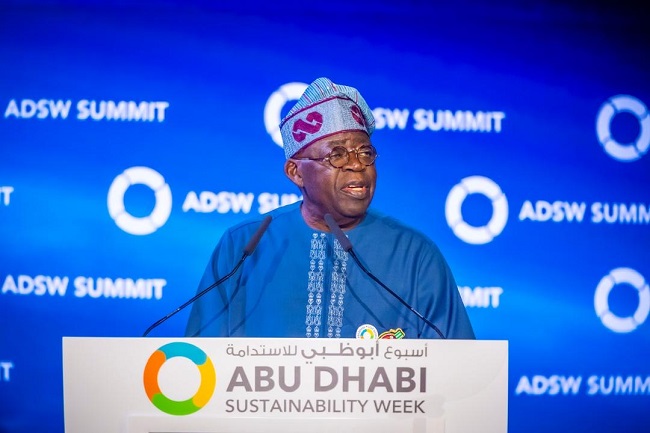
Tinubu approves incentives for Shell’s Bonga South-West project, okays oil drilling at Olokola deep seaport

0

President Bola Tinubu has approved the gazetting of targeted, investment-linked incentives to support Shell’s proposed Bonga South-West deep-offshore oil project.

He directed his Special Adviser on Energy, Mrs. Olu Verheijen, to facilitate the gazette in line with existing legal and fiscal frameworks.

This is contained in a statement issued by Mr. Sunday Dare, Special Adviser to the President on Media and Public Communication, on Thursday, January 22, 2026, in Abuja.

President Bola Tinubu

Receiving a Shell delegation led by Global Chief Executive Officer, Mr. Wael Sawan, Tinubu said the incentives were disciplined, targeted and globally competitive.

He said the measures were designed to attract fresh capital without undermining government revenues.

The President said: “These incentives are not blanket concessions.

“They are ring-fenced and investment-linked, focused on new capital, incremental production, strong local content delivery and in-country value addition.

“My expectation is clear: Bonga South-West must reach a Final Investment Decision within the first term of this administration.”

Tinubu described the project as strategic to Nigeria’s economy, with potential to create thousands of direct and indirect jobs.

He said it would generate significant foreign-exchange inflows and deliver sustained government revenues throughout the project’s lifespan.

Tinubu added that the project would deepen Nigerian participation in offshore engineering, fabrication, logistics and energy services.

He reaffirmed his administration’s commitment to policy stability, regulatory certainty and speedy execution to restore investor confidence.

The President noted that Shell and its partners invested nearly seven billion dollars in Nigeria within the past 13 months.

He said investments in Bonga North and HI showed that Nigeria’s economic and energy-sector reforms were yielding positive results.

Sawan said Nigeria’s investment climate had improved remarkably under Tinubu, adding that Shell was increasingly confident in long-term investment prospects.

Members of the delegation included senior executives from Shell’s global and Nigerian leadership teams.

Meanwhile, Gov. Dapo Abiodun of Ogun State says President Bola Tinubu has approved the commencement of commercial oil drilling at Tongeji Island in Ipokia local government area of the state.

Abiodun disclosed this on Thursday in Abeokuta while receiving the Flag Officer Commanding, Western Naval Command, Rear Admiral Abubakar Mustapha and other senior officers in his office.

He said the president had also approved the immediate take-off of the Olokola Deep Seaport project in Ogun Waterside Local Government Area, bringing an end to years of delay surrounding the multibillion-dollar port.

According to him, both projects are of special interest to the president, adding that the seaport would help decongest Lagos ports, while oil drilling at Tongeji Island would boost economic activities and inclusion in coastal communities.

“Mr President has approved the commencement of commercial oil drilling operations at Tongeji Island, and activities will soon begin there.

“The Olokola deep seaport project, which has been on the drawing board for several years, has been revived following a series of meetings with the president.

“I want to sincerely thank Mr President because this is solely his initiative. In the last two weeks alone, we have held several meetings on Olokola, and he has clearly expressed his desire to see the port become a reality,” he said.

The governor said the seaport, to be known as the Blue Marine Economic Zone, would leverage the coastal road as an alternative logistics corridor and further ease pressure on the Lagos ports.

He commended the Nigerian Navy for establishing a Forward Operations Base at Tongeji Island, saying the move would enhance security and prevent infiltration from neighbouring Benin Republic.

He said that the state government was working to provide basic amenities for residents of the island to improve living conditions and support emerging economic activities.

Abiodun thanked the Navy for its contribution to security in the state, attributing the relative peace in Ogun to collaboration among security agencies.

Earlier, Mustapha described Ogun as strategic to Nigeria’s national security, adding that the naval outpost at Tongeji Island would be upgraded to a Forward Operations Base due to the area’s oil potential.

He said the visit was to strengthen cooperation between the Nigerian Navy and the Ogun state government, particularly in securing Nigeria’s border with the Republic of Benin and preventing criminal activities.

“Furthermore, the confirmed oil and gas potentials of Ogun state place it among the critical states that will drive Nigeria’s Blue Economy aspirations in the coming years.

“The development of upcoming ports and other key maritime infrastructure further reinforces the state’s importance within Nigeria’s overall maritime and national security strategy.

“As the flag officer commanding, western Naval command, my responsibility is to secure the entire maritime and inland water space from the Republic of Benin boundary down to the Ondo/Lagos axis.

“Ensuring that criminal activities are prevented. Since assuming command, I have intensified operations across the area of responsibility,” he said. 

By Muhyideen Jimoh and Abiodun Lawal

Seplat Energy: Langavant resigns from Board, Elumelu appointed non-executive director

0

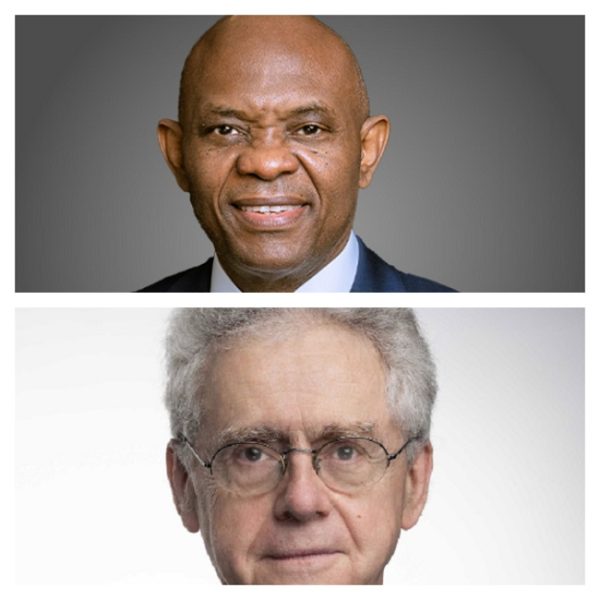
Following the Company’s prior announcement regarding the sale of Etablissements Maurel et Prom SA (“M&P”) 20.07% shareholding in Seplat to a combination of Heirs Holdings Limited and Heirs Energies Limited, the Board of Seplat Energy on Thursday, January 22, 2026, announces the resignation of Mr. Olivier Cleret De Langavant as a Non-Executive Director effective January 22, 2026.

Mr. Langavant, who joined the Board on January 28, 2020, as a nominee of M&P, is said to have rendered exceptional service throughout his tenure, providing strategic technical counsel and insights that have materially supported the Company’s progress, according to statement signed by Mrs. Edith Onwuchekwa, Director Legal/Company Secretary at Seplat Energy.

Seplat Energy
Mr. Tony Elumelu (top) and Mr. Olivier Cleret De Langavant

The Board announced the appointment of Mr. Tony O. Elumelu as a Non-Executive Director on the Board effective January 22, 2026.

Mr. Elumelu is a distinguished African investor and philanthropist, globally recognised as one of the most prominent voices on Africa’s transformation agenda. He is the Founder and Chairman of Heirs Holdings, a diversified investment company with interests across strategic sectors of the African economy, including energy, power, banking, insurance, technology, real estate, hospitality, and healthcare.

He also serves as Chairman of United Bank for Africa (UBA) Group, Heirs Energies, Transcorp Group, whose subsidiaries include Transcorp Power, and Transcorp Hotels Plc, Nigeria’s foremost hospitality brand.

In 2010, he established The Tony Elumelu Foundation (TEF), the leading philanthropy dedicated to empowering African entrepreneurs across all 54 African countries. His global influence has been widely acknowledged, including recognition as one of TIME Magazine’s 100 Most Influential People in the World (2020) and the conferment of the Commander of the Order of the Federal Republic (2022).

He also serves on several global boards, including UNICEF’s Generation Unlimited Global Leadership Council and the International Monetary Fund’s Advisory Council on Entrepreneurship and Growth.

“We are confident that Mr. Elumelu’s extensive experience and visionary leadership will significantly advance Seplat Energy’s strategic objectives and reinforce the Company’s commitment to sustainable growth and long-term success.

“Please join us in expressing our deepest gratitude to Mr.  Langavant for his outstanding service and welcoming Mr. Elumelu to the Board,” Seplat Energy submitted.

Mr. Udoma Udo Udoma, Chairman of Seplat Energy, commented: “On behalf of the Board and Management, I wish to express our profound appreciation to Mr. Langavant for his outstanding contribution to Seplat Energy over the past six years.

“His expertise and commitment have been instrumental in driving our strategic initiatives. We warmly welcome Mr. Elumelu to the Board and look forward to leveraging his wealth of experience and leadership as we continue to pursue sustainable growth and value creation for all stakeholders.”

Osinbajo, González to co-chair new global effort on development cooperation amid aid cuts

0

In Davos this January, two former senior government officials, Nigeria’s ex–Vice President Yemi Osinbajo and former Spanish Foreign Minister Arancha González Laya, signalled a push to rethink how the world approaches development cooperation, as long-standing models come under growing strain.

The backdrop was unmistakable. Aid budgets are tightening. Trust in multilateral institutions is eroding. And the pressures facing developing countries from rising debt and climate shocks to conflict and fragility – are outpacing the systems designed to support them.

Speaking at the World Economic Forum, González announced the launch of the Future of Development Cooperation Coalition, a new, independent initiative aimed at reassessing how countries work together on development in an increasingly complex global landscape.

Osinbajo and Gonzalez
Nigeria’s ex–Vice President Yemi Osinbajo (top) and former Spanish Foreign Minister Arancha González Laya

“The past year has been defined by contraction and difficult choices,” González said. “But 2026 needs to be about something more ambitious, building a credible vision for cooperation that works across governments, the private sector and civil society, and puts countries’ priorities at the centre.”

González will co-chair the Coalition alongside Osinbajo, bringing perspectives from both advanced and emerging economies to a debate that has often struggled to reconcile global ambition with national realities.

For Osinbajo, the issue is efficient. “Development cooperation is not abstract,” he said. “It shapes whether economies can create jobs, whether children stay in school, and whether communities can recover after disasters.” He argued that the moment demands a shift away from a narrow focus on aid toward broader partnerships that support long-term economic transformation.

The case for change is underscored by shifting financial realities. While official development assistance now exceeds $200 billion annually, it accounts for less than 10 per cent of total financial flows to developing countries. Many countries today act simultaneously as recipients, investors, innovators and providers of support. Public policy, private capital, civil society action and global public goods are increasingly interconnected, often without coordination.

At the same time, pressures on the system are mounting. More than 50 countries are facing serious debt challenges. Climate shocks are intensifying. Conflict and fragility are spreading, while geopolitical tensions are making international cooperation more difficult, just as collective action is most needed.

The Coalition says it is not focused on incremental reform. Over the next year, it plans to step back and confront more fundamental questions: what development cooperation should achieve today, who it should serve, and how it can deliver results at scale.

Beginning in early 2026, the group will engage governments, international institutions, private-sector leaders, civil society organisations, and young people across regions. It aims to identify misalignments in current approaches and propose practical recommendations for reform.

While development cooperation has delivered significant gains over the past six decades, helping lift hundreds of millions out of extreme poverty and improving access to health and education, those achievements are increasingly under threat as old models struggle to adapt to new realities.

The Future of Development Cooperation Coalition emerged from discussions at the Financing for Development Conference in Seville in mid-2025. Its organisers say its approach is grounded in consultation and shared ownership, rather than top-down prescription.

As global challenges intensify and traditional frameworks falter, the Coalition is positioning itself as a space to rethink cooperation from the ground up, starting with listening and asking what needs to change to make development efforts work better for the people they are meant to serve.

Makoko demolition: Organisation appeals to Lagos on resettlement

The Kreative Arts Foundation for Community Engagement (KafComE) has appealed to the Lagos State Government to halt ongoing demolition of the Makoko Community to save residents from homelessness.

Founder of the non-governmental organisation (NGO), Mr. Willie Workman, made the appeal in a statement on Thursday, January 22, 2026, in Lagos.

Makoko, a waterfront community in Lagos, had faced demolitions since December 2025.

Makoko
A displaced Makoko resident

The state government had said that the exercise was necessary to remove structures on power-line setbacks.

Gov. Babajide Sanwo-Olu had justified the demolition of structures in the community, on grounds that same was aimed at averting tragedy.

The governor stated that the demolition was for the overriding public interest, adding that many residents of the community had built shanties under high-tension wires.

Meanwhile, In a statement on Thursday, the organisation noted that the exercise had left many homeless.

According to Workman, the United Nation’s (UN) Universal Declaration of Human Rights, Article 25, safeguards the right of individuals to a standard of living, including housing.

He consequently appealed to government to back the demolition exercise, with adequate compensation, or resettlement of the residents.

“The government should prioritise humane resettlement and compensation,” he said.

Workman underscored the need for the state government to acknowledge the community’s right to adequate housing, just like the UN’s guidelines on development-based displacement.

He urged government to ensure provision of alternative housing for residents, as well as protection for vulnerable groups in the community.

By Lilian U. Okoro

×