Home Blog Page 3

Eco-comedy: Laugh, resist, survive

At a time of deepening ecological crisis, widening social injustice, and rising activist burnout, environmental justice advocates are advancing an unexpected yet powerful response to the demand for resilience, urgency, and moral courage – humour.

Activists are always at alert – responding swiftly to important existing and emerging socio-ecological and other issues. Often times they are faced with traumatic experiences on the field and met by stark opposition or even failure. This leads to burnout which can become persistent and reduce productivity/impact, as well as lower quality of life.
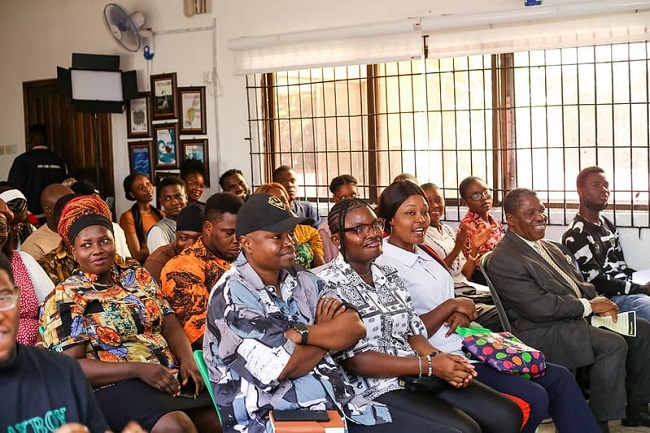
Eco-comedy
participants at the Eco-comedy session in Benin City

This challenge requires personal and collective reflection on the causes of burnout and what tools can be effective in addressing it. To this end, on April 7, 2026, Health of Mother Earth Foundation and Environmental Rights Action organised an eco-comedy live show which explored the relevance of humour and storytelling in curbing burnout and promoting wellbeing in the course of activism.

This event, which held in Benin City, Edo State, had in participation young, middle aged and experienced activists, comedians, students and media representatives. The event featured short speeches, storytelling (activists’ chronicles), live comedy performances, and group discussions, all of which were infused with humour while delivering practical ideas on how to avoid burnout. The event also featured a presentation of prizes to two winners of the eco-comedy short film competition which preceded the live show.

The Eco-Comedy gathering opened with a deeply reflective and thought-provoking message that blended humour with urgency. Nnimmo Bassey, HOMEF’s Executive Director, spoke of a time defined by overlapping ecological and social crises, and because of that, we must remain rooted in purpose, conscious of our collective power, and alert to the urgency of the moment.

According to Dr. Bassey, humour/laughter should inspire us to think about who we truly are and the socio-ecological issues that we need to address, stressing that comedy and humour are not neutral but viable tools for action.

Dr. Bassey’s remarks acknowledged the serious and often numerous challenges that activists face year after year sometimes with little success owing to deep-rooted systemic disorders. “But”, he noted, “giving up is very dangerous”. He stressed that activists must remain consistent and persistent even if the change does not happen in their lifetime. “To surrender is to allow injustice to prevail unchecked”.

Furthermore, Dr. Bassey noted that humour is a great tool for educational purposes and can be used can be used to break barriers – whether personal, structural, or systemic. The notion of power was also central. Dr Bassey left the impression that communities and individuals often underestimate their own power, especially in the face of institutional failure or injustice. Yet real change begins when people recognise that power lies in their voices, their unity, and their refusal to remain silent. Even small acts of speaking out, using caricatures to campaign and sharing stories contribute to a larger movement for justice.

The Deputy Executive Director of Environmental Rights Action, Barr. Mariann Bassey-Olsson, building on the importance of integrating humour in activism, noted that if activists lose their joy, they will lose the movement. Humour allows us to stay human without which we would lose empathy and the motivation to instigate change. While the realities that we face are grievous, our response must not be stripped of humanity.

Mrs. Olsson established that humour does not attempt to make light of the socio-ecological struggles but helps to break tension and strengthen commitment.

“We are not laughing because things are easy; we are laughing because we refuse to be broken. Humour reaches where policy papers cannot. Activism must sustain people, not consume them”, she explained.

Moreover, Mrs. Olsson added that “when we laugh together, we heal, we reconnect. We remember why we started. This isn’t a distraction. It is resistance!” Humour allows civil society activists to release tension, reconnect with one another, and sustain the energy needed for long-term struggle.

The session on activist’s chronicles had activists from different countries and regions sharing personal experiences they have had in the past which were not funny at the time but now when they look back they can laugh about them. Some of the stories were rather touching including personal sacrifices and betrayal, communications hassles/language barriers, security issues, mistakes due to inexperience, and more.

Across all accounts, a common thread emerged: these challenges did not deter the activists but instead became catalysts for learning, growth, and deepened resilience. The session underscored the significant personal costs inherent in activism and reinforced the imperative for activists to foster mutual support, cultivate solidarity, and engage in practices that promote collective and individual wellbeing.

The session also highlighted practical ways to avoid burnout and deal with trauma including prioritising areas of engagement and maintaining focus, proper planning/time management, collaborations, delegation, infusion of art/humour in programme design, avoiding competition, prioritising rest, celebrating wins (no matter how little) and addressing systemic socio-economic factors that contribute to burnout. On trauma, it was noted that rest and carefully chosen leisure activities can promote recovery.

Eco-Comedy emerges from a growing recognition that activists across the world, rather than retreat, claim humour as a political and cultural strategy, one that enables movements to communicate complex issues in accessible and relatable ways, connect with broader and more diverse audiences, and sustain emotional strength and collective resilience.

Rooted in Nigeria’s rich tradition of satire and social commentary, Eco-Comedy bridges activism and performance, using storytelling, comedy, and lived experience to expose injustice while creating space for healing, reflection, and renewal.

Overall, the event demonstrated the integration of art and advocacy, highlighted the need for movements to adopt humour as an artistic language for ecological justice, and a means to strengthen public engagement, as well as the need to build communities of eco-comedians: activists who can communicate systemic critique and propagate action with wit, clarity, and cultural relevance.
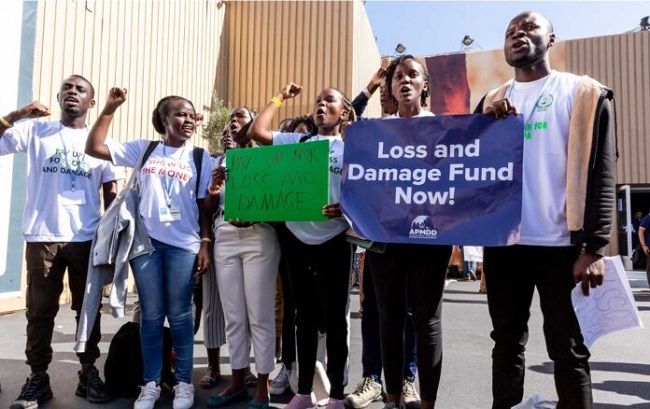

Africa sounds alarm on climate injustice, demands scaled‑up Loss and Damage finance

0

African climate leaders, government representatives, frontline communities and development partners have issued a call for renewed global commitment to climate justice, warning that the continent is being pushed to the brink by escalating climate‑induced losses and damages.

The declaration emerged from the 5th African Regional Conference on Loss and Damage, held from March 25 to 27, 2026, in Lilongwe, Malawi, where participants condemned the weakening political will of major emitters and the chronic underfunding of climate response mechanisms.

The communiqué paints a stark picture: despite contributing the least to global emissions, Africa continues to shoulder the heaviest burden of climate impacts.

Loss and Damage Fund
A demand for Loss and Damage finance

Delegates expressed deep concern that less than $1 billion has been mobilised globally for loss and damage over the past four years – an amount dwarfed by the $400–800 billion required annually. Even more troubling, only 10% of climate finance reaches frontline communities, while children and youth receive a mere 2.4%, leaving the most vulnerable with the least support.

Participants criticised the persistent reliance on debt‑creating finance, arguing that loans for climate response only deepen the fiscal crises of African nations already struggling with poverty, debt distress and limited fiscal space.

They emphasised that loss and damage is not a humanitarian gesture but a matter of reparatory justice, rooted in historical responsibility and supported by international legal principles. The communiqué referenced the 2025 International Court of Justice Advisory Opinion, which affirmed binding state obligations under customary international law, and drew inspiration from the recent UN resolution recognising the transatlantic slave trade as a grave crime against humanity.

While acknowledging progress such as the operationalisation of the Santiago Network on Loss and Damage (SNLD) and the Barbados Implementation Modality, delegates stressed that these mechanisms remain too distant from affected communities. They called for simplified, decentralised and community‑led access pathways within the Fund for Responding to Loss and Damage (FRLD), ensuring that resources reach the “last mile” where impacts are most severe.

The conference also highlighted Africa’s strategic opportunity as host of COP32, urging the continent to use this moment to redefine global norms and push for loss and damage finance to be recognised explicitly as part of a broader reparatory justice framework. Delegates pressed the African Union to establish a continental coordination mechanism and a Pan‑African Loss and Damage Data Initiative to strengthen evidence generation and policy influence.

In a strong call to action, participants demanded that developed countries honour their obligations under the Paris Agreement, scale up grant‑based finance, and accelerate global financial reforms to ensure timely, accessible and fit‑for‑purpose responses. They committed to launching a multi‑stakeholder advocacy platform, establishing grassroots networks across Africa, and documenting loss and damage cases – including non‑economic losses – to support litigation, accountability and global advocacy.

The Lilongwe communiqué signals Africa’s determination to reclaim agency in global climate negotiations and to centre justice, equity and historical responsibility in the global response to the climate crisis. It is a reminder that the continent is no longer pleading for support – it is asserting its rights.

Nigeria becomes net petrol exporter as Dangote drives historic shift

0

Nigeria recorded a historic shift in its downstream petroleum trade in March 2026, emerging as a net exporter of gasoline for the first time, driven largely by rising output from the Dangote Petroleum Refinery & Petrochemicals.

Data from market intelligence firm Kpler showed that gasoline imports into the country dropped sharply to 41,000 barrels per day (b/d) during the month, the lowest level on record. At the same time, crude supply to the Dangote facility rose to about 565,000 b/d, the second-highest intake since the 650,000 b/d refinery commenced operations in late 2023, indicating strong processing rates and increased product yield.

Dangote Refinery and Petrochemicals

Total gasoline exports from the refinery rose to 44,000 b/d in March, compared to no exports recorded in January and February. This shift enabled Nigeria to post a net export position of approximately 3,000 b/d for the month.

In expanding its market reach, the Dangote Refinery exported gasoline to East Africa for the first time, shipping a 317,000-barrel cargo to Mozambique. The move reflects growing demand in the region as buyers seek alternatives to Middle East Gulf supplies amid ongoing disruptions. Another April shipment from the refinery is also bound for Beira, Mozambique.

Nigeria’s emergence as a gasoline exporter is expected to reshape regional trade flows and intensify competition in global markets. Analysts note that the development adds pressure to Europe’s already oversupplied gasoline market, as Nigeria transitions from a key import destination to a potential competing supplier.

The March milestone signals a significant step in Nigeria’s drive towards self-sufficiency in refined petroleum products and its ambition to become a net exporter in the global energy market.

President/Chief Executive, Dangote Industries Limited, Aliko Dangote, recently described President Bola Ahmed Tinubu’s ongoing economic and energy sector reforms as critical to restoring market confidence and enabling large-scale investments in domestic refining.

Digital innovation key to Nigeria’s 87,671 tonnes daily waste – Experts

Experts in environmental management and sustainability have called for the adoption of digitally-driven waste management systems and increased citizen responsibility to tackle Nigeria’s growing waste crisis.

They made the call during the SHEnovation Hackathon 2026 Expert webinar organised by the Lagos Chapter of the Association of Professional Women Engineers of Nigeria (APWEN).

The event which brought together policymakers, engineers and sustainability advocates had the theme: “Environmental Science and Sustainability in Waste Management.”

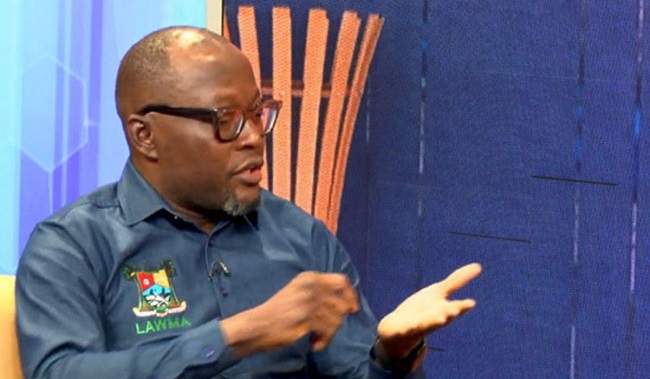
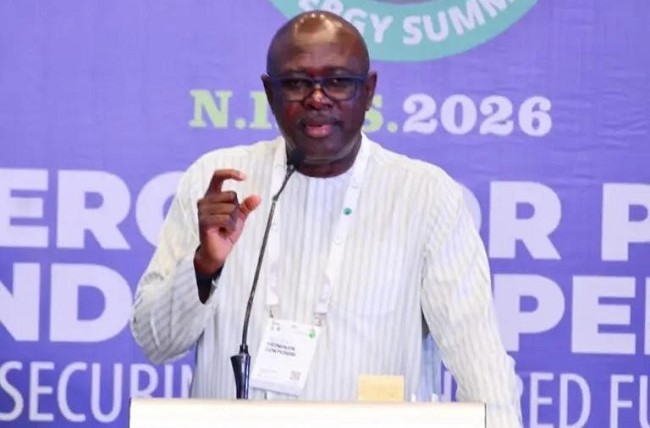
Muyiwa Gbadegesin
Managing Director/Chief Executive Officer of the Lagos Waste Management Authority (LAWMA), Dr. Muyiwa Gbadegesin

Delivering a keynote, Dr Muyiwa Gbadegesin, the Managing Director/Chief Executive Officer, Lagos Waste Management Authority (LAWMA), said Nigeria generates about 87,671 tonnes of waste daily, accounting for roughly 2.5 per cent of global waste output.

Gbadegesin was represented by Dr Essien Nsuabia, the Deputy Director, Waste Management, Research & Policy Development, LAWMA.

He said while advanced countries such as Sweden had reduced landfill waste to near zero through conversion technologies, many African cities still struggle to collect only 20 to 30 per cent of their waste.

“About 70 to 80 per cent of waste generated in sub-Saharan African cities remains uncollected, posing serious environmental and public health risks,” he said.

Gbadegesin disclosed that Lagos generates over 13,000 metric tonnes of waste daily, stressing that traditional waste collection methods are no longer sufficient.

He said LAWMA had begun deploying digitally-enabled waste management systems, including smart bins embedded with Radio Frequency Identification and geotagging technology.

According to him, the system allows real-time monitoring of waste levels, optimises collection routes and ensures accountability in operations.

“With these digital tools, waste collection can be tracked, costs can be monitored, and payments can be tied strictly to work done, eliminating inefficiencies and revenue leakages,” he said.

He added that the initiative was still at a pilot stage but had the potential to significantly improve waste collection efficiency across the state.

Gbadegesin called for collaboration with engineers and innovators to scale the system, emphasising the need for locally-developed technologies, data systems and infrastructure.

Also speaking, Jumoke Olowookere, EcoPreneur and Creative Director, African Creative Sustainable Synergy Hub, urged individuals to take responsibility for waste management through behavioural change.

Olowookere said the average individual generates about 0.5 kilogrammes of waste daily and stressed that sustainable practices must begin at the household level.

“We cannot rely on government alone. Waste is man-made, and everyone generating it must take responsibility for managing it,” she said.

Olowookere highlighted practical solutions including waste segregation, composting and adherence to the “5Rs” principle – reduce, reuse, recycle, refuse and repair, alongside upcycling.

She also advocated home gardening using composted organic waste, warning that excessive chemical use in food production poses health risks.

“Up to 99 per cent of food from conventional markets may contain chemicals. Growing even a portion of your food helps detoxify your system and promotes healthier living,” she said.

Olowookere encouraged participants to view waste as a resource, noting that many discarded materials could be converted into valuable products and income streams.

Earlier, the Chairman, APWEN Lagos Chapter, Mrs. Bosede Oyekunle, said the webinar aimed to foster innovation, mentorship and collaboration between professionals and young engineers in developing practical, technology-driven solutions for environmental challenges.

Oyekunle emphasised the role of digital innovation, engineering expertise and grassroots participation in achieving sustainable waste management and national development.

She called for innovation and collaboration to tackle sustainable waste management, describing the session as a platform to drive practical, technology-driven solutions.

Oyekunle reaffirmed Lagos APWEN’s commitment to empowering women engineers and young innovators to develop ideas that address real-world environmental challenges and support national development.

She also urged participants to actively engage with experts and leverage insights shared to inspire sustainable solutions and future-focused innovation.

Dr Olayinka Adewumi, the Chairman Planning Committee SHENovation Hackathon, said the webinar aims to raise awareness on sustainability and waste management.

Adewumi encouraged engineers to critically assess environmental challenges, existing solutions, and areas for improvement.

She said it also seeks to bridge the gap between theory and practice by fostering job-ready graduates through collaboration and innovation.

Adewumi added that the platform connects students and young innovators with professionals, mentors, and experts, enabling knowledge sharing without physical barriers.

She said the initiative focuses not just on identifying problems but on developing practical solutions, with the Lagos Chapter facilitating meaningful engagement between experienced experts and emerging innovators.

By Fabian Ekeruche

Second Africa Urban Forum: When continent spoke with one voice

Africa faces a housing deficit of over 51 million units – projected to reach 130 million by 2030. Behind this figure lies a deeper reality: more than one billion people live in informal settlements globally, many in rapidly growing African cities.

These are not just statistics; they reflect one of the defining urban challenges of our time – and a call to action that shaped discussions at the Second Africa Urban Forum (AUF), held from April 8 to 10, 2026, in Nairobi, Kenya.

Over three days, nearly 8,000 delegates came together with a shared purpose: to move from dialogue to implementation. What emerged was a unified continental voice – positioning Africa not as a recipient of solutions, but as a driver of global urban transformation through South-South cooperation.

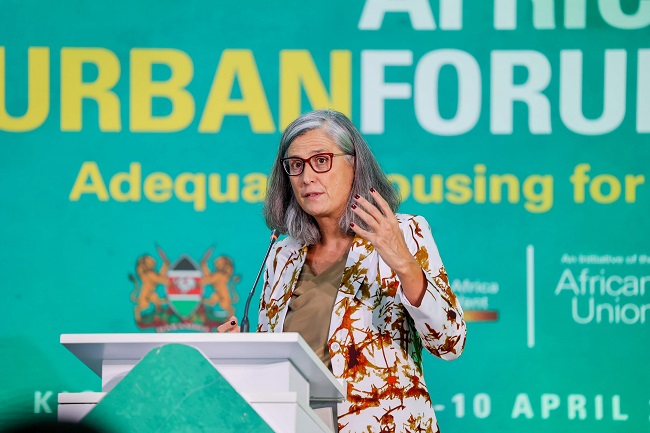
Anacláudia Rossbach
Anacláudia Rossbach, Executive Director of UN-Habitat. Photo credit: UN-Habitat/Peter Ndolo

For Anacláudia Rossbach, Executive Director of UN-Habitat, the Forum marked a turning point. “When Africa chooses to speak with one voice, the world has no choice but to listen,” she said at the closing ceremony.

Ms. Rossbach stressed that with only a few years left to deliver the 2030 Agenda for Sustainable Development, urgent action is needed to move from commitments to implementation. Housing and informal settlements are central to Sustainable Development Goal 11 and all other SDGs – and must be understood not only as shelter, but as essential infrastructure underpinning access to education, health, water and sanitation, and inclusive development.

At the heart of the Forum’s outcomes is the recognition that housing is not merely shelter – it is an economic infrastructure. This underpins the Africa Affordable Housing Compact, a multi-stakeholder platform designed to accelerate affordable housing delivery at scale. By bringing together governments, private sector developers, financial institutions, international organizations and innovative stakeholders, the Housing Compact aims to mobilize innovative financing, reduce investment risks, and support bankable housing solutions tailored to diverse national and local contexts.

Complementing this is the Nairobi Declaration 2026, a continental commitment by African Union Member States to take time-bound, action-oriented steps toward sustainable urbanisation. It prioritises land reforms, integrated housing policies and strengthened urban planning systems, while embedding housing into national development and fiscal frameworks. It also calls for prioritizing informal settlements and advancing climate-resilient urban development.

As noted by Moses Vilakati, AU Commissioner for Agriculture, Rural Development, Blue Economy and Sustainable Environment, Africa is generating home-grown solutions with global relevance. From housing finance innovation to land and planning reforms, these approaches can support other regions facing similar urbanisation pressures and strengthen South-South cooperation.

The Africa Urban Forum outcomes will directly inform discussions at the World Urban Forum (WUF13) in Baku, Azerbaijan, in May 2026. The Nairobi Declaration will guide Africa’s unified position, while the Housing Compact will support implementation through partnerships and investment. Importantly, the Nairobi Declaration will contribute to the formulation of the Baku Call to Action, ensuring Africa’s priorities are reflected in global commitments on housing systems and land reform.

At WUF13, African delegations will help shape global discussions, including pathways to strengthen housing finance and implement the New Urban Agenda and SDG 11 review processes.

From Nairobi to Baku, the message is clear: Africa is not waiting for solutions – it is building them, shaping global frameworks, and redefining the future of sustainable urban development. 

Energia appoints Oladimeji Bashorun as CEO

0

Energia Ltd., an independent oil and gas company, has appointed Mr. Oladimeji Bashorun as its Chief Executive Officer (CEO), following the exit of Mr. Chidi Egonu.

The company disclosed this in a statement issued on Monday, April 13, 2026, in Lagos.

It stated that Bashorun, who previously served as Chief Operating Officer (COO), assumed the new role after years of providing strategic and operational leadership within the organisation.

Mr. Oladimeji Bashorun
Mr. Oladimeji Bashorun, CEO, Energia Limited

According to the statement, Bashorun, during his tenure as COO, oversaw the company’s operations, driving efficiency and supporting its long-term growth strategy.

The company described him as a seasoned oil and gas professional with over two decades of industry experience.

It added that he held several technical and leadership positions at Shell Petroleum Development Company and later at Sahara Upstream before joining Energia.

In those roles, he contributed to operational leadership, asset management, and initiatives aimed at improving operational stability and performance.

The Chairman of Energia, Mr. George Osahon, said Bashorun had demonstrated exceptional leadership and deep industry expertise during his time as COO.

“Oladimeji Bashorun has demonstrated exceptional leadership and deep industry expertise during his time as Chief Operating Officer.

“His commitment to operational excellence and strategic growth has been instrumental to Energia’s progress.

“The Board is confident that under his leadership as Chief Executive Officer, the company will continue to strengthen its position as a key player in the industry, while delivering sustained value to its stakeholders,” he said.

In his remarks, Bashorun expressed appreciation for the appointment.

“I am honoured to assume the role of Chief Executive Officer of Energia.

“Working closely with a talented team that drives the company’s success, I look forward to building on our achievements and advancing Energia’s commitment to operational excellence, responsible energy development, and value creation for our stakeholders,” he said.

The company said that under Bashorun’s leadership, it would continue to focus on strengthening operational performance, expanding strategic opportunities, and contributing to Nigeria’s energy security, while maintaining commitment to environmental stewardship and community development.

By Taiye Olayemi

Food security: Stakeholders urge Nigerians to embrace biotechnology, digital tools

Stakeholders  at the 51st Annual Conference of Nigerian Society for Plant Protection have raised concerns over the effect of pests and climate change on food security in Nigeria.

The conference, which had the theme: “Plant Protection and Biotechnological Solutions for Sustainable Food Production in Nigeria”, held on Monday, April 13, 2026, at the National Horticultural Research Institute (NIHORT), Ibadan.

The stakeholders said that the prevalent climate situation in the country had led to emergence of new pests and pathogens that severely attack crop plants.

NIHORT
National Horticultural Research Institute (NIHORT), Ibadan

The Executive Director, NIHORT, Prof. Muhammed Attanda, however said that biotechnology has opened up a new era of plant protection options to outsmart these evolving biotic stressors and rapidly deliver results towards attaining food sustainability.

Attanda implored Nigerians to embrace biotechnology, stressing: “NIHORT has the mandate to conduct research into genetic improvement, production technologies, storage, utilisation, marketing of fruits, vegetables, spices, and other medicinal and aromatic plants of nutritional and nomic importance.

“NIHORT has developed numerous technologies in the horticultural value chain and is continually coming up with more technologies that would launch the country into self-sufficiency in horticulture.

“The Institute conducts extensive research tailored to various agro-ogical zones in the country. NIHORT plays a critical role in advancing Nigeria’s horticulture landscape,” he said.

The director added that the institute has released several improved crop varieties, which include two pepper varieties (HORTIPEP 1 and 2) for improved aroma and higher yield.

“Seven tomato varieties (HORTITOM 1-7 series) produced for resistance, heat tolerance and high productivity.

“Dry-season onion varieties (HORTIONI 1, 2 and 3 series) and wet-season onion varieties (HORTIONI 4, 5 and 6 series) released, along with three eggplant varieties (HORTIPICUM 1, 2 and 3 series),” he said.

Attanda added that the institute’s research was not limited to vegetables alone.

“We’ve released two plantain varieties (HORTIPLAN 1 and 2) and two banana varieties (HORTIBAN 1 and 2) to contribute positively towards food sustainability and economic empowerment in the country,” he said.

According to him, various technologies have been developed to proffer solutions to evolving pest challenges.

“The institute has developed Tuta-trap, an eco-friendly technology that traps the pest, as well as NIHORT-Lyptol and NIHORT-Raktin, the biopesticides available in both liquid and powder to effectively manage the ravaging situation of pest on tomato.

“The institute has up-scaled its various laboratories, Biotechnology, Virology, Pathology, Soil and Agronomy, which are equipped with cutting-edge technologies to make research easy for our scientists, the pride of the nation.

“NIHORT’s mission also covers technology dissemination and collaboration with farmers and stakeholders throughout the horticultural value chain,” he said.

Attanda, however, urged all participants to engage actively in the discussions .

“Your insights and knowledge are invaluable as we work collaboratively towards promotion of resilience in our agricultural systems.

“Let us utilize this opportunity to share knowledge, forge partnerships, and inspire innovation in our collective quest for sustainable horticulture.

“Let us seize the opportunity to provide advanced biotechnological solutions to solving myriads of challenges confronting food security,” he said.

Also, Dr Adamu Abubakar Dabban, the Executive Secretary, Agricultural Research Council Of Nigeria (ARCN), said that Nigeria, like many developing nations, was faced with the dual challenge of increasing food production while combating the threats posed by pests, diseases, and climate change.

He said that, without effective plant protection strategies, the country’s efforts toward food security would remain significantly constrained.

“Agriculture remains a cornerstone of Nigeria’s economy, contributing immensely to employment, food supply, and industrial raw materials.

“Crop losses due to pests and diseases continue to undermine productivity.

“It is therefore imperative that we embrace innovative, science-driven, and sustainable solutions particularly biotechnology and digital tools to safeguard our crops and ensure food availability for our growing population,” he said.

Dabban added that ARCN recognises the critical role of research in transforming agriculture.

“Through our network of National Agricultural Research Institutes, including NIHORT, we are committed to promoting cutting-edge research, capacity building, and technology dissemination.

“We are particularly focused on strengthening linkages between research institutions, universities, extension services, and the private sector to ensure that innovations reach the farmers who need them most,” he said.

The ARCN executive secretary added that the conference was focused on key areas that would help food security.

In his address, Dr David Olufolaji, the Chairman of the Board of Trustees of the Nigerian Society for Plant Protection (NSPP), called for full implementation of ideas shared.

Olufolaji said that it was only through this that food security could be guranteed.

By Oluwaseyi Oduneye-Ogunwomoju

World Migratory Bird Day 2026 to spotlight role of community science in species conservation

On Saturday May 9, 2026, World Migratory Bird Day will spotlight the important role of community science (also referred to as citizen science) in the conservation of migratory birds.

Under the theme “Every Bird Counts – Your Observations Matter!”, the 2026 campaign focuses on how individual observations and participation in community science programs help generate knowledge that supports science, conservation, and policy-making across the world’s flyways.

World Migratory Bird Day 2026 is a global awareness-raising campaign highlighting the role of community science in migratory bird conservation.

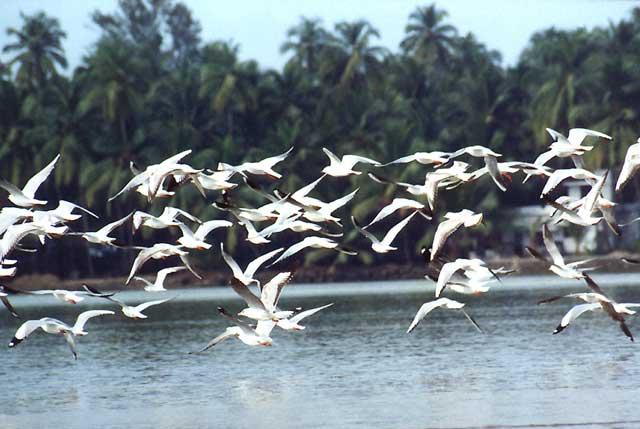
Migratory birds
Migratory birds

The World Migratory Bird Day (WMBD), an international educational and awareness-raising campaign that promotes conservation efforts for migratory birds and their journeys across borders, is organised by a global partnership consisting of the Convention on the Conservation of Migratory Species of Wild Animals (CMS), the Agreement on the Conservation of African-Eurasian Migratory Waterbirds (AEWA), the East Asian–Australasian Flyway Partnership (EAAFP), and Environment for the Americas (EFTA).

Around the globe, hundreds of events are planned locally, including community/citizen science projects, bird walks, awareness-raising activities, workshops, monitoring efforts, volunteer actions and other public events that reflect the campaign’s message and showcase how local participation contributes to global bird conservation.

From backyard bird observations registered via apps to coordinated international monitoring efforts, people around the world contribute valuable information on migratory birds, their movements, their habitats, and the pressures they face. These observations help track migration patterns, population trends, and changes across flyways, strengthening the evidence base needed to better conserve migratory birds across borders.

The 2026 theme also highlights how participation in bird monitoring can deepen people’s connection to nature and strengthen public engagement in conservation. This year’s campaign is especially timely as it coincides with the 60th anniversary of the International Waterbird Census, providing an opportunity to recognise one of the longest-running international bird monitoring efforts and the wider importance of volunteer-based observations worldwide.

Potential media angles include how community science is helping build the knowledge needed to conserve migratory birds across borders; how local bird observation contributes to a larger picture of migration across continents; the people and communities behind bird monitoring efforts worldwide; and how apps and platforms are opening new ways for the general public to take part in bird conservation by identifying and recording birds in ways that support science and conservation action across flyways.

Celebrated on two days each year (in 2026, on May 9 and October 10) to reflect the cyclical nature of bird migration and the varying peak migration periods in the northern and southern hemispheres, WMBD triggers hundreds of educational events around the world, united by their common goal of raising awareness and advocating for international bird protection.

The Earth Prize 2026: Two young Nigerian teams among world’s top 35

Three young Nigerians have been named among the top 35 global teams in The Earth Prize 2026, the world’s largest environmental competition and incubator for young people aged 13-19 years.

Representing the region of Africa, the students have presented two solutions: “BookBank Africa”, a network and app to redistribute school textbooks, “PantiPads”, affordable and biodegradable sanitary pads.

BookBank Africa is the creation of teenagers Ossai Gift Chimdiuto and Ekwueme Chiziterem Noalene. After discovering that many young people are unable to access school textbooks in not only their local community but also across Nigeria, and that book burning causes environmental damage and waste, they decided to take action by repurposing unused spaces in their school to collect, sort, log, and redistribute books.

BookBank Africa
BookBank Africa is the creation of teenagers Ossai Gift Chimdiuto and Ekwueme Chiziterem Noalene

Having worked on the solution for about a year, they hope to scale to additional schools with a network of Student Ambassadors and support from Teacher Facilitators and additionally build an app to reach this goal.

PantiPads is the creation of teenager Raheema Auwal-Panti, who was motivated by the conditions of her local environment, where young women often don’t have access to affordable sanitary products. After discovering that conventional sanitary pads used by women today are 90% plastic, and take up to 500–800 years to decompose, she decided to create PantiPads, a biodegradable sanitary pad made from agricultural waste.

Raheema Auwal-Panti, Ossai Gift Chimdiuto, and Ekwueme Chiziterem Noalene, all from Nigeria, impressed The Earth Prize’s expert jury with their projects, forming two of the five teams selected to represent Africa.

PantiPads
PantiPads is the creation of teenager Raheema Auwal-Panti

Now in its fifth year, The Earth Prize has reached over 21,000 students across 169 countries and territories. Previous winners have been featured in leading international media including Forbes, Business Insider (US and Africa), The Irish Times, and UN Today, with several teams advancing their ideas through patents and corporate partnerships.

This year’s teams represent seven global regions: Africa, Asia, Europe, North America, Central and South America, the Middle East, and Oceania and Southeast Asia. Their solutions span a wide range of innovations, from an ocean-cleaning robot, to fog-powered drinking water, and an AI-driven drought predictor.

The Earth Prize is run by The Earth Foundation, a non-profit based in Geneva, Switzerland, founded during the School Strike for Climate in 2019. At a time when climate anxiety affects a majority of young people – 59% reporting they are very or extremely worried about the environment – the Prize provides a pathway from concern to action, equipping students with the tools to develop tangible, real-world solutions.

Peter McGarry, Founder of The Earth Foundation, commented on this year’s competition: 

“The 2026 Earth Prize Scholars represent an extraordinary wave of ingenuity and determination from young people around the world. This year’s applicants have once again shown that age is no barrier to tackling complex environmental challenges with creativity and purpose. As we look ahead to announcing our regional winners in May, we are inspired by the bold thinking and real-world impact already demonstrated by this year’s cohort.”

The next stage of the competition will see seven Regional Winners announced from May 11 to 17, each representing one of the seven global regions and receiving $12.5K to accelerate their innovation. This will be followed by a public vote, with the global winner announced on Friday, May 29.

Financial experts urge govt to invest crude oil gains as palliatives

0

Financial experts have advised the Federal Government to invest the gains from the excess crude oil sales to better the lot of Nigerians.

A chartered accountant, Chief Abiola Ali, in an interview in Ibadan on Monday, April 13, 2026, said such an investment was crucial.

Ali, also a businessman, added that an emergency at hand required an emergency response, such as subsidising food items.

Heineken Lokpobiri
Sen. Heineken Lokpobiri, Minister of State for Petroleum Resources (Oil)

“The government can also find a way to give certain allowances to workers to compensate for the increase in transportation.

“Similarly, there are other social intervention programmes they can put in place for non-civil servants to cushion the effect of the hardship.

“Nigerians are not just complaining; things are deteriorating by the day,” he said.

According to him, the government should respond swiftly because the people, who are the reason for the government’s existence in the first place, should not be abandoned to continue suffering.

“Government could deplore any form of palliative that could be useful at this point,” Ali said.

Similarly, an industrialist, Chief Kola Akosile, said it would be nice to devote as much as 80 per cent of excess crude gains to provide palliatives for investors and goods manufacturers.

This, he said, would result in producing at a reduced rate for society.

Akosile, a national officer of the Nigerian Association of Chambers of Commerce, Industry, Mining and Agriculture (NACCIMA), called for small-business grants and improved transportation.

According to him, these would automatically bring down the high cost of living.

“The hardship is too much, especially on the poor people, so it is important for the government to pump the excess gains into various palliative measures to ease the hardship,” Akosile said.

President, Trade Union Congress (TUC), Mr. Festus Osifo, recently urged the government to invest 60 per cent of gains from crude oil revenue on the landing cost of fuel.

This, he said, would ease the economic hardship caused by the rising cost of fuel.

By Olawale Akinremi