The 20th meeting of the Conference of the Parties to the Convention on International Trade in Endangered Species of Wild Fauna and Flora (CoP20) took place in Samarkand, Uzbekistan, from November 24 to December 5, 2025. CoP20 marked a significant moment for global wildlife conservation and international cooperation.
Bringing together governments, enforcement authorities, technical experts, and conservation organisations, it served as a major platform for shaping the future of wildlife trade regulation.
Over three consecutive days, the International Consortium on Combating Wildlife Crime (ICCWC) and its partners hosted thematic side events in the margins of CoP20. These events were designed to highlight different dimensions of the Consortium’s global response to wildlife crime: impact, data, and forensics.
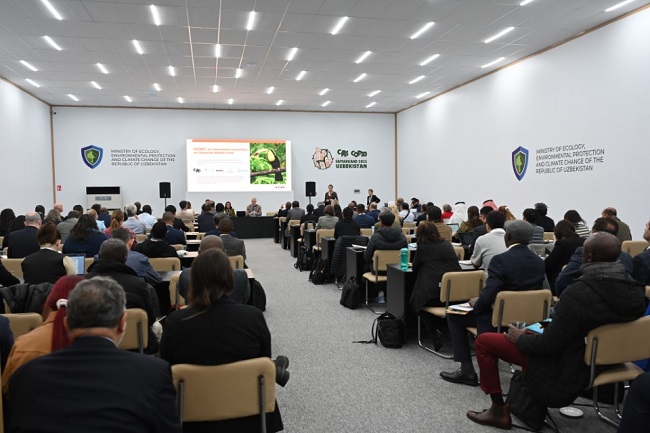
This year also marked 15 years of ICCWC, a milestone anniversary that gave special significance to the Consortium’s presence at this 20th World Wildlife Conference. The side events served not only to highlight current initiatives, but also to reflect on how far ICCWC has come, working with and supporting Parties in strengthening global enforcement capacity since 2010. This included the evolution of ICCWC’s tools, partnerships and achievements and reinforces the commitment of its partner organisations to continue supporting Parties in their efforts to combat wildlife crime.
The three side events drew strong engagement from Parties and observers, reflecting broad interest in ICCWC’s work aiding governments with enhancing their criminal justice systems to tackle wildlife crime.
CITES Secretary-General, Ivonne Higuero, said: “The ICCWC events at CITES CoP20 offered a valuable moment to highlight how Parties are making real, measurable progress in tackling wildlife crime. They showed the strength that comes from working together, sharing information, and building on reliable data to guide enforcement efforts- all of which directly support the goals of the CITES Strategic Vision. With continued support from ICCWC, Parties are increasingly equipped to confront the sophisticated criminal networks that threaten wildlife. This collective effort will remain essential as we work to stop these crimes worldwide.”
ICCWC’s Impact: Showcasing Global Successes
The first ICCWC side event showcased the real-world impact of ICCWC’s support and Parties efforts at national level, specifically by Madagascar, Mexico, New Zealand, Nigeria and South Africa. Representatives from Mexico, New Zealand and South Africa jointly presented their coordinated efforts that led to the arrest of an internationally wanted wildlife trafficker.
Tapua Hori, Principal Compliance Officer – Wildlife, Department of Conservation, New Zealand, noted: “Disrupting wildlife trafficking networks is not the work of one nation but of many united in purpose; persistent offenders will not relent but neither shall we; through intelligence, cooperation, and unwavering resolve we shall safeguard life’s diversity for generations yet to come.”
Through showcasing the achievements of the 2025 Wildlife Inter-Regional Enforcement (WIRE) Forum and those of Operation Thunder 2025, ICCWC partners examined how the Consortium’s tools, capacity-building activities, and strategic guidance have helped countries strengthen their cooperation to solve wildlife crime cases, dismantle trafficking networks, and promote long-term institutional resilience.
Discussions emphasised the importance of integrated enforcement approaches, bringing together customs, police, environmental authorities, and judicial actors, and showcased the breadth of ICCWC’s work across governance strengthening, inter-agency collaboration, and intelligence-led operations.
Data for Enforcement: Value, Sources, Experiences and Tools
This second side event focused on the central role of data in detecting, understanding, and effectively responding to wildlife crime. Participants explored how high-quality data, whether from seizures, research, online monitoring, or intelligence, can be transformed into meaningful insights that can guide enforcement action and policy decisions. The session highlighted the importance of consistent reporting to continuously expand the CITES Illegal Trade Database and demonstrated how data analyses can reveal trafficking routes, species under pressure, and emerging criminal methodologies.
The discussion underscored how data-driven enforcement enables earlier interventions, more strategic resource allocation, and stronger international cooperation. Representatives from Namibia and New Zealand, alongside ICCWC partner agencies contributed case examples showing how data that is reported under CITES is being used to shape enforcement priorities and strengthen national and transboundary responses.
Forensics – A CITES Tool: Wildlife Forensic Techniques Supporting Law Enforcement and CITES Compliance
The third side event highlighted the rapidly expanding field of wildlife forensics and its essential role in supporting both law enforcement and CITES implementation. The session demonstrated how forensic methods, such as DNA analysis for species identification and origin determination, provide the scientific evidence needed to build strong cases for court, trace trafficking networks, and verify the legality of wildlife and timber in trade.
Participants discussed the growing importance of accessible forensic capacity, including new portable tools that enable frontline officers to gather reliable evidence even in resource-limited settings. The event also showcased how forensic data contributes to broader intelligence efforts, offering insights into criminal supply chains, helping authorities target high-risk areas and contributing to bringing criminals involved to justice.
Contributions came from national laboratories, research institutions, non-governmental organisations and ICCWC partner organisations. It illustrated the collective progress being made to expand global forensic capability.
Ross McEwing, United Nations Office on Drugs and Crime Programme Officer and Wildlife Forensics Lead, said: “Countries can learn from the phased approach taken by Uganda to build sustainable wildlife DNA forensic capacity to tackle wildlife and forest crime. The laboratory started undertaking casework in 2022 and has since supported more than 150 wildlife investigations.”
ICCWC Document 16.4 at CoP20
In addition to the three side events, on 25 November, CITES Parties discussed document CoP20 Doc. 16.4 on the International Consortium on Combating Wildlife Crime, which highlighted progress made by Parties to combat wildlife crime with ICCWC support and provided reporting on the implementation of CITES Decisions 19.26 and 19.27.
Parties also considered further decisions related to ICCWC, including calling for additional feedback to ensure ICCWC support continues to be targeted where it is most needed and encouraging further financial support to the Consortium to continue its engagement with Parties up to 2030. This will be done through the 2027–2030 ICCWC Strategic Action Plan, which contributes to implementing the ICCWC Vision 2030.
A Strong Presence and a Unified Message
Through its side events, ICCWC demonstrated that tangible progress is being made in the fight against wildlife crime, but also that continued investment and coordinated action will be key to conserving the world’s most vulnerable species in the years ahead. ICCWC’s presence at CITES CoP20 underscored a unified message: collaboration, science, data and evidence-based enforcement remain essential to working towards a world free of wildlife crime.